

Finish First: Anti Slip Stone Treatments for Designers & Homeowners

The most reliable anti slip stone treatments are not treatments at all: they are finish choices. Specify honed or lightly textured marble, travertine or limestone for wet interiors, and sandblasted, flamed or bush-hammered finishes for exteriors and pool decks. Sealing protects against stains, not slips, so confirm finish, request a wet sample, and get maintenance instructions in writing from your stone supplier or installer before you order.
TL;DR:
- Choosing a textured finish such as honed, brushed, sandblasted, flamed, or bush-hammered is crucial for slip resistance because surface microtexture provides grip even when wet.
- Sealers primarily protect against stains and moisture, not improve traction; testing the stone’s wet behavior before sealing is essential for safety.
- The longevity of finish-based textures surpasses coatings, with etched or textured surfaces remaining effective unless heavily worn or re-finished over decades.
- Proper installation, including correct slope, grout joint design, and transitions, plays a vital role in maintaining slip resistance in wet environments.
- Regular maintenance, avoiding acidic cleaners, and testing with wet samples before installation help preserve the texture and prevent floors from becoming slick over time.
Table of Contents
- Finishes and textures that increase traction
- Choosing stone species: how porosity and etching affect your finish choice
- Sealing: what it accomplishes, and why it isn’t a traction solution
- Cleaning and maintenance routines that preserve texture and traction
- Installation and design details that reduce slip risk
- Specification checklist and questions to ask your stone supplier
- Surfaces Galore & John: practical notes and where to get samples
- Different types of anti-slip treatments and their efficacy
- Step-by-step application procedures for various anti-slip treatments
- Longevity and durability comparisons of common anti-slip treatments
- Health and environmental safety considerations for anti-slip treatment products
- Cost estimates and budgeting for various anti-slip treatments
- Common pitfalls and mistakes in applying anti-slip treatments and how to avoid them
- What the safety data actually supports
- How Surfaces Galore helps you specify the right finish
- Sources
- FAQ
Finishes and textures that increase traction
Slip resistance in natural stone comes down to microtexture, the tiny peaks and valleys on the surface that give bare or wet feet something to grip. Polished stone looks striking but its glass-smooth surface offers almost nothing to catch, which is why it belongs in low-moisture areas only.
Several finishes change that texture without sacrificing the look of natural stone:
- Honed: a flat, matte surface with light texture, a solid baseline for bathroom floors and kitchens.
- Brushed: mechanically abraded to open up small pits, adding grip while keeping a softer look than sandblasting.
- Tumbled: rounded edges and an irregular, pitted surface, common in rustic travertine floors and pool surrounds.
- Sandblasted: a consistently rough, matte texture created by blasting the surface with abrasive media, well suited to pool decks and exterior steps.
- Flamed: heat-treated to flake the surface into a coarse, granular texture, mostly used on granite and hard stones for exterior paving.
- Bush-hammered: mechanically pitted with a hammer tool, producing a heavily textured surface for high-traffic outdoor areas.
Match the finish to the room. Shower floors and entryways do well with honed or brushed finishes because they balance grip with easy cleaning. Pool decks and exterior walkways call for sandblasted, flamed or bush-hammered textures that stay gripping even when soaked. The tradeoff is maintenance: rougher finishes trap more soil and need more frequent cleaning to keep their texture working for you, a detail worth reading up on in Top Tile Finishes Compared.
Choosing stone species: how porosity and etching affect your finish choice
Marble, travertine and limestone are calcareous stones, meaning they react to acids. Spilled lemon juice, vinegar or many bathroom cleaners can etch the surface, dulling a polish and, over the long run, subtly altering the texture that gives a finish its grip. That reaction is chemical, not cosmetic only, and it is one reason finish choice matters more with these stones than with acid-resistant materials like granite.
Porosity is the second variable. Travertine’s natural pitting and limestone’s often higher absorption rate mean water can sit on or soak into the surface differently than it does on denser marble. This changes how quickly a floor dries and how long it stays slick underfoot.
A few practical pairings:
- Showers and wet baths: honed marble or filled travertine, both routinely sealed with an impregnator.
- Kitchen floors: honed or brushed limestone or marble, chosen for moderate traffic and occasional spills.
- Exterior decks and pool surrounds: denser, less absorbent stone in a sandblasted or bush-hammered finish, which resists both water uptake and surface wear.
Sealing: what it accomplishes, and why it isn’t a traction solution
Sealing is one of the most misunderstood steps in natural stone care, largely because it gets credited with jobs it was never built to do. An impregnating sealer soaks into the stone’s pores and repels liquids from the inside, reducing staining without changing the surface’s look or feel. A topical sealer sits on top and can add sheen, but it wears faster and, on some finishes, can actually smooth out the texture that gives a floor its grip.
According to the Natural Stone Institute, sealing improves stain resistance but does not make stone stain-proof, and many dense stones do not need it at all. Sealers are not a slip-resistance fix: they manage what soaks into the stone, not what happens on top of it.
- Seal porous stones like travertine and limestone in wet areas; skip sealing on dense, low-absorption stone unless your supplier advises otherwise.
- Always test the sealer on a spare tile first to check for haze, residue or color change before treating the whole floor.
- Reapply on a schedule based on traffic and exposure rather than a fixed calendar date, and confirm the interval with your supplier’s datasheet.
Pro Tip: Apply sealer in thin, even coats and wipe off excess within the manufacturer’s window. A hazy film left on the surface is often mistaken for a sealer defect when it is really an application mistake.
Cleaning and maintenance routines that preserve texture and traction
The finish you specify only stays effective if your cleaning routine protects it. Acidic cleaners, abrasive powders and bleach-and-ammonia mixes can etch calcareous stone or leave a film that smooths over microtexture, quietly turning a grippy floor slick.
- Dust-mop or dry-sweep daily to remove grit before it grinds into the surface underfoot.
- Rinse with a pH-neutral stone cleaner, never a general-purpose bathroom or kitchen spray.
- Squeegee shower floors after each use to cut down on standing water and soap-scum buildup.
- Place walk-off mats at exterior entrances to trap grit before it reaches interior stone.
- Schedule a professional inspection every few years, especially in high-traffic wet zones, to catch wear before it becomes a slip hazard.
The Natural Stone Institute’s care guidance recommends avoiding acidic cleaners on calcareous stones and controlling grit with entrance mats, both because acids etch the surface and because grit abrades the finish over time.
Pro Tip: If a floor that once felt gripping starts to feel slick, ask a stone restoration professional about light re-texturing rather than assuming a sealer will fix it.
Installation and design details that reduce slip risk
Finish choice does most of the work, but installation details decide whether that work holds up in practice. A shower floor with the right texture and the wrong slope still puddles, and standing water defeats even the best finish.
- Slope wet floors toward drains at a consistent grade so water clears quickly instead of sitting on the surface.
- Use small-format tile or mosaic patterns on shower floors, since more grout lines mean more places for feet to catch.
- Choose a grout joint width and texture that adds foot purchase without becoming a dirt trap that is hard to clean.
- Detail thresholds and transitions carefully, and place mats only where they are rated for wet-floor use rather than as a substitute for a proper finish.
Contractors handling complex wet-area installations, including epoxy underlayments or specialty substrates, sometimes bring in outside trade specialists such as JM Epoxy LLC for the groundwork before stone goes down.
Specification checklist and questions to ask your stone supplier
A tight spec sheet prevents most slip problems before installation starts. Include the stone species, the exact finish name and a written description of its texture, the expected wet or dry exposure, the recommended maintenance program, whether a sealer is needed and which type, and a requirement for a physical sample before ordering.
- Ask for finish precedents: photos or samples of the same finish installed in a similar wet application.
- Request the maintenance and sealer datasheet in writing, not just a verbal recommendation.
- Ask whether the supplier has sample test results or field experience with that finish in comparable conditions.
- Confirm the installer has direct experience setting textured finishes, since improper grouting or leveling can undo a good finish choice.
As the U.S. Access Board’s guidance on floor and ground surfaces notes, accessible surfaces must be slip resistant, but the standard does not set a single coefficient-of-friction number. That means your spec should rely on documented finish and maintenance choices rather than chasing one universal test result.
Surfaces Galore & John: practical notes and where to get samples
Surfaces Galore’s blog covers the practical side of specifying stone for wet and high-traffic areas, and John’s posts consistently point to the same conclusion: finish and maintenance decide slip performance, not products applied after the fact.
- What Is Slip Resistance? breaks down how texture and finish interact with flooring safety guidance.
- Marble Shower Floor Slip Resistance covers finish options specific to wet bathroom floors.
- Why Seal Natural Stone and How to Seal Natural Stone walk through what sealing does and how to apply it correctly.
Additional credentials and project case studies are not yet published and will be added as they become available.
Different types of anti-slip treatments and their efficacy
Within the stone industry, three broad approaches show up when people talk about improving traction: finish selection, sealers, and, less often, topical coatings or resurfacing.
Finish selection, covered earlier in this guide, is the most durable approach because it changes the stone’s actual surface texture rather than adding a layer on top. Honed, brushed, sandblasted and bush-hammered finishes are permanent unless the stone is heavily worn or refinished.
Sealers, whether impregnating or topical, address stains and moisture absorption. As the Natural Stone Institute notes, sealers act as repellents rather than making stone impervious, and their effect on traction is limited at best.
Topical coatings sit on top of the stone and are the least durable option. According to National Park Service preservation guidance, coatings can alter appearance, create ongoing maintenance burdens, and wear unevenly along traffic patterns, sometimes requiring removal that damages the stone underneath. That guidance covers historic tile specifically, but the underlying caution applies broadly: a coating is a maintenance commitment, not a one-time fix.
For most residential and commercial stone installations, the efficacy ranking is straightforward: finish and texture first, sealer second for stain protection, and coatings only as a last resort when texture and sealing are not enough.

Step-by-step application procedures for various anti-slip treatments
Specifying a textured finish starts before the stone ever reaches the job site. Request the finish at the fabrication stage, since sandblasting, flaming or bush-hammering is typically done at the quarry or fabrication shop rather than in the field.
For sealing, the process looks like this: clean the stone thoroughly and let it dry completely, apply a test patch on a spare piece to check for haze or color shift, apply the impregnating sealer in thin even coats following the manufacturer’s working time, wipe off excess before it dries on the surface, and allow the recommended cure time before exposing the floor to water or foot traffic.
If a coating is genuinely necessary, which is rare for natural stone floors, the National Park Service brief recommends careful product selection and a defined maintenance schedule from the start, since coatings that are not maintained tend to wear unevenly and can require full removal.
Re-texturing an existing floor, when a once-textured finish has worn smooth, is a specialty job. It typically involves light abrasive blasting or mechanical texturing performed by an experienced restoration contractor, not a DIY sanding project.
Whatever the treatment, testing before full application is not optional. A sample piece, finished the same way as the intended order, should be wetted and walked on before you commit to the full square footage.

Longevity and durability comparisons of common anti-slip treatments
Finish-based texture is the most durable option by a wide margin because it is physically part of the stone. A sandblasted or bush-hammered surface will not wear away in the way a coating does. It can smooth gradually under decades of heavy foot traffic, but that timeline is measured in years of continuous wear, not a maintenance cycle.
Impregnating sealers have a defined service life tied to traffic and exposure. High-traffic wet areas typically need resealing more often than low-traffic dry rooms, and the exact interval depends on the specific product and stone, which is why the datasheet from your supplier matters more than a general rule of thumb.
Topical coatings are the least durable of the three. Because they sit on the surface rather than becoming part of it, they are the first thing to wear, and wear tends to concentrate along traffic patterns, which is exactly the finding in the National Park Service’s preservation guidance. Uneven wear can also make a coated floor look patchy well before it becomes unsafe, which pushes many owners toward stripping and reapplying sooner than they expected.
For anyone budgeting for the long term, the practical takeaway is that a good finish decision made once at the fabrication stage outlasts almost any product applied after installation.
Health and environmental safety considerations for anti-slip treatment products
Finish-based texture, since it involves no added chemicals after fabrication, carries the fewest ongoing health or environmental considerations of the three approaches. Once the stone is textured, there is nothing further to off-gas, reapply or dispose of.
Sealers vary by formulation. Impregnating sealers are generally applied in a ventilated space and allowed to cure before the area returns to normal use, and manufacturer safety sheets specify ventilation and handling requirements that installers should follow closely.
Topical coatings carry more variables, since some formulations require more careful ventilation during application and more attention during removal, particularly when a worn coating needs to be stripped before a fresh layer or a different finish can be applied. Anyone selecting a coating product should review the manufacturer’s safety documentation directly rather than relying on general assumptions about stone treatments.
For households with children, pets or anyone sensitive to fumes, the safest sequence is usually to prioritize finish and maintenance, use a sealer only where the stone’s porosity calls for one, and treat topical coatings as a last resort reserved for situations finish and sealing cannot solve.
Cost estimates and budgeting for various anti-slip treatments
Budgeting for slip resistance is mostly a matter of budgeting for the right finish and installation, not a separate line item for a topical product. Textured finishes like honed, brushed or sandblasted surfaces are priced as part of the stone itself, and the finish choice typically has less impact on total project cost than the species or size of the stone selected.
Sealing adds a modest, recurring cost: the product itself, plus either your own labor or a professional application, repeated on a schedule tied to traffic and exposure rather than a fixed calendar. Because impregnating sealers are not needed on every stone, some projects skip this cost entirely on dense, low-absorption material.
Topical coatings tend to be the most expensive over the life of a floor, not because the initial product is costly but because of the maintenance cycle behind them. A coating that wears unevenly, as the National Park Service notes, may need full removal and reapplication well before a finish-based floor needs any attention at all.
The most cost-effective approach for most projects is to spend on the right finish upfront, budget modestly for sealing where it is genuinely needed, and avoid coatings unless a specific problem, such as an already-installed smooth floor, requires one.
Common pitfalls and mistakes in applying anti-slip treatments and how to avoid them
The most common mistake is treating sealing as a slip-resistance fix. Sealers manage staining and absorption, not traction, and specifying one in place of the right finish leaves the actual safety problem unsolved.
A close second is choosing a finish based on a showroom sample seen dry. Texture that feels adequate underfoot in a dry showroom can behave very differently once wet, which is why a wet sample test matters more than a dry one.
Skipping the maintenance conversation is another frequent error. A textured finish loses its grip gradually if cleaned with acidic products or abrasive powders, and by the time the floor feels slick, the damage is often already done to the surface itself.
Over-reliance on topical coatings, especially on floors that already have a workable texture, adds cost and maintenance burden without solving anything a proper finish would not have solved from the start.
Finally, skipping the sample and mockup stage on a large order is a costly mistake. A single tile or a small mockup, wetted and walked on, tells you far more about real-world performance than a spec sheet or a showroom display ever will.
What the safety data actually supports
The natural stone industry talks a lot about products, sealers, coatings, grip-enhancing sprays, when the real lever is almost always finish selection made before the stone leaves the fabricator. That is the uncomfortable part of this topic: the fix is usually decided months before installation, not something you can retrofit with a bottle from a hardware store.
The conventional advice oversells sealing. Plenty of buyers assume a sealed floor is a safe floor, and that assumption is wrong often enough to matter, especially in showers and around pools where water sits on the surface longer than anywhere else in the house.
If there is one thing worth prioritizing above everything else in this guide, it is the wet sample test. Everything else, finish name, species, sealer type, is a proxy for how a specific piece of stone behaves under a specific pair of wet feet. Test that directly before you commit to square footage, and most slip problems never make it past the showroom.
— John | Surfaces Galore
How Surfaces Galore helps you specify the right finish
Once you know which finish and species fit your project, the next step is confirming it in hand, not on a screen. A direct importer of marble, travertine and limestone, can send finish samples so you can run your own wet test before ordering, and provide trade information or specification sheets for architects, designers and contractors working on larger projects.
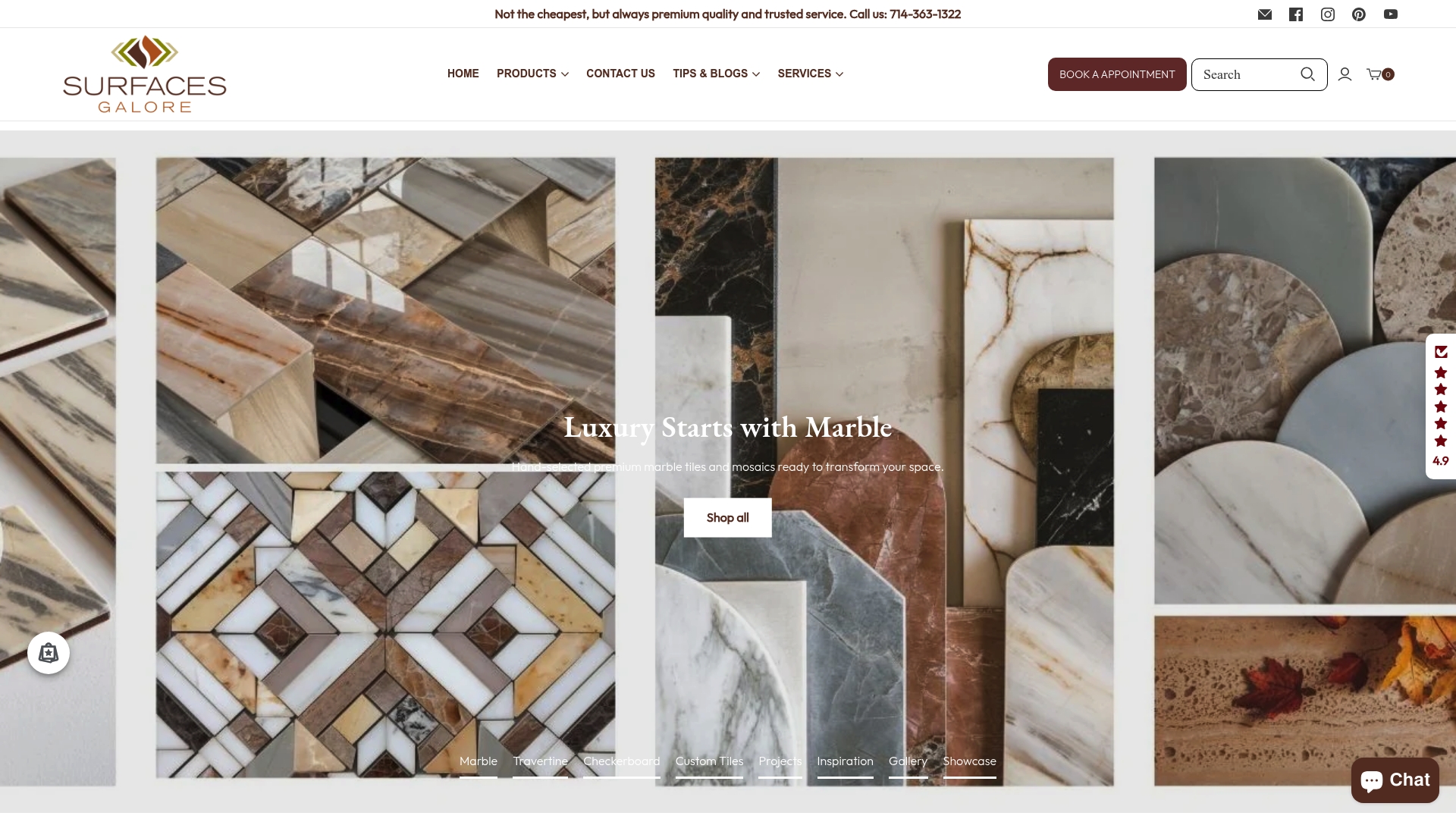
Browse marble, travertine and limestone by species, or go straight to marble tiles, marble mosaic, travertine tiles and more to compare finishes side by side. Request maintenance documentation alongside your sample order so your installer has everything needed to keep the finish performing as specified.
Sources
- Chapter 3: Floor and Ground Surfaces — U.S. Access Board
- Sealing natural stone — Natural Stone Institute
- Preservation Brief 40: Preserving Historic Ceramic Tile Floors — National Park Service
FAQ
Does sealing natural stone make it slip resistant?
No. Sealing improves stain resistance by repelling liquids from the stone’s pores, but it does not add traction. The Natural Stone Institute confirms sealers are not a substitute for choosing a finish suited to wet conditions.
Which natural stone finish is best for a shower floor?
Honed or brushed finishes on marble, travertine or limestone are common choices for shower floors because they balance grip with easier cleaning than heavily textured options. A wet sample test before ordering confirms the finish performs the way you expect underfoot.
Is there an official slip resistance rating for stone floors?
Accessible design standards from the U.S. Access Board require floor and ground surfaces to be slip resistant, but they do not set one universal coefficient-of-friction number. Specification should rely on documented finish choices and maintenance rather than a single test score.
Can cleaning products make a stone floor more slippery over time?
Yes. Acidic cleaners can etch calcareous stones like marble and limestone, and abrasive powders can smooth out the microtexture that provides grip. The Natural Stone Institute’s care guidance recommends neutral cleaners and routine grit control with entrance mats instead.
Do I need to reseal a textured stone floor regularly?
Porous stones like travertine and limestone in wet areas often need periodic resealing, while dense, low-absorption stones may not need sealing at all. The right interval depends on traffic and exposure, so check your supplier’s datasheet rather than following a fixed calendar.
Recommended
- Natural Stone Finishes Explained: A Guide for Homeowners
- What Is Slip Resistance? A Flooring Safety Guide
- Marble Shower Floor Slip Resistance: Safe and Stylish Choices
- How to Prevent Stains on Natural Stone Tile
This article is provided for general informational guidance only. Natural stone varies in color, veining, texture and performance. For installation, sealing, cleaning and maintenance, follow the product manufacturer’s instructions and consult a qualified installer or stone-care professional. Always test cleaning and sealing products in an inconspicuous area first. Surfaces Galore is not responsible for damage, discoloration, etching, staining, installation issues or other problems resulting from
Leave a comment