
Calacatta 12x24 tile: A design and buying guide for luxurious marble spaces

Key Takeaways
Calacatta 12x24 tile brings natural movement, generous scale, and a refined marble finish to residential and commercial interiors.
- Calacatta Gold marble pairs a white background with dramatic gold veining.
- The 12-by-24 format can make floors and walls feel more expansive.
- Polished and honed finishes create distinctly different moods.
- Natural variation makes every marble installation individual.
- Careful measuring, extra material, and professional installation support a better result.
What makes Calacatta 12x24 tile a premium design choice
Calacatta marble has a presence that is difficult to reproduce. Its pale field and expressive veining give a room a sense of movement without requiring a complicated pattern. In the 12-by-24 format, that character has enough surface area to read clearly across a floor or wall.
The distinctive look of Calacatta Gold marble
Calacatta Gold marble is known for a striking white background crossed by dramatic gold veining. Depending on the piece, softer gray movement may appear alongside the warmer tones. The result feels elegant but not overly formal, making it suitable for classic interiors as well as cleaner contemporary rooms.
For a closer look at a coordinating smaller format, the Calacatta Gold 4x12 tile offers the same kind of Italian marble character for backsplashes, feature walls, and detailed borders. Used selectively, a smaller tile can frame a larger field installation beautifully.
How the 12-by-24 format creates a spacious appearance
A 12-by-24 tile covers more area per piece than a small-format tile, so the eye encounters fewer grout lines. That visual continuity can help an entryway, kitchen, or open living area feel calmer and more generous. The rectangular shape also gives designers flexibility: the long side can run with the length of a hallway or across a room to shape its visual rhythm.
The format is substantial without becoming overwhelming. It works particularly well when the goal is a quiet floor that lets furniture, lighting, and architectural details share attention with the marble.
Natural veining, color variation, and stone authenticity
Natural marble is not meant to look identical from tile to tile. Veining can change in direction, density, and tone, while the white background may show subtle shifts. These differences are part of the stone’s authenticity and should be reviewed before installation so the layout feels intentional.
A useful approach is to dry-fit several pieces first. Arrange the most prominent veins where they will be appreciated, and avoid treating variation as a defect. Natural variation creates character that becomes part of the room’s identity.
Why marble adds lasting design and investment value
Marble has remained a favored interior material because it combines visual distinction with a durable, long-lasting surface. It can add elegance to floors, walls, backsplashes, and bathrooms while remaining adaptable to changing décor. A well-planned installation is less tied to a passing color trend than many decorative finishes.
The value is also experiential. A cool, smooth stone surface and authentic veining give a home a tactile quality that printed patterns cannot provide. That enduring appeal is one reason premium marble continues to be considered for high-end residential and commercial interiors.
Where to use Calacatta 12x24 tile in your home
Calacatta 12x24 tile is versatile enough for broad surfaces and refined enough for focal areas. Its scale can establish continuity between adjoining spaces, while its veining adds detail when viewed up close. Before choosing an application, consider traffic, moisture, lighting, and how much visual movement the room can comfortably hold.

The same material can feel grand in an entryway, bright in a bathroom, or intimate behind a range. The surrounding cabinetry, grout, fixtures, and lighting will determine which quality comes forward.
Open-concept floors and grand entryways
Large open rooms benefit from a flooring material that does not fragment the sightline. A 12-by-24 layout can guide movement through an entry, dining area, and living space while the veining keeps the floor from feeling flat. In a grand foyer, the marble can serve as the primary decorative feature without relying on a separate inlay.
Because marble floor tiles are suited to high-traffic areas according to the collection information, they are a natural option to consider for busy interiors. The installation should still be planned around the specific room conditions and expected use.
Kitchen backsplashes and feature walls
Behind a kitchen counter, Calacatta Gold marble brings brightness and a tailored finish. A 12-by-24 tile can create a composed backsplash with fewer interruptions, especially when the veining is arranged thoughtfully. On a feature wall, the format gives the stone enough room to feel architectural rather than merely decorative.
For a more detailed accent, a Calacatta Gold Mini Brick can introduce a smaller-scale rhythm around niches, shelves, or selected backsplash zones. Mixing formats works best when one tile remains visually dominant.
Bathroom floors, walls, and shower surrounds
In bathrooms, the white ground of Calacatta marble can make the room feel fresh and luminous. The 12-by-24 size is useful for walls and shower surrounds because it limits the number of joints across broad vertical surfaces. On floors, the finish and installation plan deserve particular attention, especially where water may be present.
Mosaics can complement the field tile on shower floors or smaller areas. The collection includes marble mosaics in several patterns and finishes, allowing a designer to shift scale without abandoning the stone palette.
Fireplace surrounds and statement accent areas
A fireplace surround is an ideal place to let dramatic veining take the lead. Bookmatching may be considered for carefully selected slabs, while 12-by-24 tile offers a more modular approach with a clear, orderly geometry. The same idea can work around a bar, recessed wall, or built-in shelving.
Use statement marble selectively. When every surface competes for attention, the room can lose its sense of calm. One strong accent, supported by quieter finishes elsewhere, usually has greater impact.
Choosing the right finish for your project
Finish changes how Calacatta marble responds to light, touch, and daily use. Polished stone feels bright and formal, while honed stone has a quieter, more tactile appearance. The right decision depends not only on style but also on the surface’s location and maintenance expectations.
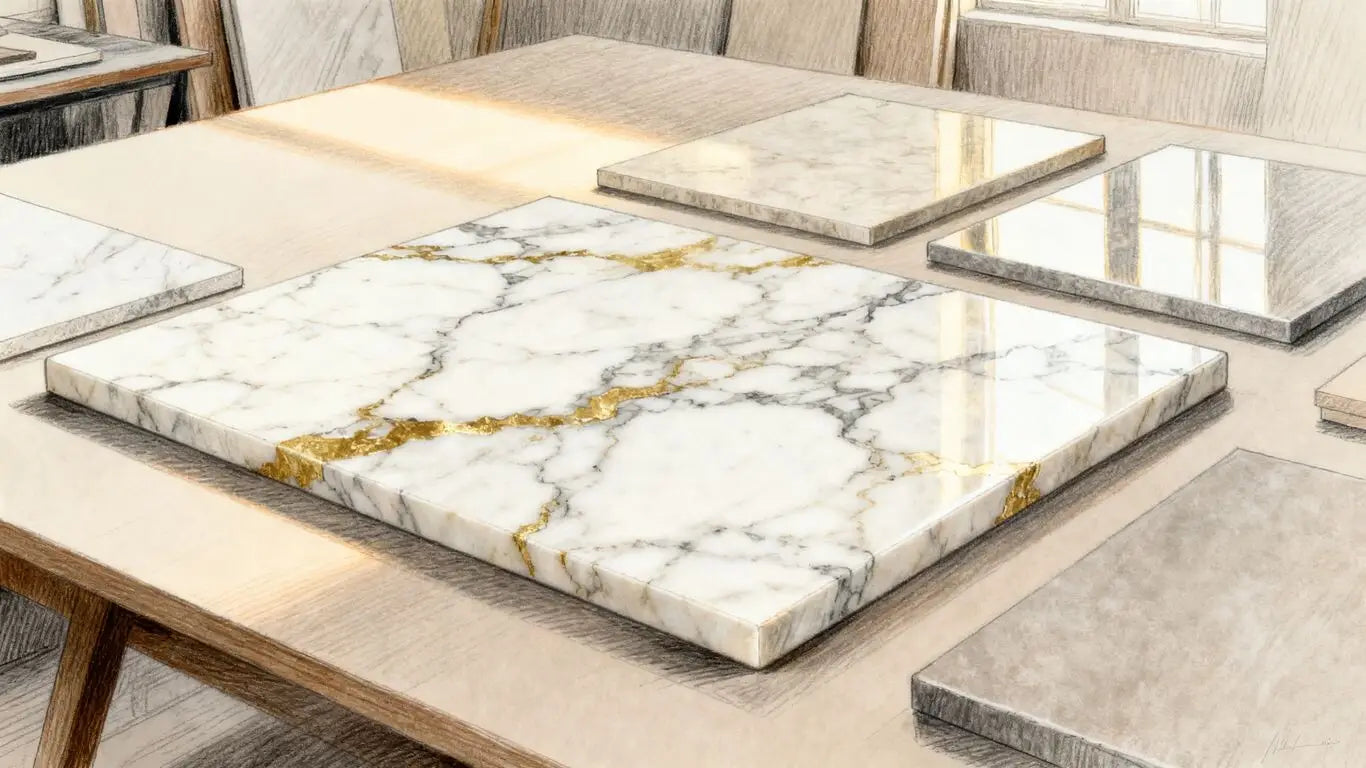
Samples are especially useful because screens cannot fully convey reflection, texture, or the relationship between the white field and the veining. Compare them beside cabinetry, paint, hardware, and natural light before ordering a full quantity.
Polished marble for a reflective, formal aesthetic
Polished marble has a smooth, reflective surface that can amplify daylight and artificial light. It suits formal entryways, elegant walls, fireplace surrounds, and statement backsplashes. Gold and gray veining may appear especially vivid against the sheen.
The finish also reveals surface marks and etching more readily, so it rewards a considered cleaning routine. For a larger polished format, the Calacatta Gold 18x36 tile provides another scale reference when comparing the visual effect of expansive marble surfaces.
Honed marble for a softer, understated appearance
Honed marble has a matte or low-sheen appearance that feels relaxed and contemporary. It can soften the formality of Calacatta Gold while preserving the depth of genuine stone. This finish is often appealing when the goal is an inviting bathroom, understated kitchen, or quietly luxurious floor.
Honing does not remove natural variation. Instead, it lets the veining sit within a gentler visual field. Sample pieces should still be viewed under the lighting used in the finished room.
Matching finish to floors, walls, and wet areas
A wall, backsplash, floor, and shower surround may not need the same finish. Walls can accommodate a more reflective surface when glare is controlled, while floors call for closer attention to traction and everyday wear. Wet areas require a product and installation approach appropriate to moisture exposure.
Use this comparison as a starting point rather than a substitute for project-specific guidance:
| Application | Finish direction | Design effect | Planning focus |
|---|---|---|---|
| Feature wall | Polished or honed | High contrast or quiet depth | Lighting and vein placement |
| Kitchen backsplash | Polished or honed | Bright focal surface | Cleaning and splash exposure |
| Bathroom wall | Polished or honed | Continuous, luminous backdrop | Moisture and joint planning |
| Interior floor | Often honed | Softer visual flow | Traction, traffic, and maintenance |
The finish should support the way the room is used. A beautiful choice becomes a better choice when it also fits the practical demands of the surface.
Balancing slip considerations with the desired visual effect
Slip considerations should be part of the selection conversation wherever water, bare feet, or frequent spills are expected. A highly reflective finish may create the desired formal mood, but a less glossy surface can feel more restrained and appropriate underfoot. Ask the installer or stone professional to assess the application rather than assuming one finish works everywhere.
Texture, grout, slope, drainage, and regular maintenance also affect how a wet area performs. Visual appeal matters, but it should be evaluated alongside the conditions of the room.
How to plan a Calacatta 12x24 tile layout
A successful layout begins before mortar is spread. Tile direction, vein placement, grout tone, and cut locations all influence whether the finished surface feels balanced. Planning is especially valuable with natural marble, where each carton can contain meaningful variation.
Straight-set layouts for a clean contemporary look
A straight-set layout places the tiles in aligned rows and columns. It gives 12-by-24 marble a crisp, architectural character and makes the long rectangular format easy to read. This approach is often effective in modern rooms where cabinetry and fixtures already provide strong lines.
Begin from a visible reference point rather than automatically starting at the first wall. A centered layout or carefully placed full tile can prevent narrow slivers at the edges.
Offset patterns and how they affect visual flow
An offset pattern shifts each row in relation to the next. It can create a more relaxed rhythm and draw the eye along the direction of the installation. The degree of offset should be discussed with the installer, particularly when veining and tile flatness could affect the appearance of adjacent joints.
Direction matters, too. Running the long side along a hallway may elongate it, while turning the layout across a broad room can make the width feel more prominent. Mock up both options when the decision is not obvious.
Grout color, joint width, and veining emphasis
Grout is part of the visual composition. A close color can quiet the grid and allow the marble to read as a continuous field, while stronger contrast makes each rectangle more apparent. Joint width should follow the tile and installation requirements rather than being chosen for appearance alone.
Keep the surrounding palette in mind. Warm white or soft gray grout may support gold and gray movement, but the final choice should be made beside an actual sample. Small differences become noticeable across a large floor.
Measuring the installation area and planning for cuts
Measure each room separately, recording length, width, alcoves, doorways, columns, and permanent fixtures. Then sketch the proposed starting lines and note where cuts will fall. This simple drawing can reveal awkward edges before material is ordered.
For a detailed reference on material inspection, dry-fitting, mortar application, grouting, and sealing, review the 12x24 Calacatta installation guide. The guide is useful for organizing questions with an installer, even when the installation itself is assigned to a professional.
Ordering extra material for natural-stone variation and waste
Extra material accounts for cuts, breakage, future repairs, and the natural selection process required to create a pleasing layout. The amount depends on room shape, pattern, installer experience, and how much vein matching is desired. It is better to calculate this before ordering than to discover a shortage midway through the work.
A practical planning sequence is:
- Measure the net installation area in square feet.
- Add an allowance for cuts and the selected layout pattern.
- Review the stone variation and reserve preferred pieces for focal locations.
- Confirm carton quantities, nominal sizing, and availability before purchase.
This process gives the installer room to work with the stone rather than forcing every piece into a predetermined position. It also reduces the risk of a visible mismatch if additional material is needed later.
Installation and care considerations for Calacatta marble
Natural marble deserves careful preparation and a gentle maintenance routine. The finished appearance depends on more than the tile itself; substrate conditions, setting materials, joint treatment, sealing, and cleaning all contribute. Plan these details early, particularly for a large or highly visible installation.
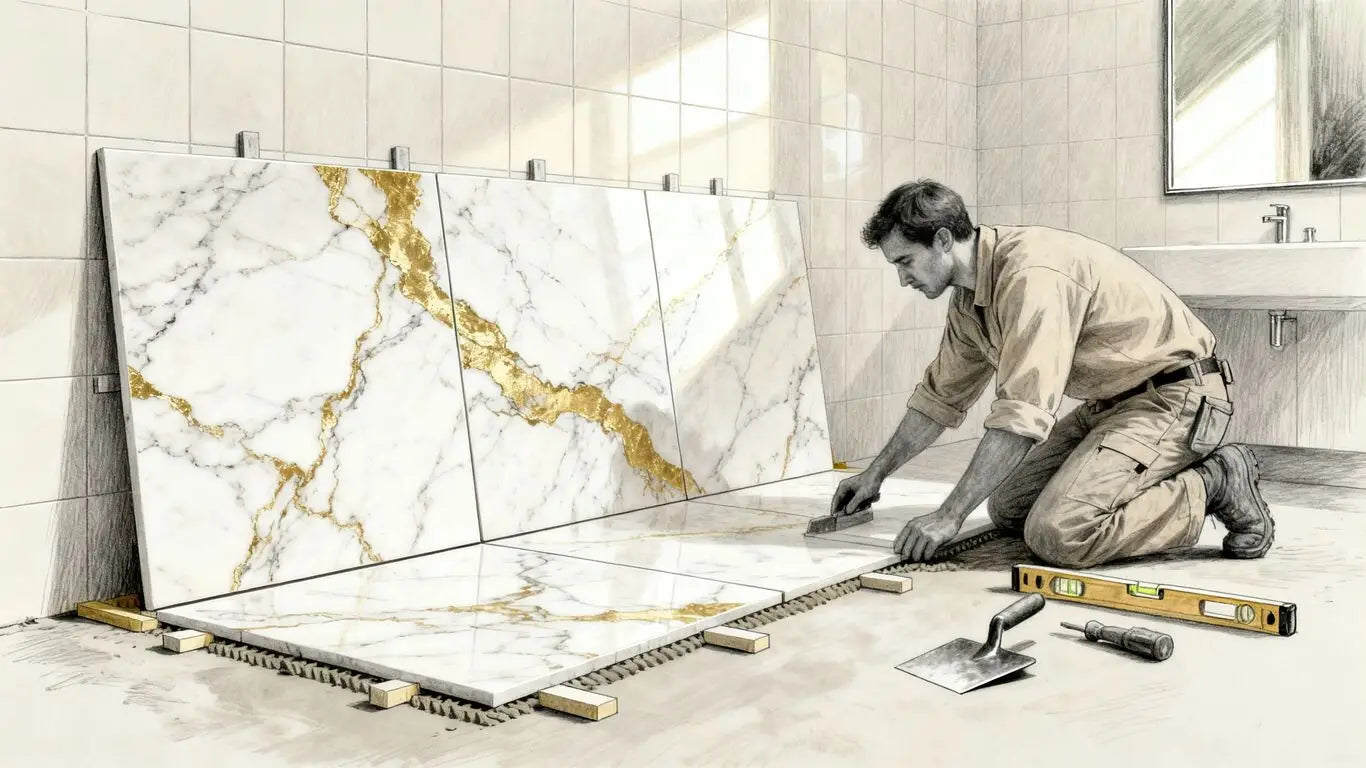
The Calacatta Gold installation details provide a useful companion reference for inspection, substrate preparation, mortar, grouting, cutting, sealing, and cleaning. Always adapt general guidance to the actual site and follow the recommendations of qualified installation professionals.
Preparing the substrate before installation
The substrate should be clean, sound, appropriately flat, and ready to receive natural stone. Dust, movement, moisture, or uneven areas can affect bond and finished alignment. Addressing those conditions before setting tile is far easier than correcting them after the marble is installed.
Dry-fitting is worthwhile. It helps reveal variation, confirms the layout, and identifies pieces that may be better placed in less prominent areas. Take photographs of the arrangement if the installation will be moved in stages.
Selecting appropriate setting materials and grout
Setting materials should be selected for natural stone and the conditions of the installation. The installer should consider the substrate, room, tile thickness, moisture exposure, and curing requirements. Grout color and joint width should be finalized with the layout rather than treated as an afterthought.
Cutting should be performed with equipment suited to marble. Clean edges matter at doorways, corners, outlets, and trim transitions, where small imperfections are easy to see.
Sealing marble and maintaining its appearance
Marble may require sealing to help protect its appearance, with timing determined by the stone, finish, product, and installation conditions. Sealing does not make marble immune to staining or etching, so spills should still be addressed promptly. Ask for product-specific recommendations and follow the sealer manufacturer’s instructions.
Maintenance is most successful when it is consistent rather than aggressive. A simple routine preserves the surface more reliably than occasional harsh treatment.
Cleaning routines and products to avoid
Use a soft cloth or mop and a cleaner intended for natural stone. Wipe away spills before they remain on the surface, especially acidic or strongly pigmented substances. Avoid abrasive powders, rough scrubbers, and acidic cleaners that may dull or etch marble.
For floors, frequent dust removal helps prevent grit from being tracked across the finish. In showers and bathrooms, gentle drying after use can also reduce lingering moisture and residue.
Understanding nominal sizing and installation responsibility
Tile sizes are nominal, meaning the stated dimension is a reference rather than a promise of an exact measured size. Confirm actual material dimensions and account for them in the layout. This is particularly important around transitions, trim, and tight corners.
The customer remains responsible for product selection, installation, and associated outcomes under the supplier’s stated disclaimer. Inspect material before installation, report concerns promptly, and use a qualified installer when the project requires specialized knowledge.
How to source Calacatta 12x24 tile from Surfaces Galore
Sourcing natural stone is part design decision and part project coordination. Availability, finish, quantity, shipping, and complementary pieces should be reviewed together. For homeowners, designers, and architects who want to buy marble tiles online USA-wide, a clear ordering conversation can prevent expensive surprises.
Reviewing current marble tile availability and finish options
Begin by checking current stock and confirming whether the desired Calacatta Gold tile is polished, honed, or offered in another finish. The 12x24 Calacatta Gold marble tile is a useful reference for comparing format, finish, and coordinating products, including mosaics and trim pieces.
Because natural stone varies, ask how available pieces compare in background tone and veining. A sample or current-stock review can help establish expectations before a full order is placed.
Requesting project quantities, quotes, and bulk pricing
Provide the room measurements, intended application, preferred finish, layout, and estimated waste allowance when requesting a quote. This gives the sales team enough context to discuss quantities and possible bulk pricing. It also helps distinguish a small backsplash order from a multi-room or commercial project.
A thoughtful quote should account for field tile, transitions, mosaics, trim, shipping, and any extra material recommended for the layout. If you are ready to compare quantities, you can request project pricing with those details prepared.
Coordinating nationwide shipping from Anaheim, California
Surfaces Galore is an Anaheim, California-based direct importer and nationwide supplier of premium natural stone. Orders can be coordinated for customers across the United States, including homeowners, interior designers, and architects. Confirm lead times, delivery access, packaging, and inspection procedures before shipment.
For larger projects, schedule delivery with the installation calendar in mind. Inspect cartons when they arrive, retain packaging until the material has been reviewed, and document any shipping issue according to the supplier’s instructions.
Comparing tiles with complementary marble mosaics and moldings
A broad 12-by-24 field tile becomes more polished when its transitions are resolved. Marble mosaics can define a shower floor or backsplash niche, while moldings and liners can finish an edge or frame a feature. The goal is coordination, not an assortment of unrelated patterns.
The Calacatta Gold 2x2 Mosaic can provide a smaller-scale companion for accent areas. Compare samples together so the white background, veining, and finish feel connected across formats.
Contacting the Surfaces Galore team for design guidance and ordering support
A direct conversation is useful when the project has unusual dimensions, several rooms, or a specific vein-selection goal. Surfaces Galore’s team can discuss current collection options, quantities, quotes, and ordering support within the documented scope of its natural-stone business. Have floor plans, photographs, finish preferences, and delivery details ready to make the conversation efficient.
As a broader reminder, imported materials benefit from realistic lead-time planning, a point also covered in this bathroom renovation planning guide. Keep the final decisions grounded in the actual marble stock and installation schedule.
Ready to Plan Your Marble Project
Bring your measurements, finish preference, and design references to Surfaces Galore to review current Calacatta marble options, request a quote, and arrange the material needed for your project.
Conclusion
Calacatta 12x24 tile offers a graceful balance of scale, movement, and authentic natural-stone character. With the right finish, a carefully planned layout, suitable preparation, and consistent care, it can give floors, walls, bathrooms, kitchens, and focal areas a lasting sense of refinement.
Frequently Asked Questions
Is Calacatta 12x24 tile suitable for floors?
It can be suitable for interior floors when the specific material, finish, site conditions, and installation method are appropriate. Review traffic, moisture, traction, and maintenance requirements before selecting it.
What is the difference between polished and honed Calacatta marble?
Polished marble has a reflective, glossy appearance, while honed marble has a softer matte surface. Polished stone feels more formal; honed stone usually creates a quieter, understated mood.
Does natural Calacatta marble vary from tile to tile?
Yes. Natural marble can vary in background tone, vein direction, density, and color. Reviewing and arranging pieces before installation helps create a balanced composition.
What grout color works with Calacatta marble?
A soft white, warm white, or light gray grout may coordinate well, depending on the marble’s undertones. Compare grout samples beside the actual tile before making a final choice.
How much extra tile should be ordered?
The allowance depends on room shape, cuts, layout, installation skill, and the amount of natural variation being selected. Measure carefully and discuss the waste factor with the installer before ordering.
Does marble need to be sealed?
Many marble installations benefit from sealing, but the timing and product depend on the stone, finish, and site. Follow the sealer manufacturer’s instructions and remember that sealing does not prevent every stain or etch.
How should Calacatta marble be cleaned?
Use a soft cloth or mop with a cleaner made for natural stone, and wipe spills promptly. Avoid acidic cleaners, abrasive powders, and rough tools that may damage or dull the surface.

Leave a comment