

Porcelain marble look tile vs. real marble: Choosing a timeless natural stone finish

Key Takeaways
Choosing between a porcelain marble look tile and authentic marble comes down to the character you want, the conditions of the room, and the care you are prepared to provide.
- Real marble offers natural movement, one-of-a-kind veining, and enduring architectural appeal.
- A printed marble look can provide more visual consistency across a large installation.
- Carrara, Statuary, Crema Marfil, Nero Marquina, and Ming Green each create a different atmosphere.
- Finish, format, layout, sealing, and installation quality all affect the final result.
- Buying from a direct importer can make premium natural stone more accessible for renovations and larger projects.
Understanding the marble look and natural stone difference
The phrase porcelain marble look tile usually describes a manufactured surface printed with a marble-inspired pattern. Authentic marble, by contrast, is quarried natural stone shaped into tiles or slabs. Both can create an elegant interior, but they do so in different ways. The better choice depends less on a simple ranking and more on whether your priorities are visual control, natural character, maintenance, or long-term material value.
How printed patterns compare with authentic veining
A printed marble pattern is designed to repeat a visual effect across many pieces. That can be useful when a project requires a predictable background, especially across a broad floor or a series of walls. Authentic marble has mineral veining formed naturally within the stone, so its lines may be delicate, bold, cloudy, or dramatically directional. A natural surface has a depth and variation that is difficult to reproduce exactly.
Marble-look surfaces can still be attractive, particularly when their tonal range feels restrained and convincing. For readers comparing styles, this marble-look tile overview explains how manufactured options can imitate natural colors, formats, and surface details. The distinction is simple: one offers controlled repetition, while the other offers geological individuality.
Why every real marble tile is unique
No two authentic marble tiles are perfectly identical. Even tiles cut from the same block can differ in background tone, vein direction, and small mineral markings. This is not a flaw to hide; it is part of the material’s identity. Before installation, a skilled tile setter typically lays out pieces so the movement feels intentional rather than accidental.
That individuality is especially noticeable in expressive stones such as Arabescato, Calacatta Viola, and darker marbles with contrasting veins. It also means a sample should be treated as a guide, not an exact promise of every tile in the order. A well-planned installation allows the natural differences to become part of the composition.
The design value of natural color variation
Natural variation gives a room a quieter kind of richness. Soft shifts in white, gray, beige, green, or charcoal can make a surface feel layered without adding another pattern. In a minimalist bathroom, subtle movement may keep a clean palette from appearing flat. In a foyer or fireplace surround, stronger veining can act almost like artwork.
This is where natural variation adds character rather than visual noise. The designer can select a restrained collection for calm continuity or embrace a more dramatic lot for a statement installation. Either way, the stone feels connected to the architecture because the variation is inherent to the material.
When visual consistency matters most
Consistency can be the deciding factor in busy commercial corridors, expansive kitchens, or projects with a tightly controlled color plan. A manufactured marble look may make it easier to predict the overall pattern from one area to the next. Authentic marble can also be coordinated carefully, but it requires viewing available lots, sorting pieces, and accepting some variation.
A practical comparison looks like this:
| Priority | Manufactured marble look | Authentic marble |
|---|---|---|
| Pattern control | More repeatable | Naturally varied |
| Surface character | Printed or engineered appearance | Mineral depth and unique movement |
| Design process | Easier to predict remotely | Benefits from lot review and layout planning |
| Long-term care | Often selected for simpler upkeep | Requires sealing and stone-appropriate cleaning |
The table is not a verdict. It is a planning tool. If the room needs absolute pattern uniformity, consistency may carry more weight; if the room is meant to feel collected and architectural, real stone is often the more compelling choice.
Why real marble remains a premium choice
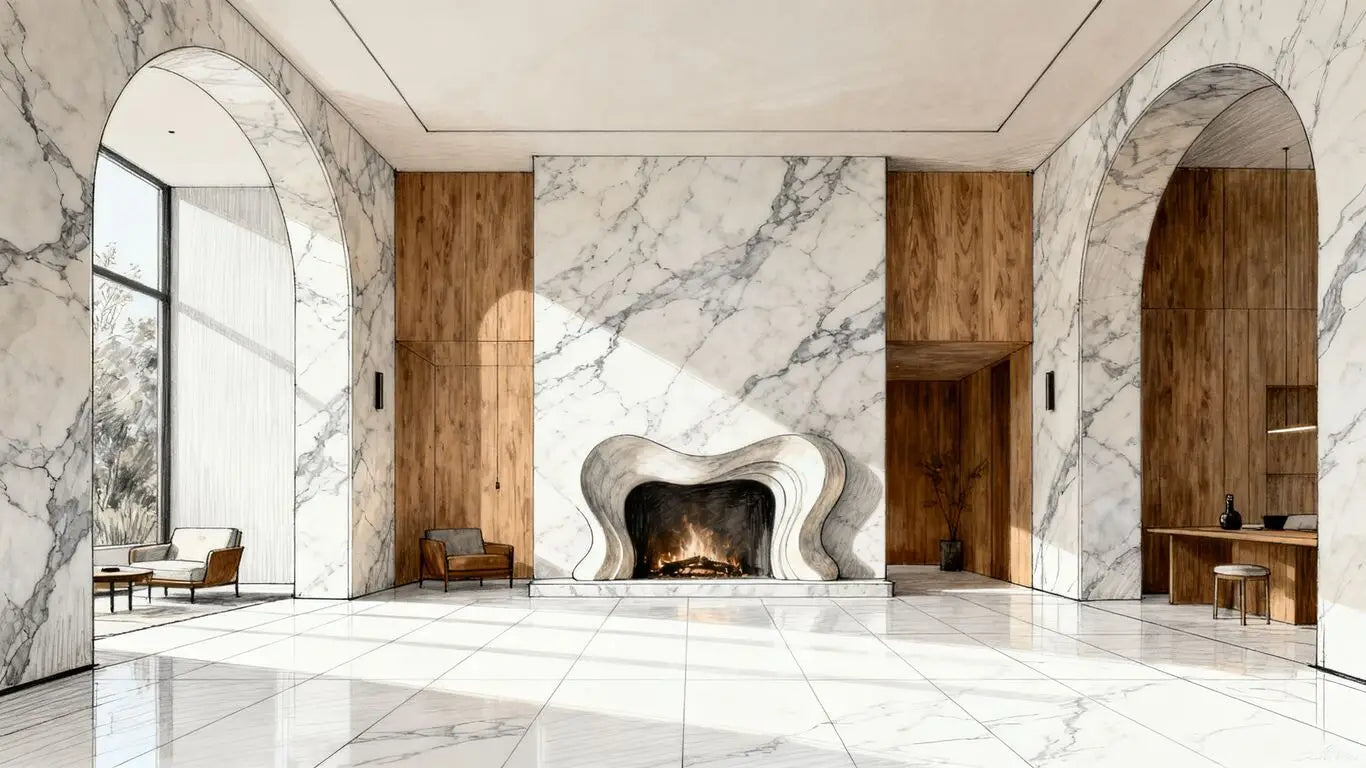
Authentic marble continues to hold a special place in residential and commercial design because it combines visual presence with a sense of permanence. It is not merely a neutral surface. Its cool touch, mineral movement, and changing response to light give a room a material identity. With appropriate selection and care, marble can remain relevant through many changes in décor.
Timeless appeal and architectural character
Marble has been used in celebrated interiors for centuries, yet it does not belong to one period or style. A polished white marble can feel bright and contemporary, while a honed beige stone may suggest an older European residence. Dark marble creates a more intimate, dramatic mood. The material’s versatility comes from its natural color families and the way each finish alters the light.
For a classic project, Carrara White Italian Marble offers a useful reference point: a white background with subtle gray movement that works across floors, walls, and backsplashes. The look is refined without being overly formal, which helps explain why Carrara remains a dependable choice for renovations.
Durability for floors, walls, and feature areas
Marble is a durable natural stone suitable for many interior surfaces when the substrate, installation, and finish are properly considered. It can serve on floors, walls, shower areas, backsplashes, fireplace surrounds, and feature walls. The right stone and finish should be matched to the room rather than selected only for its color.
For example, polished stone brings reflection and formality, while honed stone presents a softer, more understated surface. High-use areas deserve careful attention to traffic, moisture, grout, and cleaning habits. Durability is not just a property of the tile; it is the result of a complete installation system.
How natural stone can enhance property value
Natural stone can contribute to a home’s perceived quality because it feels substantial, distinctive, and difficult to duplicate. A carefully designed marble entry, bathroom, or fireplace may remain attractive long after short-lived trends have passed. That does not make a particular resale result automatic, but it can strengthen the overall impression of craftsmanship and finish.
A single client may value marble for its beauty, another for its longevity, and a third for the sense of permanence it brings to a renovation. The strongest investment is usually a stone that suits the architecture and is installed with restraint. Overly busy selections can date a space, while a balanced natural palette tends to age more gracefully.
Matching marble to luxury residential and commercial spaces
Real marble works in luxury residences, boutique hospitality settings, restaurants, galleries, and refined office interiors. The scale of the application matters. A dramatic collection can anchor a reception desk or feature wall, while a calmer stone can carry through a bathroom or hallway without overwhelming it.
For a dark, atmospheric direction, Pietra Notte offers charcoal-gray tones with white and soft silver veining and is described as suitable for residential and commercial spaces. In a different register, a classic checkerboard installation can bring structure to a foyer or lobby. The material should support the room’s proportions, lighting, and surrounding finishes.
Selecting the right marble color and collection
Color is often the first decision, but it should be made alongside lighting, cabinetry, metal finishes, and the scale of the installation. A small sample can look different beside warm wood than beside cool gray paint. It is sensible to view samples in the actual room, preferably at different times of day. Natural stone changes subtly as daylight moves across it.
Bright white options such as Carrara and Statuary
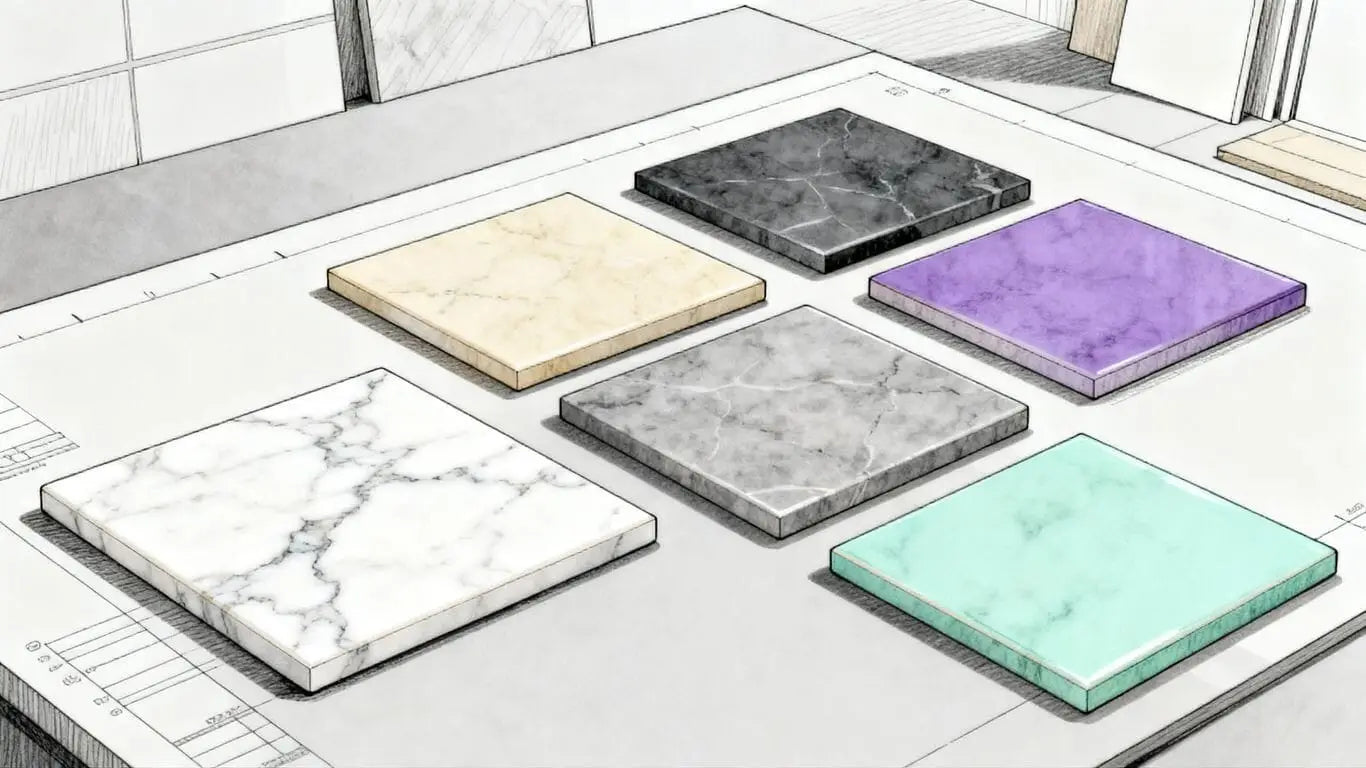
Carrara is known for a white background with subtle gray veining, giving it a calm and adaptable appearance. Statuary, also called Statuario in some collections, is generally more dramatic, with a pristine white background and bolder gray veining. Both can create a bright foundation, but Statuary is more likely to become the visual focus.
White marble suits bathrooms, kitchens, shower walls, floors, and backsplashes. If a room already contains strong cabinetry or patterned furnishings, Carrara may provide balance. If the architecture needs a central moment, Statuary’s stronger movement can provide it without relying on added ornament.
Warm beige tones including Crema Marfil and Botticino
Beige marble adds warmth where pure white may feel too cool. Crema Marfil is associated with soft beige tones and subtle veining, while Botticino and White Pearl/Botticino selections offer creamy backgrounds with delicate movement. These stones pair naturally with walnut, oak, brushed brass, and earthy textiles.
Warm neutrals are especially useful in living areas, entryways, traditional bathrooms, and transitional kitchens. They can also make a large floor feel welcoming rather than stark. For a broader view of available natural stone styles, this direct-importer marble collection shows how classic neutrals can sit alongside more unusual color directions.
Dramatic black and gray choices such as Nero Marquina and Bardiglio
Nero Marquina is recognized for a deep black background and distinctive white veining. It can create a sharp contrast in a white bathroom, a sophisticated backsplash, or a fireplace surround. Bardiglio and other gray marbles offer a softer alternative, with depth that feels modern but not severe.
Dark stone benefits from thoughtful lighting and grout selection. It may be most effective on a feature wall, powder room floor, shower wall, or carefully framed entry. For a practical format comparison, Nero Marquina Black Marble illustrates how polished and honed options can support different moods in the same color family.
Statement stones including Calacatta Viola and Ming Green
Statement marble rewards a disciplined setting. Calacatta Viola is defined by creamy white backgrounds with violet, plum, burgundy, and wine-colored movement, creating a distinctly expressive surface. Ming Green brings a refreshing mint-green tone with delicate veining and a calmer, nature-inspired atmosphere.
These stones can serve as a vanity wall, niche, backsplash, fireplace surround, or small but memorable floor installation. Because the stone itself carries visual energy, surrounding materials should usually be quieter. A statement collection does not need to cover every surface to have a strong effect.
Choosing finishes, sizes, and installation patterns
After color comes the practical design language of the tile. Finish changes how light behaves, size changes how spacious a room feels, and pattern changes the rhythm of the installation. These decisions should be made together. A glossy small mosaic and a large honed field tile may use the same stone but create entirely different rooms.
Polished, honed, and tumbled marble finishes
Polished marble has a reflective surface that deepens color and highlights veining. It can feel formal and luminous, particularly on walls, backsplashes, and feature areas. Honed marble has a matte or low-sheen appearance that feels softer underfoot and can be a more relaxed choice for many floors.
Tumbled marble has a more aged, softened appearance, with edges and surface texture that suit rustic, Mediterranean, and traditionally inspired interiors. Finish selection should account for the room’s light, the desired atmosphere, and slip considerations. A finish is not simply decorative; it changes the practical experience of the surface.
Large-format tiles for a spacious appearance
Large-format tiles reduce the number of grout lines and can make a room appear calmer and more expansive. They are especially effective in open living spaces, large bathrooms, and feature walls where uninterrupted movement can be appreciated. However, larger pieces demand careful substrate preparation and precise handling.
The room should determine the format. A large tile forced into a small, irregular area may create awkward cuts, while a smaller format can bring proportion and texture. Before ordering, confirm measurements, layout, waste, and the installer’s ability to work with the selected size.
Checkerboard, herringbone, and basket weave layouts
Pattern brings structure to marble without requiring an elaborate color palette. Checkerboard layouts create a strong architectural grid, herringbone adds directional movement, and basket weave mosaics introduce a more intricate rhythm. The simplest patterns often look the most luxurious when the stone colors and grout are carefully balanced.
A checkerboard marble floor can work beautifully in foyers, dining rooms, bathrooms, and lobbies. Herringbone suits backsplashes and narrow walls where directional lines can add energy. Basket weave is particularly effective when the project needs detail at a smaller scale. Patterns should be drawn before installation so the edges and focal points feel deliberate.
Using mosaics, moldings, and borders for detail
Mosaics help transition between surfaces, define shower niches, or create a concentrated accent behind a range. Marble moldings, base pieces, borders, and liners can finish an installation with a tailored edge. These details are most successful when they repeat a tone already present in the field tile.
A useful ordering plan includes the main tile, transition pieces, trim, and a reasonable allowance for cuts. A direct importer may have multiple related formats available, but current stock can change. Confirm the complete package before the installation begins rather than improvising the border at the last minute.
Best applications for marble tile
Marble can move through a home or commercial interior with surprising ease. It may be quiet in one room and dramatic in another, depending on the color, finish, and amount used. The best application is one that respects both the stone and the demands of the space. Consider moisture, traffic, light, cleaning, and the visual relationship between adjacent rooms.
Marble bathroom floors and shower walls
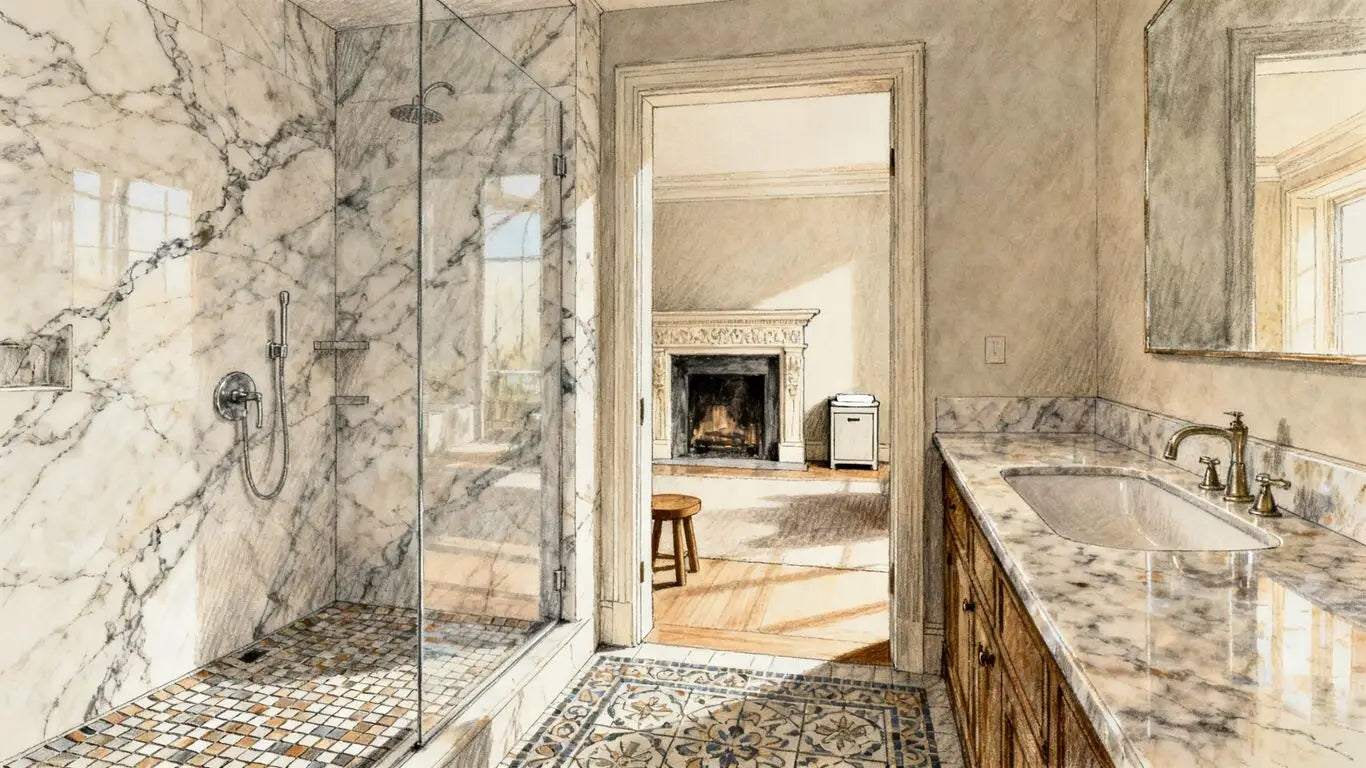
Bathrooms are natural settings for marble because the material can make a compact room feel composed and luxurious. White marble brightens a shower, while gray or green marble can create a calmer retreat. Mosaics can provide scale and traction on a shower floor, and larger tiles can make the walls feel more continuous.
Use a qualified installer, pay close attention to waterproofing, and choose a finish appropriate to the surface. A shower wall and a shower floor do not face identical conditions. The stone should be selected with the complete wet-area design in mind, including grout joints, niches, thresholds, and drainage.
Kitchen backsplashes and accent surfaces
A marble backsplash brings natural movement close to eye level, where the veining can be appreciated. Carrara offers a restrained background for colorful cabinetry, while Nero Marquina or a green marble can create a more dramatic focal point. Mosaics and trim can frame a range wall or connect the backsplash to an adjacent floor.
Kitchens require realistic expectations. Marble is beautiful, but spills, heat, abrasion, and cleaning products all matter. Use appropriate sealers and care practices, and consider where the most vulnerable areas are before deciding whether to use the stone throughout or as a focused accent.
Entryways, foyers, and living spaces
An entryway is an excellent place to let natural stone establish the tone of the home. A checkerboard pattern can feel formal and historic, while a quiet large-format Carrara installation creates a clean, contemporary welcome. In living spaces, marble floors and hearth details can connect architecture with furniture and lighting.
Traffic should guide the finish and layout. A busy family entry needs a practical maintenance plan, not only a beautiful sample. It is also wise to order extra material for future repairs when the collection and lot are available.
Fireplaces, feature walls, and commercial interiors
Feature applications allow expressive stone to be used with control. A marble fireplace surround, reception wall, shower niche, or powder room backsplash can deliver a memorable focal point without covering every surface. Calacatta Viola, Pietra Notte, and Nero Marquina are examples of stones that can carry a strong visual role.
Commercial interiors benefit from the same discipline. Hotel lobbies, boutique retail spaces, restaurants, and offices can use marble to create a durable sense of arrival, provided the selected finish and installation suit the traffic. A well-planned feature often has more impact than an overly busy material scheme.
Planning for performance and long-term care
Natural stone rewards preparation. Before ordering, review the room’s traffic, moisture, lighting, substrate, and cleaning routine. Marble is not difficult to live with, but it should not be treated like an entirely maintenance-free surface. A thoughtful plan protects both the appearance and the investment.
Sealing requirements for authentic marble
Authentic marble is porous to varying degrees, so sealing is commonly part of responsible care. A sealer can help reduce the absorption of staining substances, but it does not make the stone impervious or eliminate the need to clean spills promptly. The installer should recommend a product suitable for the specific stone and finish.
Sealing may need to be renewed over time depending on use, location, and the product selected. Shower areas, kitchens, and busy floors deserve particular attention. Always follow the sealer manufacturer’s directions and test care products in an inconspicuous area first.
Cleaning products and maintenance habits
Routine care is usually straightforward when the products are compatible with natural stone. Dust and loose grit should be removed before mopping, and spills should be addressed rather than left to sit. Harsh acidic cleaners can damage marble’s surface, so a stone-safe cleaner is the safer choice.
A simple maintenance rhythm is easier to sustain than occasional aggressive cleaning:
- Wipe spills promptly, especially colored or acidic liquids.
- Use soft tools and pH-neutral stone cleaners.
- Place protective pads beneath furniture and décor.
- Keep abrasive grit away from frequently walked areas.
These habits preserve the finish and reduce avoidable wear. The goal is not to make marble behave like another material; it is to let the stone age gracefully while respecting its composition.
Slip resistance and finish selection
Slip resistance should be considered wherever water, bare feet, or tracked moisture are likely. A honed or textured finish may provide a different underfoot experience than a highly reflective polished surface. Small mosaics can also create more grout joints, which may affect how a shower floor feels and performs.
The right finish depends on the exact application, not on a general preference for shiny or matte surfaces. Discuss the room with the installer, especially for bathrooms, entries, stairs, and commercial floors. Visual appeal and safe movement should be planned together.
Evaluating traffic, moisture, and installation conditions
A beautiful tile can perform poorly if installed over an unsuitable substrate or in conditions that were not anticipated. Confirm that the surface is sound, level, clean, and prepared for natural stone. Moisture management, movement joints, mortar selection, grout, and curing time all deserve attention.
For installation planning, Carrara installation guidance offers a useful example of the kinds of preparation, waste planning, sealing, and cleaning questions to address. The details of every project differ, but the principle remains consistent: material selection and installation quality are inseparable.
Ordering premium marble from a direct importer
Once the design is clear, purchasing becomes a matter of matching the right collection, format, quantity, and finish to the project. A direct importer can be a practical source for homeowners, designers, and contractors who want access to premium natural stone without an unnecessarily complicated buying process. Review the available lot before committing to a large installation.
Comparing current stock, colors, and lot availability
Natural stone is sold in lots, and the exact appearance can vary between shipments. Ask which sizes and finishes are currently available, whether the pieces come from the same lot, and how much material is on hand. This is especially important for a project that depends on continuous color or directional veining.
Create a short material schedule before ordering. Include the room, stone, size, finish, quantity, trim, and estimated waste. If you are planning to buy marble tiles online USA-wide, availability and shipping details deserve the same attention as the product photograph.
Requesting samples and project-specific guidance
Samples help you judge color beside flooring, cabinetry, paint, hardware, and natural light. They cannot show every variation in a natural collection, but they make the decision more grounded. Ask for guidance when you are comparing finishes or trying to coordinate several stones.
A helpful supplier should answer practical questions clearly, including format, finish, quantity, lead time, and care. For a contrasting design reference, Nero Marquina 4x12 Tile can help illustrate how a smaller rectangular format changes the character of a dark marble installation.
Saving with bulk pricing for renovations and large projects
Large renovations often require careful quantity planning because a modest under-order can create a difficult color-matching problem later. Ordering the complete amount, plus an appropriate allowance for cuts and future repairs, may be more efficient than placing repeated small orders. Ask about bulk pricing when the project includes several rooms or a substantial floor area.
The value of a direct-importer purchase is not only the initial price. It also includes access to related formats, knowledgeable assistance, and a clearer view of what can ship together. Compare the full project cost, including freight, installation materials, trim, and waste.
Shipping natural stone nationwide from Anaheim, California
Surfaces Galore is an Anaheim, California–based direct importer and nationwide supplier of premium natural stone, including marble and travertine tiles, mosaics, and moldings. Homeowners, interior designers, and architects across the United States can review available materials, request project guidance, and arrange shipping for renovation needs. Nationwide delivery makes it possible to source a distinctive natural stone collection even when the project is far from Southern California.
For a broader look at large-format natural stone purchasing, Malibu Premium Travertine provides an example of how format, finish, and project scale can shape an order. You can also request a project quote when you are ready to discuss quantity, finish, and delivery details.
Plan Your Stone Project
Review current marble and travertine collections, request samples, and contact Surfaces Galore for practical guidance before placing your order. A thoughtful conversation about color, finish, quantity, and shipping can make a beautiful renovation much easier to execute.
Conclusion
Porcelain marble look tile can offer a controlled visual effect, but authentic marble brings natural movement, tactile depth, and a lasting architectural presence. By comparing the room’s demands with the stone’s color, finish, format, and care needs, you can choose a surface that feels intentional for years to come.
Frequently Asked Questions
Is authentic marble more unique than a porcelain marble look tile?
Yes. Authentic marble contains natural mineral movement, so each tile can differ in veining and tone. A manufactured marble look is generally more consistent and repeatable across an installation.
Is real marble suitable for bathroom floors and shower walls?
Real marble can be used in bathrooms when the installation includes proper waterproofing, an appropriate finish, suitable grout, and a maintenance plan. Shower floors and walls should be evaluated separately because they experience different conditions.
Which marble color is easiest to coordinate with interiors?
Carrara, soft gray, and warm beige marbles are often versatile because they work with many wood tones, cabinet colors, and metal finishes. The best choice still depends on the room’s lighting and surrounding materials.
Does marble need to be sealed?
Authentic marble commonly benefits from sealing because natural stone can absorb staining substances. Sealing does not make the surface maintenance-free, and the product should be selected for the specific stone and application.
Is polished or honed marble better for floors?
Neither finish is universally better. Polished marble offers reflection and formality, while honed marble provides a softer, lower-sheen appearance. Traffic, moisture, lighting, and slip considerations should guide the decision.
What should be included in a marble tile order?
Include the selected collection, color, size, finish, quantity, trim pieces, layout requirements, and an allowance for cuts or waste. Confirm that enough material is available from a compatible lot before ordering.
Can natural marble work in both traditional and modern homes?
Yes. The stone’s color, finish, format, and pattern determine its visual language. Quiet white or gray marble can feel modern, while tumbled finishes, checkerboard layouts, and warm beige tones can support a more traditional interior.
Leave a comment