

The Role of Natural Stone in Luxury Design: 2026 Guide

TL;DR:
- Natural stone is essential in luxury interior design for its durability, unique geological patterns, and emotional appeal. It offers long-lasting performance, enhances indoor comfort through thermal mass, and supports sustainability with zero VOC emissions. Designers use natural stone for floors, walls, and accents, favoring textured finishes and authentic variation to create timeless, sensory-rich spaces.
Natural stone is the defining material category in luxury interior design, prized for its durability, authentic texture, and the irreplaceable visual depth that no synthetic surface can replicate. Marble, granite, quartzite, travertine, and limestone each carry a geological history that gives every installation a one-of-a-kind character. The role of natural stone in luxury design has only grown more central as 2026 trends push toward tactile, emotionally resonant spaces over glossy, mass-produced finishes. Designers and homeowners who understand how to select, specify, and maintain natural stone gain a material advantage that lasts generations.
What are the key benefits of natural stone in luxury design?
Natural stone delivers a combination of performance and beauty that synthetic materials cannot match. The benefits of natural stone extend well beyond aesthetics, reaching into durability, sustainability, and the kind of material storytelling that defines genuine luxury.
Durability that outlasts everything else
Natural stone materials such as marble, granite, and quartzite last over 100 years, significantly outlasting synthetic alternatives. That lifespan means a stone floor installed today becomes an heirloom, not a renovation project for the next owner. No engineered quartz or porcelain tile carries the same promise.
Thermal mass and temperature regulation
Stone’s thermal mass absorbs heat during the day and releases it slowly at night, buffering indoor temperature swings naturally. This property reduces reliance on heating and cooling systems, which matters in both residential and hospitality projects where energy costs are significant. Limestone and travertine floors in sun-facing rooms are a practical application of this principle, not just a design choice.
Uniqueness as a luxury asset
Every slab of natural stone carries a pattern that exists nowhere else on earth. That individuality is the core of what luxury design experts call emotional luxury: the sense that a space was made for you and no one else. Veining, fossil inclusions, and color shifts in marble or travertine tell a geological story that manufactured surfaces simply cannot fabricate.
Sustainability and indoor air quality
Natural stone avoids heavy chemical processing and produces no VOC emissions, making it one of the healthiest flooring and cladding choices available. Synthetic flooring products, including many luxury vinyl tiles, off-gas chemicals for years after installation. Stone does not. For LEED-certified projects and wellness-focused residential builds, that distinction carries real weight.
Pro Tip: When specifying natural stone for a LEED or WELL project, request the stone’s country of origin and extraction documentation. Locally quarried stone from domestic sources in states like Vermont or Georgia reduces transportation emissions and strengthens your sustainability narrative.
- Natural stone lasts 100+ years, supporting long-term resale value
- Thermal mass properties reduce energy consumption in sun-exposed rooms
- Zero VOC emissions support healthy indoor air quality
- Each slab is geologically unique, making every installation one of a kind
- Material provenance adds storytelling value to high-end residential and hospitality projects
How is natural stone applied in luxury interior spaces?
Natural stone functions across every zone of a luxury interior, from structural floors to decorative accents. The material’s versatility is one reason architects and designers return to it project after project.
Flooring, wall cladding, and countertops
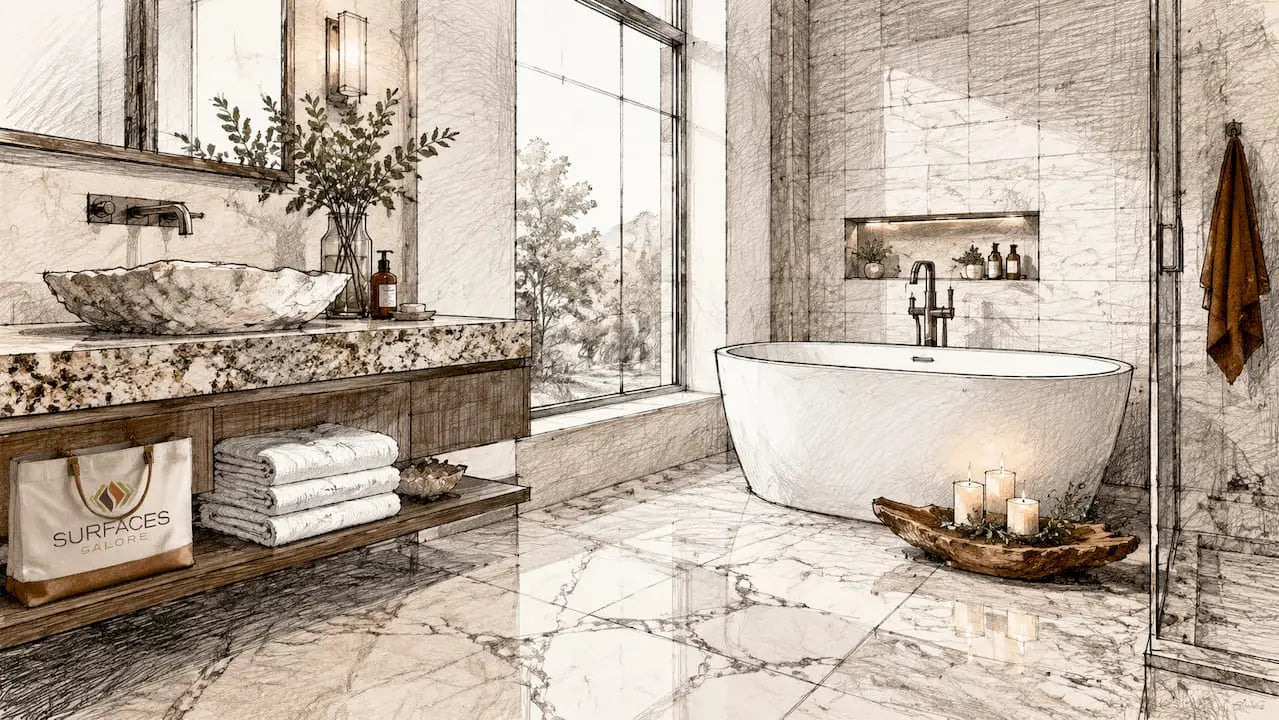
Marble flooring in entry halls sets the tone for an entire residence. Travertine wall cladding in a primary bathroom creates warmth that tile cannot achieve. Natural stone countertops in luxury kitchens combine heat resistance, visual drama, and durability in a single surface. These are the three most common applications, and each one rewards careful material selection.
Bookmatched walls and monolithic slab statements
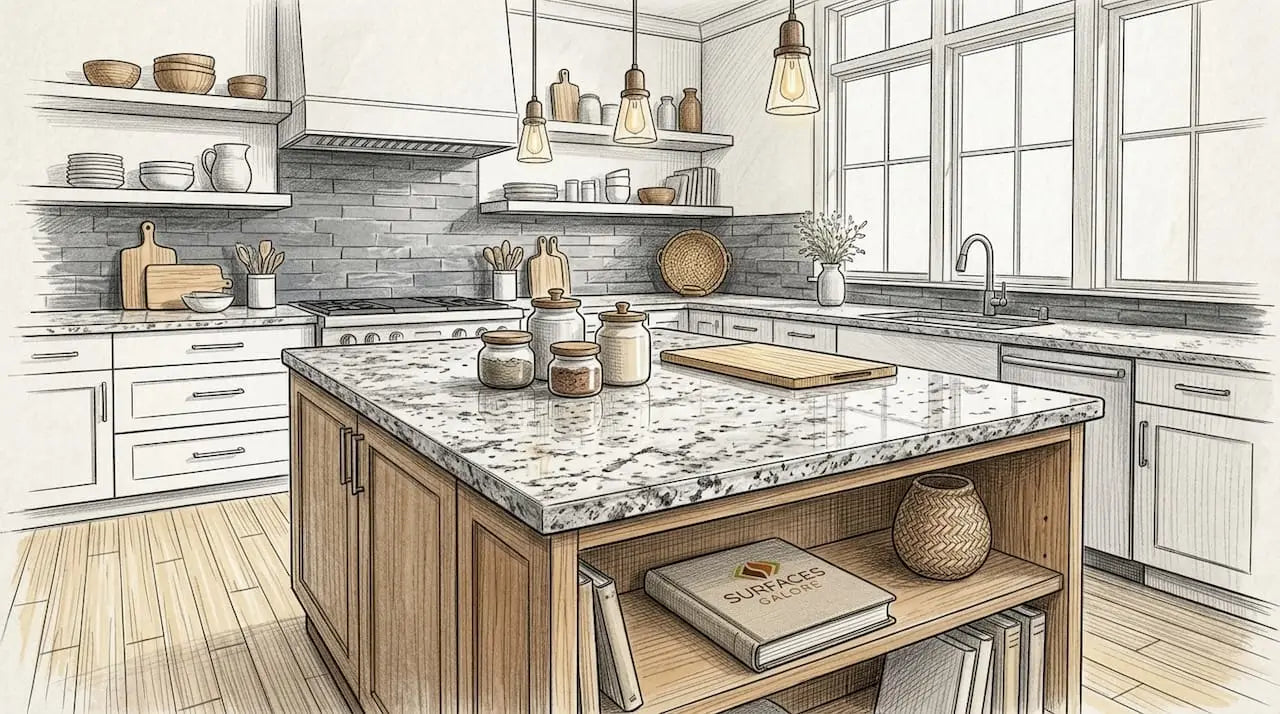
Bookmatching is the practice of opening two consecutive slabs like a book so their mirrored veining creates a symmetrical pattern across a wall or fireplace surround. The result reads as architectural art. Monolithic slab designs, where a single continuous stone runs from floor to ceiling or across an entire kitchen island, are among the strongest statements in contemporary luxury architecture. Both techniques require slab selection on site to verify vein direction and continuity before fabrication begins.
Indoor-outdoor continuity
Luxury residential projects increasingly use the same stone species indoors and outdoors to dissolve the boundary between interior and exterior spaces. Travertine pavers on a terrace that flow into travertine flooring inside a living room create a visual expansion that makes both spaces feel larger. This technique is particularly effective in California, Florida, and Arizona climates where indoor-outdoor living is central to the lifestyle.
Smaller accents and quiet luxury
Architects promote deliberate use of smaller stone objects for luxury impact. A travertine lamp base, a marble tray on a coffee table, or a limestone bookend delivers the same material quality as a full slab installation at a fraction of the cost. This approach makes natural stone accessible to homeowners who are not ready to commit to a full renovation but want the material presence of stone in their space.
- Entry hall marble flooring: sets the luxury tone from the first step
- Bookmatched fireplace surrounds: creates symmetrical, gallery-quality focal points
- Monolithic kitchen islands: single-slab surfaces that function as sculptural furniture
- Travertine bathroom walls: warm, textured cladding that elevates the bathing experience
- Indoor-outdoor stone continuity: same species inside and out to expand perceived space
- Small stone accents: travertine lamps, marble trays, and limestone vessels for quiet luxury
What are the 2026 trends in natural stone finishes and aesthetics?
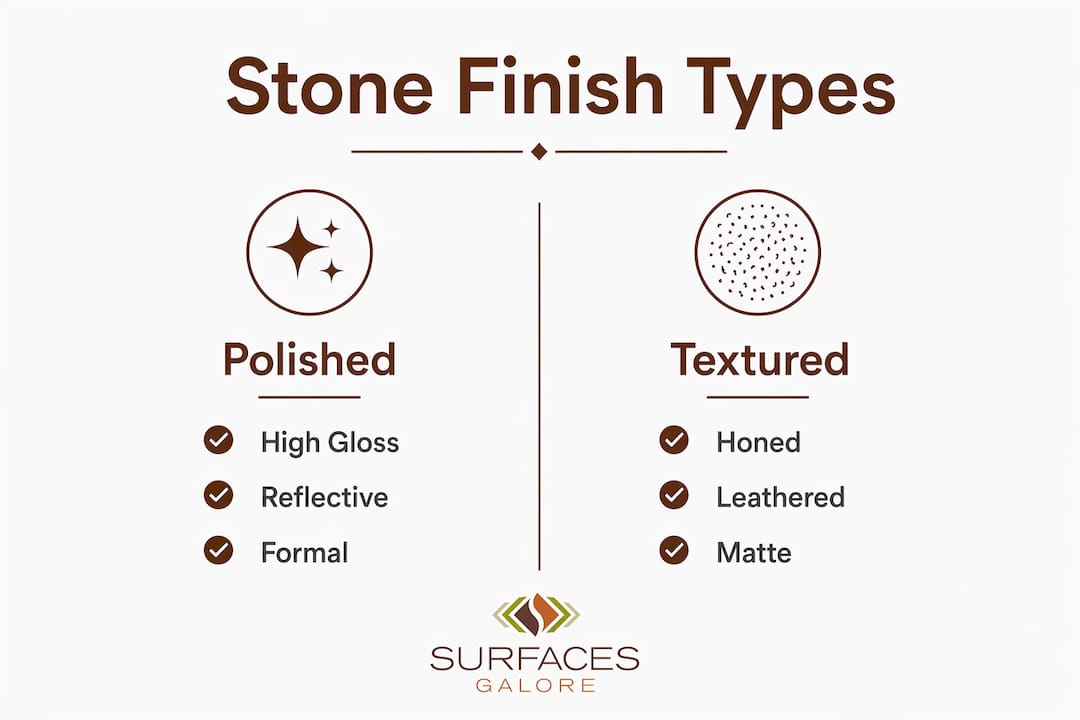
The finish on a natural stone surface changes everything. Polished marble reads as formal and reflective. Honed limestone reads as calm and matte. Leathered quartzite reads as tactile and raw. The 2026 luxury market has made a clear choice.
The shift from polished to textured finishes
Major architectural projects now favor honed, leathered, and matte natural stone finishes over high-gloss surfaces to enhance tactile experiences. Polished stone dominated luxury interiors for decades, but the current direction values touch as much as sight. A honed marble floor invites you to walk barefoot. A leathered quartzite countertop asks to be touched. That sensory engagement is the new definition of premium.
Color trends in 2026 natural stone
Warm neutrals lead the palette. Creamy limestones, honey-toned travertines, and warm white marbles with gold veining are the most requested stones in residential luxury projects. Earth tones follow closely, with green quartzites and blue-gray limestones gaining ground in both residential and hospitality design. These colors align with the broader biophilic design movement, which connects interior spaces to natural environments through material and color.
Pro Tip: Green quartzite and blue limestone are harder to source consistently than white marble. If you specify these stones for a large project, order extra material from the same quarry lot at the start. Matching stone from a different lot later is rarely possible.
Finish comparison: polished vs. honed vs. leathered
| Finish | Visual effect | Practical performance | Best application |
|---|---|---|---|
| Polished | High gloss, reflective | Shows fingerprints and scratches | Formal walls, decorative accents |
| Honed | Matte, soft | Hides minor wear, easy to maintain | Floors, bathroom walls, countertops |
| Leathered | Textured, dimensional | Conceals scratches, adds grip | Kitchen counters, outdoor surfaces |
The natural stone finishes guide from Surfacesgalore breaks down each finish type in detail, which is a useful reference before specifying stone for a project.
Emotional intelligence as a design value
Luxury design experts now frame emotional connection as the defining quality of true luxury. Natural stone fulfills this through authentic variation, organic color, and the knowledge that the material came from the earth. Synthetic surfaces, no matter how well engineered, cannot replicate that psychological dimension. The 2026 shift toward textured, warm-toned stone is not a trend in the seasonal sense. It is a recalibration of what luxury means.
What practical considerations should designers and homeowners know?
Selecting natural stone is not the same as selecting tile. The decisions made before installation determine whether a project succeeds or disappoints.
Slab yard selection is non-negotiable
Successful bookmatching and monolithic designs require visiting the slab yard in person to verify vein direction, color consistency, and slab sequencing. Ordering stone from a catalog image and expecting it to match a rendering is one of the most common and costly mistakes in luxury stone projects. The variation that makes natural stone beautiful also makes remote selection unreliable for precision applications.
Choosing the right stone for each application
Not every stone performs equally in every location. Here is a practical breakdown:
- Marble: Ideal for bathroom walls, decorative floors, and fireplace surrounds. Requires sealing in kitchen applications due to acid sensitivity.
- Travertine: Excellent for flooring, wall cladding, and outdoor applications. Its natural porosity requires sealing but rewards with warmth and texture.
- Limestone: Best for flooring and wall panels in low-acid environments. Soft and elegant, but less forgiving in heavy-use kitchen areas.
- Quartzite: The hardest natural stone option. Performs well on kitchen countertops and high-traffic floors where durability is the priority.
- Granite: Extremely durable and low-maintenance. A strong choice for kitchen counters and exterior cladding.
Accepting patina as a design feature
Stone’s ability to age gracefully distinguishes it from synthetic surfaces and contributes to lasting luxury appeal. A honed marble floor that develops a slight sheen over years of use is not failing. It is maturing. Designers who frame patina as a feature rather than a flaw set accurate expectations and build client satisfaction over the long term.
Sealing and maintenance
Sealing natural stone protects against staining and moisture penetration without altering the stone’s appearance. Most natural stones benefit from sealing at installation and resealing every one to three years depending on use. Honed and leathered finishes hide minor scratches better than polished surfaces, which makes them the practical choice for residential floors and kitchen counters.
Pro Tip: Test your sealer on a small, hidden section of the stone before full application. Some sealers darken light-colored limestone or travertine slightly. Knowing this before you seal an entire floor saves a difficult conversation with your client.
| Stone type | Best use | Maintenance level | Acid resistance |
|---|---|---|---|
| Marble | Walls, decorative floors | Medium (seal annually) | Low |
| Travertine | Floors, outdoor, cladding | Medium (seal every 1–2 years) | Medium |
| Limestone | Floors, wall panels | Medium (seal annually) | Low |
| Quartzite | Countertops, high-traffic floors | Low (seal every 2–3 years) | High |
| Granite | Countertops, exterior cladding | Low (seal every 2–3 years) | High |
Key takeaways
Natural stone is the only material in luxury design that combines 100-year durability, zero VOC emissions, geological uniqueness, and the emotional resonance that defines authentic luxury in 2026.
| Point | Details |
|---|---|
| Durability exceeds synthetics | Natural stone lasts over 100 years, making it the strongest long-term investment in luxury interiors. |
| Finish choice determines performance | Honed and leathered finishes hide wear better than polished surfaces and suit most residential applications. |
| Slab yard visits are required | Bookmatching and monolithic designs demand in-person slab selection to verify vein alignment before fabrication. |
| Patina is a feature, not a flaw | Stone that ages gracefully over decades distinguishes a luxury interior from one that simply looks expensive at installation. |
| Small accents deliver big impact | Travertine lamps and marble trays bring natural stone’s material quality into any space without a full renovation. |
Why natural stone will always define true luxury
Working with natural stone long enough teaches you something that no specification sheet can communicate: the material has a presence. You feel it when you walk into a room clad in limestone. You notice it when you rest your hand on a honed marble countertop. That presence is not a marketing claim. It is a physical and psychological reality that clients respond to every time.
The shift toward quiet luxury in 2026 is not a trend I find surprising. It is a correction. For years, luxury interiors competed on spectacle: the most reflective surfaces, the most dramatic lighting, the most visible expense. Natural stone’s current moment reflects a more mature understanding of what makes a space genuinely valuable. Authenticity, longevity, and material integrity are the new signals of quality.
What I find most interesting is how patina has been reframed. A decade ago, a client who noticed their marble floor developing character would call it damage. Now, the best designers present that aging as the point. Stone that records the life lived in a home is not wearing out. It is becoming more itself. That shift in perspective is one of the most meaningful changes I have seen in luxury residential design.
The biophilic dimension matters too. Natural stone connects a space to the earth in a way that supports wellbeing at a level that engineered materials simply cannot reach. When a client tells me their stone bathroom feels calming, they are not imagining it. The material is doing real work.
My advice to any designer or homeowner considering natural stone: visit the slab yard before you commit to anything. The difference between a photograph and the actual stone in your hands is the difference between a good project and a great one.
— cihan
Premium natural stone for luxury projects at Surfacesgalore
Surfacesgalore is a direct importer of authentic marble, limestone, travertine, and mosaic tiles, shipping nationwide from Anaheim, California to designers, architects, contractors, and homeowners.
Every stone in the Surfacesgalore collection is selected for quality, authenticity, and design versatility. Whether you are specifying a luxury hotel installation or sourcing travertine for a residential bathroom, the catalog covers honed, polished, and leathered finishes across a wide range of stone species. Browse the full collection at Surfacesgalore to find the right stone for your next project, or contact the team directly for sourcing and custom cut inquiries.
FAQ
What makes natural stone better than engineered quartz in luxury design?
Natural stone offers geological uniqueness, zero VOC emissions, and a lifespan exceeding 100 years. Engineered quartz cannot replicate the authentic variation or the emotional resonance that defines genuine luxury.
Which natural stone finish is best for luxury residential floors?
Honed and leathered finishes outperform polished surfaces in residential floors because they conceal minor scratches and wear more effectively. Both finishes also align with 2026’s preference for tactile, matte aesthetics.
How often does natural stone need to be sealed?
Most natural stones require sealing at installation and resealing every one to three years depending on the stone type and use level. High-traffic areas and kitchen countertops benefit from more frequent sealing.
Can small natural stone accents replace full slab installations?
Travertine lamps, marble trays, and limestone vessels deliver the same material quality as large slab installations at a fraction of the cost. Architects recommend these accents as deliberate entry points into natural stone luxury design.
What is bookmatching in natural stone design?
Bookmatching is the technique of opening two consecutive stone slabs to create a mirrored vein pattern across a wall or surface. It requires in-person slab yard selection to verify vein alignment before fabrication.
Leave a comment