
Top Kitchen Stone Colors for a Premium Finish

A kitchen can have excellent cabinetry and appliances yet still feel ordinary when the tile color is an afterthought. The top kitchen stone colors earn their place because they create a material-rich foundation that works with changing hardware, paint, and furnishings. For a kitchen designed to hold its value, natural stone brings depth that printed tile simply cannot duplicate.
The right color is not just a style decision. It affects how large the room feels, how often maintenance shows, whether cabinets look warmer or cooler, and how convincingly the kitchen connects to the rest of the home. Premium stone also varies naturally from piece to piece, so the best specification accounts for movement, veining, finish, and layout instead of choosing from a single online image.
Top Kitchen Stone Colors by Design Direction
White and soft gray marble
White marble with soft gray veining remains a leading choice for refined, high-value kitchens. Carrara marble offers the familiar balance of white ground and gray movement that pairs easily with white, black, navy, greige, and natural wood cabinets. It is especially effective as a backsplash, where the veining can create visual interest without introducing a competing color.
For a more dramatic white marble statement, Calacatta-style selections typically bring bolder veining and a brighter background. Use them where the tile should read as a focal point, such as a full-height backsplash, range wall, or kitchen feature wall. A honed finish delivers a softer, more contemporary look, while polished marble reflects light and leans more formal.
White marble is not a maintenance-free choice, and that is part of specifying it honestly. Natural variation, sealing, and sensible cleanup matter in active kitchens. On a backsplash, its performance demands are modest. On a floor, choose a suitable finish and expect a lived-in patina rather than a perfectly uniform surface forever.
Warm cream, ivory, and beige stone
Cream, ivory, and beige have moved far beyond the dated builder-grade look. In premium natural stone, these tones create a quiet, architectural backdrop with warmth and texture. Honed limestone and select travertine work exceptionally well in kitchens with oak, walnut, rift-sawn white oak, mushroom-painted cabinetry, or unlacquered brass details.
These colors are also among the smartest choices for open-plan homes. They transition naturally from kitchen to dining space, hallway, or living area without forcing a sharp change in flooring. A French pattern or larger-format travertine floor can make a substantial kitchen feel established rather than overly decorated.
The trade-off is undertone. Beige is not one universal color. Some stones pull yellow, others taupe, pink, gray, or green. Samples should be viewed beside cabinet doors, countertop material, grout, and flooring under the actual light in the home. A premium importer should make that step easy because stone selection deserves more than a screen-based guess.
Charcoal, black, and deep espresso
Dark stone creates contrast that lighter kitchens often need. Nero Marquina-inspired black marble, charcoal limestone, and deep brown Noce travertine can ground a kitchen with pale cabinets or add a tailored finish to a room built around walnut and bronze. In smaller applications, such as a checkerboard floor border, mosaic insert, or backsplash accent, dark stone can be exceptionally sharp.
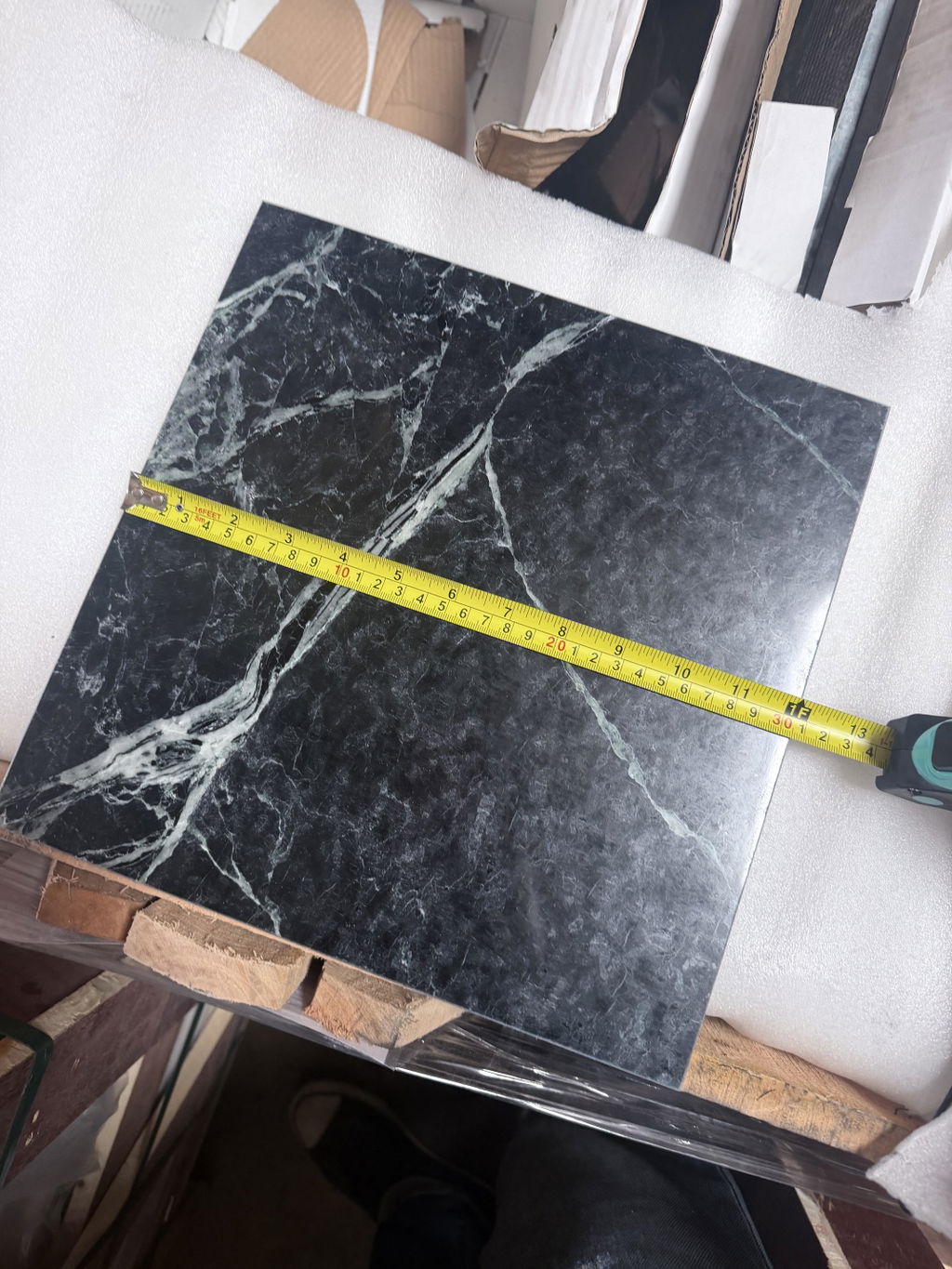
Black stone is particularly compelling when it carries white veining. The contrast feels intentional, not flat, and can tie together black-framed windows, dark hardware, and a range in matte black or stainless steel. For a classic kitchen floor, black-and-white marble checkerboard remains a proven design choice that feels equally suited to historic renovations and updated traditional homes.
Dark colors do require practical judgment. Polished black tile can show dust, water spots, and light residue more readily than a medium-tone honed material. In a high-traffic family kitchen, a honed finish, textured stone, or dark stone used on the wall instead of the floor may be the better specification.
Greige, taupe, and mushroom tones
Greige stone is the strongest middle ground for buyers who want a neutral kitchen without the starkness of bright white or the warmth of traditional beige. Taupe limestone, soft gray travertine, and mushroom-toned marble bridge cool countertops with warmer woods, making them useful in layered, transitional interiors.
These are some of the most forgiving kitchen stone colors for floors because they conceal everyday dust and minor debris better than very light or very dark surfaces. They also support a broad range of cabinet colors, from cream and light oak to charcoal and medium brown. When the goal is a kitchen that will not feel tied to one short-lived color trend, a well-selected greige natural stone is difficult to beat.
Pay attention to scale. Small-format tiles and mosaics reveal more grout lines and more color variation, while large-format tiles create a calmer visual field. Neither is automatically better. A compact kitchen may benefit from a light, larger-format stone floor, while a pantry, coffee bar, or backsplash can carry more detail through a mosaic or patterned layout.
Green and blue-gray natural stone
Muted green and blue-gray stones are increasingly specified for kitchens that need personality without looking theatrical. Sage-leaning stone can complement warm white cabinets, oak, aged brass, and handmade ceramic details. Blue-gray marble tones feel crisp alongside white cabinetry and work particularly well in coastal, traditional, or European-inspired homes.
These shades are best treated as designed accents unless the overall project has a clear color story. A green marble backsplash behind a range can be memorable; a full kitchen floor in a strong green may be right for a confident renovation but will ask more of every surrounding finish. Use samples to confirm that the stone’s natural movement reads elegant rather than busy at the chosen scale.
How to Choose the Right Stone Color for Your Kitchen
Start with the fixed elements that are hardest or most expensive to change. Cabinet finish, countertop color, natural light, and adjacent flooring should lead the decision. A white kitchen with cool quartz counters may need a warm cream or taupe floor to avoid feeling sterile. Conversely, a kitchen with honey oak cabinetry may benefit from cooler gray-white marble to create definition.
Then decide where the stone will work hardest. Backsplashes can support expressive veining, polished finishes, and lighter colors because they receive less foot traffic. Floors need more attention to slip resistance, texture, and visual maintenance. Honed marble, travertine, and limestone are often preferred for a softer, more forgiving floor appearance, especially in kitchens used every day.
Grout is part of the color decision as well. A closely matched grout keeps the focus on the stone and gives a larger-format installation a more continuous appearance. A contrasting grout can emphasize checkerboard, basketweave, or mosaic layouts, but it should be deliberate. With premium natural stone, the grout should support the material rather than compete with it.
Finally, do not buy natural stone as if every tile will match exactly. Authentic marble, travertine, and limestone contain tonal range, veining, fossils, and mineral variation. That variation is the distinction between a curated natural surface and a generic imitation. Review samples, order enough material for a cohesive installation, and have the installer dry-lay tiles when the pattern or color movement is significant.
Premium Stone Makes the Color Decision More Convincing
Color alone cannot compensate for weak material selection. A pale marble with clean grading, considered movement, and accurate finish will look more expensive than a trendy shade made from commercial-grade tile. The same is true of travertine and limestone: density, cut quality, filling, finish consistency, and careful packing all affect the final installation.
For homeowners and trade professionals sourcing online, Surfaces Galore offers premium imported stone across marble, travertine, and limestone formats, with samples, insured orders, and nationwide fulfillment that make specification more straightforward. Whether the project calls for a classic Carrara backsplash, warm travertine flooring, or a dramatic Nero Marquina checkerboard, the material should arrive with the quality and visual credibility the design requires.
The strongest kitchen color choice is the one that still looks intentional after the paint changes, the hardware is replaced, and daily life leaves its mark. Choose a stone with genuine depth, specify the right finish for the application, and let natural variation give the kitchen its lasting character.

Leave a comment