
Travertine flooring: a complete guide to styles, installation, and care

Key Takeaways
Travertine brings natural color and texture to floors, but choosing the right tile involves more than picking a shade. Consider the room, finish, installation requirements, and the look of the current stock before you order.
- Travertine has natural variation, so tiles can differ in color, veining, and texture.
- Honed, filled, tumbled, and brushed finishes create different looks and surface feels.
- Kitchens, bathrooms, patios, and other areas need choices suited to their use and exposure to moisture.
- Inspect tile, plan the layout, and confirm material quantities before installation.
- Sealing and stone-appropriate cleaning help protect travertine over time.
What travertine flooring is and why homeowners choose it
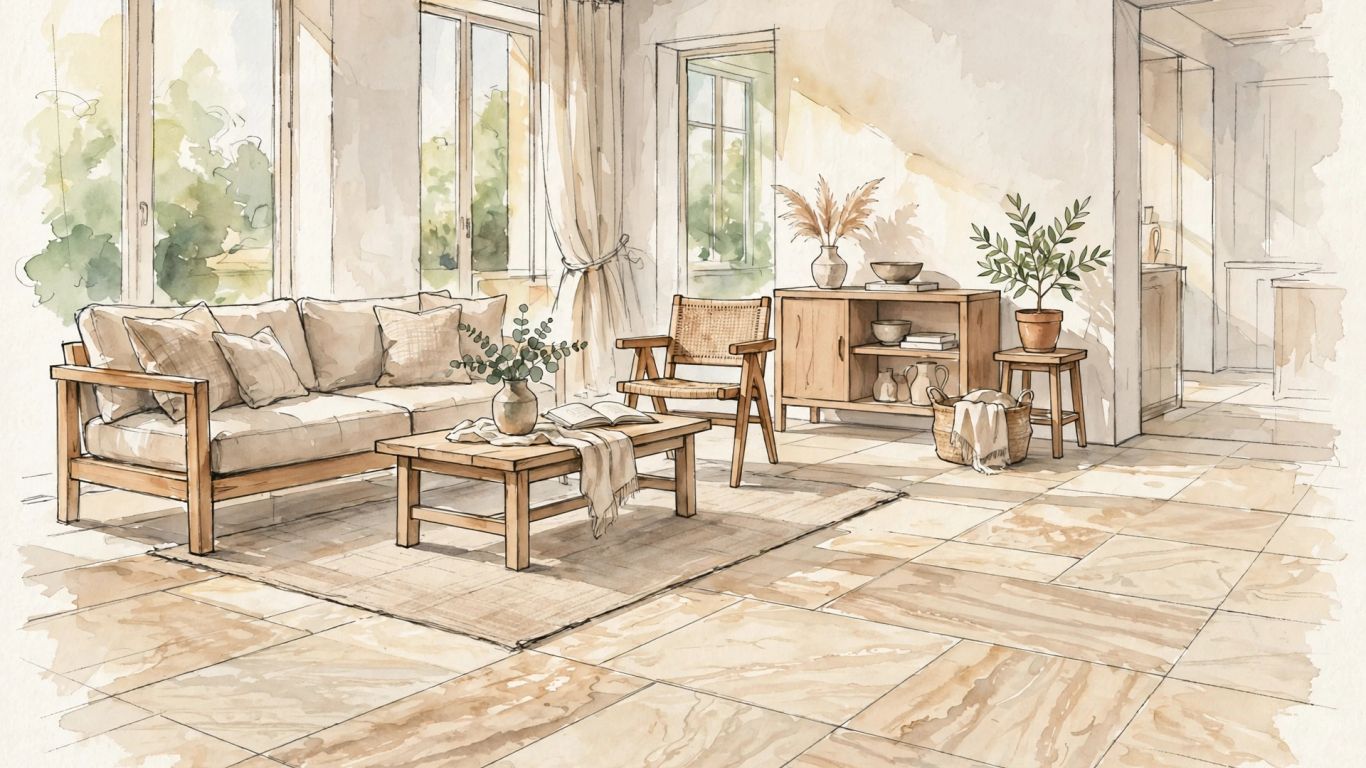
Travertine flooring is made from natural stone, giving a room a character that manufactured surfaces do not exactly repeat. Its warm tones and varied markings can feel at home in a relaxed, rustic interior or a more polished design. It is worth understanding the stone’s natural qualities before comparing finishes and layouts.
How travertine forms and what makes each tile unique
Travertine forms as mineral-rich water deposits calcium carbonate, commonly around springs. Over time, the stone develops layers and small openings that contribute to its recognizable surface. The result is not a perfectly uniform tile: natural variation is part of the material, and two pieces from the same selection can show different patterns or tones.
Before installation, arrange a dry layout so you can see how the individual tiles work together. This also helps you check the overall pattern and avoid awkwardly narrow cuts at room edges. A floor should feel composed, not as if every tile was chosen in isolation.
Natural color variations, veining, and surface texture
Travertine’s color can range from pale ivory and beige to gold, brown, and silver-gray. Veining may appear as soft linear bands or irregular movement, while natural pores and finish choices affect how smooth or textured the surface feels. A sample gives you a useful first impression, but it cannot show the full range of a natural-stone lot.
If your project includes other finish decisions, custom home planning offers a broader perspective on coordinating rooms, durable finishes, and day-to-day use. For travertine itself, compare several tiles together and look at them in the light of the space where they will be installed.
Durability in residential and commercial spaces
Travertine is used in homes and commercial settings, including areas that see regular foot traffic. Its long-term performance depends on selecting a suitable product and installing and caring for it properly. Like other natural stone, it is porous and can be affected by spills, scratches, or unsuitable cleaning products.
Think about how a room is used rather than relying on a general label such as “durable.” A busy entryway, a quiet bedroom, and a commercial lobby place different demands on a floor. Confirm the product’s intended application and care requirements before making a final selection.
How natural stone can support a timeless design
Natural stone can bridge traditional and contemporary interiors because its appeal comes from material and pattern rather than a short-lived print or color trend. Travertine’s earthy palette pairs easily with wood, painted surfaces, and other natural materials. A consistent tile choice can also help connect adjoining rooms.
For a separate look at surface choices outside flooring, this Cambria countertop overview discusses a countertop material and its upkeep. Travertine has its own finish and care needs, so keep flooring specifications in view when comparing materials for a larger renovation.
Travertine flooring styles, colors, and finishes
A tile’s appearance comes from several decisions working together: color, cut, surface finish, and layout. A pale stone may feel airy in a honed finish, while a deeper tone with visible texture can create a more grounded, rustic mood. Surfaces Galore offers travertine tiles in multiple colors and finishes, including honed, tumbled, brushed, chiseled, and polished options.
Ivory, beige, Noce, silver, and other color options
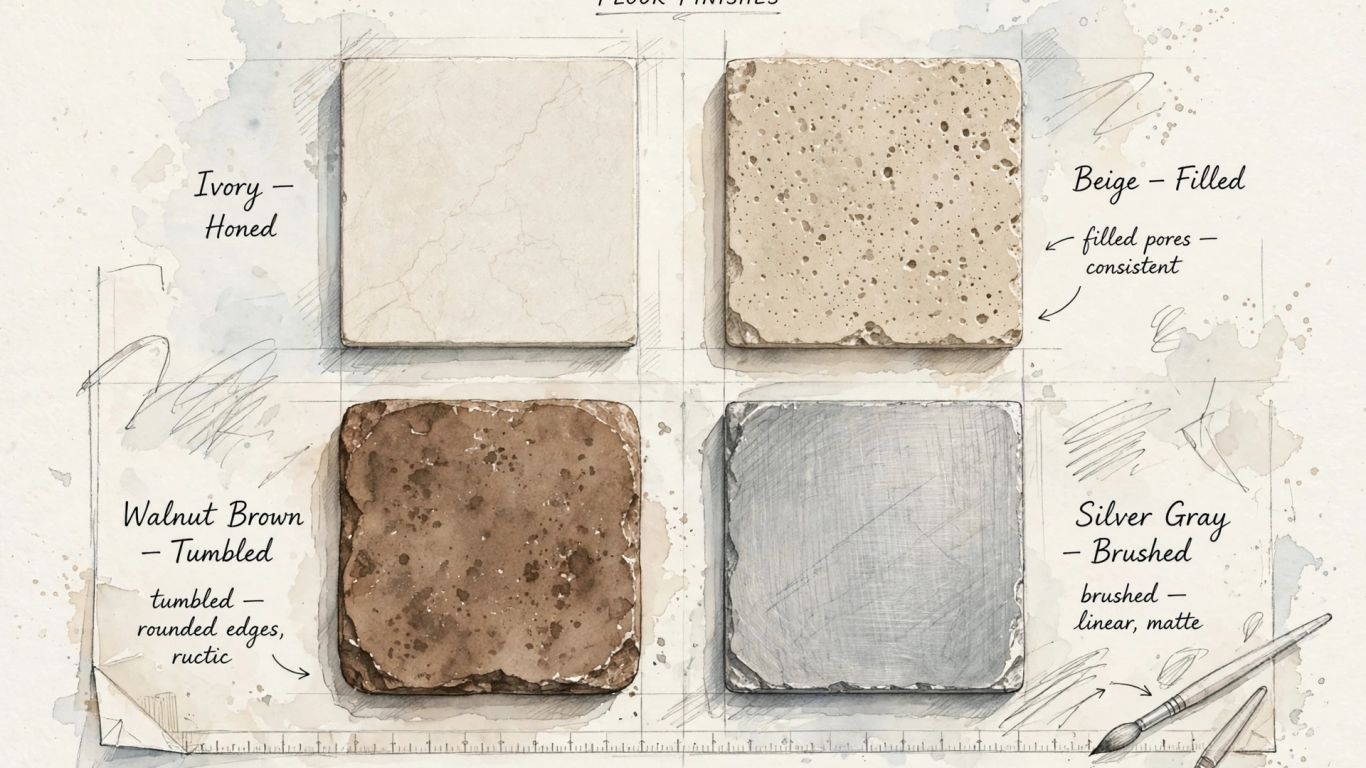
Ivory and beige travertine are popular for their soft, warm appearance; Noce and walnut bring deeper brown tones, while silver travertine offers a cooler gray palette. Gold and Scabos selections can add more pronounced earthy color. Since natural stone varies, names describe a general color family rather than a promise that every tile will look identical.
| Color family | General impression | Design consideration |
|---|---|---|
| Ivory | Light and gentle | Works well when you want a brighter stone surface |
| Beige | Warm and versatile | Coordinates easily with many wood and paint tones |
| Noce or walnut | Rich brown | Adds depth and a more grounded feel |
| Silver | Cool gray | Can complement contemporary or neutral schemes |
Use the table as a starting point, then compare actual samples or current stock. A color that seems subtle on a small piece may read more prominently across an entire floor.
Honed and filled finishes for a smooth, matte appearance
Honed and filled travertine has a smooth, matte surface, with natural voids filled to create a more even finish. It can suit interiors where you want the stone’s color and movement without as much surface texture. For example, compare La Travonya Travertine in an 18-by-18 filled-and-honed format when considering a larger, calm-looking floor field.
The finish does not erase natural character: veining and color shifts remain visible. Ask about the specific product’s care and installation guidance, and look at several pieces before deciding whether the level of variation feels right for your room.
Tumbled, brushed, and chiseled finishes for added texture
Tumbled travertine has softened edges and a more aged, tactile appearance. Brushed and chiseled finishes also add texture, although their surface character differs by product. These options can make a room feel more relaxed and less formal, and they are worth considering when a smooth finish does not suit the look you have in mind.
A finish is a visual and practical choice, not merely a decoration. Think about how the surface will be cleaned and how it will feel underfoot. For a different material and format, unfilled brushed travertine illustrates how a more textured stone can shape the look of a floor or wall.
Vein-cut patterns and layouts such as French (Versailles)
Vein-cut travertine can show linear bands that give a floor a directional, tailored look. A French, or Versailles, pattern combines pieces of different sizes into a repeating arrangement, creating more movement than a simple grid. The layout can change the character of the same stone, so it deserves attention early in the design process.
Before setting tile, dry-lay a portion of the pattern and check how it meets the room’s edges and transitions. For a classic multi-size layout, compare the La Travonya Versailles pattern. Make sure the specified tile set and installation plan suit the dimensions of your space.
Where travertine flooring works best
Travertine can be used in many indoor and outdoor settings, but the right choice depends on the product, finish, and conditions in the space. Consider foot traffic, water exposure, cleaning habits, and the intended visual connection between rooms. Surfaces Galore’s travertine range includes tiles, mosaics, and pavers for different applications.

Living rooms, hallways, and other interior spaces
In living rooms and hallways, travertine can create a continuous natural-stone surface that feels warm and established. A larger tile or a repeating pattern may make a room feel more expansive, while a textured finish brings a more rustic quality. Consider how furniture, rugs, and daylight will interact with the stone’s natural variation.
Hallways often receive more foot traffic than living areas, so ask about the product’s intended use and maintenance. When planning a larger renovation, it may also help to think about the household’s everyday routines; a Menehune Shores travel guide, for example, covers family-friendly trip planning rather than flooring, so keep that separate from your material research.
Kitchens and bathrooms, with attention to moisture
Travertine can bring a cohesive natural look to kitchen floors and bathroom spaces, but both rooms involve moisture and frequent cleaning. A sealed surface can help protect the stone, though sealing does not make it impervious to spills or remove the need for prompt cleanup. Confirm that the tile, grout, and installation approach are suitable for the specific location.
In bathrooms, also consider the surface texture and how the tile will be cleaned. A floor and a shower wall do not necessarily need the same finish or format. Ask the installer to review the conditions and product guidance before work begins.
Patios, pool surrounds, and other outdoor areas
Travertine is used for patios, pool surrounds, and other outdoor areas. Texture, exposure to weather, drainage, and the product’s intended exterior use should guide the selection. Outdoor stone needs an installation plan suited to the site rather than a simple copy of an indoor floor.
Compare finishes in person and verify that the specific tile or paver is recommended for the conditions where it will be installed. A broad selection of travertine flooring and outdoor tile can help you compare indoor and exterior formats, but always check the individual product’s specifications.
Matching floor tiles with mosaics, walls, and transitions
A coordinated project does not require every surface to use the same tile. A mosaic can add detail in a shower or backsplash, while a trim piece can create a clean meeting point between materials. Look for shared color and finish qualities so the mix feels intentional rather than overly matched.
Travertine mosaics are available in patterns such as hexagon, brick, herringbone, and basketweave. If your renovation overlaps with other practical decisions, New Star Company WLL offers guidance on selecting dental equipment and materials—a different field, but a reminder that compatibility and planning matter in any materials project. For your stone installation, confirm that tile, trim, grout, and transitions are compatible.
How to choose the right travertine tiles
The best tile is the one that suits the room and the way you plan to use it, not simply the one that looks best in a product photo. Compare format, finish, natural variation, and the quantity required before ordering. A little planning can help avoid last-minute changes once installation is underway.
Compare tile sizes, thicknesses, and available patterns
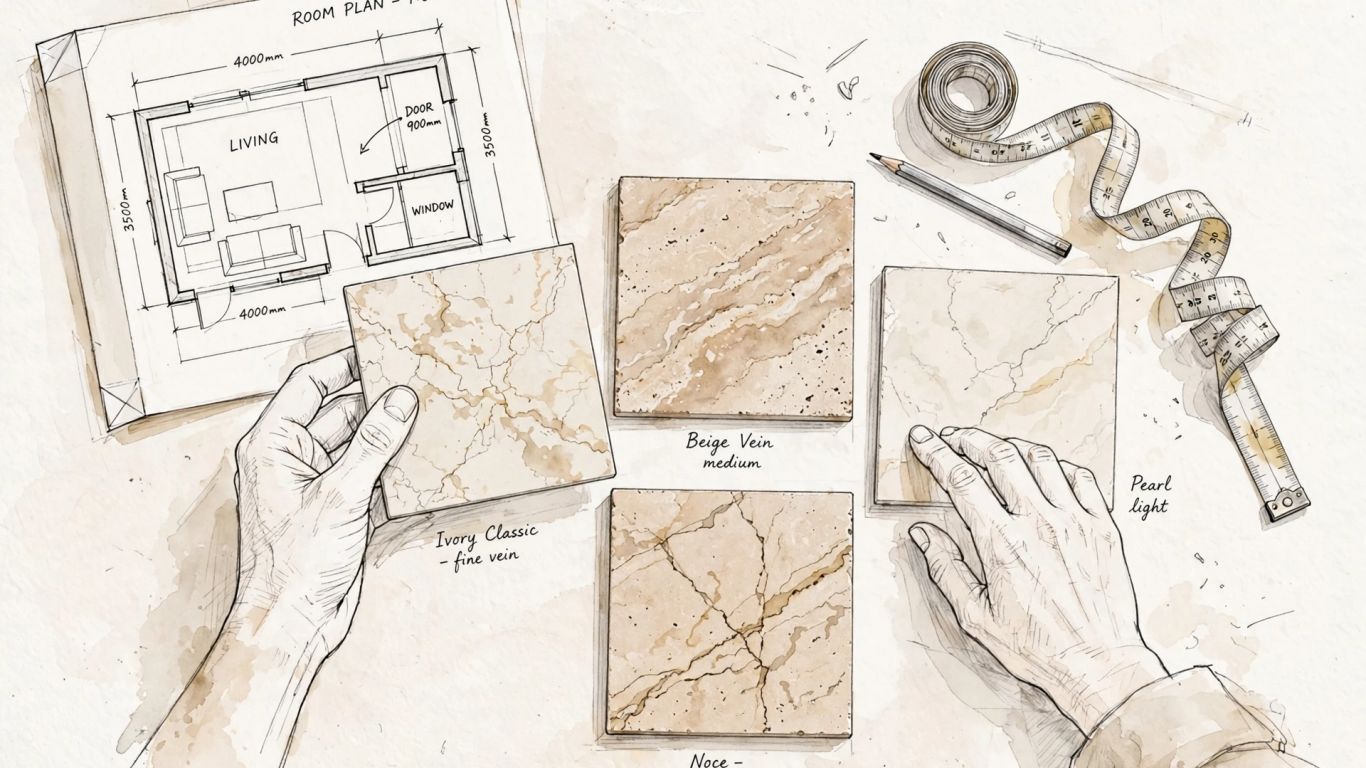
Tile format affects both the visual rhythm of the floor and the number of cuts required. Larger pieces create fewer grout lines, while smaller formats and patterns introduce more detail. Confirm the actual dimensions and thickness with the product information, since sizes can be nominal and formats vary by collection.
Compare products side by side rather than assuming that two tiles with similar names are interchangeable. For instance, La Travonya 12x24 filled-and-honed tile and a smaller-format tile will create noticeably different rhythms across a room. Check the installation requirements for the chosen format before finalizing the layout.
Match the finish to the room’s look and intended use
A smooth honed finish can give an interior a quieter, more refined appearance, while tumbled stone offers a softer, aged look. Brushed or chiseled options bring more surface texture. In each case, consider the room’s light, expected traffic, moisture, and cleaning routine alongside the design you prefer.
Use samples to assess the surface at different times of day and alongside cabinetry, paint, or other flooring. A separate guide to CholeDerm wound care concerns clinical wound management, not tile selection; it is not a source for flooring advice. For stone, rely on the product’s own specifications and a qualified installer’s guidance.
Review natural variation and inspect current stock
Natural travertine can vary in color, pattern, and texture, and individual pieces may have imperfections. Inspect the tiles before installation for cracks, chips, excessive warping, or other concerns. Lay out a selection of pieces first so you can judge the overall mix and set aside any tile that needs review before it is fixed in place.
If you are comparing smaller pieces, La Travonya 4x12 samples can help you see natural color and texture variation. Samples are useful, but check current stock as well: the full order is what will determine the finished floor’s overall appearance.
Plan quantities, overage, and material consistency
Measure the room carefully and account for cuts, pattern layout, and the natural variation of stone when estimating quantities. It is sensible to discuss an appropriate overage with your installer, especially when the floor includes borders, angled walls, or a multi-piece pattern. Also confirm that the quantity you need can be supplied from a suitable, consistent stock selection.
Keep the key planning questions together before placing an order:
- What is the room’s measured area, including alcoves and closets?
- Which pattern and tile orientation will the installer use?
- How much extra material is appropriate for cuts and breakage?
- Does the order need to come from a consistent lot or selection?
Answering these questions early gives you a clearer purchasing plan. It also makes it easier to compare quotes and avoid a shortfall once the work is underway.
Travertine flooring installation and maintenance
Good results begin before the first tile is set. The substrate, setting materials, grout, and stone sealer all need to suit the product and the space. Follow the manufacturer’s instructions and consult a qualified installer whenever site conditions or product requirements are uncertain.
Prepare the substrate and confirm installation requirements
The substrate should be suitable for the tile and installation method, and the layout should be planned before adhesive is applied. A dry layout helps identify awkward cuts and lets you distribute color and veining across the room. Inspect every tile first; once it is installed, it may be considered accepted for its quality.
Confirm the project’s requirements with the installer, including tile thickness, layout, and any substrate preparation needed. If a tile looks damaged or questionable, set it aside and ask the supplier or installer before it is installed.
Select compatible setting materials and grout
Setting materials and grout should be compatible with the stone, tile format, and conditions of use. Joint spacing can vary according to the product and edge finish, so do not assume one grout width suits every installation. Use the tile maker’s product recommendations and the installer’s guidance when choosing materials.
A careful installation also includes managing the work in sensible sections, cleaning grout residue as directed, and allowing materials to cure for the recommended time. These small steps help keep the process orderly and reduce the chance of rushing the finish.
Seal the stone and follow product-specific guidance
Travertine is porous, and sealing can help protect it from stains and moisture. Follow the sealer manufacturer’s instructions for application and curing, as well as the stone product’s specific recommendations. Do not assume that all travertine finishes need the same preparation or resealing schedule.
After grout has cured as directed, apply the appropriate stone sealer and observe its stated drying time. Product-specific guidance matters here: the correct approach depends on the materials and conditions of the installation.
Clean regularly and address spills, stains, and etching
Regular cleaning with products suitable for natural stone helps preserve the surface. Wipe spills promptly, especially in kitchens and bathrooms, and avoid unapproved acidic or abrasive cleaners that can damage stone. If a stain, scratch, or etch appears, identify the issue before trying a remedy; different kinds of marks require different care.
A simple routine is often the most practical: remove loose grit, clean with a stone-safe product, and follow care recommendations for the installed finish. Ask the installer or stone supplier which products are appropriate for your specific tile.
Buying travertine flooring from Surfaces Galore
Once you know the look and format you want, compare available products and confirm the details that affect your project: finish, size, quantity, stock, and shipping. Surfaces Galore is an Anaheim, California–based direct importer and nationwide supplier of natural stone, including travertine tiles, mosaics, and moldings. Its team serves homeowners and design professionals across the United States.
Explore travertine colors, finishes, and collections
Surfaces Galore offers travertine in a range of colors, formats, and finishes, including options for floors, walls, and other applications. Browse by the qualities that matter to your room—perhaps an ivory honed tile, a warmer Noce tone, or a more textured tumbled surface. Comparing collections is an easy way to narrow the field before requesting a sample or quote.
Request a quote and ask about bulk discounts
For a quote, have your preferred tile, approximate quantity, finish, and project location ready. Surfaces Galore offers bulk discounts, so ask how pricing applies to the amount you need. You can also browse travertine options as you compare styles and plan the order.
Arrange nationwide shipping from the Anaheim, California supplier
Surfaces Galore ships nationwide from its Anaheim, California base, making its natural-stone selection available to customers across the United States. Before ordering, confirm current availability, shipping arrangements, and the delivery details for your project. For a larger order, plan delivery around the installer’s schedule and ensure there is a suitable place to receive the material.
Contact the team for help comparing options and checking availability
If you are deciding between two finishes or formats, contact the Surfaces Galore team to ask about product details and current availability. Clear questions about the room, quantity, and intended use make it easier to compare options. Request a quote, review the stock, and choose a tile that suits both your design and your installation plan.
Ready to bring natural stone into your project? Share your preferred look and estimated quantity with Surfaces Galore, then ask the team for a quote and current availability.
Conclusion
Travertine flooring offers natural warmth, distinctive variation, and a wide range of finishes and layouts. Compare actual stock, choose a product suited to the room, and plan installation and care before ordering; with those details in hand, it is easier to create a stone floor that feels considered and lasting.
Frequently Asked Questions
Is travertine flooring suitable for busy areas?
Travertine is used in residential and commercial spaces, including areas with regular foot traffic. Choose a product intended for the space and follow its installation and maintenance guidance.
What is the difference between honed and tumbled travertine?
Honed travertine has a smooth, matte appearance, while tumbled travertine has softer edges and a more textured, aged look. The right choice depends on the style and use of the room.
Does travertine flooring need to be sealed?
Travertine is porous, and sealing can help protect it from stains and moisture. Follow the product and sealer manufacturers’ instructions for application and ongoing care.
Can travertine be used in a kitchen or bathroom?
Travertine is used in kitchens and bathrooms, but moisture and cleaning should be considered. Confirm that the product and installation approach are suitable for the specific location.
Can travertine be installed outdoors?
Travertine is used for patios, pool surrounds, and other outdoor areas. Verify that the particular product is intended for the site conditions and follow appropriate exterior installation guidance.
How much extra travertine tile should I order?
The required overage depends on room measurements, tile size, cuts, and pattern. Ask your installer to estimate the quantity and account for the natural variation of the stone.
How should travertine flooring be cleaned?
Clean regularly with products suitable for natural stone and wipe spills promptly. Avoid cleaners that are not approved for the stone, and consult product-specific care guidance if a mark or surface issue appears.

Leave a comment