
Travertine stone tile: A complete guide to styles, uses, and care

Key Takeaways
Travertine brings natural variation and warm color to floors, walls, and outdoor spaces. The right finish, layout, and care plan help the stone feel at home in your project.
- Natural pores, veining, and color variation give each tile a distinct look.
- Honed, tumbled, brushed, and polished finishes create different surface effects.
- Choose tile formats and patterns to suit the room and design scale.
- Seal travertine as recommended, clean gently, and check suitability for each application.
- Review product details, quantities, and current stock before placing an order.
What makes travertine stone tile a distinctive choice
Travertine stone tile has a natural warmth that can feel equally at ease in a classic home or a simpler, contemporary room. Its surface carries the marks of natural stone rather than a repeated printed pattern, so each installation has its own character. The right color and finish can make that variation feel quiet or more pronounced. Consider the full room, including light and surrounding materials, before settling on a particular look.
How natural pores, veining, and color variation shape its appearance
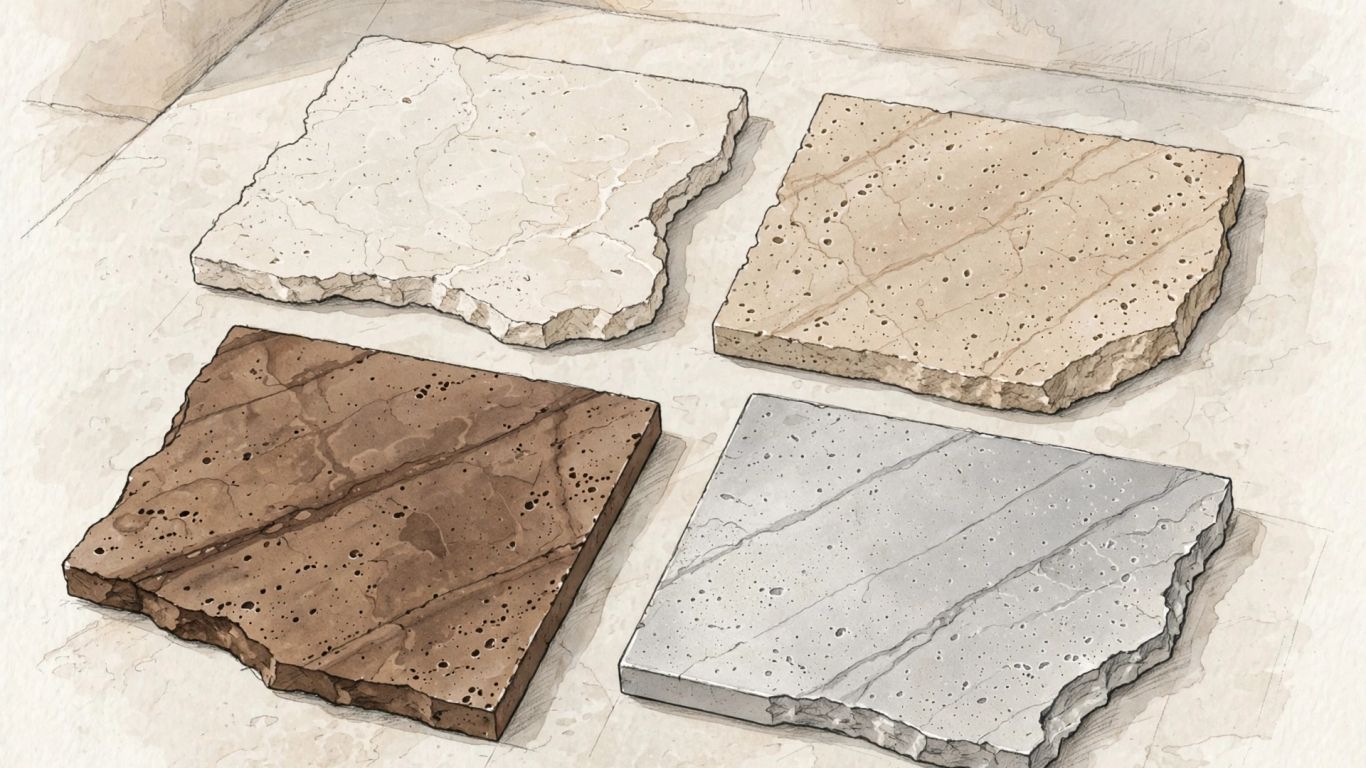
Travertine’s small pores, subtle lines, and shifts in color are part of its natural appearance. Some tiles have a more open, textured surface; others are filled and finished for a smoother look. Because these variations are inherent to natural stone, the tiles you receive may differ from a small sample or product photo. Natural variation is part of the design, so viewing several pieces together can help you picture the finished surface.
Why warm ivory, beige, walnut, and silver tones suit different designs
A pale ivory or beige palette can keep a room feeling open and soft, while walnut tones add depth and a more grounded warmth. Silver-gray travertine can bring a cooler note to a space without losing the movement of natural stone. The balance between tile color, cabinetry, paint, and daylight matters as much as the stone itself. When possible, compare a sample beside the materials already in the room.
How natural stone can bring lasting character to a space
Travertine’s variation makes a floor or wall feel individual rather than perfectly uniform. Its natural character works with both restrained furnishings and more traditional details, and it can carry through adjoining rooms when the palette is planned carefully. For broader inspiration, travertine tile styles illustrate how natural tones and texture can suit different interiors. A considered selection and a suitable care routine help preserve the look over time.
Compare travertine tile finishes
Finish changes the way travertine feels underfoot and how its natural details read in a room. Some surfaces look smooth and composed; others keep a more tactile, aged character. Think about the role of the tile, the amount of traffic, and the visual effect you want before choosing. These distinctions are useful when comparing natural travertine tile options for floors, walls, or outdoor spaces.
Choose honed and filled tile for a smoother, more consistent surface
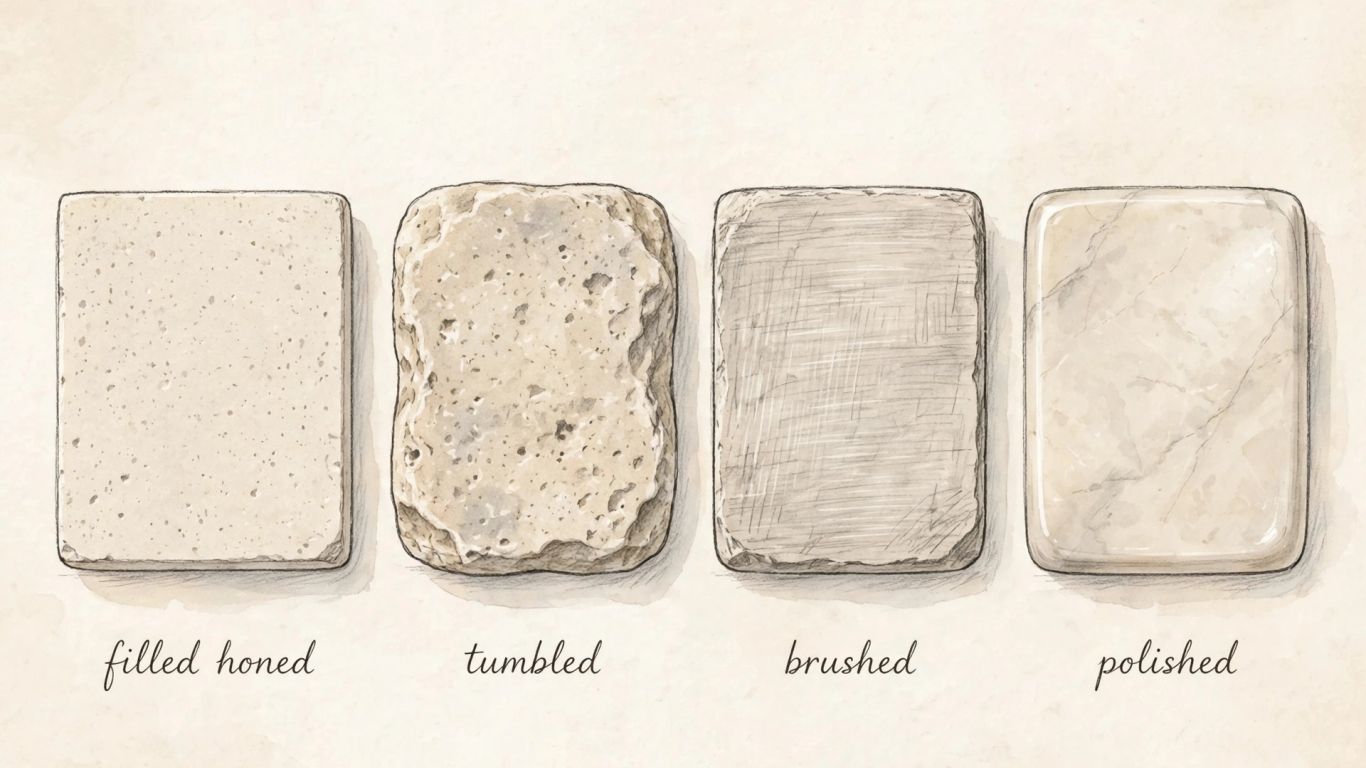
Filling the natural pores and honing the face creates a smoother, more even appearance than an open, textured finish. The stone still shows natural variation in tone and pattern, but the surface reads as more consistent across the installation. This can be a good direction when you want travertine’s warm character without a strongly rustic look. For example, La Travonya 18x18 filled and honed tile pairs a filled, honed finish with the natural variation of travertine.
Consider tumbled or brushed finishes for added texture
Tumbled travertine has a softer, weathered appearance, while brushed surfaces retain a tactile quality with a more understated finish. Both can bring depth to a room where a perfectly smooth surface would feel too formal. The finish should still suit the application, so review the product details before choosing a tile for a wet or outdoor area. This quick comparison can help focus the decision:
| Finish | General appearance | Design impression |
|---|---|---|
| Honed and filled | Smoother, more consistent face | Calm and tailored |
| Tumbled | Aged edges and tactile character | Rustic and relaxed |
| Brushed | Subtle surface texture | Natural and understated |
| Polished | More reflective surface | Bright and formal |
The table describes broad visual differences, not a substitute for checking the individual product. A sample can show how the texture and color read in your own light. For a more rustic scheme, a tumbled finish may be the detail that makes the room feel settled rather than overly polished.
Use polished finishes to create a more reflective look
Polished travertine has a brighter, more reflective appearance that can draw attention to the stone’s color and movement. It may suit a wall feature or a room where a refined finish is part of the design, but reflection changes how the stone looks under different lighting. Compare a sample at several times of day, and confirm the product’s intended use before selecting it for flooring. A finish should be chosen for both its appearance and its practical fit.
Find the right applications for travertine
Travertine can work across indoor and outdoor settings, provided the specific tile is suited to the intended location. Floors, walls, backsplashes, and patios each call for a slightly different balance of texture, maintenance, and visual scale. For kitchens, bathrooms, patios, and pool areas, check the product specifications rather than assuming every finish is interchangeable. A clear application plan makes it easier to narrow the choices.
Use floor tile in living rooms, kitchens, and entryways
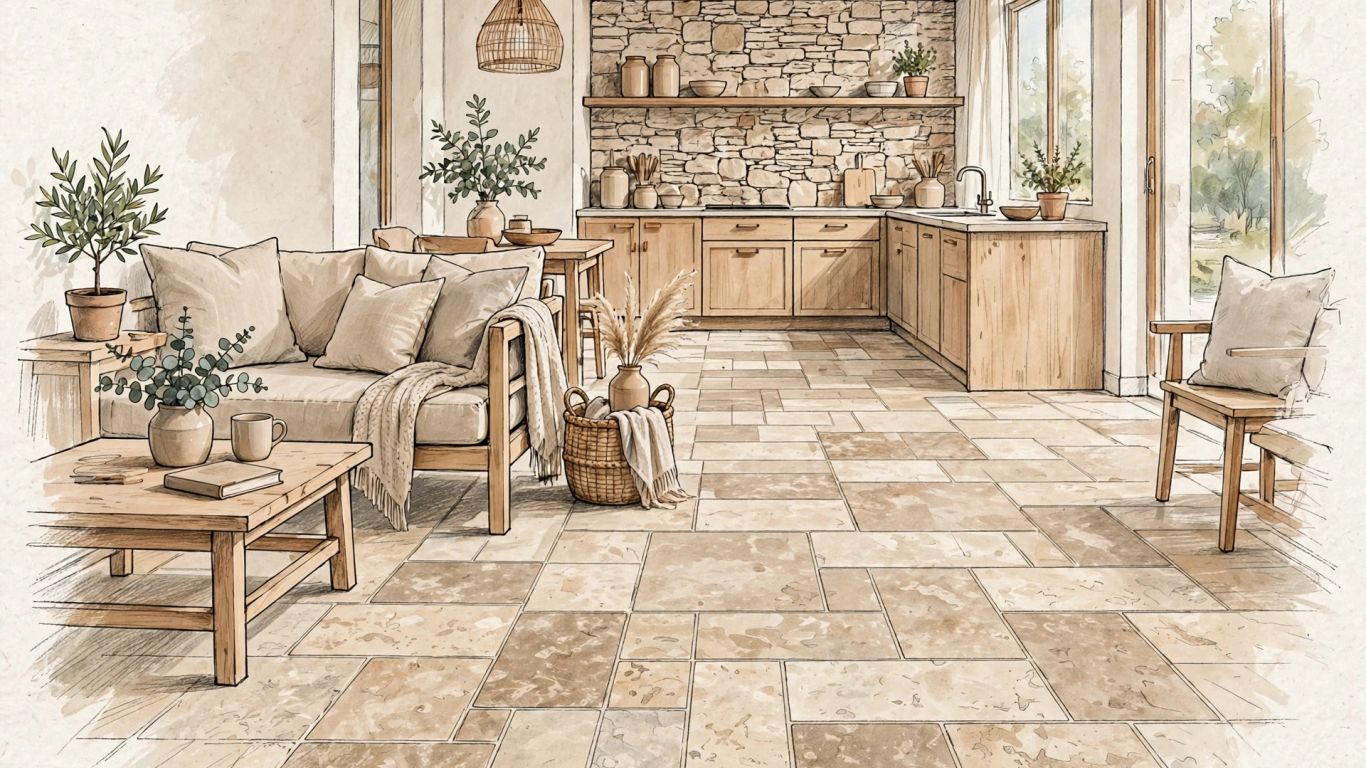
Travertine flooring can create a continuous, welcoming foundation through a living room, kitchen, or entryway. In busy areas, think about how the chosen finish will look with everyday use and how much routine care you are prepared to give it. Before settling on a format, compare it with the room dimensions and adjacent flooring. A natural-stone floor should feel considered, not simply chosen because a color looked appealing online.
For a useful starting point, make a short list of practical questions before you compare products:
- Will the finish suit the room’s traffic and cleaning routine?
- Do the tile dimensions work with the room’s proportions?
- Have you checked the product’s recommended applications?
- Does the color work beside cabinets, paint, and nearby flooring?
Those checks keep appearance and everyday use in the same conversation. They can also help you decide which samples are worth bringing home before committing to a larger quantity.
Add wall tile, mosaics, or a backsplash for decorative detail
A travertine backsplash or accent wall introduces natural texture without covering a large floor area. Mosaics create a finer pattern and can add detail around a shower, vanity, or kitchen work surface. Travertine is also available in different mosaic shapes and finishes, so choose a pattern that complements rather than competes with the rest of the room. Keep grout color and surrounding surfaces in mind as you compare the options.
Evaluate outdoor tile for patios and pool areas
For patios and pool surrounds, confirm that the selected product is intended for exterior use and assess the surface texture for the conditions where it will be installed. A natural-looking finish may suit an outdoor setting, but the product’s specifications should guide the final choice. Consider how the stone will relate to the house, landscape, and other hard surfaces. Outdoor suitability is product-specific, so do not rely on appearance alone.
Select tile sizes and installation patterns
Tile size and layout can change the apparent scale of a room. Larger pieces create fewer visible joints, while smaller formats can add rhythm and detail. Patterns also influence how the eye moves through a space, particularly across an open floor or a long entryway. Measure carefully and plan the layout before ordering, allowing for cuts and natural variation.
Match tile dimensions to the room and desired visual scale
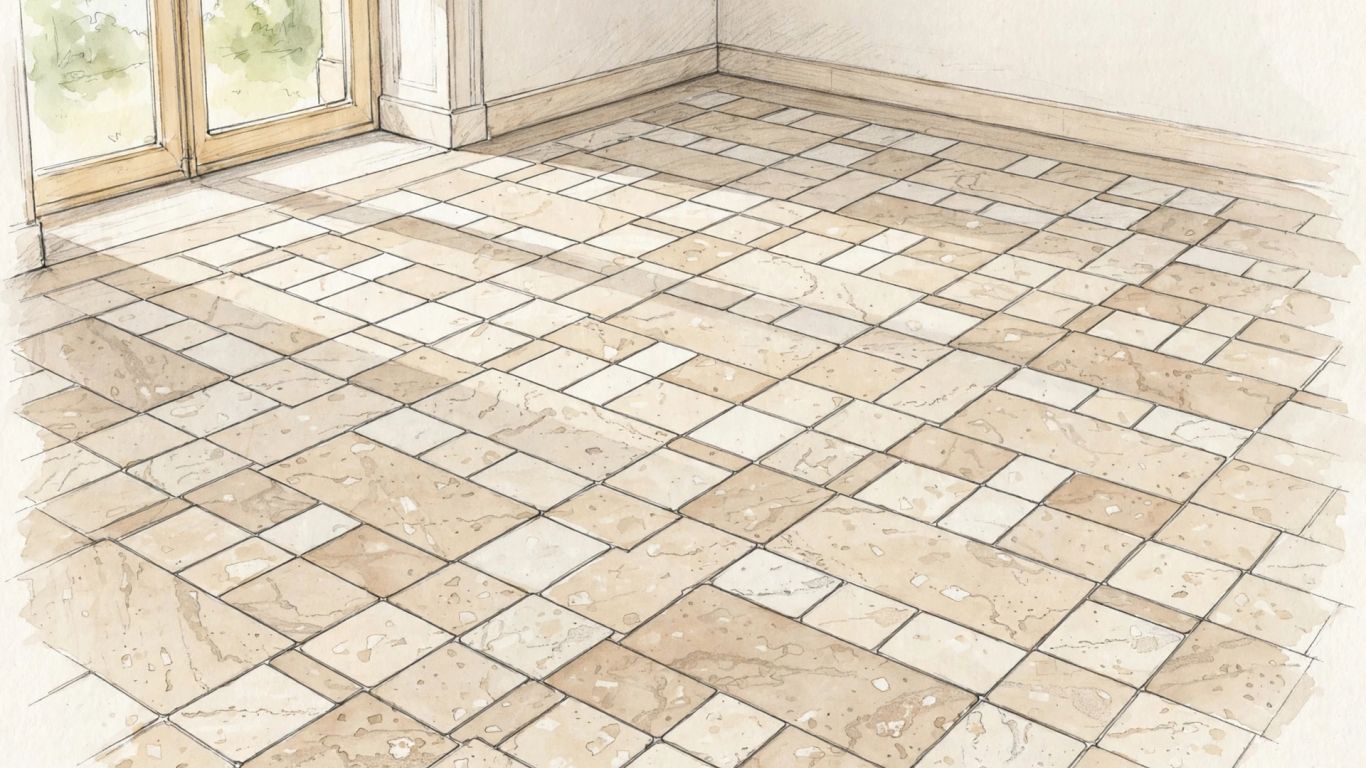
A tile that feels generous in a large room may overwhelm a narrow space, while a small format can introduce visual detail in a compact area. Look at the room’s shape as well as its area, and consider where cuts will fall along walls, cabinets, and doorways. Dry-laying a few pieces can help you judge the balance before installation. Samples, such as La Travonya 4x12 tile samples, let you see natural color and texture variation before choosing a larger format.
Create a classic layout with a French or Versailles pattern
A French or Versailles pattern uses multiple tile sizes in a repeating arrangement to create a more layered floor. It brings movement without relying on a single large motif, and its natural-stone variation makes each completed layout individual. Review the set’s dimensions and plan the room edges before installation, since the pattern needs room to repeat cleanly. A Versailles pattern set offers a way to consider the look in honed travertine.
Use mosaics and borders to add contrast or define areas
Mosaics and borders can mark a transition, frame a feature, or add a smaller-scale counterpoint to larger floor tile. They are especially useful when you want a decorative detail without introducing another stone color. Keep the palette connected, and let either the pattern or the material variation take the lead. For a custom home plan, functional space planning can help frame choices about how a room will be used alongside its finish selections.
Plan for travertine tile care and performance
Natural stone rewards a little planning, especially in rooms exposed to moisture, food, or frequent foot traffic. Travertine is porous, so sealing and gentle cleaning are part of keeping the surface in good condition. Care needs can vary with the finish, product, and level of use. Follow the product and sealer instructions, and ask a professional installer about details specific to your project.
Understand sealing and routine cleaning needs
Sealing helps protect porous natural stone from stains and moisture, but it does not make a surface impervious. Follow the sealer manufacturer’s directions for application and reapplication, and take the room’s use into account when planning routine care. Regular sweeping or dusting helps remove grit, and a stone-safe cleaner is a sensible choice for everyday cleaning. A sample can also be useful for understanding how the finish responds to ordinary upkeep.
Protect the surface from acidic spills and abrasive cleaners
Acidic substances can damage natural stone, so wipe spills promptly and avoid acidic or abrasive cleaning products. Use a soft cloth or mop and a cleaner intended for natural stone rather than a harsh household formula. For kitchens and bathrooms, this simple habit can help reduce the chance of surface damage. When in doubt, check care guidance for the exact tile and finish.
Review slip resistance and suitability for each application
Texture, finish, and the conditions of a room all affect how a surface performs underfoot. Review the product specifications for the intended application, especially in wet areas or outdoors, and do not assume a particular finish is suitable just because it is travertine. A professional can help assess the installation conditions and product details. The best choice balances the look you want with the needs of the space.
Choose travertine stone tile for your project
Once you have settled on an application and finish, compare the color, format, and product specifications together. Natural stone variation means a sample is a useful reference, but multiple pieces can give a fuller sense of the range in a batch. Check current product details and availability as you finalize quantities. A little care at this stage can make ordering and installation more straightforward.
Compare color collections such as Ivory, Noce, Silver, and Scabos
Ivory offers a light, gentle palette, while Noce brings richer brown tones; Silver tends toward cooler gray, and Scabos can include a more varied, warm blend. These names are starting points rather than guarantees of an identical appearance across every tile. Surfaces Galore offers travertine tiles and mosaics in a range of colors and finishes, including options such as La Travonya 12x12 tumbled tile. Compare samples in the room where the stone will be installed, because daylight and nearby finishes can shift the impression.
Confirm quantities, tile specifications, and current stock before ordering
Measure the surface area, account for cuts, and confirm the product dimensions and finish before placing an order. Inspecting a dry layout and distributing natural color variation can help the final installation feel balanced. For a kitchen or bath, it may also help to compare adjacent materials; a guide to quartz and quartzite countertops covers a separate but related surface decision. Broader research can branch well beyond stone: Maui vacation planning, advanced wound care, and a dental materials book address unrelated subjects, so keep those separate from the tile specifications and ordering checklist.
Request a quote and ask about bulk discounts and nationwide shipping from Surfaces Galore
For a larger renovation, ask for a quote, confirm current stock, and clarify the quantity and finish you need before ordering. Surfaces Galore serves customers nationwide and offers bulk discounts; contact the team to discuss your project and shipping needs. You can request a quote as you compare travertine options and prepare your order.
Conclusion
Travertine stone tile offers a naturally varied palette, a choice of finishes, and formats for floors, walls, and outdoor spaces. Compare samples, choose a finish suited to the application, and plan for sealing and gentle care so the stone’s character can remain part of the room for years to come.
Frequently Asked Questions
Is travertine stone tile suitable for kitchens?
It can be used in kitchens, but choose a product intended for the application and plan for sealing and prompt cleanup. A gentle, stone-safe cleaning routine helps protect the surface.
What is the difference between filled and unfilled travertine?
Filled travertine has its natural pores filled, creating a smoother and more consistent face. Unfilled travertine retains more of its open, textured character.
Which travertine finish is best for a floor?
The right finish depends on the room, the product specifications, and the look you prefer. Compare samples and confirm suitability for the intended use, especially in wet areas.
Does travertine tile need to be sealed?
Travertine is porous, and sealing helps protect it from stains and moisture. Follow the sealer and product instructions for application and reapplication.
Can travertine be used outdoors?
Some travertine products are suitable for outdoor settings, including patios and pool areas. Check the individual product specifications before selecting tile for exterior use.
How do I clean travertine tile?
Remove dust and grit regularly, clean with a soft cloth or mop, and use a cleaner made for natural stone. Avoid acidic and abrasive products, which can damage the surface.
How should I choose a travertine tile size?
Consider the room’s dimensions, layout, and the visual scale you want. Samples and a dry layout can help you see how the format will look and where cuts may fall.

Leave a comment