
2026 marble trends: Designer colors, patterns, finishes, and tile ideas for timeless interiors

Key Takeaways
The 2026 marble trends favor warmth, expressive veining, tactile finishes, and layouts with a sense of history. Natural stone still feels classic, but the way it is being used is more personal and layered.
- Warm beige, cream, gray, green, and brown tones are replacing one-note white interiors.
- Dramatic veining works best when treated as part of the room’s architecture.
- Checkerboard, Versailles, herringbone, and geometric mosaics bring pattern underfoot and onto walls.
- Polished, honed, tumbled, brushed, and textured finishes create very different moods.
- Samples, careful planning, and proper maintenance help marble remain beautiful for years.
The defining 2026 marble trends for residential interiors
Marble in 2026 is less about perfect uniformity and more about atmosphere. Designers are choosing tones that make rooms feel settled, then adding movement through veining, pattern, and finish. The result is elegant without feeling overly formal. These shifts work especially well in rooms where tile can carry both practical and decorative weight.
Warm neutrals replacing stark white stone
Cream, sand, beige, and soft taupe marble bring a gentler character to floors and walls than icy white stone. They pair naturally with walnut cabinetry, aged brass, linen upholstery, and warm paint colors. Crema Marfil is a particularly inviting direction, with its creamy beige background and delicate feathery veining. Used in tile, mosaic, borders, or moldings, it can make a bathroom or entry feel finished without looking severe.
Dramatic veining as an architectural focal point
Bold veining is moving beyond small accents. A strong pattern can run across a fireplace surround, shower wall, or feature wall and become the room’s visual structure. The key is restraint elsewhere: quieter cabinetry, simple grout lines, and lighting that lets the stone carry the composition. When planned well, veining becomes the architecture, not merely surface decoration.
Earth-inspired colors for richer interiors
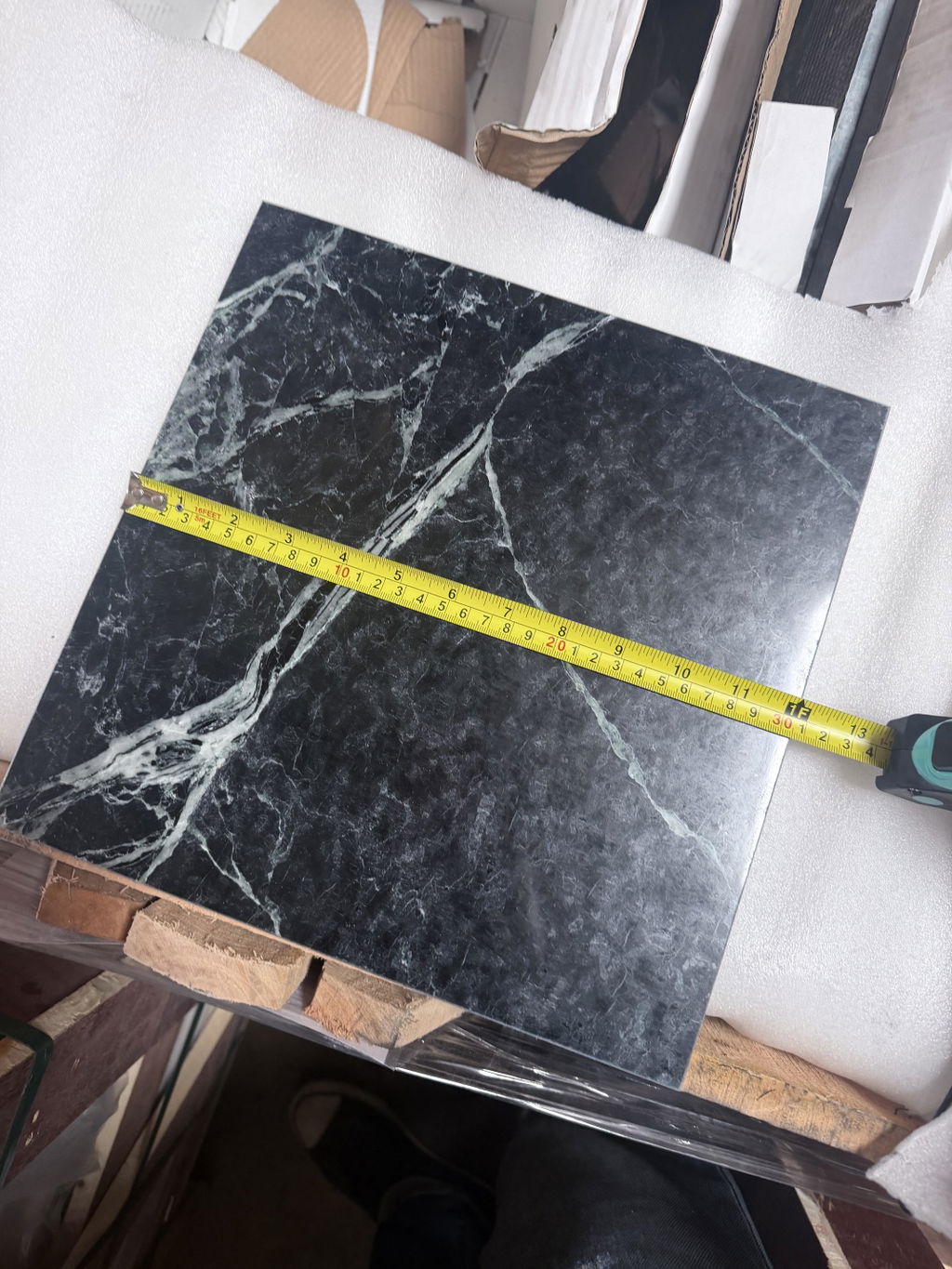
Brown, moss green, clay, gray, and deep burgundy are giving marble schemes more emotional depth. These colors feel connected to soil, foliage, stone, and weathered buildings, so they tend to soften contemporary rooms. Empress Green, for example, brings deep green tones with white and dark veining to floors, walls, checkerboard layouts, and mosaic accents.
Natural variation as a mark of authenticity
The most appealing installations rarely look mechanically identical. Slight shifts in tone, fossil-like movement, and changing vein density are part of natural marble’s character. Rather than sorting out every difference, designers are planning around it. That approach makes a finished floor or wall feel collected and genuinely made from stone.
Marble colors and varieties leading design projects
Color sets the emotional temperature of a room before furniture or accessories arrive. In 2026, the strongest marble palettes move comfortably between quiet neutrals and concentrated accents. A successful scheme usually has one dominant stone, one supporting tone, and enough breathing room for the pattern to remain legible.
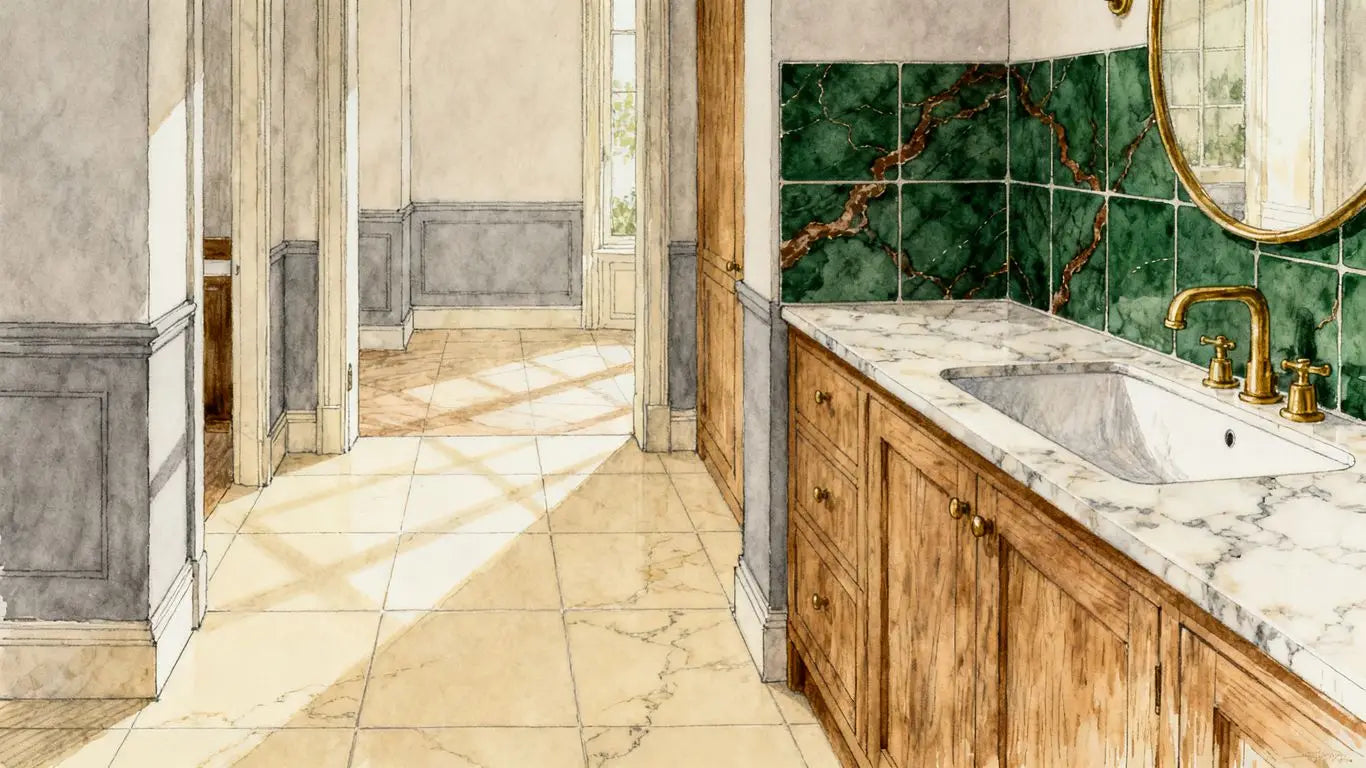
Cream and beige marble for inviting spaces
Cream marble is easy to live with because it reflects light while keeping a room visually warm. Crema Marfil, Cappuccino, Emperador Light, and related beige varieties can suit traditional bathrooms, relaxed Mediterranean spaces, and transitional entryways. Pair them with creamy grout for continuity or a slightly darker grout for a more defined tile pattern.
Gray marble for modern and transitional rooms
Gray marble has the useful quality of being both calm and expressive. Atlantic Gray combines soft gray tones with intricate veining, while Storm Gray offers a darker background with bold white movement. These varieties can support a minimalist bathroom, a classic hallway, or a fireplace with stronger contrast. For a weathered look, Tundra Gray tumbled tiles offer natural variation and an unpolished character suited to floors and walls.
Green, blue, and burgundy marble accents
Color marble works beautifully when it is given a clear role. Green can frame a shower floor or anchor a checkerboard entry; blue can appear in a small mosaic or niche; burgundy can warm a fireplace or powder room. Keep the surrounding materials uncomplicated so the accent stone does not compete with itself.
Black and deep brown marble for dramatic contrast
Nero Marquina and Emperador Dark create a stronger, more intimate mood than pale stone. Black marble with white veining looks crisp against light walls, while Emperador Dark’s brown ground and lighter veining feel richer with wood and bronze. Either can be used sparingly for a border, hearth, vanity wall, or patterned floor instead of covering every surface.
How designers are using marble tile in 2026
Tile is giving designers more control over scale and rhythm than a single uninterrupted surface. Small pieces can define a niche, while larger tiles make a floor feel quieter and more expansive. Marble also moves easily between horizontal and vertical applications, allowing one material to connect several parts of a home.
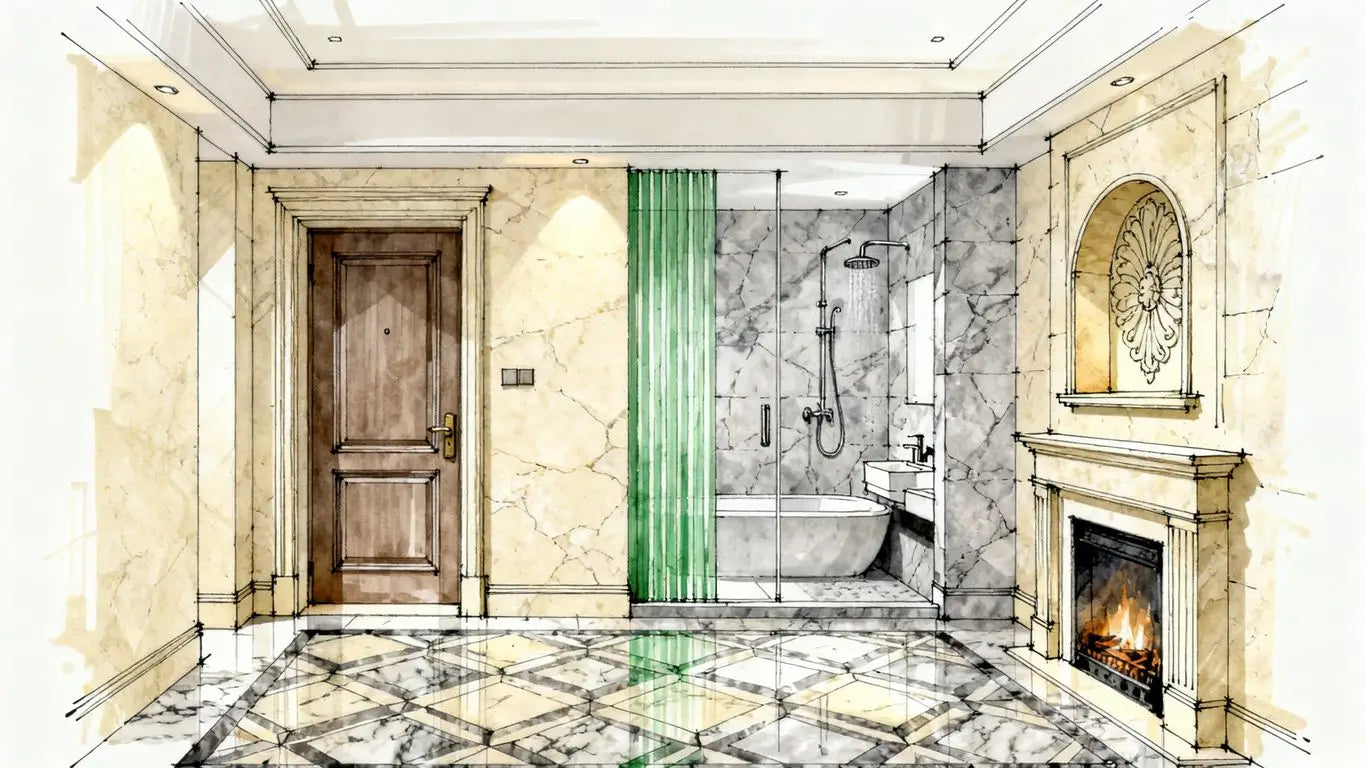
Statement floors in entryways and living areas
A marble entryway creates an immediate sense of arrival, especially when the layout has a clear border or contrasting center. In living areas, larger formats can keep the floor calm while the natural veining supplies subtle movement. For busy spaces, plan the installation carefully, account for cuts and waste, and choose a finish that suits the household’s daily routines.
Marble walls for bathrooms and shower surrounds
Bathroom walls are an ideal place to use marble vertically. A continuous color family can make a shower feel taller, while mosaics add grip and detail to the floor. Marble tile collections commonly include polished and honed options, so the same palette can be adjusted from reflective wall tile to a softer underfoot surface.
Fireplace surrounds and feature walls
A fireplace gives dramatic marble a natural frame. Gray stone can echo smoke and shadow, black marble can sharpen a pale room, and warm beige can make the hearth feel integrated with wood floors. Feature walls work similarly, but they need a deliberate stopping point—an edge, molding, or change in paint—to keep the stone from feeling unfinished.
Decorative niches, shelves, and architectural details
Small architectural details are where marble can feel especially custom. A shower niche, corner shelf, stair riser, border, or molding uses less material while adding a tactile note that repeats elsewhere in the room. Choose pieces with compatible thicknesses and plan transitions before installation. The small details often make a renovation look considered rather than simply tiled.
Marble patterns, mosaics, and layouts gaining popularity
Pattern is returning, but it is being used with a lighter hand. The most successful layouts balance repetition with the irregular beauty of natural stone. Designers are also mixing scale: a field tile may establish calm, while a mosaic or border supplies the detail that draws the eye.
Checkerboard floors with updated color combinations
Checkerboard marble remains a dependable classic, yet the palette is expanding beyond black and white. Empress Green with white marble, Emperador Dark with cream, or gray with a warmer neutral can make the layout feel current. The pattern is particularly effective in entryways, bathrooms, dining areas, and other rooms with a strong geometric footprint.
Versailles and French-pattern tile layouts
The Versailles pattern uses different rectangular and square formats to create an old-world rhythm. It feels architectural without requiring an ornate motif, making it a good bridge between rustic, traditional, and contemporary interiors. Keep the grout color close to the stone when you want the pattern to read as texture rather than a grid.
Geometric marble mosaics for refined texture
Hexagons, herringbone, basketweave, arabesque, penny round, and waterjet mosaics bring detail to backsplashes, shower walls, floors, and accent features. The right geometry depends on the room: a small hexagon can add softness, while a linear herringbone can visually stretch a wall. A restrained mosaic also lets color marble make an impression without overwhelming the space.
Vein direction and pattern planning for visual continuity
Vein direction deserves attention before the first tile is set. Dry-laying pieces helps reveal abrupt changes, awkward cuts, and areas where a stronger vein should be centered. For larger projects, make a simple room plan and mark thresholds, focal points, and transitions. That small investment in planning makes the final surface feel more continuous.
The finishes shaping the look of 2026 marble interiors
Finish changes how marble catches light, feels underfoot, and responds visually to the surrounding materials. The same color can appear formal when polished, relaxed when honed, or historic when tumbled. In 2026, tactile finishes are especially appealing because they add depth without needing louder colors.
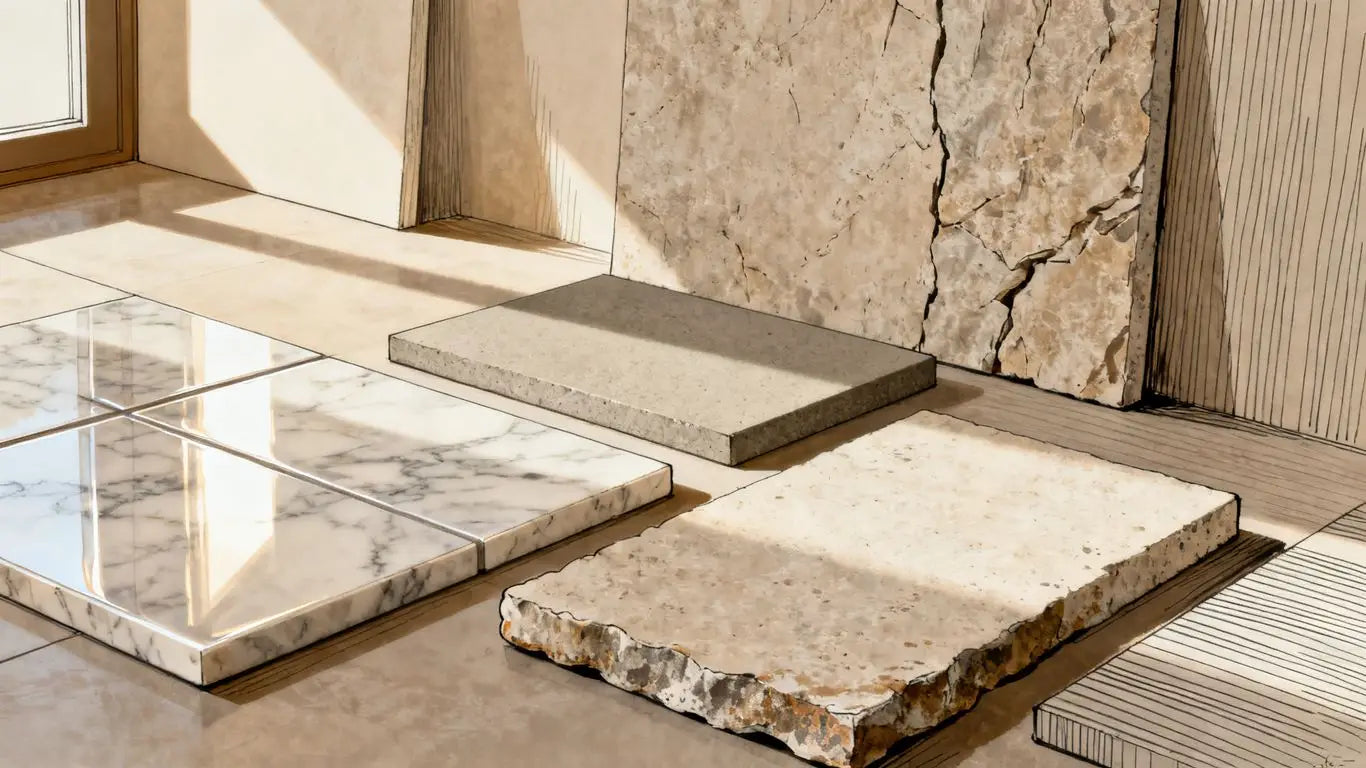
Polished marble for light-reflective luxury
Polished marble has a smooth, reflective surface that brightens a room and makes veining appear more pronounced. It suits formal entryways, feature walls, bathroom walls, and decorative surrounds. Use it where light reflection is an advantage, and balance the shine with matte paint, natural wood, or woven fabrics.
Honed marble for a softer contemporary appearance
Honed marble has a matte, understated look that feels quieter and more relaxed. It can reduce the visual formality of a classic stone while preserving its color and natural movement. Honed tile works well in contemporary bathrooms, transitional floors, and rooms where a soft finish is preferable to a high-gloss surface.
Tumbled and brushed finishes for old-world character
Tumbled edges and brushed surfaces introduce gentle irregularity. They can make a new installation feel established, particularly in Mediterranean, European, rustic, or layered traditional interiors. These finishes also work nicely with warm neutrals and French-pattern layouts, where a little softness keeps the geometry from looking too precise.
Textured and split-face surfaces for dimensional walls
Textured and split-face marble create shadow across a wall, making them useful for fireplaces, entry features, and carefully selected accent areas. Their depth is strongest under directional lighting. Because texture already adds visual activity, use simpler tile or paint nearby and plan corners so the material ends cleanly.
How to choose marble that balances style and performance
Beautiful stone still needs to suit the room where it will live. Start with traffic, moisture, light, cleaning habits, and the desired mood, then narrow the color and pattern. Natural marble is durable and long-lasting, but its performance depends on sound installation, sensible product selection, and regular care.
Matching marble characteristics to each room
A polished floor may be perfect for a formal entry, while a honed or tumbled finish can feel more comfortable in a relaxed hallway. Shower floors call for careful attention to scale, grout, and slip-resistant options. Walls allow more freedom with dramatic color and texture because they do not receive the same daily wear as floors.
Comparing marble tiles, mosaics, borders, and moldings
Tiles establish the main field, mosaics add pattern, and borders or moldings provide a finished edge. Combining them can make a modest installation feel custom, but the pieces should share a coherent color story. Check thickness, dimensions, and transitions before ordering so the components meet neatly at corners and thresholds.
Planning maintenance, sealing, and daily care
Natural stone should be cleaned with products appropriate for marble, not harsh acidic cleaners. Sealing needs vary by stone, finish, and use, so confirm the recommendation with the installer or stone-care professional. Sweep grit from floors, wipe spills promptly, and use protective mats in high-traffic areas. A simple routine is usually more effective than occasional aggressive cleaning.
A practical care plan is easier to follow when it is written down before installation:
- Confirm the recommended sealer and resealing schedule.
- Use a soft cloth or stone-safe cleaner for everyday cleaning.
- Protect floors near exterior doors from tracked-in grit.
- Keep acidic food, drinks, and cleaners away from unprotected marble.
These habits preserve the finish while allowing the stone to develop the gentle character that makes natural materials appealing.
Ordering samples to evaluate color and veining
A sample reveals more than a screen can. View it in morning, afternoon, and evening light, then place it near cabinetry, paint, grout, and flooring. Natural variation means a single piece cannot show every possibility, but several samples can clarify the overall direction. It is also wise to confirm current availability and nominal sizing before finalizing a layout.
Why natural marble remains a long-term design investment
Marble has survived changing design languages because it can be formal, quiet, rustic, or boldly contemporary. Its value is not tied to one season’s palette. Instead, it gives a room a material foundation that can work with new furniture, paint, lighting, and art over time.
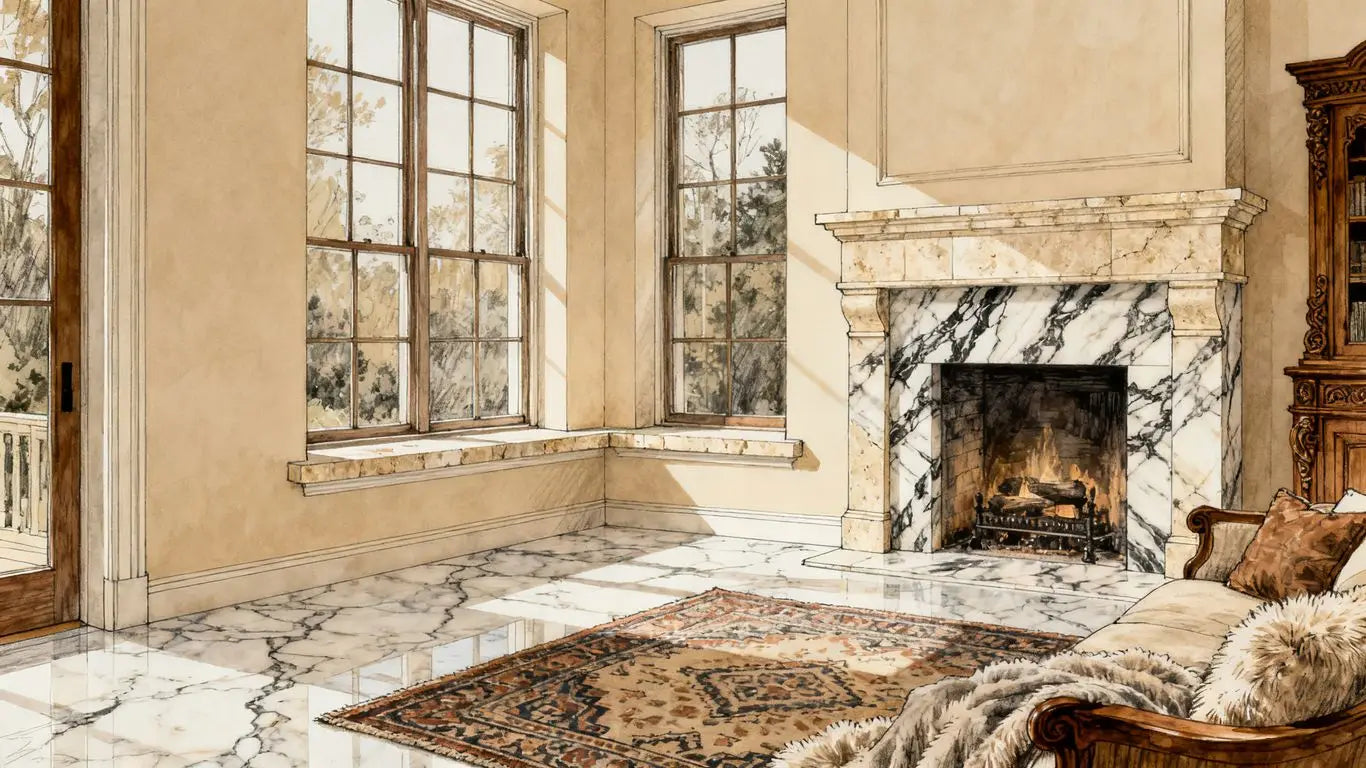
Timeless appeal beyond short-lived décor trends
A warm beige floor can support modern furniture today and a more traditional scheme years from now. Gray marble can move from minimalist to transitional with a simple change of wall color. Even a dramatic black or green accent can remain enduring when its placement is intentional rather than scattered across the entire home.
Durability with proper installation and maintenance
Marble is a lasting natural material when it is installed on a suitable substrate and cared for appropriately. Tile is practical for floors, walls, backsplashes, bathrooms, and entryways, while smaller formats can simplify curved or detailed areas. The stone’s longevity is a design advantage, but installation responsibility, material inspection, and maintenance planning still matter.
One-of-a-kind variation in every installation
No two natural marble installations are perfectly alike. Veins shift, backgrounds change subtly, and polished surfaces reflect a room differently from piece to piece. That variation is part of the appeal, especially when the layout is planned to let the stone’s movement feel intentional rather than random.
Coordinating marble with travertine and other natural stone
Marble can share a home with travertine, limestone, wood, metal, and plaster. The easiest way to coordinate them is to repeat one visual quality—perhaps a warm undertone, a soft matte finish, or a similar scale—rather than matching every color exactly. Travertine can bring earthy texture beside polished marble, while limestone can quiet a more expressive accent.
For installation planning, a 2026 stone design guide can provide additional inspiration around organic palettes and tactile finishes. Use outside ideas as a starting point, then let the architecture and light of your own room decide the final combination.
How to source 2026 marble trends from Surfaces Galore
Finding the right stone is easier when the selection includes color, finish, format, and supporting details in one place. Surfaces Galore is an Anaheim, California–based direct importer and nationwide supplier specializing in marble and travertine tiles, mosaics, and moldings. Homeowners, designers, and architects can compare options for residential and commercial projects while planning delivery across the United States.
Exploring Crema Marfil, Emperador Dark, and Atlantic Gray
Surfaces Galore offers documented options that align closely with the year’s strongest directions. Crema Marfil brings soft creamy beige and delicate veining; Emperador Dark provides an intense brown background with lighter movement; and Atlantic Gray combines soft gray tones with intricate veining. Together, they cover warm, dramatic, and restrained starting points for a marble palette.
Finding marble tile, mosaic, trim, and molding options
Surfaces Galore’s collection includes marble tiles, marble mosaics, borders, moldings, and related natural-stone details. Formats and finishes can be compared according to the room’s needs, from a polished wall tile to a tumbled mosaic or a coordinating edge. This makes it easier to carry one design language from a floor into a niche, backsplash, or fireplace surround.
Requesting bulk pricing for larger projects
For a full-home renovation, hospitality space, or multi-room installation, Surfaces Galore can be approached about bulk pricing. Build a clear material list first, including square footage, pattern, finish, trim, and an allowance for cuts and waste. A precise request gives the team a better basis for preparing a quote.
Arranging nationwide shipping from Anaheim, California
Surfaces Galore ships natural stone nationwide from Anaheim, California, serving customers across the United States. Confirm stock, quantities, timing, and delivery details before placing a larger order. Samples are a sensible first step, especially when the project depends on subtle undertones or a particular vein pattern.
Explore Your Marble Selection
Bring your preferred color, finish, and layout together by browsing current marble tile, mosaic, and molding options, then request a quote for your project. A well-chosen natural stone can make the next renovation feel personal from the first step.
Conclusion
The best 2026 marble trends are not disposable looks; they are thoughtful ways to use natural color, movement, pattern, and texture. Choose a stone that suits the room, plan its installation carefully, and allow its natural variation to remain visible. The result is an interior with warmth today and lasting design value tomorrow.
Frequently Asked Questions
What marble colors are trending in 2026?
Warm cream, beige, taupe, soft gray, deep brown, green, and selected burgundy tones are especially current. These colors create a more layered and welcoming alternative to uniformly stark white interiors.
Is marble tile suitable for high-traffic areas?
Marble tile can work well in entryways, halls, kitchens, and other busy areas when the product, finish, substrate, installation, and maintenance plan are appropriate. Regular sweeping and prompt spill cleanup help protect the surface.
Which marble finish is easiest to live with?
Honed finishes offer a soft, matte appearance, while polished finishes provide stronger light reflection. Tumbled and brushed finishes create more old-world character. The best choice depends on the room, desired look, traffic, and care routine.
Are checkerboard marble floors still fashionable?
Yes. Checkerboard floors remain relevant because the layout is classic, while the color combinations can be updated. Green and white, brown and cream, or gray and warm beige can feel fresher than a basic black-and-white scheme.
How can dramatic marble veining be used without overwhelming a room?
Limit bold veining to a clear focal area such as a fireplace, shower wall, backsplash, or entry floor. Keep nearby finishes and furnishings comparatively simple so the stone has room to read as a deliberate architectural feature.
Should marble tile be sealed?
Many marble installations benefit from sealing, but the correct product and schedule depend on the stone, finish, and location. Follow guidance from a qualified installer or stone-care professional and avoid acidic cleaning products.
How much extra marble tile should be ordered?
The allowance depends on the room shape, layout, tile size, and cutting needs. Straightforward installations require less extra material than diagonal, Versailles, or intricate mosaic patterns, so calculate waste before ordering and confirm the quantity with the installer.

Leave a comment