
Scabos Travertine: A Guide to Colors, Finishes, Applications, and Buying

Key Takeaways
Scabos travertine brings natural color movement and texture to a range of interiors. The right format, finish, and amount of advance planning help that character feel intentional.
- Expect a naturally varied palette of warm and cool tones.
- Compare tile, mosaic, and coordinating detail options for your layout.
- Choose a finish based on the look and feel you want.
- Review samples and confirm quantities before ordering.
- Ask about current availability, quotes, bulk discounts, and shipping.
What makes Scabos travertine distinctive
Scabos travertine stands out for its earthy color and lively natural pattern. Rather than reading as a single, even shade, it can bring several tones into the same surface. That variety gives a room an expressive quality while keeping the overall look grounded. It’s a good fit for designs that welcome the character of natural stone.
A natural palette of gold, rust, brown, cream, and gray
Gold, rusty red, brown, cream, and gray can all appear in Scabos travertine. The balance shifts from piece to piece, so a sample offers a useful first impression but cannot show every variation in a larger installation. Warm colors can sit alongside cooler gray notes, making the stone an adaptable partner for wood, painted cabinetry, and simple neutral finishes.
How veining and color variation create one-of-a-kind surfaces
Veining and shifting color give each tile its own visual rhythm. Some pieces may read warmer or darker than their neighbors, while others bring more light cream or gray into the pattern. Natural variation is part of the design, not a flaw to conceal, so it helps to review the material and plan how individual pieces will be distributed before installation.
Design styles that complement its earthy character
The stone’s texture and color feel at home in rustic and eclectic rooms, but they can also add warmth to a cleaner, contemporary setting. Pair it with restrained finishes if you want the stone to lead; bring in patterned textiles and aged wood for a more layered mood. The goal is to give the variation space to breathe rather than competing with it at every turn.
Scabos travertine tile and product options
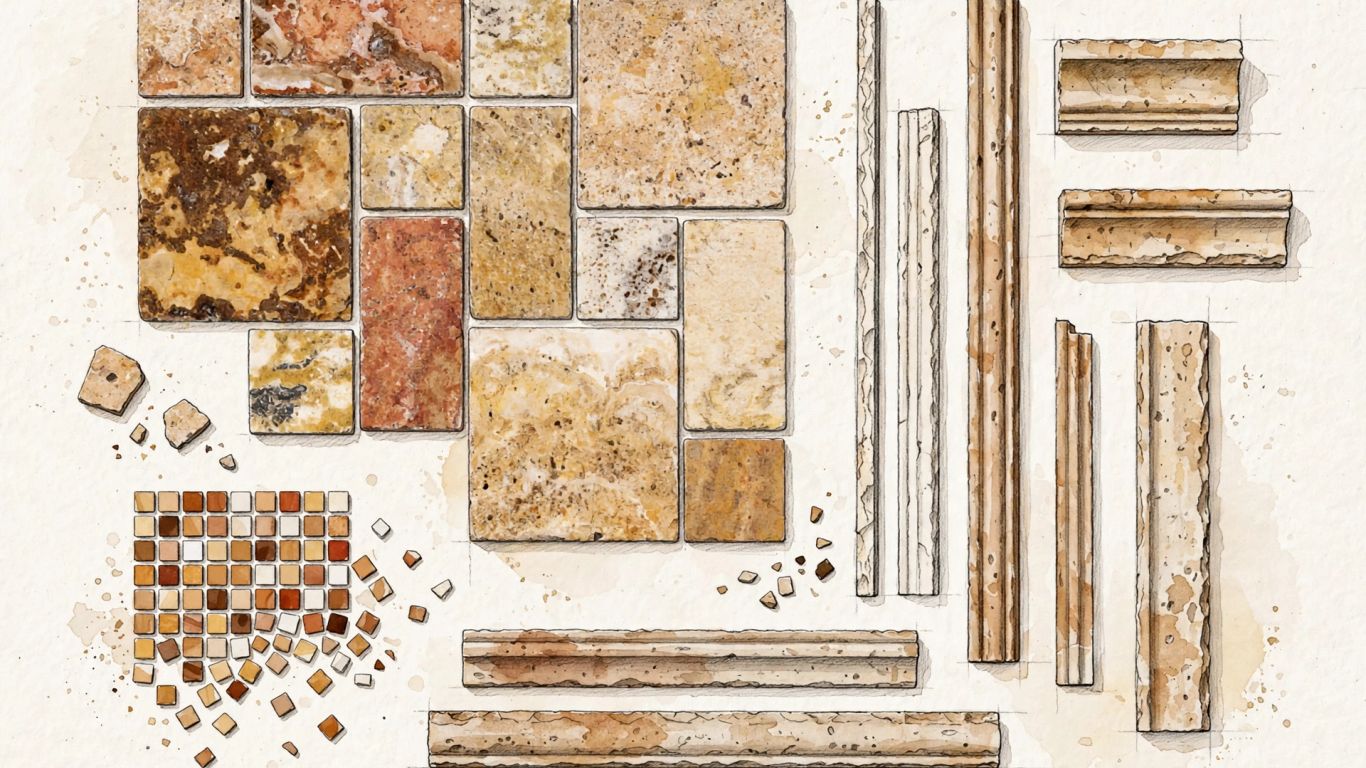
Scabos travertine is offered in several product forms, and the best choice depends on the scale and purpose of the surface. Field tiles create a broader, calmer reading; smaller pieces and mosaics introduce more joints and pattern. Coordinating elements can help a project feel considered from the main surface to its edges. Check current offerings before settling on a particular format.
Tile sizes and formats for floors and walls
Available tile sizes and finishes can vary, so confirm the current selection rather than assuming a particular dimension is in stock. Larger-format pieces tend to create a more open visual field, while smaller formats bring extra rhythm to a wall or floor. For a sense of how a small tumbled travertine tile can look, browse this 6x6 tumbled tile example; it is a different travertine, not a Scabos specification.
A simple comparison can clarify which format best suits the role of the surface:
| Format | Visual effect | Possible role |
|---|---|---|
| Field tile | Broad, connected areas of color | Floors or walls |
| Mosaic | More pattern and closely spaced joints | Backsplashes or accents |
| Border or molding | A defined edge or transition | Finishing detail |
Use the table as a starting point, then review actual product dimensions and installation needs with your tile professional. For Scabos-specific examples, this Scabos tile and mosaic guide covers varied shades and formats.
Mosaics for backsplashes, shower floors, and accents
Mosaics use smaller stone pieces to create an intricate surface or a focused accent. Scabos travertine mosaics are suited to backsplashes, shower floors, and other accent areas, according to the product information. Their close-set pattern can make the stone’s tonal changes feel especially lively, so check a sample or current product image before choosing a layout.
Borders, moldings, and other coordinating details
Borders and moldings can give a tiled area a clear finish or help it transition to an adjoining surface. A restrained edge lets the main field remain the focus; a more decorative detail can make the perimeter feel intentional. Confirm that any coordinating piece is available in a compatible material and finish before building it into the design.
Choosing a finish for your project
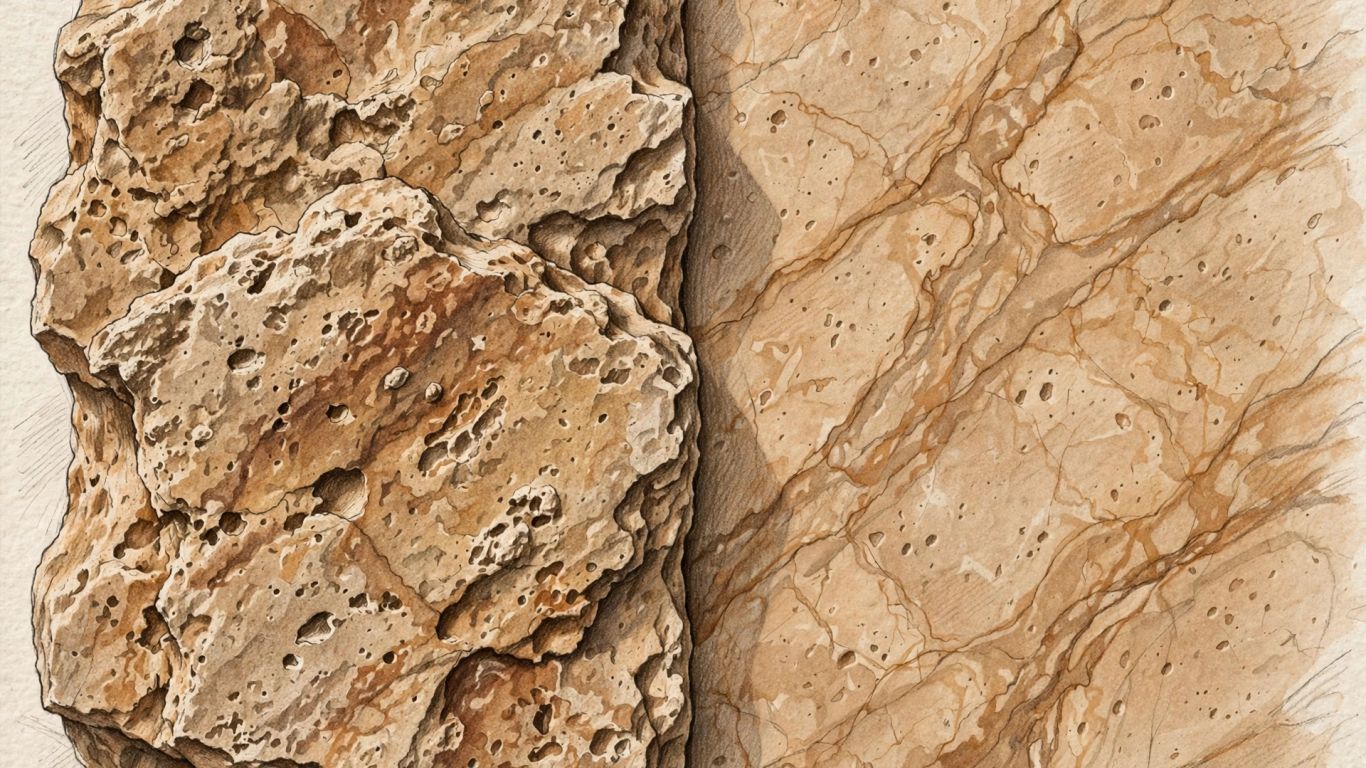
Finish changes the way travertine catches light and feels underfoot or to the touch. It also affects the overall mood: a textured surface can feel relaxed and rustic, while a smoother one tends to look more refined. Compare finishes in person where possible, and base the decision on the space as well as the style. The product information and installer can help clarify care needs for the chosen material.
Tumbled surfaces for a rustic, textured look
Tumbled travertine has a softened, textured appearance that suits informal rooms and designs with an aged, natural character. Its surface can make the stone’s variation feel more pronounced without requiring a busy surrounding palette. If that tactile quality is part of the appeal, view a sample in the room’s light and alongside the finishes you already plan to use.
Honed and filled finishes for a smoother appearance
Honed and filled finishes offer a smoother-looking surface than a more visibly textured option. They can work well when you want the color variation of the stone but prefer a more composed overall impression. The exact appearance can differ by product, so verify the finish available for the specific Scabos tile or mosaic under consideration.
How finish affects style, feel, and upkeep
Finish is a visual choice, but it belongs in the practical conversation too. Ask the installer how the selected stone should be sealed, cleaned, and maintained for its particular location; don’t assume one care routine fits every finish or installation. This short travertine finish overview can help you compare common Scabos tile and mosaic styles before you narrow your options.
Where to use Scabos travertine
Scabos travertine can bring warmth and natural pattern to multiple areas of a home. Product information lists tiles for floors, walls, and backsplashes, along with mosaics for shower floors and accents. The right placement depends on the installation conditions and the look you want. Discuss suitability for a specific wet or high-use area with your installer before ordering.
Flooring for living spaces and entryways
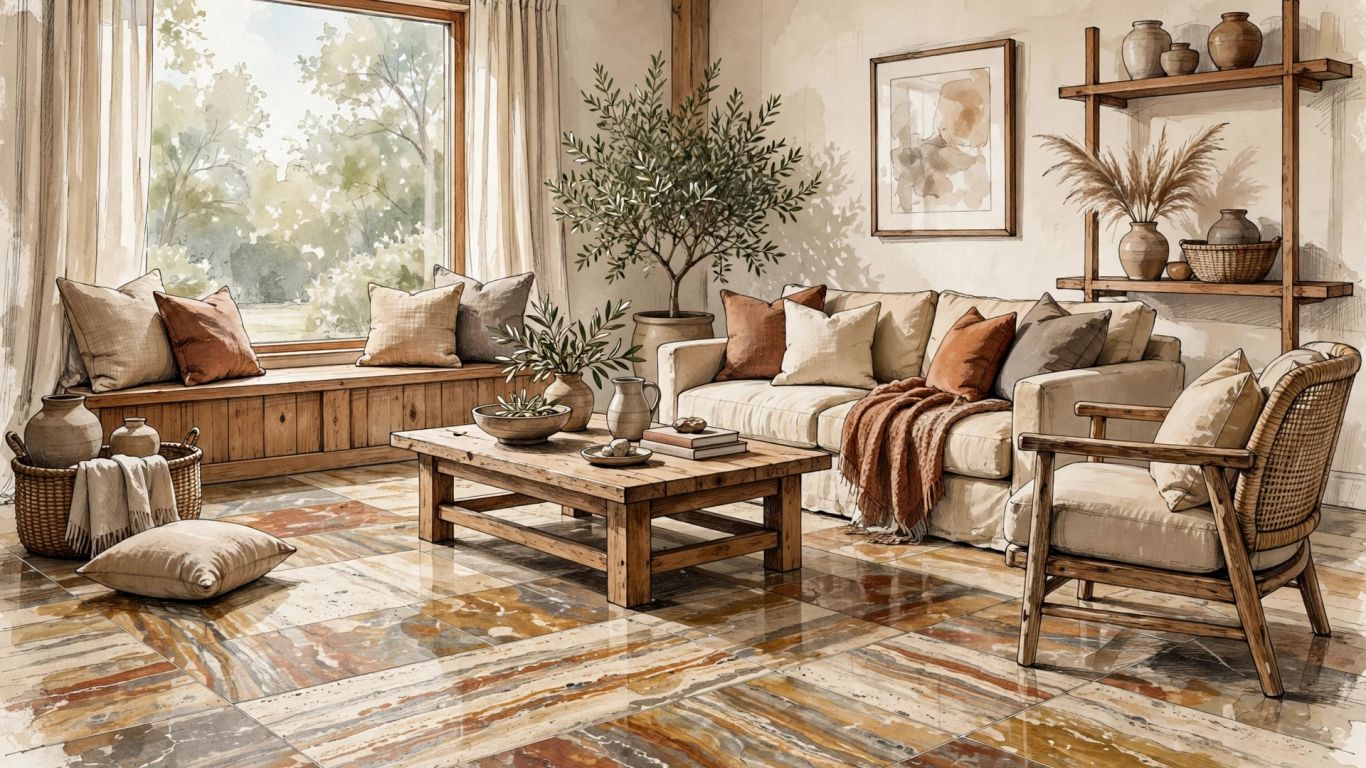
In a living area or entry, the varied pattern can make the floor feel distinctive from the moment someone walks in. Think about how the room connects to nearby spaces, and whether you want the stone to continue across a wider area or remain a feature in one zone. Natural variation makes it worth reviewing several pieces together when planning the final layout.
Kitchen backsplashes and decorative wall features
A backsplash gives Scabos travertine a contained place to show its color and veining. It can add warmth behind a work area without covering the entire room in pattern. Decorative wall features offer another way to use the stone selectively; balance them with quieter surrounding materials so the natural movement remains easy to appreciate.
Bathroom walls and shower floors
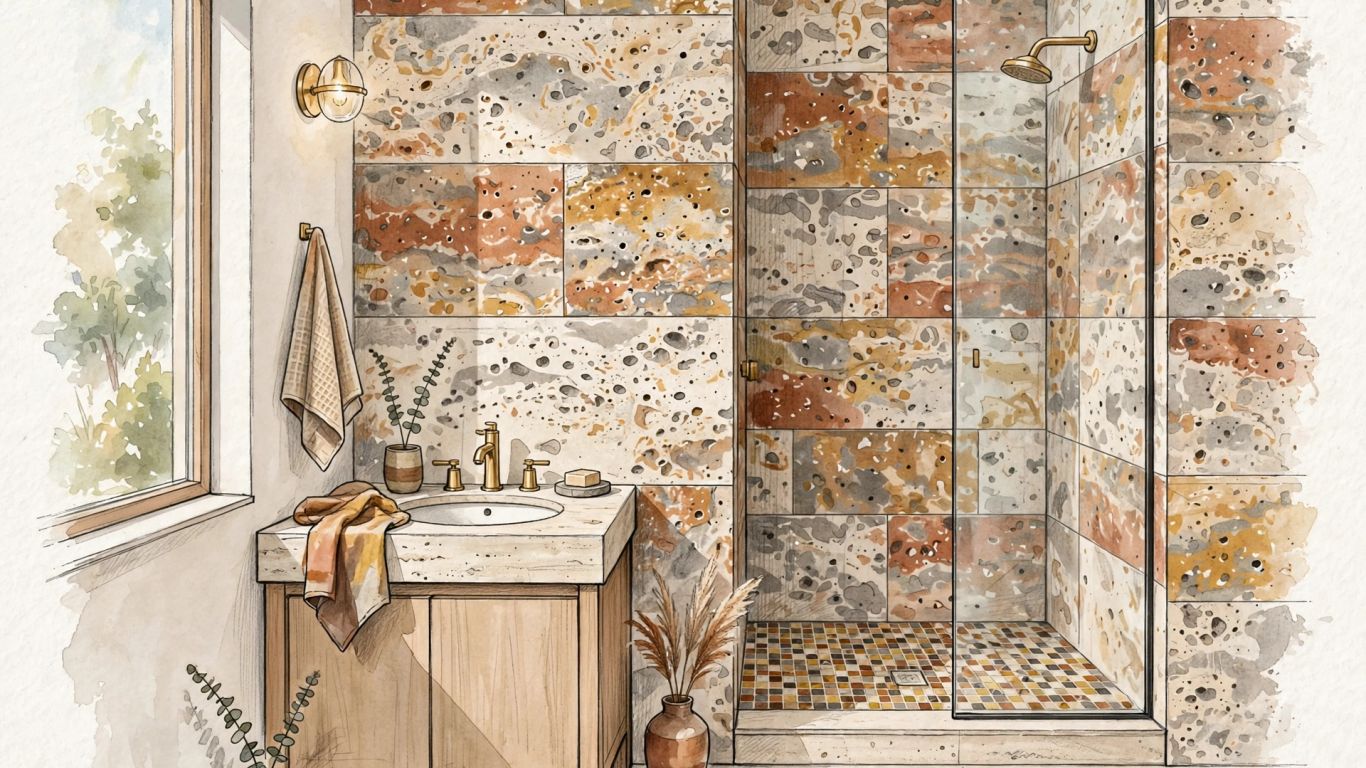
Travertine mosaics are identified as an option for shower floors and accent areas, while tiles can be used on walls. Because bathrooms involve water and specific installation conditions, discuss substrate preparation, sealing, and maintenance with a qualified installer before selecting materials. Consider how the floor, wall, grout, and other finishes will read together in the room.
How to plan for selection and installation
Good planning starts with the actual stone, not just a screen image or a small color chip. Natural variation means pieces may differ, and the final look depends on how the material is arranged. Measure carefully and bring installation questions to your contractor early. A little coordination before purchase can make the selection process more straightforward.
Review samples and natural stone variation
Look at samples in the light and setting where the stone will be installed. Compare the sample with nearby finishes, and remember that one piece cannot represent every color and pattern that may appear across a larger area. For unrelated research tasks, shoppers may also encounter resources such as frontier AI model comparisons, Hades build strategies, Lisbon Valentine’s promotion details, and privacy practices; those subjects are separate from choosing stone.
Measure the space and confirm quantities before ordering
Measure the planned surface and confirm the required quantity with your installer or tile professional. Account for cuts and layout decisions when calculating material, and verify nominal sizes and current availability with the seller before ordering. Comparing options and planning the purchase carefully can help; these general smart shopping tips are useful across categories, though they are not stone-installation guidance.
Discuss substrate, sealing, and maintenance with your installer
Installation details depend on the surface, location, product, and finish, so have a qualified installer review the project conditions. Before ordering, ask about substrate preparation, sealing, grout, and routine care. Keep the guidance specific to the selected material rather than applying a generic stone-care rule to every surface.
Buying Scabos travertine from Surfaces Galore
Surfaces Galore is an Anaheim, California–based supplier of natural stone that ships nationwide. Scabos tile and mosaic selection can change, so check current availability before finalizing a design. With product, quantity, and finish details in hand, it’s easier to request a useful quote and plan the next step.
Check current tile and mosaic availability
Review current tile and mosaic listings and confirm the exact product, finish, and quantity available for your project. If a format is central to the design, verify it directly rather than assuming stock based on an older image or description. Product pages and a sample can help you compare the stone’s natural variation with your plans.
Request a quote and ask about bulk discounts
When requesting a quote, include the product, approximate quantity, and finish you are considering. Ask whether bulk discounts apply to your order, and confirm any details that affect the final purchase. You can request a quote to start the conversation with Surfaces Galore.
Arrange nationwide shipping from the Anaheim, California supplier
Surfaces Galore supplies customers across the United States from Anaheim, California. Confirm shipping details and timing for the order before setting an installation date, especially if the project depends on a particular quantity. Checking those details early helps keep material planning and contractor scheduling in step.
Conclusion
Scabos travertine combines earthy color variation with a range of tile and mosaic possibilities, making it a distinctive choice for floors, walls, backsplashes, and selected bathroom applications. Compare samples, choose a finish with the space in mind, and confirm availability and installation requirements before ordering to bring its natural character into your project with confidence.
Frequently Asked Questions
What colors appear in Scabos travertine?
Scabos travertine can include gold, rust, brown, cream, and gray tones. The balance of colors varies naturally from piece to piece.
Does every Scabos travertine tile look the same?
No. Natural stone varies in color, veining, and pattern, so individual pieces can look different even within one installation.
What finishes are available for Scabos travertine?
Available finishes depend on the specific product. Tumbled and honed or filled finishes are among the styles discussed for travertine products; check the current listing for a particular tile or mosaic.
Can Scabos travertine be used on floors?
Scabos travertine tiles are described for flooring as well as walls and backsplashes. Confirm suitability, installation requirements, and care with a qualified installer for the exact location.
Can Scabos travertine mosaics be used in a shower?
Product information identifies Scabos mosaics for shower floors and accent areas. Review the selected product and discuss wet-area installation with your installer before proceeding.
Should I order a sample before choosing Scabos travertine?
A sample is a useful way to see the stone’s color and texture in your own lighting. Keep in mind that natural variation means a sample will not show every piece in a larger order.
How much extra material should I order?
The amount depends on the measured area, layout, cuts, and the installer’s recommendations. Confirm the quantity with your tile professional before placing an order.

Leave a comment