
Marble mosaic tile: Styles, uses, and a buying guide for timeless design

Key Takeaways
Marble mosaics bring natural stone character to small, detailed surfaces. A good choice balances appearance with the needs of the room.
- Natural veining makes each marble mosaic distinct.
- Color and layout influence whether a design feels quiet or dramatic.
- Choose a finish and application suited to the location.
- Check stone variation, installation requirements, and care before ordering.
- Samples and a clear quote can help make buying easier.
What makes marble mosaic tile a distinctive choice
Marble mosaic tile pairs the character of natural stone with the detail of smaller pieces. Its veining, color variation, and pattern can make a compact backsplash or shower wall feel considered rather than plain. Before choosing a design, think about the overall mood you want and how much visual movement suits the room.
How natural veining gives each mosaic its own character
Marble forms with naturally varied markings, so the pieces in a mosaic are not perfectly uniform. Some stones have fine, quiet lines; others show stronger veins or shifts in tone. Laid together, these differences create a surface with depth and a sense of movement that printed patterns cannot quite reproduce. Reviewing a sample helps set expectations: the installed material may vary from the sample, and that variation is part of natural stone’s appeal.
How small-format pieces add texture and visual detail
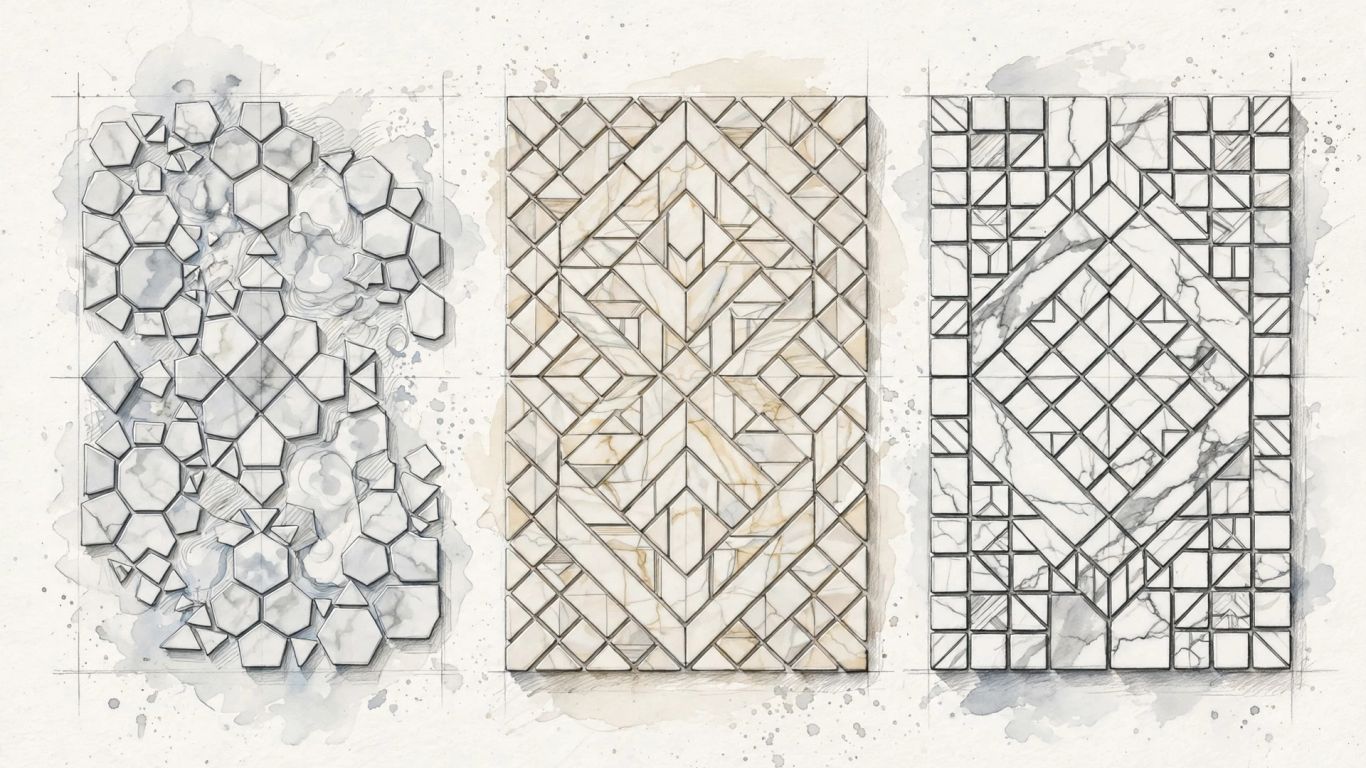
Small pieces break up a surface into a repeating rhythm, adding texture without relying on a large, uninterrupted stone slab. The grout lines become part of the pattern, so their width and color can subtly change the finished effect. A white mosaic with pale grout can read as a soft, continuous surface, while darker grout makes the individual shapes more visible. For a light, patterned option, Carrara White Herringbone combines natural veining with a familiar, orderly layout.
Where marble mosaics suit classic and contemporary interiors
A traditional room might pair a small-scale basketweave with warm metals and painted cabinetry; a contemporary one could use a clean-lined hexagon against simple surfaces. Marble can bridge both styles because its natural variation feels relaxed even when the pattern is precise. A balanced contrast between the mosaic and nearby materials helps it feel integrated rather than overly busy. A restrained setting lets the stone provide the detail.
Explore popular marble colors and patterns
Color and layout shape the first impression of a mosaic, from bright and understated to rich and graphic. Look at the room’s existing cabinetry, fixtures, and floor before settling on a stone. The goal is not to match every surface exactly, but to choose tones and pattern scale that feel at ease together.
Choose Carrara, Calacatta, or Statuario for a light palette
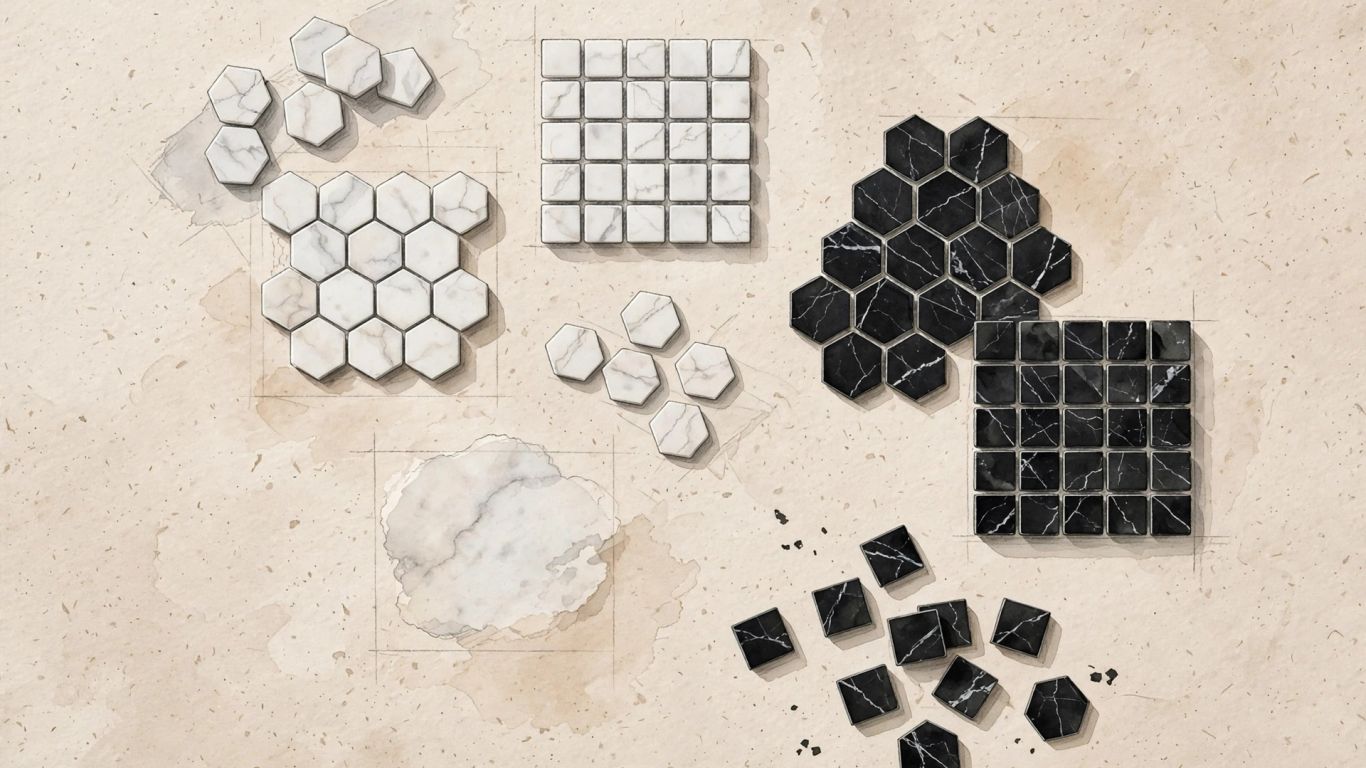
Carrara typically gives a pale ground with softer gray veining, while Calacatta and Statuario can offer a more pronounced, high-contrast look. The exact appearance varies by stone, so treat these as broad design impressions rather than guarantees about a particular batch. Thassos White is another option when a crisp white tone is the aim. A simple comparison can help narrow the palette before you order samples.
| Stone or palette | General visual impression | Design direction |
|---|---|---|
| Carrara | Light ground, soft gray movement | Quiet, classic spaces |
| Calacatta | Light ground, bolder veining | A more expressive focal point |
| Statuario | Bright white with distinct veining | Refined, high-contrast interiors |
| Thassos White | Crisp, clean white | A brighter, restrained palette |
These descriptions are starting points, not promises of a uniform appearance. Compare actual samples with your room’s light and surrounding materials; the stone’s variation can change how the color reads.
Use Nero Marquina or Emperador for dramatic contrast
Dark marble can anchor a room or set off a lighter field tile. Nero Marquina is known for its black appearance with contrasting veining, while Emperador options bring brown tones into the palette. A small dark mosaic may be enough to define a niche or create a focused backsplash detail without making the whole room feel heavy. For example, Nero Marquina Lantern Arabesque uses a distinctive lantern shape to bring pattern and contrast together.
Consider green, gray, and mixed-marble options for added character
Green and gray stones bring color without leaning on a bright, saturated palette. Ming Green offers a gentle green direction, while gray choices can complement white, wood, or metal finishes. Mixed-marble mosaics combine several tones, giving a surface a more layered appearance. The Spanish Mix Marble Mosaic, for instance, blends Crema Marfil with Emperador Light and Dark marble; view a sample to judge how its colors work with your own materials.
Compare herringbone, hexagon, basketweave, and penny-round layouts
The shape of each piece changes the feel of the surface as much as its color does. Herringbone gives linear movement, hexagons create a clear geometric repeat, basketweave looks woven, and penny-round pieces feel softer and more playful. Scale matters: a compact repeat can add detail in a small area, while a bolder shape may hold its own across a larger wall. This marble mosaic tile overview also covers common rooms and uses, useful when comparing patterns for a particular project.
Find the right application for your space
Marble mosaics can bring detail to kitchen and bathroom surfaces, but each location has different practical demands. Walls are generally simpler to plan than floors exposed to water and foot traffic. Consider how the surface will be used, how it will be cleaned, and whether the selected product is suitable for the intended application.
Add a focal point with a kitchen backsplash
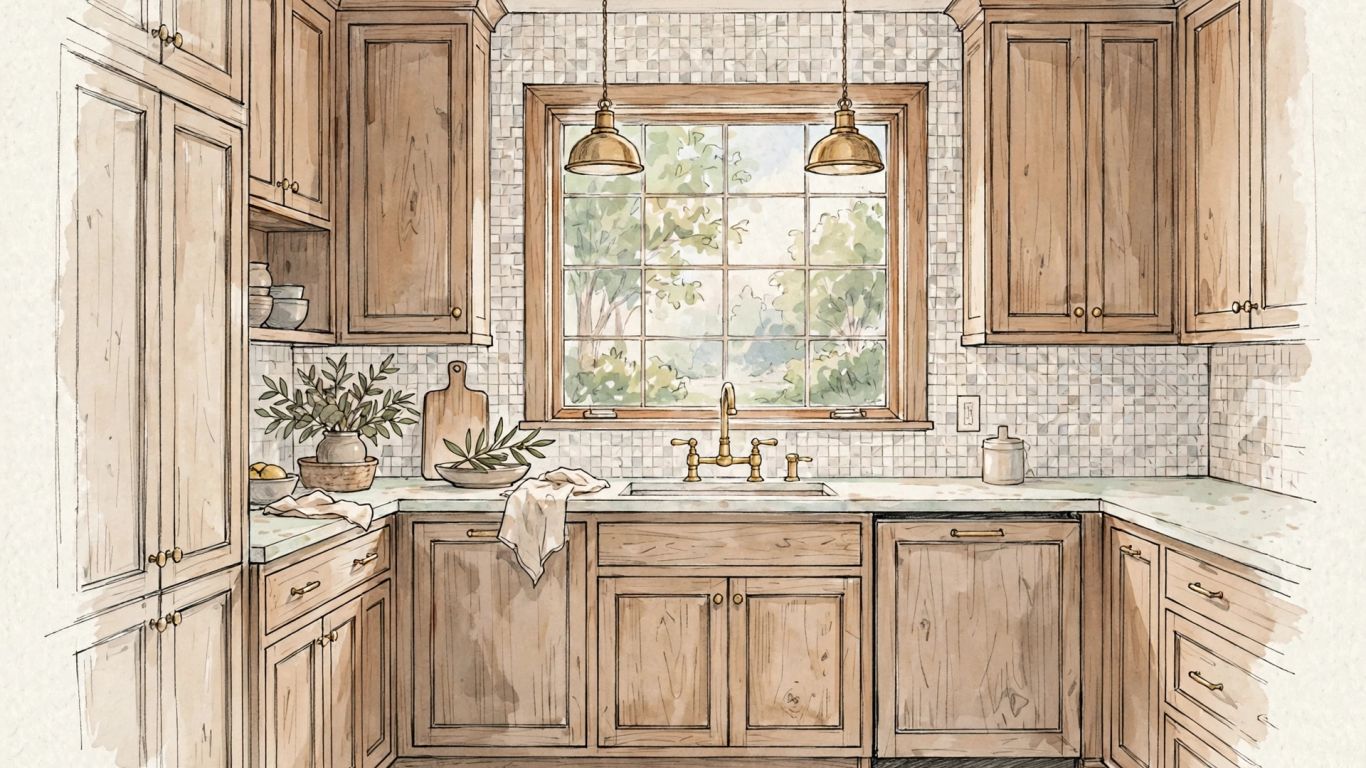
A backsplash gives a patterned mosaic a defined area where it can be appreciated without covering every surface. Light marble can sit comfortably beside many cabinet colors, while a darker or mixed stone can create a stronger focal point. Before choosing, compare the mosaic with countertop samples and cabinet finishes under the kitchen’s actual lighting. That simple check often reveals whether the pattern feels calm or too active.
Create detail on bathroom walls and shower surrounds
On bathroom walls, mosaics can add texture to a shower surround or create a visual link between a larger tile and a small accent. Repeating the same stone in a niche or border can make the design feel intentional, though a single accent area may be enough. Use products suited to the installation and follow the material and setting guidance for the specific tile. For another shape and finish to compare, Carrara White Mini Brick offers a smaller brick-format pattern.
Use mosaics on shower floors with attention to slip resistance
A mosaic’s many joints can help it follow a sloped shower floor, but that alone does not establish that a particular tile is slip-resistant or suitable for every wet floor. Check the product’s stated application and slip guidance, and consult your installer about the surface, slope, and local requirements. Surface finish and maintenance also matter. Make the decision on verified product information rather than appearance alone.
Frame niches, borders, and other interior accents
A niche, border, or small inset is a natural place to use a more intricate pattern. The limited area lets the stone’s color and shape stand out without competing with the main field tile. A thoughtful transition at the edge helps the feature look finished, so plan its dimensions and alignment before installation. Even a modest accent benefits from a layout that follows the room’s lines.
Select a finish for the look and location
The finish changes how marble reflects light and feels visually, while the intended location determines which options should be considered. Polished, honed, and tumbled surfaces each create a different impression. Match the finish to the room’s use, and confirm the product’s suitability rather than assuming every finish works in every setting.
Compare polished, honed, and tumbled surfaces
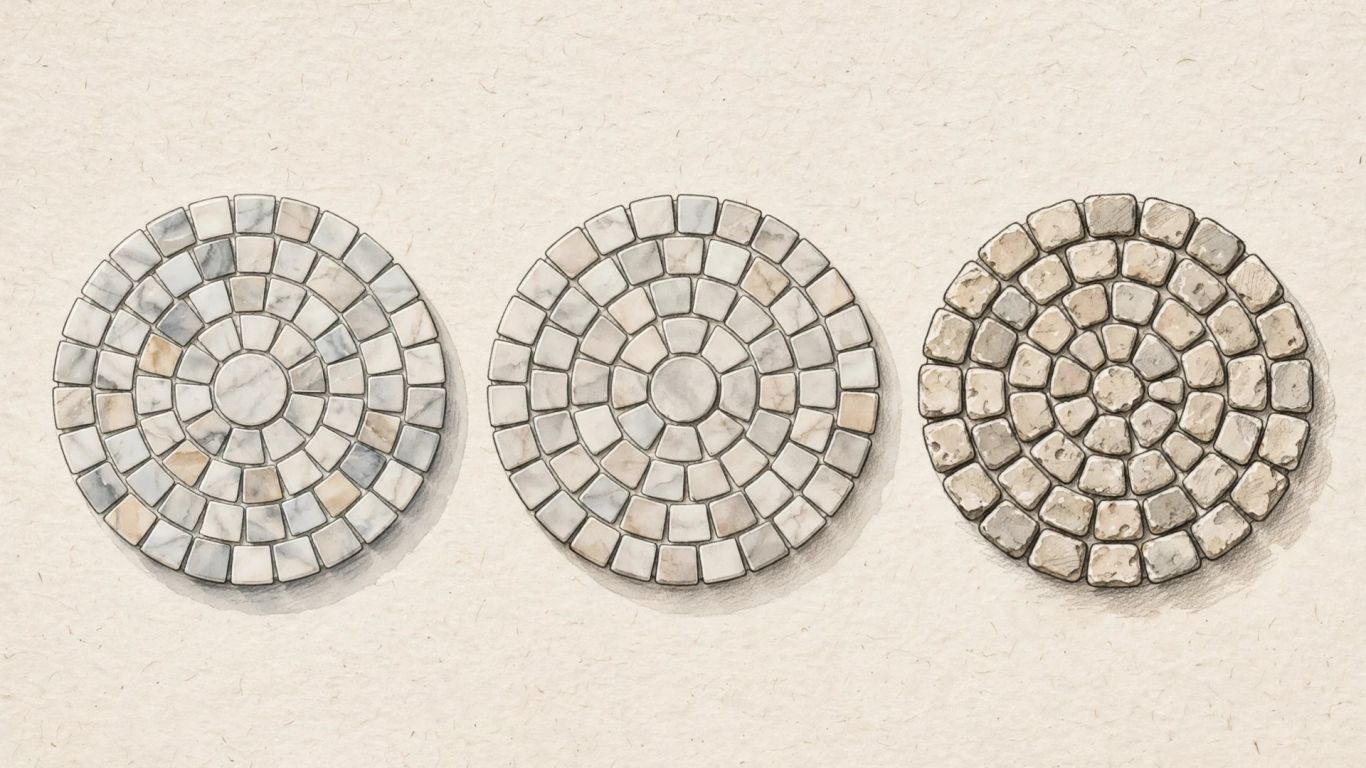
Polished marble has a reflective appearance that can brighten a surface and bring out its pattern. Honed marble has a more subdued, matte look. Tumbled finishes generally give a softer, timeworn character. These are visual distinctions, not a substitute for product-specific performance information. If you are choosing between finishes, put samples beside the materials they will meet and view them in both daylight and the room’s evening lighting.
Balance sheen, texture, and maintenance needs
A high sheen may suit a formal or luminous look, while a quieter surface can sit more subtly among other finishes. Texture also changes how the stone is experienced and cleaned, so consider routine care as part of the design decision. Stone care can vary by product and finish; follow the supplier’s instructions and ask your installer what is appropriate for the chosen material. A beautiful finish is one you can comfortably maintain.
Check suitability for wet areas and floor traffic
Before using marble mosaic on a shower floor or another high-use floor, verify the exact product’s application guidance. Ask about slip considerations and whether the stone is recommended for the conditions in your project. The name of a finish alone does not confirm performance in a wet area. For walls and floors alike, product details and professional installation advice are more useful than assumptions based on appearance.
Coordinate the finish with grout and surrounding materials
Grout can either recede into the stone or emphasize the mosaic’s individual pieces. A close color match creates a quieter effect, while contrast makes each shape more distinct. Look at grout samples next to the tile rather than choosing from a chart alone; the stone’s natural color variation can affect the result. Coordinate metal finishes, paint, and adjacent tile at the same time to keep the overall palette cohesive.
Plan for installation and long-term care
A well-planned installation starts before the first sheet is set. Measure carefully, check the layout, and make sure the installer has current product guidance for the tile and setting materials. Natural stone also benefits from careful handling and a routine that suits the exact marble and finish.
Measure the area and account for sheet layout
Measure the full installation area and discuss how sheets will meet at edges, corners, and transitions. Mosaic sheets can make layout faster, but their alignment and spacing still need attention. Confirm the coverage calculation with your installer, including an appropriate allowance for cuts and selection. Reviewing the planned layout ahead of time can reduce awkward slivers and help the pattern read consistently across the surface.
Choose suitable setting materials and grout
Use setting materials and grout that are compatible with the specific stone, the installation location, and the manufacturer’s recommendations. Test the intended combination on a sample when possible, particularly if grout color or cleanup could affect the marble’s appearance. Before ordering materials, it is useful to have a short project checklist:
- Confirm the tile’s intended application and installation instructions.
- Check the substrate and surface preparation with your installer.
- Choose compatible setting materials and grout.
- Plan cuts, edges, transitions, and the sheet layout.
That preparation gives the installer a clearer plan and helps avoid relying on guesswork once the work is underway. For detailed planning, Surfaces Galore provides product-specific guidance alongside its marble mosaic offerings; confirm the instructions for the item you select.
Seal marble and follow product-specific care guidance
Whether and how to seal a marble mosaic depends on the product and its guidance, so confirm the recommended approach before installation. If sealing is advised, use a product suitable for the stone and follow its application instructions. Cleaning products should also be stone-safe. Keep the care directions available after the project is complete, so routine maintenance follows the material rather than a general rule that may not fit it.
Natural stone rewards a little planning: check the product guidance before installation, then keep care simple and consistent.
A few straightforward habits can help protect the finished surface. Ask the installer which care products are appropriate, and follow any drying or curing times before regular use. For other kinds of project research that may appear alongside tile searches, see contractor payment platforms, March Madness parlays, Traffic Secrets, ABA therapy costs, or ways to re-engage cold leads—these topics are separate from choosing stone.
Prevent etching and staining with prompt cleanup
Marble can be affected by substances that etch or stain, so clean spills promptly and avoid harsh or acidic cleaners unless the care instructions specifically approve them. Use a soft cloth and a cleaner intended for natural stone. A small care routine is easier to maintain than waiting until marks become more difficult to address. When in doubt, check the product guidance before trying a new cleaner.
Buy marble mosaic tile with confidence
Buying well begins with a clear idea of the color, pattern, finish, and location you have in mind. Confirm current stock and the product’s details, then compare a sample with the room before committing to a larger quantity. If you are searching to buy marble tiles online in the USA, written product information and a direct quote can help you make a more informed decision.
Confirm material, pattern, finish, and current stock
Check that the listing identifies the material, mosaic layout, finish, and intended application you need. Confirm current stock and ask what details are available about sheet size, coverage, and ordering. If a project depends on matching existing stone, share that context before you buy rather than relying on a broad color name alone. Surfaces Galore offers marble mosaics in a range of colors, patterns, and finishes; verify the current product details for your selection.
Order samples and allow for natural stone variation
A sample gives you a chance to see the stone’s real color and surface in the space where it will be installed. Natural marble varies, so a small sample cannot show every piece in a larger order. Check how the sample looks beside grout, cabinetry, and adjacent tile, and ask about the product’s natural variation. You can order marble samples to compare the material at home; Surfaces Galore lists sample shipping from $8.99.
Request a quote and ask about bulk pricing
For a larger renovation, request a quote with the planned quantity and finish, and ask whether bulk pricing is available. Confirm the amount needed with your installer and discuss timing before placing an order. Surfaces Galore is an Anaheim-based direct importer and nationwide supplier, with shipping options for customers across the United States. A written quote helps keep product selection, quantity, and delivery details clear.
Explore Surfaces Galore’s collection and nationwide shipping options
Surfaces Galore offers marble and travertine tiles, mosaics, and moldings, with natural stone options for a range of interior projects. Browse the collection, check current product information, and contact the supplier with questions about stock, quotes, or shipping. For a project requiring a coordinated finish and quantity, share the intended use and area so the order can be discussed with the right details in view.
Conclusion
Marble mosaic tile brings natural variation, pattern, and tactile detail to kitchens, bathrooms, and interior accents. Choose the color and layout that suit the room, verify that the finish fits its location, and plan for stone-specific installation and care. Samples and a clear quote make it easier to move from inspiration to a confident purchase.
Frequently Asked Questions
Is marble mosaic tile suitable for bathrooms?
It can be used on bathroom walls and other surfaces when the specific product is appropriate for the application. Check the product guidance and consult an installer, especially for wet areas and floors.
Can marble mosaic tile be used on a shower floor?
Some marble mosaics may be suitable, but suitability and slip considerations depend on the product and installation. Confirm the manufacturer’s guidance and ask a qualified installer before selecting a shower-floor tile.
What is the difference between polished and honed marble mosaic?
Polished marble has a reflective sheen, while honed marble has a more matte appearance. Compare samples in the room and check the care and application information for each product.
Does every marble mosaic sheet look the same?
No. Marble is natural stone, so color, veining, and texture can vary between pieces and sheets. A sample helps you understand the material, but it may not show the full range of variation in an order.
How do I choose grout for marble mosaic tile?
Choose grout compatible with the stone and installation, and compare its color with a tile sample. Ask your installer to follow the tile and grout manufacturers’ instructions.
Does marble mosaic tile need to be sealed?
Sealing recommendations depend on the particular marble product and its care guidance. Confirm whether sealing is advised and use a product suitable for that stone and finish.
How should I clean marble mosaic tile?
Follow the care instructions for the specific tile, use a stone-safe cleaner, and clean spills promptly. Avoid acidic or harsh products unless the product guidance specifically approves them.

Leave a comment