
Marble floors: A guide to choosing the right stone, finish, and pattern

Key Takeaways
Marble floors bring natural pattern and a distinctive finish to a room, but the right choice depends on more than color. Consider how the stone will look, feel, and perform in the space where it will be installed.
- Natural veining means no two marble tiles look exactly alike.
- Choose a color and pattern that work with the room’s light and finishes.
- Polished and honed surfaces create different looks and underfoot impressions.
- Plan tile layout, installation, and ongoing care before buying.
- Compare samples, sizes, finish, and available stock before placing an order.
What makes marble floors a lasting design choice
Marble has a visual depth that comes from the stone itself: gentle shifts in tone, fine lines, and bolder veins all vary from tile to tile. That natural character can feel at home in a quiet, simple interior or a more formal one. A little planning helps the finished floor feel considered rather than overly ornate. For many homeowners, the appeal is that the surface feels both classic and personal.
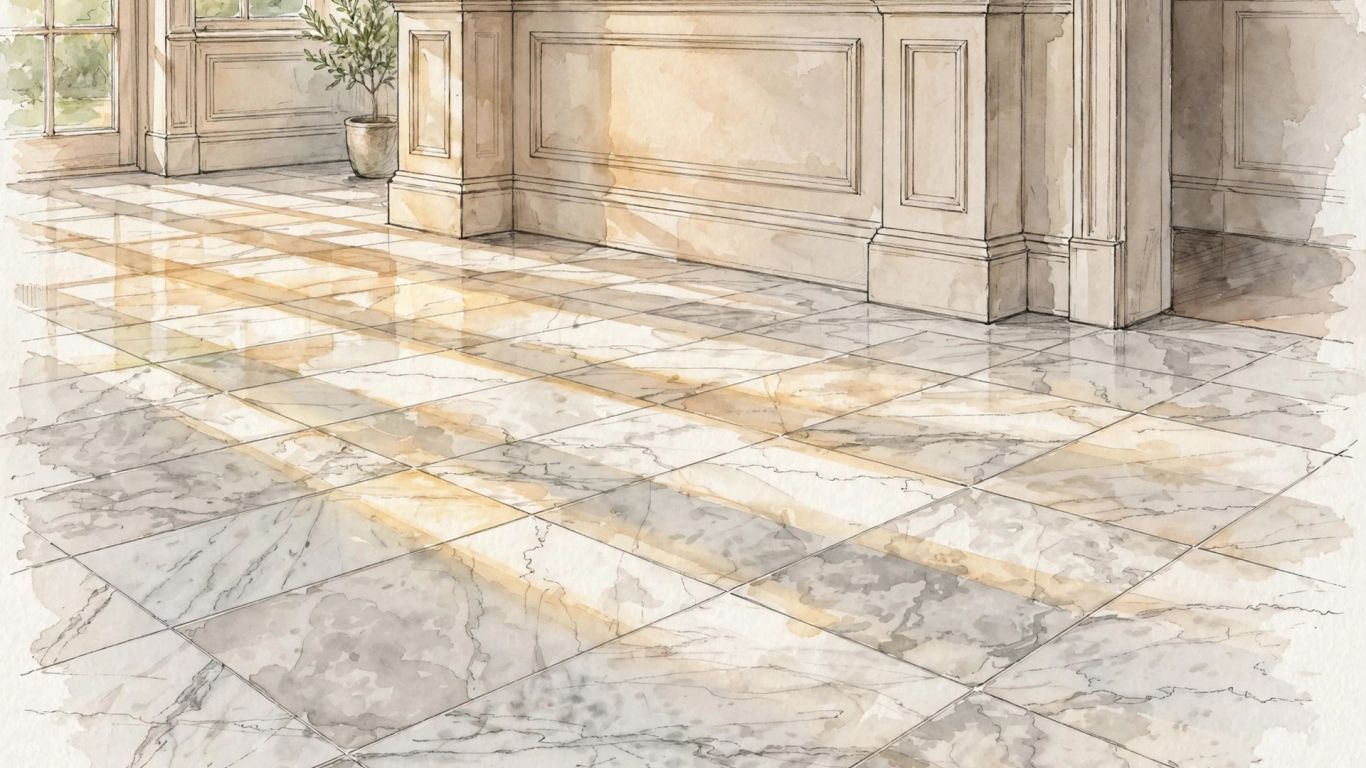
Natural veining and color create a one-of-a-kind look
Marble is formed with its own patterns and tonal variations, so a floor has a character that printed surfaces cannot reproduce exactly. Some stones have fine, delicate lines; others have dramatic veins that become a focal point. When comparing options, view several tiles together rather than judging a single piece. The overall mix is what gives the finished floor its distinctive natural variation.
Marble can bring elegance to homes and commercial spaces
A marble floor can set the mood before furniture or decor enters the picture. White and pale gray stones can feel airy, while darker colors give a room a stronger, more grounded look. In a home, marble can suit a foyer, bathroom, or kitchen; in a commercial interior, it can add a composed, polished note to a reception area or corridor. The best result comes from matching the stone’s presence to the scale and use of the room.
Quality stone flooring can support long-term property appeal
Natural stone is a substantial design choice, and its enduring look can contribute to a home’s overall appeal. That does not mean every marble floor is right for every buyer or every room: marble can scratch and stain more readily than some other flooring materials, so care matters. Think of the decision as a balance between the look you love and the maintenance you are willing to take on. A well-planned installation can remain a beautiful part of a space for years.
How to choose marble for your space
Start with the room, then narrow the choice by color and veining. The same stone can read differently in bright daylight and warm evening light, so a sample is useful before committing. Consider what is already fixed in the room, such as cabinetry, wall color, and hardware. The goal is not to find a stone that matches every detail, but one that belongs with the whole scheme.
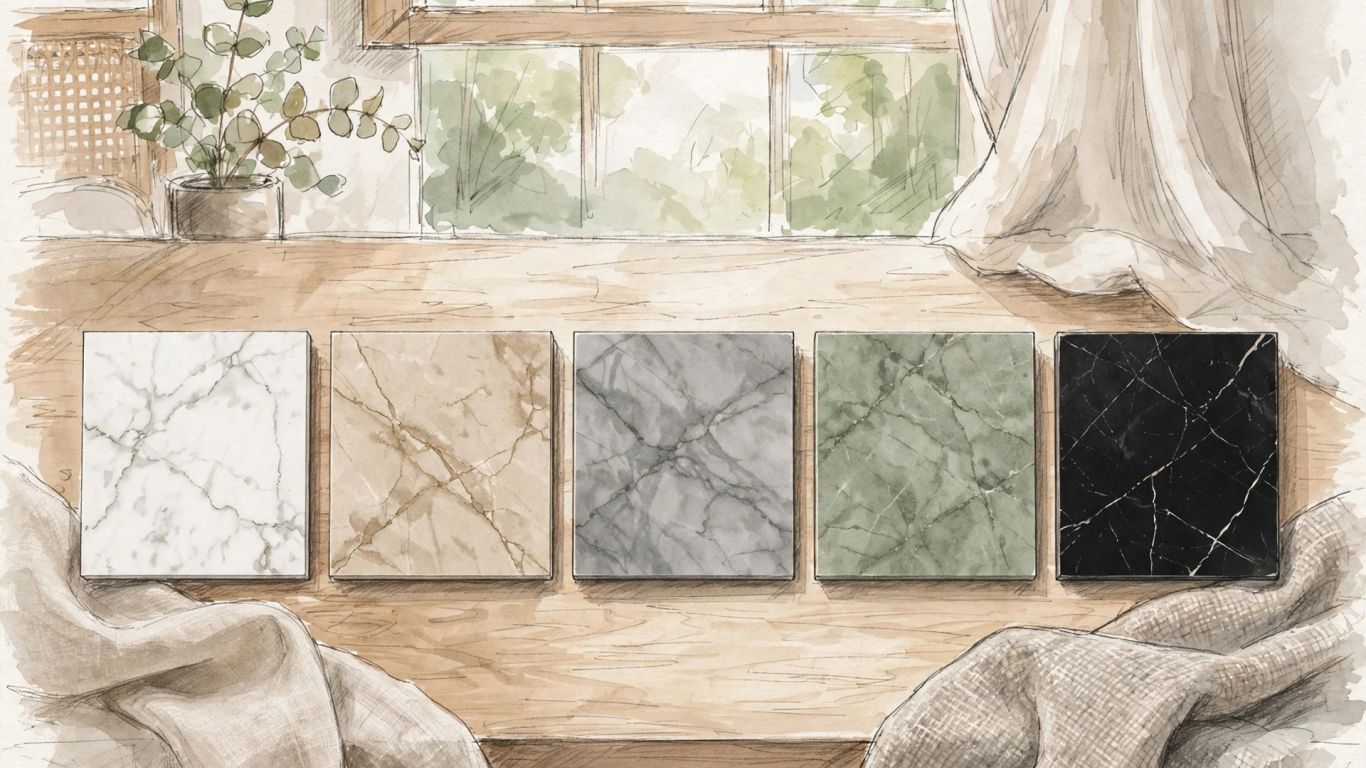
Compare white, beige, gray, green, and black marble
Each color family brings a different feeling, and veining adds another layer to the choice. White marble can look crisp or soft, beige tones bring warmth, gray often feels restrained, green adds color without losing a natural quality, and black can create strong contrast. Use this quick comparison as a starting point, then look at actual samples in your room.
| Marble color | Typical visual effect | Consider it when |
|---|---|---|
| White | Bright, classic, and open | You want a light foundation |
| Beige | Warm and softly varied | The room has warm wood or neutral tones |
| Gray | Calm and understated | You want a cooler, balanced palette |
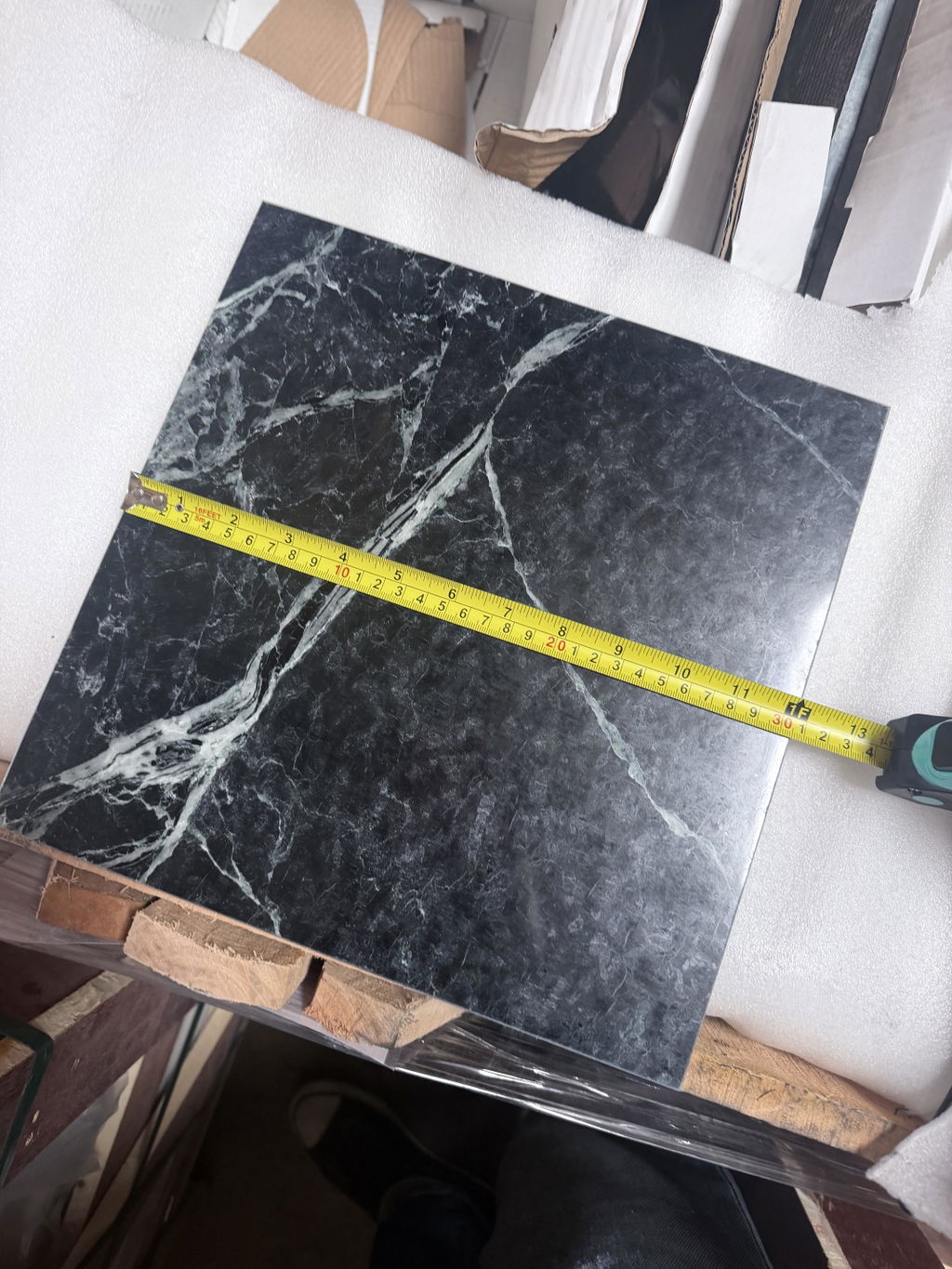
| Green | Distinctive and richly colored | You want a natural accent with personality |
| Black | Dramatic and high contrast | You want the floor to make a clear statement |
The descriptions are broad rather than fixed rules; each stone’s veining and lighting can shift its appearance. For a classic pale option, Carrara White marble has natural veining and comes in polished or honed finishes. If you are comparing other stone types as well, this marble flooring comparison offers another way to think about appearance and use.
Match the stone’s color and veining to your design scheme
Look at marble alongside the materials it will meet: wood, paint, cabinets, and nearby tile. A strongly veined floor can become the room’s main visual feature, while a quieter pattern leaves more room for patterned fabrics or detailed cabinetry. Do not rely on a small screen image alone; place a sample where the floor will go and see it at different times of day. Small shifts in color can feel surprisingly different under warm bulbs.
Consider room use, foot traffic, and moisture exposure
The way a room is used should influence the finish and maintenance plan, not just the stone color. Marble is more prone to scratching and staining than harder, less porous stone, so think carefully about busy areas and routine spills. For moisture-prone spaces, consider a honed or textured surface and assess slip resistance with a qualified installer. A family entry, a powder room, and a quiet bedroom floor may call for different priorities.
Which marble floor finish and format fit your project
The finish changes how marble reflects light and how its surface feels, while tile format affects the rhythm of the floor. A large tile can make a small room feel less interrupted by grout lines; smaller pieces add pattern and more joints. Neither choice is universally better. The right one depends on the room, the desired mood, and the practical demands of installation.
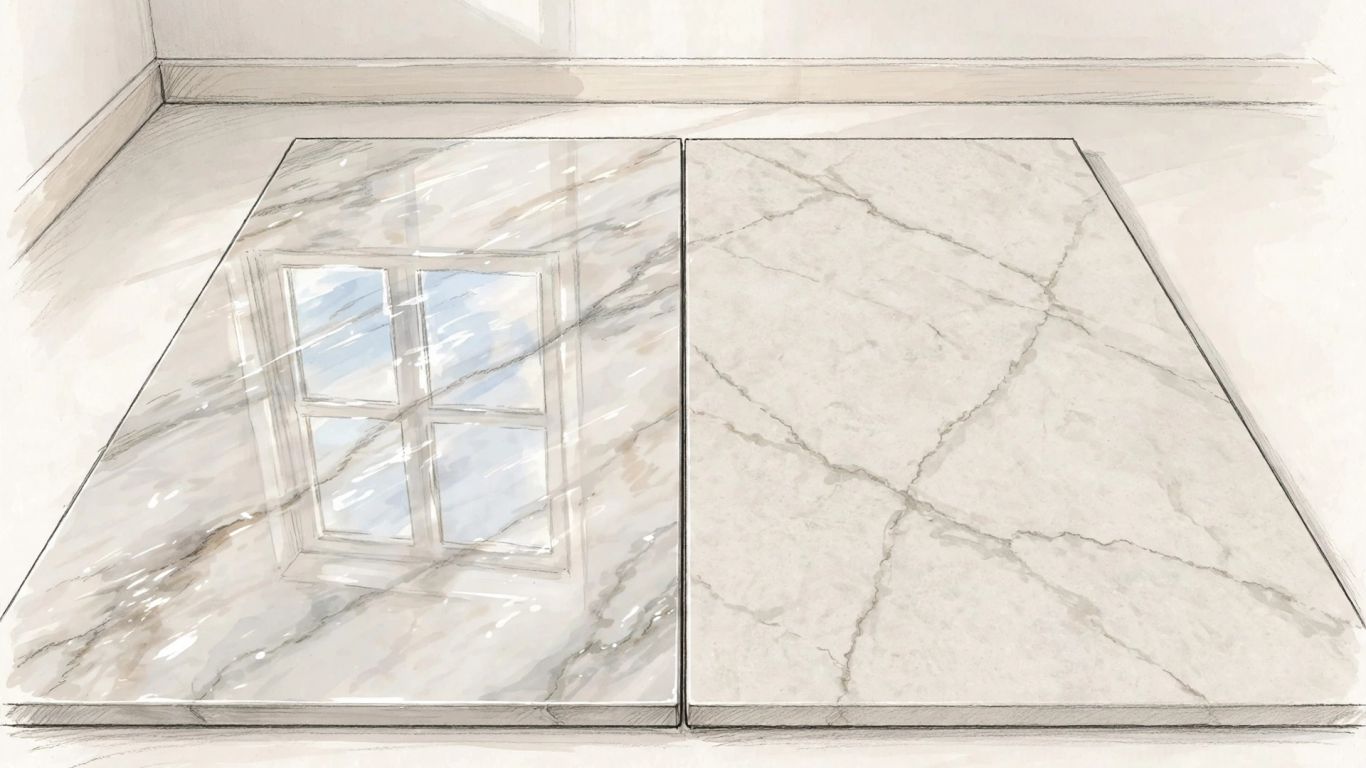
Choose polished marble for a reflective, formal appearance
Polished marble has a smooth, reflective surface that can bring light and a formal quality to an interior. It works especially well when you want the stone’s color and veining to read clearly. Keep in mind that a glossy surface may show marks and can be slippery when wet, so assess whether it suits the room’s conditions. The Marble Tiles collection from Surfaces Galore includes polished options alongside other finishes.
Consider honed marble for a softer, matte look
Honed marble has a matte appearance that feels softer and less reflective than polished stone. It can suit floors where a quieter finish is preferred, including hallways and main living areas. A matte surface does not make marble immune to staining or scratches, so regular care is still part of ownership. Compare polished and honed samples in the same light before deciding; the contrast can be more apparent in person.
Explore tile sizes, mosaics, and checkerboard patterns
Tile size and layout set the pace of a floor. Larger pieces create a calmer field, while mosaics and smaller formats introduce more detail; a checkerboard pattern gives the floor a crisp graphic quality. For example, a small powder room might suit a modest-format tile, while an open foyer can carry a larger format or bold pattern. If you are considering a patterned floor, marble layout ideas can help you explore solid tiles, mosaics, and patterned sets.
Where marble floors work best
Marble can make a memorable impression, especially where the floor is visible as soon as someone enters. It also brings color and texture to kitchens and bathrooms, although moisture and daily use call for careful material selection. In commercial settings, the design should be weighed against traffic and the maintenance plan. Think about the experience of the whole room, not just the tile viewed on a sample board.
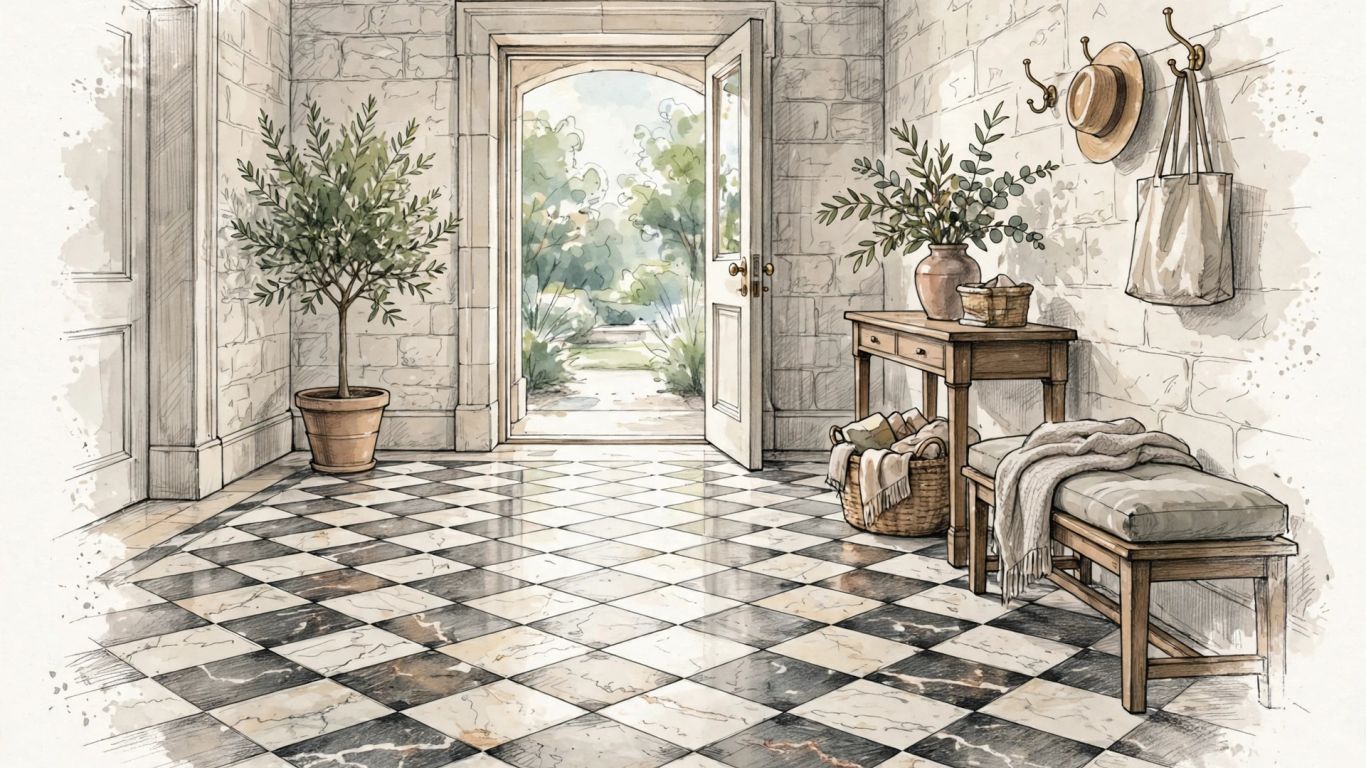
Create a striking first impression in entryways and foyers
An entry is a natural place for a stone floor to take center stage. A light marble can make the space feel open, while contrasting colors or a checkerboard layout create a more graphic welcome. Consider how much grit and moisture shoes may bring inside, and plan for mats and regular cleaning. If you want a classic white-and-gray look, Carrara White Italian marble is one option to explore in a smaller tumbled format.
Use marble tiles to add character to kitchens and bathrooms
In a kitchen or bathroom, marble can connect the floor to other stone details or provide contrast against painted cabinetry and simple walls. These rooms also see spills and moisture, so select a finish with the setting in mind and follow product-specific sealing and care guidance. In wet areas, have a qualified professional evaluate slip resistance rather than assuming that a particular color or pattern is safer. An understated stone can add plenty of character without making the room feel busy.
Plan for commercial interiors and other high-traffic spaces
A lobby, corridor, or retail interior can benefit from the formality of marble, but busy spaces need a realistic maintenance plan. Consider how often the floor will be cleaned, how much foot traffic it will receive, and whether the selected stone and finish suit those conditions. Natural variation can be an advantage in a large area, since the pattern feels less uniform. For a commercial project, review samples and installation requirements with the design and flooring teams before ordering.
What to know about installation and care
Good preparation starts before the first tile is set. Marble can vary in color and pattern, and each piece should be checked for cracks, chips, warping, or other concerns before installation. A dry layout lets you review the distribution of veining and avoid awkward cuts at the edges. Use the tile maker’s installation instructions and work with a qualified installer familiar with natural stone.
Prepare the subfloor and plan the tile layout
A stable, properly prepared subfloor and a thoughtful layout help the finished floor look even and intentional. Before using adhesive, arrange the tiles dry and mix pieces from different boxes to see how the natural variation comes together. Check the proposed cuts at walls and doorways, and confirm grout spacing with the product recommendations. Set aside any tile that appears damaged or unusually warped before it is fixed in place.
Use stone-appropriate products for routine cleaning
For everyday care, use a cleaner intended for natural stone and follow its label. A pH-neutral product is a sensible choice; acidic cleaners such as vinegar or lemon can damage marble. Keep cleaning simple, and avoid abrasive tools that may mark the surface. Sealer and cleaning instructions vary, so use the product maker’s guidance rather than assuming one schedule fits every floor.
Protect marble from staining, scratches, and acidic spills
Marble is porous and can be vulnerable to stains, scratches, and acidic spills, so a few everyday habits help protect its appearance. A short routine can make care easier to remember:
- Wipe up spills promptly, especially acidic liquids.
- Use mats near exterior doors to catch grit and moisture.
- Lift furniture when moving it instead of dragging it across the floor.
- Use a stone-appropriate sealer according to its instructions.
These steps reduce avoidable wear but do not make marble maintenance-free. If a stain or etch appears, consult a stone-care professional before trying an aggressive treatment.
How to shop for marble floor tiles
A good purchase begins with a clear picture of the project: room dimensions, preferred look, finish, and expected installation date. Compare actual stone samples where possible, and confirm that the format and quantity fit the layout. Natural stone varies, so ask how current stock compares with the sample you have seen. Buying marble tiles online in the USA is easier when you have checked these details before checkout.
Compare stone selection, finish, size, and available stock
Review the stone name, finish, tile dimensions, and quantity available as a group, rather than choosing on color alone. If a floor uses more than one size or pattern, confirm that the pieces work together and that the total quantity includes a reasonable allowance for cuts. Surfaces Galore is a direct importer of natural stone, including marble and travertine, and serves projects across the United States. When reviewing a stone listing, Nero Marquina black marble tile is an example of a dark option with polished and honed finishes.
Request samples or a quote before placing an order
A sample lets you see the stone’s color and texture in the actual room, and a quote helps clarify the order before you commit. Confirm the measurements, finish, shipping details, and intended installation timing. For a broader view of marble colors and finishes, you can also explore marble floor tiles. If the project involves several trades or overlapping decisions, a few adjacent resources may be useful too: end-grain board construction, choosing gemstones, ADO Time Tracker, Taylor Family Store, and local marketing guidance. They address separate topics, but may help with kitchen planning, personal design choices, work tracking, estate planning, or a small business project.
Ask about bulk discounts, nationwide shipping, and project support from Surfaces Galore
For a larger project, ask whether bulk pricing applies and confirm shipping arrangements before finalizing the order. Surfaces Galore provides nationwide shipping and project support, and its team can help with questions about dimensions and installation. These details are worth settling early, especially when materials need to arrive in coordination with a contractor. To begin planning, request a marble tile quote with the size, finish, and quantity you have in mind.
Shop Marble with Confidence
Review current stone options, request a sample or quote, and choose marble tiles that suit your room, finish preference, and project needs.
Conclusion
Marble floors reward a little patience at the selection stage: compare the stone in real light, weigh finish and format against the room’s use, and plan installation and care before ordering. With those decisions in place, natural veining and color can give a space a lasting sense of character.
Frequently Asked Questions
Are marble floors suitable for busy rooms?
They can be used in busy rooms, but marble is more prone to scratching and staining than some other stones. Consider traffic, finish, cleaning routines, and the level of maintenance you are comfortable with.
Is polished or honed marble better for flooring?
Neither finish is best for every room. Polished marble is reflective and formal, while honed marble has a softer matte look; compare samples and account for moisture and slip resistance.
What marble color works in a small room?
White and pale gray marble can help a small room feel brighter, though veining and lighting affect the overall impression. Test a sample in the room before making a final choice.
Does marble need to be sealed?
Marble is porous and may require sealing to help protect against stains and moisture. Follow the recommendations for the specific tile and sealer, including instructions about reapplication.
How do I clean marble floor tiles?
Use a cleaner designed for natural stone and follow its label. Avoid acidic cleaners such as vinegar and lemon, and wipe spills promptly.
How should I plan a marble tile layout?
Dry-lay tiles before applying adhesive so you can review the pattern, distribute color variation, and avoid awkward cuts. Inspect each piece before installation and confirm grout spacing with the product guidance.
How much extra marble tile should I order?
The amount depends on the room’s dimensions, tile format, layout, and number of cuts. Ask your installer or supplier to calculate the required quantity and discuss whether extra pieces are advisable for future repairs.

Leave a comment