
Carrara white marble: a guide to styles, uses, and care

Key Takeaways
Carrara white marble pairs a bright, restrained palette with the distinctive variation of natural stone. Choosing a format, finish, and care routine that suit the room helps the material feel considered for years to come.
- Its white background and gray veining vary naturally from piece to piece.
- Tiles, slabs, mosaics, and trim offer different ways to use the stone.
- Polished, honed, and tumbled finishes create different looks and surface experiences.
- Careful layout planning, suitable installation materials, and marble-safe cleaning matter.
- Check current stock, sizing, and project quantities before placing an order.
What makes Carrara white marble distinctive
Carrara white marble is known for a light background and subtle gray veining that gives a room movement without overwhelming it. The look can read as crisp and quiet from a distance, then reveal finer details up close. Because it is natural stone, pieces are not identical, and that variation is part of the design. It suits both classic interiors and more pared-back rooms.
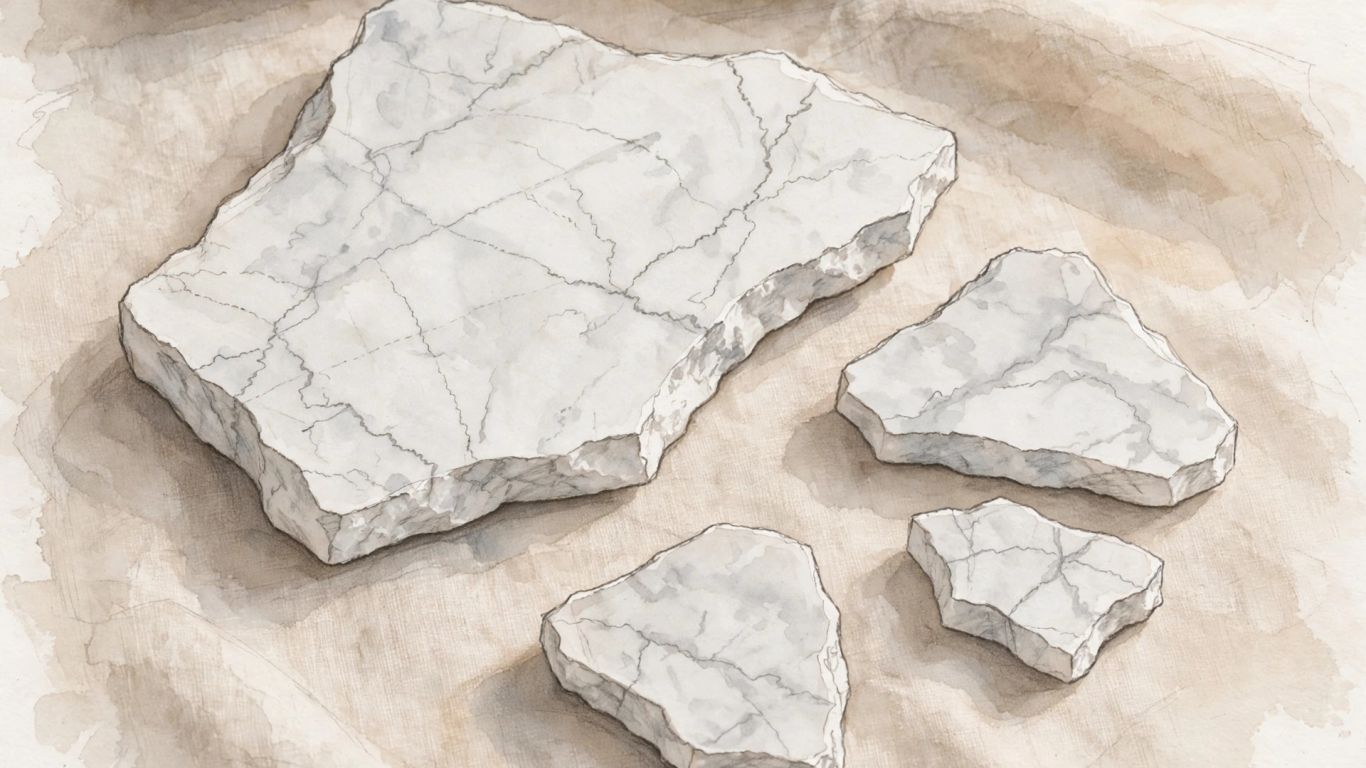
The white background and characteristic gray veining
The appeal starts with contrast: pale stone, crossed by gray lines that may be delicate, smoky, or more noticeable from one piece to the next. That restrained palette is easy to coordinate with wood, painted cabinetry, metal, and other stone. Carrara works as a broad field across a floor or wall, but it can also bring a quiet point of interest to a smaller surface. A subtle, layered pattern keeps the room from feeling flat while leaving space for other finishes.
How natural variation affects the look of each piece
Natural marble is not printed or mechanically uniform. Vein direction, tone, and small surface differences can shift among tiles, and slabs may have their own distinct patterns. Before installation, lay out pieces where possible and move them around until the overall mix feels balanced. For a broader view of natural stone’s long history in buildings and sculpture, read this Carrara marble history overview.
Carrara marble compared with Calacatta and other white stones
White stones can share a bright starting point while differing in the character and prominence of their markings. Carrara is often chosen for a more understated gray-on-white effect; the right choice depends on the particular stone and the visual weight you want in the room. Comparing samples in the actual light of the space is more helpful than relying on a name alone. Color temperature, neighboring materials, and the scale of the installation all affect how the stone reads.
Carrara white marble products and finishes
Carrara white marble comes in formats suited to large, simple surfaces as well as more detailed layouts. Tile can cover floors, walls, and backsplashes, while slabs create a continuous stone surface and mosaics introduce smaller pieces and patterns. Surfaces Galore offers Carrara White tiles in various sizes and finishes, along with slabs and mosaics. The selection of format is not just a practical decision; it shapes the rhythm of the room.
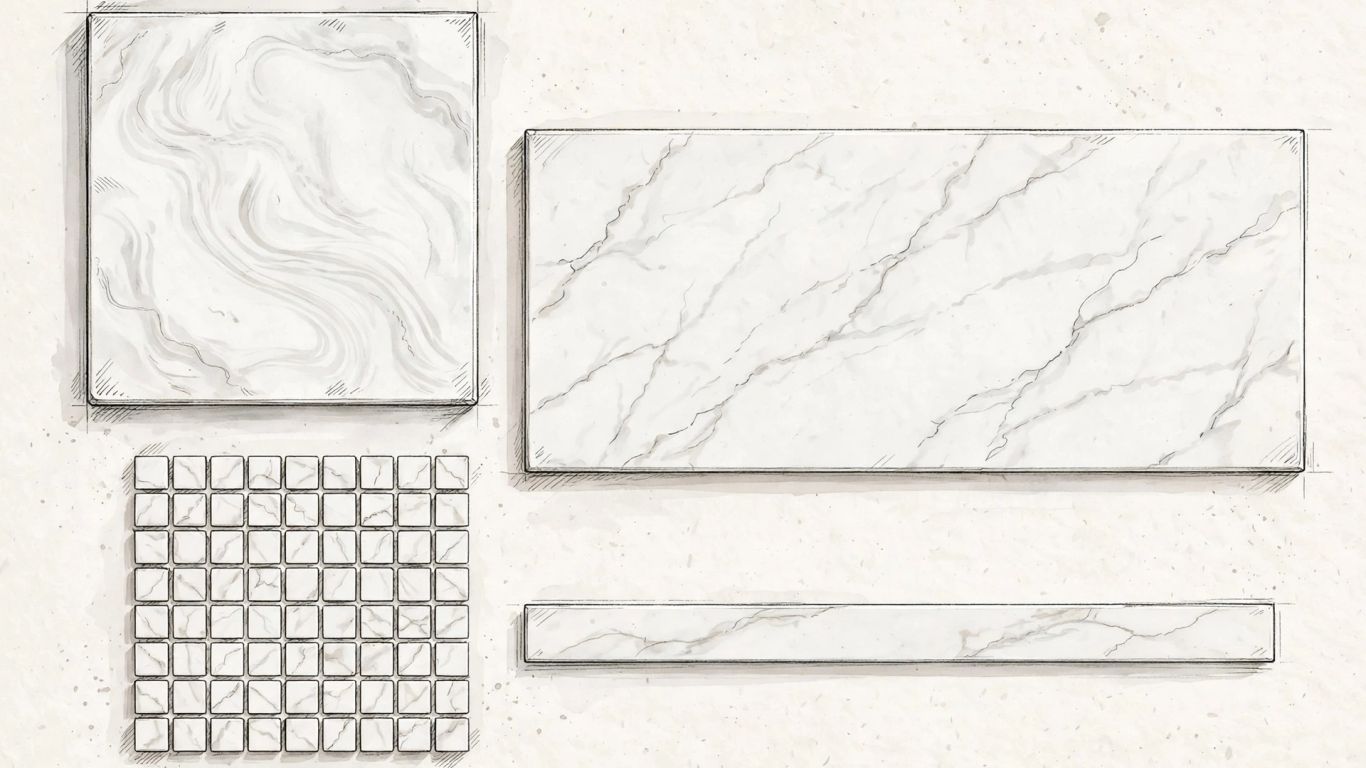
Tile sizes and formats for floors and walls
A larger tile can make a floor feel more open, while smaller formats provide more grout lines and flexibility around compact areas or detailed layouts. Rectangular tiles can run in a straight, offset, or herringbone arrangement, depending on the product and installer’s plan. For one example, explore Carrara White 24x24 tile; natural variation means the actual pieces will not look exactly alike. Confirm nominal dimensions and layout details before ordering.
Slabs, mosaics, and decorative trim
Slabs can create a broad, continuous look for a countertop or other surface, with the natural pattern becoming a focal point. Mosaics bring smaller units together for a different scale of detail, and decorative trim can provide a finished edge or transition. Surfaces Galore’s Carrara White range includes slabs and mosaics as well as tiles, giving projects several ways to use the same stone family. A Carrara White mosaic is one option to consider for a patterned wall or accent area.
Polished, honed, and tumbled finish considerations
Finish changes the way light moves across the marble and how its surface feels. A polished finish has a smooth, reflective appearance; honed stone has a softer, less glossy look; and tumbled tile has a more textured, timeworn character. This simple comparison can help narrow the options before you view samples:
| Finish | General appearance | Consider when |
|---|---|---|
| Polished | Smooth and reflective | You want a brighter, more lustrous look |
| Honed | Soft and matte | A quieter, less reflective surface suits the room |
| Tumbled | Textured and gently aged | A relaxed, traditional character is the goal |
These are visual considerations, not a substitute for checking a specific product’s suitability for the intended location. Review the product guidance and discuss the application with your installer before deciding.
Where to use Carrara white marble
Carrara white marble is used across residential interiors and can also suit commercial settings when the product and installation are appropriate. Its pale field and gray detail can connect rooms with different materials, from cabinetry and paint to wood flooring. A small application may make a restrained accent; a larger one can establish the room’s whole palette. Think about daily use as carefully as appearance.
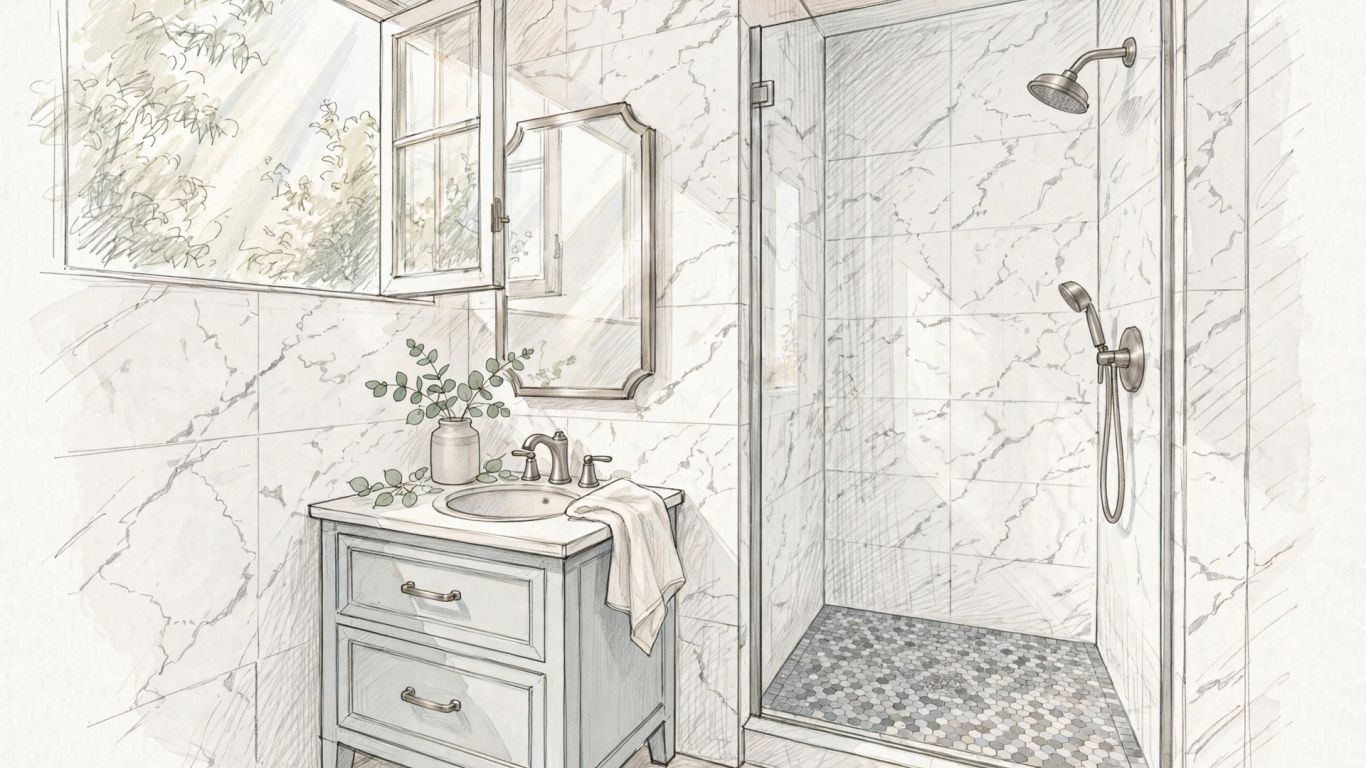
Kitchen floors, backsplashes, and countertops
On a kitchen floor, Carrara brings a light, classic surface underfoot, while a backsplash gives the stone a chance to frame cabinetry and counters. Slabs are an option for countertops, where a more continuous field of veining can be part of the design. Marble is a natural material and needs thoughtful care, especially in a working kitchen where spills are part of everyday life. Compare sample pieces with the cabinets and countertop materials before settling on a combination.
Bathroom walls, shower floors, and vanities
Carrara can give bathroom walls and vanities a clean, calm look, and mosaics offer a smaller format for shower floors. The product, finish, setting, and ongoing maintenance should all suit the specific application. Review guidance for the individual stone and consult a qualified installer about wet-area details rather than assuming every tile is appropriate for every location. A considered choice of grout and pattern can make the stone feel either crisp or softly traditional.
Entryways and accent features in residential or commercial spaces
In an entryway, marble makes a strong first impression through its color and natural pattern. A threshold, feature wall, or smaller accent can introduce Carrara without covering a large area. Marble tile collections are described as suitable for residential and commercial interiors, including entryways, but the exact product and site conditions still matter. Consider traffic, cleaning routines, and the finish when planning a busy space.
How to choose the right Carrara marble
Start with the feeling you want the room to have, then narrow the options by the actual product’s format and finish. A small sample can help reveal how the white tone shifts beside existing materials and under the room’s lighting. Since natural stone varies, a photograph or display piece cannot promise an exact match to every tile in an order. A little planning now can make the finished layout feel intentional.
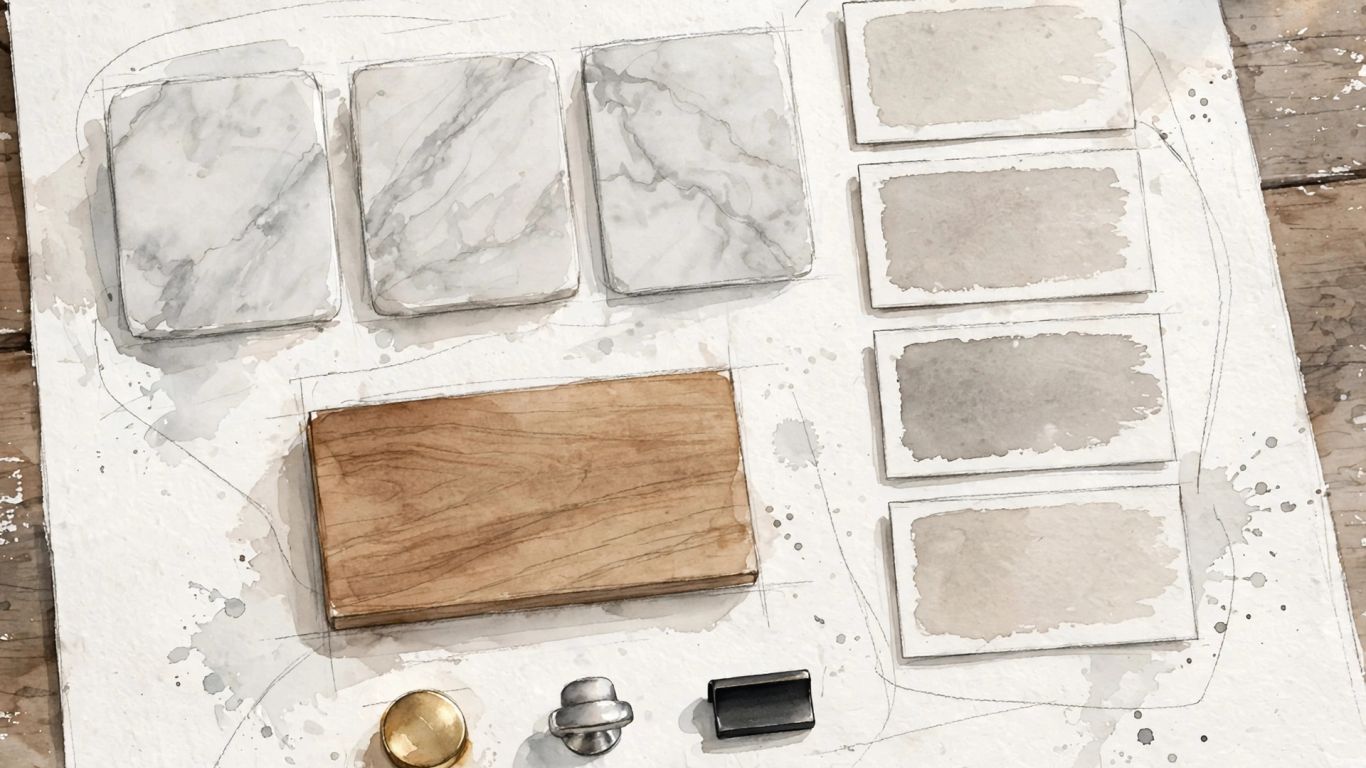
Match the veining and tone to the room’s palette
Look at the stone next to cabinet doors, paint, metal finishes, and any flooring that will remain. Some Carrara pieces may feel cooler or warmer than others, and vein contrast can change the overall impression. If a room already has strong patterns, a quieter stone selection may help balance it; in a simpler room, more visible veining can add interest. When possible, view several pieces together rather than selecting from a single tile.
Select a format and finish for the intended application
The right format depends on the scale of the area, the layout, and the visual texture you want. Keep the following practical checks in mind as you compare options:
- Consider how tile dimensions work around edges, corners, and fixtures.
- Choose a finish based on the room’s look and the application guidance for that product.
- Decide whether a broad slab, straightforward tile layout, or mosaic suits the design.
- Review grout joints and layout plans with the installer before work begins.
These choices work together: a small mosaic can feel intricate, while a large tile or slab gives the stone more room to read as a continuous surface. Sample the finish and format in context before making a final selection.
Check current stock, nominal sizing, and project quantities
All sizes are nominal, so confirm the listed dimensions and allow the installer to account for actual site measurements. Calculate the area carefully, then consider cuts, layout, and natural variation when determining project quantities. Check current stock before finalizing the plan, especially if you need matching material for multiple rooms. For background on how marble has been quarried and used over time, this Carrara stone reference offers additional context on the material and its varied forms.
Installation and ongoing care
A good-looking installation begins before the first tile is set. Natural stone can vary in tone and pattern, so inspection and layout planning help the finished surface feel balanced. Use product-specific instructions and get advice from an installer who understands natural stone. Regular, gentle care helps preserve the surface without treating marble like a maintenance-free material.
Plan for a qualified installer and suitable setting materials
Discuss the room, substrate, product, and layout with a qualified installer before work begins. Inspect tiles for cracks, chips, warping, or other concerns, and set aside questionable pieces to review with the supplier before installation. Dry-laying the material lets you see how the veining and color are distributed and can help avoid awkward cuts at edges. Setting materials and grout choices should be appropriate for the product and application.
Seal the stone as recommended for the product and application
Sealing recommendations vary by product, location, and care instructions, so follow the guidance for the specific marble and consult the sealer manufacturer or installer. A sealer can help reduce vulnerability to staining, but it does not make stone impervious or remove the need for prompt cleanup. Ask when the surface should be sealed in relation to installation and grouting. Keep the product’s care information available for future maintenance.
Clean spills promptly and use marble-safe cleaners
Wipe spills promptly, especially in kitchens and bathrooms, and use cleaners intended for marble. Avoid assuming that a household cleaner is suitable simply because it works on another surface. For more focused preparation, review these marble installation and care tips alongside the instructions supplied for the specific product. Gentle, consistent care is usually easier than trying to correct a stain or surface issue later.
Buying Carrara white marble from Surfaces Galore
Choosing a stone is easier when product details, sizing, and project needs are considered together. Surfaces Galore is an Anaheim, California–based direct importer and nationwide supplier of natural stone, including marble tiles, mosaics, and moldings. The Carrara White collection includes tiles in various sizes and finishes, slabs, and mosaics. Check the current product information and request a quote when you have a clearer sense of the quantities and application.
Browse tiles, slabs, mosaics, and related products
Compare product formats and finishes, then decide whether the project calls for floor or wall tile, a slab, or a mosaic detail. Product pages can help you review nominal sizing and the available finish options. To explore a broader selection of formats, browse Carrara marble products and note which pieces suit the room’s scale and palette. If possible, look at samples alongside the materials already chosen for the project.
Request a quote and ask about bulk pricing
For a renovation that needs more than a few pieces, share the planned area, format, finish, and estimated quantity when requesting a quote. Extra context helps clarify what you are looking for and whether bulk pricing applies. Surfaces Galore serves homeowners, designers, and architects across the United States; check current stock and confirm shipping and timing details as part of the order conversation. The most useful quote is based on a measured plan, not a rough guess.
Arrange nationwide shipping from the Anaheim, California supplier
If you are ordering from outside Southern California, ask about delivery arrangements for your destination and quantity. Surfaces Galore ships nationwide from its Anaheim base, so customers can explore natural stone options beyond their local market. Make sure the delivery plan, receiving arrangements, and inspection process are clear before the material leaves for the job site. For unrelated planning topics that may come up during a renovation season, see calcite traditions, ADO Time Tracker, Taylor Family Store, AEO and GEO, and Las Vegas family outings.
To compare a different perspective on the stone’s color and veining, see this Carrara marble countertop overview.
Conclusion
Carrara white marble brings a lasting mix of pale stone and natural gray movement to floors, walls, kitchens, and baths. Choose the format and finish with the room’s use in mind, inspect the natural variation, and follow product-specific installation and care guidance. With those decisions made thoughtfully, the stone can feel both distinctive and at home in the space.
Frequently Asked Questions
Is Carrara white marble pure white?
It has a light background, often described as white, but natural gray veining and variation in tone mean individual pieces do not appear perfectly uniform.
Does every Carrara marble tile look the same?
No. Veining, color, and other natural characteristics vary among pieces, so reviewing several tiles together can help you plan the overall layout.
What is the difference between polished and honed Carrara marble?
Polished marble has a smoother, more reflective appearance, while honed marble has a less glossy, matte look. Check the particular product details before choosing.
Can Carrara marble be used in a shower?
Some Carrara products are offered for shower-related applications, including mosaics and shower-floor tile. Confirm that the exact product and finish suit the intended wet area and follow professional installation guidance.
Does Carrara marble need to be sealed?
Follow recommendations for the specific stone, product, and application. Ask the installer or sealer manufacturer how and when sealing should be done.
How should Carrara marble be cleaned?
Clean spills promptly and use products made for marble. Follow care instructions for the specific material and avoid assuming that a general household cleaner is suitable.
How much extra marble should I order?
The amount depends on measurements, layout, cuts, and natural variation. Ask the installer to calculate quantities for the actual project and check the product’s nominal sizing before ordering.

Leave a comment