
Marble: A Complete Guide to Types, Finishes, Uses, and Care

Key Takeaways
Marble brings natural pattern and a distinctive feel to floors, walls, and other home surfaces. The best choice balances the look you love with the room’s use and the care you’re comfortable providing.
- Every marble piece has natural variation in color and veining.
- Marble comes in a wide range of colors, formats, patterns, and finishes.
- Match the finish and stone to the room, traffic, and moisture exposure.
- Plan for sealing, gentle cleaning, and careful inspection before installation.
- Samples and a clear quantity plan help avoid surprises during a project.
What makes marble a distinctive natural stone
Marble has a depth and movement that can make a simple room feel considered and personal. It is a natural stone, so no two tiles have precisely the same pattern or distribution of color. That variation is part of its appeal, but it also means seeing samples and planning the layout matter. Here’s what to understand before choosing marble for your home.
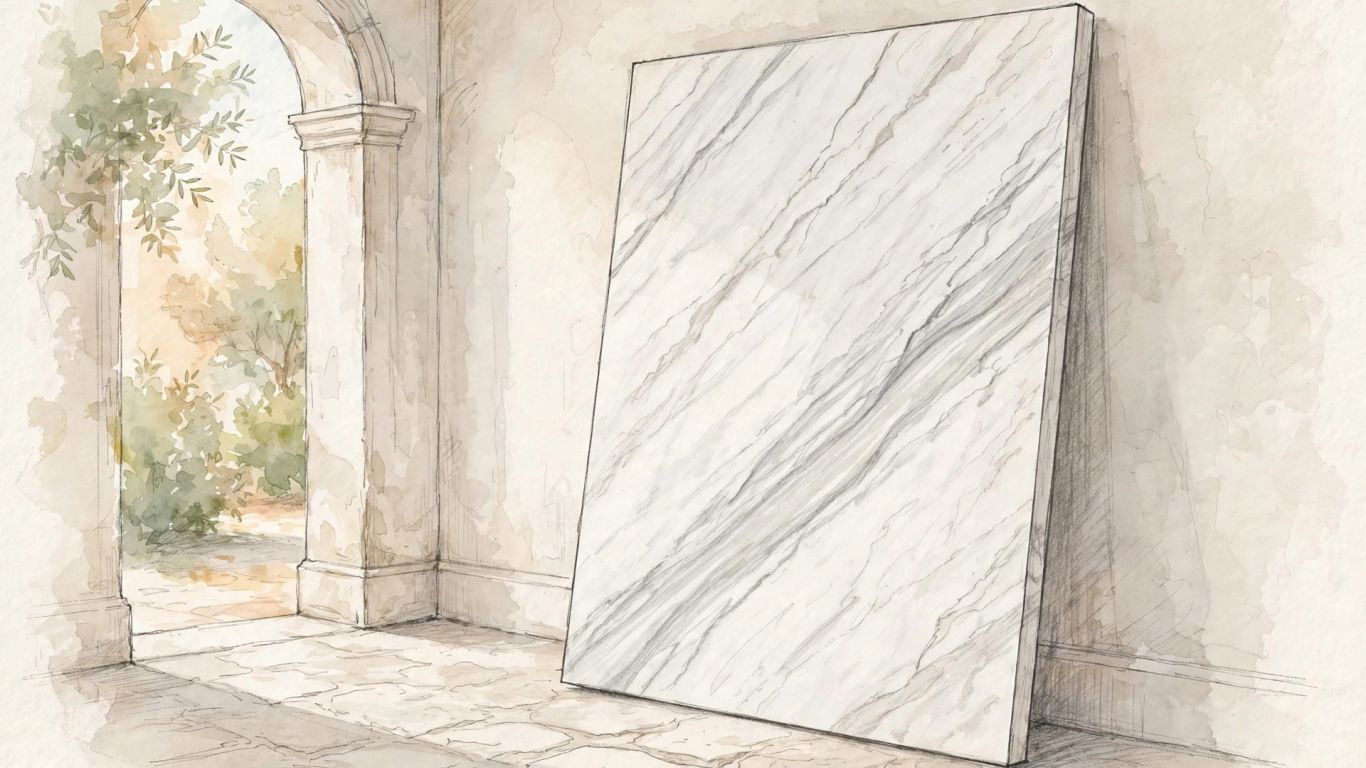
How marble forms and why every piece is unique
Marble forms when limestone or dolomite recrystallizes under heat and pressure, producing the crystalline stone used in interiors and architecture. Mineral traces in the original rock contribute to the veins, swirls, and color shifts seen in finished pieces. The geological description of marble formation offers more detail on that process. Those natural conditions make each tile a little different, even within the same selection.
The visual appeal of natural veining and color variation
Veining can be delicate and linear, or bold enough to become the main event in a room. A pale background with fine gray lines reads quietly, while contrasting veins add movement and drama. For a continuous floor or wall, consider how the patterns will sit beside one another rather than judging a single tile in isolation. Natural stone rewards a little planning.
Marble’s durability and long-term value
Marble is a substantial, long-lasting material, but its performance depends on the stone, finish, location, installation, and care. It can suit many home settings, and its natural appearance can give a space enduring character. Still, it is porous and can be affected by spills or acidic substances, so care is part of owning it. Choose it for the way it looks and feels, with a realistic view of upkeep.
Considerations before choosing marble
Before settling on a color, think about how the room will be used and how much variation you welcome. A busy entry, a quiet vanity wall, and a shower floor each have different practical needs. If you’re still comparing material moods, a separate guide to choosing a gemstone explores how people weigh color and personal preference in another setting. For marble itself, the most useful next step is to view samples under the light where they will be installed.
Popular marble types and colors
Marble ranges from crisp white to charcoal, warm beige, green, and rich red tones. Familiar names can help you start browsing, but color and veining vary within natural stone, so the name alone cannot predict the exact look of every piece. Compare samples side by side and consider the surrounding paint, cabinetry, and lighting. That small bit of patience can make the final choice feel much more certain.
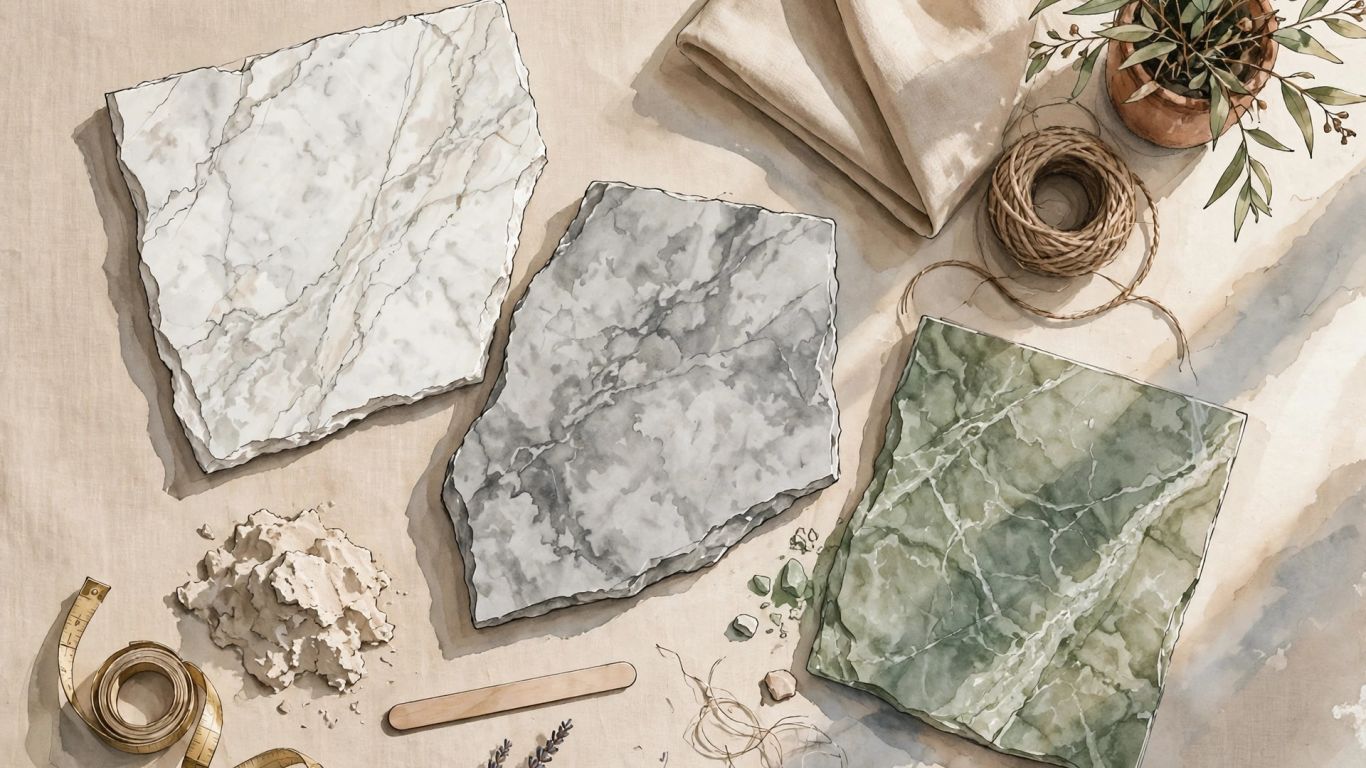
White marble, including Carrara, Calacatta, and Thassos
White marble can feel bright and classic, with patterns that range from fine gray movement to pronounced veins. Carrara is often associated with soft gray veining, while Calacatta selections can have more prominent contrast; Thassos is known for a clean, bright white appearance. These are broad visual cues, not guarantees about every tile. A sample helps reveal the precise tone and character of the material you’re considering.
Gray and black marble for contemporary spaces
Gray marble can create a calm, tailored backdrop, especially when paired with warm wood or simple metal details. Black marble offers a deeper, more dramatic look, and its veining can provide a striking counterpoint to pale walls. A room-scale sample makes it easier to judge whether a dark stone will feel grounding or too dominant. The surrounding light matters, too.
Beige, green, and richly colored marble options
Beige marble brings warmth and softness, while green selections can introduce a fresh, organic note. For more color, options such as Rosso Levanto and Rojo Alicante bring deep red tones, and Ming Green offers a lighter green direction. Each color family includes variation in pattern and background tone. Let the stone’s natural character guide the palette rather than expecting every piece to match exactly.
How to compare veining, tone, and variation
When comparing two stones, look at the background color first, then consider the scale and direction of the veins. A small, repeating pattern may suit a compact space, while larger movement can read beautifully across a wall or open floor. View pieces in both daylight and evening light if possible. A tile that looks cool in a showroom may feel warmer at home.
Marble tile formats, patterns, and finishes
Marble can be used as a large tile, a mosaic, a slab, or a carefully composed pattern. Format affects the rhythm of a surface and the number of grout lines, while finish changes how the stone reflects light and feels underfoot. Small details matter, too: trims and borders give edges a deliberate finish. Consider the room as a whole before choosing an individual product.
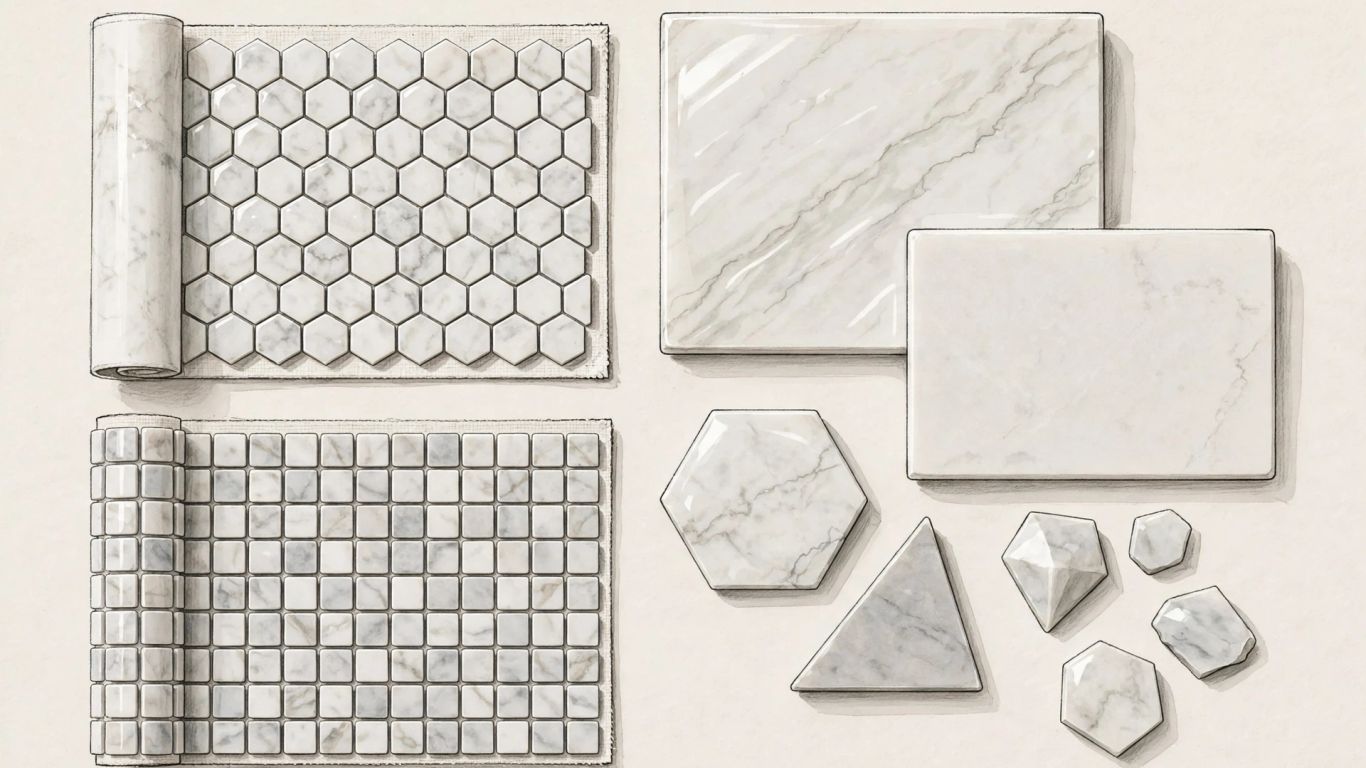
Marble tiles, slabs, mosaics, and custom designs
Tile formats work across floors, walls, and backsplashes; slabs are often selected for countertops, vanity tops, and custom projects; mosaics create smaller-scale detail for accents and intricate surfaces. The Carrara White tile is one example of a classic marble format offered in more than one finish. Surfaces Galore offers marble tiles in various sizes and finishes, along with marble slabs and mosaics for different project needs. Choose the format that suits the surface and the visual scale you want.
Polished, honed, and tumbled finishes
Finish affects both the look and the day-to-day feel of marble. A polished surface has a reflective sheen, a honed finish is matte and understated, and a tumbled finish has a more aged appearance. This quick comparison can help narrow the options before you request samples.
| Finish | Surface appearance | Consider for |
|---|---|---|
| Polished | Smooth, reflective sheen | Formal accents and bright interiors |
| Honed | Soft, matte appearance | Floors and understated spaces |
| Tumbled | Aged, gently textured character | Rustic looks and selected accents |
A finish is not a substitute for checking suitability in a wet or high-traffic area. Ask for product-specific guidance, then view the finish in the room’s lighting before making a final decision.
Patterns such as herringbone, checkerboard, and basket weave
Pattern gives marble another layer of personality. Herringbone creates directional movement, checkerboard brings a crisp graphic contrast, and basket weave offers a woven effect in mosaic form. Surfaces Galore offers marble mosaics for intricate designs and patterns. When you’re choosing a pattern, test how it relates to the room’s scale and nearby surfaces; a busy layout may call for quieter veining, while a simple pattern can let more expressive stone take the lead.
Trims, moldings, borders, and finishing details
Edges and transitions help a marble installation feel finished rather than abrupt. Marble trims, moldings, and borders can define a wall, frame a tiled area, or provide a clean edge where materials meet. Keep the profile and finish consistent with the main surface, unless contrast is a deliberate part of the design. A small detail can make the overall composition feel more complete.
Where marble works in the home
Marble is used across the home, from floors and walls to backsplashes, vanity tops, and accent areas. The right placement depends on the stone, finish, installation, and the way the room is used. Moisture and foot traffic deserve special attention; a beautiful surface should also make sense for daily life. Think of the following uses as starting points, then confirm product suitability for your specific project.

Marble flooring for entryways and living areas
An entryway can make a strong first impression with a marble floor, while a living area can use stone to establish a calm, durable-feeling foundation. Consider traffic, grit, and the finish before selecting a tile. Natural color variation can help a floor feel organic, but a dry layout is useful for balancing the pattern across the room. Inspect tiles for visible chips or cracks before installation.
Marble walls, backsplashes, and feature walls
On a wall, marble’s veining can become a focal point without taking up floor space. A backsplash is an opportunity for a subtle band of pattern or a more expressive stone behind a counter. Mosaics can introduce detailed geometry in a smaller area, while larger pieces let broad veining read more clearly. Carry a sample into the room to compare it with cabinetry and fixtures.
Marble in bathrooms, showers, and vanities
Marble can bring a clean, spa-like feeling to a bathroom, whether used on a vanity top, shower wall, or floor. Wet areas call for particular care in selecting a suitable finish and planning a safe installation. Mosaics are one option for smaller surfaces and shower floors, but product guidance should determine what is appropriate. Plan for sealing and gentle cleaning as part of the design, not as an afterthought.
Using marble in kitchens and outdoor spaces
In a kitchen, marble may appear in flooring, backsplashes, or a countertop slab. Marble can be sensitive to acids and staining, so think carefully about how the surface will be used and maintained. Helpful kitchen planning also includes tools and work surfaces: for example, a brick-pattern end-grain board or a hard maple cutting surface is a separate choice from the stone itself. For everyday food preparation, readers may also find advice on sharpening a kitchen knife useful. For outdoor projects, use stone products specifically intended for outdoor applications and confirm the installation requirements.
How to choose marble for your project
A successful marble choice begins with the room, not the sample name. Consider how the surface will be used, how much pattern you want, and how much care feels reasonable. Then check dimensions, finish, and availability before committing. A few thoughtful decisions up front help the finished space feel cohesive and practical.
Match the stone to the room’s use and traffic
A quiet powder room wall and a busy entry floor are not the same assignment. Think about water, foot traffic, spills, and whether the surface needs a more textured feel. Marble is porous, so sealing and prompt attention to spills are part of its care. Match the stone and finish to the conditions rather than relying on color alone.
Coordinate color, finish, format, and surrounding materials
Bring together the stone’s background tone, veining, finish, and tile size with the materials already in the room. A honed pale marble can sit comfortably beside natural wood, while a polished dark stone might add contrast to a lighter palette. Check the overall effect at different times of day. Consistency does not mean choosing identical patterns; it means making the elements feel like they belong together.
Plan for sealing, cleaning, and ongoing maintenance
Ask what sealer and cleaning products are appropriate for the specific stone, and follow the product and installer guidance. Acidic cleaners such as vinegar or lemon can damage marble, so use a stone-appropriate, pH-neutral cleaner instead. Wipe spills promptly, especially those that may stain or etch. Regular care helps protect the surface, but it cannot remove the need for sensible daily use.
Order samples and confirm quantities before installation
Samples let you check color, texture, and finish in the light where the stone will live. Before ordering, confirm the measured area, tile size, layout, and allowance for cuts and waste. For installation planning, inspect the material and dry-lay tiles to see how the natural variation works across the space. If you’re coordinating trades, a guide to logging project work time may be useful for organizing a separate part of the renovation. Taking time to confirm quantities now can prevent avoidable delays later.
- Compare samples in the actual room, in daylight and evening light.
- Confirm the tile dimensions, finish, and intended application.
- Calculate the installation area and allow for cuts and waste.
- Inspect the order and plan a dry layout before installation.
Use that checklist to make the sample decision and the order decision together. It is much easier to adjust a layout before installation than after the stone has been set.
Buying marble tiles from a trusted supplier
Buying natural stone online can make it easier to compare styles and formats, but the details still matter. Review product information, confirm the quantity and finish, and ask about delivery before placing an order. Surfaces Galore is an Anaheim, California–based direct importer and nationwide supplier of premium natural stone. Its marble collection includes tiles, mosaics, and moldings for a range of home projects.
Review current collections, sizes, and availability
Collections can include different colors, formats, and finishes, so look closely at the specific item rather than relying on a broad style name. Check the listed size and finish, and keep in mind that natural marble varies from piece to piece. If a particular color or format is important to your plan, confirm its current availability before finalizing the layout. Surfaces Galore serves homeowners, designers, and architects across the United States with natural stone materials.
Compare pricing, bulk discounts, and project requirements
Compare the material cost against the quantity, format, and amount of cutting your project requires. For a larger installation, ask whether bulk discounts are available and provide the planned purchase quantity when requesting pricing. Also include the intended surface finish and project dimensions so you can receive a quote based on the actual scope. A clear estimate helps you compare options without guessing.
Check shipping options for delivery across the United States
Delivery planning matters when stone is traveling to a job site or home. Confirm the shipping method, timing, and any receiving requirements before ordering, especially if installers are scheduled. Surfaces Galore is a nationwide supplier based in Anaheim, California, and its source materials describe shipping across the country. Ask for current shipping details for your location and order.
Request a quote and get help selecting natural stone
A useful quote request includes the stone or collection, desired size and finish, estimated quantity, and destination. If you are still comparing options, explain the room and the look you want so the selection can be narrowed down. Surfaces Galore’s site lists marble tiles, mosaics, and moldings, and customers can request pricing for their project. Specific details make it easier to move from browsing to a confident order.
Conclusion
Marble’s appeal lies in its natural movement, wide range of colors, and ability to bring character to floors, walls, bathrooms, and other spaces; choose it with the room’s use and care needs in mind, then confirm the details with samples and a clear quantity plan. When you’re ready to explore options, view marble tiles and request a quote for your project from Surfaces Galore.
Frequently Asked Questions
Is marble a good choice for home floors?
Marble can work on floors when the stone, finish, installation, and care plan suit the room. Consider foot traffic, moisture, and the finish’s feel underfoot before choosing.
What is the difference between polished and honed marble?
Polished marble has a reflective sheen, while honed marble has a matte appearance. The best choice depends on the look you want and the room’s practical requirements.
Does marble need to be sealed?
Marble is porous and may need sealing to help protect it from staining. Follow guidance for the specific stone and sealer, and remember that sealing does not make marble impervious to damage.
How do I clean marble safely?
Use a cleaner intended for natural stone and avoid acidic products such as vinegar or lemon. Wipe spills promptly and follow the stone and sealer care instructions.
Why does marble vary from tile to tile?
Marble forms naturally, and differences in mineral traces and stone structure create variation in color and veining. That variation is part of the character of natural marble.
Which marble color is easiest to coordinate?
White and gray marble can pair with a range of palettes, while beige, green, and richly colored choices offer warmer or more distinctive directions. Compare samples with your room’s fixed finishes and lighting.
How much extra marble tile should I order?
The amount depends on the room dimensions, tile format, layout, and cuts required. Measure carefully and confirm an appropriate allowance for waste with your installer or supplier before ordering.

Leave a comment