

How to Avoid Marble Damage: 10 Proven Tips for Homeowners

Avoiding marble damage comes down to six habits you can start today: dust-mop daily, place entry mats at every door, blot spills within 15 seconds, use coasters and trivets, clean only with pH-neutral products, and reseal on schedule. Follow those six steps and you’ll prevent the vast majority of damage marble surfaces suffer in residential settings.
Here’s your immediate action checklist:
- Dust-mop or microfiber-wipe every day to remove abrasive grit before it scratches
- Place entry mats inside and outside high-traffic doors to trap dirt and moisture
- Blot spills immediately (within 15 seconds) rather than wiping, then rinse and dry
- Use coasters under drinks, trivets under hot cookware, and cutting boards for all prep work
- Clean only with pH-neutral, stone-safe cleaners — never vinegar, lemon, or bleach
- Reseal countertops periodically, generally every several months to a year and test performance with the water-drop method
The Natural Stone Institute and the Marble Institute of America both reinforce these basics as the foundation of any sound marble care plan. Surfacesgalore echoes the same guidance for homeowners who want their stone to stay beautiful for decades.
Pro Tip: Keep a small cleaning station near your kitchen prep area: a spray bottle of pH-neutral cleaner, a stack of microfiber cloths, and paper towels. Having them within arm’s reach is what makes the 15-second spill-response rule actually work.
Key Takeaways
Consistent daily habits, the right sealers, and prompt spill response prevent the overwhelming majority of marble damage in residential settings.
| Point | Details |
|---|---|
| Daily dust control | Dust-mop or microfiber-wipe every day to remove abrasive grit before it scratches the finish. |
| 15-second spill rule | Blot (never wipe) any spill immediately, flush with water if acidic, then clean and dry completely. |
| Sealers stop stains, not etching | Impregnating sealers slow absorption; they do not prevent acid etching — keep acids off the surface. |
| Reseal every 6–12 months | Test with the water-drop method; countertops near sinks and high-use prep zones lean toward six months. |
| Surfacesgalore guidance | Surfacesgalore offers finish-specific care guides and premium marble collections shipped nationwide. |
Table of Contents
- What actually causes marble damage?
- Everyday habits that speed up marble wear
- Safe cleaning routine: daily, weekly, and monthly
- Physical protections every marble home should have
- How to seal marble and when to reseal
- What to do when a spill happens
- Etch marks and deep stains: what you can fix yourself
- What Surfacesgalore recommends for long-term marble care
- The case for consistency over intensity
- Natural stone from a source that knows it
- Sources
- FAQ
What actually causes marble damage?
Marble is calcium carbonate, which means it reacts chemically with acids. That single fact explains most of the damage homeowners see.
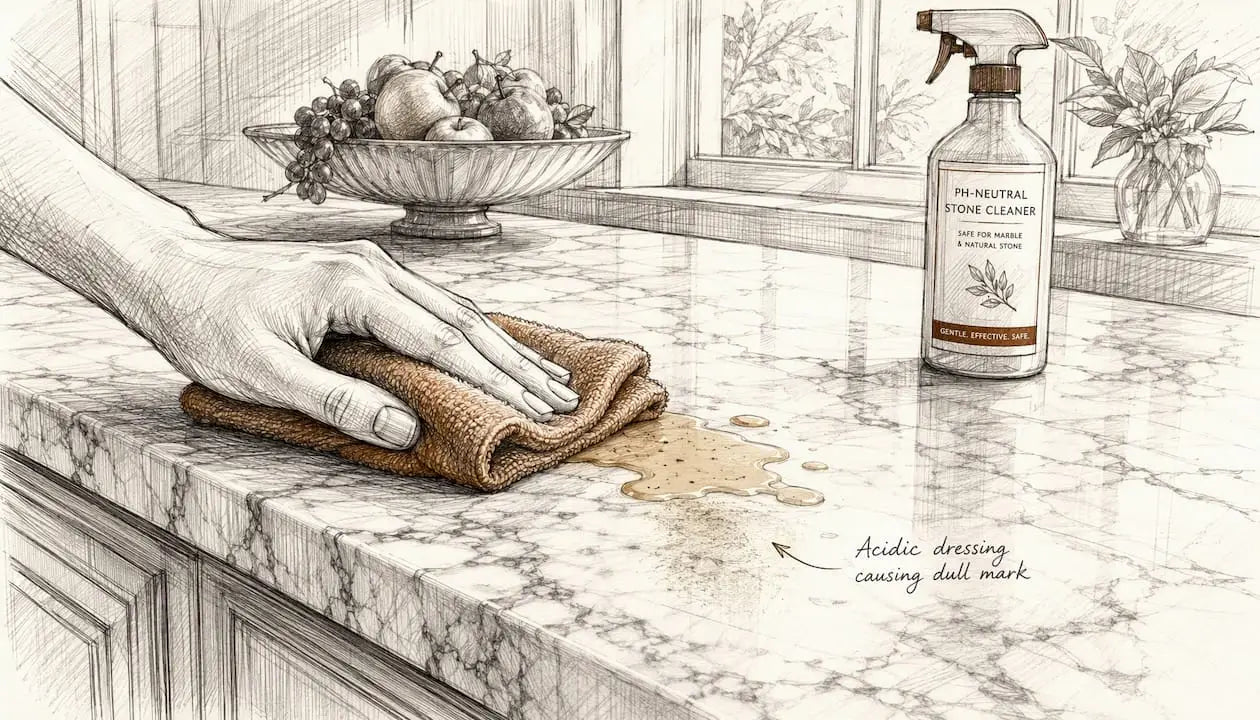
Acidic etching is the most misunderstood threat. When citrus juice, vinegar, wine, or tomato sauce contacts marble, it dissolves a microscopic layer of the surface and leaves a dull, slightly rough patch called an etch mark. This is a chemical reaction, not a stain, and no sealer prevents it. Sealers slow liquid absorption into the stone’s pores, but they sit below the surface and cannot stop an acid from reacting with the calcium carbonate above them. Sealing slows absorption and reduces staining risk, but etching requires a different prevention strategy entirely: keep acids off the surface in the first place.
Porous absorption is the second mechanism. Coffee, red wine, cooking oils, and colored cosmetics can penetrate the stone’s pores and leave a discoloration that no amount of surface wiping removes. A properly applied impregnating sealer buys you time to clean up before absorption occurs, but it is not a permanent barrier.
Abrasive grit is quieter but relentless. Fine sand, dirt, and gravel tracked in on shoes act like sandpaper underfoot. Over months, they grind down a polished finish and leave a haze of micro-scratches. Entry mats and daily dust-mopping interrupt that cycle before it compounds.
Other common culprits:
- Heat and thermal shock from hot pans placed directly on marble can damage some finishes and, in rare cases, cause hairline fractures
- Pet urine combines both staining and etching risk because of its acidity and pigment
- Harsh chemical cleaners (bleach, ammonia-based products, scouring powders) abrade or chemically alter the surface over time
Everyday habits that speed up marble wear
Most marble damage is not dramatic. It accumulates through small, repeated mistakes that are easy to fix once you know what they are.
Letting mud, wet shoes, or ice melt dry on the floor is one of the fastest ways to scratch marble. As moisture evaporates, it leaves behind grit and road salts that sit directly on the surface. A quick wipe when someone walks in prevents hours of abrasion.
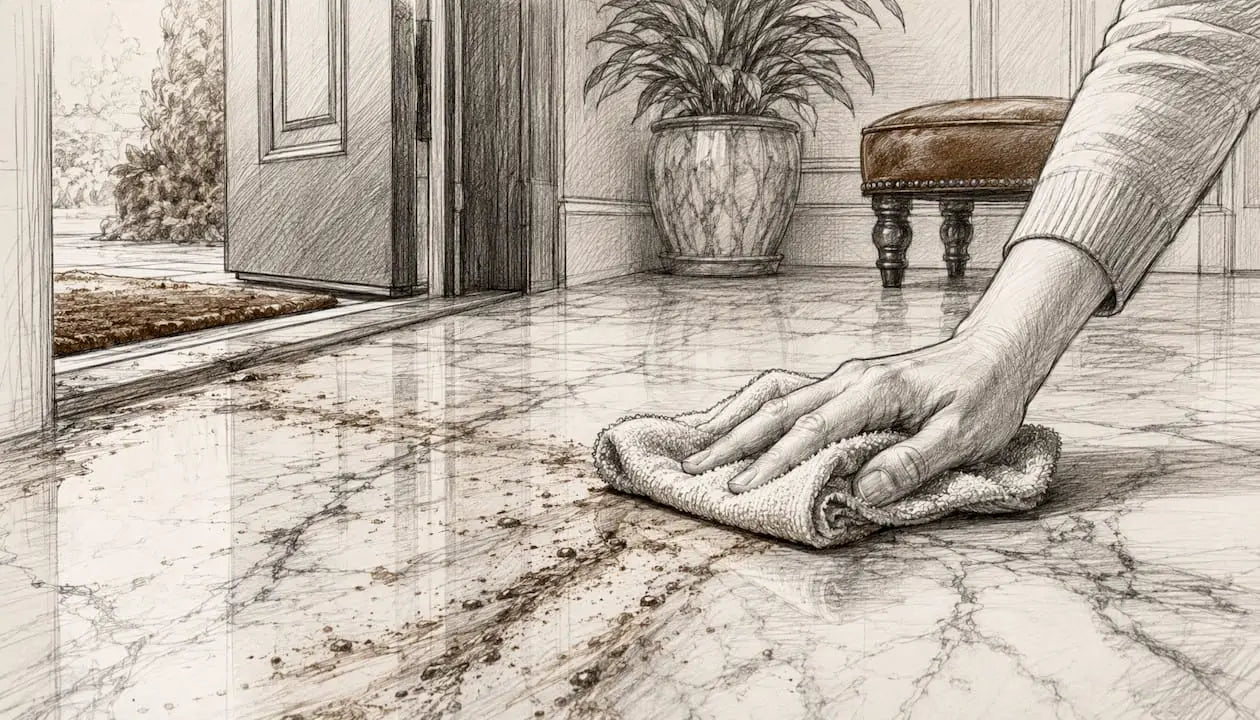
Using the wrong cleaners is the single most common homeowner error. Vinegar and lemon juice are popular “natural” cleaners, but both are acids that etch marble on contact. Bleach and ammonia-based sprays are equally damaging over time. Even some “multi-surface” commercial cleaners contain citric acid. Always check the label.
Wiping instead of blotting spreads a spill across a larger area and forces the liquid deeper into pores. Blotting lifts the liquid up and out. The difference between a permanent stain and a clean surface often comes down to that one motion.
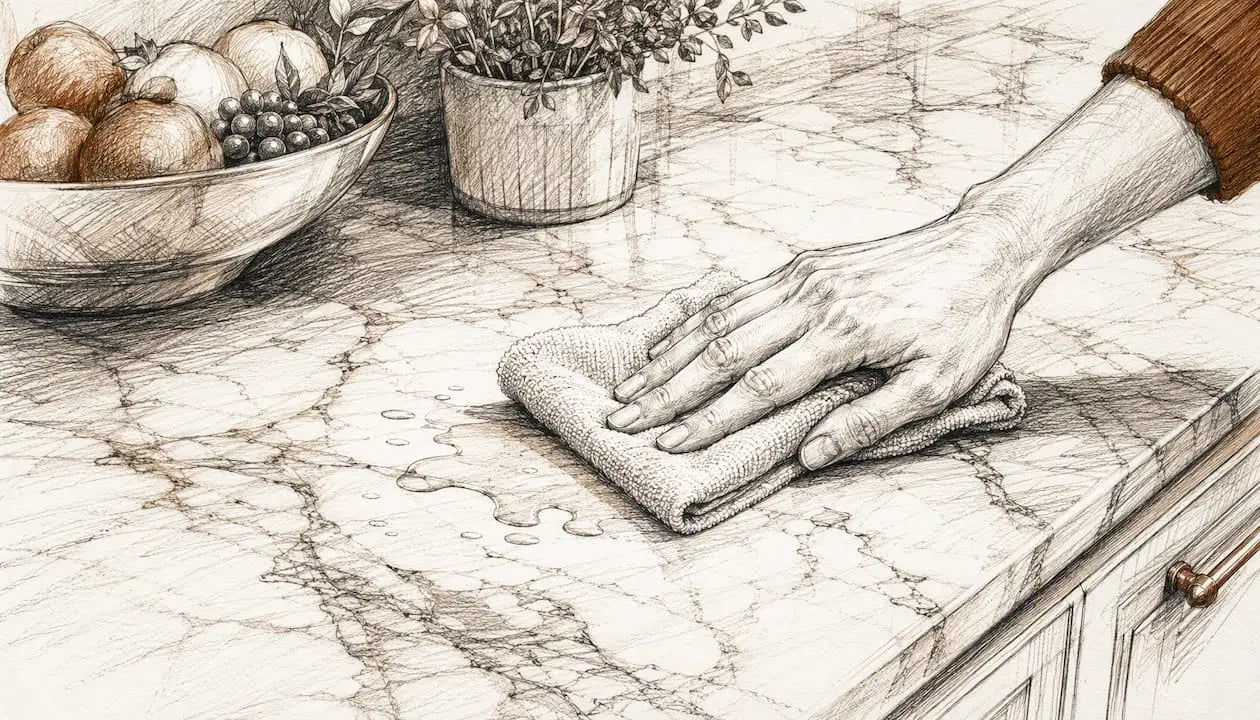
Dragging furniture across marble floors leaves scratches that are difficult to reverse. The same goes for metal vacuum attachments or worn plastic wheels on chairs and carts. Felt pads under every furniture leg cost almost nothing and prevent damage that costs hundreds to repair.
Pro Tip: Before vacuuming marble floors, switch to a soft-bristle attachment or use a dust mop instead. Hard plastic or metal vacuum edges are a leading cause of preventable surface scratches on polished stone.
Safe cleaning routine: daily, weekly, and monthly
Consistent, gentle cleaning with stone-safe products prevents most common marble damage in residential settings. The key is building a rhythm that fits your household.
Daily tasks
- Dust-mop or dry microfiber-wipe the entire marble surface to remove loose grit
- For countertops, do a quick damp wipe with warm water and a soft cloth
- Dry immediately with a clean microfiber cloth — standing water can work into grout joints and seams
Weekly tasks
- Spray a pH-neutral stone cleaner (or a few drops of mild dish soap in warm water) across the surface
- Wipe in gentle circular motions with a soft cloth
- Rinse thoroughly with clean water — soap residue left behind creates a dull film
- Dry completely; never let water air-dry on marble
Monthly tasks
- Inspect grout lines and seams for cracks or discoloration
- Perform a water-bead test on high-use zones (more on this in the sealing section)
- Use a stone-safe cleaner to address any light film or mineral buildup around faucets
- Check felt pads under furniture and replace any that have worn through
Pro Tip: Change your rinse water frequently when cleaning large marble floors. Dirty rinse water redeposits a thin film of grime that builds up over time and dulls the finish faster than almost anything else.
Product guidance: look for cleaners labeled “stone-safe” or “pH-neutral” specifically. Avoid anything marketed for tile and grout unless it explicitly states it is safe for natural stone, since many contain acids or abrasives.
Physical protections every marble home should have
The simplest marble care tips require no cleaning products at all. Physical barriers do most of the work.
- Entry mats, inside and outside every exterior door: trap grit, moisture, and road salt before they reach your floors. Choose mats with a non-slip backing so they stay in place.
- Felt pads under every furniture leg: replace them every six months or when they compress flat. Thin, worn pads offer almost no protection.
- Area rugs in high-traffic hallways and living spaces: add a layer of protection over marble floors and reduce the abrasion cycle significantly. Use a rug pad with a non-rubber backing — some rubber backings can discolor marble over time.
- Coasters under every glass, bottle, and can: condensation from cold drinks etches marble just as reliably as spilled wine. This applies to cosmetic bottles and toiletries on bathroom vanities too.
- Trivets or cork pads under hot cookware: never place a hot pan, slow cooker, or electric appliance directly on marble. Even brief contact can damage some finishes.
- Large cutting boards for all food prep: marble is not a cutting surface. Knives scratch it, and acidic foods (citrus, tomatoes) etch it on contact.
- Squeegees in marble showers: after every use, a 10-second squeegee pass removes standing water and dramatically slows mineral buildup and soap scum. For wet-area marble, this habit alone extends the time between professional cleanings.
For outdoor marble, use a UV-rated impregnating sealer and position shade structures or furniture covers to limit direct sun and rain exposure.
How to seal marble and when to reseal
Sealers are widely misunderstood. An impregnating (penetrating) sealer soaks into the stone’s pores and slows liquid absorption, giving you more time to blot a spill before it stains. It does not create a protective film on the surface, and it does not prevent etching. That distinction matters because many homeowners seal their marble and then assume it is fully protected — it is not.
How to test whether your sealer is still working
- Drop a small amount of water onto the marble surface and observe after a few minutes
- If the water beads up and sits on the surface, the sealer is performing well
- If the water darkens the stone or absorbs quickly, it is time to reseal
Recommended reseal cadence
- Kitchen countertops: every 6–12 months; high-use prep zones and areas around the sink lean toward six months
- Bathroom vanities: every 12 months for light use; more frequently if you use oil-based products
- Marble floors: every 12–18 months for moderate foot traffic
- Shower walls and floors: every 6 months, or more often in humid climates
Climate matters. Homes in very humid regions (Florida, the Gulf Coast, the Pacific Northwest) may need more frequent resealing because moisture cycles stress the sealer faster. Dry climates (Arizona, Nevada) can sometimes extend the interval slightly.
Common sealing mistakes to avoid
- Applying sealer to a dirty or damp surface (it won’t bond properly)
- Using a topical film sealer instead of an impregnating sealer on countertops (film sealers peel and trap moisture)
- Skipping the water-drop test and resealing on a fixed calendar regardless of actual performance
- Over-applying sealer, which leaves a hazy residue that requires buffing off
For a deeper look at sealer types and timing, Surfacesgalore’s guide on marble sealer options covers the chemistry and product choices in plain language.
What to do when a spill happens
Speed is everything. The 15-second rule is not an exaggeration: acidic liquids begin reacting with marble almost immediately, and porous absorption starts within seconds of contact.
Emergency spill response (step by step)
- Blot immediately with a paper towel or clean cloth — press down and lift, do not wipe or drag
- Flush the area with a small amount of clean water if the spill was acidic (wine, citrus, vinegar)
- Apply a pH-neutral cleaner and wipe gently with a soft cloth
- Rinse with clean water and dry completely with a microfiber cloth
- Inspect the surface once dry — if you see a dull patch, that is an etch mark, not a stain (see the next section)
For oil-based spills (cooking oil, lotion, butter), skip the water flush and go straight to a few drops of dish soap on the spot, then rinse and dry.
When a stain has already set: poultice basics
A poultice draws a stain out of the stone’s pores through absorption. Poultices can extract many deep stains when applied and allowed to dry for 24–48 hours; etching, by contrast, is a surface chemical change that requires polishing rather than poulticing.
To make a basic poultice: mix an absorbent powder (diatomaceous earth, talc, or white flour) with a cleaning agent appropriate to the stain type (hydrogen peroxide for organic stains like coffee or wine; acetone for oil-based stains). The mixture should be the consistency of peanut butter. Spread it over the stain about a quarter-inch thick, cover with plastic wrap taped at the edges, and let it dry for 24–48 hours. Remove, rinse, and dry. Repeat if the stain lightens but does not fully clear.
Safety warning: Never use acids (vinegar, lemon juice, rust removers containing hydrofluoric acid), strong bleach, or abrasive scrubbing powders on marble at any stage of stain removal. These products cause etching and surface damage that is far harder to repair than the original stain. Always wear protective gloves and work in a ventilated space when using acetone or hydrogen peroxide.
Etch marks and deep stains: what you can fix yourself
The first step is knowing which problem you have. A stain is a discoloration that penetrates the stone’s pores — it has color and usually matches the spilled substance. An etch mark is a dull, slightly rough patch caused by acid reacting with the calcium carbonate in the marble — it often looks like a water spot or a faded area and has no color of its own.
They require completely different fixes.
DIY options for light etching
- Marble polishing powder (sold at stone supply stores) can restore a polished finish on light etch marks. Apply a small amount with a damp cloth, buff in a circular motion, then rinse and dry.
- Fine buffing pads (3,000-grit or higher) used with a handheld buffer can address slightly deeper etches on polished marble.
- Always test in an inconspicuous spot first. The wrong grit or too much pressure can widen the damaged area.
When to call a professional
Deep etching, widespread dullness across a large area, or stains that survive two rounds of poulticing are beyond DIY territory. Professional honing and polishing physically removes a thin layer of stone to expose a fresh surface below the damage. It is effective, but it is not reversible — each restoration removes material. A good stone restoration contractor will match the original finish (polished, honed, or brushed) so the repaired area blends seamlessly.
Pro Tip: Before calling a restoration professional, photograph your marble surface in natural light and note the finish type (polished, honed, or brushed). Matching the finish during restoration is the detail most homeowners forget, and it is the difference between a repair that disappears and one that is obvious from across the room.
For troubleshooting scratched or dull marble floors specifically, Surfacesgalore’s floor restoration guide walks through the decision points in detail.
What Surfacesgalore recommends for long-term marble care
As a direct importer of premium marble, limestone, and travertine, Surfacesgalore works with installers and homeowners across the country and has distilled the practices that consistently produce the best long-term results.
Practical installer-backed recommendations:
- Seal immediately after installation before the stone is exposed to any foot traffic, spills, or cleaning products
- Match sealer chemistry to stone type: some marble varieties are denser and need less frequent resealing; ask your fabricator or supplier for finish-specific guidance
- Keep a record of your sealer brand and application date so you can replicate results and track performance over time
- For marble surface treatments and finish-specific care, Surfacesgalore’s blog covers honed vs. polished maintenance differences, which matter more than most homeowners realize
- For etching questions, the Surfacesgalore guide on what marble etching is explains the chemistry and repair options in plain language
The case for consistency over intensity
Marble ownership has a reputation for being high-maintenance, and that reputation is mostly undeserved. The homeowners who struggle most with marble are usually the ones who ignore it for weeks and then try to fix accumulated damage with aggressive cleaning. That approach causes more harm than the original neglect.
The research is consistent on this point: regular, gentle cleaning with stone-safe products and prompt spill cleanup prevents most common marble damage. A two-minute dust-mop pass every morning and a 15-second blot response to spills will outperform any monthly deep-clean ritual. Marble rewards the homeowner who treats it like a daily habit, not a weekend project.
The one mistake I see most often: a homeowner notices a dull spot, assumes the sealer failed, and reseals. But the dull spot is an etch mark, not a stain, and no amount of sealer will fix it. Understanding the difference between etching and staining is the single piece of knowledge that prevents the most wasted effort and money.
Natural stone from a source that knows it
Surfacesgalore imports premium marble, limestone, and travertine directly, which means the stone you buy comes with real knowledge behind it, not just a product listing. Whether you are choosing a finish for a kitchen countertop or selecting tile for a wet-area shower, the right material decision at the start makes every maintenance step easier.

Every marble collection at Surfacesgalore ships nationwide from Anaheim, California, with guidance on finish selection, sealer compatibility, and long-term care built into the buying experience. If you are ready to invest in natural stone that holds up beautifully with the right daily habits, shop natural stone tiles today and find the marble that fits your home and your lifestyle.
Sources
- Natural Stone Institute - Learn About Cleaning Products for Natural Stone
- Marble Countertop Protection Guide | Int’l Stoneworks
- Homeowner Guide to Marble Care and Lasting Shine - Natural Surface Restoration
- Preventing Marble Etching and Staining in South Florida: Daily Care Routines That Work | GMFI Stone and Cabinetry
FAQ
What should you put on marble to protect it?
Apply an impregnating (penetrating) sealer immediately after installation and reseal every 6–12 months depending on use. Physical protections — coasters, trivets, felt pads, and entry mats — handle the threats a sealer cannot.
Does sealing marble prevent etching?
No. Sealers slow liquid absorption into the stone’s pores and reduce staining risk, but they sit below the surface and cannot stop an acid from reacting with the calcium carbonate above them. Keeping acidic substances off the surface is the only way to prevent etching.
How do you remove an etch mark from marble?
Light etch marks on polished marble can often be buffed out with marble polishing powder and a damp cloth. Deep or widespread etching requires professional honing, which removes a thin layer of stone to expose a fresh surface below the damage.
What cleaners are safe for marble?
Use only pH-neutral, stone-safe cleaners. Avoid vinegar, lemon juice, bleach, ammonia-based sprays, and any multi-surface cleaner that contains citric acid. When in doubt, warm water and a soft cloth are safer than most commercial products.
How often should marble countertops be resealed?
Most kitchen countertops benefit from resealing every 6–12 months, with high-use zones near the sink leaning toward six months. Use the water-drop test monthly: if water absorbs into the stone rather than beading on the surface, it is time to reseal.
Leave a comment