
Thinset Color for Marble: Why White Wins and When It Doesn't

Use white thinset under white, light-colored or translucent marble. Gray mortar can darken the stone or shadow through it, and you can’t fix that once the tile is set. But color is only half the decision. Some marbles are sensitive to the water in any cement-based mortar, and for those, white thinset is still the wrong product. This guide covers both questions, so you can pick the right setting material before the first tile goes down.
TL;DR
- Light, white or translucent marble (Carrara, Calacatta, Bianco Dolomite and similar) belongs on white thinset. Gray mortar can shadow through the stone.
- Dark marble is more forgiving on color, but you still need a polymer-modified mortar rated for natural stone.
- Moisture-sensitive stones, green marbles and resin-backed tiles usually need an epoxy adhesive, not cement thinset of any color. Ask your stone supplier before you buy mortar.
- Do a small test set, and keep acids (including vinegar) away from marble during installation and afterward.
Table of Contents
- Why thinset color matters under marble
- Which marbles need white thinset
- White thinset is not one product
- When no thinset is the right answer
- Thinset color and grout color are separate decisions
- How to set marble the careful way
- Keep vinegar and acids away from marble
- Quick answers by project type
- Where to find marble worth setting properly
- Our perspective on thinset and marble
- FAQ
- Sources
Why thinset color matters under marble
Marble is not an opaque material like porcelain. It is made of calcite crystals, and light marbles let some light travel into the stone before it bounces back. That is part of why polished Carrara looks soft and deep rather than flat.
It also means what sits behind the tile can change what you see in front of it. The Natural Stone Institute describes marble as porous and potentially translucent, which is why a dark gray mortar can show through or darken a pale stone. Installers sometimes call this shadowing or telegraphing. In practice it looks like a dingy cast, blotchy patches where the mortar was combed in ridges, or tiles that don’t match each other because the mortar coverage differed beneath them.
Standard gray thinset is fine for many porcelain and ceramic jobs. Under light marble, it is a gamble you don’t need to take. White mortar costs little compared with the stone, and it removes the variable.

Which marbles need white thinset
A quick way to think about it: the lighter and more translucent the stone, the more the mortar color matters.
| Stone type | Examples | Thinset color |
|---|---|---|
| White and very light marble | Carrara, Calacatta, Bianco Dolomite, Thassos | White |
| Cream and beige marble or limestone | Crema Marfil, light limestones | White (safest) |
| Light mosaics with thin or mesh-backed pieces | Marble mosaic sheets | White |
| Mid-tone and veined marble | Gray-veined marbles, Emperador | White preferred, test first |
| Dark marble | Nero Marquina | Color is less visible, but check moisture sensitivity |
A few notes on the table. Thin mosaic pieces let more of the mortar show between and behind the stone, so they are the most exposed to color problems. A mosaic-specific example is MAPEI’s Adesilex P10 Mosaic & Glass Tile, a bright white thin-set mortar designed for glass tile and marble mosaic, among other uses.
Dark marble is a different story, but not a free pass. Nero Marquina, for example, shows up in the moisture-sensitive discussion below, and that matters far more than the color of the mortar.
White thinset is not one product
“White thinset” describes a color, not a performance category. Several major manufacturers make white versions of their polymer-modified mortars. What you want to check on the bag or data sheet:
- Rated for natural stone. For example, LATICRETE 254 Platinum is described by its maker as a polymer-fortified thin-set for interior and exterior installation of tile, stone, pavers and more. Always confirm that the specific stone you are setting is covered.
- Polymer-modified. A polymer-modified mortar gives you better bond and flexibility than a basic dry-set mortar.
- Right size and weight class. Large, heavy tiles need a mortar designed for them. MAPEI’s Ultraflex LHT, for instance, is a nonsag large-and-heavy-tile mortar for floors, walls and countertops. Custom Building Products also lists a premium mortar for natural stone and large-format tile for any size of natural stone.
- Suitable for the substrate and location. Showers, exterior areas and floors over wood framing each have their own requirements.
We cover this in more detail in our guide to choosing the right white thinset for your tile project. The short version: pick the mortar by what the stone and the substrate demand, then choose the white version of it.
When no thinset is the right answer
This is the part many forum threads skip. Color is the question people ask, but moisture is the question that ruins tile.
MAPEI’s technical bulletin on installing moisture-sensitive stone explains that these stones can change dimension when their minerals react with water, which can cause cupping, curling, doming and warping. Cement mortar contains water, and the stone can react to it while the mortar cures. A white mortar does nothing to prevent that.
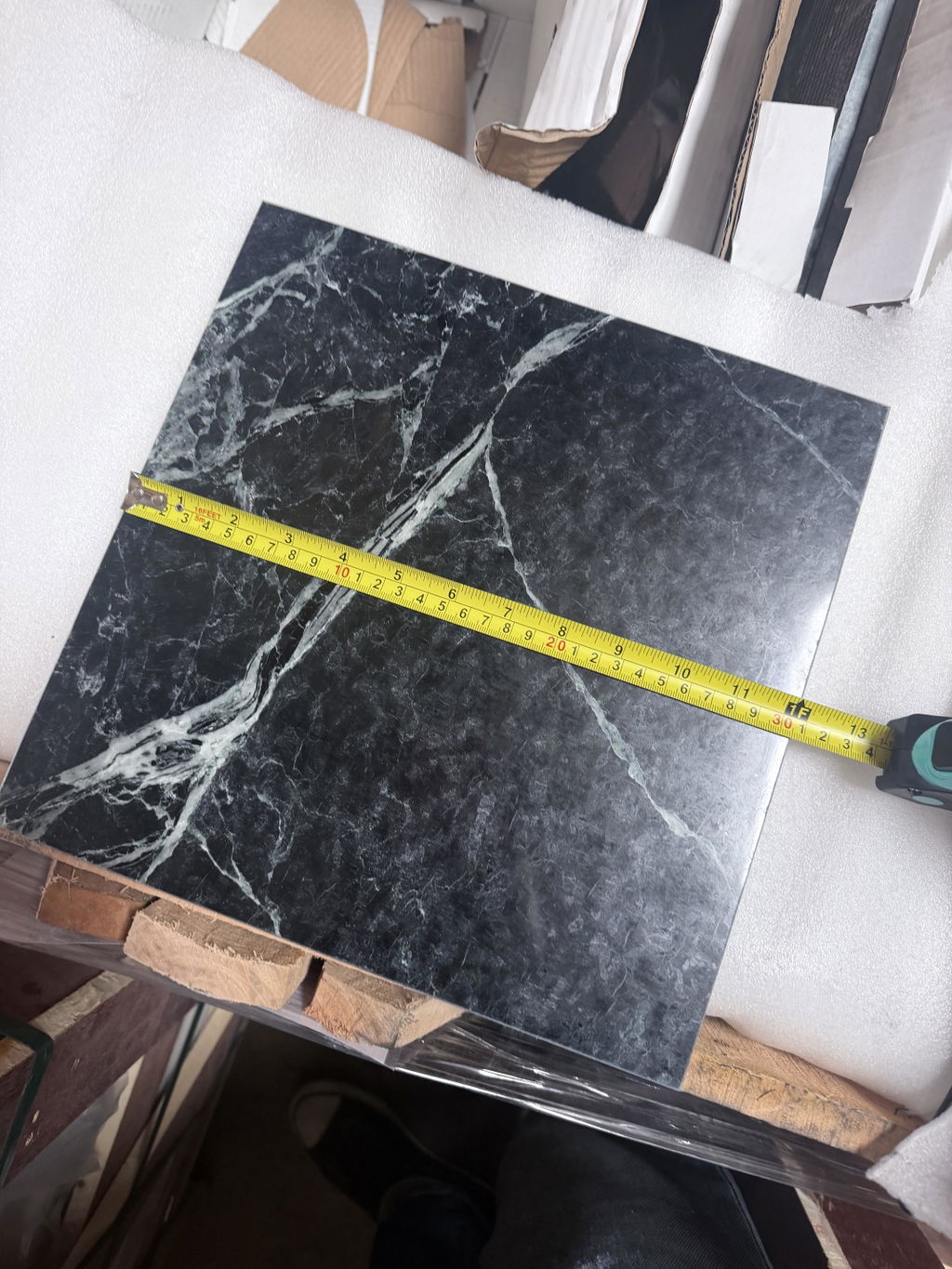
Which stones are affected? Green marbles are the classic case, and the research behind this article also names Verde Alpi and Nero Marquina as examples, along with certain limestones. Resin-backed stone is another category that usually calls for a different adhesive.
The usual alternative is a 100% solids epoxy adhesive. Custom Building Products’ data sheet for its natural stone mortar, for example, directs installers to its epoxy bonding mortar when setting moisture-sensitive natural stone or resin-backed stone. MAPEI makes the same kind of recommendation in the bulletin above.
What to do about it:
- Ask your stone supplier whether the specific tile you are buying is moisture sensitive.
- Read the mortar manufacturer’s data sheet for stone limitations.
- If there is any doubt, call the mortar manufacturer’s technical line before you open a bag.
- Plan the budget for epoxy if it is needed. It costs more and is less forgiving to work with, so a tile setter experienced with it is worth hiring.
Thinset color and grout color are separate decisions
People searching for thinset color often have grout color on their minds too. The top search results are full of threads about gray grout leaving a shadow or halo on white marble, and polished white marble that soaked up grout.
Those are grout and sealing problems, not mortar problems, but they connect. A few points to keep straight:
- Grout pigment can stain porous marble, and dark grout on pale stone makes it more noticeable. Test a small area first.
- Many installers seal marble before grouting to make cleanup easier. Opinions vary and some people skip it. Test on a spare tile from your own batch and judge the result yourself.
- Etched or honed surfaces behave differently from polished ones, so test on the same finish you are installing.
- If the thinset beneath is also wrong, you are stacking two color risks, one behind the tile and one between the tiles.
Our how-to-grout guide for marble and travertine walks through choosing the right grout and mixing and applying it correctly.
How to set marble the careful way
The order below is how most careful installers approach a marble job. Your mortar’s data sheet always outranks a general list like this one.
1. Confirm the stone and the mortar match
Before ordering, confirm moisture sensitivity with your supplier and choose the mortar type (white polymer-modified thinset or epoxy). Write the product name on the order so everybody on site uses the same one.
2. Blend tiles from several boxes
Natural stone varies in color and veining. Open several boxes and mix tiles as you lay them so the blend looks natural across the floor or wall. That variation is part of why people choose marble in the first place.
3. Do a test set
Set a few tiles with the chosen mortar and let them cure. Check the color in the light the room will actually have. This one step settles most thinset color worries for the cost of a few tiles and a bit of mortar.
4. Prepare a flat, stable substrate
Marble shows flaws underneath. A flat, clean, properly prepared surface matters more with stone than with most ceramic tile. Our guide to common installation mistakes with marble, limestone and travertine lists the ones we see most.
5. Use full coverage
Comb the mortar, and back-butter the tile where the manufacturer’s instructions call for it. Voids behind thin or polished stone can show as dark or light spots and can leave the tile vulnerable to cracking. Many installers pull a tile now and then to check the transfer.

6. Keep the surface clean
Wipe mortar off the face of the tile while it is fresh. Dried mortar on a polished surface is hard to remove without risking the finish.
7. Hold off on harsh chemicals
Do not use acidic cleaners to remove haze or residue. This leads to the next point.
Keep vinegar and acids away from marble
Readers often wonder about vinegar, because it is the default household cleaner. The answer is no. The Natural Stone Institute’s technical bulletin on sanitation advises against vinegar on calcareous stones such as marble, limestone and travertine, because mild acids etch the surface. The same organization notes that the calcite crystal in marble is vulnerable to mild acids, including those common in kitchens and bars.
An etch mark is a dull spot where the polish has been eaten away. It is not a stain you can wipe off. Use a pH-neutral stone cleaner instead. We put together a 10-minute spot test and guide to acid-safe marble cleaners for homeowners, and it is worth reading before you buy a cleaning product.
Quick answers by project type
- Shower walls and floors in white marble: white polymer-modified thinset suited to wet areas, after confirming the stone is not moisture sensitive. Check the waterproofing system requirements too.
- Kitchen backsplash in Carrara or similar: white thinset, and think about how the stone will be cleaned and what spills it will face. Our list of considerations before installing a marble backsplash covers this.
- Marble mosaic sheets: a white mortar formulated for mosaics, applied in a thin, even bed.
- Large-format marble: a white mortar rated for large and heavy tile, with attention to flatness and coverage.
- Green or dark marble with known moisture sensitivity: epoxy adhesive, set by someone who has used it before.
- Travertine and limestone: travertine and some limestones are also calcareous and acid-sensitive. Check moisture sensitivity as you would with marble, and use white thinset for light-colored pieces.
Where to find marble worth setting properly
A good setting job is wasted on a tile that arrives chipped, off-shade or mixed in grade. We are a direct importer and nationwide supplier of natural stone, and we focus on premium material. Our range includes marble tiles, marble mosaics, travertine tiles and mosaics, and checkerboard patterns, all of which you can browse in our shop-by-type collection.
If you’re drawn to a classic pairing, look at the Modena Bianco Dolomite 12x12 and Nero Marquina 6x12 set. It shows exactly why this article matters: the white Bianco Dolomite wants white mortar, and the dark Nero Marquina is a stone to check for moisture sensitivity before you choose an adhesive. For a slimmer format, there is also the Nero Marquina, Rojo Alicante and Carrara White 3" x 12" field tile. Sample options are available, which makes a test set and a look at the color in your own light easy to do before you commit to a full order.
If you are ordering for a commercial or trade project, we also take custom and bulk quote requests. Start from our main stone catalog and tell us what you are building.

Our perspective on thinset and marble
We see the same pattern across many projects. The person buying the stone spends weeks choosing between Carrara and Calacatta, and the mortar gets chosen in five minutes at a supply counter. Then the finished floor looks a little flat, and nobody can say why.
Our view is simple. Treat the setting material as part of the stone selection. Ask about moisture sensitivity when you pick the tile, not when the installer is standing in the room. Order a few extra tiles so you can do a test set. Choose white mortar for anything light, and don’t assume dark stone means you can stop thinking.
We also think natural variation deserves honesty. Marble will have veining, tonal shifts and character that a sample photo cannot fully show. A well-set installation lets that variation read as beauty rather than as a flaw caused by what is underneath. And when a tile does need an unusual adhesive, such as epoxy, it is better to plan for it at the start than to find out after the first tile curls.
Our rule of thumb for homeowners and pros alike: if the question is about color, the answer is probably white. If the question is about a stone’s chemistry, call the manufacturer.
— John | Surfaces Galore
FAQ
What color thinset should I use for marble?
White, for any white, light or translucent marble. Gray mortar can darken the stone or show through it. Dark marbles show the difference less, but you still need a mortar rated for natural stone, and some dark marbles need epoxy because of moisture sensitivity.
Does the color of thinset mortar matter?
It matters most under thin, light or translucent materials such as marble and marble mosaics, where the mortar can affect the final look. Under opaque porcelain it is mostly invisible. If you are unsure, white is the safer choice, and a test set will confirm it.
What is the best mortar for marble tile?
There isn’t one best product for every job. For non-sensitive marble, choose a white polymer-modified mortar rated for natural stone and sized for your tile (for example, a large-and-heavy-tile mortar for big formats). For moisture-sensitive or resin-backed marble, use the epoxy adhesive the stone supplier and mortar manufacturer recommend.
Can I use vinegar to clean marble?
No. Vinegar is a mild acid, and the Natural Stone Institute advises against using it on marble, limestone and travertine because it etches the surface. Use a pH-neutral stone cleaner instead.
Should I seal marble before grouting?
Installers disagree, and it depends on the stone, the finish and the grout color. Many pros seal first to reduce staining and haze, especially with dark grout. Test on a spare tile from your own batch before you commit.
Sources
- MAPEI Adesilex P10 Mosaic & Glass Tile data sheet
- MAPEI: Installing moisture-sensitive stone
- MAPEI Ultraflex LHT data sheet
- LATICRETE 254 Platinum product data sheet
- Custom Building Products: Natural Stone & Large Tile Premium Mortar (TDS-309)
- Natural Stone Institute: What is marble, onyx & serpentine
- Natural Stone Institute: Natural stone countertop sanitation
Recommended
- Choosing the Right White Thinset for Tile Projects
- Statuary Marble Buying Guide
- Elegant White Marble Examples for Luxurious Home Design
- Choosing Marble Colors for Stunning Interior Designs
This article is provided for general informational guidance only. Natural stone varies in color, veining, texture and performance. For installation, sealing, cleaning and maintenance, follow the product manufacturer’s instructions and consult a qualified installer or stone-care professional. Always test cleaning and sealing products in an inconspicuous area first. Surfaces Galore is not responsible for damage, discoloration, etching, staining, installation issues or other problems resulting from

Leave a comment