
White Thassos Marble Bathroom: Design Ideas, Tile Choices, and Planning Tips

Key Takeaways
A white Thassos marble bathroom can feel calm and luminous when the stone’s natural character is considered from the start. Thoughtful choices about format, finish, layout, and care help bring the design together.
- Thassos marble is known for its pure white color and crystalline structure.
- Tiles, mosaics, slabs, and trim can serve different roles across the room.
- A consistent palette and considered transitions make the layout feel cohesive.
- Natural stone varies; inspect and dry-lay pieces before installation.
- Confirm quantities, product details, and installation guidance before ordering.
Why choose Thassos marble for a bathroom
Thassos marble brings a bright, composed quality to bathroom design. Its clean white appearance can suit a quiet retreat as readily as a more tailored, architectural room. The stone’s crystalline character gives the surface a distinct look without relying on prominent veining. For a white thassos marble bathroom, the appeal often lies in the balance of simplicity and natural depth.
The look of its bright white crystalline surface
Thassos marble is recognized for its pure white color and crystalline structure. In a bathroom, that clear palette can make surfaces feel connected and give light a calm place to settle. The effect is especially striking when the same stone appears in carefully chosen areas rather than everywhere at once. A honed or polished surface can shift the impression, so consider the finish alongside the room’s lighting and other materials.
How natural variation gives each installation character
Natural stone is not mechanically uniform. Color, texture, and pattern can vary among pieces, giving the finished surface its own character. Review the material before installation and arrange pieces together so the distribution feels deliberate. A considered dry layout lets you see how the stone reads as a whole before it is set in place.
Where the stone can create a sense of continuity
Thassos marble can be used for floors, walls, countertops, and other surfaces, allowing a room to share one visual language. A consistent stone palette does not require identical formats everywhere: a larger field tile and a small mosaic can feel related when their color and finish work together. Repeating the material at a vanity or shower detail can also tie separate zones together. Let the room’s scale guide how much continuity feels right.
Design styles that pair well with white marble
The restrained white surface can sit comfortably in contemporary, traditional, or minimalist interiors. Pair it with simple lines for a fresh, uncluttered room, or introduce classic profiles and warm materials for a softer, more familiar feel. If a quiet white palette needs a point of contrast, a carefully placed darker stone detail can do the work without overwhelming the room. A little restraint helps the marble remain the focus.
Choose the right Thassos product for each surface
The best format depends on the job a surface needs to do and the amount of visual detail you want. Large tiles create a quieter field, while mosaics bring pattern and smaller-scale texture. Slabs can give a vanity a more continuous appearance, and trim helps finish exposed edges. Surfaces Galore offers Thassos tiles in various sizes and finishes for flooring, walls, and backsplashes.
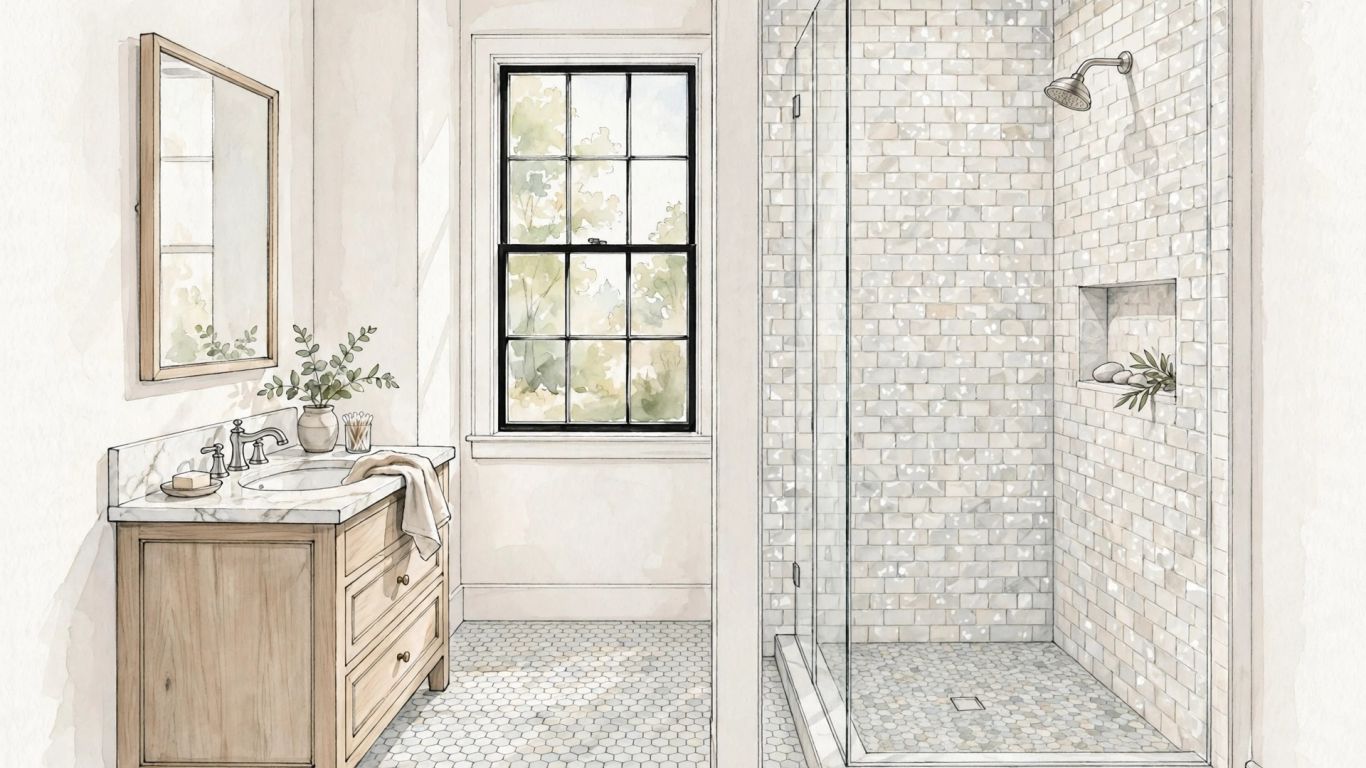
Marble tiles for bathroom floors and walls
Tile is a flexible choice for establishing the main stone surfaces of a bathroom. Larger formats can make a wall or floor read as a broad, calm plane; smaller formats introduce more joints and a different rhythm. Consider how tile size relates to the room and the number of cuts around fixtures, corners, and openings. For another view of white stone and mosaic pattern, browse this Carrara White mosaic as a contrasting design reference.
Mosaics for shower floors and detailed accents
Mosaics are useful when a design calls for smaller pieces, a patterned surface, or a focused accent. Thassos mosaics are offered for intricate designs, shower floors, and accent areas. Surfaces Galore lists Thassos mosaics among its formats, including options for shower floors and accent areas. Pattern and scale shape the impression, so compare a few approaches before choosing:
- A hexagon pattern creates a clear, repeating geometry.
- Herringbone introduces directional movement across a surface.
- Penny rounds make a finer, more closely spaced pattern.
Each pattern sets a different visual pace. A restrained mosaic can complement larger field tile, while a more intricate design can serve as the room’s focal detail.
Slabs for vanities and larger uninterrupted surfaces
A slab can create a more continuous stone appearance at a vanity or countertop. The broad surface places attention on the stone itself rather than on a grid of smaller pieces. Consider the sink, faucet, and edge treatment together so the finished composition feels intentional. Confirm the available slab dimensions and have a qualified professional assess fabrication and fit for the specific space.
Moldings and trim for finished edges
Trim can make transitions look resolved where a tiled surface ends or meets another material. Choose a profile that suits the overall character of the room, and plan its position before installation begins. Even a simple edge detail can bring a more finished look to a niche, doorway, or wall termination. Coordinate trim with the tile size and grout joint so the details feel related.
Plan a cohesive bathroom layout
A good layout is more than a set of attractive materials; it is the way surfaces meet and lead the eye through the room. Begin with the primary field tile, then decide where a change in scale or pattern will help. Think through transitions at the shower entry, around niches, and beside the vanity before materials are ordered. That early planning can make the finished room feel calm rather than pieced together.
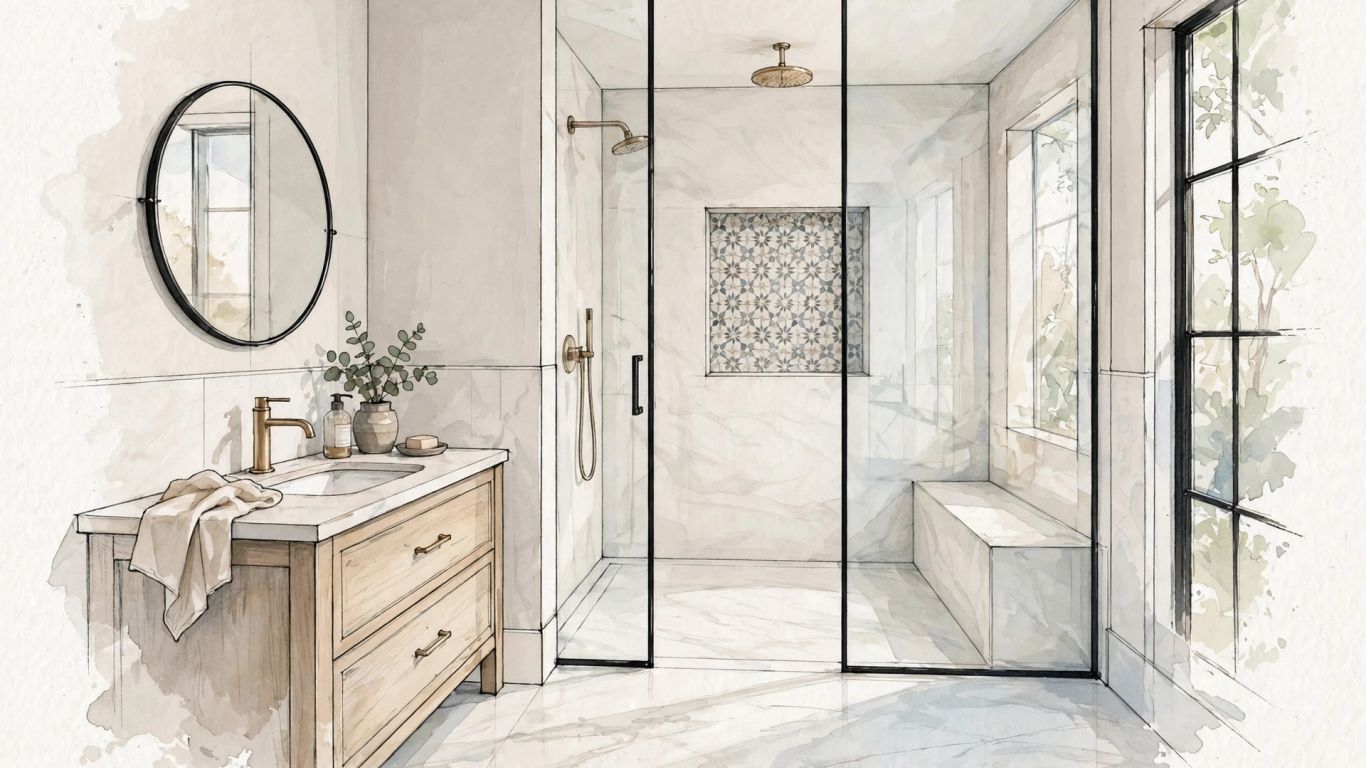
Carrying tile from the floor into the shower
Extending a similar tile or color palette into the shower can visually connect the two areas. The transition still needs careful planning around the shower floor, drain, and changes in plane. A mosaic may be considered where a smaller format suits the layout, but suitability and installation details should be confirmed with the installer. Keep the relationship between surfaces clear, even if the formats differ.
Creating a focal point with a feature wall or niche
A feature wall or niche can give the eye a natural place to rest. Use a change in format, pattern, or surface placement to distinguish that area without introducing too many competing details. A niche can repeat the room’s main stone, or use a mosaic as a contained accent. Set its dimensions and tile alignment with the installer before work begins, so the cut pieces feel purposeful.
Balancing large-format tile with mosaic details
Large-format tile gives a room broad visual fields, while mosaic adds a smaller pattern that can mark a transition or highlight a detail. It helps to compare formats side by side and think about where each one will appear. A simple planning table can make those roles easier to discuss with a designer or installer.
| Format | Possible role | Planning consideration |
|---|---|---|
| Larger tile | Main floor or wall field | Check cuts at edges and openings |
| Mosaic | Shower floor or accent | Review pattern scale and layout |
| Slab | Vanity or countertop | Confirm dimensions and fabrication |
| Trim | Exposed edge or transition | Coordinate profile with adjacent tile |
The table is a starting point, not a substitute for a measured layout. Review the proposed transitions in the actual room, where fixtures and wall dimensions will influence the final result.
Using grout color to shape the overall look
Grout color changes how clearly each piece reads. A close match can soften the grid and let the stone surface feel more continuous, while a contrast makes the pattern more visible. Test the proposed grout alongside the actual tile and finish rather than choosing from a small sample alone. The final choice should support the layout, not compete with it.
Compare finishes and complementary materials
Finish and surrounding materials help determine whether white marble feels crisp, soft, or more traditionally detailed. Polished and honed finishes are available in marble tile collections, and the choice affects how the surface reads in the room. Wood, metal, and darker stone can each add a different note. Bringing samples together is a practical way to see whether the palette feels balanced.
Polished and honed finishes for different visual effects
A polished finish has a more reflective appearance, while a honed finish reads as matte and understated. Either can suit a bathroom, depending on the desired look and the product’s intended use. In wet areas, ask a qualified professional to assess the selected material and finish for the application. Compare samples in the room’s lighting, because a finish can look different beside daylight, task lighting, or warm lamps.
Pairing white marble with warm wood and metal accents
Warm wood can soften the clarity of white marble, while metal details introduce a finer accent. Keep the number of finishes manageable: a vanity tone, faucet finish, and lighting detail can establish a palette without making every element compete. Natural variation in the stone means a sample board is useful for checking the combination. Aim for a room that feels collected rather than overly matched.
Adding contrast with darker natural stone details
A dark stone detail can sharpen the outline of a white marble room. It might appear in a small border, a niche, or another limited accent, rather than occupying every surface. Keep the contrast in proportion to the room’s size and lighting. This approach creates definition while preserving the open feeling of a pale stone palette.
Coordinating tile sizes and patterns across the room
Different sizes can work together when each has a clear purpose. Choose one main format, then introduce a second pattern where it adds useful detail or helps distinguish a zone. Pay attention to grout joints and alignments at transitions, since those small decisions can affect the room’s overall rhythm. If a separate natural-stone reference would help compare pattern character, see this white onyx mosaic.
Prepare for installation and everyday care
Natural stone rewards thoughtful preparation. Measure carefully, review the material before setting, and discuss the installation plan with a qualified professional. Marble and travertine installation guidance also recommends dry-laying pieces to check the layout and distribute natural variation. A clear plan gives the installer and homeowner a shared reference before work begins.
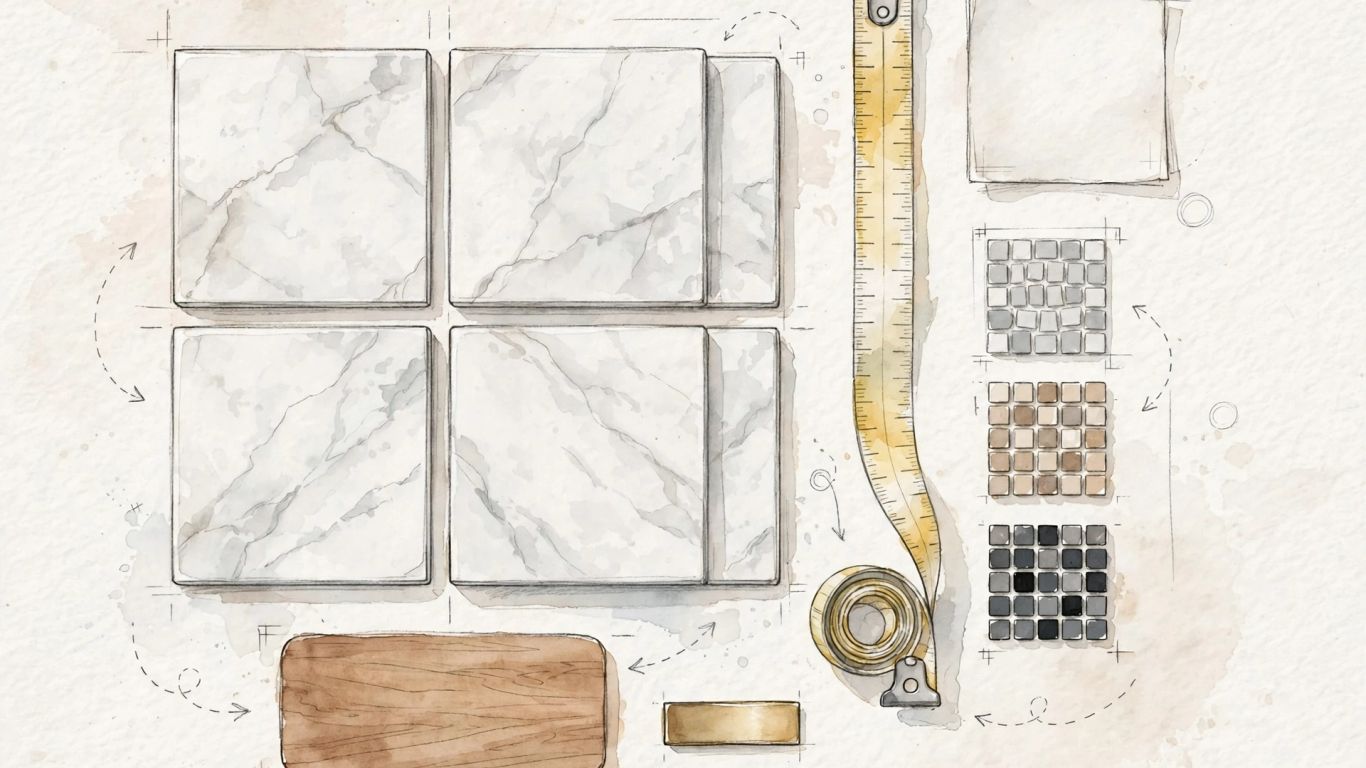
Confirming dimensions, quantities, and layout before ordering
Measure each area and account for cuts, edges, and the chosen pattern before determining quantities. Product sizes are nominal, so confirm the actual product details and ask how much additional material may be appropriate for the layout. A dry layout can help reveal awkward cuts and show how color variation will appear across the surface. Recheck dimensions before placing an order, especially when the room includes niches or several changes in plane.
A bathroom renovation may be one part of a larger home update. For readers coordinating other household projects, planning resources also cover tile roofing, fireplace design, and thermostat selection, alongside accessibility ideas such as classroom text-to-speech and a relaxing Zen Color painting game.
Discussing substrate, waterproofing, and installation with a qualified professional
Ask the installer to review the substrate, waterproofing, setting approach, and transitions for the specific bathroom. These decisions depend on the project conditions and should be addressed by a qualified professional rather than assumed from a general design guide. Share the selected tile, mosaic, and trim details before work begins. Clear communication can help avoid last-minute changes to the layout.
Following stone-specific sealing and maintenance guidance
Care and sealing requirements should be confirmed for the specific stone product and installation. Follow the supplier’s stone-specific recommendations and the installer’s guidance, and use cleaning products suitable for natural stone. A simple routine of prompt cleanup and regular attention can help keep the surface looking cared for. Avoid relying on generic advice where product-specific guidance is available.
Planning for natural variation and ongoing care
Natural stone pieces can differ in color and pattern, so inspect them before installation and set aside any pieces that raise concerns. Mixing pieces during a dry layout can help distribute variation more evenly. Keep a record of the stone and care guidance for future reference. Over time, ordinary upkeep is part of living with a natural surface, not a sign that every piece should look identical.
Source Thassos marble for your project
Once the design is settled, compare the product format, finish, and dimensions against the rooms you have measured. Current selection and availability can change, so confirm product details before finalizing a plan. Surfaces Galore offers Thassos products including tiles, slabs, and mosaics for different applications. A sample or a conversation about the project can help resolve details before ordering.
Comparing available sizes, finishes, and product formats
Compare tile sizes, finishes, and formats against the planned surfaces rather than choosing by appearance alone. A wall, floor, vanity, and accent may each call for a different product form. For an additional Thassos reference, explore Thassos marble tiles and compare the options with your room plan. Check the product details for the intended application and available finish.
Reviewing current stock and requesting samples or product details
A sample can help you assess the stone’s color and finish in the actual bathroom lighting. Ask for product information and confirm current stock before setting a schedule around delivery. Surfaces Galore provides Thassos products including tiles, slabs, and mosaics; review the relevant product details to match the format to your plan. Samples are a useful first step when choosing a white stone remotely.
Estimating project quantities and asking about bulk pricing
Use measured surface areas and the planned layout to estimate quantities, then ask the supplier and installer about allowances for cuts and waste. Larger projects may benefit from asking directly about bulk pricing and shipping arrangements. Confirm sizes and quantities before placing an order, especially if the design uses more than one product format. A written quote makes it easier to compare the order against the project plan.
Requesting a quote and arranging nationwide shipping from Surfaces Galore
Surfaces Galore is an Anaheim, California-based direct importer and nationwide supplier of natural stone, including marble and travertine. For Thassos product details, a quote, and shipping arrangements for a project elsewhere in the United States, request a project quote. Confirm the product, quantity, and delivery details before placing the order so the materials align with your schedule.
Conclusion
A white Thassos marble bathroom comes together through considered choices: the right format for each surface, a finish that suits the room, and a layout that respects natural variation. Compare samples, confirm product and installation details, and let a qualified professional guide the technical decisions; when you are ready to explore Thassos marble for your plan, request a quote and discuss nationwide shipping with Surfaces Galore.
Frequently Asked Questions
Is Thassos marble suitable for a bathroom?
Thassos marble is used for bathroom applications including floors, walls, countertops, and mosaics. Confirm that the specific product and finish are appropriate for each intended surface with a qualified professional.
What does Thassos marble look like?
Thassos marble is known for a pure white color and crystalline structure. Natural stone can vary, so individual pieces may not look exactly alike.
Should I choose polished or honed Thassos marble?
Polished marble has a reflective appearance, while honed marble has a more matte, understated look. Compare samples and confirm suitability for the intended application before deciding.
Can Thassos marble tile be used in a shower?
Thassos products include mosaics intended for shower floors and accent areas. Ask a qualified installer to review the particular product, finish, and installation conditions for your shower.
How can I make a white marble bathroom feel less plain?
Introduce warmth with wood, use a contrasting metal finish, or add a small mosaic detail. Keeping accents limited helps the white stone remain the central element.
Will every Thassos marble tile look the same?
No. Natural stone can show variation in color, texture, and pattern. Inspect pieces and dry-lay them before installation to plan how the variation will appear across the room.
What should I confirm before ordering Thassos marble?
Check dimensions, product format, finish, quantities, current availability, and delivery details. Also discuss installation and care guidance with the supplier and a qualified professional.

Leave a comment