
Best Tiles for Remodels: A Homeowner's 2026 Guide

For most remodels, porcelain is the workhorse and natural stone is the statement. Porcelain handles kitchen floors, mudrooms, and high-traffic bathrooms with minimal fuss. Honed marble, limestone, and travertine earn their place on feature walls, master bath floors, and backsplashes when you’re prepared to seal and maintain them. Here’s the quick room-by-room breakdown:
- Kitchen floor: Large-format porcelain (24×24 or larger) for durability and easy cleaning
- Kitchen backsplash: Marble or limestone mosaic for visual impact; ceramic subway tile for a classic, budget-friendly look
- Bathroom floor: Honed or brushed travertine, limestone, or textured porcelain for grip and warmth
- Shower walls: Honed marble or large-format porcelain; avoid polished stone on wet surfaces
- Shower floor: Honed or brushed natural stone mosaic, or small-format textured porcelain for maximum slip resistance
- Entry/mudroom: Slate, granite, or dense textured porcelain for traction and scratch resistance
- Outdoor/covered patio: Frost-rated porcelain or brushed granite; check frost resistance ratings before buying
The core trade-off in every remodel tile decision is durability versus maintenance. Porcelain wins on both counts for busy households. Natural stone wins on depth, character, and long-term resale appeal when you’re willing to seal it regularly. Surfacesgalore specializes in marble, limestone, and travertine sourced directly, so you get authentic material at prices that make real stone a realistic option for more rooms than you might expect.
Pro Tip: Before committing to any tile, bring a sample home and live with it for 48 hours under your actual lighting. Natural stone reads completely differently under warm incandescent light versus cool LED, and that difference matters more than any showroom photo.
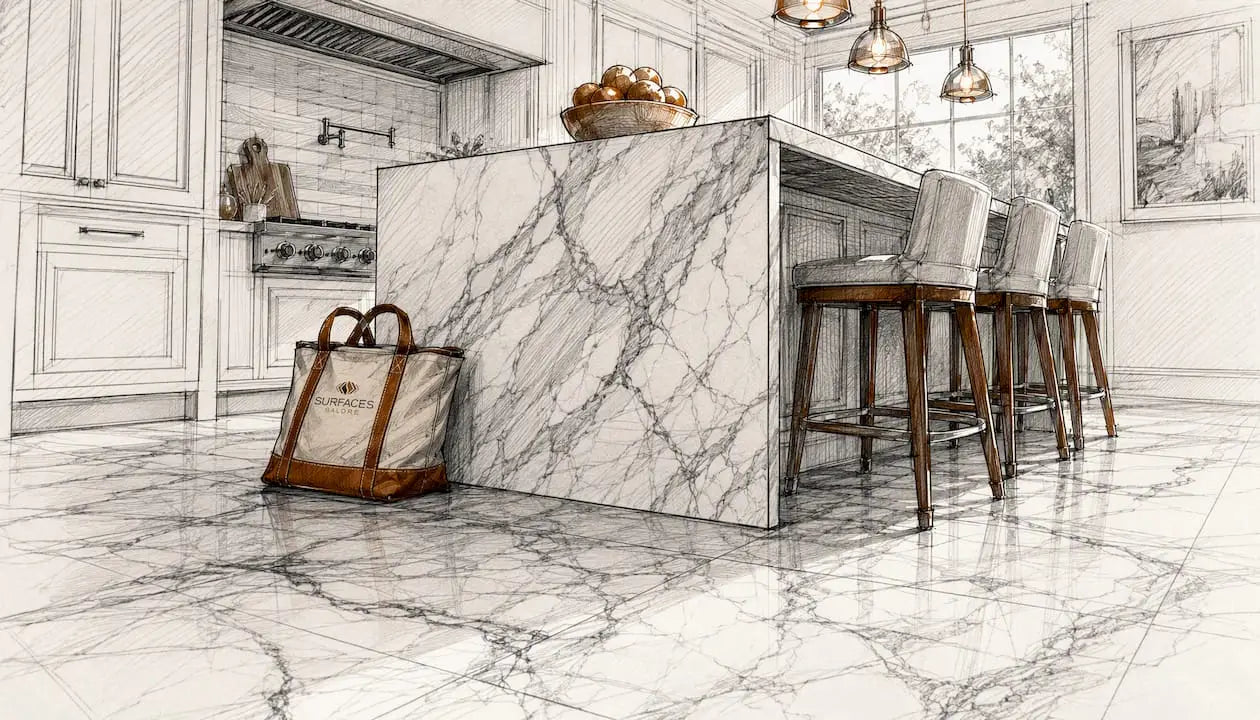
Table of Contents
- Which tile types should you actually consider for a remodel?
- Room-by-room: which tile works best where?
- What finishes are actually safe for wet areas?
- How tile size, format, and layout affect your remodel
- How to care for tile and how long it actually lasts
- What does tile actually cost for a remodel?
- Which tile choices tend to stay timeless?
- A homeowner’s checklist for buying tile and hiring an installer
- Key Takeaways
- The case for choosing stone intentionally
- Surfacesgalore: authentic natural stone, shipped nationwide
- Useful sources
- FAQ
Which tile types should you actually consider for a remodel?
Not every tile family deserves equal attention for home remodels. Here’s what each one actually delivers.
Porcelain
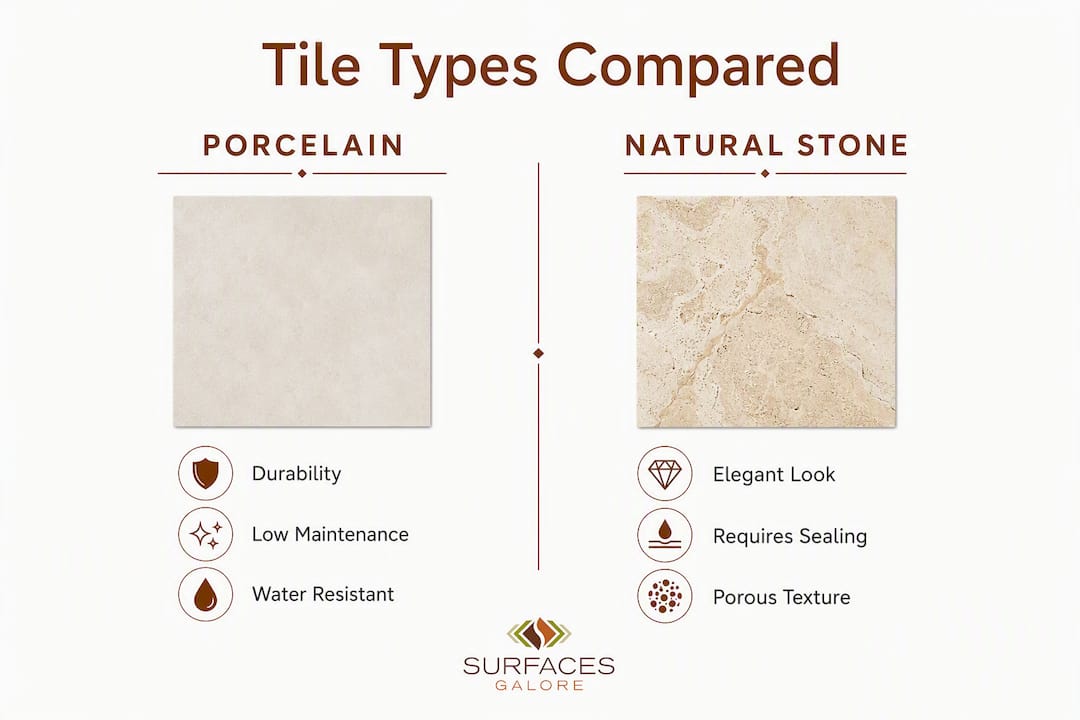
Porcelain is fired at higher temperatures than ceramic, making it denser, harder, and nearly impervious to water. It’s the default choice for floors, wet areas, and anywhere that takes a beating. The PEI (Porcelain Enamel Institute) wear rating tells you how much foot traffic a tile can handle: PEI 3 works for residential floors, PEI rated for heavy-use areas. Premium stone-effect porcelain has closed the aesthetic gap considerably. At normal viewing distances, quality stone-look porcelain is often difficult to distinguish from real stone, which makes it a practical option when budget or maintenance is the priority.
Ceramic
Ceramic costs less than porcelain and comes in an enormous range of colors and patterns. It’s softer and more porous, so it belongs on walls, backsplashes, and low-traffic floors rather than high-use areas. Classic 3×6 subway ceramic tile remains one of the most cost-effective and timeless choices for kitchen backsplashes.
Natural stone: marble, limestone, travertine, slate, granite, and quartzite
Marble, limestone, and travertine are softer and more porous than granite and slate, requiring regular sealing and pH-neutral cleaning. Marble, limestone, and travertine vary in hardness, generally softer than granite and slate, which are denser and better suited for high-traffic floors and outdoor use.
Marble’s famous vulnerability is etching: acids from lemon juice, vinegar, or wine leave dull marks on polished surfaces. Many designers treat this as a developing patina rather than damage, and if you choose marble intentionally with that expectation, it ages beautifully. For kitchens and busy bathrooms, honed marble or factory-filled travertine is a smarter starting point than polished. Surfacesgalore’s marble tile guide covers etching, sealing, and the best residential applications in detail.
Finishing options matter as much as the stone itself:
- Polished: High sheen, shows etching and scratches more readily, best for low-traffic feature walls
- Honed: Matte to satin, hides wear, preferred for floors and wet areas
- Brushed/tumbled: Textured surface, excellent grip, suits rustic and transitional styles
Glass tile
Glass tile works beautifully as a backsplash or accent strip. It reflects light in ways no other material matches. The limitation is fragility under impact and the need for a perfectly flat substrate, since any unevenness telegraphs through the tile. Keep glass to walls and decorative bands, not floors.
Cement and quarry tile
Cement tile offers bold geometric patterns and a handmade look that’s had a strong design moment. It’s highly porous and needs sealing before and after grouting. Quarry tile is unglazed, dense, and slip-resistant, making it a solid choice for utility rooms and covered outdoor areas.
Mosaics and large-format tiles
Mosaics (tiles under 2 inches, typically on mesh backing) create visual texture and work well on shower floors because the higher grout-line density improves grip. Large-format tiles (18×18 and up, including the popular 24×48 and 32×32 formats) make rooms feel larger and reduce grout lines for easier cleaning. The trade-off: large-format installation demands a flatter substrate and more skilled labor.
Price bands at a glance:
| Tile Type | Price Band | Maintenance Level | Water Resistance | Slip Potential (Polished) |
|---|---|---|---|---|
| Basic ceramic | Entry | Low | Moderate | Moderate |
| Standard porcelain | Entry–Mid | Low | High | Low–Moderate |
| Premium stone-look porcelain | Mid | Low | High | Low |
| Filled travertine (honed) | Mid–Premium | Moderate | Moderate | Low |
| Marble (honed) | Premium | High | Low–Moderate | Low |
| Marble (polished) | Premium | High | Low | High |
| Granite/slate | Mid–Premium | Low–Moderate | High | Low |
Pro Tip: Ask for the tile’s water absorption rating (ISO 10545-3). Porcelain should be below 0.5%; natural stone varies widely, and that number tells you how aggressively you need to seal it.
Room-by-room: which tile works best where?
Tile selection gets easier once you match material to the demands of each specific room.
Kitchen floors and countertops
Kitchen floors take grease, dropped pots, and constant foot traffic. Large-format porcelain handles all of it without complaint. If you want natural stone on a kitchen floor, dense honed limestone or granite are the realistic options. Marble on a kitchen floor is possible but requires consistent sealing and acceptance of eventual etching.
For kitchen countertops, marble remains a designer favorite despite its maintenance demands. Granite is harder and more stain-resistant. For backsplashes, the options open up considerably: marble mosaic, ceramic subway, glass tile, or even a slab of natural stone running floor to ceiling behind the range. See Surfacesgalore’s guide on picking floor tiles for kitchens and bathrooms for a deeper breakdown.
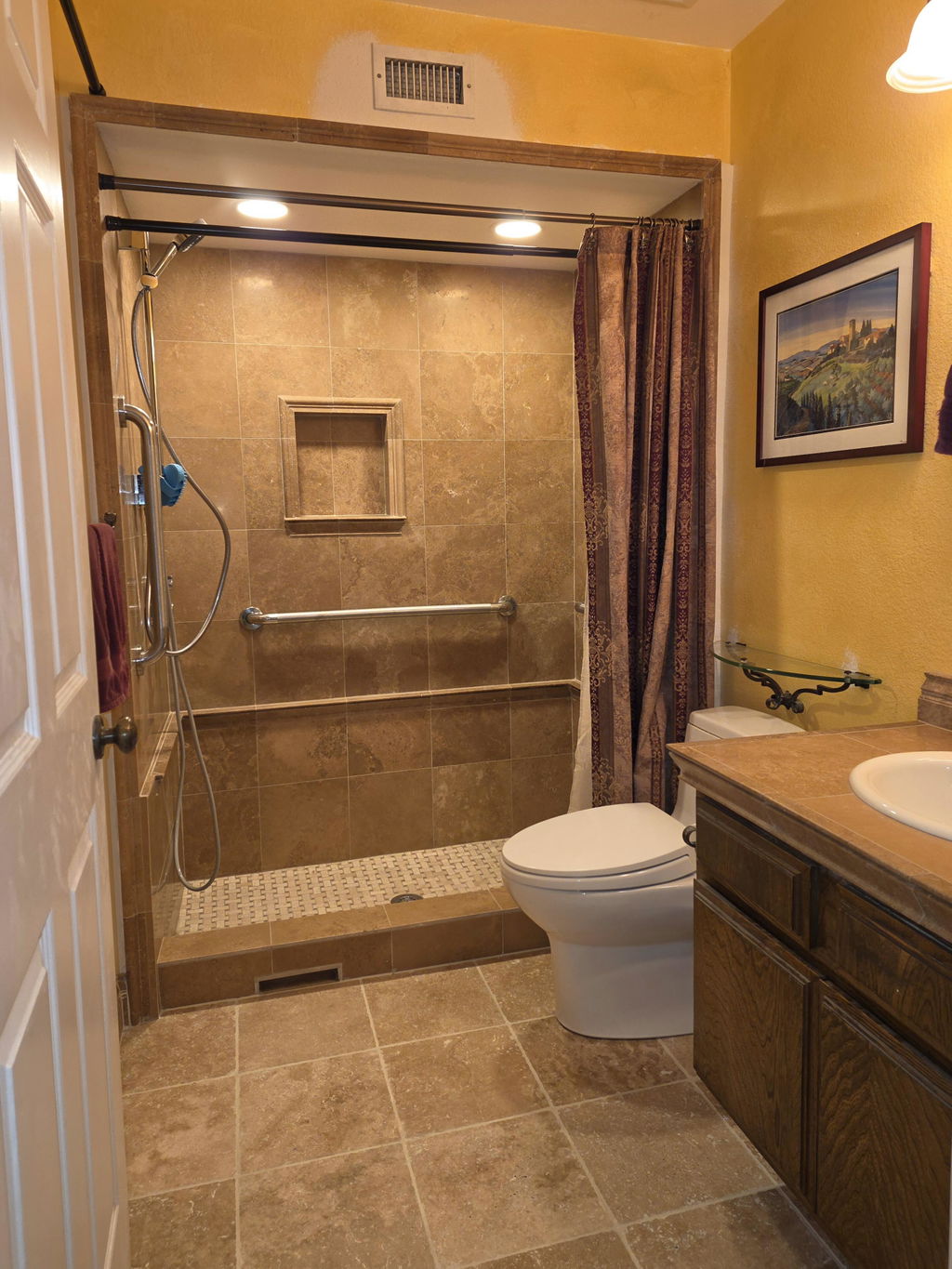
Bathroom floors and shower areas
- Bathroom floor: — Honed travertine, honed limestone, or textured porcelain. Avoid polished stone.
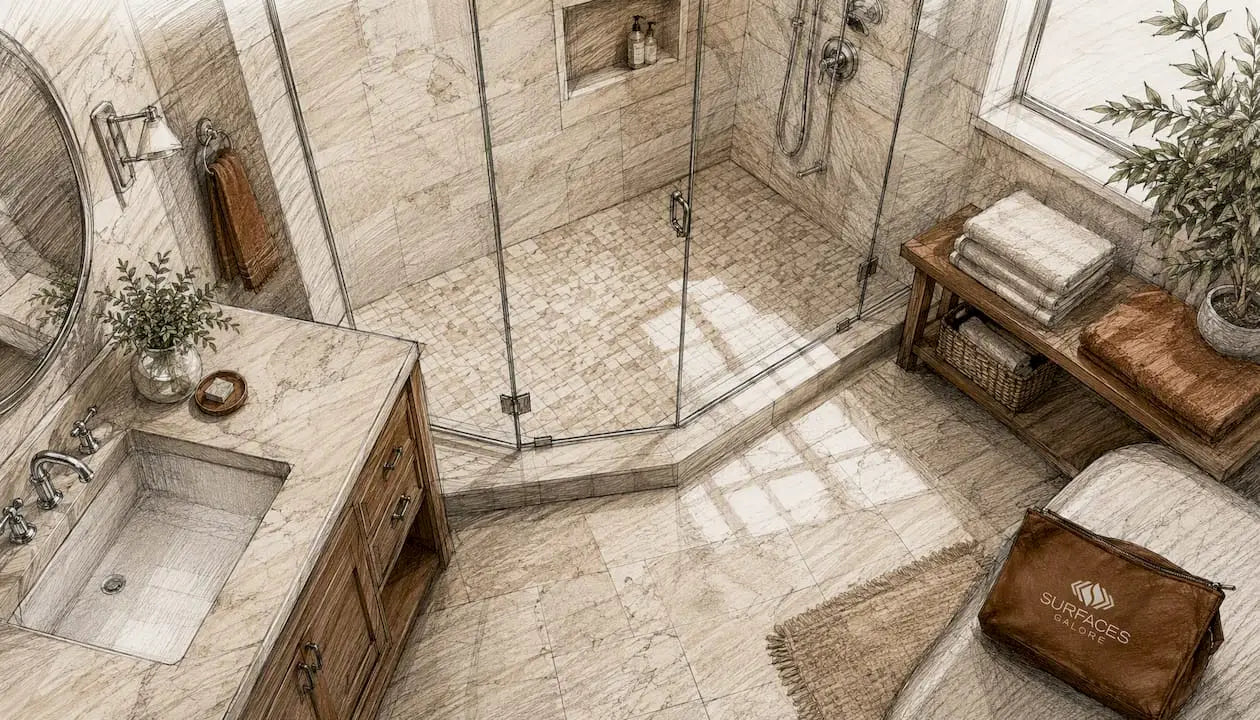
- Shower floor: — Honed or brushed stone mosaic (2×2 or smaller) or small-format textured porcelain. More grout lines equal more grip.
For wet-area tile planning in older homes, pairing your tile choices with a quality frameless shower enclosure makes a real difference. Glass Shower Direct’s bathroom update guide covers how frameless glass and tile work together to modernize a bathroom without a full gut renovation.
Entry and mudroom floors
These areas need traction and scratch resistance above all else. Slate, granite, and dense textured porcelain are the top choices. Travertine works if it’s filled and sealed, but unfilled travertine traps dirt in its natural voids. Avoid polished anything at an entry.
Laundry and utility rooms
Unglazed porcelain or quarry tile. Both handle water, cleaning chemicals, and heavy appliances. No need for premium materials here; spend the budget elsewhere.
Outdoor and covered patios
Only use tiles rated for outdoor and frost conditions if you’re in a climate with freeze-thaw cycles. Frost-rated porcelain is the safest choice. Brushed granite and certain dense limestones work in mild climates. Check the tile’s frost resistance certification before purchasing, and always use an exterior-rated adhesive and grout.
What finishes are actually safe for wet areas?
The finish you choose for a shower floor or bathroom floor matters more than the tile itself.
Honing or brushing natural stone is recommended for wet areas because it provides better slip resistance than polished stone. A polished marble shower floor is a genuine safety hazard when wet. Honed marble, brushed travertine, or brushed limestone on the same floor is a different story. Surfacesgalore’s guide on marble shower floor slip resistance walks through exactly which finishes work and where marble can still be used safely.
For textured porcelain, look for a Dynamic Coefficient of Friction (DCOF) rating of 0.42 or higher for wet floor applications, per the ANSI A137.1 standard used in the United States.
Wet-area safety checklist:
- Use a honed, brushed, or textured finish on all wet floors (no polished stone, no high-gloss porcelain)
- Install a waterproof membrane (Schluter Kerdi, RedGard, or equivalent) before tiling
- Slope the shower floor at least 1/4 inch per foot toward the drain
- Use a non-sanded or epoxy grout rated for wet areas
- Seal natural stone before grouting and again after installation
- Verify the tile’s DCOF rating meets ANSI A137.1 minimums for your application
Finish matters more than material. A honed travertine shower floor is safer than a polished porcelain one. The surface texture, not the stone type, determines grip when wet.
Pro Tip: When sampling tiles for a wet area, run the sample under water and walk on it barefoot. That 30-second test tells you more than any spec sheet.
How tile size, format, and layout affect your remodel
Tile format shapes how a room reads before a single piece of furniture goes in.
Large-format tiles (18×18 and up) reduce visible grout lines and make a space feel more open. They’re the dominant choice in contemporary and transitional remodels. The catch: they require a flatter substrate (within 1/8 inch over 10 feet per industry standards) and more precise installation to avoid lippage, the slight height difference between adjacent tiles that catches light and looks uneven.
Mosaics do the opposite: they add texture, visual complexity, and grip. A 2×2 honed marble mosaic on a shower floor is both beautiful and functional. On a feature wall, a mosaic can carry a whole room’s design.
Grout joint width affects both look and maintenance. Tight joints (1/16 to 1/8 inch) suit rectified tiles and create a cleaner, more modern look. Wider joints (3/8 inch or more) work with handmade or tumbled tiles and hide slight size variations. Darker grout hides staining; lighter grout shows it. Choose grout color based on how much cleaning you’re willing to do, not just aesthetics.
Installation checklist:
- Confirm substrate flatness before ordering large-format tile
- Use large-format tile-specific thin-set (medium-bed mortar) for tiles over 15 inches
- Install movement joints at perimeter walls and every 20–25 feet in field areas
- Pre-seal natural stone before grouting to prevent permanent grout haze
- Back-butter large tiles in addition to combing the substrate
DIY vs. hiring a pro:
- Backsplash (DIY-friendly): Flat wall, no waterproofing, forgiving of minor imperfections
- Bathroom floor (moderate skill): Requires slope planning and waterproofing knowledge
- Shower (hire a pro): Waterproof membrane installation, slope, and wet-area grout are unforgiving of errors
- Large-format floor (hire a pro): Lippage control requires experience and specialized leveling systems
A mid-size bathroom tile install typically runs 3–5 days: one day for substrate prep and waterproofing, one to two days for setting tile, one day for grouting, and one day for sealing and cleanup. Surfacesgalore’s Home Tile Renovation Guide covers post-installation workflows that reduce edge chipping and protect the tile long-term.
Pro Tip: Order 10–15% extra tile to account for cuts, waste, and future repairs. Natural stone tiles vary slightly between production batches, so matching a repair tile years later is nearly impossible without stock on hand.
How to care for tile and how long it actually lasts
Tile maintenance is mostly about what you don’t do. Acid on marble, abrasive cleaners on polished stone, and skipping the sealer are the three most common ways homeowners shorten a tile’s life.
Cleaning rules by material:
- All natural stone: pH-neutral cleaner only. Avoid vinegar, lemon juice, bleach, and anything labeled “grout cleaner” unless it’s stone-safe.
- Porcelain and ceramic: Most household cleaners work. Avoid abrasive scrubbers on glazed surfaces.
- Cement tile: Sealed surface only; use a gentle, pH-neutral soap.
- Grout: Mild alkaline cleaner and a stiff brush. Re-seal grout annually in wet areas.
Sealing schedule by stone type:
- Marble and limestone: Seal before grouting, again after installation, then annually in wet areas and every 18–24 months in dry areas
- Travertine: Same schedule as marble; filled travertine may need slightly less frequent sealing
- Granite and slate: Every 2–3 years in most residential applications
- Porcelain and ceramic: No sealing required (grout still needs sealing)
The most reliable way to know if a stone needs resealing is the water-drop test. Place a few drops of water on the surface; if the stone absorbs the water within 60 seconds, it’s time to reseal. Applying sealer over a dirty or already-saturated stone traps impurities and causes hazing, so clean the surface thoroughly first.
Use a penetrating (impregnating) sealer, not a topical coating. Penetrating sealers soak into the stone’s pores and protect from within without changing the surface appearance. Topical coatings sit on the surface, peel over time, and can make stone look plasticky. For marble, limestone, and travertine, a premium impregnating sealer applied by a professional or a careful DIYer is the single most protective step you can take.
How materials age over time:
- Marble: Develops a patina from etching and foot traffic; many homeowners find this adds character rather than diminishing it
- Travertine: Fills and voids may open slightly over decades; periodic re-filling keeps it looking fresh
- Porcelain: Holds its appearance almost indefinitely; grout is the weak point
- Slate: Can delaminate if exposed to freeze-thaw cycles; stable indoors
What does tile actually cost for a remodel?
Tile budgets vary widely, and the material cost is often the smaller part of the total.
Material price bands (per square foot, approximate):
- Entry: Basic ceramic tile, standard glazed porcelain
- Mid: Premium stone-look porcelain, factory-filled honed travertine, standard limestone
- Premium: Honed or polished marble, unfilled travertine, high-end quartzite, book-matched stone slabs
Installation typically costs more than the tile itself in complex projects. The factors that drive labor costs up fastest:
- Substrate prep: Leveling an uneven subfloor before large-format tile can add significant time and cost
- Pattern complexity: Herringbone, Versailles, and diagonal layouts require more cuts and more installer time than straight-lay
- Waterproofing: A proper shower waterproof membrane adds a day of labor but is non-negotiable
- Mosaic tile: Mesh-backed mosaics take longer to set and grout than large-format tile
Budget control strategies:
- Use natural stone as a focal accent (one feature wall, a shower niche, a range backsplash) rather than surfacing an entire room
- Choose stone-look porcelain for high-traffic floors and save authentic stone for lower-traffic feature areas
- Batch-order all tile for a project at once to reduce shipping costs and guarantee dye-lot consistency
- Avoid complex patterns in large rooms; a straight-lay or offset pattern cuts labor hours significantly
Pro Tip: Get three installer quotes and ask each one to break out substrate prep, waterproofing, tile setting, and grouting as separate line items. A quote that bundles everything makes it impossible to compare fairly or spot where costs are inflated.
Which tile choices tend to stay timeless?
Trends in tile move slowly, but they do move. The choices that consistently hold their value and appeal across decades share a few traits: neutral tones, natural materials or convincing natural-look materials, and classic formats.
Reliably timeless options:
- Classic ceramic subway tile (3×6): Has been in continuous production since the early 1900s and shows no sign of dating
- Large-format neutral porcelain (24×24 or larger in warm gray, cream, or greige): Works in contemporary, transitional, and even traditional interiors
- Honed white or cream marble feature walls: The master bath focal wall in honed Carrara or similar marble reads as luxury in any decade
- Natural stone with subtle veining: Busy, dramatic veining can feel dated; quiet, consistent stone ages better
- Travertine in warm beige tones: Had a long run in the 2000s, fell out of fashion briefly, and has returned strongly in 2026 interiors
When to go trend-forward: accent areas that are cheap to replace, like a powder room floor or a small backsplash. When to stay classic: master bath floors, kitchen floors, and any tile that would cost $5,000 or more to replace.
Where modest natural stone investment pays off at resale: entry floors, master bath focal walls, and the kitchen range wall. Buyers notice these areas first, and authentic stone reads differently than porcelain to a trained eye.
A homeowner’s checklist for buying tile and hiring an installer
Most tile-buying mistakes happen before a single tile is set. These questions protect you.
Questions to ask your tile supplier:
- What is the tile’s grade and PEI rating (for porcelain) or Mohs hardness (for stone)?
- Is this tile rectified (precision-cut for tight joints) or calibrated (slight size variation)?
- What sealer do you recommend, and how often should it be applied?
- What finish options are available, and which do you recommend for my application?
- What is the lead time, and can I order samples before committing?
Questions to ask your installer:
- What waterproofing system do you use for showers, and can you show me a completed example?
- How do you prep the substrate for large-format tile?
- Do you use a leveling system, and which one?
- What warranty do you offer on labor?
- Can you provide references from similar projects?
Quality evaluation when inspecting tile samples:
- Check edge straightness by holding two tiles back-to-back; any gap shows warping
- Look at the back of the tile: a well-made porcelain has a consistent, dense body
- For natural stone, ask for batch photos showing the range of variation you’ll actually receive
- Confirm the return policy before ordering; most tile is non-returnable once cut
Ordering and logistics:
- Order 10–15% extra for cuts and future repairs
- Confirm lead times before scheduling your installer
- For natural stone, request tiles from the same quarry batch (lot number) to minimize color variation
- Stagger deliveries for large projects so tile isn’t sitting on a job site for weeks before installation
Pro Tip: Ask your installer to dry-lay a section of tile before setting anything. Seeing the actual pattern and color variation across 20–30 tiles in your real space prevents expensive surprises after the adhesive sets.
Key Takeaways
Porcelain handles durability and wet areas reliably, while honed natural stone like marble, limestone, and travertine delivers character and resale value when sealed and maintained consistently.
| Point | Details |
|---|---|
| Porcelain for high-traffic areas | Porcelain with suitable PEI ratings handles kitchen floors, mudrooms, and busy bathrooms with minimal maintenance. |
| Honed finish for wet areas | Always choose honed, brushed, or textured finishes for shower floors and bathroom floors; polished stone is a slip hazard when wet. |
| Seal natural stone consistently | Use the water-drop test: if water absorbs within 60 seconds, reseal. Marble and limestone need to be sealed annually in wet areas and every 18–24 months in dry areas. |
| Natural stone for focal impact | Use authentic marble, limestone, or travertine on feature walls, master bath floors, and backsplashes where the visual payoff justifies the maintenance. |
| Surfacesgalore for authentic stone | Surfacesgalore imports marble, limestone, and travertine directly, shipping nationwide, making real stone accessible for more remodel budgets. |
The case for choosing stone intentionally
There’s a version of the “porcelain vs. natural stone” debate that misses the point entirely. The question isn’t which material is objectively better. It’s whether you’re choosing stone because you actually want what stone does, or because you think you should want it.
Marble etches. Travertine has voids. Limestone needs sealing. None of that is a flaw. It’s the material behaving exactly as it always has. Installer experience consistently points to the same conclusion: choose stone when you value its depth and character and accept the maintenance that comes with it. Choose porcelain when heavy use or a low-maintenance household is the reality.
What I find underestimated in most remodel advice is the role of finish. Homeowners spend weeks choosing between marble and limestone and almost no time choosing between polished and honed. That’s backwards. The finish determines how the tile performs in daily life, how safe it is underfoot, and how it ages. A honed travertine floor in a busy family bathroom will outlast and outperform a polished marble floor in the same space, not because travertine is better, but because honed is the right finish for that application.
The other thing worth saying plainly: authentic natural stone and high-quality stone-look porcelain are not interchangeable, even when they look similar from across the room. Stone has depth, variation, and a physical presence that porcelain doesn’t replicate at close range. For a master bath feature wall or a kitchen range surround, that difference is worth paying for. For a laundry room floor, it isn’t.
Surfacesgalore: authentic natural stone, shipped nationwide
Real natural stone at a fair price is harder to find than it should be. Most homeowners either pay retail markup at a local tile showroom or settle for stone-look porcelain because sourcing authentic marble, limestone, or travertine feels complicated.
Surfacesgalore is a direct importer of premium marble, limestone, and travertine tiles, mosaics, moldings, and custom cuts, based in Anaheim, California and shipping nationwide. Buying direct means you get authentic stone without the distributor markup, and the selection covers everything from classic Carrara marble mosaics to filled travertine field tiles and honed limestone for bathroom floors. Sample ordering is available so you can confirm color and finish before committing to a full project quantity. For project-specific advice on quantities, finishes, or lead times, the team is available to help you plan. Shop natural stone tiles and see the full collection, or reach out directly for guidance on your specific remodel.
Useful sources
- Natural stone tile care: marble, limestone, and travertine (Bromley Tiler) — Practical sealing schedules, the water-drop reseal test, and pre-grouting prep steps for natural stone
- The SHS field guide to timeless materials: natural stone (Stafford House Studio) — Design-focused perspective on marble etching as patina and choosing stone intentionally
- Care and maintenance guide: marble, limestone, travertine (Signorino) — Technical guidance on porosity, hardness, and cleaning protocols by stone type
- Natural stone tile overview (Original Mission Tile) — Finish recommendations for wet areas and slip resistance guidance
- Limestone vs. marble vs. travertine comparison (WillyHomes) — Side-by-side hardness, porosity, and application comparison for the three most common natural stones
- Advantages of marble tiles: a homeowner’s guide (Surfacesgalore) — Etching, sealing, and best residential applications for marble from a direct importer’s perspective
FAQ
What bathroom tile never goes out of style?
Classic 3×6 ceramic subway tile and large-format neutral porcelain in cream or warm gray tones have remained consistently popular for decades. Honed white marble on a feature wall or vanity surround is another choice that reads as timeless rather than trendy.
Is porcelain or natural stone better for a bathroom floor?
Porcelain is lower maintenance and more water-resistant; natural stone offers more visual depth and character. For a busy family bathroom, textured porcelain or honed travertine are both strong choices. The finish matters more than the material: always use a honed or textured surface, never polished, on a wet floor.
How often does natural stone tile need to be sealed?
Marble and limestone in wet areas need sealing annually; in dry areas, every 18–24 months is typical. Granite and slate can go 2–3 years between sealings. Use the water-drop test: if water absorbs into the stone within 60 seconds, it’s time to reseal.
Can you use marble in a shower?
Yes, with the right finish and proper installation. Honed or brushed marble on shower walls is safe and beautiful. On a shower floor, use honed or brushed marble mosaic (2×2 or smaller) for adequate grip. Never use polished marble on a shower floor.
What tile is easiest to maintain in a kitchen?
Large-format glazed porcelain is the easiest kitchen tile to maintain: it resists stains, doesn’t need sealing, and cleans with standard household products. For homeowners who want natural stone in the kitchen, honed granite or dense limestone are more forgiving than marble.

Leave a comment