
Checkerboard Foyer Transformation That Looks Custom

A foyer has one job before the rest of the house gets a word in: establish the standard. A well-planned checkerboard foyer transformation does that with remarkable efficiency. The pattern is graphic, familiar, and architectural, yet the material selection determines whether it reads as a lasting custom detail or a flat, predictable floor.
Natural stone gives checkerboard tile the depth that printed porcelain and low-grade imitations cannot replicate. Fine veining in Carrara, a crisp Thassos field, the warmth of Noce, or the drama of Nero Marquina creates movement within the grid. The pattern remains disciplined, while every piece carries the quiet variation that makes real stone feel considered.
Start a Checkerboard Foyer Transformation With Scale
Checkerboard is simple in concept, but proportion makes or breaks the finished room. Tile that is too small can make a generously sized entry feel busy. Tile that is too large can leave a compact foyer with awkward slivers at the walls. Before choosing colors, measure the clear floor area, account for door swings, and determine the visual center guests will see when the front door opens.
For many residential foyers, 12-by-12-inch stone tiles create a classic, balanced grid. An 8-by-8 format can be especially effective in a narrow vestibule, older home, or entry where the detail needs to feel more tailored. Larger 16-by-16-inch tiles suit open entry halls and homes with broad sightlines, provided the perimeter can be planned without excessive cuts.
Dry-layout planning matters as much as tile size. A centered grid usually looks intentional, but not every room should be centered on all four walls. In an entry that opens directly into a hall or living room, it may be better to align the checkerboard with the dominant sightline or a major doorway. This is where an experienced installer earns their value: the layout should look right from the threshold, not merely work on paper.
Choose the Border Before Ordering Tile
A border is not mandatory, but it often solves layout challenges and gives a foyer a finished architectural edge. A narrow marble pencil liner, a single row of dark stone, or a coordinating field-tile border can frame the checkerboard and absorb uneven perimeter cuts.
For a formal entry, a dark border around a white-and-gray field creates definition without distracting from the pattern. For Mediterranean, rustic, or transitional interiors, a warm travertine checkerboard with a limestone or walnut-toned border can feel grounded rather than ornate. The key is restraint. The checkerboard is already the feature; the border should sharpen it, not compete with it.
Select Stone Colors for the Rest of the Home
Black and white is the iconic checkerboard combination, but it is only one direction. The best palette is the one that relates to the rooms beyond the foyer. An entry floor should introduce the home's material language, not feel like an isolated design moment.
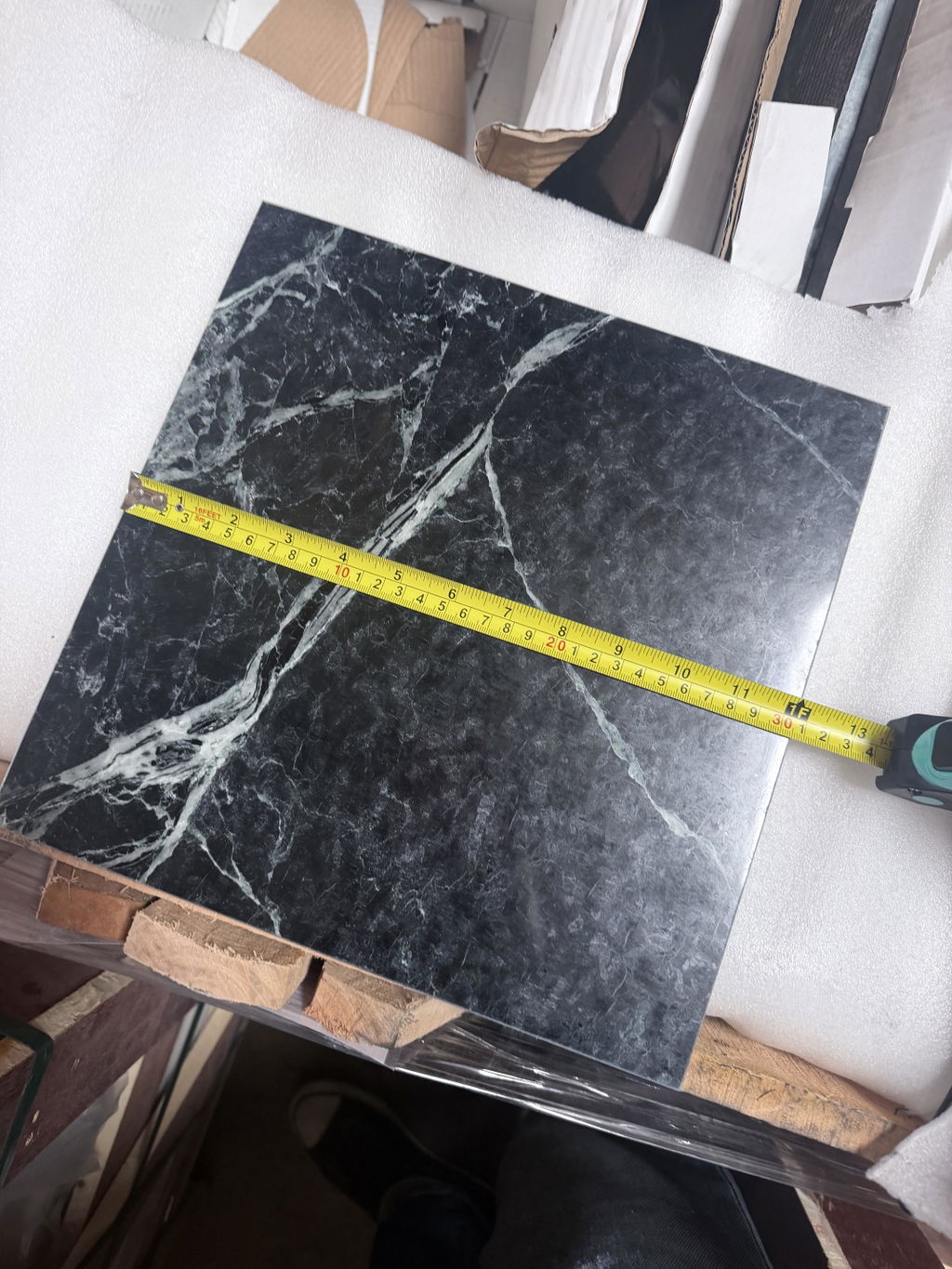
Carrara marble paired with Nero Marquina delivers a high-contrast, formal look with enduring appeal. Carrara's soft gray veining prevents the white squares from appearing stark, while Nero Marquina brings rich black depth and occasional white veining that ties the two stones together. This combination works beautifully with painted millwork, brass hardware, dark stained doors, and traditional or European-inspired interiors.
For a brighter, cleaner result, Thassos and a refined gray marble offer contrast without the intensity of black. This is a strong choice for coastal, contemporary, and light transitional homes. It also accommodates a wide range of wall colors and furnishings, though it requires thoughtful maintenance near a frequently used exterior door.
Warmer combinations deserve equal attention. Ivory travertine paired with Noce travertine creates a relaxed checkerboard with natural tonal variation. Tumbled finishes and softened edges can make this palette feel established from day one. Limestone and travertine combinations are also practical for homes where a pure white floor would create unnecessary anxiety around wet shoes, pets, and daily traffic.
Stone is naturally variable, especially in veining, shade, and mineral character. That variation is part of the value, not a defect. Requesting samples before finalizing a large foyer order is the most reliable way to assess color, finish, and how two materials perform together under your home's actual lighting.
Finish Is a Performance Decision, Not Just a Style Choice
A polished marble checkerboard reflects light and gives an entry a formal, high-design presence. It is an excellent fit for lower-moisture foyers, carefully maintained homes, and projects where visual impact leads the brief. Polished stone also makes the tonal depth of marble more visible.
A honed finish has a softer, more contemporary appearance and typically makes day-to-day marks less apparent. It is often the practical choice for active households, dogs, children, or front doors exposed to rain and snow. Honed does not mean maintenance-free, but its low-sheen surface is more forgiving than a mirror-polished floor.
Textured, tumbled, or brushed stone creates grip and a more relaxed character. These finishes are especially compelling in farmhouse, old-world, Spanish, and Mediterranean-influenced homes. They can also be appropriate where a foyer receives frequent moisture, although grout selection, sealing, and proper cleaning still matter.
No natural stone finish eliminates the need for sensible entry maintenance. Use a quality interior and exterior doormat, wipe up standing water promptly, and avoid acidic cleaners that can etch calcareous stones such as marble, travertine, and limestone. A penetrating sealer selected for the specific stone and finish adds valuable protection, but it is not a substitute for correct care.
Details That Make the Floor Look Professionally Specified
The difference between an attractive checkerboard and a truly polished foyer often comes down to the elements around the squares. Grout color, joint width, transitions, and thresholds all deserve decisions before installation begins.
A tight, consistent grout joint keeps the grid crisp. The ideal width depends on tile calibration and edge treatment, but many stone checkerboards benefit from joints that are narrow enough to preserve the pattern while allowing proper installation tolerance. Do not assume every natural stone tile can be installed with ultra-tight joints. A qualified installer should inspect the material and establish a suitable joint based on its sizing and edge profile.
Grout should support the stones, not draw a third color across the floor. With a Carrara and Nero Marquina checkerboard, a soft gray grout is often more refined than bright white or deep black. For warm travertine floors, a sand or taupe grout tends to keep the composition cohesive. Test boards are worthwhile when the project includes multiple stones, a border, or a highly visible transition.
Plan floor height early. Natural stone can be thicker than adjacent flooring, and an abrupt transition at the foyer opening can undermine an otherwise premium installation. Coordinate the substrate, underlayment, and transition profile before tile is set. This is particularly important when connecting to hardwood, engineered wood, or existing stone.
If the foyer includes a coat closet, powder room, or stairs, decide where the pattern begins and ends. Carrying the checkerboard into a nearby powder room can create a strong visual connection. Stopping it cleanly at a doorway with an appropriate stone threshold may be the better choice when adjoining rooms need their own identity.
Buy for the Project, Not Just the Square Footage
Natural stone is a finish material, not a commodity purchase. Ordering solely by the lowest displayed price can introduce inconsistent color, poor calibration, breakage risk, and replacement delays at the stage when a schedule is already tight. For a focal-point floor, material quality and dependable fulfillment matter.
Calculate the net square footage, then add an appropriate waste factor for cuts, layout adjustments, and future repairs. A straightforward rectangular foyer may need roughly 10 percent extra material. A diagonal layout, detailed border, multiple doorways, or a room with many corners can require more. Your installer should confirm the quantity before ordering.
For a checkerboard, order both colors together and review samples as a pair. The goal is not to find two stones that look good individually. It is to ensure their tones, finishes, thicknesses, and edge treatments work as one floor. Surfaces Galore helps homeowners and trade professionals source premium-grade natural stone with sample access, insured orders, and nationwide fulfillment, so the material decision can be made with greater confidence before installation day.
A checkerboard foyer should feel inevitable when it is complete, as if the house was always waiting for that exact floor. Choose stone with real depth, give the grid the right scale, and insist on a layout that respects the room. The result is not simply an upgraded entry. It is a first impression built to hold its value under every arrival.

Leave a comment