
3 Crema Marfil Marble SKUs From a Direct Importer

Crema Marfil is a warm cream-to-ivory Spanish marble quarried near Pinoso, Alicante, prized for its consistent tone, subtle gold veining, and versatility across floors, bathrooms, and walls. It’s a strong choice for most residential and light-commercial interiors, though heavy-use kitchen counters call for extra caution. The stone is available in tumbled mosaics, polished or honed field tile, and bullnose trim, covering most specification needs from a single source.
TL;DR:
- Crema Marfil’s authenticity relies on sourcing from specific Spanish quarries, with the Monte Coto quarry recognized for superior quality and consistency.
- It is available in three grades: Select offers the most uniform appearance, Standard provides natural variation, and Commercial is less consistent, requiring careful lot management for large projects.
- Finishes vary between polished, honed, and tumbled, each suited to different applications such as vertical surfaces, floors, or rustic accents, with sealing and maintenance being crucial for longevity.
- Crema Marfil performs best in low-traffic areas like bathrooms and wall cladding, while active kitchen counters require extra caution due to its calcite content and susceptibility to etching.
- Prices depend on grade, format, and finish, and ordering full lots from a trusted supplier with samples and proper sealing ensures optimal results.
Table of Contents
- What Is Crema Marfil Marble, and Is It Authentic?
- What Do Select, Standard, and Commercial Grades Mean?
- Which Finish and Format Should You Choose?
- Where Does Crema Marfil Marble Work Best?
- How Do You Install and Maintain Crema Marfil Marble?
- What Does Crema Marfil Marble Cost, and What Should You Budget?
- How Durable Is Crema Marfil Compared to Other Marbles?
- Is Crema Marfil Marble a Sustainable Choice?
- What Defects and Natural Variations Should You Expect?
- An Importer’s View on Specifying Crema Marfil
- Shop Crema Marfil Marble Tile and Trim at Surfaces Galore
- Sources
- FAQ
What Is Crema Marfil Marble, and Is It Authentic?
Genuine Crema Marfil comes from the Pinoso and Alicante district of Spain, not from generic “cream marble” quarried elsewhere and sold under the same name. The stone’s cream-to-ivory background, soft beige and gold veining, and occasional fossilized shell inclusions are what geologists and stone suppliers use to confirm origin. Those fossil traces are a genuine fingerprint. Marble marketed as “Crema Marfil” from Turkey, China, or other regions can look similar at a glance but usually lacks the same mineral consistency and fossil pattern, and it often behaves differently once sealed and installed.
The best-regarded material historically traces back to the Monte Coto quarry, part of the Coto de Pinoso group, which has a reputation for superior tone and structural consistency. Before you commit to a large order, ask your supplier a few direct questions:
- What quarry or block does this lot come from?
- Can you provide photos of the actual slabs or tiles I’ll receive?
- Are batch or lot identifiers marked on the crating or packing slip?
- Is this material commercial-grade Crema Marfil or a blend marketed under the same name?
A supplier who can’t answer these clearly is a red flag, especially for large visible installations where color matching matters.
What Do Select, Standard, and Commercial Grades Mean?
Crema Marfil ships in three common commercial grades, and mixing them up is the fastest way to end up with a patchy floor. Suppliers typically define them as Select, Standard, and Commercial, each with a different balance of consistency and cost.
- Select (or Extra) grade offers the most uniform background color, minimal filled fissures, and tighter veining control. It commands a real price premium over Standard.
- Standard grade shows more natural variation, moderate veining, and occasional filled voids. It’s the workhorse choice for most residential jobs.
- Commercial grade carries more visible fissures, color shifts, and filler, typically reserved for budget-driven or heavily patterned installations where uniformity matters less.
Because Crema Marfil is pulled from multiple quarries across the Alicante district, lot-to-lot variation is normal even within the same grade. For a large, highly visible area like a foyer floor or a bookmatched feature wall, specify Select grade from a single lot rather than mixing pallets.
Pro Tip: Always request a physical mock-up panel, not just a photo, before finalizing a large order. Screen colors and lighting distort marble tone more than most people expect.

Which Finish and Format Should You Choose?
Finish changes both the look and the performance of Crema Marfil, so match it to the room before you order.
- Polished finish brings out maximum depth in the veining and tone, ideal for accent walls, backsplashes, and vertical surfaces that don’t take foot traffic.
- Honed finish has a soft, matte look that hides etching better and adds slip resistance, making it the practical pick for floors and shower pans.
- Tumbled finish gives a worn, rustic edge that suits mosaics, accent bands, and transitional trim pieces.
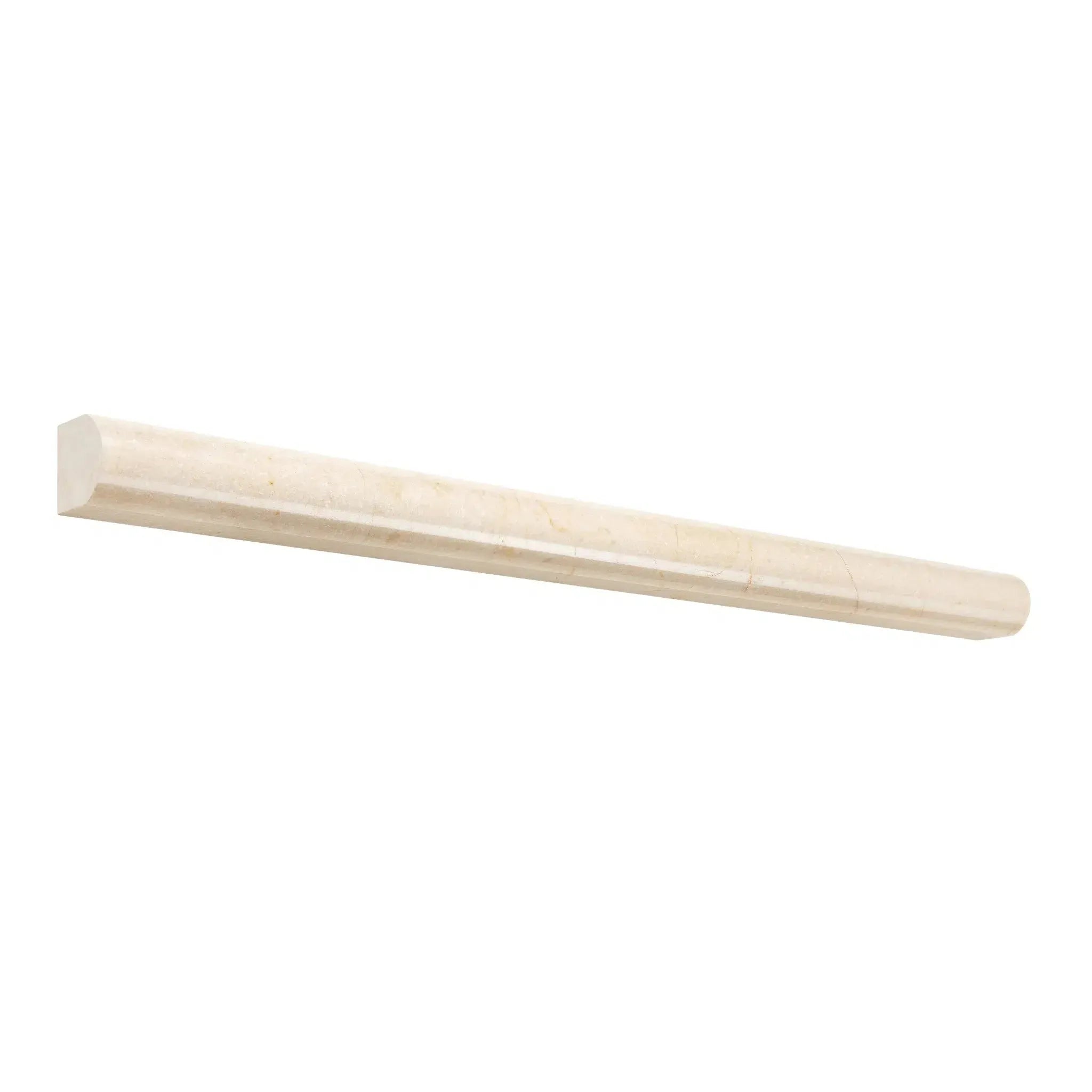
Surfaces Galore carries this range in standard formats: the Crema Marfil Marble 6x6 Tumbled for mosaics and decorative accents, the Crema Marfil Marble 18x18 Polished or Honed for standard field tile, and the 3/4x12 bullnose liner for finished edges around niches and steps. Honed floors also read warmer underfoot in low light than polished ones, which matters more than most buyers expect once the tile is actually down.
Where Does Crema Marfil Marble Work Best?

Crema Marfil is one of the more forgiving natural stones for daily living spaces, which is exactly why it shows up so often in bathrooms and open floor plans. It’s commonly specified for flooring, bathroom vanities, shower surrounds, and wall cladding, and its warm base tone hides minor etching far better than a bright white marble would. Kitchen counters are the one place worth pausing on. Daily acidic exposure from citrus, wine, and vinegar can etch any calcite-based stone, Crema Marfil included, so an active cooking counter needs a disciplined sealing routine or a more resilient surface altogether.
Design-wise, Crema Marfil pairs naturally with warm whites, greiges, and light wood tones, and it holds its own against both brushed brass and matte black hardware.
- Use tumbled mosaics as a shower floor accent against a larger honed field tile.
- Bookmatch slabs for a feature wall behind a vanity or fireplace to double the veining pattern.
- Run a bullnose liner at niche edges and stair noses for a finished, seamless look.
Pro Tip: If you’re pairing Crema Marfil with warm metal fixtures, test the finish samples together under your actual room lighting. Gold veining reads differently under LED versus incandescent bulbs.
How Do You Install and Maintain Crema Marfil Marble?
Getting the installation right matters as much as picking the right grade. Crema Marfil needs a stable substrate, a mortar rated for natural stone, and grout joints sized to the tile format, typically 1/16 inch for rectified tile and slightly wider for tumbled pieces with irregular edges.
- Seal the stone with a penetrating sealer immediately after installation, before grouting whenever possible.
- Reapply sealer annually in wet areas like showers and bathroom floors, or sooner if a water-droplet test shows the surface absorbing instead of beading.
- Clean exclusively with pH-neutral stone cleaners. Acidic products, including many all-purpose sprays, cause etching, a dulling of the polish where the calcite reacts chemically.
- Blot spills immediately, especially wine, coffee, and citrus juice, since etching happens on contact and staining happens over time as liquid soaks into the pores.
It helps to know the difference between the two failure modes: etching dulls the surface finish while staining discolors the stone itself, and they need different fixes. A light etch can often be buffed out by a stone pro; a deep stain may need poultice treatment. Suppliers consistently flag annual resealing in wet areas as the single most effective habit for keeping Crema Marfil looking new for decades.
What Does Crema Marfil Marble Cost, and What Should You Budget?
Material cost is driven by grade, format, and finish, in roughly that order of impact. Select-grade material typically runs 30 to 50 percent above Standard grade for the same format, and polished slabs generally price higher than honed or tumbled tile of the same size. Field tile prices commonly land in the low-to-mid tens of dollars per square foot, with premium slabs pricing considerably higher depending on thickness and bookmatching.
Installation labor adds a separate line item, and it varies by region and by the complexity of the layout, mosaic work and bullnose trim take longer per square foot than a straightforward field tile run. Always order 10 to 15 percent overage beyond your measured square footage to cover cuts, breakage, and future repairs from the same lot.
Before you place a bulk order, run through this checklist:
- Order a physical sample, not just a digital photo, to confirm tone and veining in person.
- Confirm all boxes ship from the same production lot for color consistency.
- Ask about the return policy on unopened cartons before committing to a large quantity.
- Check remnant or clearance availability if you only need a small accent area.
How Durable Is Crema Marfil Compared to Other Marbles?
Crema Marfil sits in the mid-to-upper range of marble durability, harder and denser than soft travertine but still a calcite-based stone that scratches and etches more easily than granite or engineered quartz. What sets it apart from many other decorative marbles, including bright white Carrara or Calacatta varieties, is how it hides wear. Its warm cream base and fine veining camouflage minor scratches, water spots, and light etching far better than a stark white stone would show the same damage.
That forgiving quality doesn’t mean it’s indestructible. Like all natural marble, Crema Marfil has a Mohs hardness around 3, soft enough that grit tracked in on shoes can scuff a polished floor over years of foot traffic, and any exposure to acid still etches the surface regardless of color. Honed finishes perform better than polished ones in high-traffic areas precisely because the matte surface doesn’t show these micro-scratches the way a glossy polish does.
Compared to travertine, Crema Marfil is denser and less porous, which means fewer natural pits to fill and generally easier day-to-day cleaning. Compared to darker marbles like Nero Marquina, it shows dust and hard-water spots less noticeably simply because of its color family. For a busy household bathroom or a hotel lobby floor that needs to look good for fifteen years with only routine sealing, Crema Marfil’s balance of hardness and forgiving tone is a big part of why it remains one of the most specified marbles in the American market.
Is Crema Marfil Marble a Sustainable Choice?
Natural stone has a genuinely different environmental profile than manufactured surfaces like porcelain or quartz composite, and it’s worth understanding both sides before assuming either material is automatically greener. Crema Marfil is quarried, not manufactured, meaning it doesn’t require the resin binders and pigments used in engineered stone, and it doesn’t off-gas volatile organic compounds indoors the way some composite materials can.
On the other side of the ledger, quarrying and long-distance shipping from Spain carry real transportation and extraction impacts, and cutting slabs generates stone dust and water use at the fabrication stage. What tends to offset this over the long run is longevity. A properly sealed and maintained Crema Marfil floor or wall can last well beyond the functional lifespan of most manufactured flooring products, which are typically replaced on a 15 to 20 year renovation cycle. Fewer replacement cycles mean less manufacturing, packaging, and landfill waste over the life of a building, even if the upfront extraction footprint is higher.
Buying from a direct importer also shortens the supply chain compared to purchasing through multiple distributor layers, which can reduce redundant handling and transport steps. If sustainability is a priority for your project, ask your supplier directly about sourcing practices and quarry-level water management rather than relying on general assumptions about natural stone. Reclaimed or remnant Crema Marfil pieces, when available, are also a lower-impact option for smaller accent applications like a powder room vanity or a decorative niche.
What Defects and Natural Variations Should You Expect?
No batch of Crema Marfil looks identical from tile to tile, and understanding what’s normal versus what’s a real defect saves a lot of frustration mid-installation. Natural veining variation is expected. Some tiles will show heavier gold streaking, others will read almost solid cream, and this range is part of buying a natural material rather than a printed one.
Filled fissures are also common and generally acceptable, particularly in Standard and Commercial grades. Quarries and fabricators fill small natural cracks with a resin or epoxy that closely matches the stone’s tone, and a well-filled fissure is structurally sound and barely visible once installed. What’s not acceptable is a fissure that runs through a large percentage of the tile’s surface or one that wasn’t filled at all, since that’s a genuine breakage risk during handling or installation.
Fossil inclusions, the small shell-like markings mentioned earlier as an authenticity marker, are a natural feature rather than a flaw, though some buyers find them more or less desirable aesthetically. Pinholes, tiny surface pits left from mineral dissolution, occasionally show up and are usually filled during fabrication.
Color drift between lots is the most common complaint from contractors ordering in phases. Because Crema Marfil comes from multiple quarry faces within the same district, a reorder six months later may run slightly warmer or cooler than the original shipment. That’s exactly why ordering full quantity upfront, including overage, and confirming single-lot sourcing before installation matters more with this stone than with a manufactured tile that’s engineered for batch-to-batch uniformity.
An Importer’s View on Specifying Crema Marfil
Most of the frustration with Crema Marfil doesn’t come from the stone itself, it comes from buyers treating it like a manufactured product with guaranteed uniformity. It’s not. Two boxes from different lots can look like different stones, and that’s not a defect, it’s how quarried marble behaves. The fix isn’t avoiding Crema Marfil, it’s respecting the ordering process: confirm lot origin, order full quantity with overage, and get a physical sample before signing off on a large job.
Direct import sourcing helps here in a concrete way. Fewer distributor handoffs mean tighter grading consistency and faster access to current lots, which is why sample availability and trade pricing matter more with this stone than with almost any other marble in our catalog. Our Crema Marfil marble guide covers grade selection in more depth if you’re specifying for a design-forward space. Request a sample before you commit to a full order.
— John | Surfaces Galore
Shop Crema Marfil Marble Tile and Trim at Surfaces Galore
As a direct importer, some suppliers can offer Crema Marfil that skips extra distributor markups often found at typical stone showrooms, and may include sample shipping so buyers can check tone and veining before committing to a full order.
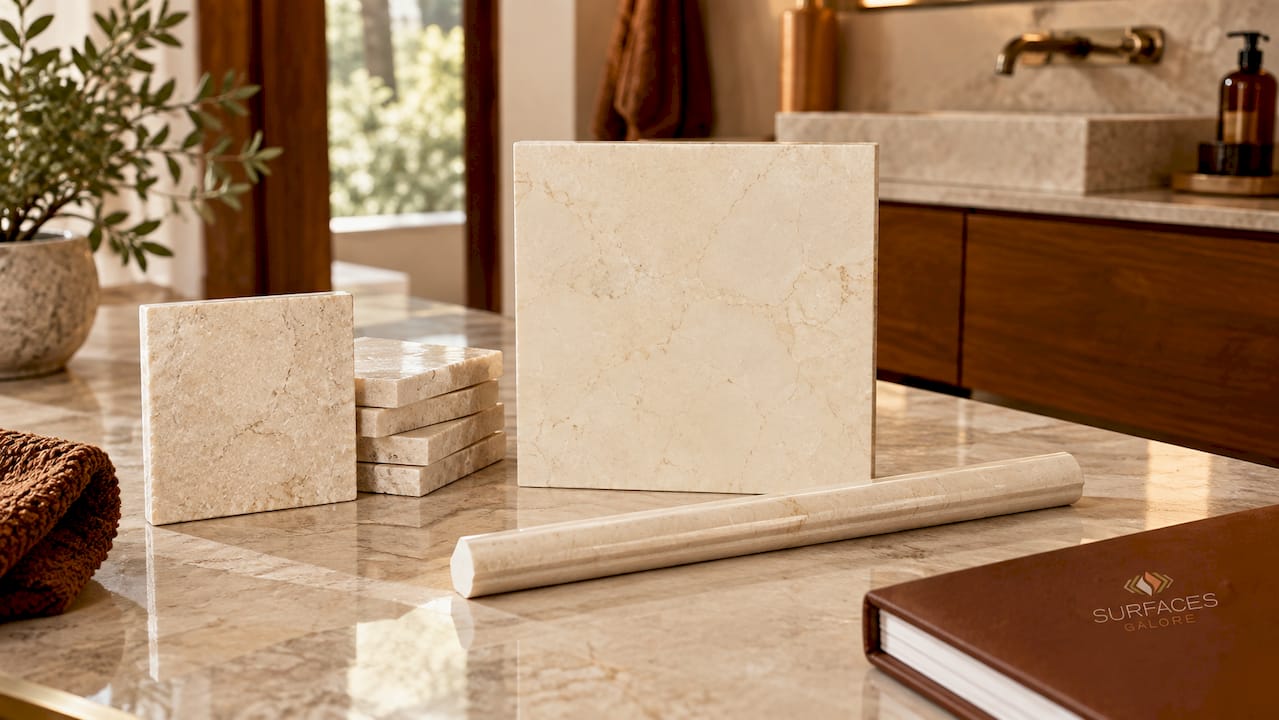
For accents and shower floors, the Crema Marfil Marble 6x6 Tumbled gives you that rustic, worn edge mosaics need. For main floors, backsplashes, or bathroom walls, the Crema Marfil Marble 18x18 Polished or Honed covers most standard field tile layouts in either finish. And for clean, finished edges at niches, steps, or countertop transitions, the 3/4x12 bullnose liner rounds out the trim work. Trade professionals can request bulk quotes directly, and homeowners can order a sample before deciding on a full room. Browse the complete marble, travertine, and limestone catalog or head straight to the marble tile and mosaic collection to check current remnant and lot availability, then request your sample or trade quote today.
Sources
- Crema Marfil Marble: Origin, Grades, Uses and Care Guide - Marbleseven
- Crema Marfil Tile: The Complete Guide for Homeowners - D and G Flooring
- Crema Marfil Marble from Coto Quarry - Karimi Stone
- Crema Marfil Marble: The Forgiving Marble, Explained - Stone Depot
FAQ
Is Crema Marfil a Real Marble?
Yes. Authentic Crema Marfil is a true metamorphic marble quarried in the Pinoso and Alicante district of Spain, identifiable in part by fossilized shell inclusions in the stone. Look-alikes sold under the same name but sourced elsewhere are not the genuine material.
Is Crema Marfil Marble Expensive?
Pricing depends heavily on grade and format, with Select grade running roughly 30 to 50 percent above Standard grade for comparable tile. Surfaces Galore lists current pricing directly on each product page, including the 18x18 polished or honed format.
What Colors Go Well With Crema Marfil?
Warm whites, greiges, and light wood tones complement Crema Marfil’s cream and gold undertones without competing with the veining. Brushed brass and matte black hardware both read well against it, giving designers flexibility for either a soft traditional look or a more modern contrast.
What Are the Best Uses for Crema Marfil?
Crema Marfil performs well on flooring, bathroom vanities, shower surrounds, and wall cladding, where its forgiving, warm tone hides minor wear better than a stark white marble. Active kitchen counters need caution, since daily acidic exposure can etch any calcite-based stone over time.
Is Crema Marfil Durable Enough for Floors?
Yes, especially in a honed finish, which reduces visible etching and adds slip resistance compared to polished stone. It’s softer than granite or quartz, so it needs annual sealing and pH-neutral cleaning to stay in good condition long term.
Recommended
- Spec Ready Crema Marfil Marble for Designers & Contractors, 3 Grades
- A Guide to Luxurious Crema Marfil Marble
- Imported marble: luxury, longevity, and real value
- Best 4 Marble Tile Brands 2026
This article is provided for general informational guidance only. Natural stone varies in color, veining, texture and performance. For installation, sealing, cleaning and maintenance, follow the product manufacturer’s instructions and consult a qualified installer or stone-care professional. Always test cleaning and sealing products in an inconspicuous area first. Surfaces Galore is not responsible for damage, discoloration, etching, staining, installation issues or other problems resulting from

Leave a comment