
Flooring guide: How to choose marble and travertine flooring for any space

Key Takeaways
Marble and travertine can give a home a lasting sense of character, but the right choice depends on the room, finish, layout, and care plan.
- Marble brings expressive veining, refined color, and a formal sense of luxury.
- Travertine offers warmer tones, tactile texture, and flexible indoor-outdoor appeal.
- Finish and layout affect safety, maintenance, and the visual scale of a room.
- Accurate measurements, extra material, and professional installation protect the investment.
- Regular sealing and gentle cleaning help natural stone remain beautiful for years.
Compare marble and travertine flooring options
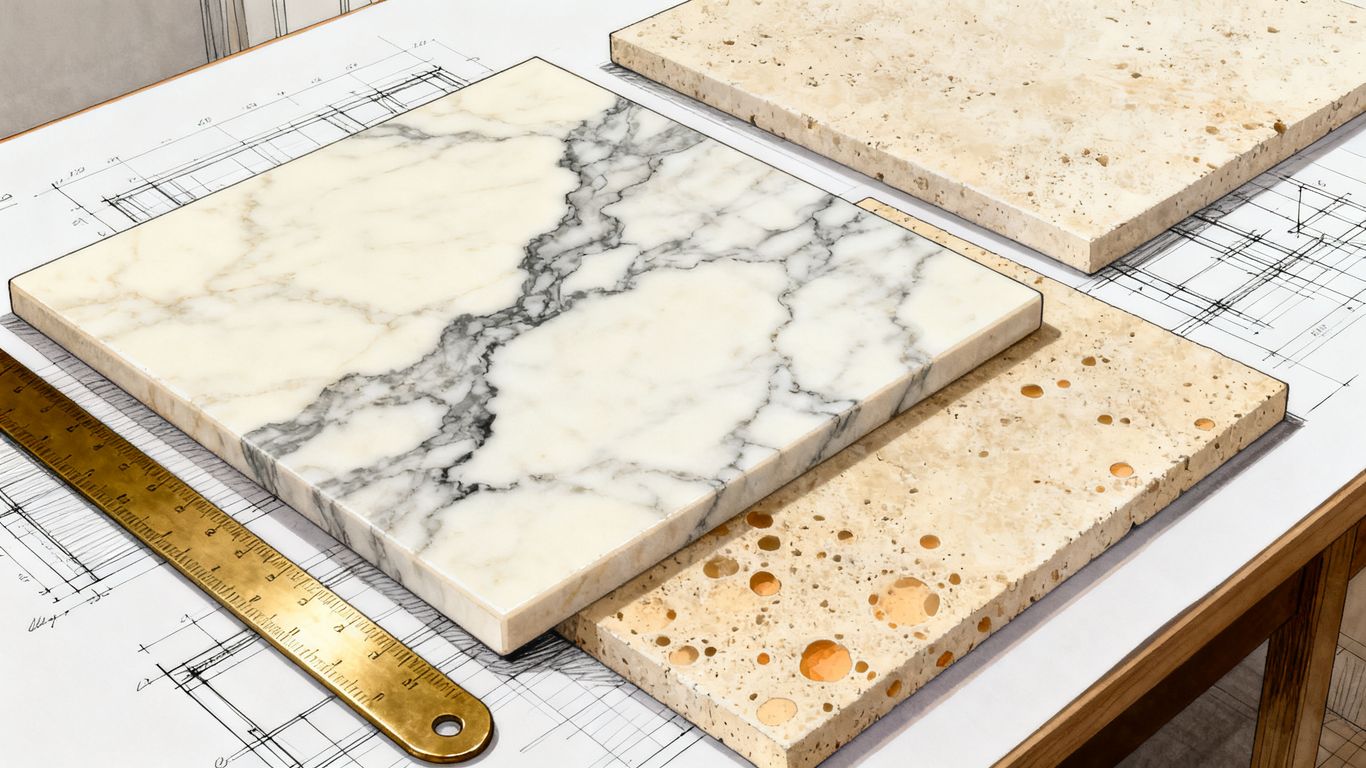
Marble and travertine are both natural stones, yet they create noticeably different moods. Marble often feels crisp, luminous, and architectural, while travertine tends to feel relaxed and earthy. Neither is a universal answer for every room, so compare appearance, traffic, moisture, finish, and maintenance before you buy. A thoughtful flooring choice starts with how the space is actually used.
Marble’s distinctive colors, veining, and luxury appeal
Marble is known for movement: fine lines, dramatic veins, cloudy fields, and shifts in tone that make each tile individual. White varieties can brighten an entry or dining room, while black, green, red, and gray marbles create a richer statement. The effect can be polished and formal or quiet and understated, depending on the finish and grout. For homeowners who want a refined focal point, marble offers an unmistakable sense of occasion.
Travertine’s warm tones and natural texture
Travertine generally brings cream, ivory, beige, walnut, and gold tones into a room. Its pores, softly varied surface, and occasional movement give it a grounded, hand-finished appearance. Filled and honed tiles look smoother and more contemporary; tumbled or brushed options feel older and more relaxed. Travertine works especially well when the goal is warmth rather than high contrast.
Durability and suitability for high-traffic areas
Both stones can serve busy spaces when the tile, finish, substrate, and maintenance plan are appropriate. Marble is more prone to scratching and staining, so it deserves careful consideration in heavily used floors. Travertine is also porous and needs sealing, but its natural variation can make everyday wear feel less conspicuous. In either case, select a stone rated for the application and discuss expected traffic with an experienced installer.
The practical comparison is less about choosing a winner and more about matching the material to daily habits. Entryways with grit, kitchens with spills, and commercial corridors need a different plan from a quiet bedroom or formal sitting room.
| Consideration | Marble | Travertine |
|---|---|---|
| Visual character | Veining and polished elegance | Warm color and organic texture |
| Common finishes | Polished, honed, tumbled | Honed, filled, brushed, tumbled |
| Maintenance | Regular sealing and gentle cleaning | Regular sealing and gentle cleaning |
| Best design mood | Formal, refined, dramatic | Relaxed, rustic, timeless |
That comparison gives a useful starting point, but a sample viewed in your own lighting is still essential. Natural stone can look very different beside cabinets, paint, wood, and daylight.
Polished, honed, brushed, and tumbled finishes
A polished finish reflects light and brings out color, but it can show footprints and surface marks more readily. Honed stone has a softer matte appearance and often feels easier to live with. Brushed finishes add subtle texture, while tumbled edges and surfaces create an intentionally aged look. Finish affects both appearance and traction, so do not select it from a photograph alone.
Choosing between tile, mosaic, and patterned flooring
Large-format tile keeps the visual field calm and reduces the number of grout lines. Mosaic sheets add detail and can make a shower floor or small entry feel carefully composed. Patterned flooring, including checkerboard and French layouts, becomes part of the room’s architecture. Consider furniture placement, sightlines, cleaning effort, and the scale of adjoining rooms before committing.
For installation inspiration, natural stone layout ideas can help you compare how size, pattern, and variation work together. A sample layout on paper—or a dry layout on the actual floor—often reveals problems before mortar is involved.
Match flooring to each room and application
The best flooring responds to the room rather than competing with it. A grand marble pattern may suit a foyer but overwhelm a narrow hallway, while textured travertine can make a patio feel connected to the garden. Moisture, foot traffic, sunlight, furniture, and cleaning habits all matter. Think about the transition from one space to the next so the home feels intentional rather than pieced together.
Marble flooring for entryways, living rooms, and dining areas
Marble can make an entryway feel bright and established, particularly in a restrained checkerboard or large-format installation. In living rooms and dining areas, veining adds movement without requiring much decoration on the walls. Because grit and spills can affect the surface, use mats at exterior doors and address messes promptly. A honed finish is often a comfortable choice for homeowners who want elegance without a mirror-like floor.
Travertine flooring for kitchens, bathrooms, and hallways
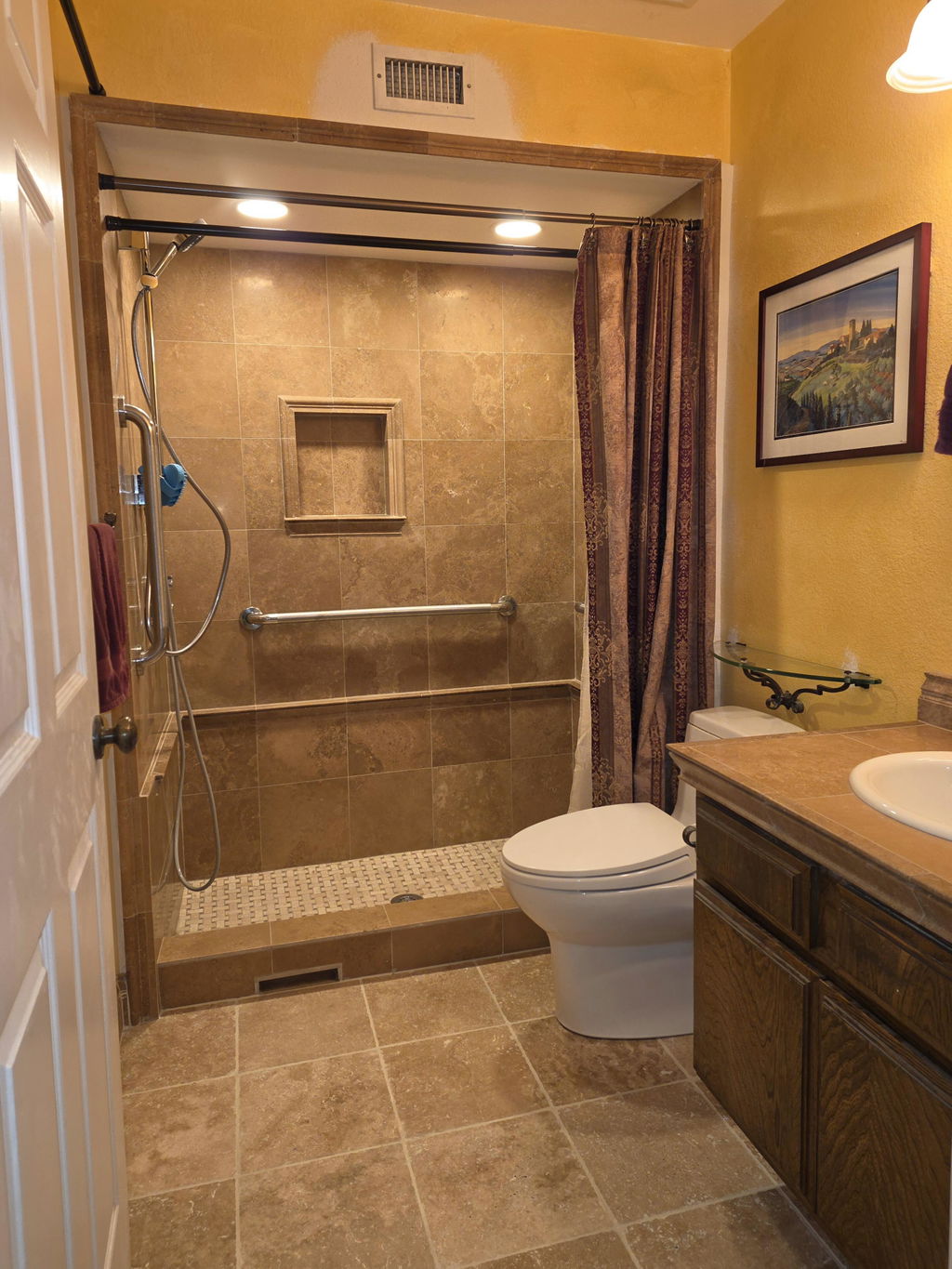
Travertine’s warm palette sits naturally beside painted cabinetry, wood, woven textiles, and aged metals. In kitchens, filled and honed surfaces create a smoother appearance, while hallways can benefit from the stone’s forgiving variation. Bathrooms require careful attention to sealing, drainage, and slip resistance. Review the specific tile rather than assuming every travertine product has the same performance.
Slip-resistant options for showers, spas, and pool areas
Small mosaics provide more grout joints and can offer useful traction when paired with an appropriate stone and installation system. Tumbled, honed, and textured finishes may be preferable to highly polished surfaces in wet areas. Drainage and slope are just as important as the tile itself. Always confirm that the selected material and setting products are suitable for continual moisture.
Outdoor flooring for patios, balconies, and terraces
Outdoor stone must suit local weather, exposure, drainage, and temperature changes. Travertine is often chosen for patios, terraces, and pool surroundings because its earthy color and textured finishes feel at home outside. Marble can also create a sophisticated outdoor setting, but the specific product and finish need careful review. Samples should be viewed in direct sun and beside the exterior materials.
A useful outdoor comparison is whether the flooring supports the way people move through the space. Leave room for furniture legs, plan transitions at doors, and avoid creating abrupt changes in height.
Commercial flooring for hotels, lobbies, and retail spaces
Commercial projects demand a clear plan for traffic, cleaning, replacement material, and visual consistency. Marble can create a memorable lobby or dining environment, while travertine can soften a hospitality space with natural warmth. Order samples and review several cartons before approving the final blend. The same principles apply to a residential project, just with less tolerance for disruption.

Select colors, patterns, and layouts
Layout is where a good tile becomes a complete design. Start with the room’s proportions, fixed architectural lines, and the direction of natural light. Then decide whether the floor should quietly support the furnishings or act as the main feature. Pattern controls the room’s rhythm, so even a simple square installation deserves planning.
Classic checkerboard marble flooring
Checkerboard flooring gives a room immediate structure through contrast. Black and white marble feels graphic and formal, while beige and cream combinations are gentler. Keep the surrounding finishes relatively calm so the pattern has space to breathe. Align the layout with the room’s strongest axes, and avoid ending with awkward slivers at prominent walls.
Versailles and French pattern travertine layouts
The Versailles, or French pattern, arrangement combines several rectangular and square tile sizes into a repeating composition. It suits travertine particularly well because the varied geometry reinforces the material’s old-world character. The pattern needs accurate planning and an installer familiar with the set, especially around walls and doorways. Check the kit dimensions and coverage before ordering.
Herringbone, basketweave, and geometric mosaics
Herringbone adds direction and can make a narrow area feel longer, while basketweave gives a classic woven impression. Hexagons, arabesques, and geometric mosaics bring detail to bathrooms, entries, and accent zones. Use smaller patterns selectively when the room already contains strong cabinetry or architectural detail. A simple border can help a busy mosaic feel finished.
For a compact visual study, marble mosaic patterns offer examples of how mixed tones and small pieces can create a focal surface. Let the pattern guide the palette rather than forcing several competing colors into one floor.
Coordinating marble and travertine colors
Mixed stone can look collected and sophisticated when one element connects the palette. Pair a cool marble with a gray or silver travertine, or place warm marble beside ivory, gold, or walnut travertine. Repeat one tone in the grout, trim, or wall finish to keep the combination coherent. Always compare samples under the actual room lighting.
Using borders, moldings, and medallions for custom details
Borders can frame a foyer, define a dining area, or create a transition between patterns. Moldings provide a finished edge at walls, steps, niches, and backsplashes, while medallions turn a large floor into a more personal composition. Use decorative pieces sparingly when the stone itself has strong veining. Careful proportion makes custom work feel architectural rather than crowded.
Plan your flooring purchase and project budget
A natural stone budget includes more than the tile price. Measure the installation area, account for cuts and future repairs, and ask how the material is packed and sold. Installation, substrate preparation, setting materials, sealing, delivery, and disposal can all change the final figure. A clear quote is easier to compare than a low headline price with missing allowances.
Measuring square footage and ordering extra material
Multiply room length by width, then subtract openings only when the measurement is reliable and the area is substantial. Add extra material for cuts, pattern matching, breakage, and future repairs; patterned or small-format installations usually need more allowance. Some product guidance recommends ordering 10–30% extra, depending on the layout and waste factor. Confirm the appropriate quantity with the supplier before placing the order.
Accounting for natural color and veining variation
Natural stone is not manufactured to a perfectly uniform color. Review multiple pieces and, when possible, several cartons before installation. Mixing tiles from different boxes can distribute variation more naturally across the room. Set aside pieces with cracks, chips, or unwanted extremes before they are fixed in place.
Comparing material, installation, and maintenance costs
A polished marble may have a different purchase price from a tumbled travertine mosaic, but installation time can also vary significantly. Intricate patterns, many cuts, uneven substrates, and narrow grout joints increase labor. Include sealer, cleaning products, trim, transitions, and a contingency in the budget. The least expensive tile is not always the least expensive finished floor.
Evaluating bulk discounts and nationwide shipping
Larger projects may qualify for bulk pricing, but compare the complete delivered cost rather than the unit price alone. Ask about packaging, insurance, lead time, and how damaged material is handled. Nationwide delivery can make a direct-import source practical for homeowners, designers, and architects outside California. Keep a few spare tiles after installation for later repairs.
Reviewing stock availability and requesting a quote
Stock can change quickly, especially for distinctive colors, mosaics, and coordinated trim. Before ordering, confirm the current quantity, lot or shade information, finish, dimensions, and expected ship date. A written quote should identify the material, amount, freight, and any accessories included. For ideas about a specific warm stone, La Travonya Travertine provides a useful reference point for color and texture.
Prepare for professional flooring installation
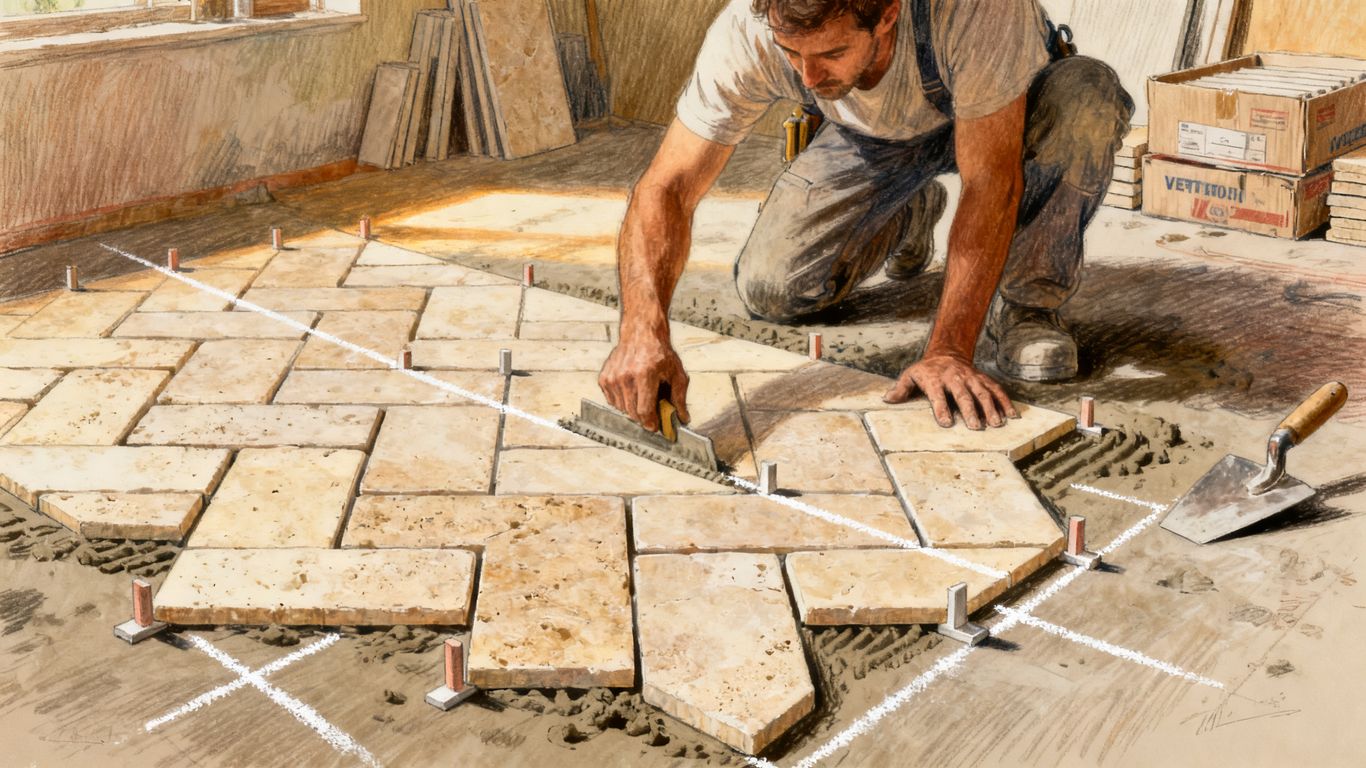
Natural stone rewards careful preparation. The floor must be clean, dry, level, stable, and appropriate for the tile’s weight and thickness. Installation errors can lead to lippage, cracks, loose pieces, or moisture problems that are difficult to correct later. Even experienced do-it-yourselfers should read the product instructions and recognize when a professional is the safer choice.
Inspecting and dry-laying natural stone tiles
Inspect every tile for cracks, chips, warping, and defects before setting it. Dry-lay a representative portion to check the pattern, edge cuts, color distribution, and veining direction. Mixing pieces from different cartons helps avoid visible blocks of one shade. This is also the right time to decide where the strongest or most unusual pieces should appear.
Preparing a level, clean, and stable subfloor
Remove dust, grease, old adhesive, and other contaminants before installation. Correct high and low spots with an appropriate patching or leveling system, and make sure the structure is stiff enough for natural stone. Wood substrates may require approved underlayment, while concrete projects may need crack-isolation planning. A flat foundation protects both the tile and the finished appearance.
A related subfloor preparation guide illustrates why moisture, substrate condition, and professional review deserve attention before flooring is installed. The materials differ, but the planning principle remains useful: solve the foundation before the surface.
Choosing thin-set mortar, grout, spacers, and tools
Use setting materials rated for natural stone and follow the manufacturer’s instructions. White thin-set is generally preferred for light or translucent stone to reduce the risk of visible bleed-through; avoid unsuitable premixed adhesives. Spacers, a notched trowel, a level, and a wet saw with a suitable diamond blade are common parts of the process. Confirm compatibility among the tile, mortar, grout, substrate, and adjacent finishes.
Planning cuts, transitions, and grout joints
Measure from the center or principal sightline so cuts at opposite walls feel balanced. Plan door transitions, stair edges, cabinets, vents, and exposed cut edges before mortar is spread. Tight joints can look elegant, but the tile and installation instructions determine the appropriate spacing. A dry layout exposes problems while the pieces can still be moved.
When to hire an experienced tile installer
Hire a qualified installer when the floor is large, the pattern is complex, the substrate is questionable, or the room has demanding moisture conditions. Professional help is also sensible for heavy slabs, multiple transitions, intricate borders, and commercial work. Ask for relevant natural-stone experience and a clear scope of work. A good installer can protect the design intent as well as the technical result.
Maintain the beauty and value of natural stone flooring
Marble and travertine are durable materials, but they are not maintenance-free. Stone is porous, and the wrong cleaner can dull a finish or leave a film. A simple routine—dust removal, prompt spill cleanup, suitable cleaning products, and periodic sealing—helps preserve the surface. Keep care instructions with the project records so future owners or service providers know what was installed.
Sealing marble and travertine after installation
Allow mortar and grout to cure according to the product instructions before sealing. Use a sealer intended for the particular stone and finish, and follow its application and curing directions. Sealing does not make stone stain-proof, but it can provide helpful protection against moisture and spills. Test an inconspicuous area first, especially when the stone has a honed or textured surface.
Cleaning floors with pH-neutral products
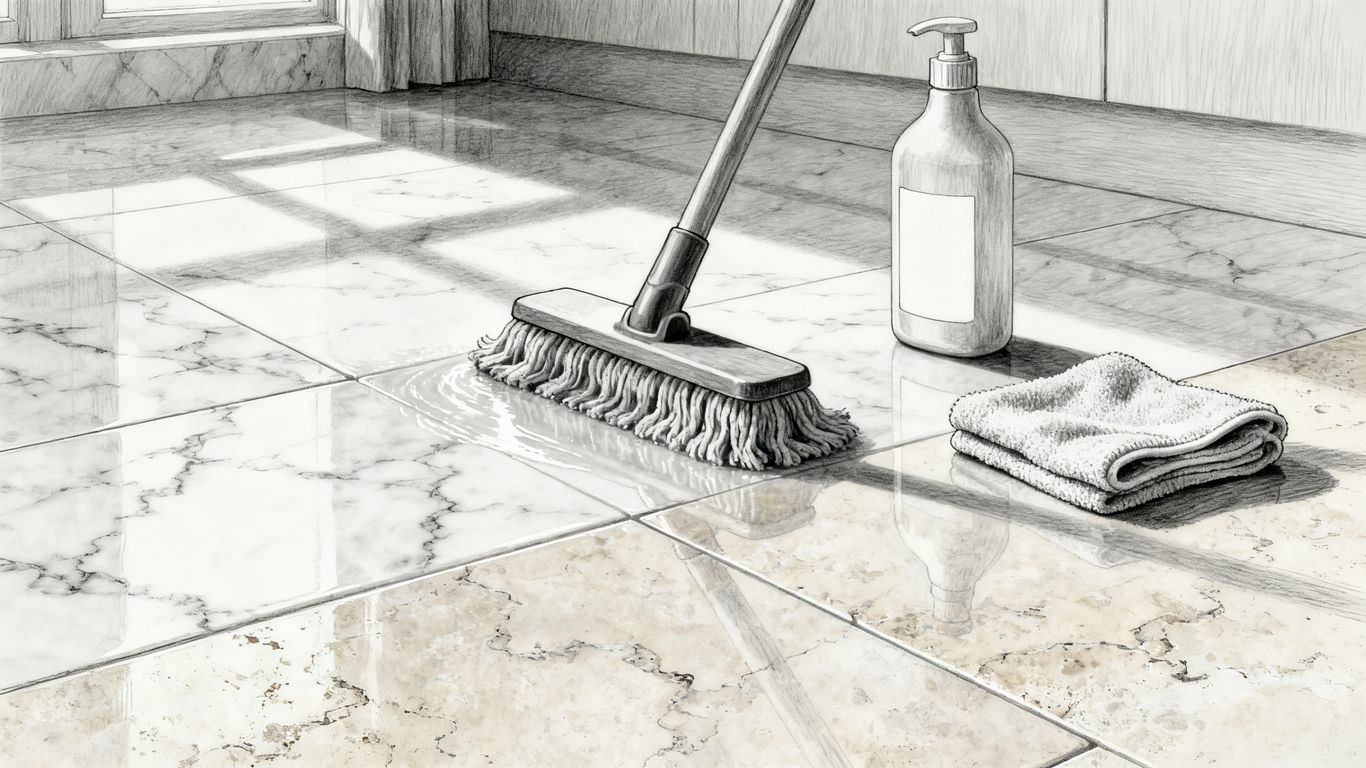
Sweep or vacuum with a soft attachment to remove grit, then use a pH-neutral stone cleaner and a clean, lightly damp mop. Avoid acidic products, abrasive powders, steel wool, and harsh scouring pads. Do not allow dirty water to dry on the floor. Gentle, frequent cleaning is usually better than aggressive occasional scrubbing.
Preventing stains, scratches, cracks, and moisture damage
Use mats at exterior doors and felt protectors beneath furniture. Wipe oil, wine, coffee, and colored liquids promptly, and avoid dragging heavy items across the surface. Keep grout and movement joints in good condition so moisture does not find an easy route beneath the tile. Cracks, hollow sounds, or persistent dampness deserve prompt professional assessment.
Establishing a resealing and care schedule
The right resealing interval depends on the stone, finish, traffic, cleaning routine, and sealer used. Instead of relying on a fixed calendar, observe whether water darkens the surface quickly or spills absorb more readily than before. Keep a record of the product and date used. Regular inspection makes maintenance predictable and helps preserve the floor’s appearance.
Getting product guidance from Surfaces Galore
Surfaces Galore provides guidance on marble and tile design, layouts, installation, and ongoing care through its tile ideas and layout resources. Use that information alongside the specific product instructions and advice from your installer. For a dark, high-contrast option, Nero Marquina Marble can help you study how polished and honed surfaces differ in appearance and care.
For additional installation context, professional tile planning can help project teams organize information clearly before ordering. The most useful guidance is the guidance that matches the actual room, stone, and installation conditions.
Before choosing a sealer or cleaner, confirm the stone’s finish and ask the supplier or installer for product-specific advice. A small test area is a sensible final check.
Choose Your Natural Stone
Bring your measurements, room photos, preferred colors, and installation timeline to a direct importer of marble and travertine. Request a quote, review current stock, and order samples before committing to the flooring that will shape the room for years. You can also plan your tile order before speaking with the sales team.
Conclusion
The best marble or travertine flooring balances beauty with the realities of the room. Compare the stone, finish, pattern, maintenance needs, installation requirements, and delivered cost as one decision. With careful planning and regular care, natural stone can give an entry, kitchen, bath, patio, or commercial space a distinctive surface that grows more characterful over time.
Frequently Asked Questions
Is marble or travertine better for flooring?
Neither is automatically better. Marble offers expressive veining and a more formal appearance, while travertine brings warm tones and natural texture. The right choice depends on traffic, moisture, finish, maintenance expectations, and the desired design.
Does natural stone flooring need to be sealed?
Most marble and travertine flooring benefits from sealing because these stones are porous. Sealing helps reduce absorption but does not make the surface completely stain-proof. Follow the sealer instructions and confirm suitability for the stone’s finish.
What finish is safest for a wet area?
Honed, brushed, tumbled, and textured finishes are commonly considered for wet areas because they can provide more traction than highly polished surfaces. Tile size, grout joints, drainage, and installation quality also affect safety.
How much extra tile should I order?
The allowance depends on the room shape, tile size, pattern, cuts, and future repair needs. Straight layouts may need less extra material than diagonal or patterned designs. Ask for a project-specific waste recommendation before ordering.
Can marble and travertine be used outdoors?
They can be suitable for some outdoor applications when the specific product, finish, climate, drainage, and installation system are appropriate. Confirm weather exposure and maintenance requirements before purchasing.
How should natural stone flooring be cleaned?
Remove grit regularly and clean with a pH-neutral product intended for natural stone. Avoid acidic cleaners, abrasive tools, and harsh chemicals. Promptly wipe spills and follow the care guidance for the installed finish.
Should natural stone flooring be professionally installed?
Professional installation is especially valuable for large areas, complex patterns, wet rooms, uneven substrates, and commercial projects. An experienced installer can evaluate the subfloor, plan cuts, select compatible materials, and reduce the risk of cracks or uneven tiles.

Leave a comment