
How to clean travertine tile: A safe step-by-step care guide

Key Takeaways
Travertine stays beautiful when it is cleaned gently, dried thoroughly, and protected from acidic products.
- Dust and sweep before using any liquid cleaner.
- Choose a pH-neutral cleaner made for natural stone.
- Work in small sections and rinse away residue.
- Treat spills quickly, especially oil, food, and organic marks.
- Reseal when water no longer beads on the surface.
Understand travertine and its cleaning needs
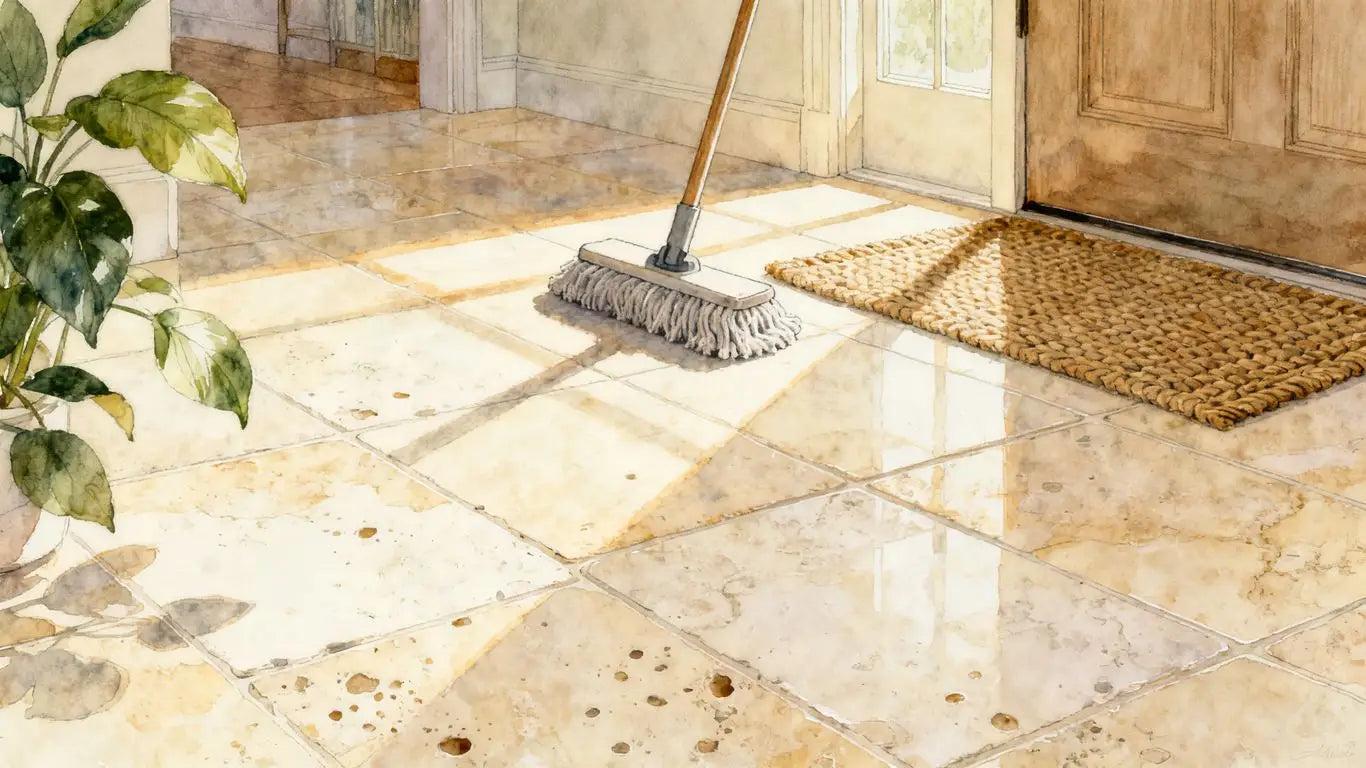
Travertine brings warm color, natural variation, and a quietly classic finish to floors, walls, bathrooms, patios, and pool areas. It is also porous, so its open texture can hold moisture and debris. Learning how to clean travertine tile starts with understanding that the stone needs a lighter touch than many manufactured surfaces.
Why travertine requires gentle care
Travertine is a natural stone with pores, pits, and mineral variation. Those features create its character, but they can also collect grit and absorb spills. Strong chemicals may change the surface, while overly aggressive scrubbing can leave scratches or a worn-looking finish. Gentle, consistent care is usually more effective than occasional heavy cleaning.
How finish and texture affect cleaning
Honed and filled travertine has a smoother, matte surface that is generally easier to wipe, while tumbled or chiseled finishes have more texture and may need extra attention around edges and recessed areas. Polished surfaces can show water spots and streaks more readily. Adjust the pressure and tool to the finish rather than assuming every travertine tile should be cleaned in exactly the same way.
Common causes of dullness, stains, and etching
Loose sand can scratch the surface under shoes, and dirty water can spread a gray film across a floor. Soap residue, cooking grease, hard-water minerals, and wet leaves can also leave marks. Acidic substances such as vinegar, lemon juice, and some bathroom products may etch the stone, creating a pale or dull patch that ordinary cleaning cannot remove.
When to check the tile manufacturer’s recommendations
Before using a new cleaner, sealer, stain treatment, or restoration product, check the tile and installation documentation. The recommended care can vary with the finish, grout, sealer, and intended use. Installation guidance for a La Travonya Tile project also reinforces the value of following manufacturer instructions for sealing and ongoing maintenance.
Gather the right cleaning tools and products
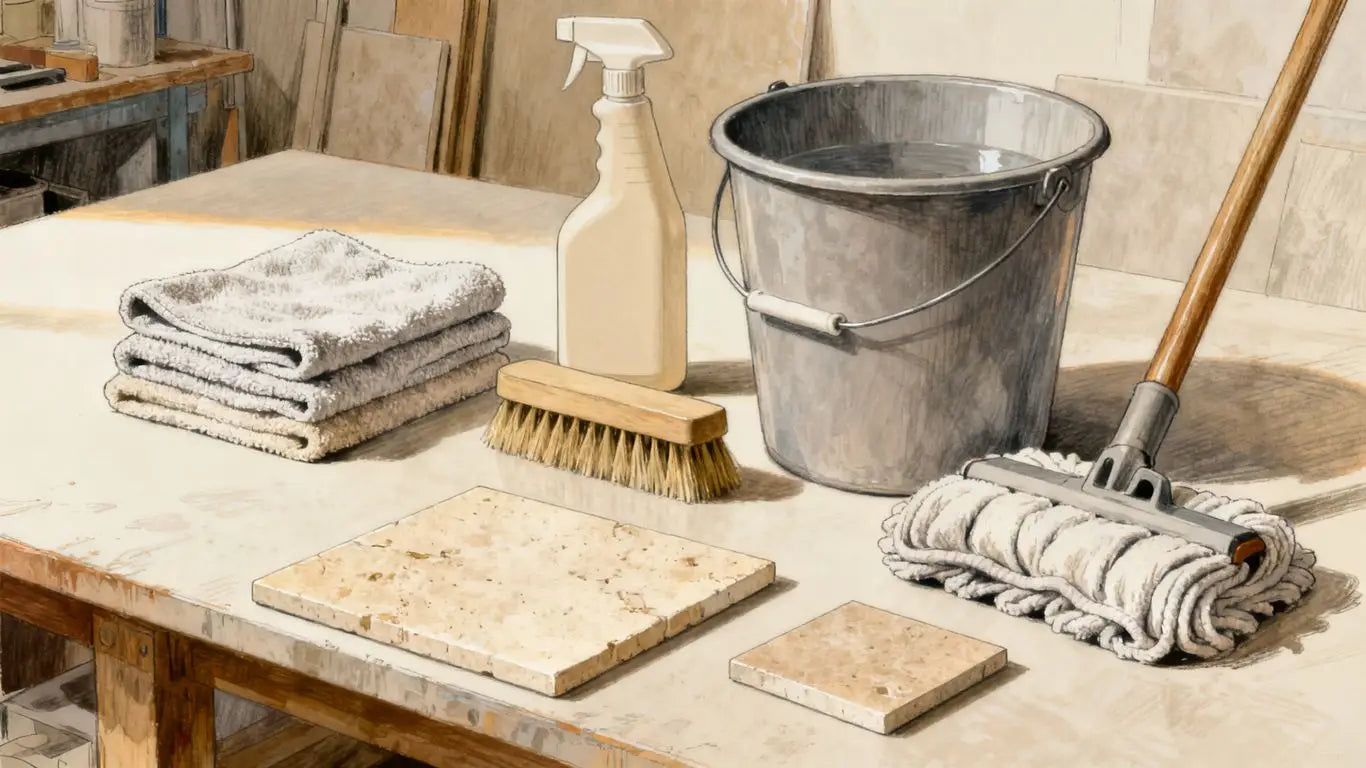
A small collection of suitable tools makes travertine care simpler and safer. You do not need a cabinet full of specialty equipment. A soft microfiber mop, a soft cloth, clean water, and a stone-safe cleaner will handle most routine work when used correctly.
Safe tools for floors, walls, and mosaics
Use a soft-bristle broom or vacuum attachment for loose dirt, then switch to microfiber cloths or a soft mop for damp cleaning. A soft toothbrush or small nylon brush can help with grout and textured mosaics, but keep the pressure light. Clean buckets and fresh water matter too, because grit and dirty rinse water can be more damaging than the original spill.
Choosing a pH-neutral stone cleaner
Select a cleaner labeled for natural stone and described as pH-neutral. Follow its dilution instructions instead of making the solution stronger. A product intended for stone helps remove everyday soil without relying on acids that can react with travertine.
Why abrasive pads and acidic cleaners can cause damage
Scouring powders, steel wool, rough scrub pads, vinegar, lemon-based formulas, and acidic limescale removers are poor choices for travertine. They can scratch, etch, or strip a protective treatment. Even bleach-based products may discolor nearby grout or finishes, so avoid improvised chemistry and choose a product with clear stone-compatibility directions.
Testing products in an inconspicuous area
Test a diluted cleaner on a hidden corner, spare tile, or area behind a fixture. Let the test area dry fully, then look for color change, streaking, roughness, or a different sheen. This modest step can prevent a noticeable problem across an entire floor.
Follow the everyday travertine cleaning process
Routine cleaning should remove grit without flooding the stone. Start with a dry surface, use a small amount of properly diluted solution, and keep the work controlled. The same basic sequence works for many floors, walls, backsplashes, and shower surfaces, with extra care around grout and textured details.
Remove loose dirt and debris first
Sweep or vacuum slowly, paying attention to corners, thresholds, and grout lines. Use a soft attachment rather than a hard rotating brush. Removing abrasive particles first means the damp mop can lift soil instead of dragging it across the tile.
Mix and apply the cleaning solution
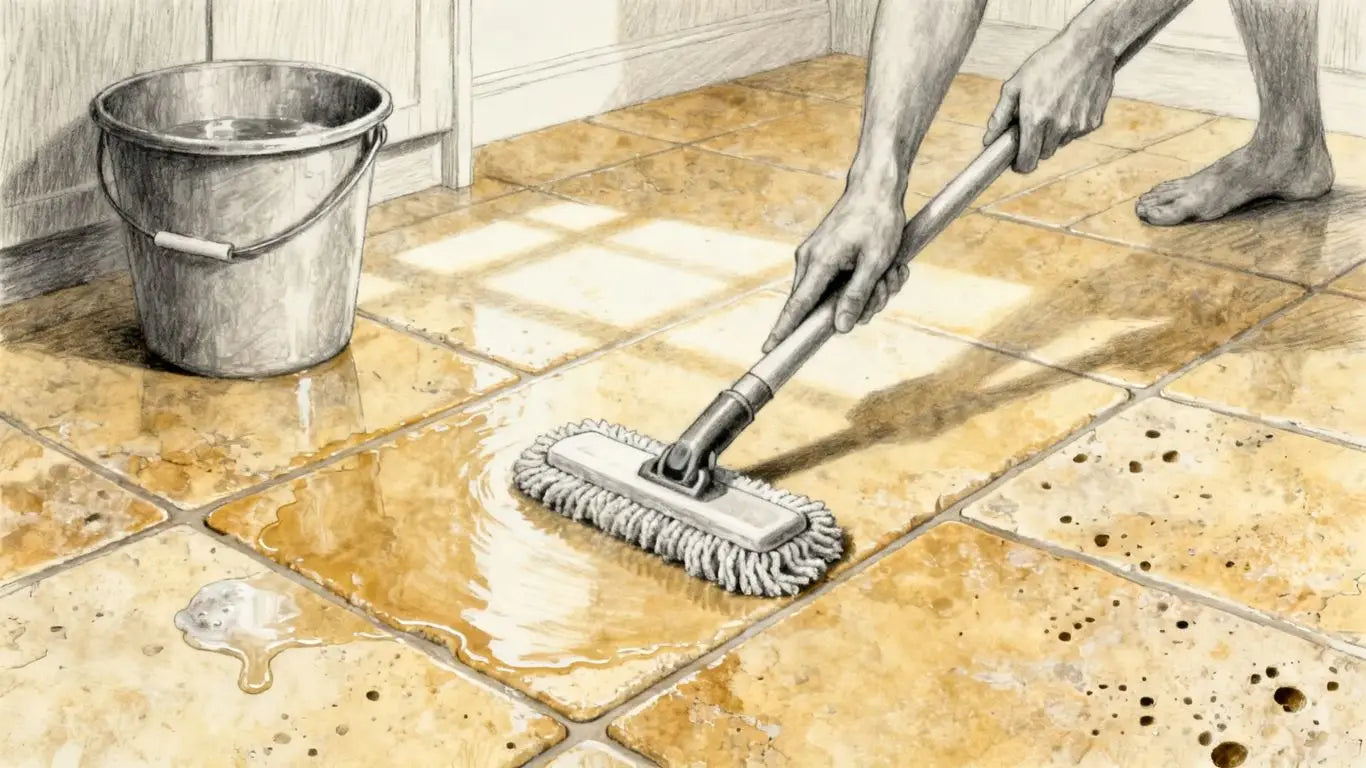
Fill a clean bucket with water and add the recommended amount of pH-neutral stone cleaner. Do not saturate the floor or leave standing water on a shower ledge. Dampen the mop or cloth, wring it well, and apply an even, light layer.
Wipe in small sections
Work in manageable areas, such as a few square feet at a time. Wipe with overlapping passes and give textured areas a little more attention without scrubbing hard. Change the water when it becomes cloudy so residue is not redistributed.
For a quick routine, keep the sequence simple:
- Dry-remove grit from the entire area.
- Clean one small section with diluted stone cleaner.
- Use a soft brush only where texture or grout needs it.
- Rinse the cloth or mop before moving to the next section.
This approach keeps the work even and makes it easier to notice a stain or damaged spot before it spreads. It is also a practical method for larger installations where cleaning everything at once would leave the surface wet for too long.
Rinse away residue and dry the surface
Use a separate cloth or mop dampened with clean water to remove cleaner residue. Then dry the tile with a clean microfiber towel, especially around polished edges, shower niches, and low spots. Drying prevents streaks and reduces the time moisture remains in the stone and grout.
Remove common travertine stains safely
Stains should be identified before they are treated. A surface mark from soap is different from oil absorbed into the pores, and rust may require a specialist product. Start with the mildest stone-safe method, avoid mixing products, and stop if the finish changes.
Treat water spots and soap scum
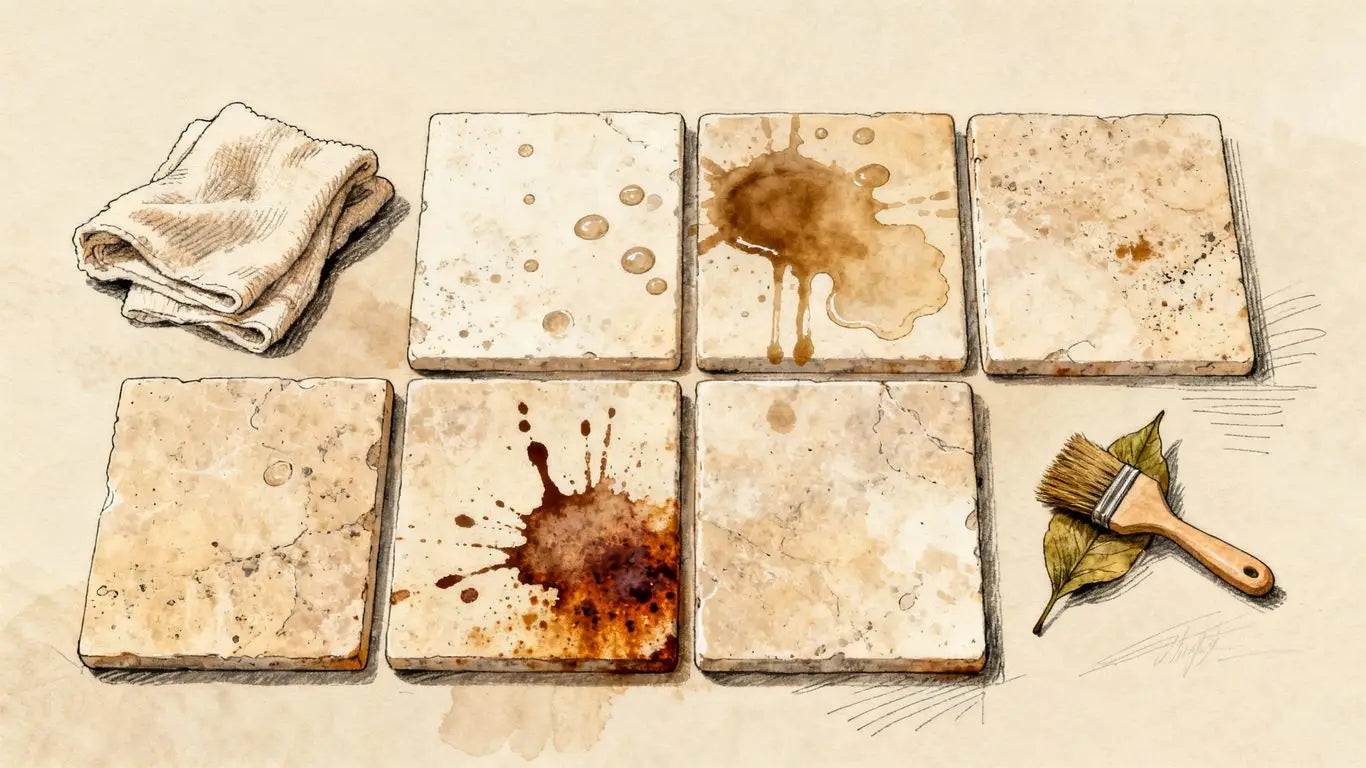
For light water spots or soap film, use a soft cloth with a pH-neutral stone cleaner, then rinse and dry. Do not reach for vinegar or an acidic shower cleaner, even when mineral deposits look stubborn. Heavy deposits may have etched the stone rather than simply sitting on top, which calls for restoration rather than stronger household chemicals.
Address oil and grease stains
Blot fresh oil with an absorbent paper towel instead of rubbing it outward. For a set-in mark, use a poultice or stone-specific degreasing treatment only when its label confirms compatibility with travertine. Allow the area to dry between attempts; an absorbed stain can take time to draw out and may not disappear in one pass.
Lift food, beverage, and organic stains
Blot coffee, wine, juice, and food spills promptly with a clean cloth. Rinse with water and a pH-neutral cleaner, then dry thoroughly. Leaves, soil, and mildew on outdoor stone should be removed gently, since scrubbing with a harsh chemical can create a larger finish problem than the original organic mark.
Handle rust, hard-water deposits, and grout discoloration
Rust and mineral deposits are among the more difficult travertine stains because common removers are often acidic. Use only a product specifically labeled for natural stone, and test it first. For grout discoloration, work with a small soft brush and stone-safe cleaner while keeping the solution off the tile as much as possible. A travertine stain guide can help you decide whether the mark is suitable for cautious home treatment.
A simple reference can prevent the wrong response:
| Stain or issue | First response | Avoid |
|---|---|---|
| Water spots | Neutral cleaner, rinse, dry | Vinegar or lemon |
| Oil or grease | Blot, then stone-safe degreaser | Aggressive scrubbing |
| Food or organic marks | Prompt blotting and gentle cleaning | Rubbing the stain outward |
| Rust or mineral deposits | Test a compatible specialist product | Generic acidic remover |
The table is a starting point, not a promise that every mark will respond to household cleaning. If the surface is etched, deeply discolored, or unevenly polished, cleaning alone may not restore its original appearance.
When professional stain removal is the better option
Call a stone restoration professional when a stain has penetrated deeply, when etching covers a broad area, or when the tile has a valuable or difficult-to-replace finish. Professional work may involve poulticing, honing, polishing, or resealing rather than simple washing. Do not keep escalating chemicals after a test patch shows a reaction.
Clean travertine in bathrooms and outdoor areas
Bathrooms and exterior spaces expose travertine to more moisture, residue, and changing conditions than many interior rooms. The goal is not to keep the stone permanently wet or sterile. It is to remove buildup, improve drying, and protect the joints and finish through regular, measured care.
Prevent mold and mildew on shower tile
After shower use, pull water from walls and floors with a soft squeegee or wipe the surface with a microfiber cloth. Leave ventilation running long enough for the area to dry. For visible mildew, use a cleaner labeled safe for natural stone and test it first; never assume a powerful bathroom spray is compatible with travertine.
Protect grout lines and shower floors
Grout can hold soap and moisture even when the tile looks clean. Give grout lines extra attention with a soft nylon brush, using a small amount of neutral cleaner. Shower floors with mosaics and textured finishes need patient, gentle passes rather than hard pressure that may loosen grout or scratch raised edges.
Clean patios, pool surrounds, and pavers
Sweep away sand, leaves, and soil before rinsing outdoor travertine. Use a soft broom and mild, stone-safe solution for heavier soil, then rinse without excessive pressure. Pool surrounds and patios should be checked for leaves, standing water, and spilled products, since outdoor debris can stain porous stone over time.
Adjust maintenance for weather and heavy traffic
High-traffic entries may need more frequent dry cleaning, while shaded outdoor areas may need closer attention to damp debris. A seasonal inspection can reveal worn sealer, clogged pores, cracked grout, or small chips before they become expensive repairs. When choosing materials for a new exterior project, travertine paver options can help you compare surfaces suited to outdoor use.
Protect and maintain travertine tile long term
Cleaning removes what is already on the surface; maintenance reduces what reaches the pores in the first place. Sealing, careful furniture placement, prompt spill response, and a realistic schedule all help preserve travertine’s color and texture. Well-maintained stone can remain a strong visual feature for many years.
Know when travertine needs resealing
Sealer does not make travertine permanently stain-proof, and it wears at different rates depending on traffic and moisture. Place a few drops of water on a clean, dry area and observe whether they bead briefly or darken the stone quickly. If absorption is obvious, consult the sealer instructions or a stone professional before applying another coat.
Apply a compatible penetrating sealer
Choose a penetrating sealer specifically approved for your travertine finish and intended location. Clean the surface first, let it dry fully, and follow the product’s coverage and curing directions. Do not seal over grime, dampness, or unresolved stains, since the sealer can make those problems harder to correct.
Establish a practical cleaning schedule
Dry-clean busy floors often enough to prevent grit from accumulating, and damp-clean them when they look soiled rather than waiting for a heavy buildup. Bathrooms benefit from frequent wipe-downs and good ventilation. A weekly routine is a reasonable starting point for many homes, but traffic, pets, weather, and the stone’s finish should guide the final schedule.
Prevent scratches, spills, and moisture damage
Use mats at entrances and felt pads beneath furniture. Lift furniture when moving it instead of dragging it, and blot spills as soon as possible. Keep planters, bath products, and wet items from sitting on the stone for long periods. These small habits reduce wear without changing the natural look that made travertine appealing.
Replace or upgrade worn travertine tile with Surfaces Galore options
When tiles are cracked, extensively etched, or beyond practical restoration, replacement may be cleaner than repeated repairs. Surfaces Galore offers travertine tiles, mosaics, slabs, and pavers for indoor and outdoor applications, including options in different finishes, patterns, and warm natural tones. You can view current travertine to compare a mosaic format for a backsplash, shower wall, or accent area, then request guidance on the material that fits your project.
Shop Travertine With Confidence
If your space needs a fresh natural-stone finish, browse Surfaces Galore’s travertine collection for tiles, mosaics, slabs, and pavers, or contact the team to discuss samples, project quantities, and nationwide delivery.
Conclusion
Travertine rewards a calm routine: remove grit, clean with a pH-neutral product, rinse, dry, treat stains carefully, and reseal when the surface begins absorbing moisture. With the right habits and compatible materials, its warm texture and natural variation can stay inviting from everyday floors to outdoor entertaining areas.
Frequently Asked Questions
Can I clean travertine tile with vinegar?
No. Vinegar is acidic and may etch or dull travertine. Use a pH-neutral cleaner labeled for natural stone instead.
How often should travertine tile be cleaned?
Dry-cleaning frequency depends on traffic, pets, and debris. Many homes benefit from regular weekly damp cleaning, while busy or damp areas may need attention more often.
Is it safe to use a steam mop on travertine?
Check the tile, sealer, and steam-mop instructions first. Heat and moisture may affect some finishes, grout, or sealers, so a lightly damp microfiber mop is usually the more cautious choice.
How do I remove soap scum from travertine?
Use a pH-neutral stone cleaner, a soft cloth, and clean water, then dry the surface. Avoid acidic bathroom products that can etch the stone.
How can I tell whether travertine needs sealing?
On a clean, dry area, place a few drops of water and watch the surface. Rapid darkening or absorption suggests that the protective treatment may need evaluation or renewal.
Can I pressure-wash outdoor travertine?
High pressure can erode textured areas, disturb grout, or force water into vulnerable joints. Use gentle rinsing and a soft brush unless a qualified professional recommends a controlled alternative.
What should I do about a deep travertine stain?
Stop using stronger household chemicals and have the area assessed by a stone restoration professional. Deep stains, etching, and widespread discoloration may require specialized treatment rather than routine cleaning.

Leave a comment