
Is travertine good for showers? Benefits, drawbacks, and care tips

Key Takeaways
Travertine can be a beautiful shower material when its finish, installation, and maintenance needs are understood.
- Travertine brings warm, natural texture to shower walls, floors, niches, and accents.
- Honed, filled, tumbled, and lightly textured finishes are generally more practical for wet areas than polished surfaces.
- Because travertine is porous, proper waterproofing and regular sealing are essential.
- Gentle, pH-neutral cleaning helps prevent etching, staining, soap scum, and mineral buildup.
- Samples, careful layout planning, and accurate quantities make the finished shower easier to live with.
Understanding travertine as a shower material
If you are asking, “is travertine good for showers,” the answer is yes—with conditions. Travertine is a natural stone with pores, mineral variation, and a surface character that differs from one tile to the next. That makes it visually distinctive, but it also means the stone needs thoughtful product selection, installation, and care. A shower built with travertine should be planned as a natural-stone system rather than treated like a maintenance-free surface.
How travertine’s natural composition performs in wet areas
Travertine forms around mineral-rich water and naturally contains pores and openings. In a shower, those features can absorb moisture and hold residue if the stone is left unsealed or cleaned with unsuitable products. Proper sealing helps protect the surface, but it does not replace a waterproof shower substrate or good ventilation. The stone can perform well in wet areas when those details are handled from the beginning.
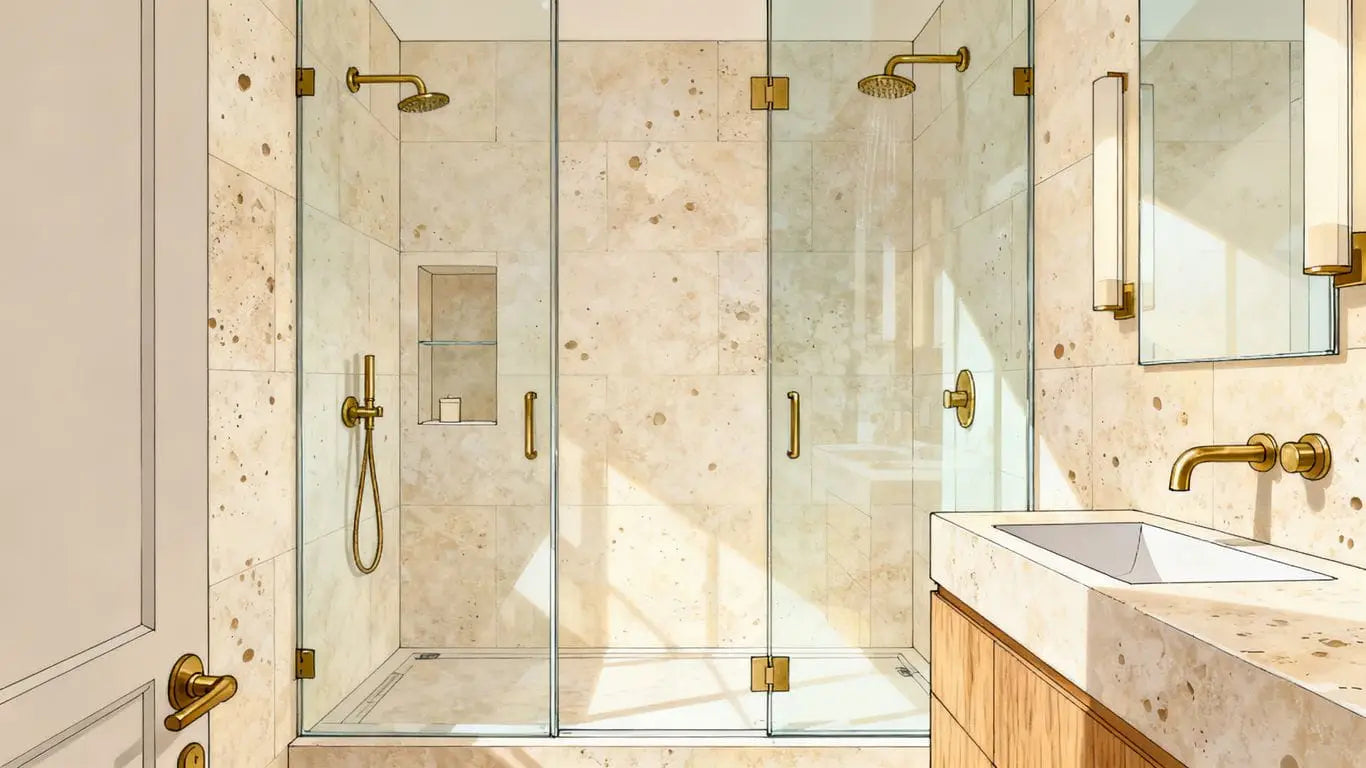
The timeless appeal of earthy colors and natural variation
Travertine has a softness that is difficult to reproduce with printed tile. Ivory, beige, gold, brown, walnut, and silver-gray tones can give a bathroom warmth without making it feel overly formal. Veining, small pits, and shifts in color create movement across a wall or floor. For a more contemporary bathroom, a restrained tone and honed finish can feel calm; a tumbled surface gives the same room a more rustic, established character.
Where travertine works best in a shower
Walls are often the simplest place to use travertine because they receive less direct abrasion than a shower floor. The material also suits niches, benches, trim, and accent bands, where its color variation can add detail without taking over the room. On floors, smaller mosaics and textured finishes can provide more grout joints and underfoot grip. A thoughtful combination—honed wall tile with a tumbled or textured floor mosaic—can balance appearance and practicality.
How it compares with ceramic, porcelain, and marble
Every shower material asks you to prioritize something different. Ceramic and porcelain offer a more uniform appearance and can be simpler to maintain, while marble delivers distinctive veining but may be sensitive to acids and surface wear. Travertine sits firmly in the natural-stone category: it offers tactile warmth and individual variation, but requires more upkeep than many manufactured options. For a useful overview of shower-floor traction and sealing, see this shower-floor guide, then compare the advice with your household’s cleaning habits.
| Material | Typical visual character | Main shower consideration | Maintenance tendency |
|---|---|---|---|
| Travertine | Warm, earthy, naturally varied | Needs sealing and careful cleaning | Moderate |
| Ceramic | Broad range of colors and patterns | Check the specific finish and grout design | Low to moderate |
| Porcelain | Consistent and versatile | Choose a suitable wet-area surface | Low to moderate |
| Marble | Distinctive veining and luxury appeal | Can etch and requires stone-safe care | Moderate to high |
The table is a starting point, not a substitute for reviewing the exact tile and finish. A well-installed travertine shower may be a rewarding choice for someone who enjoys natural variation and is comfortable with periodic care.
The benefits of using travertine in showers
Travertine gives a shower a grounded, welcoming quality. Its earthy colors soften hard bathroom surfaces, while its natural variation keeps a large installation from looking flat. The material can be used in several formats, from field tile to mosaics and decorative moldings. With the right finish and installation, it can support both a relaxed residential bathroom and a carefully designed commercial interior.
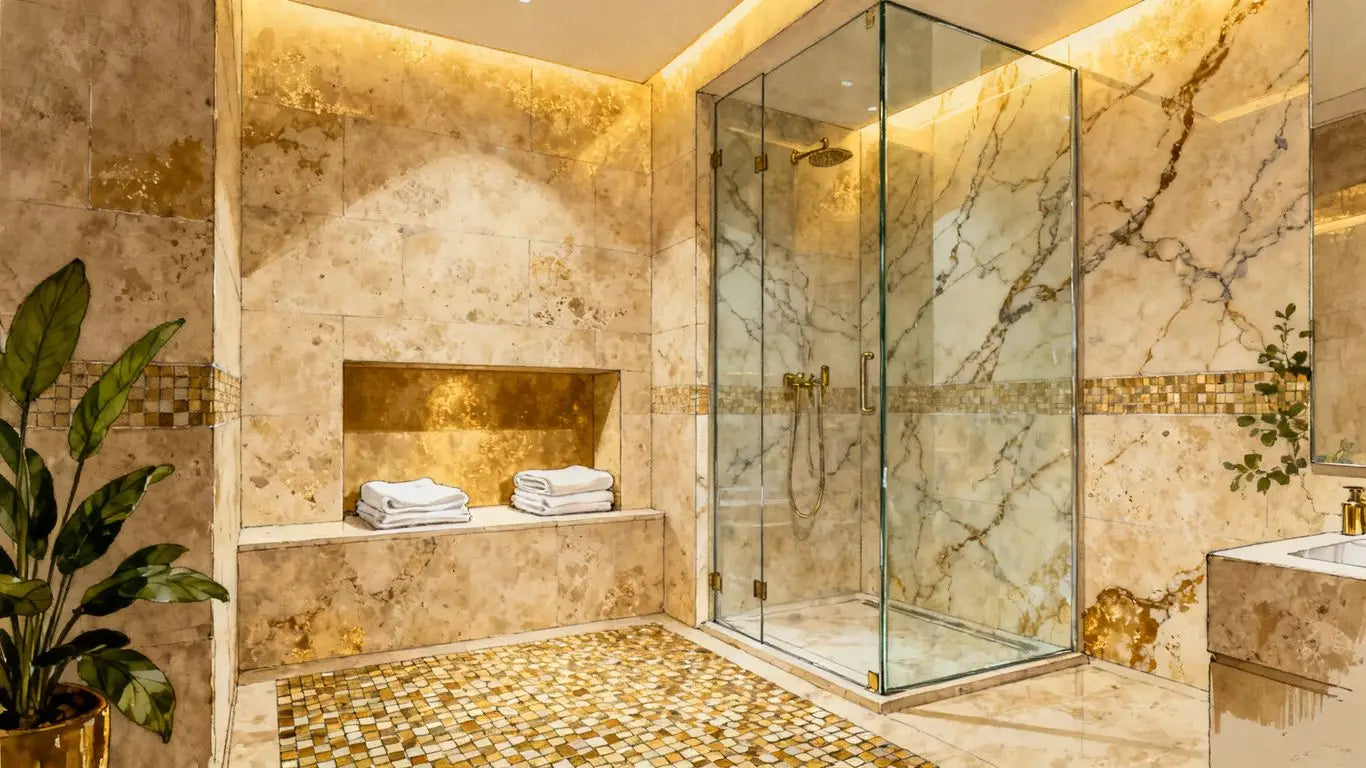
Warm, spa-like visual appeal
A travertine shower can feel more like a retreat than a purely functional enclosure. Soft beige and ivory tones work with wood, brushed metal, glass, and muted paint colors. Tumbled edges and gentle texture add an aged, handcrafted quality, while honed tile keeps the look clean and current. Natural variation is part of the appeal, so the finished wall feels collected rather than mechanically repeated.
Durable performance with proper installation
Travertine is a durable natural stone used across residential and commercial spaces, but durability depends on the complete installation. A sound substrate, suitable mortar, correctly placed grout, and effective sealing all contribute to long-term performance. It is also wise to inspect tiles before they are installed, since natural stone may contain variation or occasional chips. Proper preparation matters more than rushing the setting process.
Versatility across shower walls, floors, and niches
Travertine can coordinate several parts of one shower without making every surface identical. Larger tiles can create a quiet wall field, while a mosaic can define the floor or niche. A narrow liner or molding can frame an opening and repeat a color from the stone. For a project that needs a classic pattern, a travertine mosaic tile can add detail while keeping the material consistent.
Slip-resistant options for shower floors
A shower floor should not be chosen from a photograph alone. Tumbled, brushed, and lightly textured finishes generally provide a more useful surface feel than highly polished stone, especially when paired with a smaller mosaic layout. More grout joints can also contribute to traction and help the installer follow the slope toward the drain. Always review the specific product and finish before ordering enough material for the floor.
Natural stone value for residential and commercial bathrooms
Natural stone can add a sense of permanence and design value to a bathroom. Travertine’s range of tones and formats makes it possible to create a custom look without relying on one dramatic feature. A consistent material palette can also help connect shower walls with floors, backsplashes, or nearby areas. Its value is aesthetic as much as practical: the room gains texture, depth, and a surface that changes subtly with light.
The drawbacks and installation considerations
The same pores and variation that make travertine attractive also create its main responsibilities. Water management must happen behind the tile, while sealing and cleaning protect the visible surface. Natural stone may also show mineral deposits or etching more readily than a uniform manufactured tile. Knowing these tradeoffs before purchase helps prevent disappointment later.
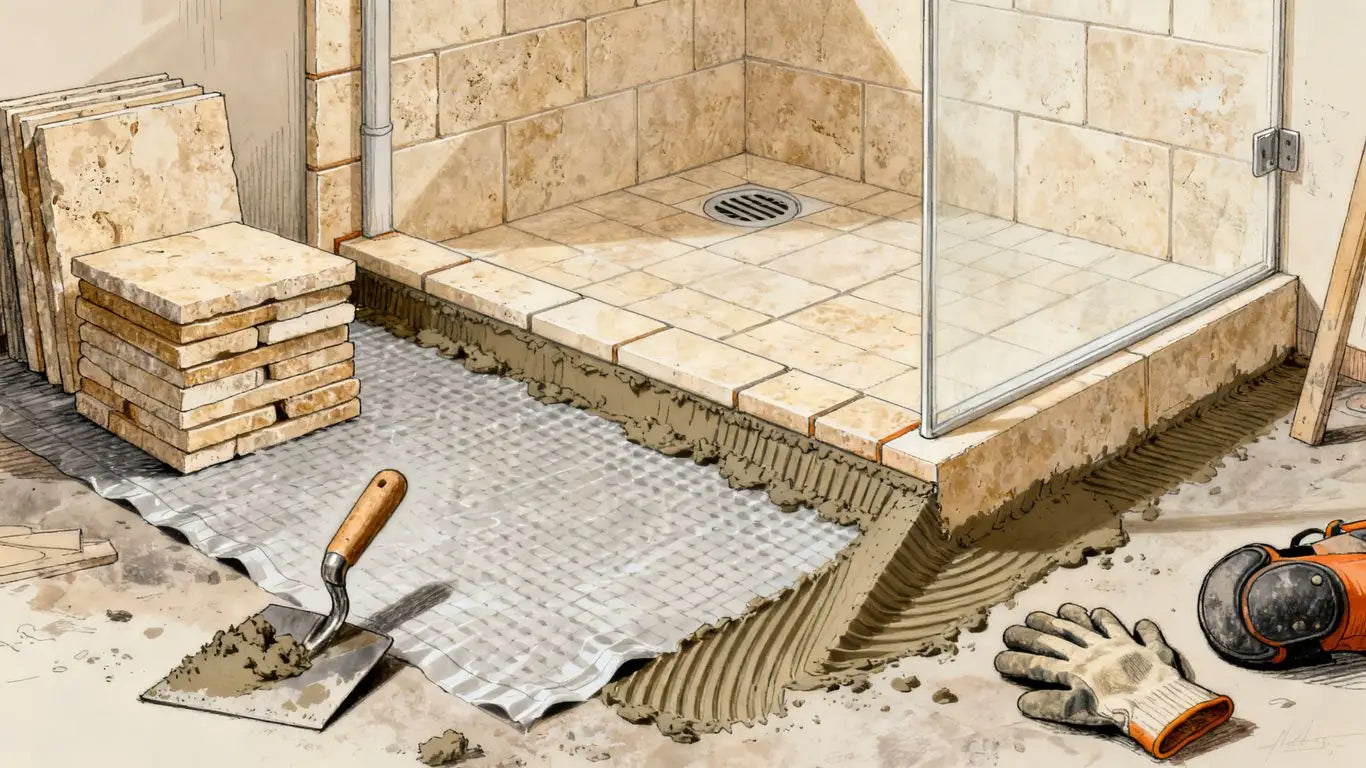
Why travertine requires regular sealing
Travertine is porous, so a sealer is used to reduce absorption and help protect against moisture and staining. Sealing is not a one-time guarantee; the surface eventually needs evaluation and, when appropriate, resealing. Frequency depends on the product, finish, use, and cleaning routine. Follow the sealer manufacturer’s directions and test an inconspicuous area before applying anything across the shower.
Managing pores, holes, and natural surface texture
Some travertine is filled and honed, while other finishes preserve more of the stone’s open, rustic character. Pores and small holes can collect soap residue, and rougher surfaces may take longer to wipe clean. That does not make them unsuitable, but it does make the cleaning routine more deliberate. Filled travertine offers a smoother look for walls and niches; tumbled stone can bring character to a floor when the pattern and grout are planned carefully.
Preventing water intrusion behind the stone
Tile and grout are not the shower’s waterproofing layer. The wall assembly needs a stable, properly waterproofed substrate, and corners, seams, penetrations, and the drain require particular care. Any moisture that reaches behind the stone can create problems independent of how attractive the tile looks. When the waterproofing plan is uncertain, pause the tile order and clarify the assembly with a qualified installer.
Addressing etching, staining, and mineral buildup
Acidic cleaners can etch calcium-based natural stone, leaving dull or lightened areas. Oils, colored products, and standing water can contribute to staining, while hard-water deposits may build up around fixtures and grout. Avoid aggressive scrubbing and unverified household chemicals. A stone-safe cleaner, a soft brush, prompt rinsing, and good airflow are safer long-term habits.
When professional installation is the better choice
A professional is often the wiser choice when the shower has multiple niches, a bench, large-format pieces, unusual angles, or a complicated drain slope. Natural stone also benefits from an experienced eye during layout because color and veining need to be distributed intentionally. For installation planning, the tumbled tile guide covers inspection, dry-fitting, substrate preparation, mortar, grouting, and cleaning considerations. The goal is not simply to set tile; it is to create a reliable wet-room surface.
Choosing the right travertine shower tile
The best travertine shower tile is the one that suits both the design and the daily routine. Finish affects texture, reflection, cleaning, and slip resistance. Size affects layout, grout, cuts, and slope. Color affects how water spots and variation are perceived. Ordering samples before committing is one of the easiest ways to make a confident decision.
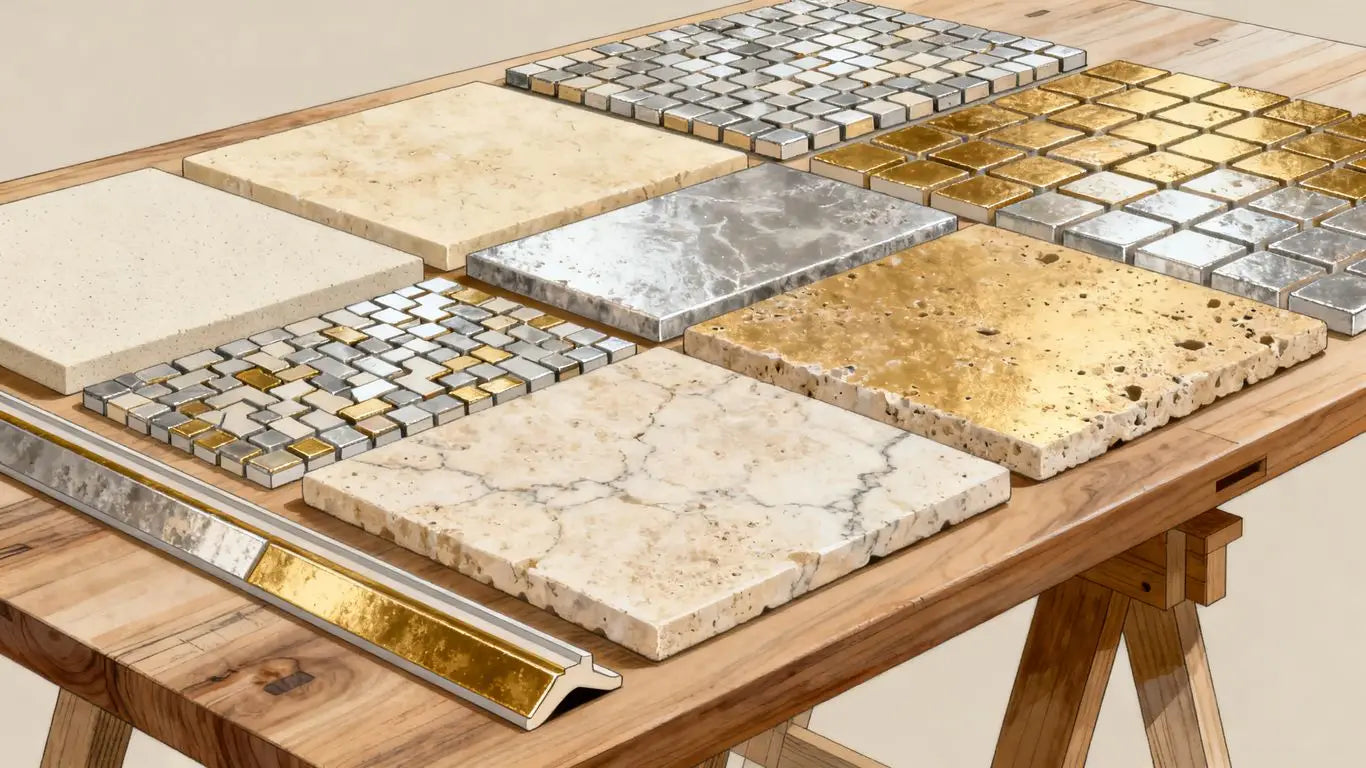
Honed and filled travertine for a smooth, modern finish
Honed and filled travertine has a relatively smooth, matte appearance because natural openings are filled and the surface is finished without a high shine. It works especially well on shower walls, niches, and restrained contemporary designs. The finish still reveals the stone’s movement and tone, but it feels quieter than a heavily textured tile. It is a practical starting point for homeowners who want natural stone without a strongly rustic surface.
Tumbled travertine for rustic texture and character
Tumbled travertine has softened edges and a weathered look that gives a shower instant personality. It pairs naturally with warm wood, aged metal, and traditional spaces. On a floor, a small tumbled mosaic can create visual rhythm and additional grout joints, though its texture may require more attentive cleaning. A tumbled 3x6 tile can also work as a wall accent or compact running-bond pattern.
Polished travertine and its limitations in wet areas
Polished travertine reflects light and can look elegant on a feature wall or decorative detail. However, a shiny surface may feel slick when wet, particularly underfoot. It can also make water spots and etching more noticeable. For that reason, polished stone is usually better reserved for carefully selected vertical applications rather than a shower floor.
Selecting tile sizes, mosaics, and shower-floor patterns
Large tiles reduce grout lines on broad walls, but they require accurate walls and careful handling. Smaller mosaics adapt more easily to a sloped floor and can create a defined border around the drain. Hexagons, herringbone, basketweave, penny rounds, and brick patterns each create a different visual pace. Keep the floor pattern, wall scale, niche dimensions, and trim in conversation rather than choosing each element separately.
Comparing Ivory, Noce, Silver, and other travertine tones
Ivory offers a light, soft backdrop, while Noce brings deeper brown warmth. Silver-gray travertine can give a more contemporary impression, and gold, walnut, or mixed tones add stronger color movement. Samples should be viewed in the actual bathroom because artificial lighting can shift the impression of beige, gray, and yellow. Natural variation is expected, so approve the overall range rather than searching for identical pieces.
Best practices for installing travertine in a shower
A successful travertine shower begins before the first tile is set. The substrate, layout, materials, and quantity all deserve attention. Natural stone rewards patience: dry-laying and inspecting the material may feel slow, but they reduce avoidable surprises. Installation instructions for the specific tile and setting products should always take priority.
Preparing a stable, waterproof shower substrate
The substrate must be sound, appropriately flat, and waterproofed as part of a complete shower assembly. Surfaces should be clean and ready for the selected mortar, with transitions and penetrations handled carefully. Do not use tile or grout to compensate for an unstable wall or poorly formed slope. A qualified installer can verify the system before the stone makes access more difficult.
Planning tile layout, grout joints, and natural variation
Dry-lay the tile before applying mortar. Mix pieces from different cartons so color and veining are distributed naturally, and avoid placing unusually similar or contrasting pieces in one conspicuous cluster. Plan grout-joint width, corner cuts, niche alignment, and the relationship between wall and floor patterns. Leave room for a sensible waste factor, especially when the design includes many cuts or a mosaic border.
Using compatible thinset, grout, and edge treatments
Use a thinset and grout compatible with the stone, substrate, and wet-area application. A notched trowel helps create consistent coverage, while lifting an occasional tile can reveal whether the mortar is bonding across the back. Spacers and a level help control joints and lippage. Exposed edges may need a finished trim, a bullnose, or another suitable treatment rather than an unfinished cut.
Sealing the stone before and after installation
Some installers apply a suitable impregnating sealer before grouting to help prevent grout from lodging in porous surfaces; others follow a system-specific sequence. After installation, allow mortar and grout to cure according to their instructions before final sealing. The exact timing depends on the products used. Never assume that a sealer makes the stone impervious or permits acidic cleaners.
Inspecting tiles and confirming material quantities
Inspect every piece for cracks, chips, warping, and unusual defects before it is fixed in place. Natural variation is part of travertine, but damaged pieces should be set aside and discussed before installation. Confirm measurements, pattern requirements, trim, mosaics, and extra material in advance. This is also the moment to verify that the chosen finish is the one intended for each surface.
Cleaning and maintaining a travertine shower
Travertine care is straightforward when it becomes part of the normal bathroom routine. Rinse away residue, dry wet areas when practical, and keep air moving after showers. Avoid treating natural stone like glass or ceramic tile, especially when removing mineral deposits. Gentle consistency is usually more effective than occasional aggressive cleaning.
Choosing pH-neutral stone cleaners
A pH-neutral cleaner made for natural stone is the safest general starting point. Follow its label directions and use a soft cloth, sponge, or non-abrasive brush. Bleach, ammonia, vinegar, lemon-based products, and abrasive powders can damage or dull some stone surfaces. If a product is not clearly intended for travertine or similar natural stone, test it in a hidden area or choose another cleaner.
Removing soap scum without damaging the surface
Soap scum responds best to regular, mild cleaning rather than harsh chemical buildup. Rinse the walls after use, wipe surfaces with a soft tool, and remove residue before it becomes a thick film. On textured or tumbled stone, work gently into the low areas without grinding grit across the surface. A stone-care guide offers additional general direction on sealing, routine cleaning, and avoiding damaging chemicals.
Reducing mold, mildew, and hard-water buildup
Good ventilation and faster drying help reduce the damp conditions that encourage mold and mildew. Repair leaks promptly and pay attention to corners, grout lines, niches, and the area around fixtures. Hard-water deposits should be addressed with a stone-safe method because common acidic descalers may etch travertine. If buildup is severe, a natural-stone professional can recommend a treatment that suits the finish.
Resealing schedules for walls and shower floors
There is no universal calendar for resealing. A heavily used shower floor may need evaluation sooner than a lightly used wall, and a rough finish may behave differently from a filled, honed surface. Watch for darkening when water contacts the stone, increased staining, or a change in the surface’s ability to resist absorption. Clean and dry the stone before resealing, and follow the chosen product’s curing instructions.
Repairing chips, cracks, and worn areas
Small chips can sometimes be filled with a color-matched stone repair product, while cracks or loose tiles may indicate movement or moisture trouble beneath the surface. Do not simply cover a recurring crack. Identify the cause, replace damaged pieces when necessary, and match the repair to the stone’s finish. A repair may blend well without making the natural variation disappear completely.
Planning a travertine shower project with Surfaces Galore
A polished result depends on more than choosing a beautiful tile. You also need the right formats, enough material, compatible trim, and a clear delivery plan. Surfaces Galore is an Anaheim, California–based direct importer and nationwide supplier of premium marble and travertine tiles, mosaics, and moldings. Homeowners, designers, and architects can use the collection to build a coordinated material plan for walls, floors, niches, and accents.
Ordering premium travertine tiles and mosaics
The collection includes travertine tiles and mosaics in multiple colors, patterns, sizes, and finishes. A La Travonya Travertine 12X12 Tumbled Tile can suit a warm, textured design, while honed and filled formats offer a smoother appearance. Mosaics are useful for shower floors, accent areas, and details where a smaller scale improves the layout. Review the product information and order samples before finalizing the design.
Coordinating shower walls, floors, niches, and moldings
A coordinated shower does not require every surface to use the same size or finish. Pair a calm wall field with a mosaic floor, repeat a tone in the niche, and use a compatible molding to finish exposed edges. This approach creates visual continuity while giving each surface a job. Confirm that the selected materials are appropriate for their intended application and that quantities include cuts and natural variation.
Requesting samples, current stock, and project quotes
Samples reveal texture and color far better than a screen. Place them beside the bathroom’s paint, cabinetry, metal finishes, and lighting before choosing. For a larger renovation, request current stock information and a project quote so the material plan reflects what is available. You can also request a quote when you are ready to discuss quantities and timing.
Using bulk discounts for larger renovations
Larger bathrooms and multi-room renovations require careful quantity planning, particularly when several areas use the same stone. Surfaces Galore offers bulk discounts for larger renovations, according to the supplied project information. Compare the estimated square footage with the pattern, cuts, and recommended extra material before placing an order. Buying thoughtfully at the start can help maintain a consistent lot and reduce last-minute substitutions.
Arranging nationwide shipping from Anaheim, California
Surfaces Galore ships nationwide from Anaheim, California, serving customers across the United States. Confirm packaging, delivery timing, and inspection procedures before the shipment arrives. When the material is delivered, check cartons promptly for damage and compare the contents with the order. That simple step gives you time to address concerns before installation begins.
Conclusion
Travertine can be an excellent shower material for homeowners who want natural warmth, texture, and lasting visual character. Its success depends on choosing a suitable finish, building a properly waterproofed assembly, sealing the stone, and cleaning it with care. If those responsibilities fit your project, a thoughtfully planned travertine shower can feel refined, personal, and welcoming for years.
Frequently Asked Questions
Is travertine good for showers?
Yes, travertine can work well in showers when the stone is properly selected, installed over a waterproof substrate, sealed, and maintained with suitable products.
Is travertine safe for a shower floor?
Textured, tumbled, brushed, or lightly honed options can provide a more practical feel underfoot than polished stone. Smaller mosaics may also help follow the shower slope.
Does travertine need to be sealed in a shower?
Travertine is porous and generally needs sealing to help reduce moisture and stain absorption. Sealing does not replace waterproofing or eliminate routine care.
Can polished travertine be used in a shower?
Polished travertine may work on selected vertical surfaces, but it can become slippery when wet and may show etching or water spots more readily. It is usually not the first choice for a shower floor.
How do you clean a travertine shower?
Use a pH-neutral cleaner made for natural stone, a soft cloth or brush, and plenty of clean water. Avoid acidic, abrasive, or unverified household cleaners.
How often should a travertine shower be resealed?
The timing depends on use, finish, sealer, and water conditions. Evaluate the stone periodically for increased absorption or staining, then follow the sealer manufacturer’s instructions.
What is the best travertine finish for shower walls?
Filled and honed travertine is a popular choice for walls because it offers a smooth, matte appearance while retaining natural color and variation. The best selection still depends on the desired design and maintenance routine.
Start Your Travertine Project
Explore suitable travertine tiles, mosaics, and moldings, request samples, and contact Surfaces Galore for current stock, project pricing, and delivery information. A clear material plan now can make the finished shower more beautiful and much easier to maintain.

Leave a comment