
Marble countertops near me: How to find the right stone, supplier, and value for your project

Key Takeaways
Choosing marble countertops is easier when you compare the stone, finish, supplier, and full project cost together.
- View natural variation in person or through current-stock photos.
- Compare polished, honed, marble, limestone, and travertine options.
- Budget for fabrication, delivery, installation, sealing, and waste.
- Use remnants and clearance pieces for smaller applications.
- Confirm measurements, shipping details, and care expectations before ordering.
Start your search for marble countertops near me with the right material
A search for marble countertops near me should begin with the material itself, not only the closest showroom. Marble can range from quiet white backgrounds with fine gray movement to dramatic slabs with broad, expressive veining. Your room, lighting, maintenance expectations, and budget all shape the best choice.
Think about how the surface will feel when you live with it. A marble countertop can bring a classic touch to a kitchen, a calm finish to a bathroom, or a richer sense of occasion to a home bar. It also deserves careful selection because natural stone varies from piece to piece.
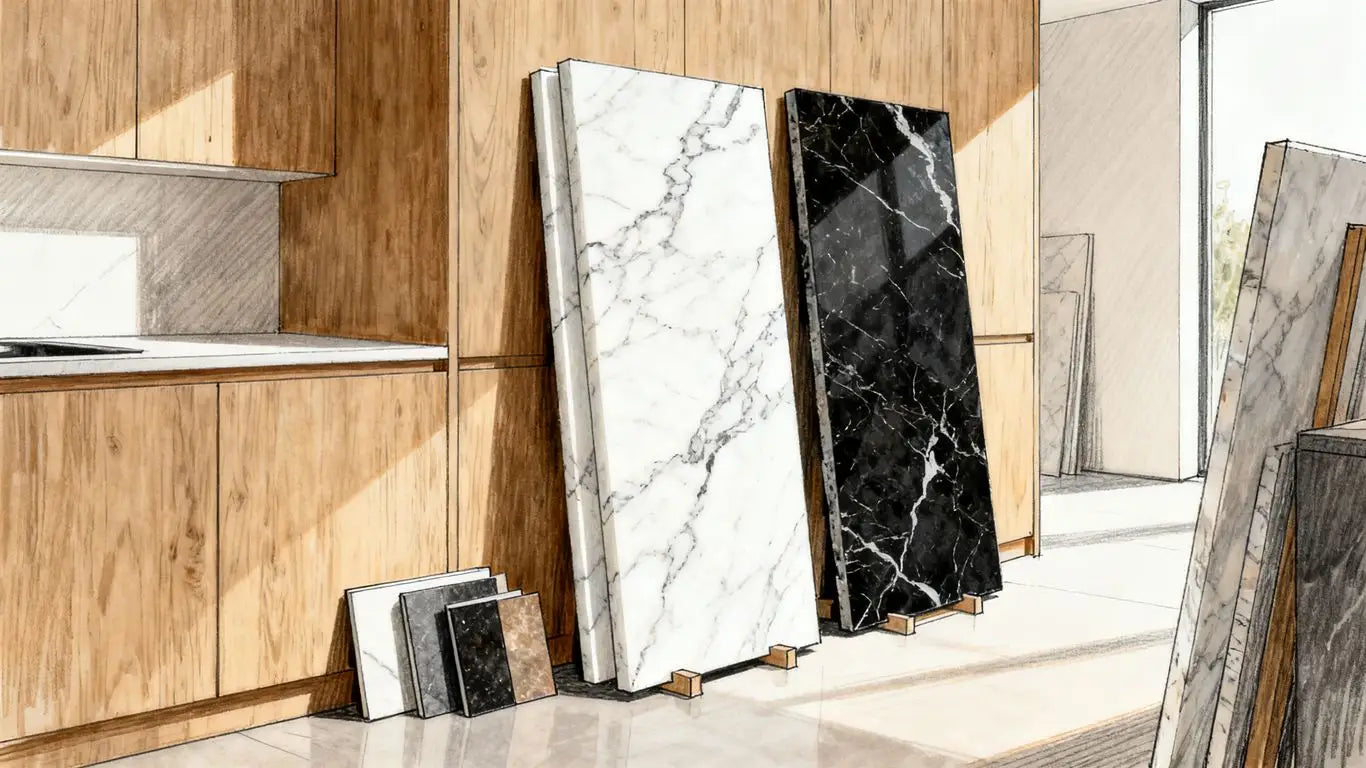
Compare classic marble varieties and veining
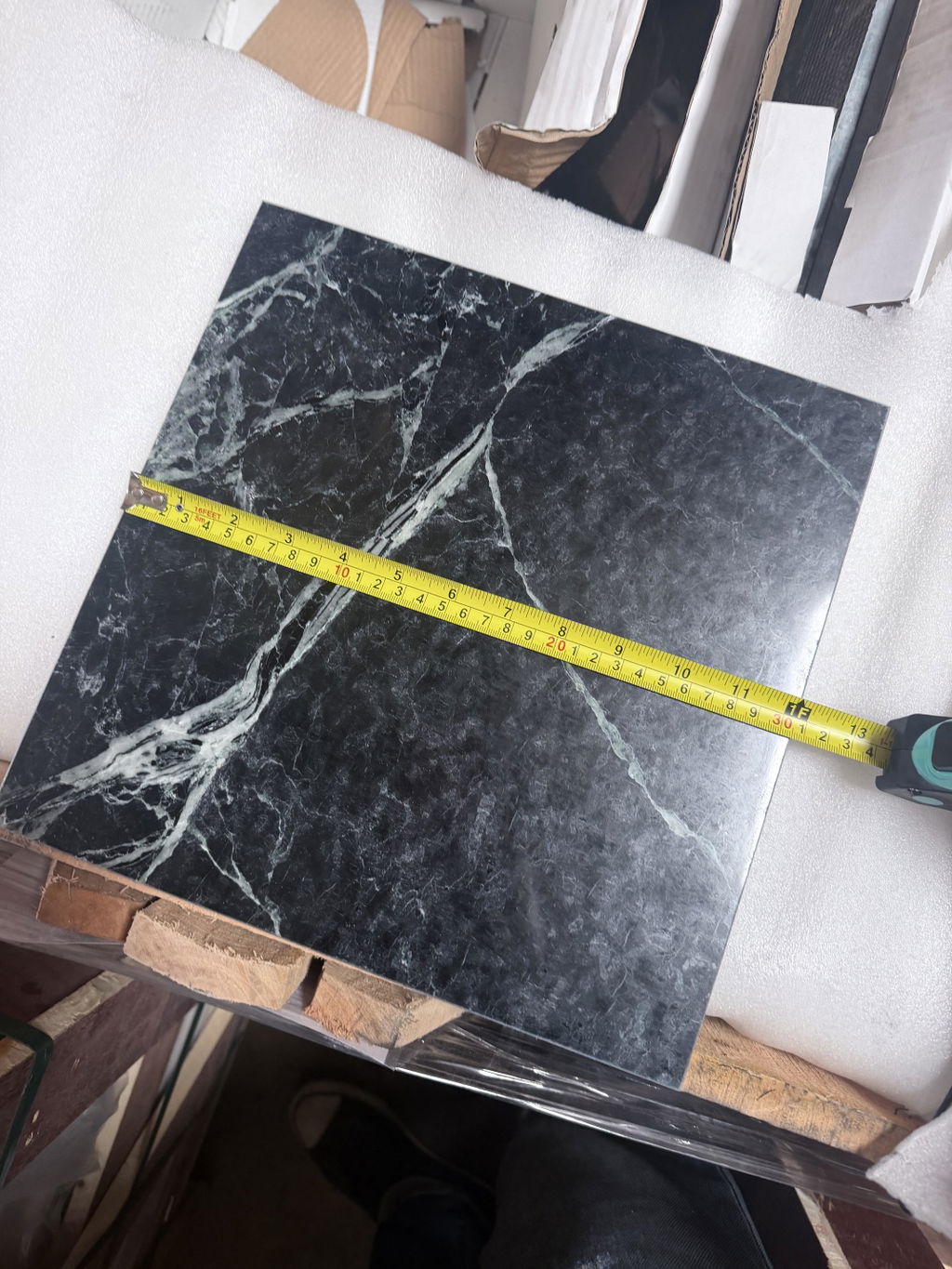
Carrara White is a familiar choice for its white field and delicate gray movement. Calacatta Gold can introduce warmer veining, while Statuario White offers a brighter backdrop with more pronounced gray character. Darker options such as Nero Marquina create contrast with a deep background and white veining.
When comparing slabs, study the direction and density of the veins rather than judging color alone. A quiet pattern may suit a small vanity, while a bold pattern can become the focal point of a large island. Ask whether the fabricator can plan the cuts so the most attractive movement appears where it will be seen.
Choose between polished and honed finishes
Polished marble has a reflective, smooth surface that can make colors and veining appear more vivid. Honed marble has a softer, matte appearance and often feels more relaxed in farmhouse, transitional, or natural-material interiors. The right finish depends on the mood you want as well as how you expect the surface to be used.
Finish also affects the way marks and maintenance are perceived. Marble is more prone to scratching and staining than harder stones, so discuss sealing and daily care before committing. A sample viewed beside cabinet doors and flooring will tell you more than a product photo on its own.
Consider marble alternatives such as limestone and travertine
Limestone offers a marble-like texture with a more understated, earthy presence. Travertine brings warmth, visible variation, and a Mediterranean or rustic feeling, and it is generally more budget-friendly than marble, although price still depends on quality and finish. These materials can be especially appealing when the design calls for softness rather than high contrast.
The comparison should include porosity and maintenance. Limestone and travertine need sealing, and their natural openings or variation may be part of the look. For a related project, Antico Onyx Travertine illustrates how a filled, honed natural-stone surface can create a calm beige-and-white palette.
Match the stone to your kitchen, bathroom, or bar design
A kitchen island usually benefits from a slab with a pattern that can be read across a broad, uninterrupted area. In a bathroom, a lighter marble can support a clean, open feeling, while a dark marble may give a powder room or bar a more intimate character. Consider backsplash, cabinet color, hardware, and floor tone before selecting the countertop.
A useful design exercise is to place a sample next to every major finish in the room. Morning light, evening light, and artificial light can each change the apparent color. This simple step prevents a beautiful stone from feeling disconnected once it reaches the finished space.
Evaluate marble countertop quality before you buy
Natural stone is not uniform, and that is part of its appeal. Quality evaluation means understanding the slab’s appearance, dimensions, thickness, finish, and condition before fabrication begins. The more information you gather early, the fewer surprises you face later.
Ask for details about the actual inventory rather than relying only on a representative image. Samples are useful, but a current slab photo is better when the project depends on a particular vein or background color. Treat the purchase as a design decision and a construction decision at the same time.
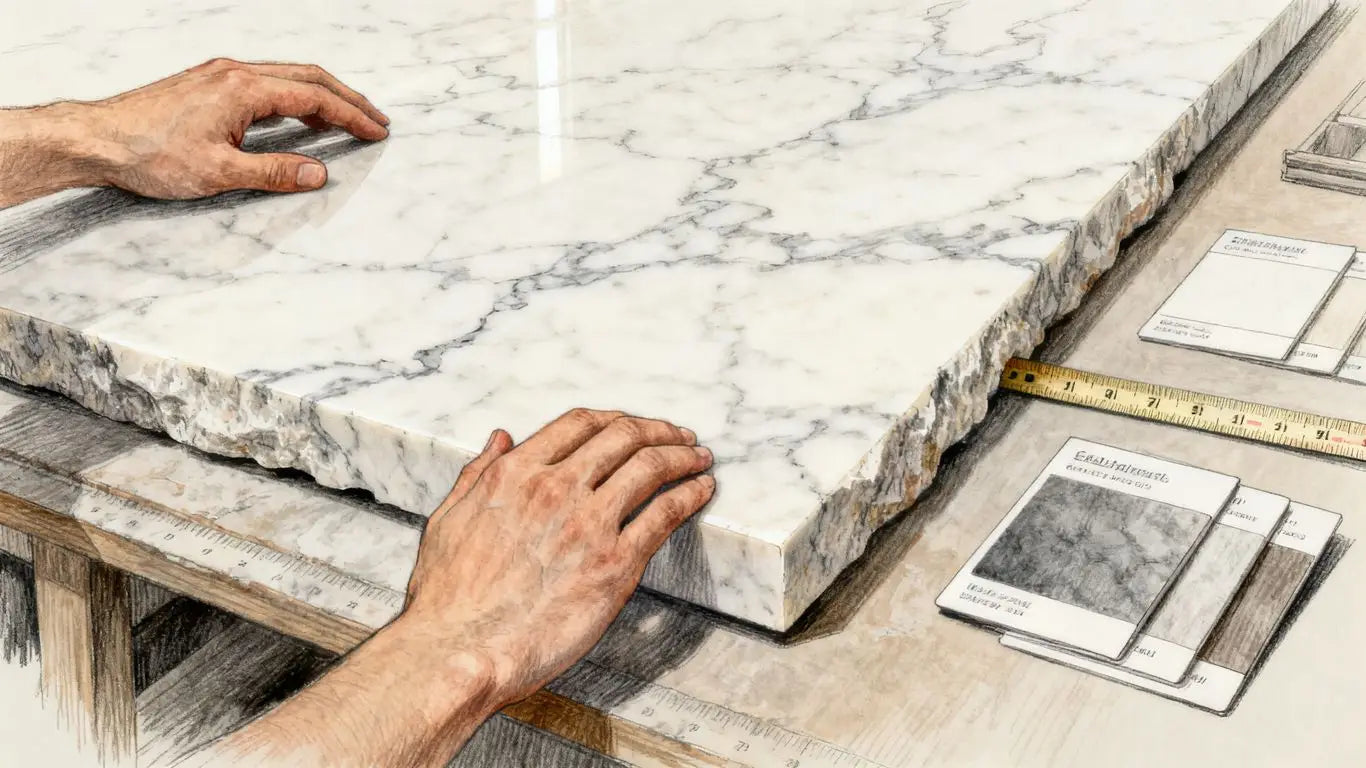
Inspect color, veining, and natural variation
Look for consistency where you want it and character where you can welcome it. A white slab may include gray, gold, or cream movement, and two pieces from the same stone family may not look identical. This is normal for natural marble, but it should be discussed before the order is finalized.
Lay samples against the backsplash and cabinet finish. If the project uses multiple slabs, ask whether they can be selected or viewed together. For a strong black-and-white scheme, Nero Marquina Black Marble offers a deep backdrop with striking white veining and is available in polished and honed finishes.
Check slab dimensions, thickness, and edge requirements
Countertops typically use 3/4-inch or 1-1/4-inch thick slabs, but the correct specification depends on the design, support, and fabrication plan. Confirm the slab dimensions against the countertop layout, including sink cutouts, cooktop openings, seams, overhangs, and backsplash pieces. Edge profiles can also affect how much material is needed.
Do not assume nominal dimensions tell the whole story. Have the installer or fabricator verify the usable area and account for cuts. This is where an attractive slab becomes a practical order—or reveals that a different size will reduce seams and waste.
Understand minor imperfections in clearance and as-is materials
Clearance marble can offer strong value, but it is sold as-is and may include minor chips, irregularities, or variations. Those pieces may work well for a small island, vanity, bar top, backsplash, repair, or decorative project. They are less suitable when the design requires a flawless, uninterrupted surface with no flexibility in placement.
Inspect the photos and ask what condition to expect before buying. A small imperfection can disappear inside a cutout or along an edge, but only if the layout allows it. The best clearance purchase is one whose limitations are understood and planned for from the start.
Request samples, photos, or current-stock details
A sample helps you see texture and color in your own lighting, while current-stock photos help you understand natural variation. Ask for the piece’s dimensions, finish, thickness, quantity available, and any visible condition notes. If timing matters, also confirm whether the material is ready to ship.
Samples cannot replace slab review for a large countertop, but they make early decisions much easier. Keep the sample with your cabinet, paint, tile, and flooring selections so the entire palette can be judged together.
Compare local and online marble countertop suppliers
The best supplier is not always the one with the shortest drive or the most polished website. Look for clear product information, responsive guidance, realistic inventory details, and a process that works for your project size. Local visits and online ordering can both be useful when each is handled carefully.
A supplier should help you understand what is available and what still needs to happen after purchase. Stone selection, fabrication, freight, and installation are separate steps, even when one conversation starts them all. Compare the level of support as closely as you compare the price.
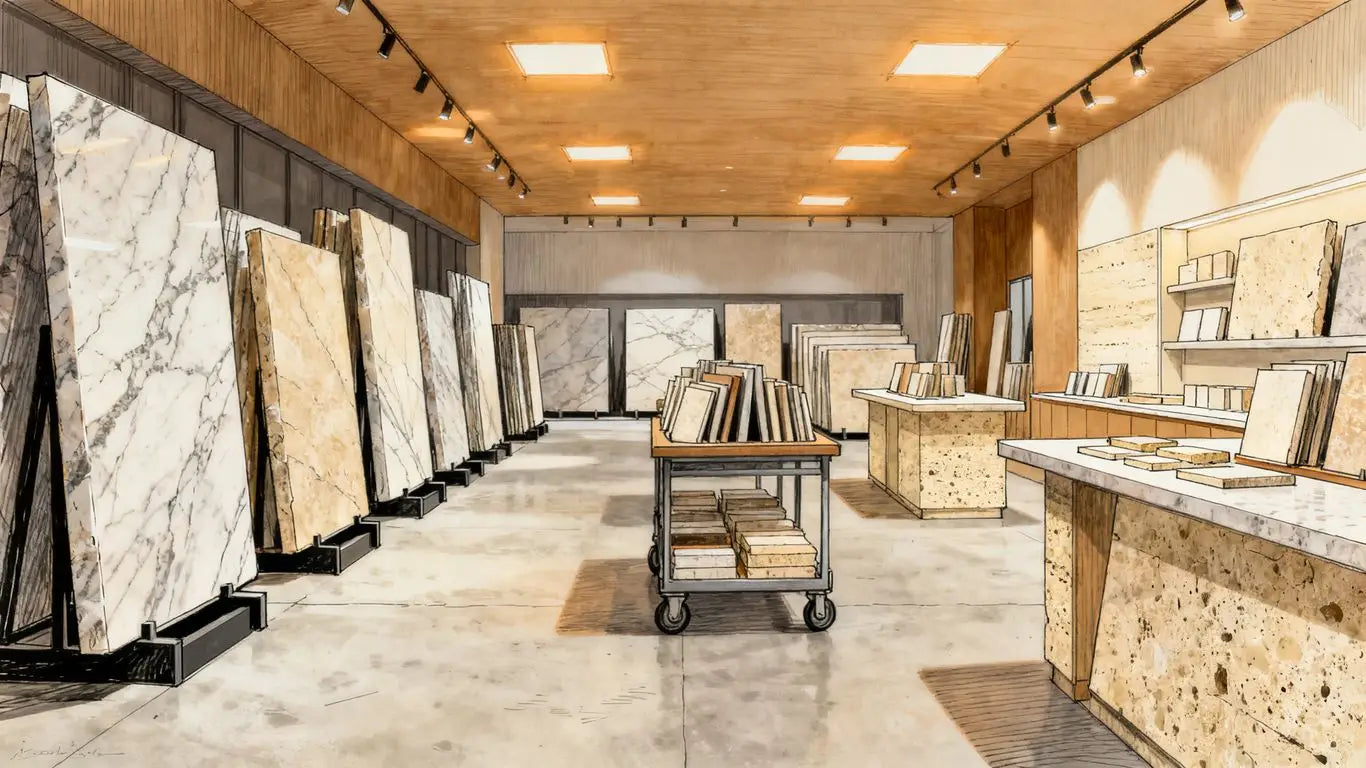
Benefits of visiting a local showroom
A showroom lets you see scale, surface texture, and variation in person. You can hold samples near cabinet colors, compare finishes side by side, and notice details that a screen may flatten. For Southern California homeowners, the Surfaces Galore Anaheim showroom provides a place to discuss natural-stone choices directly with the team.
A local visit can also make the decision feel less abstract. Bring cabinet samples, floor samples, and measurements if you have them. Even a short conversation can narrow a large collection into a few realistic options.
Questions to ask about sourcing and inventory
Ask whether the material is in stock, how many pieces are available, and whether the photos show the current product. Confirm finish, thickness, nominal dimensions, expected variation, and whether samples can be expedited. You should also ask how damaged-material claims and delivery issues are handled.
For a project that is still in design, ask how long the quoted material is expected to remain available. Inventory can change, particularly for discontinued or clearance pieces. Written answers make it easier to compare suppliers without relying on memory.
How direct importers can improve selection and pricing
A direct importer may offer access to imported marble, travertine, limestone, tiles, mosaics, and moldings without as many intermediary markups. That can create more room to compare colors and formats, especially when the supplier serves both individual renovations and larger orders. Pricing still varies by stone, finish, quantity, and logistics, so request a project-specific quote.
Selection matters as much as the number on a price tag. A material that fits the design with fewer compromises may reduce waste or simplify the installation plan. This is particularly useful when you are coordinating countertops with a backsplash or other natural-stone surfaces.
When nationwide shipping makes sense
Online ordering can make sense when the right stone is not available nearby, when a project needs a particular collection, or when the buyer wants to compare inventory from a wider geographic area. Surfaces Galore ships cross-country from its Anaheim, California warehouse, with nationwide freight, professional crating, and insured delivery described in its source materials.
Before ordering, confirm the freight quote, delivery appointment, access requirements, and inspection process. A truck may reach your region, but the job site still needs a safe path for unloading and handling. For comparison, this guide to local countertop remnants shows why nearby availability can be helpful for smaller countertop projects.
Plan your marble countertop budget
The stone price is only one part of the countertop budget. Fabrication, cutouts, edge work, delivery, installation, sealing, and possible support work can all affect the final number. Building the estimate in stages gives you a more useful comparison than judging slabs by price per square foot alone.
Marble can be a long-term design investment, but value depends on choosing the right application and caring for the surface. A premium slab used thoughtfully may have more impact than an oversized selection that creates excessive waste. Take time to price the complete plan.
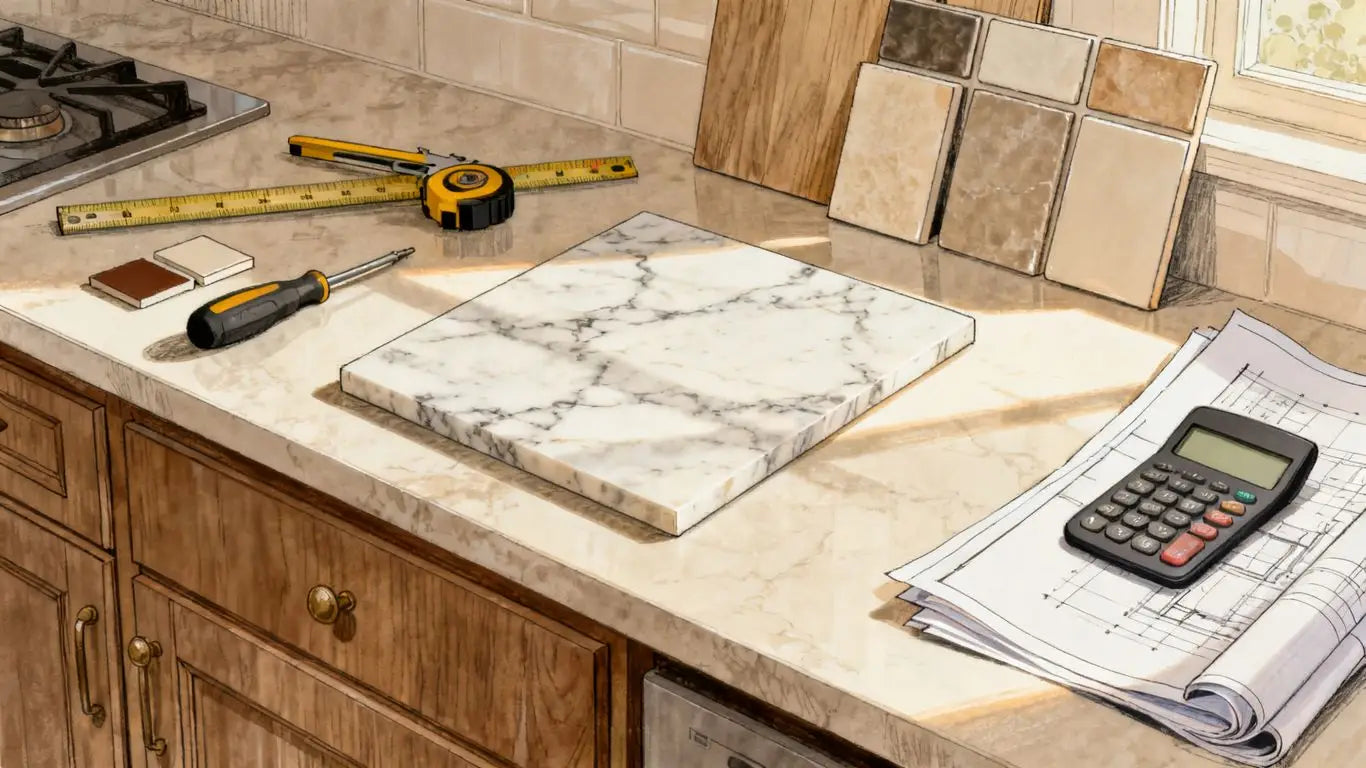
Account for stone, fabrication, delivery, and installation
Start with the measured square footage and add roughly 10–15% for cuts and waste, adjusting with the fabricator when the layout is complex. Then list sink and cooktop cutouts, edge profiles, seams, backsplash pieces, delivery, and installation. If the material is shipped, include freight and any special handling required at delivery.
The estimate should identify assumptions. A slab quote without fabrication is not directly comparable with a package that includes installation. Ask for each line item in writing so you can make a fair decision.
Explore bulk discounts and clearance opportunities
Larger projects may qualify for bulk pricing, but the discount should be considered alongside usable quantity and matching requirements. Clearance pieces can lower the material cost substantially, particularly for smaller applications, provided their as-is condition works with the layout. Do not buy extra material simply because the unit price appears attractive.
A careful clearance plan might look like this:
- Select a piece large enough for the intended cut pattern.
- Place visible imperfections inside cutouts or less prominent areas.
- Confirm that the finish and thickness suit the installation.
- Keep photos and condition notes with the project records.
These steps turn a low-cost opportunity into a controlled design choice. They also reduce the chance of discovering too late that the piece cannot produce the required countertop shape.
Use remnants for vanities, islands, and smaller projects
Remnants are often practical for bathroom vanities, compact islands, bar tops, shelves, and repair work. A small piece can also introduce marble to a room without requiring a full slab purchase. Measure carefully and compare the remnant’s usable dimensions with the finished template.
Think about vein direction and edge placement before reserving the piece. A remnant with an attractive corner may be perfect for a vanity but awkward for a long island. The best match is based on both size and visual movement.
Compare long-term value with other countertop materials
Marble offers natural veining, a cool tactile quality, and a look that can suit both traditional and contemporary interiors. It is also more prone to scratching and staining than harder stones, so the household’s habits matter. Compare not only purchase price but also maintenance, repair expectations, replacement risk, and how strongly the material supports the design.
Natural stone can contribute to a home’s lasting appeal, but no material removes the need for sound installation and care. A realistic budget leaves room for sealing and professional guidance rather than spending every dollar on the slab itself.
Coordinate countertops with surrounding natural stone surfaces
Countertops rarely stand alone. They meet backsplash tile, flooring, wall surfaces, trim, hardware, and cabinetry, and each material changes how the others look. A successful design usually repeats one or two visual ideas without making every surface identical.
Use color temperature, finish, scale, and vein direction as your organizing tools. A quiet countertop may allow a patterned mosaic to lead, while a dramatic slab may need a simpler backsplash. Samples and mockups are especially helpful when several natural stones share the same room.
Pair marble countertops with backsplash tile
A backsplash can echo the countertop’s background color or pick up a secondary vein tone. For example, a light marble countertop may pair with a small-format marble mosaic, while a boldly veined slab may look best beside a restrained tile. Grout color also affects the visual rhythm and should be tested with the actual materials.
Keep the transition intentional. A narrow trim, a full-height backsplash, or a simple horizontal field can each work, but the choice should respond to the countertop’s pattern and the room’s proportions.
Create a cohesive floor and wall design
Floors and walls establish the broader setting for the countertop. A warm travertine floor can soften a cooler marble, while limestone can create a quieter bridge between white cabinetry and expressive veining. The goal is balance, not a perfect match.
Use larger samples where possible. Small chips may hide the amount of variation that becomes visible across a floor or wall. Checking full-size pieces helps you decide whether the materials feel layered, coordinated, and comfortable together.
Add marble mosaics, trim, and decorative moldings
Mosaics, liners, thresholds, and moldings can carry marble into details around the room. These elements are useful for shower niches, backsplash borders, vanity walls, and fireplace surrounds. Surfaces Galore offers custom cutting and design services for marble, travertine, and other natural stones, including unique mosaic patterns or specific shapes.
Keep decorative elements measured and purposeful. One repeated trim profile may feel more refined than several competing patterns. Plan those pieces with the countertop template so the color and finish remain consistent.
Coordinate colors across marble, travertine, and limestone
Begin by identifying the dominant color: white, cream, gray, brown, or another tone. Then look for a supporting shade that can repeat in the floor, wall, or hardware. Travertine and limestone can bring warmth to a marble scheme, while gray stone can make a bright white countertop feel more grounded.
Natural variation means an exact match is rarely necessary. What matters is whether the materials share a convincing relationship in the room’s actual light. Let one surface lead and allow the others to support it.
Prepare for ordering and installation
Good preparation protects both the stone and the schedule. Before ordering, gather the measurements, finish preferences, installation address, delivery constraints, and fabricator requirements. A supplier can provide material guidance, but the final installation plan should be confirmed by qualified professionals.
Countertops are heavy, fragile at certain points, and difficult to reposition once fabricated. Small errors in templates or access planning can create expensive delays. Clear communication is worth more than rushing to place the order.
Confirm measurements and project specifications
Review the final template, slab dimensions, thickness, edge profile, sink type, cooktop opening, overhang, backsplash height, and seam placement. Confirm which party is responsible for measuring and who approves the fabrication drawing. If the design changes, communicate it before processing begins.
Ask whether the listed sizes are nominal and whether the material is sold by piece, square foot, or another unit. Written specifications give the homeowner, supplier, fabricator, and installer the same reference point.
Plan transportation, handling, and delivery access
Measure doorways, stairways, gates, elevators, and turns from the delivery point to the installation area. Confirm whether a receiving team or specialized equipment is needed. Freight delivery should be scheduled when someone can inspect the crate and document any visible damage.
Do not store slabs casually against unstable surfaces or in a high-traffic path. Protect the material from impact and keep the delivery area clear. These practical details often determine whether the installation day feels orderly or stressful.
Coordinate with a qualified fabricator and installer
A qualified fabricator can advise on slab yield, seams, cutouts, edge details, and support. The installer should understand natural-stone handling and the requirements of the selected material. Share product information, photos, and the approved layout with everyone involved.
Installation guidance for Statuario White 12x24 Marble is a useful example of the kind of material inspection, waste planning, cleaning, and installation information buyers should review before work begins. The exact requirements for your countertop should come from your fabricator and installer.
Review sealing, care, and maintenance expectations
Ask which impregnating sealer is appropriate and when it should be applied. Use a pH-neutral cleaner and avoid acidic cleaners such as lemon or vinegar, which can damage or dull some natural-stone surfaces. Depending on use and the sealer, resealing may be needed periodically.
Daily care is simple when it becomes routine: wipe spills promptly, use suitable cutting boards and trivets, and follow the installer’s recommendations. Marble’s beauty comes with some responsibility, but that care is manageable when expectations are clear.
Order marble countertops from a trusted natural stone supplier
Once the material, layout, and budget are clear, ordering becomes much more straightforward. Focus on the actual product, current availability, finish, dimensions, delivery plan, and support available after purchase. This is the point to move from inspiration to a documented project request.
Surfaces Galore serves homeowners, designers, and architects with imported natural stone materials, including marble and travertine tiles, mosaics, and moldings. Its product range and direct-importer positioning can be useful for projects that need coordinated surfaces or wider inventory access.
Browse Surfaces Galore’s current marble collection
Review the available marble varieties and compare the options that fit your room’s palette. Look for Carrara White, Calacatta Gold, Statuario, Nero Marquina, and other documented collections, then request samples or current-stock details before making a final selection. The marble collection is a practical starting point for narrowing the search.
Use your measurements and finish preference while browsing. A beautiful tile or slab still needs to work with the countertop layout, fabrication plan, and surrounding materials.
Request a quote for residential or commercial projects
A useful quote should include the selected material, quantity, finish, dimensions, fabrication assumptions, delivery destination, and any known installation requirements. Include photos or drawings when available. More context helps the team respond to the actual project instead of a generic estimate.
For a home renovation, mention the room and intended application. For a commercial project, include the expected quantity, schedule, and receiving details. Either way, ask which items remain outside the material quote.
Ask about bulk pricing and cross-country shipping
If you are ordering for several rooms or multiple properties, ask whether bulk pricing applies to the planned quantity. Also confirm freight, professional crating, insurance, delivery timing, and inspection procedures. Surfaces Galore’s source materials describe nationwide shipping from its Anaheim warehouse, including insured freight and secure crating.
Pricing should be evaluated with service and logistics together. A clear shipping plan can be especially valuable when the desired stone is not available locally or when matching material is needed for a larger project.
Contact the Anaheim showroom team for product guidance
A showroom conversation can help you compare texture, color, finish, and natural variation before you commit. Bring your room dimensions, cabinet or paint samples, and a short list of priorities. The Anaheim team can then help direct your questions toward the material and quantity that fit the project.
The goal is not simply to buy the nearest stone. It is to choose a surface you can approve confidently, receive safely, fabricate correctly, and enjoy for years.
Get Your Marble Project Moving
Send your measurements, preferred finish, application, and delivery location to Surfaces Galore for product guidance and a project quote. Browse the collection, request samples, and take the next step toward a marble countertop that fits your space and budget.
Conclusion
The right marble countertop comes from matching the stone’s natural character with your room, your practical expectations, and your complete project budget. Compare slabs carefully, plan fabrication and delivery early, and choose a supplier that can support the process from selection through shipping. With those details in place, marble can bring lasting warmth, elegance, and personality to a kitchen, bathroom, or bar.
Frequently Asked Questions
How much extra marble should I order for a countertop?
A common starting point is 10–15% extra for cuts and waste, but the exact amount depends on the layout, slab size, vein direction, cutouts, and seam plan. Ask the fabricator to confirm the required quantity.
Is polished or honed marble better for countertops?
Neither finish is universally better. Polished marble is reflective and formal, while honed marble has a softer matte appearance. Compare samples with your lighting, cabinetry, and expected maintenance routine.
Does marble naturally vary in color and veining?
Yes. Marble is a natural stone, so color, veining, and texture can vary between samples and slabs. Reviewing current-stock photos or seeing the slab in person can help set realistic expectations.
Can limestone or travertine be used instead of marble?
Limestone and travertine can be alternatives when you want a warmer or more understated natural-stone look. They are generally more porous and require appropriate sealing and care, so application and maintenance should be considered carefully.
Are marble remnants suitable for bathroom vanities?
They can be a practical choice when the remnant has enough usable area for the vanity template and the finish and thickness are appropriate. Check for imperfections, cut placement, edge requirements, and vein direction before reserving one.
What should a countertop quote include?
A quote should clarify material, quantity, finish, dimensions, fabrication, cutouts, edge work, delivery, installation, taxes, and any exclusions. Written details make it easier to compare offers accurately.
How should natural marble countertops be maintained?
Wipe spills promptly, use a pH-neutral stone cleaner, and avoid acidic products such as vinegar or lemon. Follow the installer’s guidance for sealing and resealing, and use trivets and cutting boards to reduce wear.

Leave a comment