

Marble tile guide: how to choose the right stone for your home

Key Takeaways
Marble brings natural color and veining to floors, walls, and accents, but each selection should suit the room and the way it will be used.
- Expect natural variation: every tile has its own pattern and tone.
- Choose color and finish with your room’s lighting and palette in mind.
- Consider traffic, moisture, and maintenance before choosing an installation area.
- Review samples and product details before estimating material quantities.
- Plan for suitable installation materials and routine natural-stone care.
What makes marble a distinctive natural stone
Marble is valued for its depth, distinctive veining, and the quiet variation that makes a tiled surface feel individual. Its appearance can range from subtle and pale to richly colored and dramatic. Because it is a natural material, the finished surface will not look like a perfectly repeated manufactured pattern.
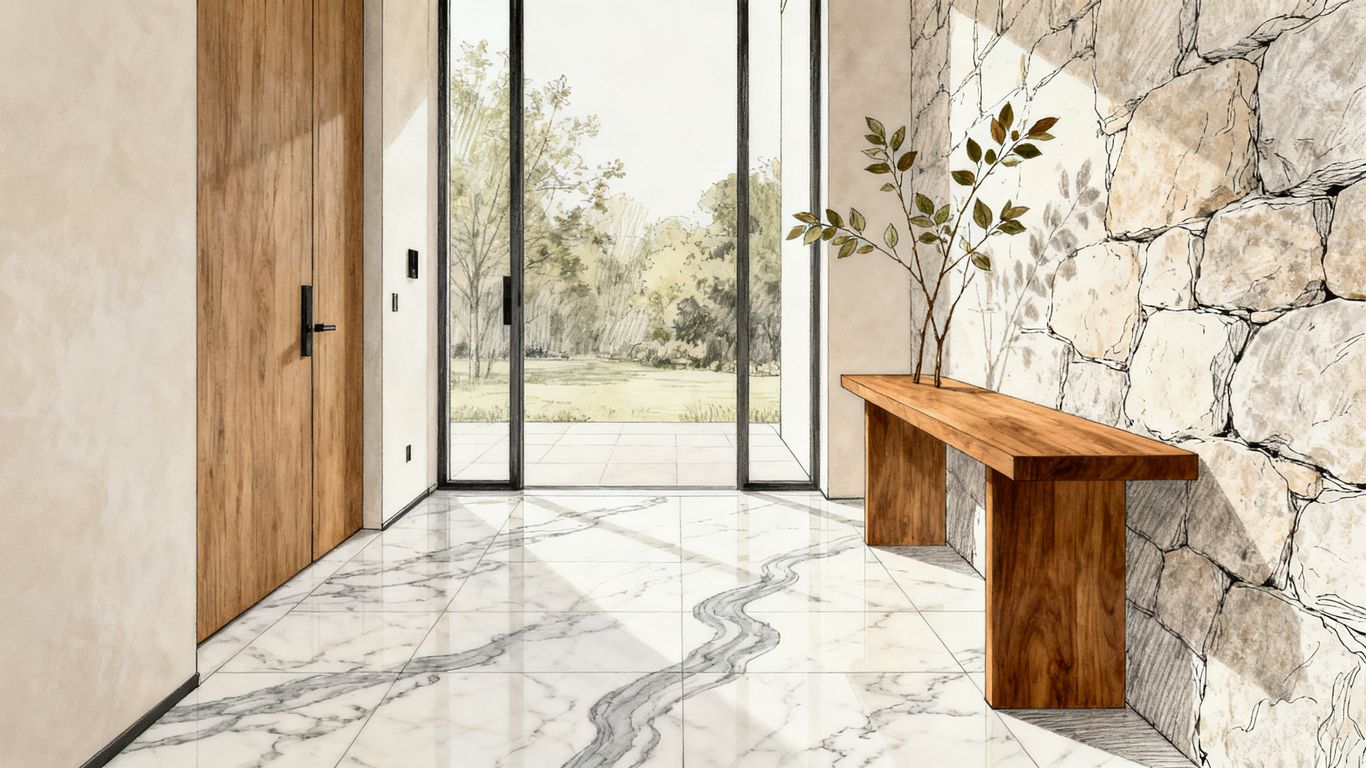
How natural veining and color variation shape each tile
Mineral traces and the stone’s formation contribute to the veins, clouds, and shifts in tone visible across marble. The geological story behind those patterns is part of what makes marble’s formation so interesting, but for a design decision, the practical point is simple: expect variation from tile to tile. A dry layout lets you arrange pieces before installation and balance prominent veins, lighter areas, and darker marks across the room. That natural variation is a defining feature, not a flaw to be designed away.
Popular marble varieties, from Carrara to Calacatta
Carrara is often chosen for a light ground and gentle gray veining, while Calacatta can offer bolder contrast and more pronounced movement. Statuario is another familiar white marble, and deeper choices such as Nero Marquina bring a dark base with pale veins. For a closer look at one format, the Nero Marquina 18x18 page gives a product-specific example; always check the finish and current product details rather than relying on a variety name alone.
How marble compares with travertine and limestone
Marble, travertine, and limestone each have their own surface character. Marble often reads as polished and veined; travertine commonly has a more textured, softly pitted appearance, while limestone tends toward a quieter, more even look. All are natural stones, so suitability depends on the particular product, its finish, the installation area, and the care you are prepared to give it.
Why marble can add lasting appeal to a home
Marble’s appeal is less about following a short-lived trend and more about its enduring material character. It can lend an entry, bath, or feature wall a sense of permanence, and its one-of-a-kind patterns give a room visual depth. Think of it as a choice for the atmosphere you want to live with, as well as the practical demands of the room.
How to choose a marble color and finish
Start with the colors and materials already in the room, then decide whether the stone should blend in or become a focal point. A pale marble can brighten a scheme, while a dark or strongly veined selection creates more contrast. Finish also changes how the surface feels and reflects light, so compare both elements together rather than choosing by color alone.
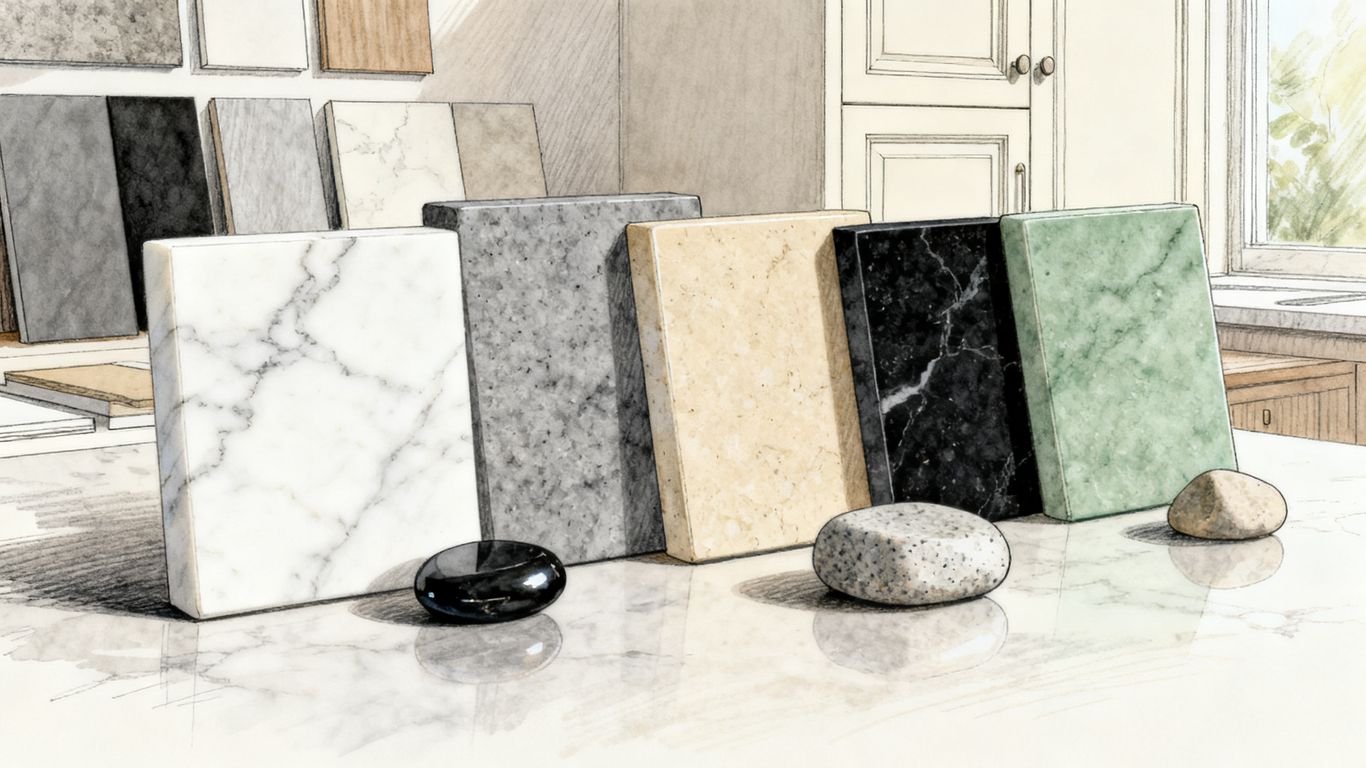
Match white, gray, beige, black, or green marble to your palette
White and gray marble can sit comfortably beside cool paint, light woods, and crisp metal details. Beige tones pair naturally with warmer woods and cream-colored finishes, while black marble can anchor a high-contrast room. Green marble brings a less expected note of color; balance it with simpler surrounding materials so its pattern has room to read.
Compare polished, honed, and tumbled finishes
A polished finish is smooth and reflective, bringing out depth and sheen in the stone. Honed marble has a matte appearance that can feel softer and less formal, while tumbled finishes have a more aged, relaxed character. This quick comparison can help narrow the choice before you look at samples:
| Finish | Visual character | Design direction |
|---|---|---|
| Polished | Smooth, reflective surface | Formal accents and bright interiors |
| Honed | Soft, matte appearance | Calm floors and understated rooms |
| Tumbled | Aged, gently irregular look | Rustic or relaxed settings |
Use the table as a starting point, not a substitute for checking the product’s intended application. The same finish can feel quite different on a small mosaic than across a large floor.
Consider how lighting changes the stone’s appearance
Daylight, warm bulbs, and shaded corners can each shift the way a marble color appears. A gray stone may read warmer in evening light; a polished surface may also reflect nearby colors. If possible, view samples in the room at different times of day and alongside the finishes that will remain in place.
Review samples to assess natural variation
A small sample helps you judge color, texture, and finish in person before committing to a larger quantity. Surfaces Galore offers product samples, so you can compare a stone with your own cabinetry, paint, and lighting. Look beyond the single sample face when reviewing product imagery or available pieces: natural marble can vary in veining and tone across a full order.
Where marble tile works best
Marble can bring a composed, elegant feeling to many parts of a home, from a welcoming entry to a quiet bathroom wall. The best location is one where the stone’s beauty and care needs make sense together. Consider how much wear, moisture, and cleaning the surface will encounter before choosing a tile and finish.
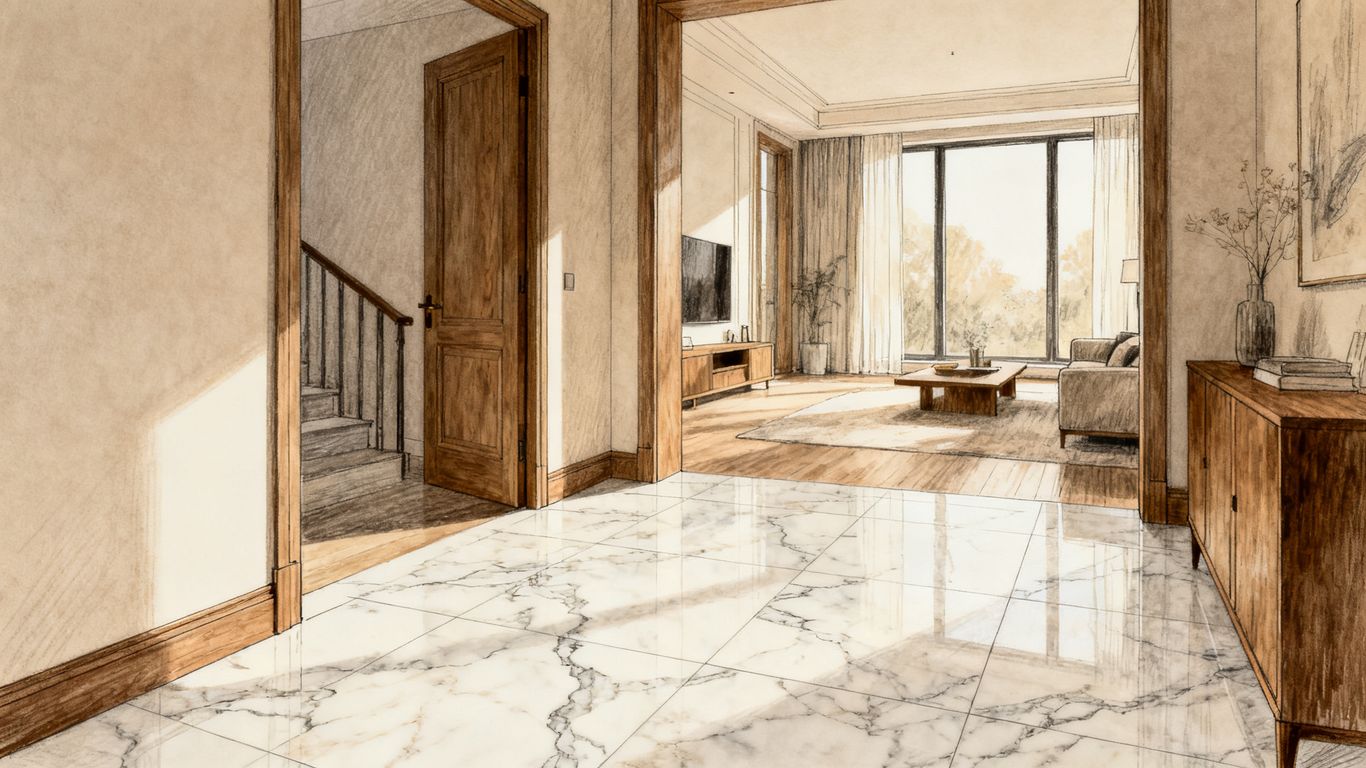
Create an elegant marble floor in an entryway or living space
An entry floor gives marble a chance to make a first impression, while a living space can use it to create a calm, continuous surface. In busier areas, think carefully about foot traffic, grit, and the time you can give to routine care. A classic checkerboard, a simple grid, or larger-format pieces can each set a different mood without competing with the room’s furnishings.
Use marble wall tile for bathrooms and feature walls
On a bathroom wall or fireplace surround, marble offers visual movement without occupying much floor area. Large pieces can let the veining flow, while smaller formats introduce a more patterned look. Choose the scale and direction of the layout with the room’s proportions in mind, and confirm that the product and setting materials are appropriate for the application.
Design a marble backsplash with tile or mosaics
A backsplash is a natural place to use marble as a focused accent, especially when the rest of the palette is restrained. Subway shapes feel orderly; a mosaic can add a more intricate rhythm behind a sink or range. For example, a small kitchen might pair quiet cabinet colors with a light marble mosaic, while a larger kitchen could use a bolder veined tile as its central feature. These are design possibilities, not customer case studies.
Select suitable marble for showers and other wet areas
Marble is used in shower walls, floors, and accent details, but wet-area suitability depends on the specific stone, finish, and installation. Ask for product specifications and consider how the surface will feel underfoot when wet. A mosaic can provide more grout joints than a large tile, but it is still important to confirm the complete assembly and care requirements before ordering.
What to know about marble durability and care
Marble is a lasting natural material, but it is not impervious to daily life. Scratches, stains, and surface changes may occur, particularly in areas exposed to grit, spills, or frequent use. A realistic care plan helps preserve the look you chose while leaving room for the stone to develop a natural patina over time.
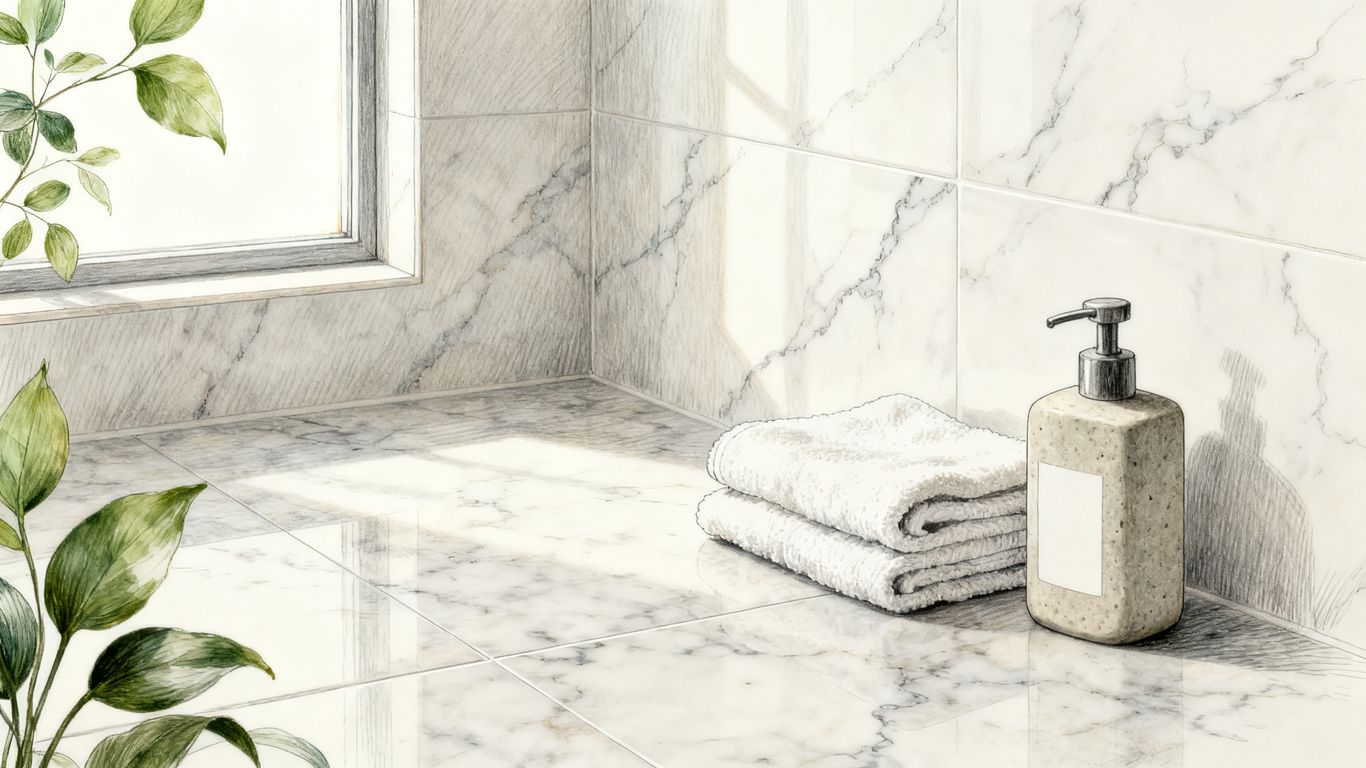
Understand etching, staining, and everyday wear
Acidic substances can etch marble, leaving a dull mark on a polished surface, while spills may stain porous stone if left in place. Everyday grit can also contribute to scratches. These effects are not all the same: etching changes the surface appearance, whereas a stain changes the stone’s color, and the best response depends on the specific issue.
Choose sealers and cleaning products made for natural stone
Sealing can help reduce the chance of staining and moisture absorption, but it does not make marble stain-proof or etch-proof. Use a sealer intended for natural stone and follow its application instructions. For routine cleaning, choose a stone-safe, pH-neutral product and avoid acidic household cleaners such as vinegar or lemon-based solutions.
Use mats and prompt cleanup to help protect surfaces
A few small habits can make everyday care easier. Place mats near exterior doors to catch grit, and wipe spills promptly rather than letting them sit. Use coasters or protective trays where liquids are regularly set down, especially on nearby stone surfaces. These steps help limit avoidable wear without asking you to treat the room as untouchable.
Plan for periodic maintenance and long-term patina
Sealing frequency varies with the stone, sealer, and level of use, so follow the product guidance and assess the surface periodically. Gentle cleaning and prompt attention to spills are more useful than harsh scrubbing. Over time, small signs of use may become part of the stone’s character; decide in advance whether you prefer a pristine appearance or are comfortable with a lived-in finish.
How to plan a marble tile project
A good project plan connects the visual choices to measurements, installation details, and the room’s everyday use. Before placing an order, confirm the surface area and account for cuts, layout, and the possibility of replacement pieces. The right amount of preparation can help prevent rushed decisions once installation begins.
Measure the space and estimate material needs
Measure the length and width of each area, then calculate the total square footage and separate out alcoves or other distinct sections. For walls, include the height and width of each tiled surface, subtracting openings where appropriate. Add extra material for cuts and breakage based on the layout and installer’s guidance; the needed allowance varies by project, so do not rely on a one-size-fits-all number.
A tile project may sit within a larger renovation, and a Dallas kitchen remodel guide can offer broader planning context. Other search results are unrelated to tile selection, including pages about term life insurance, Barcelona home buying, video production companies, and online slot sites; keep those separate from material research and verify tile decisions with the product specifications.
Select tile sizes, patterns, and coordinating trim
Tile scale can change the feel of a room: larger pieces create fewer visual breaks, while smaller formats and mosaics add pattern and detail. Consider how the layout meets corners, thresholds, niches, or cabinetry, and plan trim where an exposed edge needs a finished transition. Surfaces Galore carries marble tiles, mosaics, and moldings, which can help you consider related formats together.
Account for installation, setting materials, and extra pieces
Natural stone needs a suitable, stable substrate and setting materials rated for the stone. Before installation, inspect pieces for cracks, chips, and excessive warping, then dry-lay the arrangement to distribute color and veining. Use this short preparation sequence to keep decisions in the right order:
- Confirm measurements and the intended tile coverage.
- Review product specifications and inspect the pieces before installation.
- Dry-lay the pattern to check cuts and distribute natural variation.
- Confirm compatible mortar, grout, sealer, and substrate requirements.
This sequence gives you a chance to catch layout or material concerns before the stone is fixed in place. For complex installations, a qualified installer can help confirm the preparation and setting approach.
Confirm that the stone and finish suit the project’s use
Before ordering, compare the product’s stated applications with the room’s traffic, moisture, and maintenance demands. A finish that looks beautiful in a sample may not be your preferred choice underfoot or in a busy household. When in doubt, ask for product-specific guidance and make the decision with the intended use clearly in view.
How to source marble for your project
Sourcing stone is about more than finding a color you like. Confirm the product name, dimensions, finish, quantity, and availability, then compare those details with your measurements and layout. A clear request makes it easier to evaluate options and avoid surprises as the project moves forward.
Compare product details, finishes, and current stock
Read each product listing closely for dimensions, finish, and application information, and ask questions if a detail is unclear. If the stone will be installed across a large area, review samples and available stock together so you can make a decision with the full project in mind. Surfaces Galore is an Anaheim-based direct importer and nationwide supplier of natural stone, including marble and travertine tiles, mosaics, and moldings.
Ask about bulk pricing and nationwide shipping
For a larger order, ask whether bulk pricing is available and confirm how shipping will be arranged for your location. Surfaces Galore describes nationwide shipping and bulk discounts for projects across the United States; confirm current terms, quantity requirements, and delivery details when requesting pricing. Clear answers up front help you coordinate the order with your installer’s schedule.
Request a quote and confirm lead times before ordering
Share the product, finish, dimensions, and estimated quantity when requesting a quote. Confirm current availability and lead times before setting an installation date, and ask how the order will be packaged and delivered. If you are ready to compare options, request a quote with the project details you have gathered.
Coordinate tile, mosaics, and moldings for a unified design
A cohesive stone scheme can combine field tile with a mosaic accent, border, or molding in a related color and finish. Check that adjacent pieces work together in scale and tone, and consider how transitions will look at edges and openings. A little coordination before ordering helps the finished room feel considered rather than assembled one piece at a time.
Conclusion
Marble rewards careful selection: look closely at the natural variation, choose a finish that suits the room, and plan for the care the stone needs. With samples, measurements, and product details in hand, you can make a confident choice and explore marble tile options for a project that feels distinctly your own.
Frequently Asked Questions
Is marble a good choice for flooring?
It can be, especially where its appearance and maintenance needs suit the space. Consider traffic, grit, finish, and how much routine care you are comfortable providing.
Does every marble tile look the same?
No. Marble varies naturally in color and veining, and individual pieces may look different from one another. A dry layout helps distribute those differences before installation.
What is the difference between polished and honed marble?
Polished marble has a smooth, reflective surface, while honed marble has a softer matte appearance. Samples viewed in the room can help you decide which finish fits the light and overall design.
Can marble be used in a shower?
Marble is used in shower applications, but suitability depends on the specific product, finish, and installation details. Check product specifications and plan for appropriate sealing and care.
Does marble need to be sealed?
Natural stone is porous, and sealing can help protect it from stains and moisture. Follow the sealer’s instructions and confirm how often the specific product should be reapplied.
How should marble tile be cleaned?
Use a cleaner made for natural stone and avoid acidic products such as vinegar or lemon-based cleaners. Wipe spills promptly and follow the care guidance for the stone and sealer.
How much extra marble tile should I order?
The amount depends on the room’s dimensions, tile size, pattern, cuts, and installation conditions. Calculate the measured area and ask the supplier or installer to recommend an appropriate allowance for the project.
Leave a comment