
Marble tile: How to choose the right style, finish, and application for your space

Key Takeaways
Marble brings natural variation, lasting character, and a refined finish to both classic and contemporary interiors.
- Choose color and veining with the room’s light, cabinetry, and surrounding materials in mind.
- Match the tile format and finish to traffic, moisture, and the level of detail you want.
- Plan the layout before installation so natural variation feels intentional.
- Use stone-safe cleaning products and seal marble where appropriate.
- Order samples, confirm current stock, and request a project quote before buying.
Understand marble and its lasting design value
Marble has a presence that is difficult to reproduce with manufactured materials. Its soft movement, cool touch, and natural depth can make a modest room feel considered and complete. The right selection also gives a project a sense of permanence rather than following a short-lived trend.
From a quiet bathroom wall to a dramatic entry floor, marble can work across many design directions. The key is to choose the stone for the way a space is used, not only for the way it looks in a photograph.
What makes marble a premium natural stone
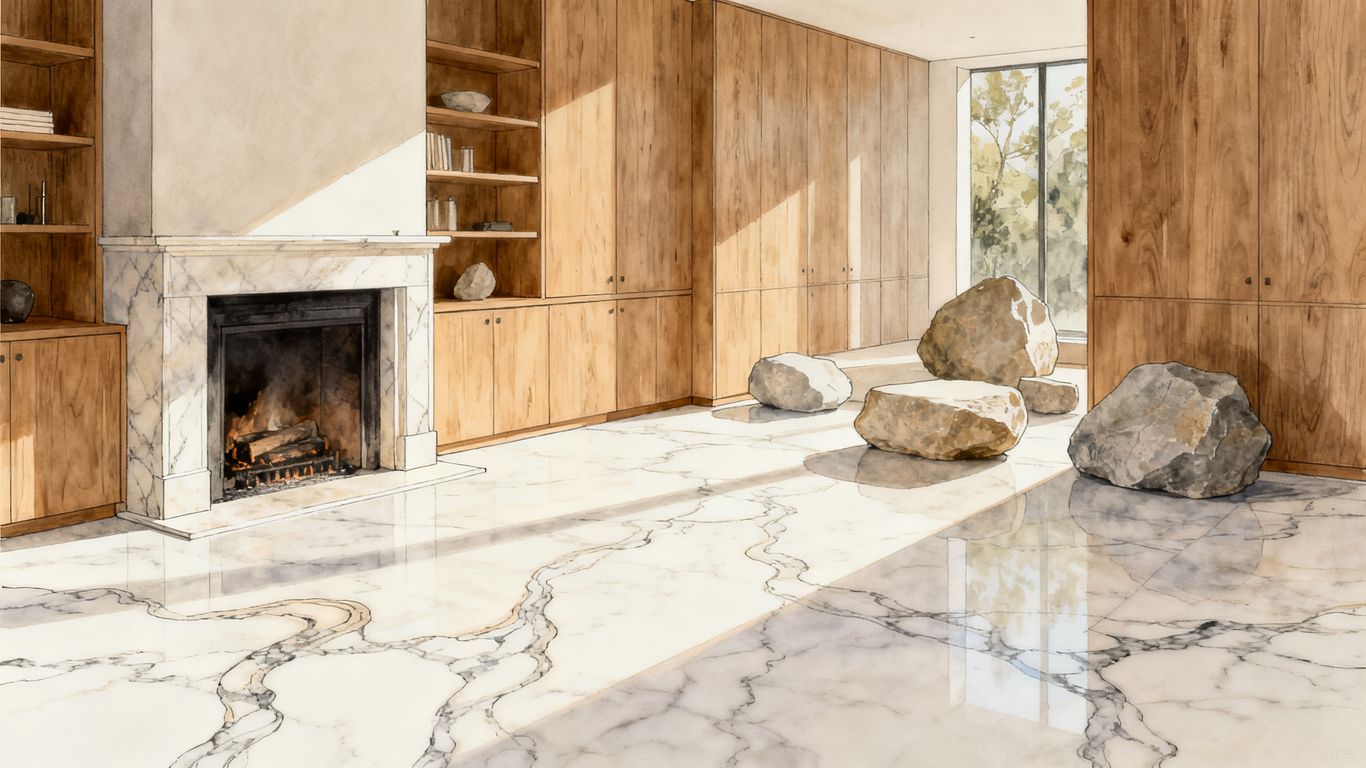
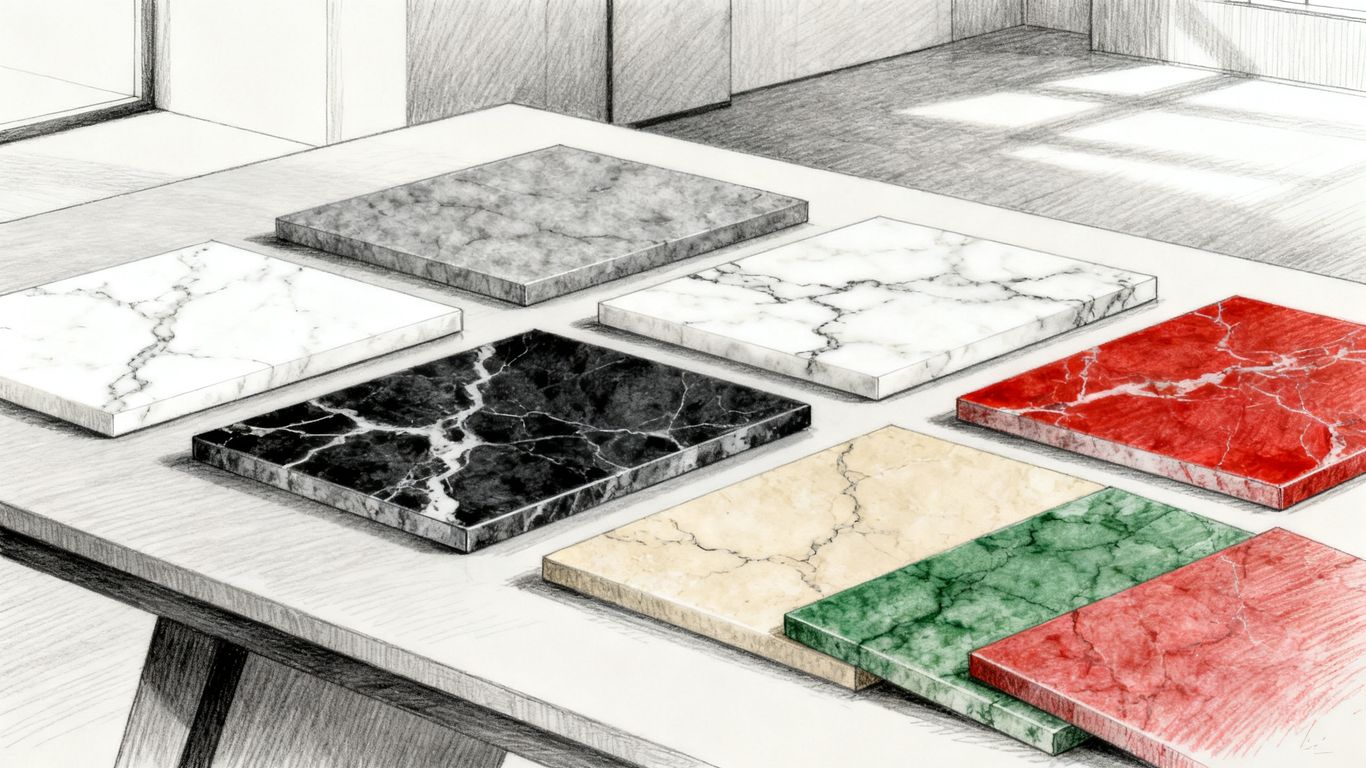
Marble is prized for its polished surface, distinctive movement, and broad palette. Clean white, warm beige, cool gray, green, black, and red varieties can all create very different moods while retaining the unmistakable character of natural stone. A premium piece should feel substantial, show a pleasing distribution of pattern, and suit the intended application.
Its appeal is also tactile. Polished marble reflects light across a room, while honed marble feels quieter and more velvety underfoot. That range lets one material move from formal to relaxed without losing its identity.
How natural veining and color variation create unique surfaces
No two natural marble tiles are perfectly identical. Veining may run softly through a pale background, gather into bold lines, or shift from one tile to the next. Rather than treating this variation as a flaw, plan it as part of the composition by opening several cartons and arranging pieces before setting them.
A dry layout helps distribute darker movement and avoid an accidental cluster. It also makes it easier to decide which pieces deserve the most visible positions, such as the center of a backsplash or the front of a fireplace.
Marble’s durability and investment value
Marble can be durable and long-lasting when it is selected, installed, and maintained appropriately. It suits many floors, walls, backsplashes, bathrooms, and accent surfaces, though its natural composition means it can scratch, stain, or etch more readily than some harder materials. Thoughtful placement matters.
The investment is partly practical and partly visual. Natural variation adds lasting character, so a well-designed marble installation can continue to feel distinctive as furniture and paint colors change.
Marble compared with limestone and travertine
Marble, limestone, and travertine are all natural stones, but they create different visual and tactile experiences. Marble tends to offer more crystalline movement and a smoother, more formal appearance. Limestone is often softer and more gently colored, while travertine brings warmer tones and a naturally layered texture.
Consider the atmosphere you want, then compare samples in the actual room. A quiet limestone may suit a relaxed retreat, while marble can sharpen a formal entry or make a small bathroom feel more luminous.
For broader context on the material itself, this marble composition guide explains how natural formation contributes to marble’s characteristic veining.
Explore popular marble colors and collections
Color is usually the first marble decision, but it should not be made in isolation. Natural light, cabinet tones, grout, hardware, and adjacent flooring all affect how a stone reads. A sample that looks cool in a showroom may feel warmer beside wood or brass at home.
Start with the mood you want, then compare several pieces rather than relying on one tile. The variations within a collection are part of its appeal and should be considered before ordering.
Classic white marble, including Carrara and Thassos
Carrara marble is a familiar choice for its pale background and graceful gray movement. It can feel traditional in a basketweave floor, clean and current in a simple backsplash, or softly luxurious across a bathroom wall. Thassos White offers a brighter, purer appearance when the goal is a crisp, light-filled surface.
White marble pairs easily with painted cabinetry, natural wood, warm metals, and darker accents. Before committing, compare the white of the stone with the whites already in the room so the finished space feels coordinated.
Statement-making Calacatta and Statuario marble
Calacatta and Statuario marble create a more expressive look through stronger veining and greater contrast. They work beautifully when a backsplash, shower wall, or vanity surround is meant to become the room’s focal point. The broader movement deserves room to breathe, so keep surrounding finishes relatively restrained.
Large-format pieces can make the veining feel architectural, while smaller formats soften the impact. Either way, dry-lay the material first and discuss vein placement with the installer.
Gray marble, including Tundra Gray and Atlantic Gray
Gray marble is versatile because it can bridge warm and cool elements. Tundra Gray offers refined gray tones with delicate movement, while Atlantic Gray combines soft gray coloring with more intricate veining. Both can support modern, transitional, or traditional rooms.
Gray works especially well with white walls, walnut cabinetry, black fixtures, and brushed metal. It can also help a small space feel calm without becoming flat or overly pale.
Dramatic black, green, beige, and red marble
Darker and more colorful marble can turn a practical surface into a memorable design feature. Nero Marquina is known for its deep black background and white veining, while green, beige, and red stones bring a warmer or more theatrical note. Use these varieties selectively when you want contrast and personality.
A dark marble backsplash or fireplace surround may be enough to anchor a room. For a larger installation, balance the stone with simple cabinetry, generous light, and a quieter floor.
Choose the right marble tile format
Format affects more than installation time. It changes how often grout lines appear, how natural movement is read, and how easily the tile can follow corners or architectural details. Think about scale early, especially when the room is small or the design includes several patterns.
A large tile can create visual calm, while a mosaic adds rhythm and flexibility. Trim pieces finish the transition between surfaces and make the installation look deliberate rather than improvised.
Marble floor tile for entryways and living spaces
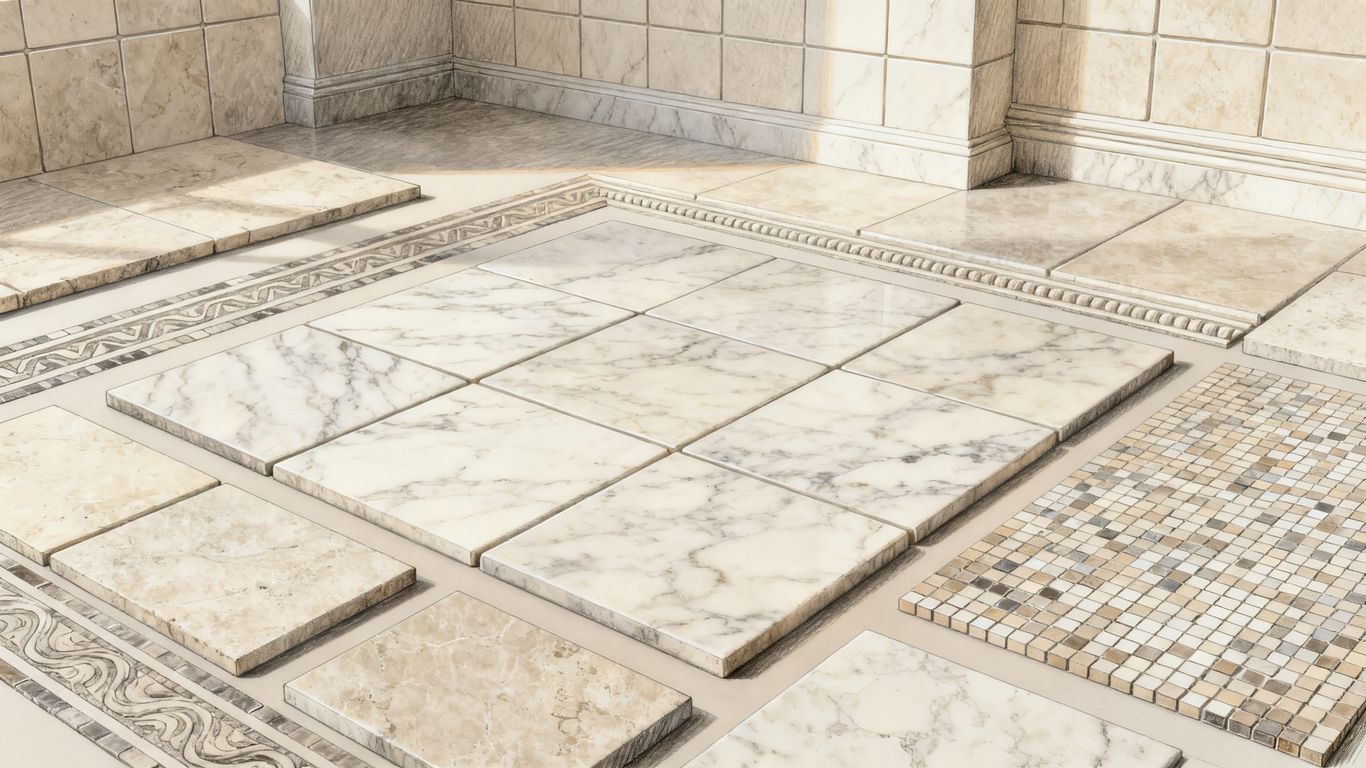
Marble floor tile can give an entry, hall, dining room, or living area a strong sense of arrival. Larger square tiles reduce visual interruption, while a checkerboard or contrasting border creates a more historic feeling. Choose a finish that suits the expected traffic and the amount of upkeep you are comfortable with.
Plan the room from the threshold inward. Centering the layout, balancing cuts, and blending tiles from different cartons can help the floor feel composed instead of pieced together.
Marble wall tile for bathrooms and feature walls
Marble wall tile is useful when you want height, light, and continuity. It can cover a shower surround, frame a vanity, or create a quiet feature wall behind a freestanding tub. Subway formats feel familiar, while larger slabs or tiles show off broader veining.
Wall applications also allow you to use expressive stone in a place where it will not receive the same wear as a busy floor. Keep the grout and edge details aligned with the overall design rather than treating them as afterthoughts.
Marble mosaic tile for detailed patterns and accents
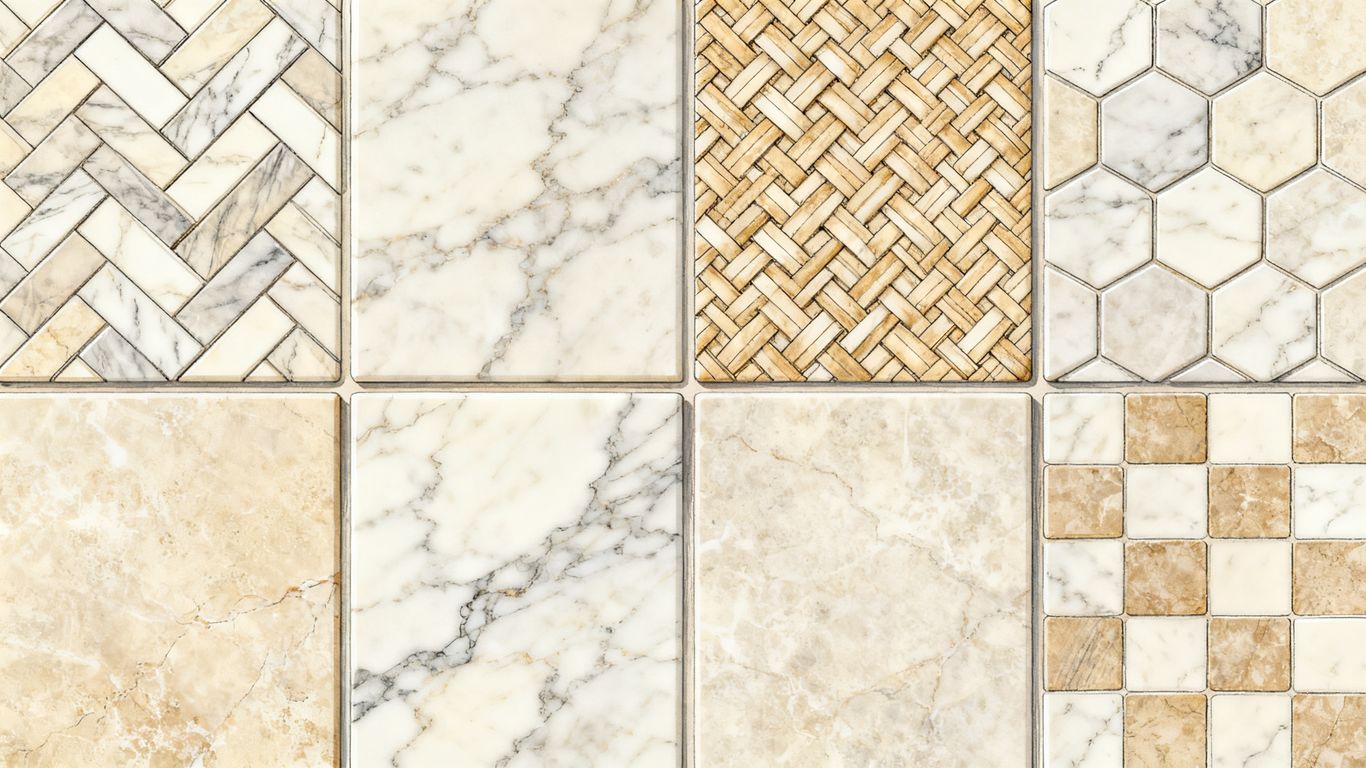
Mosaics bring detail to shower floors, niches, backsplashes, and small accent zones. Herringbone, hexagon, basketweave, arabesque, penny round, and geometric layouts each create a different rhythm. Small pieces also make it easier to follow curves and create slip-resistant options for some wet-area applications.
For a close look at a dark patterned option, this Nero Marquina mosaic illustrates how a smaller format can add movement without covering an entire room. Use a contrasting grout only after testing it on a sample, since grout can change the apparent scale of the pattern.
Marble molding, trim, thresholds, and borders
Trim gives marble installations a finished edge. Pencil liners, chair rails, base molding, thresholds, and borders can frame a field tile, define a transition, or protect an exposed corner. They are especially useful where a wall meets another material or where a floor changes direction.
Coordinate trim with the thickness and finish of the main tile. A polished edge beside a tumbled field may be intentional, but it should look like a design choice rather than a mismatch.
Select a finish and design pattern
Finish changes how marble reflects light, feels underfoot, and responds to daily use. Pattern changes the pace of the room. Together, they determine whether the result feels sleek, relaxed, historic, or boldly decorative.
Bring samples home and view them in morning, afternoon, and evening light. A finish that looks dramatic under showroom lighting may feel too reflective in a bright room, while a honed surface can reveal subtle depth that photographs do not capture.
Polished marble for a reflective luxury look
Polished marble has a smooth, reflective surface that brings out color and veining. It suits walls, backsplashes, formal floors, and feature areas where a luminous finish is welcome. The shine can make a room feel brighter, though it may also highlight fingerprints, water marks, and surface wear.
Use polished marble where its visual effect supports the room’s purpose. In a bathroom, for example, it can make a wall feel especially elegant while a different finish may be more comfortable underfoot.
Honed marble for a softer, understated appearance
Honed marble has a matte appearance and a quieter feel. It can soften bold veining and create a relaxed backdrop for wood, linen, plaster, and aged metals. Many homeowners prefer it when they want the character of marble without a mirror-like reflection.
Because honing changes the way the surface catches light, compare polished and honed samples from the same stone. The color may appear gentler, even though the underlying material is identical.
Tumbled and textured marble for traditional character
Tumbled marble has softened edges and a timeworn quality that works well in traditional, Mediterranean, rustic, and collected interiors. Textured finishes add dimension and can make a new installation feel less formal. They are often especially attractive in smaller mosaics, borders, and accent areas.
Texture does require practical thought. Deep irregularities can hold residue, so ask how the surface will be cleaned and whether it is suitable for the intended location before ordering.
Herringbone, basketweave, hexagon, and checkerboard patterns
Pattern is a useful way to make a familiar color feel personal. Herringbone adds direction, basketweave feels classic, hexagon introduces a crisp geometric note, and checkerboard creates strong contrast. The best choice depends on the room’s scale and the amount of visual activity already present.
A compact pattern guide can make the decision easier:
| Pattern | Visual effect | Well-suited applications |
|---|---|---|
| Herringbone | Directional and tailored | Backsplashes, shower walls, entry floors |
| Basketweave | Classic and softly detailed | Bathrooms, foyers, traditional interiors |
| Hexagon | Clean and geometric | Shower floors, niches, accent walls |
| Checkerboard | Bold and architectural | Entryways, kitchens, patios, formal floors |
Use the pattern as a supporting element, not as decoration without purpose. A restrained stone color lets a complex layout speak, while a highly veined stone may call for a simpler arrangement.
Match marble to each area of the home
The best application balances appearance with real daily conditions. Water, cooking oils, foot traffic, sunlight, temperature changes, and cleaning habits all affect the choice. Marble can be remarkably versatile, but it should be installed with a clear understanding of its natural qualities.
Begin with the surface that matters most to you, then repeat the color or finish elsewhere in smaller gestures. That approach creates continuity without making every room feel identical.
Marble bathroom and shower applications
Marble can give a bathroom a calm, spa-like quality on shower walls, floors, vanities, niches, and backsplashes. Honed mosaics are often appealing underfoot, while polished wall tile creates a brighter vertical surface. Use proper waterproofing beneath the stone and plan the slope and drain details carefully.
A small niche or border can introduce a more dramatic color without committing to a full room. Test the stone and grout together, since moisture can make color variation appear stronger.
Marble kitchen backsplashes and countertops
In kitchens, marble is often chosen for its softness of color and expressive movement. A backsplash can carry the material behind open shelving, while a countertop or island creates a larger focal plane. Spills should be wiped promptly, and the selected finish should match the household’s tolerance for patina and maintenance.
For countertops, coordinate the tile, slab, cabinet, and hardware samples together. A quiet floor may allow a bold backsplash, while a patterned floor usually benefits from a calmer wall treatment.
Marble fireplaces, entryways, and accent walls
Fireplace surrounds, entry floors, and accent walls are excellent places to use marble as a statement. These surfaces are visually prominent and can show off a distinctive stone without covering every room. A strong border, medallion, or contrasting trim can make the installation feel architectural.
Entryways need extra attention to grit and traffic. A durable installation begins with sound preparation, sensible grout planning, and a finish that suits the way the household enters and leaves the home.
Outdoor marble tile, pool coping, and patios
Outdoor applications require careful product selection because weather, moisture, temperature, and slip conditions vary by location. Marble may be used for patios, pool surrounds, coping, and other exterior details when the specific material and finish are suitable. Confirm that the tile, setting system, and drainage plan are intended for exterior use.
For a covered terrace, a textured surface may feel more appropriate than a highly reflective finish. Always review local conditions and installation requirements with a qualified professional before ordering exterior stone.
Outdoor furniture can also influence the stone selection; these weatherproof outdoor pieces show how durable furnishings can be coordinated with a refined hardscape.
Plan for installation, care, and maintenance
Natural stone rewards preparation. Before the first tile is set, inspect the material, confirm quantities, check the substrate, and dry-lay the design. Small decisions made at this stage can prevent visible cuts, uneven transitions, and avoidable waste.
Installation products should be compatible with marble, and light-colored or translucent stone may require a white mortar to prevent discoloration. When the layout is complex or the material is valuable, professional installation is a sensible part of the budget.
Preparing the surface and choosing suitable tile sizes
The substrate should be clean, dry, stable, and level. Natural stone can crack or show lippage when installed over movement or unevenness, so correct low spots and confirm that the supporting surface can carry the installation. Tile size should follow the room, pattern, and installer’s ability to maintain a flat result.
Order enough material to cover cuts and natural variation. Before installation, inspect pieces for cracks, chips, or excessive warping and set questionable pieces aside until the supplier or installer reviews them.
Sealing marble in kitchens, bathrooms, and wet areas
Sealing can help reduce absorption and give you more time to wipe away spills, but it does not make marble stain-proof or maintenance-free. The right product and application depend on the stone, finish, and location. Follow the sealer manufacturer’s directions and allow the required curing time.
Bathrooms, kitchens, and other wet areas deserve a planned maintenance schedule. Ask the installer or stone-care professional when resealing may be appropriate rather than applying products randomly.
Cleaning products and practices that protect the stone
Use a soft cloth or mop and a cleaner made for natural stone. Avoid acidic products and abrasive powders, which can dull or etch the surface. Dust and grit should be removed regularly from floors so they do not act like sandpaper underfoot.
A simple routine usually works best:
- Wipe spills promptly, especially oils, coffee, wine, and acidic foods.
- Use clean water and a stone-safe cleaner for regular maintenance.
- Place mats or rugs near exterior doors and high-traffic transitions.
- Test any new product on a hidden area before broad application.
These habits protect the finish without turning care into a daily chore. For installation-specific guidance, this natural stone installation guide offers a useful reference for preparation, setting, sealing, and cleaning.
Preventing stains, etching, scratches, and moisture damage
Prevention begins with choosing an appropriate location and finish. Felt pads beneath furniture, cutting boards in kitchens, prompt spill cleanup, and well-placed mats can reduce common sources of wear. Etching from acids is a chemical change to the surface, not simply a stain, so it may require professional refinishing.
Moisture problems are usually addressed below the visible stone. Confirm waterproofing in showers, provide suitable drainage outdoors, and do not rely on sealer to correct an unstable or improperly prepared installation.
Source premium marble for your project
Once the design is clear, sourcing becomes the next important decision. Look for consistent product information, realistic photographs, sample availability, and a supplier who can explain variation without promising that every piece will look identical. Current stock matters too, especially when a project needs material from one lot.
Buying marble tiles online USA shoppers can receive shipped across the country is convenient, but samples remain valuable. They let you evaluate color, finish, thickness, and movement in the actual room before committing to a larger order.
How to evaluate quality, authenticity, and current stock
Review the stone’s stated origin, dimensions, finish, application guidance, and available quantity. Ask how much variation is expected and whether the pieces come from the same collection or lot. Product photographs are helpful, but they cannot replace seeing the material in person.
A quality review should also include edge condition, flatness, surface consistency, and the recommended waste factor. If a project uses a repeating pattern, calculate cuts before ordering so the visual rhythm is not interrupted.
Ordering samples and coordinating colors across materials
Samples are especially useful when comparing Carrara, Calacatta, Statuario, gray, black, or beige marble. Place them beside cabinet doors, paint cards, flooring, grout, and metal samples. View the group in both natural and artificial light.
If the design includes several marble colors, repeat one undertone to keep the room connected. A warm beige stone may sit comfortably beside wood, while a cool gray stone may reinforce stainless steel or charcoal cabinetry.
Several unrelated planning resources can be useful when organizing a renovation brief, including AI search visibility, roofing terminology, and Maui wedding inspiration. They are not substitutes for a tile professional, but they illustrate why clear project information and detailed planning matter.
Benefits of working with a direct importer
A direct importer can offer access to a broad range of natural stone surfaces and help buyers compare collections, formats, and finishes in one place. It may also be easier to discuss bulk quantities, current availability, samples, and shipping before placing an order.
For a large renovation, ask about lead times, insured delivery, replacement procedures, and how the supplier handles natural variation. Good communication is part of the purchase, not an extra afterthought.
Getting nationwide shipping, bulk pricing, and a quote from Surfaces Galore
Surfaces Galore is an Anaheim, California-based direct importer and nationwide supplier of premium natural stone, including marble and travertine tiles, mosaics, and moldings. The company serves homeowners, designers, and architects across the United States, with options for bulk discounts and cross-country shipping. Its collection includes marble tiles, mosaics, slabs, pavers, moldings, and related surfaces for interior and exterior projects.
When you are ready, share the room dimensions, preferred stone, finish, format, quantity, and delivery location. Surfaces Galore can then help you review current stock and request a project quote. You can also request a quote before finalizing the order, which makes it easier to compare material needs and shipping details.
A helpful supplier should leave you with fewer unknowns: what is available, how much to order, how the material will arrive, and what care the finished surface will require. That clarity can make the entire marble selection process feel much more manageable.
Conclusion
The right marble brings together color, movement, finish, format, and practical planning. Compare samples in your space, design around natural variation, prepare the substrate carefully, and choose care products made for stone. With those decisions in place, marble can give a bathroom, kitchen, entry, fireplace, or outdoor setting lasting beauty and a distinctly personal finish.
Frequently Asked Questions
Is marble a good choice for flooring?
Marble can be a good flooring choice for entryways, living areas, bathrooms, and other suitable spaces when the finish, installation, and maintenance plan match the expected traffic. It can scratch or etch, so placement and care should be considered before purchase.
What is the difference between polished and honed marble?
Polished marble has a glossy, reflective surface that highlights color and veining. Honed marble has a matte appearance with a softer visual effect and is often chosen for understated interiors or areas where glare is undesirable.
Which marble color is best for a small bathroom?
Light-colored marble such as Carrara or Thassos can help a small bathroom feel brighter and more open. Gray marble can also work well when paired with suitable lighting and a restrained grout color.
Is marble suitable for a shower?
Marble can be used on shower walls, floors, niches, and surrounds when the installation includes proper waterproofing, drainage, compatible setting materials, and an appropriate finish. Regular cleaning and suitable sealing may also be needed.
How should marble tile be cleaned?
Use a soft cloth or mop with a cleaner formulated for natural stone. Avoid vinegar, lemon-based products, abrasive powders, and harsh chemicals that can etch or dull marble.
How much extra marble tile should I order?
The amount of extra material depends on room shape, tile size, pattern, and the number of cuts. Natural variation and potential replacements should also be considered, so confirm the waste factor with the supplier or installer before ordering.
Can marble be used outdoors?
Some marble products and finishes may be suitable for patios, pool surrounds, coping, and other outdoor applications, but not every marble is appropriate for exterior conditions. Confirm suitability, slip considerations, drainage, and local climate requirements before installation.

Leave a comment