
Marble Tile Shade Range – Impact on Premium Design

Beautiful American homes often owe their appeal to stunning kitchens and bathrooms, where marble tiles bring a touch of luxury that is hard to match. Selecting the right marble shade can shape not only the mood but also the perceived space of any room. With over 80 percent of high-end California projects featuring natural stone, understanding shade variation is vital for designers aiming to create visually seamless yet truly unique interiors.
Table of Contents
- Defining Marble Tile Shade Range And Variation
- Types Of Marble Shades And Veining Patterns
- How Shade Range Affects Kitchen And Bath Design
- TCNA Shade Classification And Selection Tips
- Common Pitfalls In Marble Tile Matching
Key Takeaways
| Point | Details |
|---|---|
| Marble Tile Uniqueness | Each marble tile features distinct shade variations due to geological processes, enhancing aesthetic appeal in design. |
| Strategic Shade Selection | Choosing the right marble shade can influence the perceived size and mood of kitchen and bathroom spaces. |
| Understanding TCNA Classifications | Familiarity with the TCNA shade classification system is crucial for managing client expectations and achieving optimal design outcomes. |
| Effective Communication | Proactively educating clients about natural tile variations helps to prevent disappointment and ensures satisfaction with the final installation. |
Defining Marble Tile Shade Range and Variation
Marble tiles represent a stunning natural material with extraordinary shade variations in metamorphic rock. These variations emerge from complex geological processes where minerals like calcite and dolomite undergo transformation, creating unique color patterns that make each marble tile distinctly beautiful.
The visual complexity of marble tiles stems from impurities present during the rock’s formation. Iron oxides, clay, sand, and chert redistribute during metamorphism, generating an incredible spectrum of colors ranging from pristine whites to deep blacks, with intermediate shades of gray, pink, and green. These natural transformations ensure that no two marble tiles look exactly alike, offering designers unprecedented aesthetic flexibility for premium interior spaces.
Understanding marble’s crystalline nature and non-flaggy stratification helps designers appreciate the material’s inherent variations. Professional interior designers recognize that these shade variations are not imperfections but unique characteristics that contribute to marble’s luxurious appeal. The subtle veining, color gradients, and mineral streaks tell a geological story, transforming floors, countertops, and wall treatments into living design elements.
Pro tip: When selecting marble tiles, always request multiple samples to understand the true range of shade variations and ensure consistent visual harmony across your design project.
Types of Marble Shades and Veining Patterns
Marble’s incredible diversity manifests through an extraordinary range of color variations and veining patterns that transform interior spaces. The geological processes responsible for these unique characteristics create a natural palette spanning from pristine whites to deep blacks, with intermediate tones of gray, pink, and green that captivate designers and homeowners alike.
Certain marble varieties stand out for their distinctive aesthetics. Calacatta marble, quarried from the Apuan Mountains in Italy, represents the pinnacle of luxurious design with its bright white backgrounds dramatically contrasted by thick veins in silver, gray, and gold tones. Other notable marble types include Carrara (soft gray veining), Statuario (bolder gray patterns), and Nero Marquina (rich black with white veining), each offering unique visual narratives for premium design applications.
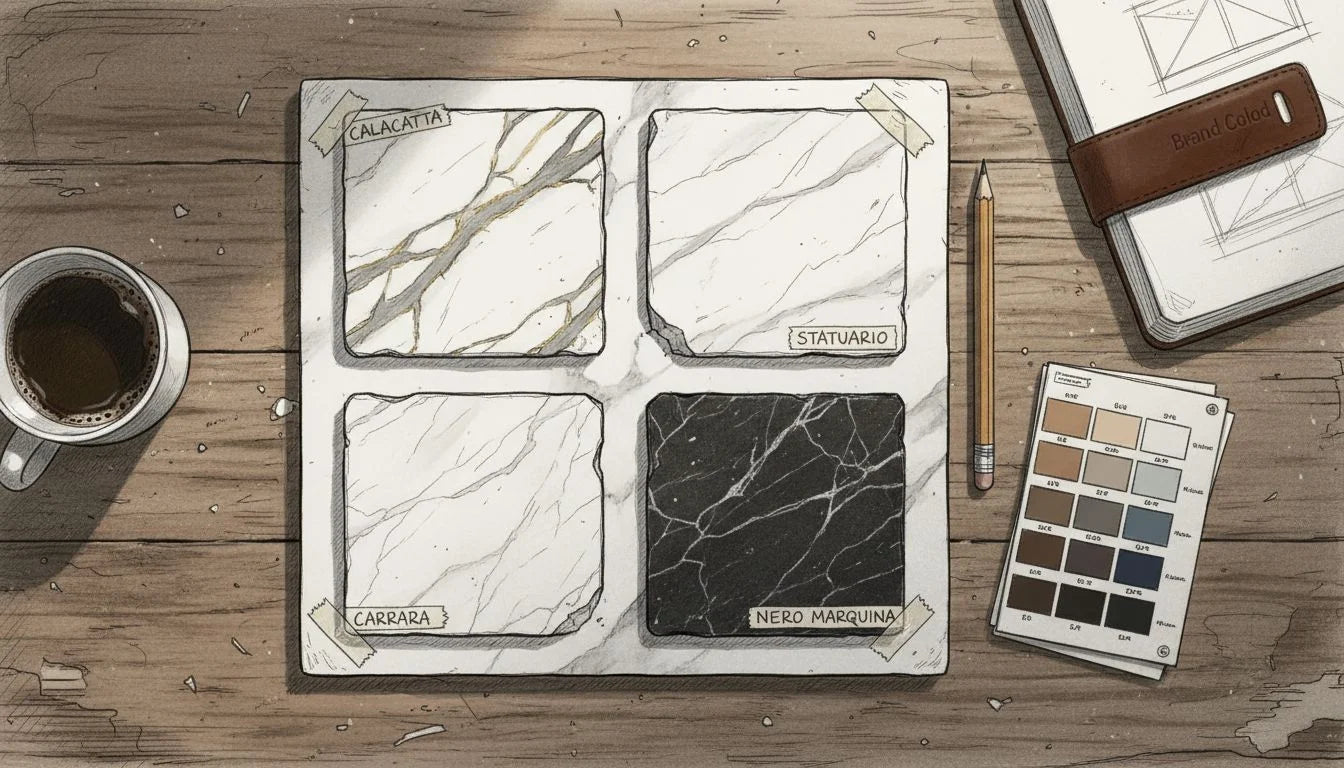
The veining patterns in marble tiles result from mineral impurities redistributed during metamorphic transformation. These natural streaks and color variations are not considered flaws but celebrated as unique design elements that tell a geological story. Professional designers understand that each marble tile is essentially a one-of-a-kind piece of natural art, with subtle variations in color, mineral content, and veining that make it inherently special.
Pro tip: When selecting marble tiles, collect multiple samples and view them under different lighting conditions to fully appreciate the nuanced shade variations and veining patterns.
Here’s a quick reference to some of the world’s most popular marble types and their unique visual characteristics:
| Marble Type | Shade Range | Typical Veining Patterns | Best Use Case |
|---|---|---|---|
| Calacatta | Bright white, gold | Thick, dramatic, bold veins | Luxury kitchens, bathrooms |
| Carrara | Soft white to gray | Fine, feathery, gentle veins | Floors, counters |
| Statuario | White, light gray | Bold, elegant gray patterns | Statement walls, islands |
| Nero Marquina | Deep black | Sharp, striking white veining | Modern or classic designs |
How Shade Range Affects Kitchen and Bath Design
The color psychology of marble shades profoundly transforms kitchen and bathroom environments, influencing both emotional perception and spatial dynamics. Designers strategically leverage marble’s nuanced color palette to create atmospheres ranging from serene and minimalist to dramatic and luxurious, using subtle variations in tone to manipulate visual depth and emotional resonance.
Light interaction plays a critical role in how marble shade ranges impact interior design. Lighter marble shades like white Calacatta or soft gray Carrara can make smaller kitchen and bathroom spaces feel more expansive and luminous, while deeper tones like Nero Marquina create intimate, sophisticated environments. The strategic selection of marble tile shades allows designers to visually expand or contract spaces, control perceived cleanliness, and establish specific mood settings.
Professional designers must carefully manage client expectations around tile variation. Natural marble’s inherent variability means that no two tiles will be identical, requiring thoughtful layout planning and transparent communication. Successful implementation involves selecting complementary shade ranges, understanding how different lighting conditions affect perception, and embracing the unique geological narrative each marble tile represents.
Pro tip: Always order slightly more marble tile than your project requires to ensure you can create a cohesive look by selecting and arranging tiles with complementary shade variations.
TCNA Shade Classification and Selection Tips
The Tile Council of North America (TCNA) shade classification system provides designers and installers with a critical framework for understanding and managing natural marble tile variations. This standardized approach categorizes shade differences from V0 to V4, offering a systematic method for setting client expectations and achieving desired aesthetic outcomes in premium design projects.
Understanding the TCNA classification levels is crucial for selecting the right marble tiles. V0 represents tiles with no detectable variation, essentially uniform in appearance. V1 indicates minimal shade differences barely noticeable during installation. V2 shows more pronounced variations within a single tile or between tiles. V3 represents significant shade variations that create a deliberate visual texture, while V4 signifies extreme variation where each tile looks dramatically different from others, often used to create bold, artistic design statements.
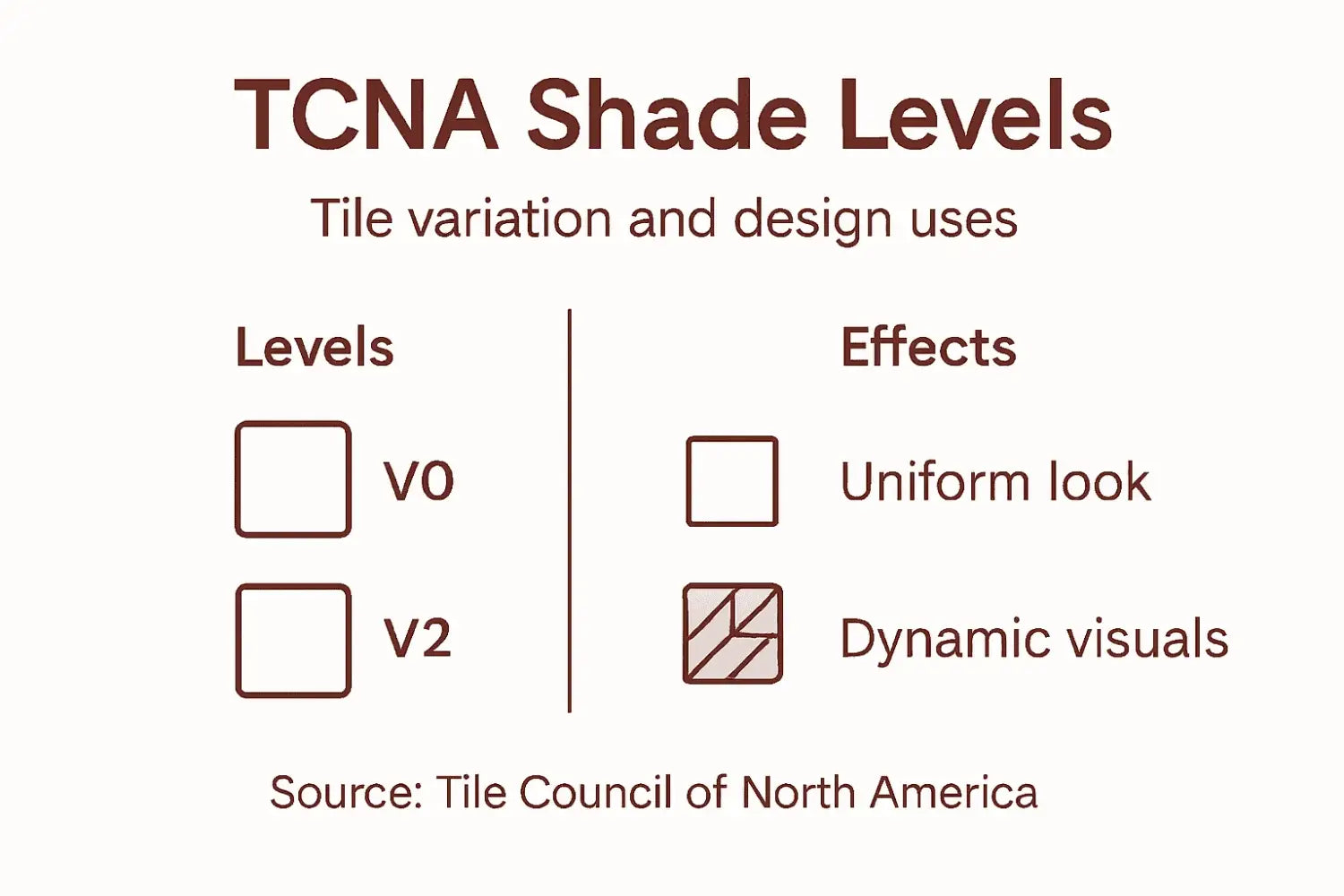
Professional installation techniques play a critical role in managing shade variations. Designers and installers must carefully plan tile layout, mixing tiles from different boxes to create a harmonious look. This approach helps distribute natural variations evenly, preventing noticeable clustering of dramatically different shades. Careful selection and strategic placement can transform potential visual challenges into intentional design features that showcase the unique beauty of natural marble.
Pro tip: When working with marble tiles, always request multiple boxes during selection and mix tiles from different boxes during installation to create a more balanced and visually cohesive appearance.
Compare TCNA’s marble tile shade variation classifications for easier selection:
| TCNA Level | Variation Description | Design Effect | Best for |
|---|---|---|---|
| V0 | No variation | Uniform, minimalist | Institutional spaces |
| V1 | Minimal shade difference | Subtle variance | Contemporary homes |
| V2 | Noticeable variations | Mild texture | Living areas |
| V3 | Significant variation | Dynamic, textured | Feature walls |
| V4 | Dramatic variation | Bold statement | Artistic installations |
Common Pitfalls in Marble Tile Matching
Professional designers must be vigilant about marble tile matching challenges that can undermine the aesthetic integrity of premium design projects. Natural stone’s inherent variability creates unique challenges, requiring sophisticated strategies to ensure visual harmony and client satisfaction.
The most critical pitfall is the ‘Five-O-Five Surprise,’ where clients become unexpectedly disappointed after installation due to shade variations they did not anticipate. Effective communication and sample review become essential in managing expectations. Designers should proactively educate clients about the natural variation in marble, demonstrating how differences in veining, color, and shade are not flaws but distinctive features that make each tile a unique piece of geological artwork.
Successful marble tile matching requires comprehensive planning and technical expertise. Professionals must carefully mix tiles from multiple boxes during installation, creating a balanced visual composition that distributes variations evenly. This approach prevents clustering of dramatically different shades and transforms potential visual challenges into intentional design elements. Strategic tile selection, understanding TCNA shade classification, and employing sophisticated blending techniques are critical to achieving a cohesive and sophisticated marble tile installation.
Pro tip: Always order 15-20% more marble tile than your project requires to ensure maximum flexibility in selecting and matching tiles during installation.
Elevate Your Space with Expertly Selected Marble Tiles
Navigating the intricate shade range and variation of marble tiles can feel overwhelming but it is key to achieving the premium design you envision. At Surfaces Galore, we understand the challenge of matching natural stone while embracing its unique veining and color variations to create stunning, harmonious spaces. Whether you need the dramatic texture of V3 or the subtle elegance of V1 shade variation our wide selection helps you find the perfect marble for your kitchen or bath project.

Discover authentic and durable marble tiles that celebrate their natural beauty. Visit Surfaces Galore to explore our premium offerings and access expert advice on managing shade variations in your design. Don’t wait to transform your project — order multiple samples today and experience the timeless elegance only genuine marble can provide. Start your journey at Surfaces Galore now and turn natural stone challenges into your next signature design.
Frequently Asked Questions
What are the different types of marble shades and veining patterns?
The main types of marble shades include Calacatta, Carrara, Statuario, and Nero Marquina, each with unique veining patterns and color ranges that create different visual effects in design. Calacatta features thick, dramatic veins on a bright white background, while Carrara has soft gray veining. Statuario displays bolder patterns, and Nero Marquina is known for its deep black color with striking white veins.
How do marble tile shades affect kitchen and bathroom design?
Marble tile shades influence the emotional atmosphere and spatial perception of kitchens and bathrooms. Lighter shades, like white Calacatta, can make spaces feel larger and more luminous, while darker tones, such as Nero Marquina, create a more intimate and sophisticated environment. Designers use these color dynamics to manipulate depth and mood.
What is the TCNA shade classification system for marble tiles?
The TCNA shade classification system categorizes marble tile variations from V0 to V4, helping designers manage client expectations. V0 represents no detectable variation, while V4 signifies dramatic differences between tiles. Understanding this classification is essential for selecting the right marble for a cohesive design.
What common pitfalls should be avoided when matching marble tiles?
One common pitfall is the ‘Five-O-Five Surprise,’ where clients are disappointed by unexpected shade variations after installation. To avoid this, effective communication and thorough sample reviews are crucial. Additionally, mixing tiles from multiple boxes during installation can help create a balanced visual composition, preventing clustering of differing shades.

Leave a comment