
Marble Tile Sizing Explained: Choosing for Lasting Elegance

Most American homeowners are surprised to learn that the size of marble tiles does much more than fill a floor or wall. From visual balance to installation difficulty, tile dimensions play a major role in every renovation decision. Choosing the wrong size can dramatically affect how spacious or crowded your room feels. This guide explains what really matters when it comes to marble tile sizing, helping you make choices that fit your style and space perfectly.
Table of Contents
- What Marble Tile Sizing Really Means
- Standard Marble Tile Sizes And Variations
- Custom And Large-Format Marble Tile Options
- How Sizing Affects Design And Installation
- Common Sizing Mistakes To Avoid
Key Takeaways
| Point | Details |
|---|---|
| Tile Size Impacts Aesthetics | The dimensions of marble tiles significantly influence room appearance and functionality, with larger tiles enhancing the sense of space. |
| Consider Installation Requirements | Larger tiles require precise subfloor preparation and can raise installation costs, necessitating professional guidance. |
| Tailor Size to Space | Selecting the right tile size based on room dimensions ensures design harmony and prevents visual clutter. |
| Avoid Common Mistakes | To prevent costly errors, always create a mockup and consider the specific needs of your space before purchasing tiles. |
What Marble Tile Sizing Really Means
Marble tile sizing is more than simple measurements. It represents a critical design decision that impacts visual aesthetics, spatial perception, and overall room functionality. Different tile dimensions can dramatically transform a space, creating unique visual experiences that range from intimate and intricate to expansive and elegant.
When exploring tile sizes, designers and homeowners must consider multiple factors. Understanding tile dimensions involves recognizing how specific measurements interact with room proportions, lighting, and architectural elements. Larger marble tiles, typically ranging from 12x24 inches to 24x48 inches, can make smaller rooms appear more spacious by reducing grout lines and creating a seamless visual flow. Conversely, smaller tiles like 4x4 or 6x6 inches offer more intricate design possibilities and work exceptionally well in compact spaces or areas requiring detailed patterning.
Tile sizing also influences installation complexity and overall project cost. Larger format tiles require precise subfloor preparation and can be more challenging to install, potentially increasing labor expenses. Professional installers often recommend selecting tile sizes that complement the room’s dimensions and architectural style. A general design principle suggests using larger tiles in expansive areas and reserving smaller tiles for more intricate spaces like bathroom floors or kitchen backsplashes.
Pro Tip for Tile Selection: Carefully measure your space and create a digital or paper mock-up before purchasing marble tiles to visualize how different sizes will interact with your room’s unique characteristics. This simple step can prevent costly mistakes and ensure a stunning, professional result.
Standard Marble Tile Sizes and Variations
Marble tiles come in an impressive array of sizes that cater to diverse design preferences and architectural requirements. Standard tile dimensions range from compact 300x300mm options to expansive 1200x1800mm formats, offering designers and homeowners unprecedented flexibility in creating unique spatial experiences.

Traditional marble tile sizes include popular rectangular and square formats that complement various interior design styles. 12x24 inch marble tiles have emerged as a versatile choice, providing elegant proportions that work beautifully in both residential and commercial settings. Large format tiles measuring 24x48 inches are particularly favored in modern architectural designs, creating seamless surfaces with minimal grout interruption and a sophisticated visual continuity.
The selection of marble tile size directly influences room perception and aesthetic impact. Smaller tiles like 6x6 or 12x12 inches work exceptionally well in compact spaces, allowing intricate pattern creation and detailed visual texture. Conversely, larger tiles measuring 18x36 or 24x48 inches can make rooms appear more spacious by reducing visual fragmentation and creating a sense of expansive elegance. Professional designers often recommend matching tile size to room dimensions, ensuring proportional and harmonious design outcomes.
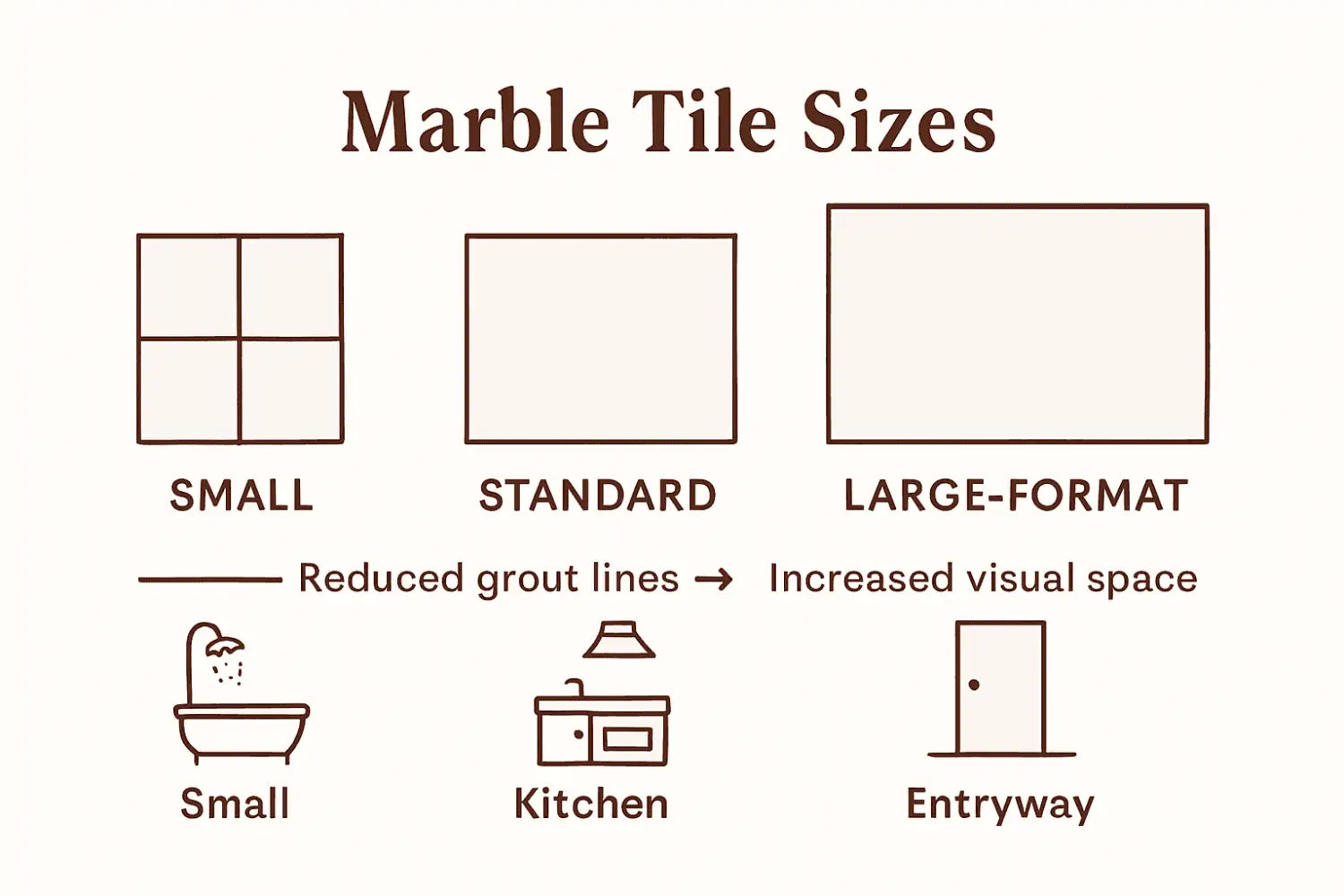
Pro Tip for Tile Sizing: Always create a scaled mockup or digital rendering of your space before finalizing marble tile sizes to understand how different dimensions will interact with your specific architectural environment.
Here’s a summary comparing marble tile sizes and their practical uses:
| Tile Size Category | Typical Dimensions (inches) | Best Use Cases | Key Considerations |
|---|---|---|---|
| Small | 4x4, 6x6, 12x12 | Backsplashes, bathrooms, accent walls | Allows pattern variety, suits compact spaces |
| Medium | 12x24, 18x18 | Kitchens, entryways, living areas | Balances installation ease and aesthetics |
| Large Format | 24x48, 18x36, 24x24 | Open-plan areas, modern interiors | Minimizes grout lines, needs level subfloor |
| Extra Large/Custom | Up to 120x240 cm | Commercial, minimalist spaces | Requires special handling and support |
Custom and Large-Format Marble Tile Options
Large-format marble tiles represent the pinnacle of modern design flexibility, offering architects and homeowners unprecedented opportunities for creating seamless, sophisticated spaces. Custom tile configurations now extend beyond traditional sizing limitations, with expansive formats measuring up to 120x240 centimeters that dramatically transform interior environments.
Large-format marble tiles provide exceptional visual continuity by minimizing grout lines and creating sweeping, uninterrupted surface landscapes. Innovative tile manufacturing techniques now enable tile sizes up to 120x240 centimeters, allowing designers to craft stunning wall and floor installations with minimal visual interruption. These oversized tiles are particularly compelling in modern architectural contexts, where clean lines and spatial minimalism are prized aesthetic principles.
Engineering advancements have dramatically improved large-format marble tile performance. Reinforced tiles with 10mm thickness provide enhanced structural integrity, preventing common issues like cracking or warping during installation and long-term use. Professional designers increasingly recommend these expansive tile formats for commercial and residential spaces seeking a sophisticated, contemporary aesthetic that combines visual drama with practical durability.
Pro Tip for Large Format Selection: Carefully measure your installation space and consult with professional installers to ensure your subfloor can adequately support the weight and precise requirements of oversized marble tiles before making a final purchase.
How Sizing Affects Design and Installation
Marble tile sizing is far more than a mere aesthetic choice. Selecting the right tile dimensions profoundly impacts both visual design and practical installation considerations, creating a complex interplay between form and function that skilled designers must carefully navigate.
Visual perception plays a critical role in tile sizing decisions. Larger tiles like 24x48 inches create an illusion of expanded space, reducing visual fragmentation and delivering a sense of seamless elegance. Conversely, smaller tiles such as 6x6 or 12x12 inches offer intricate pattern possibilities and work exceptionally well in compact areas, allowing for more detailed design expressions. Professional designers understand that tile size directly influences room scale, light reflection, and overall spatial dynamics.
Installation complexity increases dramatically with tile size, requiring precise subfloor preparation and specialized techniques. Larger format tiles demand exceptional flatness and structural integrity from the underlying surface, with even minor imperfections potentially causing lippage or installation challenges. Skilled installers must account for tile weight, potential stress points, and expansion requirements, transforming tile selection from a purely aesthetic decision into a sophisticated engineering consideration that balances visual impact with long-term performance.
Pro Tip for Tile Sizing Strategy: Always conduct a thorough site assessment and consult with professional installers before selecting marble tile sizes to understand the specific structural and design requirements of your unique space.
Common Sizing Mistakes to Avoid
Marble tile selection requires strategic planning to prevent costly design mishaps. Avoiding improper tile sizing demands careful consideration of room proportions, architectural context, and long-term aesthetic goals.
One prevalent mistake involves selecting tile sizes without considering room scale and visual proportion. Homeowners frequently choose oversized tiles in small spaces, creating a cramped and overwhelming appearance, or conversely, use tiny tiles in expansive areas that fragment the visual landscape. Professional designers recommend a balanced approach: matching tile dimensions to room size, ensuring that tile proportions complement rather than compete with architectural elements.
Technical installation errors compound sizing challenges, particularly with large-format marble tiles. Common pitfalls include inadequate subfloor preparation, insufficient expansion joints, and improper alignment techniques. Inexperienced installers might not account for natural stone’s inherent variations, leading to lippage, uneven surfaces, or premature tile failure. Critical considerations include precise substrate flatness, understanding thermal expansion characteristics, and implementing professional leveling techniques that accommodate marble’s unique structural properties.
Review this table for common marble tile sizing mistakes and how to avoid them:
| Mistake | Negative Effect | Prevention Tip |
|---|---|---|
| Using oversized tiles in small rooms | Makes space feel cramped | Select size proportional to room |
| Installing small tiles in large areas | Visual clutter, too much grout | Opt for larger tiles in open rooms |
| Skipping substrate preparation | Causes uneven surfaces, lippage | Level subfloor before installation |
| Ignoring expansion needs | Cracking, warping | Add adequate expansion joints |
Pro Tip for Tile Selection: Always create a scaled room mockup or digital rendering before purchasing marble tiles to visualize how different sizes will interact with your specific architectural environment and design intentions.
Master Marble Tile Sizing with Surfaces Galore for Elegant, Lasting Spaces
Choosing the right marble tile size is essential to achieving the timeless beauty and seamless elegance every project deserves. If you have struggled with balancing room scale, design goals, and installation challenges, you are not alone. This article highlights how tile dimensions affect visual flow, spatial perception, and long-term durability — all critical factors that demand expert guidance and premium materials.

At Surfaces Galore, we understand the complexities behind marble tile sizing decisions and offer a curated selection of premium natural stone tiles designed to fit your unique needs. Whether you want small tiles for intricate backsplashes or large format marble for expansive, modern spaces, our expert team based in Anaheim, California can help you find the perfect match. Don’t risk costly mistakes when you can access authentic, durable marble delivered nationwide. Discover how premium marble tiles transform your space with elegant proportions and lasting impact. Take the next step now by exploring our collection at Surfaces Galore and unlock the full potential of your project today.
Frequently Asked Questions
What are the standard sizes for marble tiles?
Standard marble tile sizes range from compact 12x12 inches to expansive 24x48 inches, accommodating various design preferences and spatial requirements.
How does tile size affect the installation process?
Larger tiles require precise subfloor preparation and can be more challenging to install, potentially increasing labor costs. Smaller tiles may be easier to handle but can require more intricate layout planning.
What are the benefits of using large-format marble tiles?
Large-format marble tiles minimize grout lines, creating a seamless visual flow and an illusion of spaciousness. They are particularly well-suited for modern interiors that emphasize clean lines and minimalism.
How do I choose the right tile size for my room?
Match tile dimensions to the room’s size and function. Larger tiles work well in open areas, while smaller tiles are ideal for compact spaces or areas requiring detailed patterns.

Leave a comment