

Modern Bathroom Shower Tile Ideas for 2026

The strongest modern bathroom shower tile ideas right now fall into a clear shortlist. Pick the one that fits your space and budget, then build from there.
- Large-format porcelain slabs of a size suited to spacious walk-in showers: Best for areas where minimal grout lines and a clean, contemporary look are desired.
- Book-matched marble panels: Best for a luxury spa statement wall; book-matched marble creates mirrored veining across adjacent slabs for a dramatic, immersive effect.
- Honed marble tile in standard rectangular or square formats: Best for a warm, matte-luxe finish that hides water spots far better than polished marble in daily use.
- Subway tile in stacked or vertical patterns: Best for budget-conscious renovations and small showers; vertical stacking adds visual height.
- Herringbone brick mosaic: Best for accent walls or shower niches; adds geometric energy without overwhelming a small space.
- Textured 3-D ceramic tile: Best for a tactile, contemporary feature wall in a neutral palette.
- Penny-round or small hex mosaics of small sizes suitable for shower floors and accent strips: More grout lines mean better traction.
- Pebble or river-rock floors: Best for a natural, spa-like underfoot feel; pairs well with travertine or limestone walls.
- Linear mosaic accent strips: Best for breaking up large-format walls and adding a horizontal color or material contrast.
- Large-format honed travertine tile: Best for a warm, earthy Mediterranean look in medium to large showers.
- Limestone in a running-bond pattern: Best for a soft, coastal or minimalist vibe; pairs beautifully with matte black fixtures.
- Porcelain wood-look planks installed vertically: Best for a modern organic feel in a rental or mid-budget renovation.
Subway tile, marble tile, and mosaic tile consistently appear among the most-photographed modern shower looks. Surfacesgalore carries marble, limestone, and travertine options across most of these categories, shipped nationwide from Anaheim, California.
Key Takeaways
Natural stone showers installed with a proper waterproofing membrane and flexible corner sealant can last 50–100 years with straightforward maintenance habits.
| Point | Details |
|---|---|
| Finish choice matters most | Use honed or textured finishes on all wet surfaces; avoid polished stone on shower floors. |
| Waterproofing is the critical layer | The membrane behind the tile, not the tile itself, is what keeps water out of the wall. |
| Small tiles belong on floors | Tiles 4"×4" or smaller improve traction and allow proper slope to the drain. |
| Grout and sealant strategy | Use epoxy or polymer-modified grout on walls; flexible silicone sealant at every inside corner. |
| Surfacesgalore for authentic stone | Direct-import marble, travertine, and limestone with nationwide shipping and sample support. |
Table of Contents
- What are the top modern shower tile styles worth knowing?
- Which shower floor tiles are safest and most practical?
- Porcelain, ceramic, or natural stone: which material is right for your shower?
- How do you choose the right shower tile? A practical checklist
- What does Surfacesgalore recommend for natural stone shower durability?
- What does a modern tiled shower actually cost, and how long does it take?
- What the tile industry gets wrong about natural stone showers
- Surfacesgalore: authentic stone samples and expert support
- Sources
- FAQ
What are the top modern shower tile styles worth knowing?
Each style on that shortlist has a distinct personality. Here is what each one actually looks like in a real shower, and where it performs best.
Large-format porcelain and stone slabs
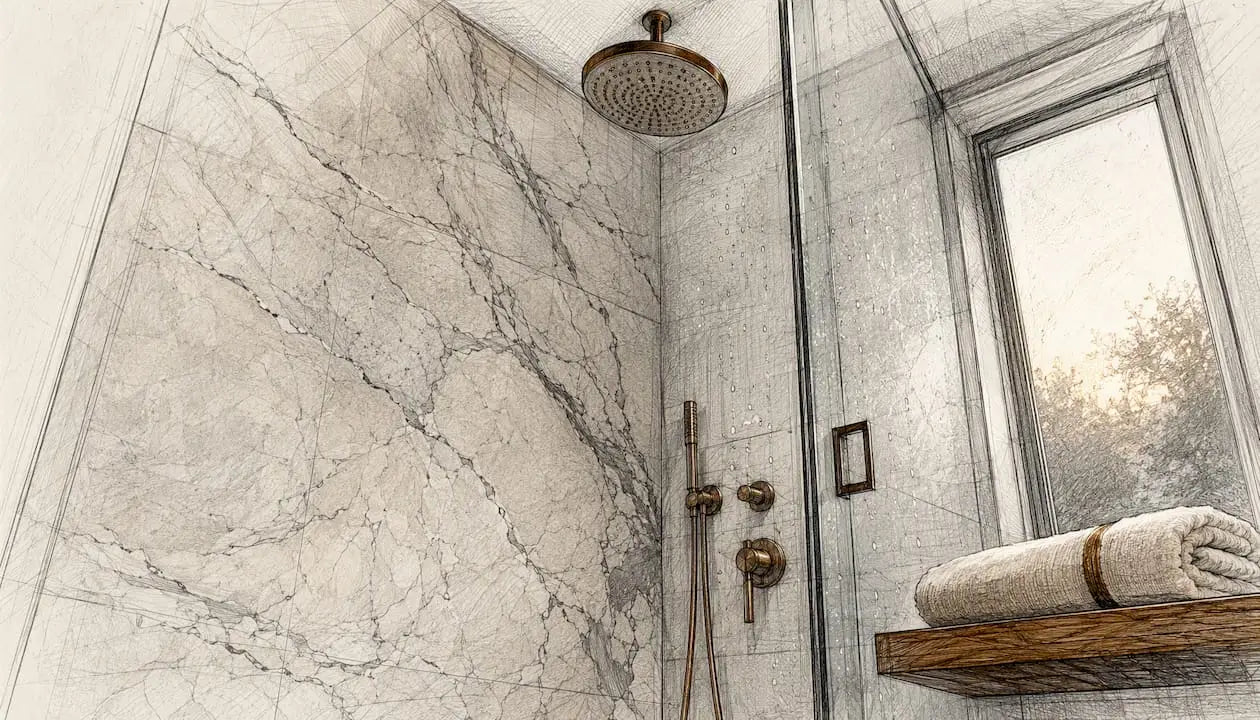
A 24"×48" or 48"×96" porcelain panel reads as one continuous surface. The visual effect is calm and architectural, especially in gray, white, or warm beige tones that mimic marble or limestone. Large-format slabs eliminate most grout joints, which reduces long-term grout maintenance significantly. The trade-off: they need a perfectly flat substrate and a specialist installer who knows how to back-butter large panels correctly. Budget for both.
Book-matched marble panels
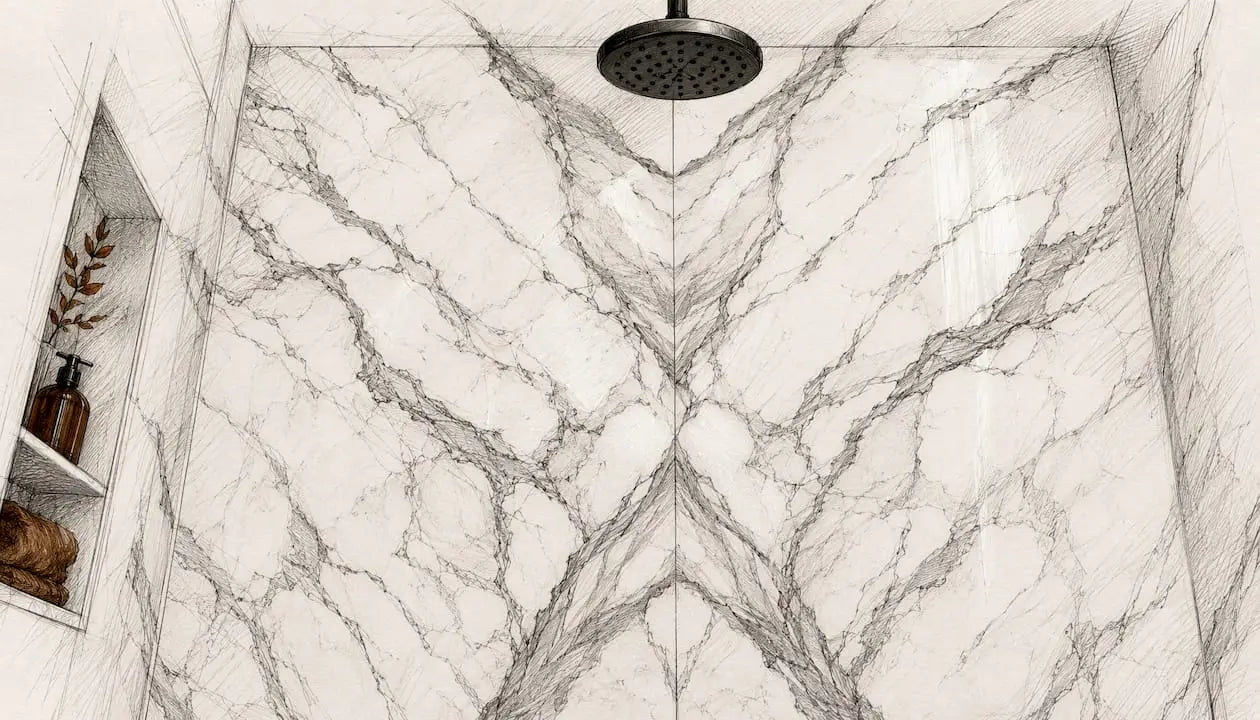
Bookmatching opens two adjacent slabs like a book so the veining mirrors itself across the seam. The result looks like a painting. Calacatta and Statuario marble are the go-to choices. This is a high-cost, high-impact option that requires expert fabrication and careful sealing, but nothing else in the shower tile world produces the same visual drama.
Honed marble and travertine tile
Honed stone has a matte, velvety surface that photographs quietly but lives beautifully. Design experts consistently recommend honed or leathered finishes for bathroom stone because they manage moisture better and hide the water spots that polished stone shows every single day. A 12"×24" honed Carrara marble in a running bond pattern with a thin white grout joint is one of the most timeless shower wall choices available. Pair it with brushed nickel or matte black fixtures.
Subway tile
The classic 3"×6" subway tile is still everywhere, and for good reason. It is affordable, widely available, and works in showers from 36" square to a full walk-in. The layout makes the difference: horizontal running bond reads traditional; vertical stacking reads modern; a staggered herringbone reads bold. Neutral palettes and single-accent walls are the dominant approach in current editorial inspiration, and subway tile executes both well. White subway with a dark charcoal grout is a sharp, low-cost contemporary look.
Herringbone and mosaic tile
Herringbone works best as an accent, not a full-surround. Use it on the back wall of a niche, on a bench face, or as a floor insert. A 2"×4" marble herringbone mosaic strip running horizontally at eye level breaks up a large-format wall without competing with it. Penny-round mosaics in white or soft gray are a natural choice for shower floors, where their many grout lines provide traction.
Textured 3-D ceramic and pebble floors
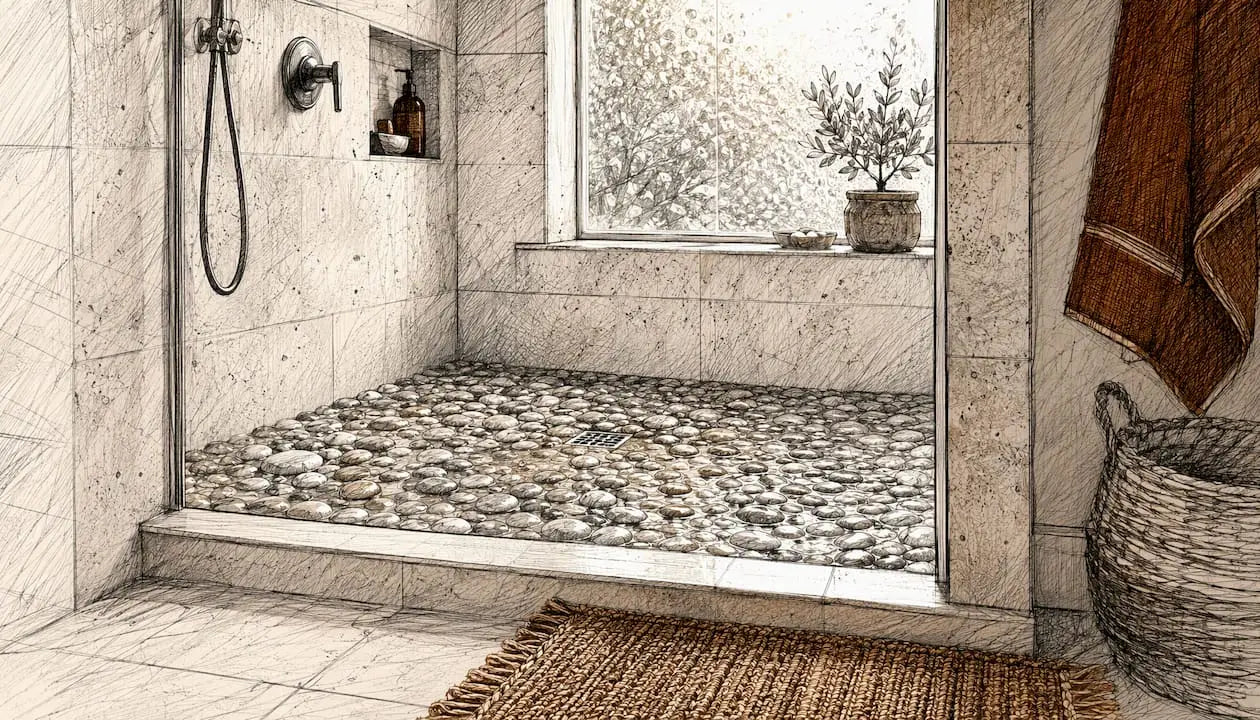
Three-dimensional ceramic tiles add shadow and depth to a flat wall. They work best in neutral tones (off-white, warm gray, sand) where the texture itself is the design. Pebble floors bring an organic, spa-like quality underfoot. They need more grout maintenance than smooth tile, but the sensory experience is hard to replicate with any other material. Pair pebble floors with honed travertine or limestone walls for a cohesive natural look.
Pro Tip: For a small shower, use the same large-format tile on walls and floor (in a smaller format) to create visual continuity. It makes the space read larger than it is.
Which shower floor tiles are safest and most practical?
The floor is the highest-stakes surface in any shower. It gets wet constantly, needs to drain properly, and has to grip bare feet. The tile you choose here matters more than anywhere else.
| Floor tile type | Recommended size | Slip resistance | Maintenance level | Best for |
|---|---|---|---|---|
| Penny-round mosaic | 1" diameter | High | Moderate (grout lines) | Small showers, spa look |
| Small hex mosaic | 1"–2" | High | Moderate | Modern, geometric floors |
| Small stone squares | 2"–4" | High | Moderate to high (sealing) | Natural stone showers |
| Honed natural stone | Up to 4"×4" | Moderate to high | High (seal regularly) | Luxury stone showers |
| Pebble/river-rock | Irregular | High | High (grout, sealing) | Spa and organic aesthetics |
| Large-format tile | 12"+ | Low (polished) | Low (fewer grout lines) | Walls only, not floors |
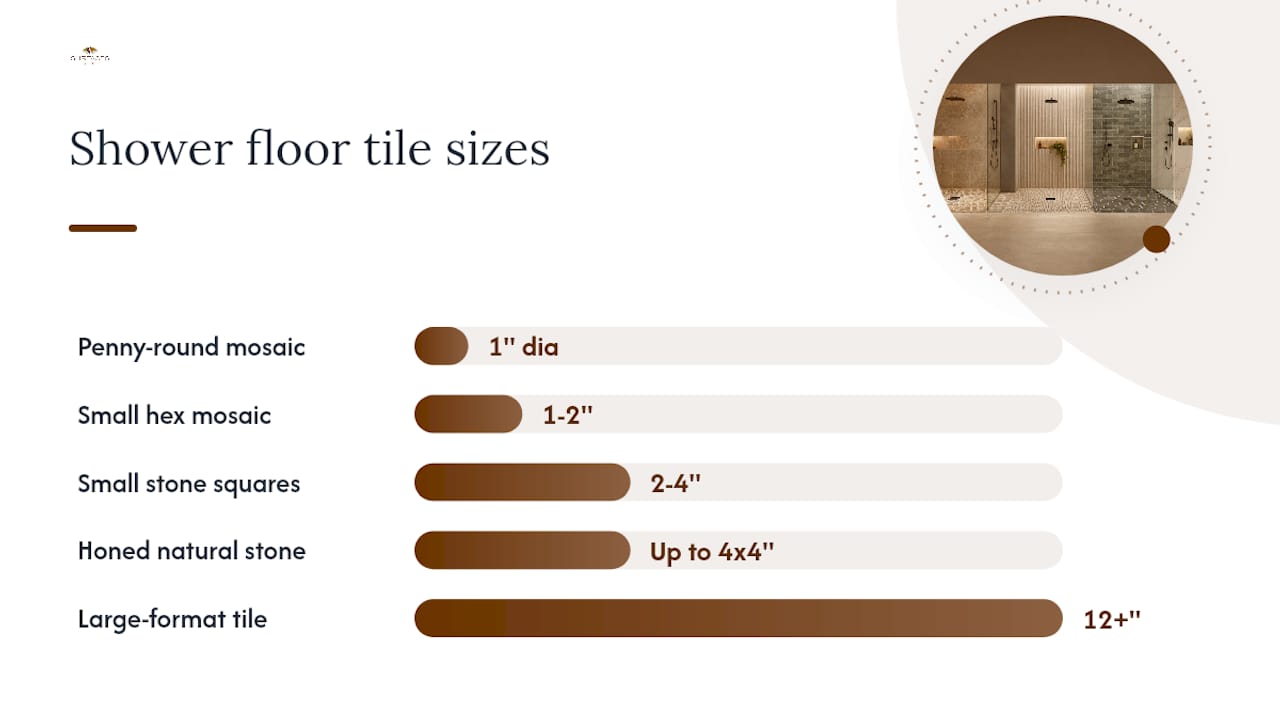
Tiles 4"×4" or smaller are the standard recommendation for shower floors because more grout lines improve traction and help the installer accommodate the slope toward the drain. Larger tiles, such as 12"×24", are less suitable for shower floors due to slip hazard risk and difficulty achieving correct slope without lippage.
Key slip-resistance rules:
- Avoid polished stone on any shower floor, regardless of size.
- Honed or textured finishes on stone provide meaningfully better grip when wet.
- Mosaics and small-format tiles give the installer more control over the pitch to the drain.
- For households with mobility needs, 1"–2" mosaics or pebble tile are the safest choices.
Pro Tip: Steam showers add thermal cycling stress on top of constant moisture. For steam applications, choose a vapor-rated membrane and denser, less porous stones like quartzite or granite rather than calcite-based marble or travertine, which absorb moisture more readily and need more frequent sealing.
Porcelain, ceramic, or natural stone: which material is right for your shower?
The choice between porcelain, ceramic, and natural stone comes down to three things: how much maintenance you want, what visual outcome you are after, and how long you plan to stay in the house.
Porcelain tile
Porcelain is nonporous, so it never needs sealing and resists soap scum, hard water, and acidic cleaners. Large-format porcelain panels mimic natural stone convincingly and are available in marble, travertine, and concrete looks. For a busy household or a rental property, porcelain is the practical answer. The visual limitation is that it lacks the unique veining variation and warmth of real stone. Every tile in a box looks nearly identical.
Ceramic tile
Standard ceramic is less dense than porcelain and more porous, so it is better suited to walls than floors in wet areas. It is the most affordable option and comes in the widest range of colors and textures. For a modern shower wall on a budget, a matte ceramic in a large format or a textured 3-D profile is a strong choice.
Natural stone: marble, travertine, and limestone
Natural stone offers something no manufactured tile can replicate: genuine variation. Every slab and tile is unique. Marble brings dramatic veining; travertine brings warm, earthy texture; limestone brings quiet, coastal softness. The trade-off is maintenance. Natural stone is porous and needs sealing on installation and on a regular schedule thereafter. It is also sensitive to acidic cleaners, which etch the surface.
The payoff for that care is longevity. A properly installed natural stone shower, with correct waterproofing and grout strategy, can last 50–100 years. That figure assumes the membrane and grout are done right, because most stone shower failures trace back to inadequate waterproofing or rigid grout at corners, not to the stone itself.
On sustainability: porcelain manufacturing is energy-intensive, while quarrying stone has land-impact considerations. Neither is a clear winner. Natural stone does have a strong resale argument: a marble or travertine shower is a recognized value-add in most U.S. real estate markets, particularly in the mid-to-upper price tiers.
For finish guidance, see the tile finishes explained guide from Surfacesgalore, which covers honed, polished, and textured options by room and use case.
How do you choose the right shower tile? A practical checklist
Walk through these steps before you order a single tile or sign a contract.
- Measure and plan scale. Know your shower dimensions. A 36"×36" shower needs smaller-format tile to avoid visual overwhelm. A large walk-in can handle 24"×48" panels.
- Separate floor and wall tile choices. Wall tile can be large-format and polished; floor tile must be small-format and honed or textured.
- Choose your grout type. Epoxy grout is stain-resistant and nonporous but harder to install. Polymer-modified cement grout is a workable compromise for most projects. Avoid unsanded grout in joints wider than 1/8".
- Pick grout color deliberately. A grout color close to the tile reads as seamless and modern. A contrasting grout (dark grout with white tile) reads as graphic and bold.
- Specify your waterproofing system. Ask your contractor which membrane brand they use. Sheet membranes (such as Schluter Kerdi or Wedi) and liquid membranes are both valid; vague answers here are a red flag.
- Plan niches, benches, and transitions. Niches need their own waterproofing detail. Bench faces are a natural place for a mosaic accent or a contrasting stone.
- Confirm your sealing and maintenance schedule. Natural stone needs pre-sealing before installation and periodic resealing in use.
Questions to ask your contractor or tile supplier:
- What waterproofing membrane are you using, and is it rated for steam if applicable?
- Will you back-butter large-format tiles?
- What substrate prep do you recommend for this shower size?
- Are you using epoxy or cement grout, and why?
- How will you handle corners and transitions?
Red flags that should prompt a second opinion:
- No mention of a waterproofing membrane at all.
- Vague answers about membrane brand or installation method.
- Installer refusing to pre-seal natural stone before setting.
- Proposal to use large-format polished stone on the floor.
Pro Tip: Pre-seal each stone tile individually before your installer sets them. After sealing, do the water-bead test: drop water on the surface and watch. If it beads up and sits on top, the sealer is working. If it soaks in within 2–3 minutes, the stone needs another coat. This test also tells you when it is time to reseal during the life of the shower.
For a full installation workflow, the marble shower installation guide from Surfacesgalore walks through each phase in detail.
What does Surfacesgalore recommend for natural stone shower durability?
Natural stone’s longevity in a shower is not primarily a question of which stone you pick. It is a question of what happens behind and between the stone. The membrane, the substrate prep, and the grout strategy determine whether a stone shower lasts 20 years or 80.
The most common failure points are not the stone itself. Inadequate waterproofing and rigid grout at corners are where most stone showers fail. Corners and transitions move slightly as the building settles and as temperature cycles. Rigid cement grout cracks at those joints. Flexible sealant, applied at every inside corner and transition, accommodates that movement without cracking.
Recommended maintenance habits:
- Squeegee the walls after every shower. This single habit reduces sealer degradation faster than any product.
- Use only pH-neutral stone cleaners. Acidic cleaners (vinegar, citrus-based products) etch marble and limestone surfaces permanently.
- Reseal marble and limestone annually in a heavily used shower; travertine every 12–18 months; denser stones like quartzite every 2–3 years.
- Inspect grout lines and sealant joints annually. Regrout or reseal any area showing hairline cracks before water gets behind the tile.
A properly installed natural stone shower, with correct waterproofing and consistent maintenance, can last 50–100 years. That is not a marketing claim; it is the practical outcome of getting the substrate and sealing right from day one.
Pro Tip: At every inside corner and where the tile meets the shower pan, use a color-matched flexible silicone sealant instead of grout. Grout at those joints will crack within a year or two. Silicone moves with the building and stays watertight.
Surfacesgalore provides installation workflow documentation and finish guides for marble, travertine, and limestone. The natural stone bathroom tile guide covers stone selection by bathroom type and finish preferences.
What does a modern tiled shower actually cost, and how long does it take?
Rough installed cost ranges for a standard shower (approximately 60–80 square feet of tile):
- Standard ceramic tile: $15–$30 per square foot installed, including labor and basic waterproofing.
- Porcelain tile (standard format): $20–$40 per square foot installed.
- Large-format porcelain panels: $35–$60 per square foot installed; specialist labor adds cost.
- Natural stone tile (marble, travertine, limestone): $40–$80 per square foot installed, depending on stone grade and complexity.
- Book-matched marble slab walls: $100+ per square foot installed; custom fabrication and expert installation required.
Factors that push cost higher:
- Large-format slabs requiring back-buttering and a specialist crew.
- Custom book-matching and slab fabrication.
- Steam-proofing with a vapor-rated membrane system.
- Complex niche and bench work with mitered stone corners.
- Remote locations with high freight costs for heavy stone.
Typical renovation timeline for a full shower retile:
- Design, material selection, and ordering: 2–4 weeks (stone lead times vary).
- Demo and substrate prep: 1–2 days.
- Waterproofing membrane installation and cure: 1–2 days.
- Tile installation: 2–4 days depending on format and complexity.
- Grout, sealant, and sealing: 1–2 days.
- Total elapsed time: typically 4–6 weeks from first order to finished shower.
For coordinating your tile scheme with bathroom doors and hardware, bathroom door selection guidance is worth reviewing alongside your tile choices, since door finish and frame material affect how the overall room reads.
What the tile industry gets wrong about natural stone showers
The conventional wisdom in most renovation content is that natural stone is “high maintenance” and therefore a risky choice for busy households. That framing is misleading, and it pushes homeowners toward porcelain when stone might actually serve them better.
The maintenance burden of natural stone is real but narrow. It comes down to two habits: squeegee after every shower, and use the right cleaner. That is it. The sealing schedule is a once-a-year task that takes 20 minutes. What the “high maintenance” framing misses is that a properly sealed and maintained marble or travertine shower ages beautifully. Porcelain does not age; it just stays the same until it chips or the grout discolors.
The deeper issue is that most stone shower problems are installation problems, not stone problems. A polished marble shower that leaks after three years failed because the membrane was wrong or the corner grout cracked, not because marble is fragile. Homeowners who understand this go into the project asking the right questions of their contractor, and they end up with showers that last decades.
The other thing the industry underplays is the resale signal. In most U.S. markets, a genuine marble or travertine shower is a recognized quality marker that buyers notice. Porcelain that looks like marble is not the same thing to a buyer who knows the difference.
Surfacesgalore: authentic stone samples and expert support
If you have worked through the ideas in this guide and you know the direction you want, the next step is getting samples in your hands before you commit.

Surfacesgalore is a direct importer of premium marble, travertine, and limestone tiles, mosaics, and decorative stone, shipping nationwide from Anaheim, California. Because there is no middleman, the pricing reflects what you would expect to pay at a stone yard, not a retail showroom markup. Bring your shower dimensions and your finish preference (honed, polished, or textured) when you reach out, and the team can point you to the right stone grade and format for your project. Sample requests, specification documentation, and installation guidance are all available.
Shop natural stone tiles at Surfacesgalore and request samples to see the real color, veining, and finish before you order.
Sources
- The One-Stone Home Trend: How Natural Stone Is Transforming Interiors in 2026 - FineHomeKeeping
- Stone Shower Walls: Slab vs. Tile, Sealing & Waterproofing – Dynamic Stone Tools
- 75 Modern Ceramic Tile Bathroom Ideas You’ll Love - Houzz
- 49 Stunning Shower Tile Ideas for a Standout Bathroom
FAQ
What tile size works best for a small shower?
For small showers, 4"×12" or 3"×6" subway tile on walls and 1"–2" mosaics on the floor keep the space from feeling busy while maintaining proper drainage slope. Vertical tile layouts add visual height.
Do I need to seal porcelain shower tile?
No. Porcelain is nonporous and does not require sealing. Natural stone tile, including marble, travertine, and limestone, needs sealing before installation and resealing annually or every 12–18 months depending on stone type and use frequency.
What is the most durable shower tile material?
Porcelain is the most durable and lowest-maintenance option for shower walls and floors. Natural stone, when correctly waterproofed and sealed, can last 50–100 years and offers a visual quality porcelain cannot fully replicate.
How do I prevent mold and grout discoloration in a stone shower?
Squeegee walls after every shower and clean with a pH-neutral cleaner weekly. Epoxy grout resists staining better than cement grout and does not require sealing. Inspect sealant at corners annually and replace any cracked sections promptly.
Where can I find authentic marble and travertine shower tile?
Surfacesgalore imports marble, limestone, and travertine tiles and mosaics directly, shipping nationwide across the United States. Sample requests and specification support are available through the Surfacesgalore website.
Leave a comment