
Modern Bathroom Wall Tile Ideas Worth Copying in 2026

The strongest move for a 2026 remodel is picking one direction and committing: floor-to-wall tile drenching for a cocoon-like feel, an artisan textured tile like zellige for warmth and imperfection, or a natural stone feature wall for quiet drama. Wet-area durability and upkeep should decide the material, not just the photo you saved. Homeowners who want the natural stone look can start with Surfaces Galore’s marble and travertine collections and build the rest of the room around that one choice.
TL;DR:
- Natural stone like quartzite is more stain- and scratch-resistant than marble and is recommended for busy bathrooms with water contact.
- Full wall tile drenching creates a taller, calmer space, but it is best suited for bathrooms with minimal trim or paint breaks.
- Porcelain and honed quartzite are the most practical materials for high-maintenance areas such as shower surrounds due to their durability and low upkeep.
- Small mosaic tiles add texture and grip, making them ideal for niches or shower floors, while large-format tiles create a minimal, calming effect.
- Sealing natural stone regularly and hiring licensed installers for waterproofing are essential steps to ensure long-lasting bathroom tile installations.
Table of Contents
- 2026 modern bathroom wall tile trends worth copying
- Choosing materials and finishes for bathroom walls
- Layouts, scale, and grout: shaping the room with tile
- How to choose the right tile: a practical checklist
- Installation and upkeep: what to expect after the tile goes up
- Where natural stone earns its place in a modern bathroom
- A short checklist for applying these ideas to your remodel
- Shop natural stone tiles at Surfaces Galore
- Sources
- FAQ
2026 modern bathroom wall tile trends worth copying
Bathroom design in 2026 is moving away from stark, matched surfaces toward rooms with texture and warmth. Design reports point to tile drenching, hand-glazed ceramics, tonal checkerboards, and deep earthy palettes as the directions showing up most often in new builds and remodels.
- Tile drenching: running the same tile from floor to ceiling erases sightlines and makes a small bathroom feel taller and calmer. It works best in bathrooms without a lot of competing trim or paint breaks.
- Artisanal textures: zellige and hand-glazed ceramics bring intentional imperfection and light-catching variation that flat porcelain can’t fake.
- Tonal checkerboards: a softened, low-contrast version of the classic black-and-white pattern, feels more current than the sharp version.
- Deep earthy and jewel tones: olive, terracotta, and forest green are functioning as the new neutrals, especially paired with softly veined marble looks and muted zellige-inspired tiles.
- Small theatrical moments: a tiled niche, a framed alcove, or a mosaic backsplash gives you drama without retiling the whole room.
Designers generally recommend committing fully once you choose a bold pattern, then keeping the surrounding materials (countertops, cabinetry) simple so the tile doesn’t compete with itself.
Choosing materials and finishes for bathroom walls
Material choice determines how a tile looks in five years, not just on installation day. Natural stone, porcelain, and hand-glazed ceramics each solve a different problem, and the right one depends on how the bathroom actually gets used.
- Natural stone (marble, travertine, limestone): these bring veining and warmth no manufactured tile fully replicates, but they’re porous and need sealing. Quartzite is often a smarter substitute for marble in a busy family bathroom because it resists staining and scratching better while keeping a similar look.
- Porcelain and large-format porcelain: dense, low-maintenance, and reliably water-resistant, which is why it dominates shower surrounds where upkeep matters more than character.
- Zellige and hand-glazed ceramics: gorgeous, handmade texture, but expect longer installation time and higher labor cost since each tile varies slightly in size and glaze.
- Onyx-effect and veined-stone panels: dramatic for a single feature wall, though true onyx and heavily veined marble can be fragile, so many designers spec them only where water contact is limited.
Project data from recent bathroom builds shows a clear shift toward zellige, microcement, and natural stone like Calacatta Viola and honed quartzite, often paired with floor-to-wall continuity and fluted stone edge details. Honed quartzite in particular keeps showing up as the practical alternative when a client wants marble’s look but needs it to survive a household with kids.
Layouts, scale, and grout: shaping the room with tile
Tile size and orientation change how a bathroom reads before color even enters the conversation. A few decisions do most of the work.
- Pick your scale on purpose. Large-format tile on a shower wall reads calm and minimal with fewer grout lines to clean; small mosaics add texture and grip, which matters on a floor or a niche.
- Use orientation to reshape the room. Vertical runs draw the eye up and make low ceilings feel taller; horizontal runs widen a narrow space. Herringbone and other directional layouts add movement without needing a bold color.
- Choose grout as a design tool, not an afterthought. Tonal grout that nearly matches the tile keeps a wall looking monolithic; contrasted grout sharpens a pattern like a checkerboard. Livingetc’s design team notes grout color is often what separates a dated black-and-white floor from a modern one.
- Finish with trim and edge details. Fluted stone panels, curved bullnose edges, and mitered corners give a wall a finished, custom look, especially on bookmatched marble installations where the veining needs to line up perfectly.
How to choose the right tile: a practical checklist
Photos on a screen never show true color or scale, so the buying process has to include physical samples before anything gets ordered in bulk.
- Order full-size samples, not tiny chips, and view them in the actual bathroom under both daylight and your evening lighting.
- Confirm the tile’s water absorption rating and ask whether it’s rated for wet walls, not just floors.
- Compare material cost against installation cost. A bookmatched slab or fluted stone panel can double labor time even if the material price looks similar to a standard tile.
- Ask your installer directly about recommended adhesive, grout type, and sealing schedule before you commit to a pattern.
The Surfaces Galore workflow guide walks through sample ordering and testing in more detail if you want a step-by-step version of this process.
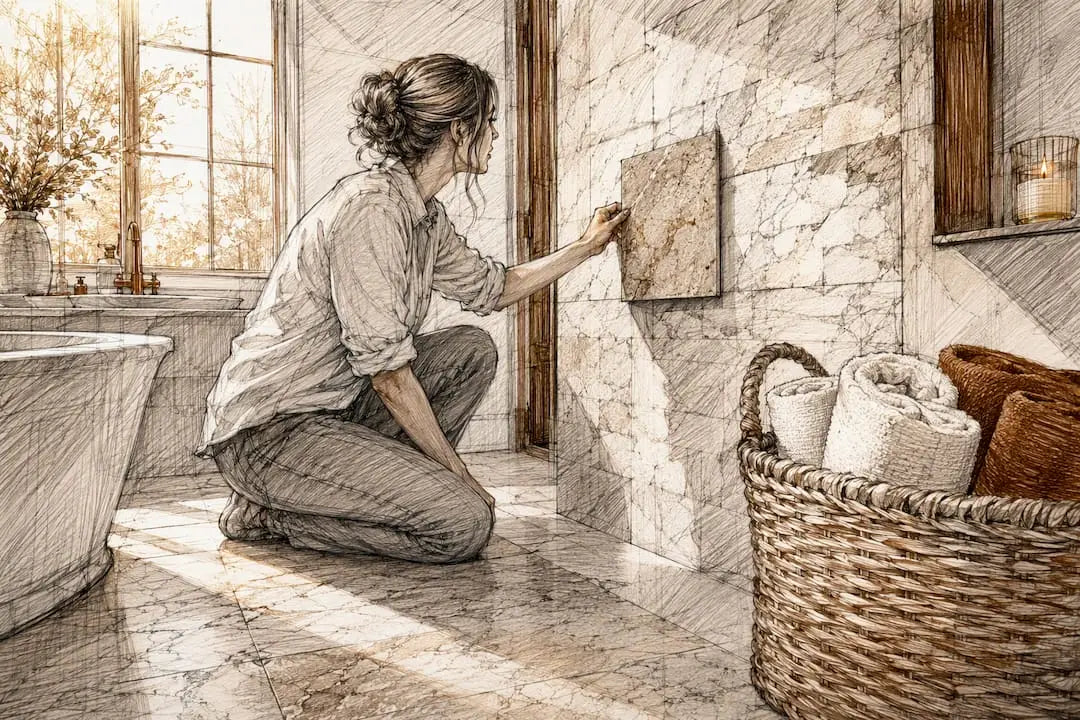
Pro Tip: Tape a sample tile to the wall and check it at 7 a.m. and again after dark. Stone and glazed tile can shift dramatically in tone between warm bulbs and daylight, and that difference is easy to miss if you only look once.
Installation and upkeep: what to expect after the tile goes up
Waterproofing happens behind the tile, and it’s the part homeowners most often underestimate. A proper membrane system behind shower walls prevents moisture from reaching framing, and this step should never be a DIY shortcut on a wet wall.
- Hire a licensed installer for any wet-area waterproofing, complex pattern work, or bookmatched slab installation.
- Reseal natural stone on a regular schedule (roughly once a year for most marble and limestone, less often for denser stone like granite or quartzite).
- Clean stone and grout with pH-neutral cleaners; avoid vinegar, bleach, and other acidic products that etch the surface.
- Address chips in artisan tile quickly. A cracked zellige or hand-glazed piece is usually easier to swap early than after grout has cured around it.
Microcement and other seamless wet-room finishes look striking, but projects built for low-maintenance daily use often lean toward porcelain or honed quartzite instead, since seamless surfaces can show wear differently than tiled joints.
Where natural stone earns its place in a modern bathroom
Natural stone still does the heaviest visual lifting in a modern bathroom, and it earns that role in specific spots rather than everywhere at once. A single feature wall behind the vanity, a fully drenched shower enclosure, or a fluted stone accent around a niche gives a room its personality without requiring stone on every surface.
- Reserve bookmatched or heavily veined slabs for a focal wall where the pattern can be appreciated as one continuous image.
- Use fluted stone or reeded panels on vanity fronts or tub surrounds for texture that reads as custom millwork.
- Request samples before committing to a full order. Veining and tone can vary meaningfully between batches of the same stone.
| Application | Best-fit material | Why it works |
|---|---|---|
| Full shower drenching | Porcelain or honed quartzite | Water-resistant, low upkeep |
| Feature/accent wall | Marble or travertine | Veining reads best at scale |
| Niche or backsplash | Zellige or mosaic stone | Texture in a small footprint |
Homeowners exploring these options can browse Surfaces Galore’s bathroom tile trend guide for more application-specific examples before placing an order.
A short checklist for applying these ideas to your remodel
Before touching a single tile sample, decide whether the bathroom should feel like a quiet retreat or hold one bold, theatrical moment. That choice should drive everything else. Lock in your primary material first and settle the layout second, since chasing both decisions at once tends to produce a room that feels indecisive. Keep your metal finishes (One Day Doors & Closets) consistent throughout, and let those fixtures, not the tile, provide the visual contrast.
— cihan
Shop natural stone tiles at Surfaces Galore
Surfaces Galore imports marble, travertine, and limestone directly, which keeps pricing lower than buying through multiple middlemen while still giving you authentic, quarried stone rather than a printed imitation.
If any of the directions above pointed you toward real stone, the next step is simple: request full-size samples before you order anything in bulk, since veining and tone shift from batch to batch. Browse the current marble and travertine collections to compare finishes side by side, and reach out for a bulk quote if you’re tiling a full shower wall or a multi-bathroom remodel. Discover marble collections built for exactly the kind of feature wall or drenched shower described above, and get a same-week sample kit sent to your door.
Sources
- Bathroom Tile Trends 2026 | Homes and Gardens
- 7 Bathroom Tile Trends You’ll See Everywhere in 2026 | Livingetc
- Bathroom Tile Trends 2026 | Zellige, Microcement & Natural Stone
- 2026 Bathroom Color Trends—from paint to tile to fixtures | BHG
FAQ
What are the latest trends in bathroom wall tiles?
The leading 2026 directions are tile drenching, handcrafted textures like zellige, tonal checkerboards, and deep earthy color palettes, often paired with natural stone feature walls.
What color wall tiles are best for a bathroom?
Natural neutrals, softly veined marble tones, and deep greens are currently the most popular color directions, replacing stark white and high-contrast schemes as the default choice.
What bathroom tile never goes out of style?
Honed and polished marble, along with classic white and neutral porcelain, remain the most consistently timeless choices because their veining or simplicity works across design styles, from minimalist to traditional.
Is natural stone practical for a shower wall?
Yes, with the right sealing schedule. Denser stones like honed quartzite or granite hold up especially well, while marble and limestone need more frequent resealing to resist water and soap residue.
Should I choose large-format tile or mosaics for a small bathroom?
Large-format tile with minimal grout lines tends to make a small bathroom feel more open, while mosaics work best reserved for accent areas like niches or shower floors where grip matters more.

Leave a comment