

Timeless Tile Styles That Never Go Out of Fashion

The tile styles that reliably hold up across decades of design shifts are: subway tile, honed marble, herringbone, hexagon, checkerboard, penny round, large-format stone-look porcelain, and travertine. Each one earns its place for a specific reason, and knowing which room suits each style is half the decision.
Here’s the quick-reference shortlist before the deep dive:
- Subway tile — the 3×6 running bond is a century old and still the default kitchen backsplash for a reason: it disappears into the background and lets everything else shine.
- Honed marble — matte finish softens the veining and hides daily wear better than polished; best for bathroom walls, shower surrounds, and low-traffic floors.
- Herringbone — the interlocking V-pattern has Roman-road origins and works on floors, backsplashes, and shower niches at almost any scale.
- Hexagon — a geometric that reads as both vintage and modern depending on size and grout color; ideal for bathroom floors and entryways.
- Checkerboard — black-and-white or stone-on-stone, this pattern anchors a room without competing with anything else; best in entryways, mudrooms, and kitchens.
- Penny round — small-scale mosaic with excellent slip resistance; a natural for shower floors and powder room walls.
- Large-format stone-look porcelain — 24×24 or larger slabs in a neutral stone finish minimize grout lines and read as calm, permanent, and easy to maintain.
- Travertine — warm ivory-to-gold tones and natural texture that no manufactured tile fully replicates; works on floors, feature walls, and outdoor-to-indoor transitions.
Read on for the full breakdown: what each style is, which materials hold up longest, how layout patterns affect longevity, and what 2026 trends mean for your choices.
Key Takeaways
The most durable tile choices combine a material suited to your lifestyle with a pattern that has historical precedent — not just current popularity.
| Point | Details |
|---|---|
| Lifestyle fit comes first | Choose material and finish based on traffic, moisture, and maintenance tolerance before aesthetics. |
| Natural stone vs. porcelain | Stone develops patina and requires sealing; porcelain needs none but reads differently up close. |
| Pattern scale matters | Small mosaics suit small rooms; large-format straight lay works in open spaces; herringbone scales to both. |
| Grout color is a longevity lever | Grout within two shades of the tile keeps the look timeless; high contrast dates faster. |
| Surfacesgalore | Direct importer of marble, limestone, and travertine; ships nationwide with finish and sealing guidance. |
Table of Contents
- 1. Subway tile: the original timeless tile style
- 2. Honed marble: quiet luxury that ages well
- 3. Herringbone: a pattern with a 2,000-year track record
- 4. Hexagon tile: geometric that spans eras
- 5. Checkerboard: the pattern that anchors a room
- 6. Penny round: small scale, serious staying power
- 7. Large-format stone-look porcelain: the low-maintenance classic
- 8. Travertine: warm texture that manufactured tile can’t replicate
- 9. Zellige and handmade tile: texture without trend
- 10. Basketweave mosaic: a floor pattern with architectural roots
- How to pick a timeless tile for your home
- What materials actually read as timeless
- Tile patterns that make a room feel permanent
- Care, lifespan, and cost factors for classic tiles
- What 2026 design trends mean for timeless choices
- Surfacesgalore: natural-stone expertise for your next project
- A designer’s take on what actually feels timeless
- Natural stone tiles, shipped nationwide from Surfacesgalore
- Sources
- FAQ
1. Subway tile: the original timeless tile style
The 3×6 white ceramic subway tile debuted in the New York City subway system in 1904 and has never left residential design. Its staying power comes from simplicity: a rectangular format that creates a clean, reflective surface with no pattern to date it.
Why it lasts: The running bond layout (each tile offset by half) creates visual rhythm without noise. White or off-white glaze reflects light in small kitchens and bathrooms. Grout color is the only real variable.
Best rooms: Kitchen backsplash, bathroom walls, shower surrounds, laundry rooms.
Material options: Ceramic is the classic and most affordable. Porcelain offers better moisture resistance. Natural stone subway cuts in marble or limestone push the look into luxury territory.
- Pros: Widely available, easy to replace individual tiles, works with every cabinet style
- Cons: Grout lines require regular cleaning; dark grout can look dated quickly
Pro Tip: Choose a grout color within two shades of the tile itself. High-contrast grout on subway tile is the fastest way to make a classic look feel like a trend.
2. Honed marble: quiet luxury that ages well
Polished marble is dramatic. Honed marble is something else: a matte, velvety surface that absorbs light instead of reflecting it, softening the veining and making the stone feel more like a material than a statement. Designers consistently recommend it as one of the top timeless tile choices for exactly this reason.
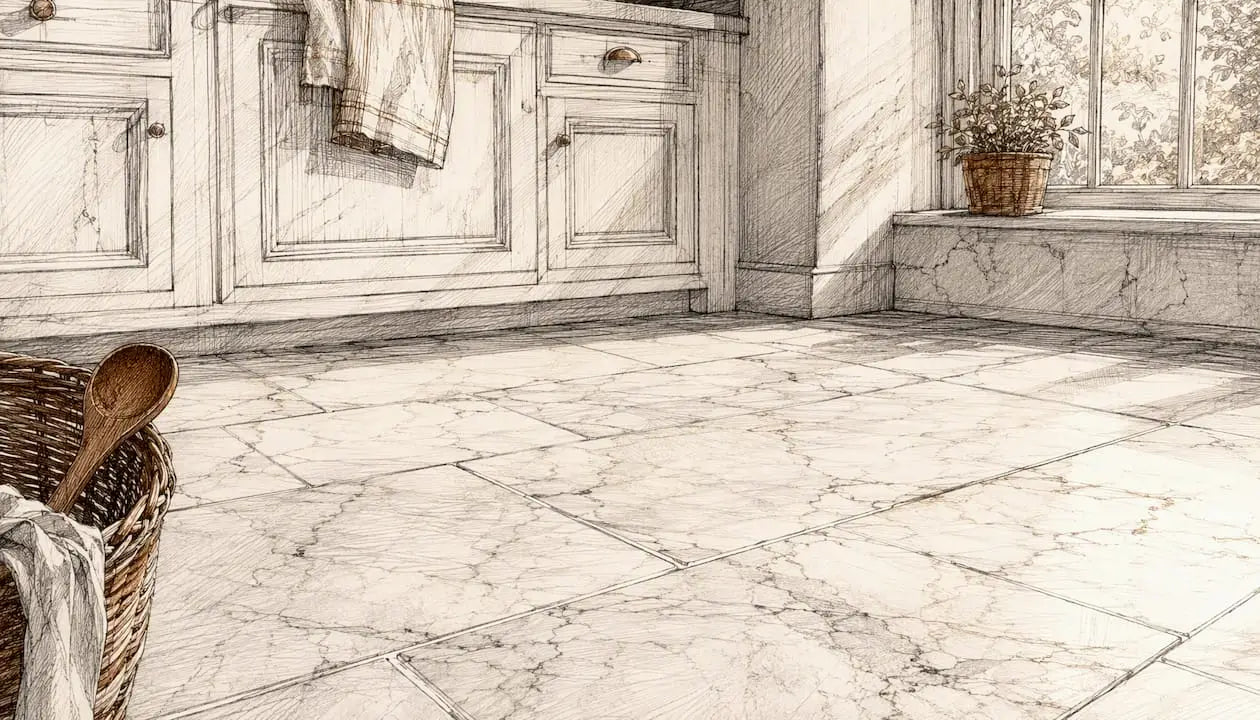
Why it lasts: Honed finishes hide minor scratches and etching that would be visible on a polished surface. The muted look ages gracefully rather than showing wear as damage.
Best rooms: Bathroom walls, shower surrounds, master bath floors, kitchen countertops as a slab (not tile).
Material options: Carrara, Calacatta, and Thassos marble are the most recognized. Lighter veining reads as more versatile across decades.
- Pros: Sophisticated, unique veining in every tile, improves with age and patina
- Cons: Requires sealing, susceptible to etching from acids (citrus, vinegar), heavier maintenance than porcelain
3. Herringbone: a pattern with a 2,000-year track record
Herringbone is not a material; it’s a layout. Rectangular tiles set at 90-degree angles to each other create a V-shaped zigzag that draws the eye along the surface. Roman engineers used it on roads. French parquet floors used it for centuries. It has never stopped working. Southern Living’s tile pattern guide identifies herringbone among the classic repeats that hold up across room types and scales.
Why it lasts: The diagonal geometry creates movement without chaos. It works at 1×2 mosaic scale on a shower niche wall and at 4×8 scale on a living room floor.
Best rooms: Entryway floors, kitchen backsplashes, bathroom floors, shower walls, hallways.
Material options: Marble, travertine, limestone, porcelain, ceramic, and even wood-look porcelain all work in herringbone.
- Pros: Adds visual interest without a bold color or pattern; works in both traditional and contemporary spaces
- Cons: More cuts and waste than straight-lay patterns; installation takes longer and costs more
4. Hexagon tile: geometric that spans eras
The six-sided tile has appeared in American bathrooms since the early 1900s and still shows up in every shelter magazine. Small 1-inch hex in white with white grout reads as vintage. Large 6-inch or 12-inch hex in stone-look porcelain reads as contemporary. The shape itself is neutral enough to carry either direction.
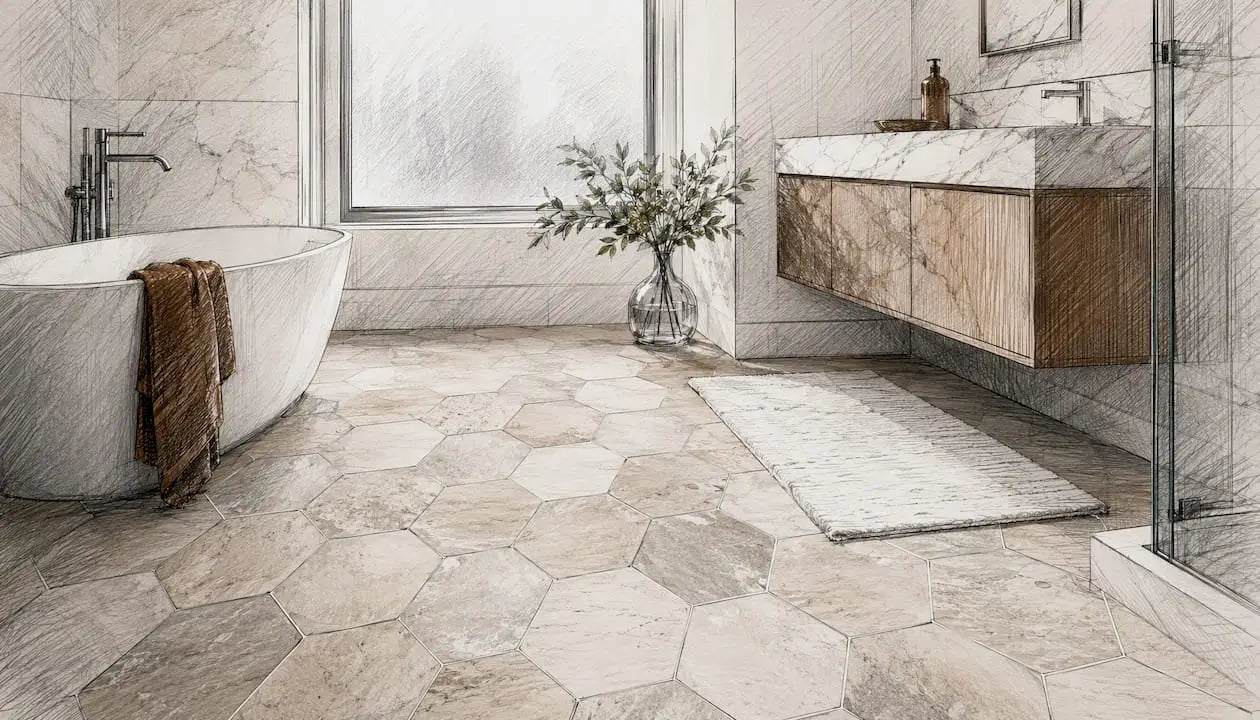
Why it lasts: The geometry is mathematically satisfying and visually stable. It tiles a surface without a dominant directional line, which keeps it from feeling trendy.
Best rooms: Bathroom floors, shower floors, powder room walls, entryways.
Material options: Porcelain and ceramic dominate the market. Marble hex mosaics are a natural-stone upgrade worth considering for bathrooms.
- Pros: Excellent for curved or irregular spaces; available in every price point
- Cons: Many grout lines on small hex require more maintenance; large-format hex can feel busy in small rooms
5. Checkerboard: the pattern that anchors a room
Two colors, alternating squares. The checkerboard has been on floors since ancient Rome and reached its American peak in 1950s diners and farmhouse kitchens. It never actually left. HGTV’s classic bathroom tile roundup includes checkerboard among the designs that consistently hold up over time.
Why it lasts: The pattern is so fundamental that it reads as architectural rather than decorative. Black-and-white is the most common version, but stone-on-stone (white marble and gray limestone, for example) gives it a softer, more contemporary feel.
Best rooms: Entryways, mudrooms, kitchens, bathrooms, laundry rooms.
Material options: Ceramic and porcelain for durability and budget. Marble or limestone for a natural-stone version that develops patina.
- Pros: Strong visual identity; works with almost any wall color or cabinet finish
- Cons: High-contrast versions show dirt and pet hair more readily; requires precise installation to keep squares aligned
6. Penny round: small scale, serious staying power
Penny rounds are circular mosaics, typically 7/8 inch to 2 inches in diameter, mounted on mesh sheets. They’ve been used in American bathrooms since the early twentieth century and remain a go-to for shower floors because the many grout lines provide natural slip resistance.
Why it lasts: The scale is small enough to read as texture rather than pattern from a distance. White or off-white penny rounds on a shower floor are essentially invisible as a “choice” — they just look right.
Best rooms: Shower floors, powder room floors, bathroom walls as an accent band.
Material options: Ceramic and porcelain are standard. Marble penny rounds add warmth and natural variation.
- Pros: Slip-resistant, works on curved surfaces, classic look that doesn’t compete with other design elements
- Cons: High grout-line density means more cleaning; mesh backing requires careful installation on uneven substrates
7. Large-format stone-look porcelain: the low-maintenance classic
A 24×24 or 32×32 porcelain tile in a soft travertine, limestone, or marble look has become one of the most practical choices for contemporary U.S. homes. Fewer grout lines mean a calmer visual field and easier cleaning. The large format reads as permanent and considered rather than busy.
Why it lasts: Neutral stone tones in large format don’t compete with furniture, art, or changing paint colors. The look is quiet enough to outlast multiple rounds of redecorating.
Best rooms: Living room floors, primary bathroom floors, open-plan kitchen-to-living transitions, outdoor-to-indoor extensions.
Material options: Porcelain only — the format requires the dimensional stability and low absorption rate that natural stone can’t always deliver at this scale.
- Pros: Very low maintenance, no sealing required, consistent color and pattern across the installation
- Cons: Heavier substrate requirements; mistakes in installation are harder to hide at large scale
8. Travertine: warm texture that manufactured tile can’t replicate
Travertine is a sedimentary limestone formed near hot springs, and its natural pitting and warm color range — ivory, gold, beige, rust — give it a character that porcelain has spent decades trying to imitate. Bob Vila’s travertine guide covers the four main finishes: polished, honed, tumbled, and brushed. Honed is the most popular for residential interiors because it balances visual warmth with practical slip resistance.
Why it lasts: The material has been used in architecture for thousands of years. Its warm neutrals sit comfortably alongside wood, linen, leather, and stone — the materials that cycle back into favor every decade.
Best rooms: Bathroom floors, entryways, living room floors, outdoor patios, shower walls.
Material options: Natural travertine only — this is a stone, not a manufactured product. Porcelain travertine-look tiles exist but deliver a different result.
- Pros: Unique natural texture, warm tones that work in most climates, improves with age
- Cons: Porous and requires periodic sealing; pits can collect dirt if left unfilled; tumbled finishes are harder to clean in wet areas
9. Zellige and handmade tile: texture without trend
Zellige is a hand-cut Moroccan tile with an irregular glaze surface that catches light differently across each piece. It’s not a new discovery — it’s been in use for centuries — but its current moment in American interiors reflects a broader shift toward texture and imperfection over machine-made uniformity.
Why it lasts: Handmade tiles with natural variation age better than uniform tiles because each piece already looks slightly different. There’s no “worn” look to develop because the surface was never perfectly consistent to begin with.
Best rooms: Kitchen backsplashes, bathroom feature walls, fireplace surrounds.
Material options: Traditional zellige is clay-based. Designers also recommend neutral-toned zellige and honed finishes for homeowners who want texture without high-contrast veining that can date a space.
- Pros: Every installation is unique; works in both traditional and contemporary kitchens
- Cons: Irregular surface makes cleaning harder; grout lines are less predictable; higher cost than standard ceramic
10. Basketweave mosaic: a floor pattern with architectural roots
The basketweave pairs two small rectangular tiles (typically 1×2) around a central square to create an interlocking pattern that mimics woven material. It appears in Victorian-era bathrooms, Craftsman bungalows, and contemporary powder rooms with equal ease.
Why it lasts: The pattern is small-scale and floor-specific, which keeps it from overwhelming a space. It reads as craftsmanship rather than decoration.
Best rooms: Bathroom floors, powder room floors, shower floors, entryway thresholds.
Material options: Marble is the traditional choice — white Carrara with gray dots is the most recognized version. Porcelain versions are available for lower maintenance.
- Pros: Historically grounded, works as a border or field tile, adds detail without color
- Cons: Many grout lines; marble version requires sealing; installation is labor-intensive
How to pick a timeless tile for your home
Inspiration is easy. Narrowing it down to the right tile for your specific kitchen, bathroom, or entryway takes a different kind of thinking. Start with your lifestyle, not the look.
The decision checklist
- Assess your traffic level. High-traffic floors (entryways, kitchens, mudrooms) need a tile rated for floor use with a PEI rating of 3 or higher. Bathroom walls have almost no wear requirements.
- Evaluate moisture exposure. Shower floors and walls need low-absorption tiles. Natural stone in wet areas requires sealing. Porcelain is the lowest-maintenance option for showers.
- Decide on your maintenance tolerance. Polished marble is beautiful and requires regular sealing and careful cleaning. Large-format porcelain needs almost none. Be honest about which one you’ll actually maintain.
- Choose your finish. Honed finishes hide scratches and etching. Polished finishes show them. Tumbled finishes on travertine or limestone add texture but trap more dirt. See tile finishes explained for a full breakdown.
- Pick your grout width and color. Narrow grout lines (1/16 to 1/8 inch) read as cleaner and more contemporary. Wide grout lines emphasize the pattern. Grout color within two shades of the tile keeps the look timeless; high-contrast grout emphasizes the grid and can date faster.
- Consider tile size relative to room size. Large-format tiles make small rooms feel larger by reducing visual interruption. Small mosaics add texture but can feel busy in large open spaces.
- Request samples before committing. A 4×4 sample card looks nothing like 80 square feet of installed tile. Get the largest sample available and live with it for a few days in the actual room’s light.
Questions to ask your supplier
- What sealer do you recommend for this specific stone and finish?
- What is the return policy on full boxes of unopened tile?
- Is this tile rated for floor use, wall use, or both?
- What installation method (thin-set type, substrate prep) do you recommend for this format and material?
- Do you carry matching trim pieces, bullnose, or border tiles?
What materials actually read as timeless
The material underneath the pattern matters as much as the pattern itself. Here’s how the main options compare for real-home performance.
Natural stone: marble, travertine, quartzite, and limestone
Natural stone develops patina over time. Marble’s slab-scale continuity and evolving surface are part of what makes it feel permanent — no two installations look identical, and the surface changes subtly with use in a way that reads as character rather than wear. That said, marble etches when it contacts acidic liquids, which makes it a considered choice for kitchens.
Travertine brings warmth that marble doesn’t. Its ivory-to-gold color range sits naturally alongside wood floors, warm plaster walls, and linen textiles. Honed travertine is the most practical residential finish: it’s slip-resistant, hides minor scratches, and seals well. Tumbled travertine adds more texture but requires more maintenance in wet areas.
Quartzite is harder than marble and more resistant to etching, which is why designers increasingly recommend it as a practical alternative that preserves a stone-like aesthetic. Limestone is softer and more porous than both, but its muted, chalky surface is hard to replicate in porcelain.
- Marble: Elegant, unique veining, requires sealing every 1–2 years, susceptible to etching
- Travertine: Warm tones, porous, requires sealing, fill pits for wet areas
- Quartzite: Harder and more durable than marble, lower maintenance, similar visual character
- Limestone: Soft, muted surface, highest porosity, best for low-traffic or wall applications
Pro Tip: For kitchen floors or high-traffic entryways, quartzite or honed limestone with a penetrating sealer gives you the stone aesthetic with meaningfully better durability than polished marble.
Porcelain and ceramic
Porcelain is fired at higher temperatures than ceramic, making it denser, less porous, and more resistant to moisture and staining. It requires no sealing. Large-format porcelain in stone-look finishes has closed the visual gap with natural stone considerably in recent years, though the surface still reads differently up close.
Ceramic is the most affordable option and works well for wall applications and low-traffic floors. It’s not the right choice for high-traffic floors or wet areas where porcelain or natural stone would perform better.
Engineered quartz
Engineered quartz (a composite of crushed quartz and resin) is primarily a countertop material, not a floor or wall tile. It’s worth mentioning because homeowners often ask about it as a tile alternative. For floors and walls, porcelain stone-look tiles deliver a comparable low-maintenance result.
Tile patterns that make a room feel permanent
The layout you choose can make the same tile look classic or dated. Southern Living’s pattern guide consistently names herringbone and other classic repeats as the layouts that hold up across room types and renovation cycles.
Running bond (subway layout)
Offset each row by half a tile length. This is the default for subway tile and works for any rectangular format. It’s the most forgiving pattern for imperfect walls and the easiest to install.
Herringbone
Tiles set at 90-degree angles to each other in a V-shape. Works at small scale (2×4 mosaic) on shower walls and at large scale (4×8 or 6×12) on floors. The diagonal draws the eye along the length of a room, making narrow spaces feel longer.
Checkerboard
Two tiles in alternating colors set in a straight grid. The pattern is strongest when the two materials have similar surface texture — stone-on-stone reads more permanently than high-gloss ceramic on matte ceramic.
Basketweave
Two small rectangles flanking a central square. Best at small scale on bathroom and powder room floors. Works as a border pattern around a field of larger tiles.
Hex borders
A field of large-format tile with a hex mosaic border creates a transition that reads as architectural detail rather than decoration. Use this at thresholds between rooms or around the perimeter of a bathroom floor.
Practical rules for scale and grout:
- Small patterns (penny round, 1-inch hex, basketweave) work best in small rooms where you’re close to the floor.
- Large-format patterns (24×24 straight lay, large herringbone) work best in open spaces where the full repeat is visible.
- Grout contrast amplifies the pattern. Low contrast (grout close to tile color) softens it.
Pro Tip: Avoid combining a busy pattern with high-contrast grout. Herringbone in a dark tile with bright white grout creates so much visual noise that it reads as a trend rather than a classic. Choose one: the pattern or the contrast.
See top tile patterns every designer should know for installation notes and visual examples.
Care, lifespan, and cost factors for classic tiles
A tile that looks beautiful in a showroom but requires maintenance you won’t do is not a timeless choice for your home. It’s a future renovation project.
Basic maintenance by material
- Natural stone (marble, travertine, limestone): Sweep or vacuum regularly to prevent grit from scratching the surface. Clean with a pH-neutral stone cleaner — avoid vinegar, bleach, or citrus-based products. Reseal every 1–2 years depending on traffic and finish.
- Quartzite: Similar care to marble but more forgiving of mild acids. Reseal annually in high-use areas.
- Porcelain and ceramic: Sweep and mop with a mild detergent. No sealing required. Grout lines still need periodic cleaning and may need resealing every 2–3 years.
- Zellige and handmade tile: The irregular glaze surface traps more residue than smooth tile. Clean with a soft brush and pH-neutral cleaner. Avoid abrasive scrubbers.
Lifespan expectations
Well-maintained natural stone floors — marble, travertine, limestone — can last the life of the building. Roman travertine is still in use. Porcelain tile, properly installed on a stable substrate, also lasts decades without degradation. The weak point in any tile installation is usually the grout and the substrate, not the tile itself.
Cost factors to plan for
Tile cost varies widely by material, format, and source. The table below covers the main cost components to budget for any tile project.
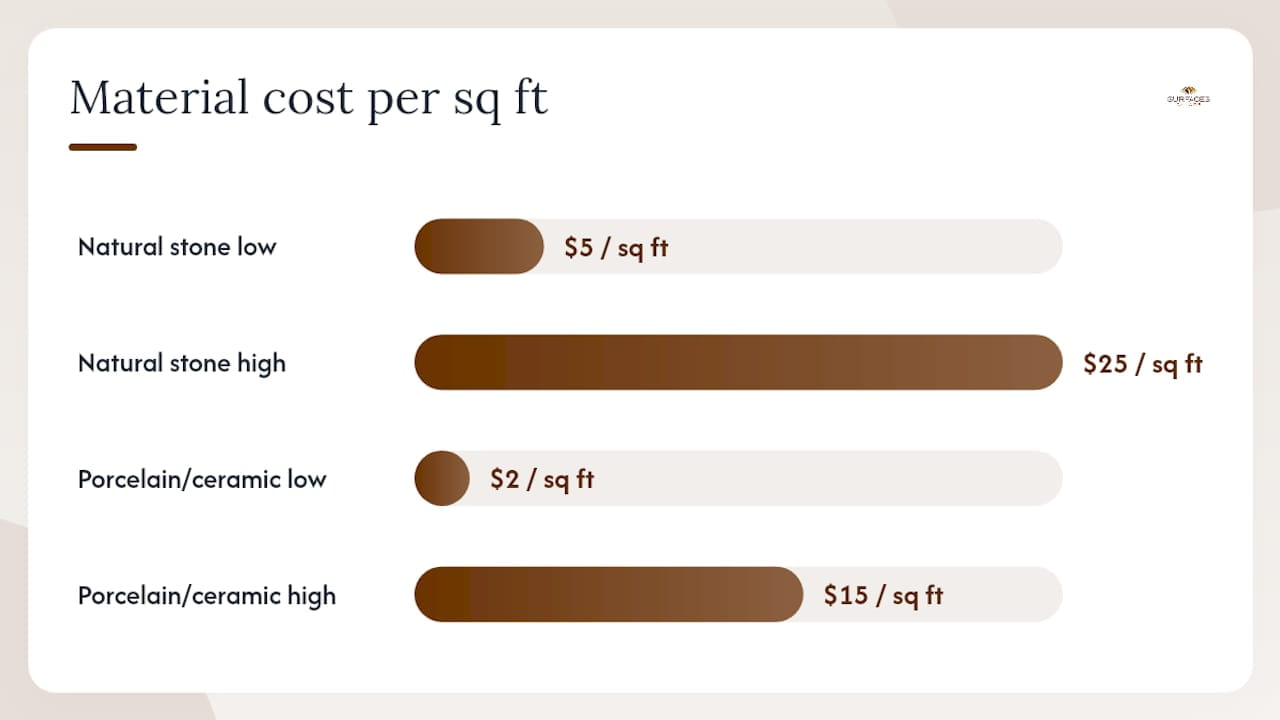
| Cost component | Natural stone | Porcelain / ceramic |
|---|---|---|
| Material (per sq ft, rough range) | $5–$25 depending on stone type and finish | $2–$15 depending on format and quality |
| Installation labor | Higher for pattern layouts (herringbone, mosaic) | Standard for straight lay; higher for large format |
| Substrate preparation | May require backer board or membrane in wet areas | Same requirements |
| Sealing (initial + periodic) | Required; cost of sealer + labor every 1–2 years | Not required for tile; grout sealing every 2–3 years |
| Long-term upkeep | pH-neutral cleaners only; occasional professional honing | Standard household cleaners |
Installation complexity is the biggest variable. A straight-lay 12×12 ceramic floor costs far less to install than a herringbone marble mosaic covering the same area. Pattern work adds waste (more cuts) and labor time.
What 2026 design trends mean for timeless choices
Trends are not the enemy of timeless design. They’re a signal about where collective taste is moving, and reading them correctly helps you avoid choices that will feel dated in five years.
The clearest market signal right now: Zillow’s 2026 home-trends data shows listings highlighting marble sinks are down about 15%, with designers noting growing homeowner interest in quartzite and engineered quartz as lower-maintenance stone alternatives. That’s not a verdict against marble — it’s a verdict against polished marble used as a high-maintenance showpiece in a working kitchen or bathroom.
What the shift actually signals is a preference for stone aesthetics without stone upkeep. Quartzite delivers that: harder than marble, similar veining, lower maintenance. Large-format porcelain in soft stone tones delivers it even more completely.
The other 2026 shifts worth noting:
- Softer veining. Bold, dramatic veining (think Calacatta Gold with thick gold veins) is giving way to quieter, more linear patterns. Softer veining reads as more permanent because it doesn’t compete with everything else in the room.
- Warmer neutrals. Cool gray tiles that dominated the 2010s are being replaced by warm beige, ivory, and greige tones. Travertine and limestone have been in this color range for centuries.
- Textured surfaces. Smooth, high-gloss surfaces are losing ground to honed, tumbled, and handmade textures. Zellige and brushed limestone are benefiting from this shift.
Designers who have watched multiple trend cycles say the same thing: the tiles that age best are the ones that look like they belong to the building, not to the moment they were installed. Softer veining, warm neutrals, and natural texture are not trends — they’re a return to what stone has always offered.
Surfacesgalore: natural-stone expertise for your next project
Surfacesgalore is a direct importer of premium natural stone based in Anaheim, California, specializing in marble, limestone, and travertine tiles, mosaics, and decorative pieces. Nationwide shipping means the same stone available to designers in Los Angeles or New York is accessible to homeowners anywhere in the country.
What that importer relationship means in practice:
- Slab-scale viewing: See full slabs before committing to a tile cut, so veining and color variation are visible at the scale they’ll actually appear in your home. Explore marble applications at slab scale for real-project examples.
- Finish and sealing guidance: The team can advise on honed vs. polished vs. tumbled finishes for your specific room and lifestyle — not generic advice, but guidance tied to the actual stone you’re considering.
- Sample programs: Order samples before committing to full quantities. Living with a sample in your actual room’s light is the single most reliable way to avoid an expensive mistake.
- Custom cuts and mosaics: For herringbone, basketweave, or border inlay work, custom fabrication is available. See marble custom fabrication for details on what’s possible.
Pro Tip: Always request the largest sample your supplier offers. A 4×4 chip tells you the color. A 12×12 sample tells you how the veining moves. Neither tells you what 80 square feet looks like — but the larger sample gets you much closer.
A designer’s take on what actually feels timeless
The conventional framing of “timeless vs. trendy” misses the real question, which is: timeless for whom? A polished Calacatta marble bathroom is genuinely timeless in a formal, low-traffic guest bath. In a family bathroom used by three kids every morning, it’s a maintenance burden that will look worn within a few years — and a worn surface doesn’t read as timeless, it reads as neglected.
The designers who get this right choose for lifestyle first and material character second. They’ll specify honed travertine over polished marble for a client who travels frequently and won’t keep up with resealing. They’ll choose large-format porcelain in a stone look for a family with young children, knowing the aesthetic holds up and the maintenance won’t become a source of regret. The marble goes in the primary bath, where it gets careful use and the patina that develops over years reads as intentional.
The trade-off is real: marble has a presence that porcelain doesn’t fully replicate, even when the visual gap has narrowed. If you want that presence and you’re willing to maintain it, marble is the right call. Neither answer is wrong. The mistake is choosing marble for the look and then resenting the maintenance — or choosing porcelain out of fear and wishing you’d gone with stone.
Natural stone tiles, shipped nationwide from Surfacesgalore
Surfacesgalore imports marble, limestone, and travertine directly, which cuts out the middleman and keeps quality stone accessible at prices that don’t require a design-firm budget. Whether you’re tiling a single shower or sourcing material for a full home renovation, the same stone goes to homeowners, contractors, and designers across the country.
The natural-stone focus means the team understands finish trade-offs, sealing requirements, and pattern applications in a way that a general tile retailer typically doesn’t. If you’re weighing honed marble against travertine for a bathroom floor, or trying to decide whether large-format porcelain or quartzite makes more sense for your kitchen, that’s exactly the kind of question worth bringing to a specialist. Browse the natural stone tile collections and request samples before you commit. Pairing tile updates with other interior refreshes? One Day Doors & Closets covers how to refresh a space without a full renovation — a useful companion read if you’re updating more than just the floors.
Sources
- What Is Travertine? | Types, Uses, Pros & Cons | Bob Vila
- 14 Timeless Tile Layout Patterns For Your Next Renovation | Southern Living
- 15 Classic Bathroom Tile Designs That Will Never Go Out of Style | HGTV
- Top 5 Timeless Tiles and How Designers Use Them | Daunt Designs
- Marble vs tiles: A Luxury Buyer’s Guide to Timeless Surfaces | Quarry Asia
FAQ
What tile pattern is truly timeless?
Herringbone, running bond, and checkerboard are the three patterns most consistently named as timeless by designers and shelter publications. Herringbone has been in continuous use since Roman road construction and scales from small mosaic to large-format floor tile.
What tile will never go out of style?
Honed marble, travertine, and white subway tile are the most cited examples of tiles that have remained in continuous use across design eras. Large-format stone-look porcelain in neutral tones is the manufactured equivalent for homeowners who want low maintenance.
Is star and cross tile timeless?
Star and cross is a classic Victorian-era pattern with genuine historical roots, but it reads as more period-specific than herringbone or checkerboard. It works well in entryways and powder rooms where a deliberate historical reference fits the architecture, but it’s less versatile across different home styles.
How often does natural stone tile need to be sealed?
Most natural stone tiles — marble, travertine, and limestone — benefit from resealing every 1–2 years in high-use areas. Quartzite is more resistant and may need sealing less frequently. Porcelain requires no sealing.
How do I choose between natural stone and porcelain for a timeless look?
Choose natural stone if you want evolving patina and material presence and are willing to maintain it. Choose porcelain if you want a stone aesthetic with minimal upkeep. The visual gap between quality stone-look porcelain and natural stone has narrowed, but the surface still reads differently at close range.
Leave a comment