

Travertine: A Complete Guide to Types, Finishes, Uses, and Care

Key Takeaways
Travertine combines natural variation with a wide range of formats and finishes. The best choice depends on the look you want, where the stone will be installed, and how much ongoing care you’re comfortable with.
- Travertine forms when mineral-rich water deposits calcium carbonate over time.
- Color, veining, pores, and texture vary naturally from piece to piece.
- Tiles, mosaics, slabs, and pavers suit different design needs and locations.
- Finish and installation choices affect both appearance and day-to-day care.
- Reviewing samples and planning quantities before ordering can help a project run smoothly.
What travertine is and how it forms
Travertine is a natural stone with a distinct, softly layered appearance and a long history as a building material. Its subtle pores and variation are part of its character, not a printed pattern. Knowing how the stone forms helps explain why no two pieces look exactly alike.
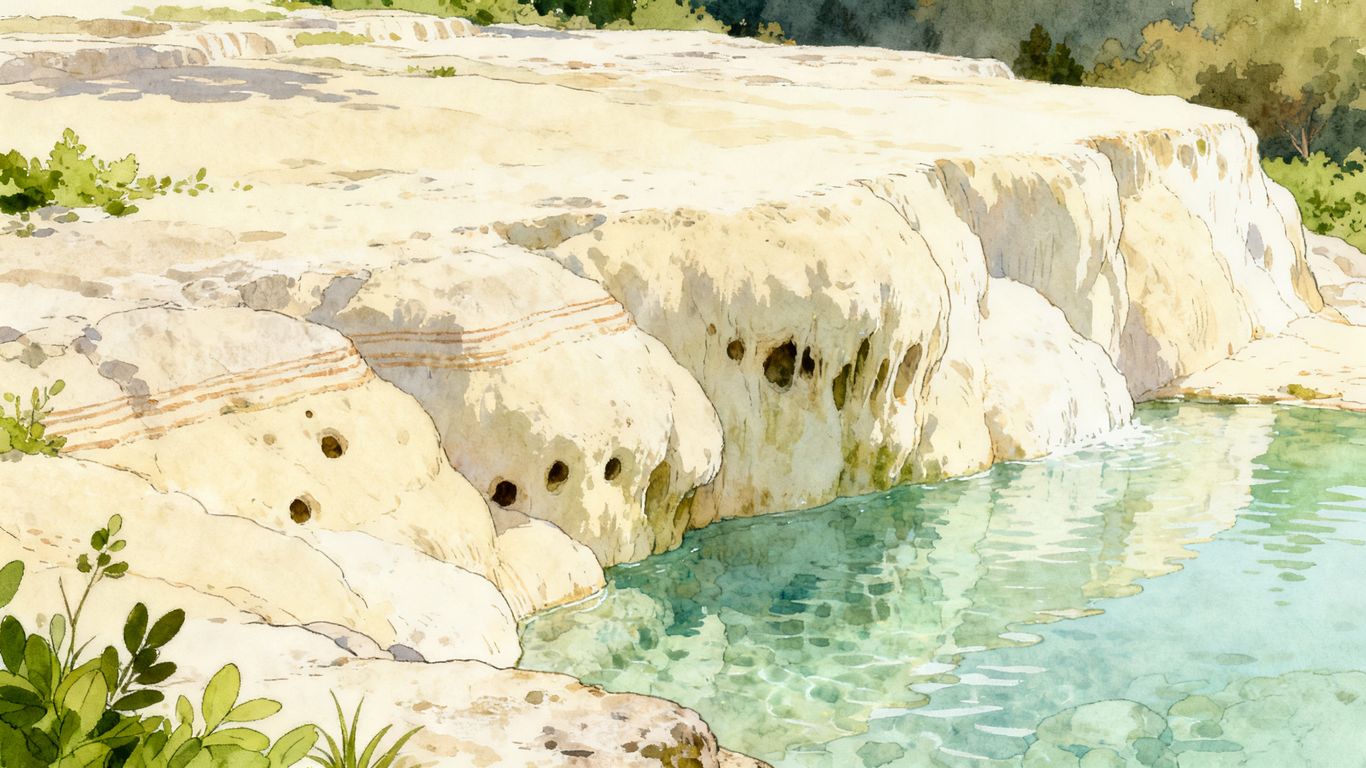
How mineral-rich water creates travertine
Travertine forms when calcium carbonate dissolved in freshwater precipitates and builds up in layers, often near mineral springs. As water flows and changes conditions, deposits can develop bands, cavities, and fibrous or concentric patterns. Over time, those deposits become the stone quarried for floors, walls, and other uses. For a concise background on travertine formation, the basic process is easier to picture as mineral-rich water slowly leaving behind a stone record of its path.
Common colors, veining, and natural variation
Cream, ivory, beige, gold, brown, and silver-gray tones are all found in travertine. Some pieces have quiet, diffuse markings; others show stronger bands or linear veining. This natural color variation gives a finished surface depth, but it also means a small sample may not capture the full range in a larger order. View several pieces together when possible, and plan the layout so the variation feels intentional.
How travertine compares with marble and other natural stones
Travertine and marble are both natural stones, but they tend to read differently in a room. Travertine often has a more open, softly textured surface and earthy palette, while marble is commonly selected for its more crystalline appearance and distinctive veining. Granite and other stones have their own patterns and practical considerations. For a broader overview of travertine and stone comparisons, focus on the specific finish, application, and maintenance needs rather than assuming one material suits every project.
Travertine types and product formats
Travertine is sold in formats suited to broad surfaces, detailed accents, and outdoor areas. The right format affects how the stone is installed and how its pattern reads across a space. At Surfaces Galore, the documented travertine range includes tiles, mosaics, slabs, and pavers, with product options varying by collection.
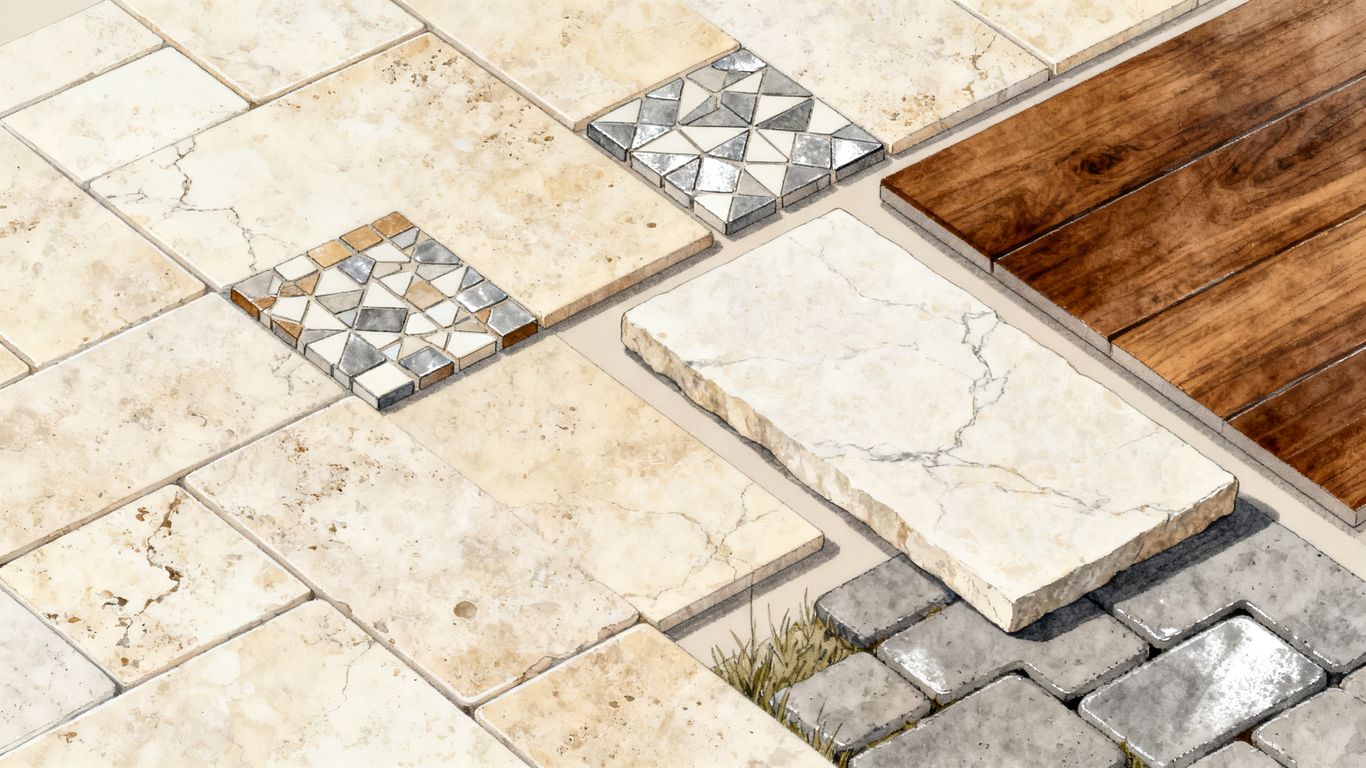
Tiles for floors, walls, and backsplashes
Field tiles create a continuous surface across floors and walls, while smaller formats can suit backsplashes and other focused areas. Available sizes and finishes differ between products, so compare the actual specifications rather than relying on a general description of travertine. Examples include La Travonya travertine tile in a filled-and-honed format and tumbled travertine tile for a more textured look. Surfaces Galore offers travertine tiles for floors, walls, and backsplashes.
Mosaics for detailed patterns and accent areas
Mosaics bring smaller pieces together on a mesh or in a repeating arrangement, making it easier to introduce pattern into a compact area. Herringbone, hexagon, brick, and other layouts can shift the mood from orderly to more decorative. The La Travonya brick mosaic is one documented honed option; check the individual product details for its finish and intended use. Mosaics can complement larger field tiles without making every surface compete for attention.
Slabs, pavers, and specialty pieces for custom projects
Slabs provide broad, uninterrupted areas for custom applications, while pavers are intended for outdoor projects. Specialty pieces such as borders and liners can finish an edge or create a transition between materials. Surfaces Galore’s product information includes travertine slabs and pavers as well as decorative pieces; confirm current availability and suitability with the specific product listing. For a coordinated floor layout, a French pattern set combines multiple tile sizes in a classic arrangement.
Finishes, patterns, and design styles
Finish changes the way travertine reflects light and feels underfoot, while layout determines how its natural markings move across a surface. A single stone color can look calm or richly textured depending on these choices. Compare finish samples in the room’s actual light before settling on a full order.
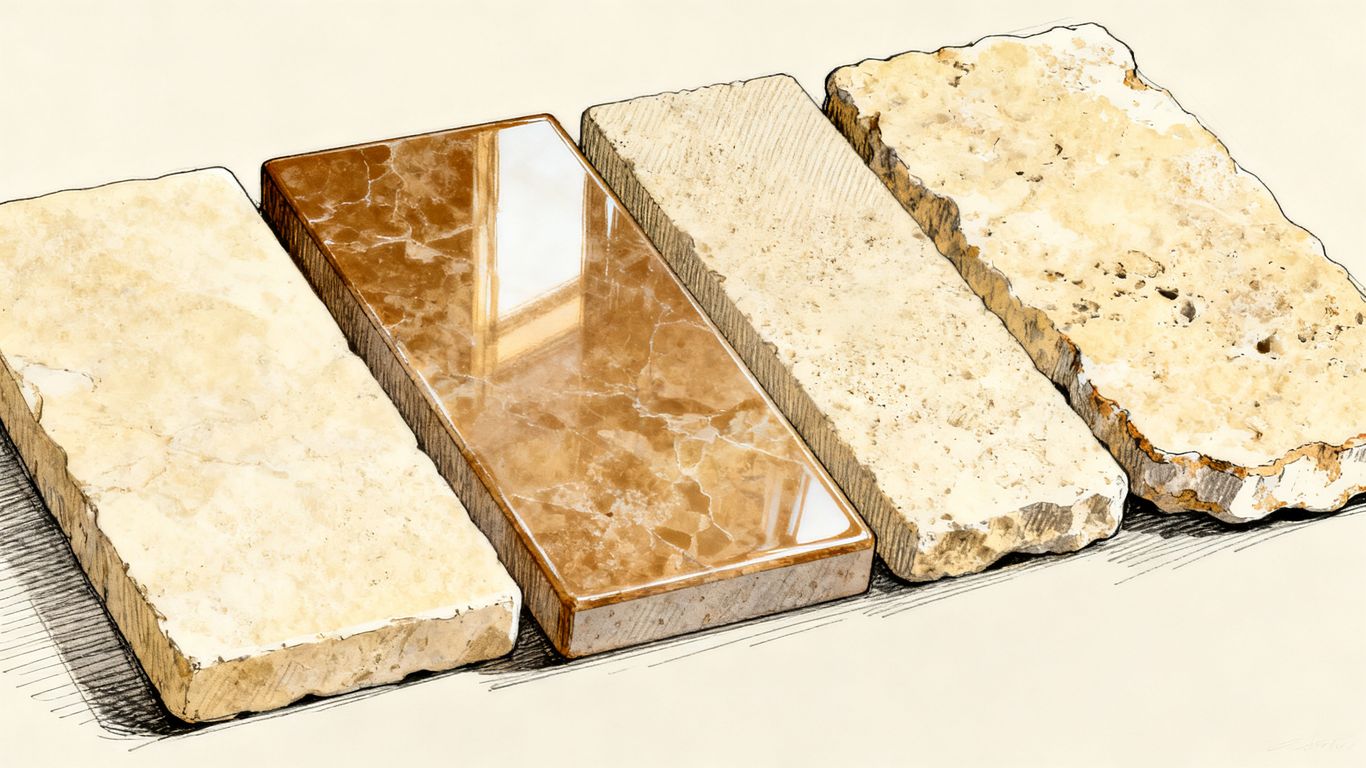
Honed and filled for a smooth, matte surface
Filling and honing address the stone’s natural openings and create a smoother, matte appearance. This finish works well when you want travertine’s variation without a strongly rustic texture. It is available in the brand’s documented travertine options, though specifications vary by product. A filled and honed tile offers one example to compare with more textured finishes.
Polished, brushed, and tumbled finishes compared
Polished surfaces have a shinier appearance, while brushed finishes retain a more tactile quality. Tumbled stone has softened edges and an aged, informal look; chiseled edges create a more pronounced outline. The table below gives a broad visual guide, but product names and finish details can differ, so use samples to confirm what a particular tile looks and feels like.
| Finish | General appearance | A useful design direction |
|---|---|---|
| Honed | Smooth and matte | Quiet, understated interiors |
| Polished | Reflective and sleek | More formal or luminous spaces |
| Brushed | Textured and softly worn | Natural, relaxed rooms |
| Tumbled | Aged edges and rustic texture | Traditional or informal settings |
No finish is automatically right for every room. Match the surface to the intended application and check product guidance, especially in wet or outdoor areas.
Vein-cut, French pattern, and mosaic layouts
Vein-cut travertine presents its linear markings in a more directional way, making the stone’s bands part of the room’s geometry. French pattern layouts mix tile sizes for a traditional, varied rhythm, while mosaics create a smaller-scale repeat. A vein-cut travertine tile is one option for a linear look; a brick mosaic offers a different scale. Choose a layout that relates to the room’s proportions, not just the sample board.
Choosing colors to suit modern or classic interiors
Ivory and beige can keep a room light and warm, while walnut and Noce tones bring a deeper, earthier feeling. Silver-gray options can feel cooler and more contemporary, and mixed colors may make the surface more visually active. Look at samples beside cabinetry, paint, and flooring. Seeing the materials together helps reveal whether the palette feels balanced in your own space.
Where travertine works best
Travertine is used in a range of interior and exterior projects, from floors and walls to patios and pool areas. The stone’s look can connect a room to outdoor materials or lend a bathroom a softer, natural feel. For every application, check that the chosen product and finish are appropriate for the conditions it will face.
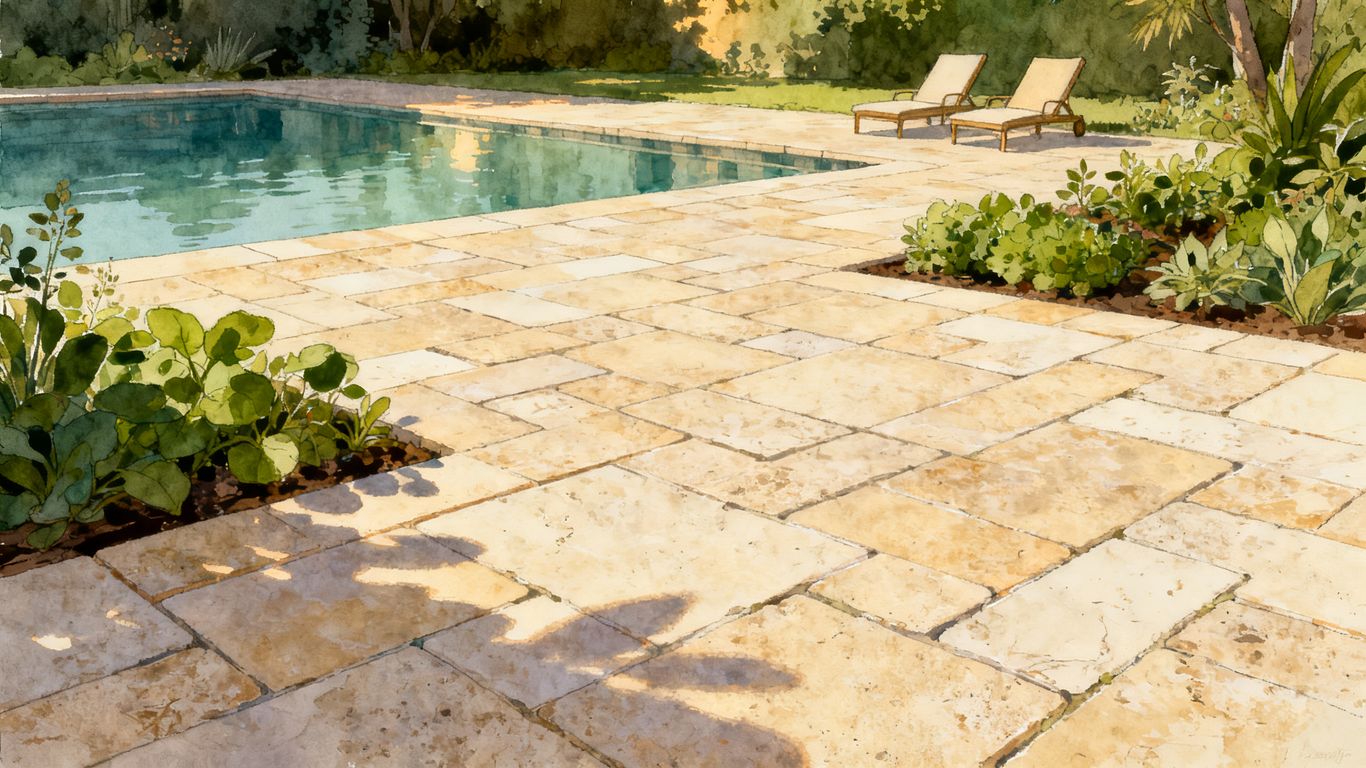
Flooring for living spaces and high-traffic areas
Travertine flooring brings natural variation into entryways, living rooms, and other frequently used spaces. Its markings can make a broad floor feel less uniform, and several sizes and patterns are available across product collections. Consider the expected foot traffic, finish, and cleaning routine before choosing. A sample viewed across a larger area can help you judge how strongly the variation will read.
Bathrooms, showers, and kitchen backsplashes
Travertine can be used for bathroom floors, shower walls, kitchen backsplashes, and other interior surfaces. Mosaics and smaller-format tiles are useful when a design calls for more detail, while larger tiles create a quieter field. In wet areas, plan the finish, drainage, sealing, and installation as a complete system. Follow product-specific guidance and consult a qualified installer where needed.
Patios, pool surrounds, and other outdoor settings
Travertine pavers can bring a warm stone palette to patios, walkways, and pool surroundings. Textured options may be worth considering where traction matters, but performance depends on the product, finish, and site conditions. Ask whether a particular selection is intended for outdoor use, and consider local weather and installation requirements. A travertine outdoor surface guide can offer another perspective on the choices involved.
Selecting products for the needs of each application
The most attractive tile is not necessarily the best fit for every location. Before choosing, write down the room conditions and the qualities the surface needs to provide. This short checklist helps narrow the options without losing sight of appearance:
- Identify whether the surface is indoors or outdoors.
- Note exposure to water, food, dirt, and frequent foot traffic.
- Compare finish and texture against the intended use.
- Confirm product dimensions and installation guidance.
Use those answers to compare samples and product details side by side. A considered match can make the stone feel at home in the space and make care expectations clearer from the start.
Travertine performance and maintenance
Travertine is valued for its natural look and use across many kinds of projects, but it is still a stone surface that benefits from thoughtful care. Its open areas and finish can influence how it responds to moisture and everyday spills. A clear maintenance plan helps preserve the appearance you chose.
Durability, surface texture, and expected wear
Natural stone can show changes with use, and the exact character of that wear depends on the product, finish, and setting. Textured surfaces may disguise small marks differently from smooth ones; polished finishes also reflect light in a different way. Consider how the space is used each day and whether a lived-in patina suits your preference. Discuss product-specific expectations with the supplier or installer before committing.
Sealing and routine cleaning basics
Sealing needs depend on the stone and the product instructions, so follow the sealer manufacturer’s directions and any applicable installation guidance. For routine cleaning, use products approved for natural stone and avoid assuming that a general household cleaner is suitable. A gentle, consistent routine is easier to maintain than waiting until residue builds up. Test cleaning products in an inconspicuous area when appropriate.
Preventing stains, etching, and moisture-related issues
Promptly wipe spills and avoid letting moisture sit on the surface for long periods. Use protective mats where practical, and take care with acidic substances, which can affect some natural stone finishes. In bathrooms and other wet locations, sound waterproofing, drainage, and installation matter as much as the stone selection. If a mark or surface change appears, seek advice about the specific material before using a strong treatment.
A little routine attention is easier than correcting a problem after it has settled in.
Build cleaning and protection into ordinary care, and check with a stone professional when a product or treatment is uncertain. That cautious approach helps prevent well-meant cleaning from creating a new issue.
Installation considerations for indoor and outdoor projects
Inspect the material before installation and plan the layout in advance, since natural stone varies in color and pattern. Dry-laying tiles can help distribute those differences and reveal cuts or transitions before adhesive is applied. Substrate preparation, setting materials, grout, and sealing all need to suit the specific product and conditions. For outdoor projects, confirm that both the stone and installation approach are appropriate for the local climate.
How to choose and buy travertine
Buying travertine is easier when you assess the stone, the project, and the delivery plan together. Natural variation is part of the material, so samples and current stock details deserve close attention. A little preparation can also help you request a more accurate quote and avoid last-minute quantity changes.
Comparing samples, color variation, and current stock
Order or view samples to compare color, texture, and finish alongside the other materials in your room. Then ask how the sample relates to the current stock, because natural stone can vary between pieces and batches. Surfaces Galore lists travertine products in a range of colors and formats; confirm current stock and product details before choosing. A travertine sample tile can help you assess a filled-and-honed option in person.
Estimating quantities and planning for overage
Measure the full area, then account for cuts, edges, layout, and any pieces that may need to be set aside after inspection. The amount of extra material depends on the project and pattern, so ask your installer or supplier to review the calculation before ordering. Keep these planning steps together when preparing a quantity estimate:
- Measure each surface and record its dimensions.
- Include transitions, niches, borders, and other detailed areas.
- Ask the installer to recommend an appropriate overage.
- Confirm whether the product is sold by piece, box, or another unit.
Once the layout and quantities are checked, compare the estimate with the product’s listed packaging and availability. Planning ahead is especially useful when a pattern needs several sizes or when matching material later could be difficult.
Reviewing pricing, bulk discounts, and nationwide shipping
Pricing can vary with product, format, finish, quantity, and availability, so compare like with like when reviewing options. Surfaces Galore serves customers nationwide, and project buyers can ask about bulk discounts and shipping details when requesting current pricing. Shipping arrangements and timing should be confirmed for the specific order rather than assumed. If you are coordinating several trades, build delivery timing into the broader project schedule.
Planning guides for other purchases cover different needs, from Dallas kitchen planning and Malaga home buying to term and whole life, online casino games, and training video planning. Travertine buying has its own practical checks: sample the stone, confirm the quantity, and verify the current product and delivery details.
Requesting a quote and selecting products from Surfaces Galore
Before requesting pricing, gather the product name or format, desired finish, estimated quantity, and project location. Surfaces Galore offers travertine tiles, mosaics, slabs, and pavers, so sharing the intended application can help focus the selection. The team can confirm current product details and discuss pricing and shipping for the order. You can request a quote once you have the project basics together.
Conclusion
Travertine’s natural color, texture, and range of formats make it a flexible choice for many spaces, provided the finish and product suit the application. Compare samples, plan quantities carefully, and follow product-specific installation and care guidance; when you are ready to explore options, contact Surfaces Galore to review current travertine products and request a project quote.
Frequently Asked Questions
Travertine has a distinctive look, but choosing it well means weighing appearance alongside location, finish, and care. These answers cover common questions to help you make a more informed decision.
What is travertine made of?
Travertine is a natural stone formed when calcium carbonate dissolved in freshwater precipitates and accumulates over time, often near mineral springs.
Does travertine vary in color?
Yes. Its color can range from ivory and cream to beige, gold, brown, and gray, with natural differences in veining and texture from piece to piece.
What is the difference between honed and tumbled travertine?
Honed travertine generally has a smoother, matte appearance, while tumbled stone has softened edges and a more aged, textured look.
Can travertine be used outdoors?
Some travertine products are intended for outdoor applications, but suitability depends on the specific product, finish, climate, and installation. Confirm those details before purchase.
Is travertine suitable for bathrooms?
Travertine is used for bathroom floors, shower walls, and other bathroom surfaces. Choose products and installation methods appropriate for wet conditions, and follow care guidance.
Does travertine need to be sealed?
Sealing requirements vary by product and installation. Follow the stone and sealer manufacturers’ instructions, and ask a qualified installer if you are unsure.
How much extra travertine should I order?
The appropriate overage depends on the project dimensions, pattern, cuts, and installation plan. Ask your installer or supplier to review the quantity before placing an order.
Leave a comment