
Types of Travertine Finishes: A Room-by-Room Buying Guide

The main types of travertine finishes are honed, polished, tumbled, brushed, and split-face, and each one changes how the stone looks, feels underfoot, and holds up over time. For most indoor floors, filled honed travertine is the safest bet. For pool decks, patios, and other wet or high-traffic outdoor zones, tumbled or brushed surfaces give you the grip you actually need.
- Maintenance: plan on sealing travertine annually, regardless of finish, though unfilled stone needs more frequent attention.
- Slip and look: honed balances a soft, matte look with everyday practicality; polished looks the most formal but turns slick when wet; tumbled and brushed trade some shine for texture and traction.
Key Takeaways
Choosing a travertine finish is fundamentally a slip-resistance and maintenance decision first, and an aesthetic decision second.
| Point | Details |
|---|---|
| Default indoor choice | Filled honed travertine suits most kitchens, living rooms, and dry bathroom floors. |
| Default wet-area choice | Tumbled or brushed travertine provides the traction polished and honed finishes lack. |
| Sealing schedule | Reseal travertine annually, with unfilled stone needing more frequent attention. |
| Cleaning rule | Avoid acidic and citrus-based cleaners, which etch and dull the stone’s surface. |
| Where to source it | Surfacesgalore ships filled and unfilled travertine nationwide with sample and bulk-quote options. |
Table of Contents
- Different Types of Travertine Finishes Explained
- Filled Versus Unfilled Travertine: Why Pore Filling Matters
- How to Choose a Travertine Finish by Room
- Edge Treatments and Cuts That Change the Look
- Caring for Travertine: Sealing, Cleaning, and Repairs
- What Surfaces Galore Recommends for Real Projects
- Why Finish-First Thinking Beats Style-First Shopping
- Get the Right Travertine Finish From a Direct Importer
- Sources
- FAQ
Different Types of Travertine Finishes Explained
Travertine starts as a sedimentary rock built from calcium carbonate deposits, the same material Roman builders used for the Colosseum and the Trevi Fountain. That geologic origin explains why every travertine finish has to deal with natural pores and voids in the stone. How a fabricator treats those pores, and how they polish or texture the surface, is what separates one finish from another.
Honed travertine
Honing is a grinding process that removes the shine and leaves a flat, matte to satin surface. It’s the finish most homeowners picture when they think of a “classic” travertine floor: smooth, understated, and close in feel to worn limestone. Honed travertine is commonly sold filled, which smooths out the surface further and makes daily cleanup easier because there are fewer open pores to trap dirt or grout haze.
- Best for: kitchens, living rooms, hallways, bathroom floors
- Pros: forgiving of scratches, low glare, pairs with almost any design style
- Cons: can look flat or “chalky” if oversealed; needs periodic resealing to keep its low sheen from turning dull
Polished travertine
Polishing takes honing a step further, grinding and buffing the surface until it reflects light like glass. This is where travertine’s veining and color variation really show off, which is why polished slabs show up so often on accent walls and formal foyer floors. The tradeoff is real: a polished surface is more prone to water spotting and loses slip resistance the moment it gets wet.
- Best for: dry, low-traffic showcase areas — entryways, formal dining rooms, fireplace surrounds
- Pros: maximum shine, deepest color saturation, a genuinely upscale look
- Cons: shows every water droplet and footprint; a poor, sometimes dangerous choice for bathroom or shower floors
Tumbled travertine
Tumbling is mechanical. Tiles get tossed together with sand, gravel, or pebbles until the edges soften and the surface picks up small pits and a weathered texture. That roughness isn’t just cosmetic. It’s functional: tumbled travertine typically lands in a static coefficient of friction range around .50 to .70, which is why it shows up so often on pool decks and terraces where wet feet need real traction.
- Best for: pool surrounds, outdoor patios, rustic kitchen backsplashes, Tuscan and Mediterranean interiors
- Pros: excellent grip, hides wear and small chips well, ages gracefully
- Cons: harder to keep spotless (grout lines and pits collect grime); less formal look than honed or polished
Brushed and antique travertine
Brushing uses a wire brush to rough up the surface without going as far as a full tumble. The result sits in the middle: more texture and slip resistance than honed, but a more consistent, less pitted profile than tumbled. Designers reach for brushed travertine when a client wants the softened, “antique” character of tumbled stone but a cleaner line for a more contemporary layout.
- Best for: transitional kitchens, covered patios, wall cladding, projects splitting the difference between rustic and modern
- Pros: better traction than honed without tumbled’s aggressive pitting; easier to keep clean than fully tumbled stone
- Cons: fewer suppliers stock it compared to honed, polished, and tumbled, so lead times can run longer
Split-face travertine
Split-face isn’t ground or brushed at all. The stone is mechanically split along its natural bedding planes, leaving a rough, three-dimensional face with visible texture and depth. It has almost no place on a floor, but as an accent wall, fireplace surround, or exterior facade, it brings a rugged, architectural presence nothing else on this list matches.

Pro Tip: If you’re mixing finishes in one room, match the grout color to the darkest vein in your polished or honed tile first. It’s much harder to correct a grout choice after installation than to test a sample against the stone.
For a deeper side-by-side on production methods, the Surfaces Galore travertine finishes guide walks through how each surface is fabricated in more technical detail.
Filled Versus Unfilled Travertine: Why Pore Filling Matters
Travertine forms with natural holes and channels, and how a fabricator handles those voids changes everything from cleaning routine to final appearance.
- Filled travertine uses a resin or cementitious filler, often color-matched to the stone, to close surface pores at the factory. It creates a smoother, more uniform surface that’s noticeably easier to mop and less likely to trap bacteria or stain-causing liquids.
- Unfilled travertine keeps its natural voids exposed, giving it a more rustic, quarry-direct look that many designers specifically want for outdoor and Mediterranean-style projects.
- Field filling happens on-site during grouting, when installers pack exposed pores with grout or a matching filler as they go. It’s common on unfilled tumbled tile and gives installers more control over color matching row by row.
Filled travertine is almost always the better call for busy kitchens and indoor floors, since fewer open pores mean fewer places for grease, wine, or coffee to settle in permanently. Unfilled stone earns its keep outdoors, where that raw, pitted texture reads as authentic rather than unfinished. The Surfaces Galore guide to travertine fill breaks down which fill materials hold up best in each setting.
How to Choose a Travertine Finish by Room
Picking the right finish comes down to answering four questions honestly: how much foot traffic will this surface see, how often will it get wet, how much upkeep are you willing to do, and what look are you actually going for?
- Kitchen floors: filled honed travertine handles spills and daily wear without turning slippery.
- Bathroom floors: honed or brushed, never polished. Wet feet on a polished floor is a fall risk.
- Shower walls: polished or honed works fine on vertical surfaces since you’re not standing on them.
- Shower floors: tumbled or brushed only, for the traction.
- Pool decks and patios: tumbled travertine, full stop. It’s the finish built for wet bare feet.
Slip resistance isn’t a style preference. Experts generally recommend weighing maintenance tolerance and traction ahead of appearance for any wet or high-traffic zone, then choosing the finish within that constraint. Climate matters too: in regions with hard freeze-thaw cycles, water trapped in stone pores can crack tiles over repeated seasons, so exterior installations in those areas call for premium, consistently thick stone with proper drainage details, or a porcelain alternative where the risk is too high to accept. If you’re grouting unfilled tile, seal before grouting to keep grout haze from staining the open pores, then seal again after the joints cure.
Edge Treatments and Cuts That Change the Look
The finish on the face of the tile is only half the story. How the stone is cut and edged shapes the entire room’s formality.
- Chiseled edge: a rough, hand-hewn look along the tile’s border, common on rustic and Old World floors.
- Straight (sawn) edge: a crisp, factory-cut line that suits contemporary and minimalist layouts.
- Split-face: reserved for walls and facades, never wet interior floors, where its texture would trap grime.
- Vein cut: sliced parallel to the stone’s natural layers, producing straighter, more linear patterning that reads closer to marble.
- Cross cut: sliced across those layers, revealing the cloud-like, circular pore patterns most people associate with classic travertine.
Vein cut pairs well with contemporary and formal interiors that want cleaner lines. Cross cut suits Mediterranean and traditional spaces where that swirling, organic pattern is the whole point. If you’re chasing a specific tile-pattern layout for a bathroom remodel, this guide to geometric tile patterns has useful layout inspiration that applies just as well to stone as it does to ceramic.
Caring for Travertine: Sealing, Cleaning, and Repairs
Every travertine finish is porous to some degree, which means sealing isn’t optional if you want the stone to look good in five years, not just five months.
- Seal annually. Stone specialists widely recommend resealing travertine every year to keep moisture and stains from working into the surface, and unfilled stone often needs closer attention since it has more exposed pore surface to protect.
- Skip acidic cleaners entirely. Vinegar, lemon juice, and most citrus-based sprays will etch travertine, leaving dull spots that no amount of scrubbing fixes. Use a pH-neutral stone cleaner instead.
- Watch for finish-specific issues. Polished floors show water spots fastest and need a soft, dry cloth after any spill. Unfilled tumbled stone can lose grout or filler in the pores over time and may need spot refilling every few years.
- Repolish or refill as needed. A honed floor that’s picked up scratches can often be rehoned rather than replaced, and a polished floor that’s lost its shine can be rebuffed by a professional.
Pro Tip: Keep a small sample tile from your installation. It’s the fastest way to test a new cleaner or sealer without risking your actual floor.
For the exact sealing sequence, including how long to wait between coats, the step-by-step sealing workflow from Surfaces Galore covers the timing in more detail, and the 2026 travertine care guide lists specific cleaning products that won’t damage the stone.
What Surfaces Galore Recommends for Real Projects
As a direct importer shipping natural stone nationwide, Surfacesgalore sees the same buying mistakes repeat across kitchens, patios, and pool decks: shoppers pick a finish for its photo appeal, then discover too late it can’t handle their traffic or moisture. Filled and honed travertine is often the most practical starting point for modern interiors, since it balances an authentic stone look with maintenance that fits real life.
- For busy kitchens and living areas, start with filled honed tile.
- For patios and pool surrounds, tumbled travertine gives you the grip the space demands.
- For accent walls or a fireplace surround, split-face or a cross-cut polished tile adds real visual weight.
Browse the Surfaces Galore application ideas guide for room-specific layouts, or shop natural stone tiles today to compare finish samples side by side before you commit to a full order.
Why Finish-First Thinking Beats Style-First Shopping
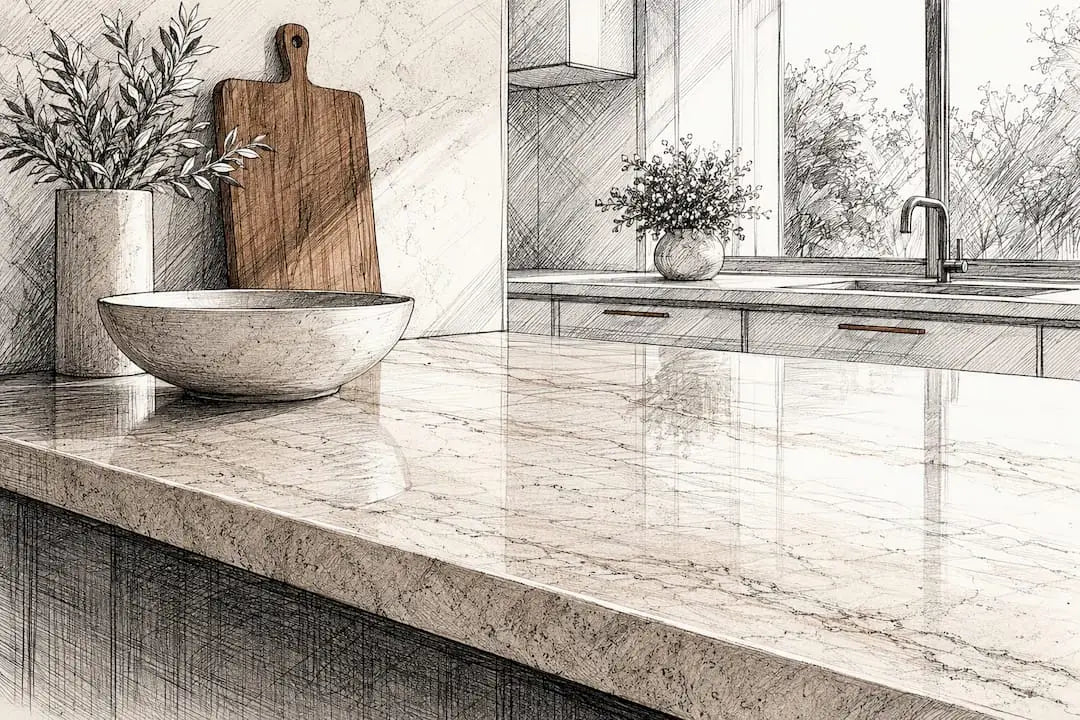
Most travertine advice online starts with color and pattern, then treats finish as an afterthought. That’s backward, and it’s why so many homeowners end up with a beautiful polished floor in a bathroom that’s genuinely dangerous when wet. The finish determines whether a stone works in a given room at all; the color and vein pattern only decide whether you like looking at it once it’s there.
The bigger blind spot is maintenance honesty. Buyers see a tumbled or unfilled travertine sample and fall for the rustic texture without asking how often they’ll need to reseal it or refill worn pores. Filled honed travertine isn’t the most photogenic option in the showroom, but it’s the one that still looks good after three years of actual foot traffic, spilled coffee, and kids running through the kitchen. Prioritize the finish’s real-world behavior first: slip resistance for wet areas, cleanability for high-traffic zones, and sealing frequency for your own patience level. Pick the pattern and color after that box is checked, not before.
— cihan
Get the Right Travertine Finish From a Direct Importer
Surfacesgalore cuts out the markup that comes from buying travertine through multiple middlemen. As a direct importer based in Anaheim, California, shipping nationwide, Surfacesgalore sources travertine, marble, and limestone in the honed, polished, tumbled, brushed, and split-face finishes covered in this guide, plus filled and unfilled options for both indoor and outdoor projects.

Whether you’re a homeowner comparing samples for a kitchen remodel, a designer sourcing finishes for a client’s bathroom, or a contractor placing a bulk order for a commercial build, the same catalog covers residential and trade needs without separate pricing tiers to navigate. Custom cuts, bulk quotes, and sample orders are all available directly through the site. Request a sample set or a bulk quote at Surfaces Galore to see the exact finish and color variation you’d be installing, before you order a single tile.
Sources
- Comparing Honed and Tumbled Travertine for Your Home - Tilen Space
- Travertine Tiles Guide | La Fabrico Tile Showroom | Exeter
- Travertine Floor Tile: Finishes, Colors, Sealing, and Pricing Guide - D and G Flooring
FAQ
What is the best finish for travertine?
There’s no single best finish. Filled honed travertine suits most indoor floors, while tumbled or brushed finishes work better for wet or high-traffic outdoor areas.
What is the difference between tumbled and brushed travertine?
Tumbled travertine is mechanically tossed with abrasive material to create a pitted, weathered texture with higher slip resistance, while brushed travertine uses a wire brush for a subtler, more consistent texture with moderate traction.
What are the different grades of travertine?
Travertine is typically graded by density, pore size, and consistency of color and veining, though grading standards vary by supplier, so ask directly about a specific batch’s grade before ordering.
Is polished travertine safe for bathroom floors?
Polished travertine loses significant slip resistance when wet, making it a poor choice for bathroom or shower floors; honed or brushed finishes are safer for those areas.
How often should travertine be sealed?
Most stone specialists recommend resealing travertine once a year, with unfilled travertine often needing closer attention because more of its surface pores stay exposed.

Leave a comment