
Beige Marble: 3 In Stock Formats & SKUs for Designers & Homeowners

Beige marble covers everything from pale ivory to warm greige, and it earns its popularity by hiding daily wear better than white marble while still reading as luxurious. Choose it over white when you want a room that feels warmer under natural light, or when you need a countertop or floor that forgives everyday scuffs and minor etching without constant babying. The rest of this guide covers the main varieties, where each performs best, and how to buy from Surfaces Galore’s sample and SKU options.
TL;DR:
- Beige marble offers better concealment of daily wear than white marble, making it ideal for high-traffic areas and surfaces that require durability.
- Variations like Crema Marfil and Botticino are popular due to their consistent tones and subtle veining, suitable for both large-scale and feature applications.
- Honed and leathered finishes are recommended for floors and wet areas to reduce glare, hide scratches, and improve slip resistance.
- Proper sealing, especially on both the top and underside of countertops, and use of pH-neutral cleaners are essential for maintaining beige marble’s appearance over time.
- Buyers should request samples under real lighting conditions, match lot and origin, and verify supplier transparency to ensure consistent color and quality.
Table of Contents
- What Are the Main Types of Beige Marble?
- Where Should You Use Beige Marble in Your Home?
- How Do You Care for Beige Marble Without Damaging It?
- How Do You Choose and Buy the Right Beige Marble?
- How Does Surfaces Galore Support Beige Marble Projects?
- What Are Common Defects to Watch for in Beige Marble?
- What Should You Know Before Installing Beige Marble?
- Design Perspective: Pairing and Trends
- View and Order Beige Marble Samples
- Sources
- FAQ
What Are the Main Types of Beige Marble?
Not all beige marble looks or behaves the same way, and the differences matter more than most buyers expect. Some varieties read almost cream colored with faint, ghostly veining. Others carry bold brown streaks or fossil-like patterning that turns a slab into a focal point on its own.
- Crema Marfil is quarried in Spain and stays one of the most requested beige marbles because of its uniform tan background and subtle, flowing veins, a combination that works in almost any room style.
- Botticino, often sold under names like White Pearl, brings a slightly warmer, more golden beige with linear veining, common in classic and transitional interiors.
- Sahara Beige leans sandier and more textured, with a mottled look that hides seams well on large floor runs.
- Emperador Light sits at the deeper end of the beige spectrum, edging toward tan-brown with heavier veining for a richer, more dramatic look.
- Avorio and Arabian Desert varieties trend paler and calmer, closer to true ivory, and suit minimalist spaces that want warmth without visual noise.
- Crema Amalfi (sometimes labeled White Moon) mixes soft beige with faint gray undertones, a good middle ground between warm and neutral palettes.
Geologically, beige marble gets its color from iron oxides and clay minerals trapped in the limestone during metamorphosis. More iron generally means a deeper tan or brown cast; fewer means the stone stays closer to cream or ivory. Breccia-style beige marbles, which show angular, shattered-looking patterns, tend to work best as a single feature surface rather than spread across an entire floor, while calmer, more uniform slabs handle large-scale cladding without overwhelming a room.
Where Should You Use Beige Marble in Your Home?
Beige marble’s warmth and forgiving surface make it flexible across nearly every room, but the right variety and finish depend on the application. Beige marble is commonly recommended for floors, bathrooms, and kitchens precisely because its tones and texture make spaces feel more inviting while masking everyday marks.
- Countertops: Calmer beige varieties like Avorio or a lightly veined Crema Marfil work well here since busy patterning competes with backsplashes and cabinetry. A leathered finish adds grip and hides fingerprints around a kitchen island.
- Floors: Honed finishes reduce glare and slip risk, and they mask etch marks far better than a glossy polish across a large floor run. Sahara Beige and Botticino both perform well underfoot in entryways and living areas.
- Walls and large cladding: Bold breccias shine here as a feature wall, while calmer stones like Crema Amalfi suit full-room cladding without visual fatigue.
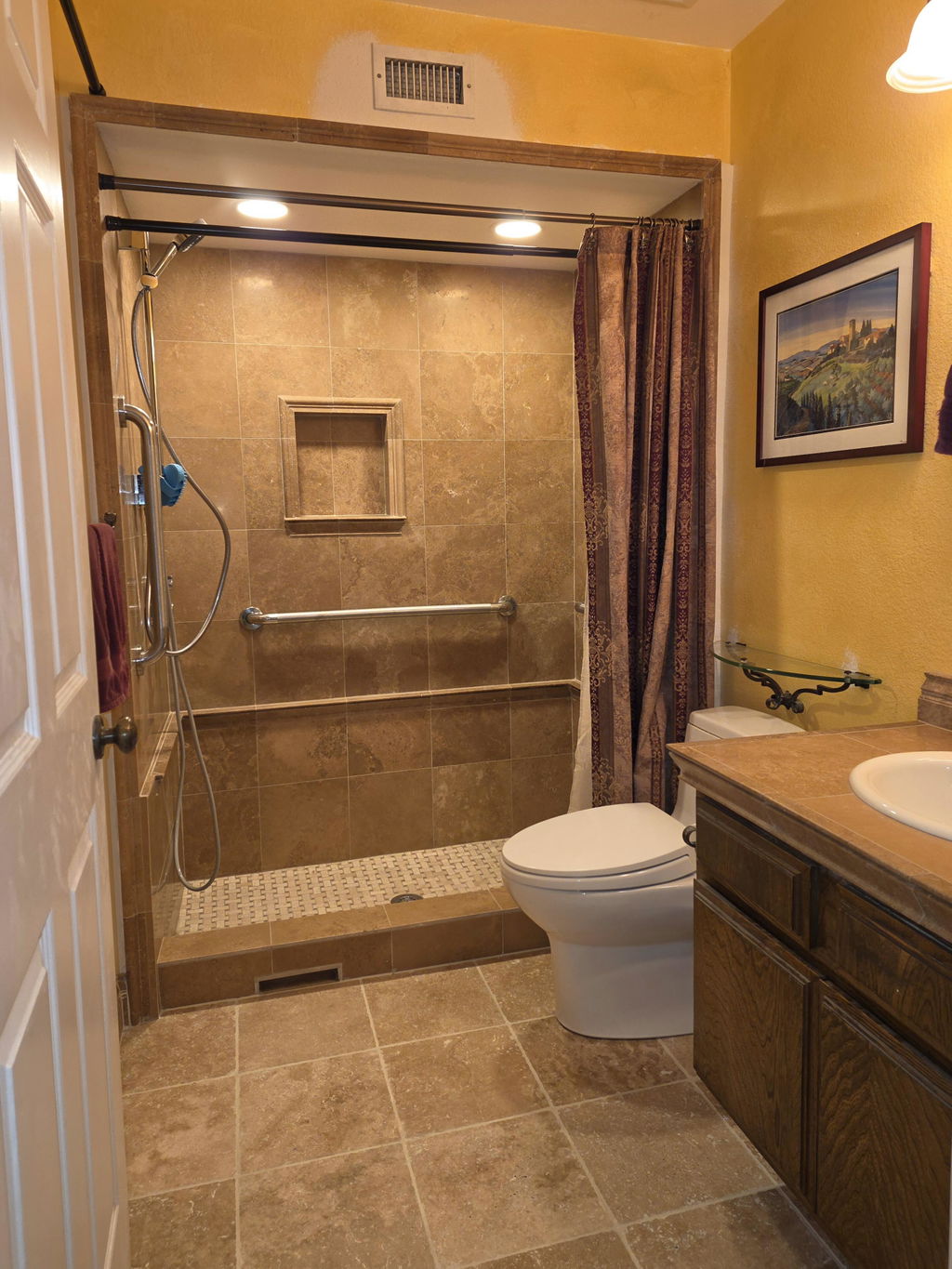
- Showers and backsplashes: Tumbled or honed finishes in Botticino or White Pearl handle moisture and daily contact better than high-polish surfaces, which show water spots more readily.
Sunlight matters too. Rooms with strong southern exposure tend to flatter deeper beige tones like Emperador Light, while north-facing rooms benefit from paler stones that don’t read as muddy under cooler light. Pair beige marble with warm brass or bronze fixtures for a traditional feel, or brushed nickel and pale oak for something more contemporary.
How Do You Care for Beige Marble Without Damaging It?
Finish choice changes both the look and the maintenance load of a beige slab. Polished finishes deepen color and increase reflectivity, which looks stunning on a feature wall but shows etching and scratches more readily than a matte surface. Honed finishes mute the shine and hide daily wear, making them the better call for kitchen floors and bathroom vanities. Leathered finishes add a subtle texture that resists fingerprints and gives extra grip near wet areas.
- Reseal beige marble roughly once a year in kitchens and bathrooms, sooner in high-traffic commercial spaces.
- Use only pH-neutral stone cleaners; skip vinegar, lemon, or anything acidic since marble is calcite-based and reacts to acids, causing dull etch marks.
- Wipe up wine, coffee, and citrus spills immediately rather than letting them sit.
- Use coasters and trivets on countertops, especially around cooking zones where acidic splashes are common.
Beige marble generally shows daily wear less than white marble because its natural pattern variation and warmer tone camouflage minor scratches and etching. That doesn’t mean it’s indestructible. It just means small imperfections blend into the stone’s existing character instead of standing out against a stark white background, which is exactly why so many busy kitchens and entryways lean beige instead of white.
Pro Tip: Ask your fabricator to seal both the top and the underside of any beige marble countertop before installation. Moisture wicking up from below is one of the most overlooked causes of uneven staining.
How Do You Choose and Buy the Right Beige Marble?
Buying natural stone sight-unseen from a photo is one of the most common regrets homeowners run into, since lighting, screen calibration, and lot variation can make two “identical” slabs look nothing alike in person.
- Order samples first. Request actual tile or slab samples and view them under your project’s real lighting, not the store’s showroom lights, before committing to a full order.
- Check lot and bed matching. For larger projects, ask the supplier to pull material from the same lot or quarry bed so veining and tone stay consistent across the full run.
- Get an itemized quote. Beige marble pricing varies with origin, rarity, veining complexity, and finish. Crema Marfil, for instance, tends to rank as one of the more affordable and widely available beige options, while heavily veined or rare beige breccias cost more. Ask for material, fabrication, and installation broken out separately so you know exactly what you’re paying for.
- Watch for red flags. Vague quarry provenance, inconsistent lot photos, or a supplier who can’t explain their cutting and fabrication process are all warning signs worth taking seriously.
- Confirm return and sample policies before ordering in bulk, especially for commercial projects with tight timelines.
A marble selection checklist can help keep these steps organized if you’re managing multiple rooms or a full commercial build-out at once.
How Does Surfaces Galore Support Beige Marble Projects?
Some suppliers work as direct importers and nationwide suppliers, which can mean marble ships without the markup from multiple middlemen. Trade pricing and bulk quote options may be available for designers, architects, and contractors managing larger projects.
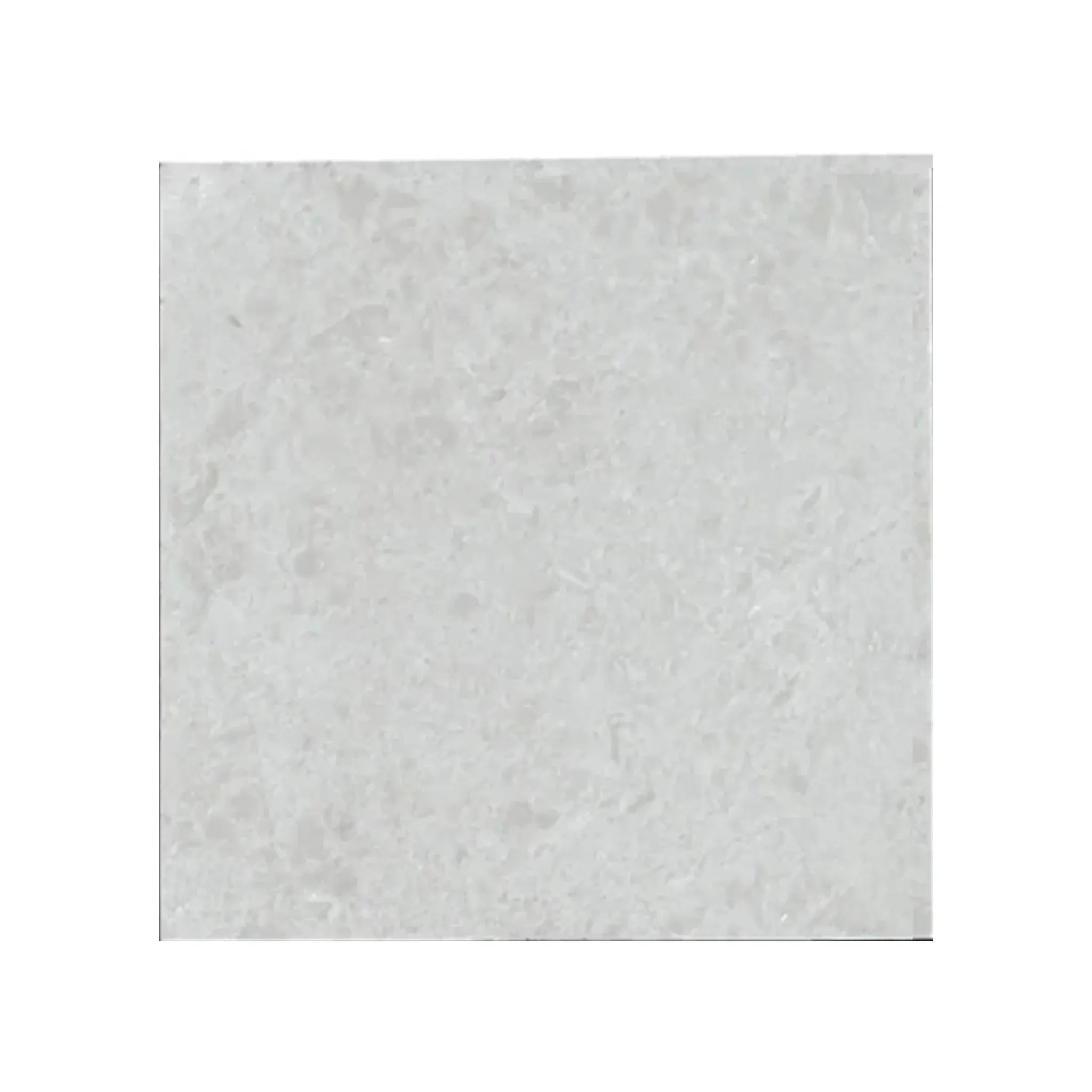
Three formats of White Pearl/Botticino Beige Marble are ready to order:
- 6x6 tumbled tile, suited to backsplashes and small accent areas where a softer, aged edge fits the design.
- 12x12 polished or honed tile, a workhorse format for floors and larger surfaces where finish choice drives the final look.
- 3x6 tumbled subway-format tile, a natural pick for shower surrounds and kitchen backsplashes.
Samples, bulk quotes, and project-specific guidance are available directly through Surfaces Galore for any of these formats.
What Are Common Defects to Watch for in Beige Marble?
Beige marble can hide minor wear well, but that same forgiving quality makes it easy to overlook real defects during inspection. Fissures, natural hairline cracks that run through the stone, show up often in beige varieties and usually aren’t structural, but deep or widespread fissuring can weaken a slab under heavy foot traffic or countertop loads.
Pitting is another common issue, tiny surface holes left where softer minerals dissolved out during formation. Light pitting is normal and often filled with resin during fabrication, but heavy pitting on a polished surface can trap dirt and grime over time. Color inconsistency between tiles from different lots is probably the most frequent complaint homeowners raise after installation, which is exactly why lot matching matters so much at the buying stage.
Watch for these specific issues when inspecting slabs or tile shipments:
- Uneven veining direction between adjacent tiles, which breaks the visual flow across a floor or wall.
- Chips or corner damage from shipping, especially on tumbled edges where the softer, weathered look can mask genuine impact damage.
- Dull or hazy patches on polished finishes, often a sign of poor sealing rather than a stone defect.
- Resin filling that’s visibly different in color from the surrounding stone, common in heavily pitted lots.
Reputable suppliers inspect for these issues before shipping, but a quick visual check on arrival, tile by tile, catches problems before installation locks them in place.
What Should You Know Before Installing Beige Marble?
Installation challenges with beige marble tend to center on three things: weight, moisture, and pattern layout. Marble tile and slab are heavy, and floors, especially older ones, need to be checked for adequate structural support before a full marble installation moves forward. Skipping this step is one of the more expensive mistakes contractors run into on renovation projects.
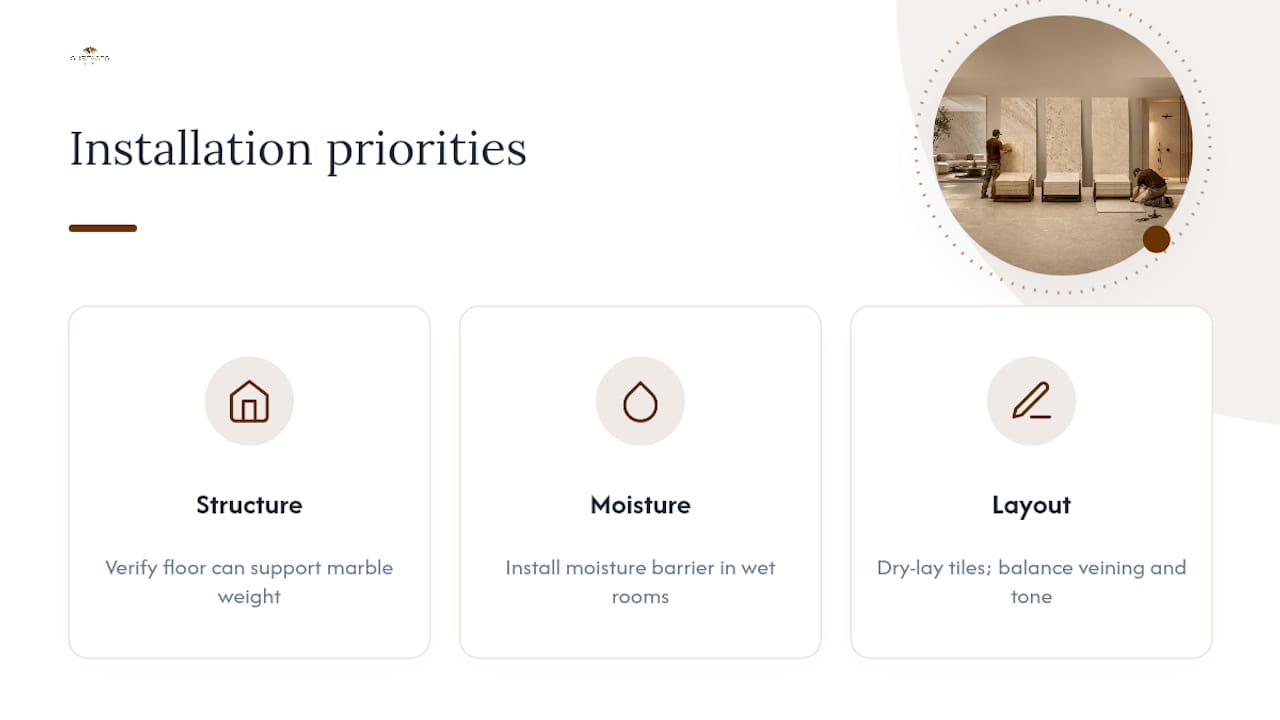
Moisture management matters just as much. Beige marble should go down over a proper moisture barrier in bathrooms and kitchens, since trapped moisture beneath the stone can cause staining that shows up months after installation. A step-by-step installation guide covers substrate prep in more detail, which matters more for beige marble than it might seem since discoloration is harder to fix after the fact than to prevent up front.
Layout planning is where a lot of installers get tripped up with veined beige stones. Dry-laying tiles before setting them, arranging pieces to balance veining direction and tone across the visible field, prevents the patchwork look that happens when installers just work through boxes in whatever order they’re stacked. This step takes extra time, but it’s the difference between a floor that reads as one continuous stone and one that looks like mismatched tile.
Grout color choice also deserves attention. A grout that’s too stark against beige marble draws the eye to every seam, while a closely matched tone lets the stone’s natural variation carry the visual interest instead.
Design Perspective: Pairing and Trends
Designers keep circling back to warm neutrals because they connect a room’s materials instead of competing with them. Beige marble pairs naturally with pale oak and aged brass for a soft, layered look, or with deep charcoal cabinetry and a honed beige counter for something moodier and more modern.
— John | Surfaces Galore
View and Order Beige Marble Samples
Surfaces Galore ships samples nationwide so you can check color and veining against your own cabinetry, lighting, and flooring before committing to a full order. As a direct importer, Surfaces Galore cuts out the extra markup that typically comes from buying through multiple distributors, which means trade pricing and bulk quotes are available for contractors and designers managing larger jobs.
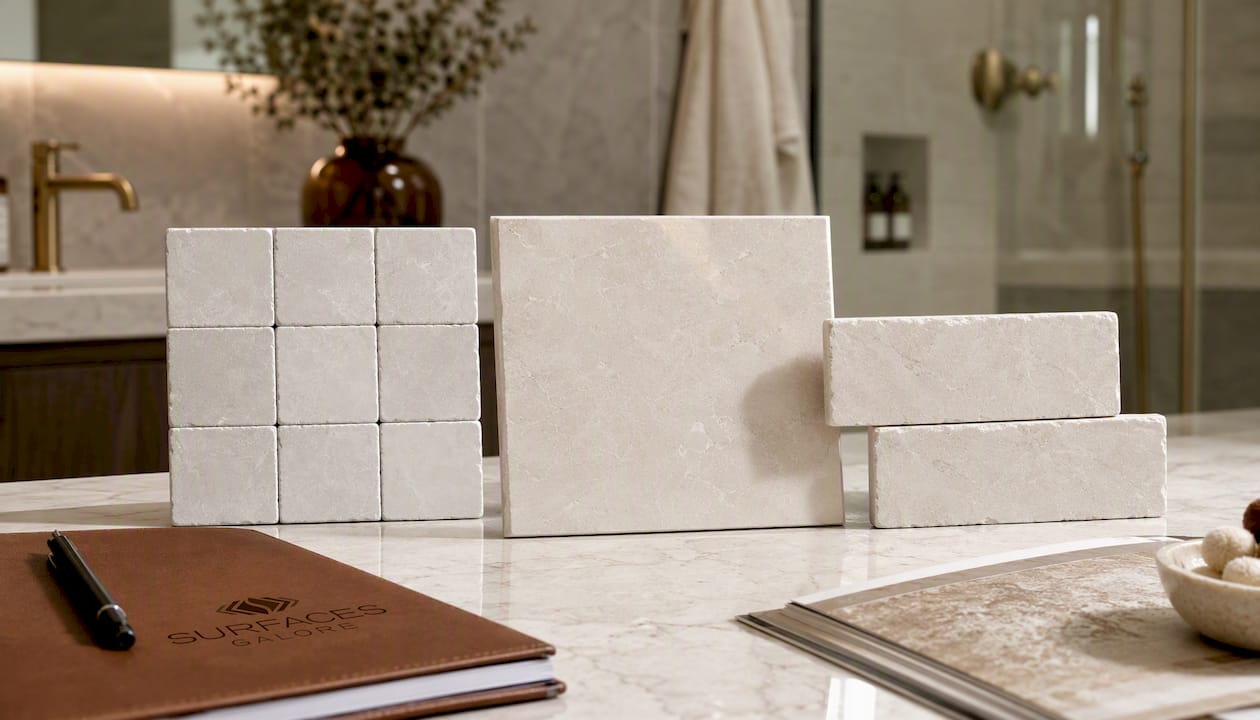
Start by browsing the full marble, travertine, and limestone selection, or go straight to the White Pearl/Botticino 6x6 tumbled, 12x12 polished or honed, or 3x6 tumbled formats if you already know the look you want. For broader tile and mosaic options, the shop by type collection covers additional sizes and finishes worth comparing before you place your order.
Sources
- Beige Marble: Varieties, Uses and How to Choose — Purapietra
- Benefits of beige marble flooring for your house — Antic Colonial
- Marble Types and Prices 2026 – One and Done Prep
- How Much Marble Is Worth In 2026 (Pricing Guide By Type) — RockChasing
FAQ
What Is Beige Marble Called?
Beige marble doesn’t have one single name since it covers several distinct quarried varieties, including Crema Marfil, Botticino, Sahara Beige, and Emperador Light. Each name refers to a specific quarry origin and pattern, not just a generic color category.
Which Color of Marble Is Most Expensive?
Rare, heavily veined marbles like Calacatta and certain exotic golds tend to command the highest prices, though within the beige family, pricing depends mainly on rarity, origin, and finish rather than color alone. Crema Marfil, by contrast, remains one of the more affordable and widely available beige options.
What Is the Prettiest Marble?
Beauty in marble comes down to personal taste and how the stone fits its setting, but beige varieties like Crema Marfil and Botticino consistently rank among the most requested for their balance of warmth and versatility. Surfaces Galore’s White Pearl/Botticino line offers that same warm, uniform look across tumbled and polished formats.
What Color Is Cream Marble?
Cream marble typically reads as a soft, pale ivory with minimal veining, sitting at the lighter end of the beige spectrum. Varieties like Avorio and Arabian Desert fall into this category, offering warmth without the deeper tan or brown tones found in stones like Emperador Light.
Recommended
- Spec Ready Crema Marfil Marble for Designers & Contractors, 3 Grades
- Homeowners and Designers: How Marble’s Color, Veining, Finish Look
- Trendiest Marble Colors 2025 for Luxury Homes
- 4 Phase Marble Design Checklist for Homeowners and Design Pros
This article is provided for general informational guidance only. Natural stone varies in color, veining, texture and performance. For installation, sealing, cleaning and maintenance, follow the product manufacturer’s instructions and consult a qualified installer or stone-care professional. Always test cleaning and sealing products in an inconspicuous area first. Surfaces Galore is not responsible for damage, discoloration, etching, staining, installation issues or other problems resulting from

Leave a comment