
Tile flooring: How to choose the right marble and travertine for your space

Key Takeaways
Marble and travertine tile flooring bring natural variation, lasting beauty, and strong design flexibility to residential and commercial spaces.
- Choose marble for refined veining and travertine for warmer, earthy character.
- Match the finish, dimensions, and pattern to the room’s traffic and moisture levels.
- Inspect, blend, and dry-lay natural stone before installation.
- Use compatible setting materials and maintain the surface with gentle, pH-neutral care.
- Compare samples, inventory, shipping, and quantity pricing before you buy.
Understand the benefits of natural stone tile flooring
Natural stone gives a floor depth that printed surfaces cannot quite reproduce. Every tile has its own movement, texture, and subtle shifts in tone. With the right material and care, tile flooring can become one of the most enduring features in a home.

Why marble and travertine remain timeless choices
Marble carries a polished, architectural quality, while travertine feels warmer and more relaxed. Both materials have been used in interiors for generations because their natural surfaces work with traditional, transitional, and contemporary design. They do not depend on a passing color trend to feel finished.
Durability, longevity, and property value
Natural stone is durable and long-lasting when properly installed and maintained. Marble floor tiles are suited to residential and commercial interiors, including kitchens, bathrooms, and entryways, while travertine can serve indoor and outdoor areas. A carefully selected stone floor can also add a sense of permanence and elegance to a property.
Natural variation and design character
Variation is part of the appeal, not a manufacturing flaw. Veining, open pores, shade changes, and small differences between boxes give the finished floor an individual character. For a project using a dramatic stone, view several samples together rather than judging one tile in isolation.
Comparing natural stone with porcelain and ceramic tile
Porcelain and ceramic tile offer consistent sizing and a broad range of printed appearances, and porcelain is often selected for moisture-prone settings. Natural stone offers a different experience: authentic veining, tactile variation, and a surface that changes gently with its surroundings. The best choice depends on the desired appearance, maintenance expectations, installation conditions, and budget.
A useful comparison is to consider not only the tile price but also the full project. The indoor flooring tile guide offers another perspective on comparing tile materials, maintenance, and room suitability.
Choose the right tile flooring material
Material selection sets the mood before color, layout, or furniture enters the conversation. Marble tends to sharpen a space with luminous veining and a refined surface. Travertine softens it with mineral tones, texture, and an easy connection to outdoor landscapes.
Marble flooring for refined, luxurious interiors
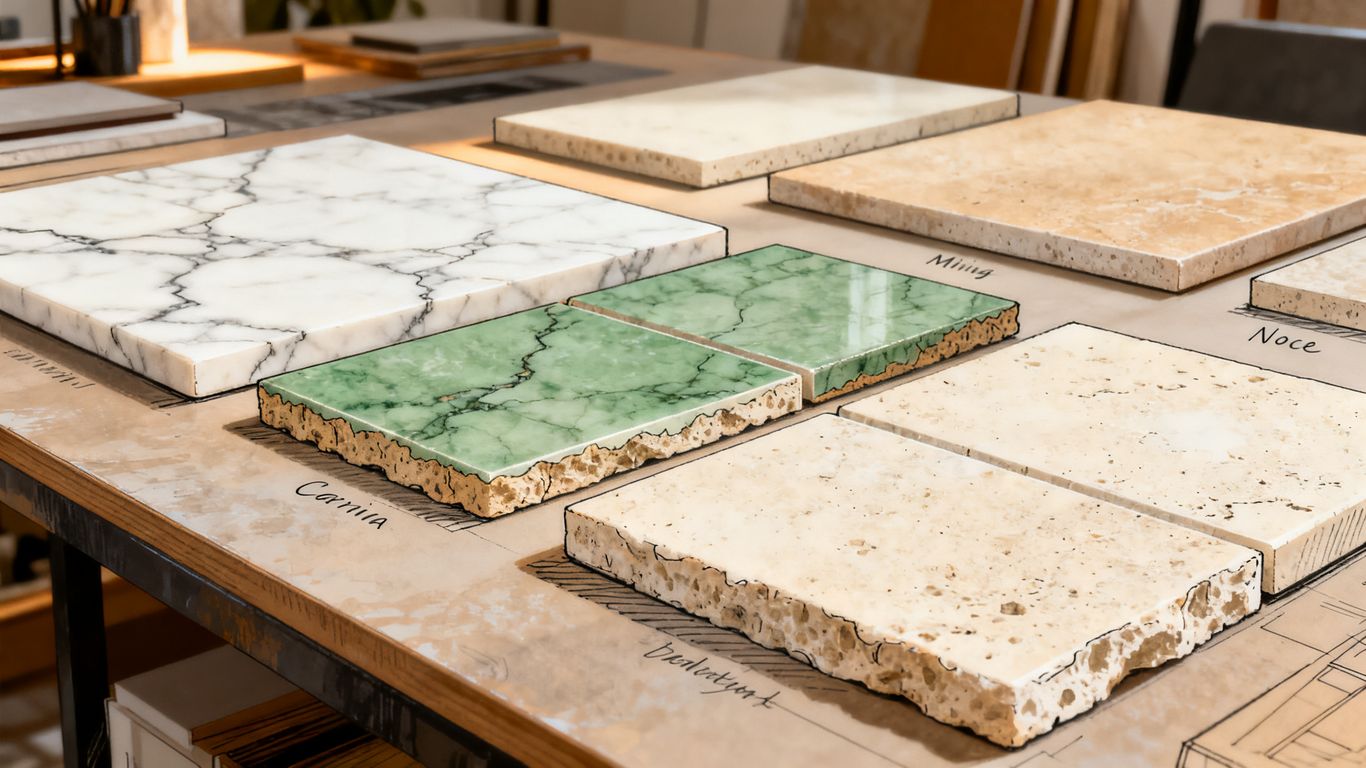
Marble works especially well when you want the floor to feel bright, tailored, and expressive. White, beige, gray, and richly colored varieties can support both quiet rooms and bold statement floors. Carrara White Marble is a versatile example, with a clean white base and delicate gray veining suited to kitchens, bathrooms, and living areas.
Travertine flooring for warm, earthy spaces
Travertine brings warmth through cream, beige, walnut, gold, and silver-gray tones. Filled and honed surfaces feel smooth and understated, while tumbled finishes create a more rustic edge. For a broad, welcoming floor, La Travonya Travertine offers warm earthy tones and natural textures in a 12x24 format.
Ming Green, Carrara, and other distinctive marble styles
Distinctive marble can become the room’s central design note. Ming Green introduces a memorable color direction, while Carrara remains a classic choice for restrained movement and soft contrast. Nero Marquina, Statuario, Thassos White, and other documented styles can shift the atmosphere from dramatic to serene without changing the basic flooring plan.
Ivory, Noce, and vein-cut travertine options
Ivory travertine keeps a room light and approachable. Noce adds deeper brown character, and vein-cut travertine draws the eye along linear patterns rather than scattered movement. For a more bespoke appearance, Antico Onyx Travertine provides natural variations in color, pattern, and veining.
Select the best finish, size, and pattern
Finish changes how a stone feels underfoot and how it responds to light. Size affects visual rhythm, installation planning, and the number of grout joints. Pattern adds personality, but it should support the proportions of the room rather than overwhelm them.
Polished, honed, tumbled, and brushed finishes
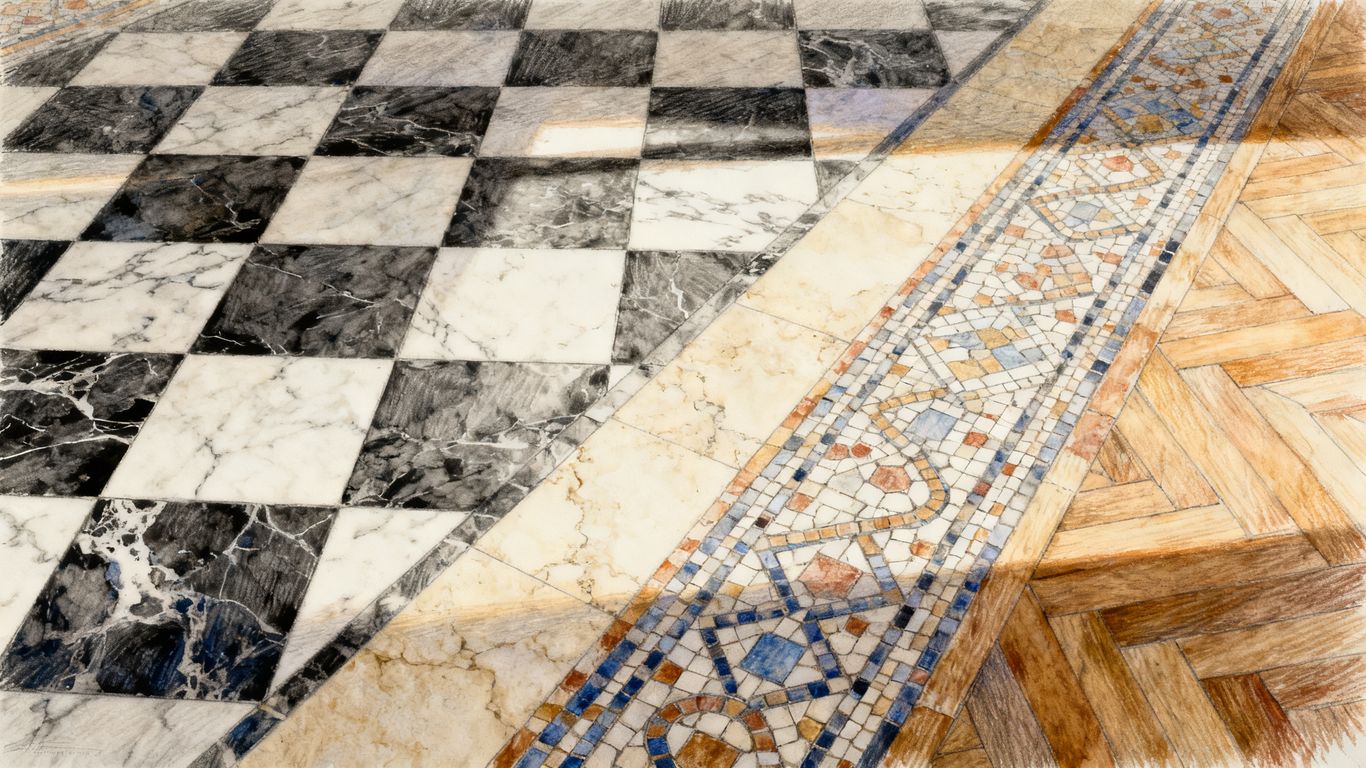
Polished marble reflects light and gives formal rooms a crisp, luxurious appearance. Honed stone has a matte, softer look, while tumbled edges create an aged, casual feel. Brushed finishes add texture and depth, making them useful when a less glossy surface is preferred.
Checkerboard layouts for classic contrast
Checkerboard flooring remains effective because its geometry is clear and adaptable. Pairing a light marble with a dark marble creates a formal entry, dining room, or bathroom floor; pairing contrasting travertines makes the effect warmer. Keep surrounding finishes relatively calm so the pattern has room to read.
Versailles and French patterns for architectural character
The Versailles, or French, pattern combines multiple rectangular tile sizes into a repeating arrangement. It suits travertine particularly well because the varied modules echo the material’s old-world character. Use it in rooms with enough open floor area to show the pattern without excessive interruptions.
Mosaics, herringbone, and geometric designs
Mosaics can define a shower floor, border, backsplash, or small entry without covering every surface in detail. Herringbone adds directional movement, while hexagons, basketweave, and penny rounds bring a finer scale. Both marble and travertine mosaics are available in styles suited to floors, walls, showers, and accent spaces.
Matching tile dimensions to the room
Large formats can make an open room feel calmer, while smaller tiles suit compact spaces and intricate layouts. Before ordering, account for cuts, transitions, and waste rather than calculating only the exact floor area. This simple table can help frame the decision.
| Room condition | Often suitable | Why it works |
|---|---|---|
| Open living area | Large-format tile | Fewer visual breaks and a spacious rhythm |
| Compact bathroom | Smaller tile or mosaic | Easier layout around fixtures and better detail |
| Rustic indoor-outdoor area | Tumbled or brushed travertine | Texture and warmth support the setting |
| Formal entry or dining room | Polished marble or checkerboard | Strong contrast and a tailored appearance |
The right dimension is ultimately the one that leaves balanced cuts at the walls and transitions. A beautiful tile can look awkward when the layout is forced, so plan the field before committing to the order.
Match tile flooring to each application
The room determines more than color. Foot traffic, water exposure, sunlight, furniture, and cleaning habits all affect the appropriate stone and finish. Think about how the surface will be used on an ordinary day, not just how it looks in a sample photograph.
Living rooms, dining rooms, and entryways
Living and dining rooms give marble and travertine enough visual space to make an impression. Polished marble feels formal in an entry or dining area, while honed travertine creates a relaxed, grounded base. In busy entryways, choose a finish and color that can accommodate everyday dust and movement.
Kitchens, bathrooms, and powder rooms
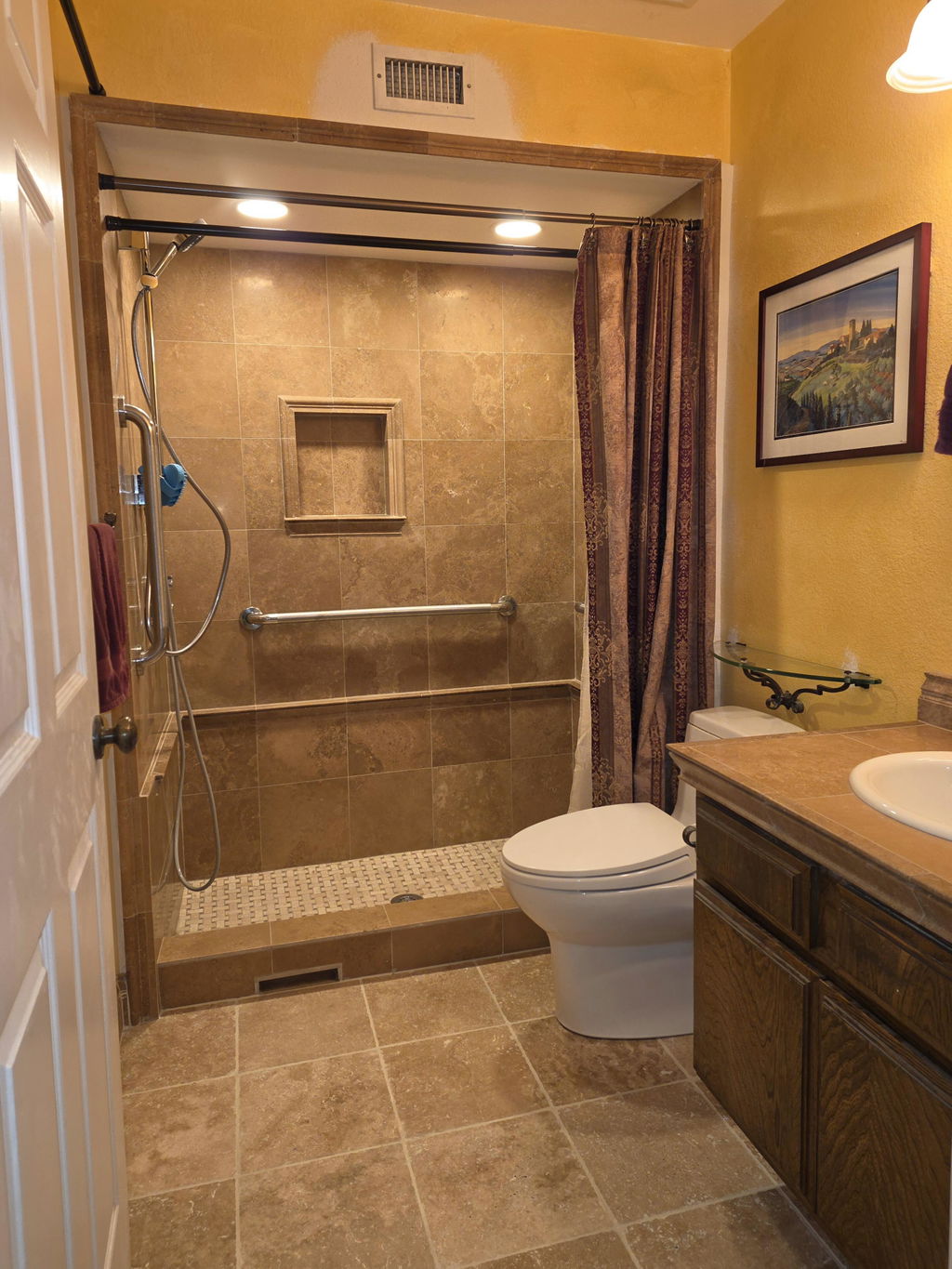
Marble and travertine can work beautifully in kitchens and bathrooms when the substrate, grout, finish, and maintenance plan are appropriate. Honed surfaces often create a quieter look than polished stone, while mosaics help organize smaller bathroom areas. Always consider splash zones and sealing requirements before installation.
Showers, pool areas, patios, and terraces
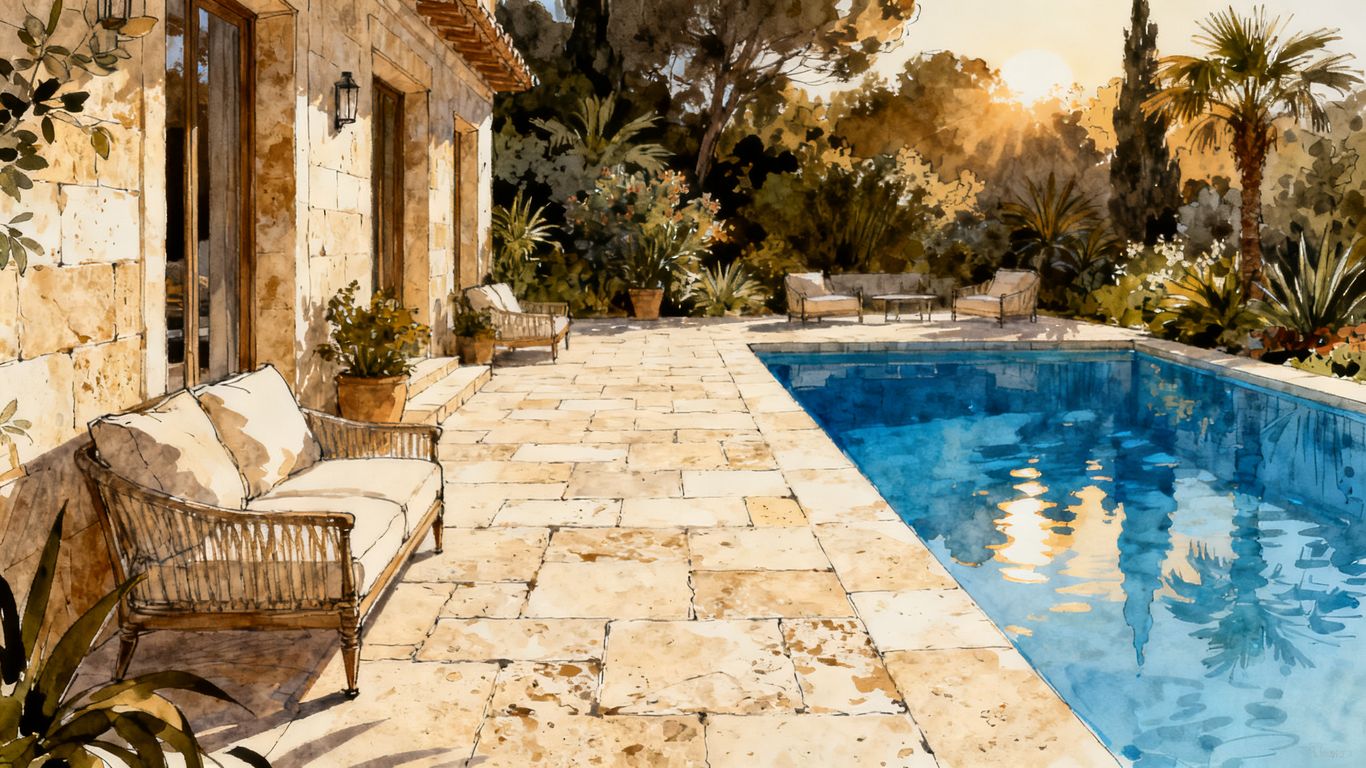
Travertine is suited to indoor and outdoor applications, including patios and pool areas, with finishes that provide added texture. Shower floors need careful attention to slope, drainage, grout, and surface feel. Outdoor installations also require setting materials and substrate preparation appropriate to the exposure.
High-traffic residential and commercial spaces
Entry halls, corridors, lobbies, and retail interiors need a tile selected for the expected traffic and maintenance routine. Marble and travertine are used in both residential and commercial spaces, but the installation must be especially consistent across broad areas. Keep replacement material from the same order when possible, since natural variation is expected.
For comparison, this floor tile design resource discusses how style and durability can work together in high-use areas. It is a helpful reminder that practical performance and visual character do not have to be separate goals.
Plan a successful tile flooring installation
Good installation begins before the first tile meets mortar. Natural stone needs a stable, level surface, compatible materials, and a layout that respects variation. Taking time at this stage prevents many avoidable surprises later.
Inspecting and blending natural stone tiles
Inspect every tile for cracks, chips, warping, and other concerns before installation. Set questionable pieces aside and contact the supplier before fixing them in place. Blend tiles from different boxes during the layout so color and veining are distributed naturally rather than collected in visible patches.
Dry-laying the layout before installation
Dry-lay the field on the floor before applying adhesive. This reveals awkward edge cuts, confirms the direction of veining, and helps establish a pleasing mix of tones. It is also the best time to test the pattern, grout spacing, borders, and transitions.
Preparing the subfloor and selecting setting materials
The substrate should be clean, dry, sound, level, and stiff enough to support natural stone. Uneven areas may need patching or self-leveling underlayment, while wood subfloors commonly need an appropriate backer board or uncoupling system. Use a thin-set mortar rated for marble or travertine; white thinset is generally preferred beneath light or translucent stone to reduce the risk of discoloration.
Planning grout joints, cuts, transitions, and radiant heating
Decide grout spacing, cut locations, thresholds, base details, and adjoining floor heights before setting tile. A wet saw with a diamond blade helps produce clean stone cuts, and exposed edges may need smoothing or polishing. If radiant heating is planned, coordinate the system, substrate, and tile installation with the applicable manufacturer instructions.
A short preparation checklist keeps the work orderly:
- Confirm tile quantity, shade variation, and acceptable pieces.
- Mark the room centerlines and test the dry layout.
- Verify substrate flatness, stiffness, cleanliness, and moisture conditions.
- Confirm mortar, grout, sealer, trim, and transition compatibility.
After the list is checked, work in manageable sections and allow mortar to cure according to the product instructions. The natural stone installation guide is useful when reviewing dry-fitting, cutting, sealing, and waste planning for a marble floor.
When to hire a professional tile installer
A professional installer is a wise choice for large rooms, complicated patterns, uneven substrates, wet areas, stairs, radiant heating, or expensive stone. Experience matters when aligning veining, managing lippage, cutting around fixtures, and creating consistent transitions. Ask for references and confirm that the installer is comfortable working with natural stone.
Maintain and protect marble and travertine tile flooring
Marble and travertine reward simple, consistent care. They are porous natural stones, so sealing, prompt cleanup, and suitable cleaning products matter. Maintenance is less about complicated routines and more about avoiding harsh habits.
Sealing porous natural stone
A stone sealer helps protect tile and grout from stains and moisture, but it does not make the surface invulnerable. Apply it only after the installation and grout have cured as directed, and follow the sealer manufacturer’s instructions for application and curing. Re-sealing needs vary with the stone, finish, traffic, and product used.
Cleaning with pH-neutral products
Dust and grit should be removed regularly because they can act as abrasives underfoot. Use a pH-neutral cleaner intended for natural stone and a soft mop or cloth. Avoid acidic cleaners, abrasive powders, and products that may leave a dulling film.
Preventing stains, scratches, and moisture damage
Wipe spills promptly, use mats at exterior doors, and add protective pads beneath furniture. Keep standing water from lingering, especially near grout joints and bathroom fixtures. A honed or textured finish may be more forgiving visually, but every finish benefits from sensible daily care.
Repairing chips, cracks, and grout problems
Small chips may be repairable with a compatible stone repair product, while cracks require investigation rather than concealment. Loose tiles, recurring grout cracks, or moisture problems can indicate movement or substrate concerns. Have a qualified professional assess significant damage before replacing isolated pieces.
Source premium tile flooring for your project
The supplier you choose affects more than the initial order. Product knowledge, sample access, current inventory, packing, and communication all influence the final result. This is especially true when a project needs matching stone across several rooms or a substantial quantity.
How to evaluate a natural stone tile supplier
Look for clear product descriptions, finish and size information, realistic sample policies, and guidance on installation and care. A dependable supplier should be able to explain natural variation without presenting it as a defect. Service also matters when timing, substitutions, or quantity changes arise.
Benefits of direct-import pricing and bulk discounts
Direct-import purchasing can provide access to a broader range of marble and travertine and may make bulk pricing more competitive. Ask whether discounts apply to the full quantity, whether stock is from the same lot, and how overage should be calculated. A lower headline price is not useful if the material cannot be matched or delivered when needed.
Checking inventory, samples, and current stock
Request samples before committing to a large order, and view them beside cabinet colors, paint, grout, and natural light. Confirm current stock, nominal dimensions, finish, and expected lead time. For a specific floor, ordering enough material from one available lot can reduce visible variation.
Shipping marble and travertine nationwide from Anaheim
Surfaces Galore is an Anaheim, California–based direct importer and nationwide supplier of premium natural stone. It serves homeowners, interior designers, and architects across the United States, with marble and travertine tiles, mosaics, and moldings available for projects that require cross-country shipping. Confirm packaging, insurance, delivery access, and inspection procedures before the shipment arrives.
Requesting a quote from Surfaces Galore
Surfaces Galore can help you move from inspiration to a practical order by reviewing the stone type, size, finish, quantity, and intended application. When requesting pricing, include room dimensions, a waste allowance, delivery location, and any preferred pattern. You can request a quote when you are ready to compare the project details and current options.
Bring Your Design to Life
Choose your preferred marble or travertine style, gather your measurements, and contact Surfaces Galore for current stock, project pricing, and delivery options. A thoughtful order today can give your space a natural floor with lasting visual character.
Conclusion
The right tile flooring balances beauty, use, installation conditions, and care. Marble brings refined movement, travertine adds warmth, and thoughtful choices about finish, size, pattern, and sourcing make the result feel intentional from the first step to the last.
Frequently Asked Questions
Is marble suitable for floor tile?
Yes. Marble can be used for residential and commercial flooring, including kitchens, bathrooms, entryways, living rooms, and dining areas, when the finish, installation, and maintenance plan suit the space.
Is travertine a durable flooring material?
Travertine is a durable natural stone that can serve indoor and outdoor applications. Proper substrate preparation, installation, sealing, and routine cleaning help preserve its appearance over time.
What is the difference between honed and polished stone?
Polished stone has a reflective surface that highlights color and veining. Honed stone has a matte, understated appearance with less surface shine.
Does natural stone tile vary in color?
Yes. Marble and travertine naturally vary in tone, veining, texture, and pore structure. Dry-laying and blending tiles from multiple boxes helps create a balanced finished floor.
How much extra tile should be ordered?
The amount depends on the room shape, pattern, tile size, and number of cuts. A professional installer or supplier can help estimate waste, and patterned or intricate layouts generally need more allowance.
Can marble and travertine be used in bathrooms?
They can be used in bathrooms, showers, and wet areas when the surface, slope, drainage, setting materials, grout, and sealing plan are appropriate. Product recommendations should always be followed.
How should natural stone flooring be cleaned?
Remove grit regularly and clean with a pH-neutral product made for natural stone. Avoid acidic cleaners, abrasive powders, and harsh chemicals that may etch or dull the surface.

Leave a comment