
Stone for home design: How to choose the right natural stone for every project

Key Takeaways
Choosing stone well means balancing appearance, performance, installation demands, and care. Start with the room, then narrow the field by stone type, finish, budget, and supplier.
- Match the stone’s hardness, porosity, and finish to the room.
- Compare marble, travertine, limestone, granite, quartzite, slate, and soapstone by use.
- Always assess color and veining with physical samples in your own lighting.
- Order extra material for cuts, breakage, and natural variation.
- Choose a dependable supplier that can provide guidance, samples, and secure delivery.
Define your project requirements before choosing stone
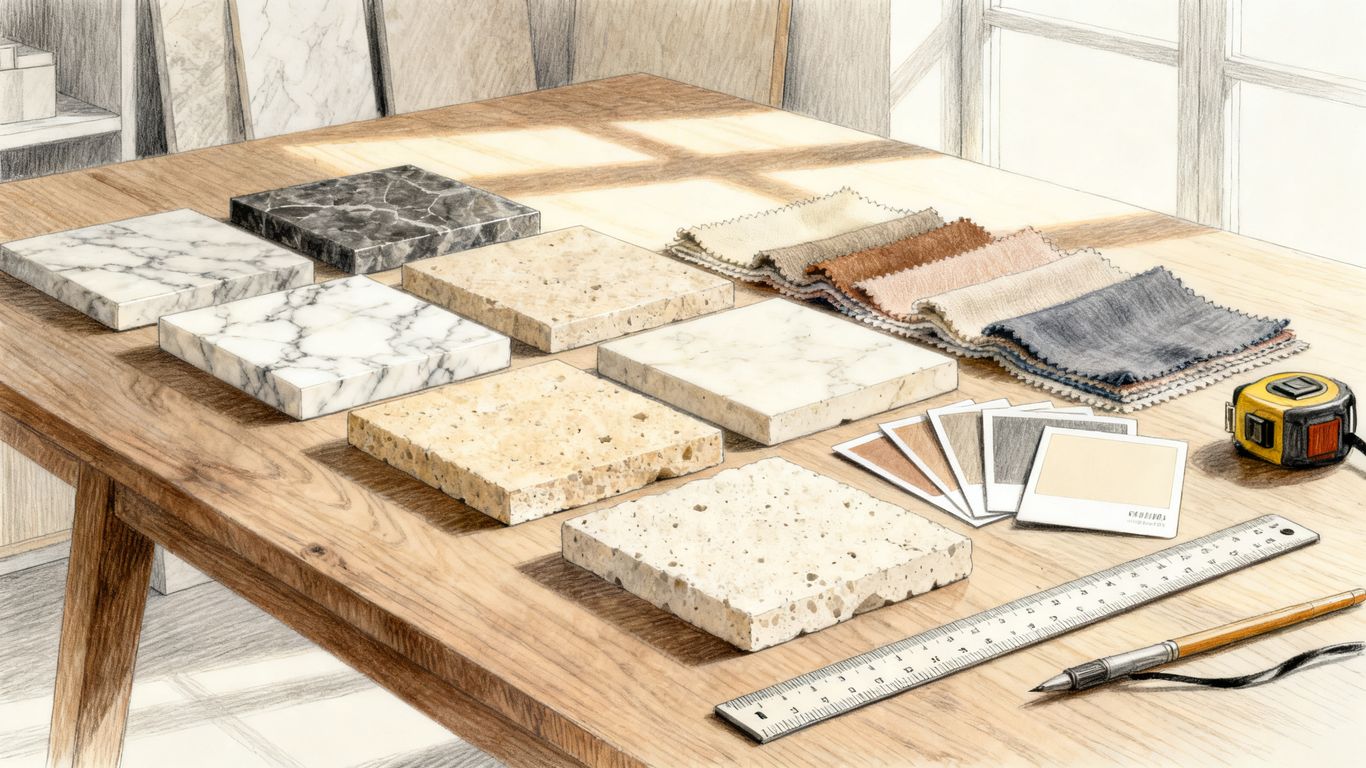
A beautiful slab or tile is only the right choice when it also suits the way you live. Begin with the room, the surfaces involved, and the demands placed on them each day. A quiet bathroom floor has different needs from a busy entryway or a kitchen worktop. This short planning stage prevents expensive changes later.
Match the stone to the room and intended use
Think about what the stone will actually do. Flooring needs a surface that feels stable underfoot, while a backsplash gives you more freedom to prioritize color and pattern. Countertops need resistance to stains, scratches, and heat; shower walls need moisture tolerance and a finish that does not become dangerously slick.
Marble can bring a refined look to a bathroom, fireplace, or statement wall. Travertine is appealing for warm floors, backsplashes, patios, and pool areas. For a useful visual reference, the Statuario White 12x24 marble combines a white background with dramatic gray veining and is available in polished or honed finishes.
Evaluate traffic, moisture, heat, and exposure
Traffic changes the practical equation. A hallway may collect grit and shoe traffic, while a shower receives constant moisture and a kitchen counter faces hot cookware and spilled food. Outdoors, freeze-thaw cycles, rain, sunlight, and pool chemicals may matter as much as the stone’s color.
Porosity is another key consideration. More porous materials such as marble and limestone can stain more easily and generally need sealing. Granite is typically easier to maintain, while slate offers durability and slip resistance for selected wet or outdoor applications. Match the finish to the conditions rather than choosing only by appearance.
Set a realistic material and installation budget
The purchase price is only one part of a stone project. Include delivery, substrate preparation, setting materials, edge work, cutting, grout, sealing, and professional labor where needed. Large-format pieces, intricate mosaics, stairs, niches, and unusual layouts usually require more time and precision.
Natural stone also varies from batch to batch, so an unusually low price may not tell the whole story. Ask what is included, whether the material is in stock, and how much extra should be ordered. A clear quote makes it easier to compare quality and total project cost rather than just the cost per square foot.
Plan for long-term maintenance and performance
Maintenance should fit your routine. If you prefer a quick wipe and minimal fuss, consider less porous materials or a finish that disguises everyday marks. If you love the character of marble or limestone, accept that sealing and careful cleaning are part of preserving the surface.
Write down the cleaning products, sealer, and maintenance interval before installation. This simple habit protects the investment and helps everyone in the household care for the stone consistently. For terminology outside home renovation, even the word stone has several meanings, so keep the material’s technical and care requirements clear when discussing a project with tradespeople.
Compare the most popular natural stone types
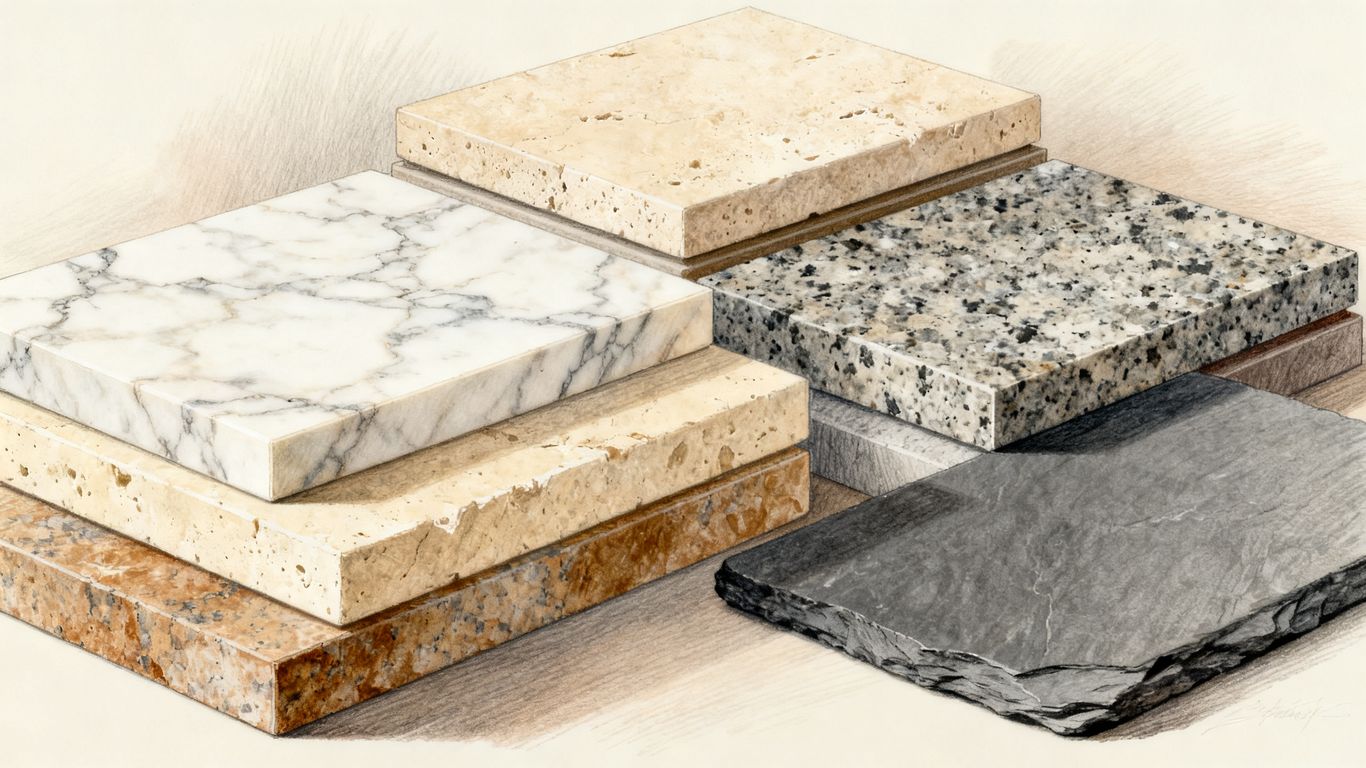
Natural stone is not one uniform category. Each type has a distinct mix of hardness, porosity, movement, texture, and visual warmth. Marble and travertine are especially versatile for residential interiors, while granite, quartzite, slate, and soapstone can be strong choices when performance leads the brief.
Marble for elegant interiors and statement features
Marble is known for expressive veining, a smooth feel, and a wide range of colors. It works beautifully in master baths, fireplace surrounds, accent walls, floors, and decorative features. Calacatta Gold, Carrara White, Statuario, Nero Marquina, and other varieties can create very different moods, from bright and restrained to dark and dramatic.
Marble is softer and more prone to scratching, staining, and etching than some harder stones. That is not necessarily a flaw; many homeowners appreciate the patina that develops with use. Choose a polished surface for a formal reflective look, or a honed surface when you want a softer, quieter finish.
Travertine for warm, timeless floors and outdoor spaces
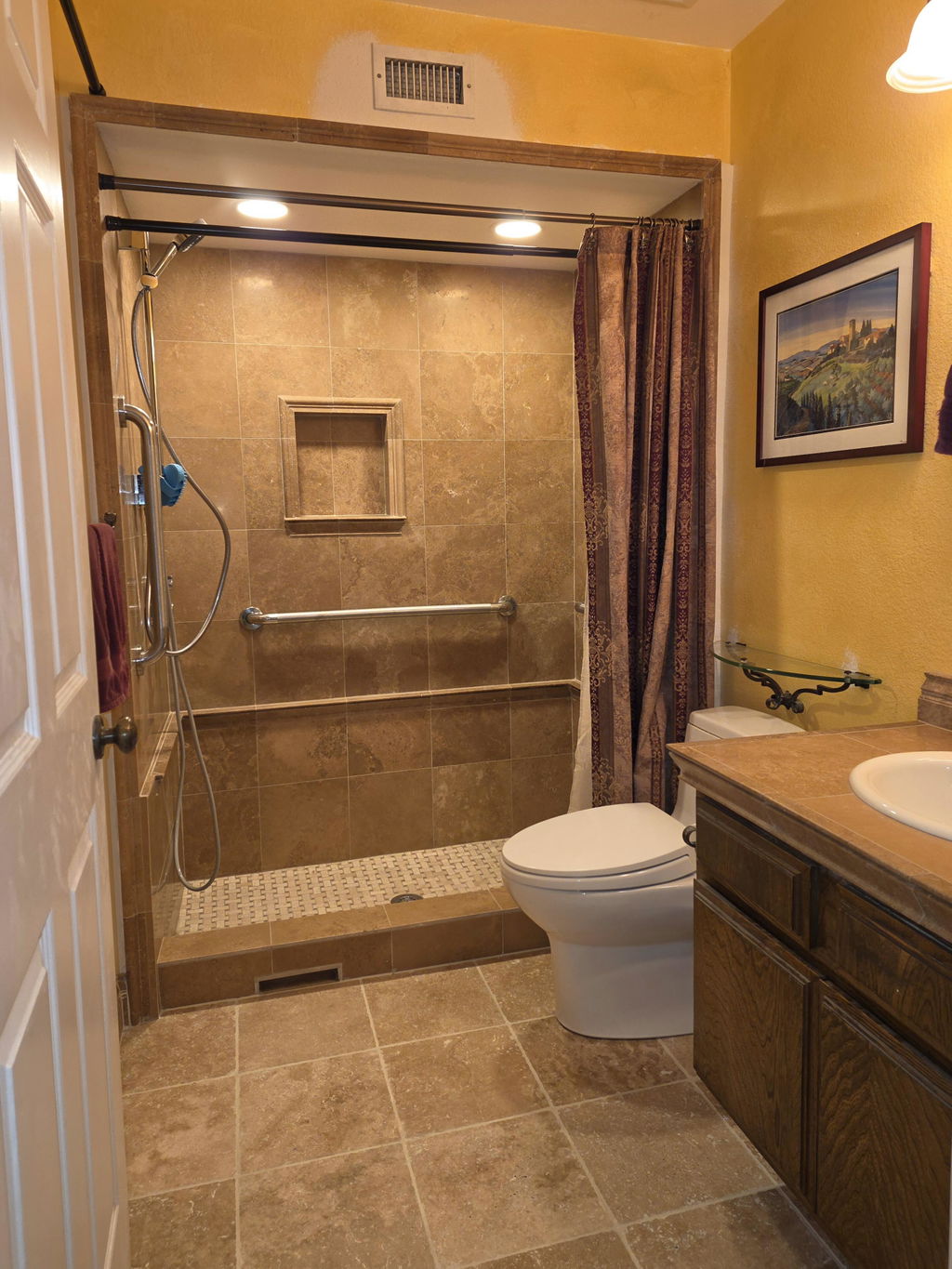
Travertine has a naturally earthy appearance, with movement, small cavities, and warm cream, beige, silver, or brown tones. It suits Mediterranean, rustic, transitional, and relaxed modern interiors. Depending on the product and specification, it can be used for floors, walls, backsplashes, patios, pool decks, and other outdoor settings.
Travertine generally needs sealing, especially in areas exposed to spills or moisture. Tumbled finishes create an aged, relaxed character, while honed and filled surfaces feel more tailored. Varieties such as Ivory, Silver, Noce, and Scabos travertine make it easier to coordinate the material with wood, paint, metal, and cabinetry.
Limestone for understated architectural character
Limestone offers a muted palette and subtle texture rather than high-contrast drama. Its quiet surface works well in floors, walls, backsplashes, shower details, and outdoor features where the architecture should remain the focus. Warm limestone can make a room feel settled and welcoming.
Because limestone is softer and more porous, it deserves thoughtful placement and regular care. It may be a better fit for lower-impact areas than a heavily used work surface. Its restrained character can also be a practical design advantage: it complements strong cabinetry, patterned fabrics, and more decorative lighting without competing for attention.
Granite, quartzite, slate, and soapstone for performance-driven applications
When resistance to heat, scratches, stains, or heavy use is the priority, look beyond the most familiar decorative stones. Granite is highly durable and suited to countertops, floors, walls, backsplashes, and outdoor areas. Quartzite combines the visual appeal of marble with very high hardness, though each product still needs to be evaluated individually.
Slate brings a naturally textured, slip-resistant quality to selected bathrooms and outdoor areas. Soapstone has a smooth matte appearance and is naturally resistant to stains and heat, making it appealing for counters and hearths. The table below offers a starting comparison, not a substitute for the specific product’s technical information.
| Stone type | Visual character | Common strengths | Typical care consideration |
|---|---|---|---|
| Marble | Veined and elegant | Bathrooms, accents, fireplaces | Seal and clean carefully |
| Travertine | Warm and organic | Floors, walls, patios | Seal; inspect surface finish |
| Limestone | Soft and understated | Floors, walls, architectural details | More porous; protect from stains |
| Granite | Varied and resilient | Counters, floors, outdoor use | Usually straightforward care |
| Slate | Textured and earthy | Wet areas and selected exteriors | Clean texture thoroughly |
This comparison helps narrow the field before you review individual colors and sizes. Always confirm suitability for the exact installation, especially when a material will face standing water, direct heat, or outdoor weather.
Select the right stone color, pattern, and finish
Once performance is clear, design decisions become easier. Look at the room as a whole: cabinetry, wall color, hardware, wood tones, natural light, and grout all influence how stone will read. A small sample can appear completely different when repeated across a floor or placed beside a large window.
Coordinate veining and color with your design style
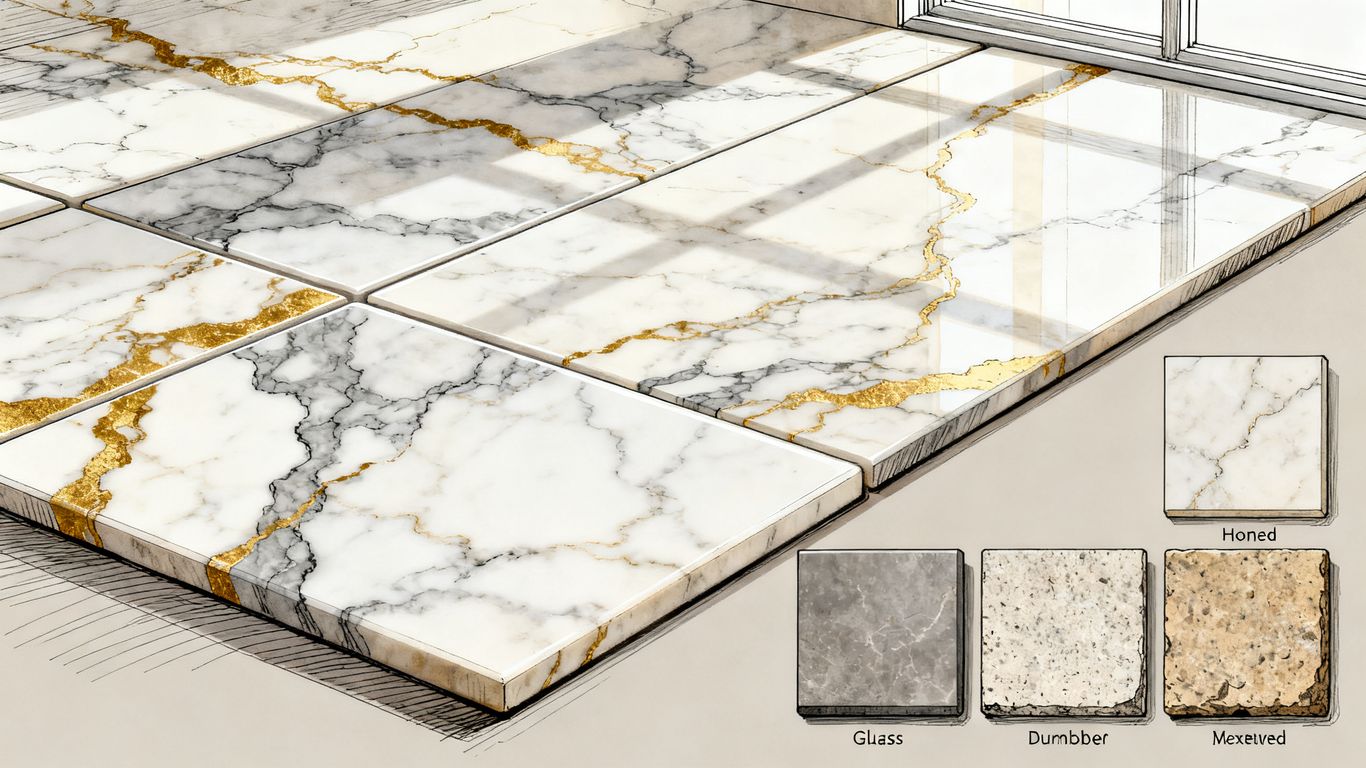
Start by deciding whether the stone should quietly support the room or act as its focal point. Pale marble can brighten a compact bathroom, while dark marble can give a fireplace or powder room a more intimate mood. Warm travertine and limestone pair naturally with oak, terracotta, brushed brass, and woven textures.
Pay attention to movement across adjoining pieces. Dramatic veining may look best when slabs are book-matched or dry-laid for a deliberate flow. More consistent tiles can create a calm backdrop. For a classic black-and-white direction, a Carrara White 6x6 tile offers a white base with delicate gray veining and can suit both traditional and contemporary rooms.
Choose between polished, honed, tumbled, and textured finishes
Finish changes both the look and the way a surface feels. Polished stone reflects light and emphasizes color, but it can show water spots and may be less suitable where slip resistance is critical. Honed stone has a matte appearance that feels softer and often works well on floors and hallways.
Tumbled stone has softened edges and an aged, informal character. Textured or split-face surfaces add dimension to walls and selected exteriors. Do not treat finish as decoration alone; connect it to cleaning, traction, glare, and the amount of daily wear the area receives.
Use mosaics, moldings, and trim to add visual detail
Small-format pieces can bring rhythm to a design without requiring a heavily patterned field tile. Herringbone, basketweave, hexagon, penny round, and arabesque mosaics each create a different sense of movement. Borders, chair rails, bullnose pieces, moldings, and trim can also give transitions a finished appearance.
Use detail where it supports the room’s scale. A narrow trim can frame a shower niche, while a larger mosaic may anchor a backsplash or fireplace. For a stronger contrast, Nero Marquina 1x2 Herringbone uses honed black marble with white veining and is suited to backsplashes, shower walls, and other accent areas.
Order samples to assess the stone in your lighting
Samples answer questions that online photographs cannot. Place them near flooring, cabinetry, paint, and fixtures, then view them in morning, afternoon, and evening light. Turn off warm bulbs and test the material under the lighting you actually use.
Look closely at texture, edge detail, color variation, and the relationship between several pieces. If the project is large, ask whether the supplier can provide enough material to create a small mock-up. That extra check is especially valuable for highly veined marble, mixed-color travertine, and patterned installations.
Choose stone for specific areas of the home
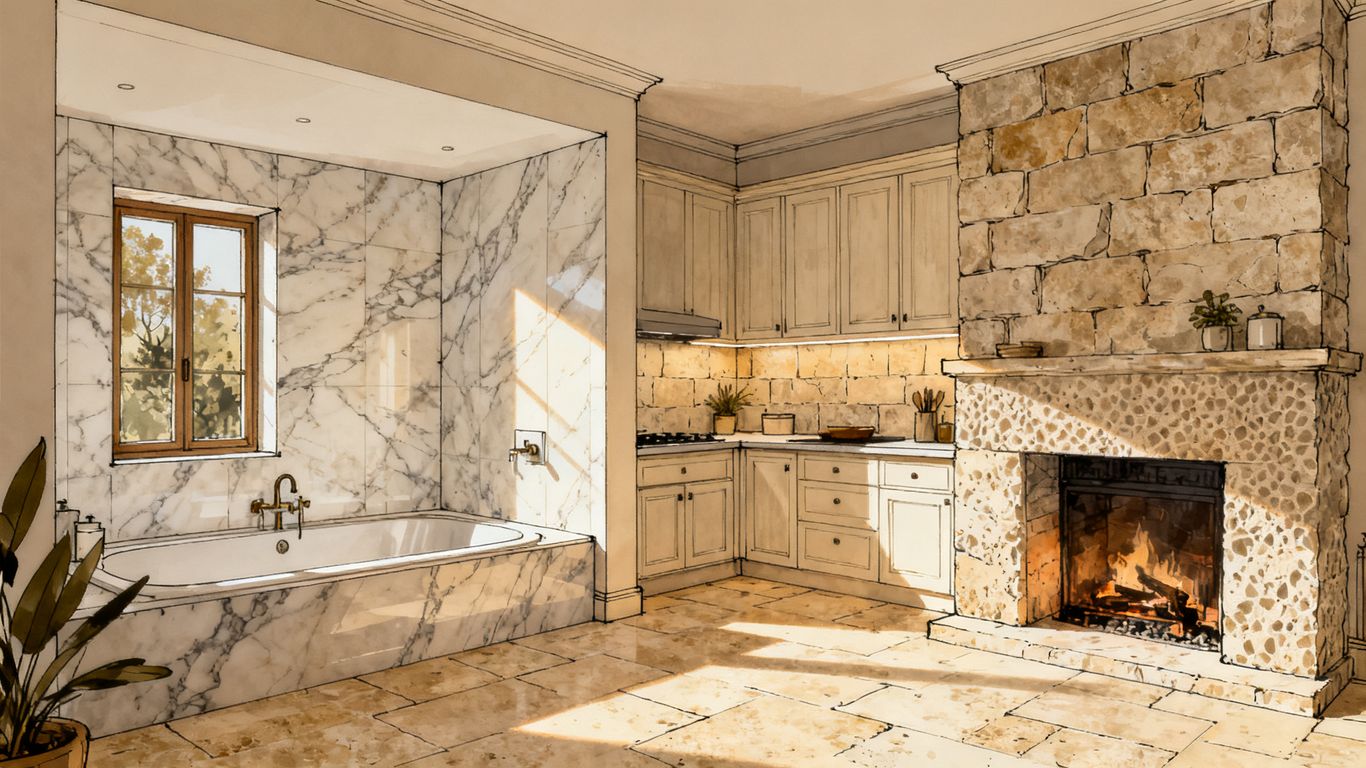
The best material changes from room to room. A floor must cope with footsteps and grit, a bathroom must manage moisture, and a kitchen must tolerate spills and heat. The design should still feel connected, but you do not need to use one stone everywhere.
Design durable flooring for entryways and high-traffic rooms
Entryways, kitchens, hallways, and mudrooms need a surface that can handle repeated use and tracked-in debris. Honed finishes often provide a calmer visual effect than high polish, while textured options may improve traction in appropriate conditions. Grout color and joint width also affect how practical the floor feels day to day.
Travertine, granite, slate, and selected limestone products can all be considered, depending on the setting and finish. Plan the layout before installation so prominent veining, natural holes, and cut pieces appear intentional. Keep spare material for future repairs because replacement batches may not match exactly.
Create a refined marble bathroom or shower
Marble can turn a bathroom into a calm, luminous retreat. Use it on walls, floors, vanities, niches, or a feature panel, but assess slip resistance and water exposure before selecting the finish. Honed marble is often more comfortable visually under bright bathroom lighting, while polished marble creates a formal, reflective effect on suitable vertical surfaces.
A reliable waterproofing system and a properly prepared substrate matter as much as the tile. Plan corner details, drain slopes, trim, and grout lines before the stone is set. Sealing helps protect porous material, but it does not replace sound waterproofing or routine cleaning.
Select practical stone for kitchen countertops and backsplashes
Kitchen surfaces face food, oils, moisture, heat, knives, and frequent wiping. Granite is valued for resistance to scratches and heat, while soapstone offers a matte feel with natural resistance to stains and heat. Marble can be an elegant choice for a countertop or backsplash when the household is comfortable with a surface that may develop etching and patina.
Use the backsplash to introduce pattern if the counter is visually active, or let a dramatic counter lead while the backsplash stays quiet. A carefully chosen mosaic can bridge the two. Confirm slab dimensions, edge profiles, sink cutouts, and care instructions before fabrication begins.
Add impact with fireplaces, accent walls, and ledger panels
A fireplace or feature wall is an opportunity to use movement more boldly than you might on a large floor. Marble creates a tailored, high-contrast statement, while travertine brings warmth and texture. Ledger panels can add a layered surface to interior walls, fireplace surrounds, garden walls, and other feature areas.
Keep the surrounding finishes simple so the stone has room to breathe. Check weight, heat clearances, substrate requirements, and installation specifications for the exact product. A material that looks perfect on a sample should still be reviewed at full scale before ordering.
Extend the design outdoors with weather-resistant stone
Outdoor stone must be selected for the local climate, drainage, traction, and exposure. Travertine pavers, suitable marble products, granite, slate, and other natural stones may work in patios, pool surrounds, paths, and garden walls when their specifications fit the application. A textured or tumbled finish can create a more relaxed outdoor feel.
Ask how the material performs when wet and whether it requires sealing or special installation details. Account for slope, movement joints, edge restraint, and runoff rather than treating an exterior project like an indoor floor. Outdoor durability begins with the complete system, not the tile alone.
Plan installation and calculate the quantity you need
Good installation starts before the first piece is cut. Confirm the dimensions, inspect the material, prepare the substrate, and decide on the layout while there is still time to adjust the order. Natural variation is part of the appeal, but it needs to be considered in the planning.
Measure the installation area and account for waste
Measure each area separately and multiply length by width, subtracting large openings where appropriate. Then add extra material for cuts, breakage, natural variation, and future repairs. A common planning range is 10% to 30%, with the higher end more relevant to intricate layouts, tight joints, unusual shapes, or heavily varied stone.
For example, a 1,000-square-foot installation may require 1,100 to 1,300 square feet of material. A mock-up and a planned cutting diagram can improve the estimate. The Statuario White 18x18 guide is a useful reference for material inspection, substrate preparation, waste planning, installation, and care.
Choose suitable mortar, grout, spacers, and installation tools
Use setting materials rated for the specific natural stone and substrate. Light-colored or translucent stone may require white thin-set mortar to reduce the risk of discoloration, while large-format pieces may benefit from leveling systems. Spacers, a level, the correct trowel, and stone-rated cutting equipment help produce consistent joints and reduce lippage.
Read manufacturer directions for mortar, additives, grout, and sealer. Avoid assuming that a product suitable for ceramic tile will automatically suit marble or travertine. A qualified tile professional can help confirm compatibility before work begins.
Reduce breakage with proper cutting and material handling
Store pieces on a stable, protected surface and move large slabs with appropriate equipment. Inspect each box or slab before installation, then dry-lay enough material to understand the pattern and variation. Use a clean diamond blade and steady feed rate when cutting, and protect exposed edges during handling.
Plan visible cuts carefully. Cut edges may need smoothing or polishing when they will remain exposed, while less prominent cuts can often be positioned against walls or beneath cabinets. Patience is cheaper than replacing a damaged feature piece.
Work with qualified installers for large-format or custom designs
Large-format tiles, book-matched slabs, stairs, shower systems, mosaics, and custom-cut pieces demand accurate preparation. The substrate should be clean, dry, stable, and level, with appropriate underlayment or membranes where required. A skilled installer can also coordinate waterproofing, movement joints, edge details, and the final layout.
Ask for references, a written scope, and confirmation that the installer has handled natural stone before. General guidance is helpful, but complex work deserves an on-site assessment. Good craftsmanship protects both the appearance and the performance of the material.
Protect and maintain your natural stone investment
Stone maintenance is usually manageable when the care plan begins on installation day. Seal where appropriate, wipe spills promptly, and use products made for natural stone. Small habits prevent many of the stains, dull spots, and surface marks that are difficult to reverse.
Understand porosity and when sealing is necessary
Porous stones such as marble, limestone, and travertine can absorb liquids, especially when unfinished or heavily used. An impregnating sealer can help reduce staining, but it does not make the surface indestructible or remove the need for cleaning. Follow the sealer manufacturer’s instructions and test an inconspicuous area first.
Sealing needs vary by stone, finish, traffic, and exposure. A high-use kitchen or entry may need attention sooner than a lightly used wall. Ask the installer or supplier what product and interval suit the material you purchased.
Clean stone safely with pH-neutral products
Dust and grit should be removed regularly so they do not act like abrasives underfoot. For routine cleaning, use a soft cloth or mop and a pH-neutral, stone-specific cleaner. Avoid vinegar, lemon, abrasive powders, and harsh chemicals that can etch or dull sensitive surfaces.
Wipe spills rather than spreading them across a larger area. A clean, dry surface also makes it easier to notice changes in the finish early. Keep the cleaning routine simple enough that everyone in the home will follow it.
Prevent stains, scratches, moisture damage, and etching
Use coasters, trivets, cutting boards, and mats where they make sense. Do not leave oily or acidic spills sitting on porous stone, and use rugs or entry mats to reduce tracked-in grit. In wet rooms, maintain caulk and grout and make sure water can drain rather than collecting at edges.
Remember that sealing helps with absorption but does not prevent scratches or etching. Choose a honed finish if a softer visual surface will make everyday marks less noticeable, and accept that authentic stone may change gently over time.
Build a practical resealing and maintenance schedule
A maintenance calendar keeps care from becoming an afterthought. Note the installation date, product used, cleaning method, and the areas that receive the most wear. Inspect high-use surfaces periodically for darkening, water absorption, rough grout, or changes in sheen.
Some homes may need resealing every 12 to 24 months, while high-traffic or moisture-exposed areas may need more frequent attention. The right schedule depends on the stone and sealer, so use the product guidance rather than relying on a fixed date alone.
Source premium stone from a dependable supplier
A dependable supplier should make selection easier, not simply offer a long product list. Look for clear information about material, finish, size, availability, samples, shipping, and care. Helpful support is particularly valuable when the project includes several matching products or a tight installation schedule.
Compare quarry-direct pricing and material quality
Direct importing can reduce middleman markups, but price should be considered alongside grade, consistency, packaging, and service. Ask whether the material is architectural-grade, how it was inspected, and whether the quoted quantity comes from a compatible lot. A lower headline price is not useful if the material arrives damaged or cannot be matched later.
Surfaces Galore is an Anaheim, California–based direct importer and nationwide supplier specializing in premium marble and travertine tiles, mosaics, and moldings. For homeowners researching how to buy marble tiles online USA, compare the delivered cost, sample process, and support available before placing a large order.
Review current stock, collections, and matching options
Availability matters when a project has a firm installation date. Review current stock, sizes, finishes, mosaics, moldings, and related pieces together. If you are extending an existing installation, provide photographs, dimensions, and a sample so the supplier can help assess a potential match.
Collections may include marble, travertine, limestone, onyx, dolomite, pavers, mosaics, and custom-cut items. Natural variation means no match can be assumed from a product name alone, so request current images or physical samples when color continuity matters.
Request samples, quotes, and bulk-order discounts
A good quote should state the product, size, finish, quantity, waste allowance, shipping, and any fabrication or special handling. Ask about wholesale or bulk-order pricing when covering a large home, multiple rooms, or a professional project. Samples let you assess texture and color before committing to a full order.
Surfaces Galore offers samples and bulk or wholesale inquiries for its natural stone products. Put your plans in writing, including the installation area and target schedule, so the response can be specific rather than generic. This is where a sales conversation becomes genuinely useful.
Plan insured nationwide shipping from Anaheim, California
Shipping deserves its own line in the project schedule. Confirm the delivery address, freight access, lead time, crating, inspection procedure, and what to do if material arrives damaged. Professional crating and insured delivery can provide important protection for a heavy, fragile order moving across the country.
Surfaces Galore ships from its Anaheim, California warehouse to customers across North America, with insured delivery and secure crating described in its supplier information. Schedule the shipment with enough time for inspection before installation, especially when the order includes large pieces or custom work.
Partner with Surfaces Galore for expert service and project support
The right supplier can help you compare finishes, calculate quantities, request samples, and think through installation questions without taking the design out of your hands. Surfaces Galore serves homeowners, designers, and architects with premium natural stone, including marble and travertine tiles, mosaics, and moldings.
Use that support early. Share the room, intended use, measurements, preferred look, and delivery location. A focused request makes it easier to review current stock and move confidently from inspiration to a workable order.
Start Your Stone Project
Bring your measurements, inspiration, and finish preferences to Surfaces Galore, then request samples or a quote for the right marble, travertine, or other natural stone for your home.
Conclusion
The right stone is a meeting point between beauty and everyday performance. When you evaluate the room, compare materials honestly, test samples in real light, plan installation carefully, and choose a supplier that supports the process, your project has a much better chance of looking refined for years to come.
Frequently Asked Questions
Which natural stone is best for a busy entryway?
Choose a durable stone and a finish suited to foot traffic and tracked-in grit. Granite, slate, travertine, and selected limestone products may work, depending on the specific material, finish, maintenance plan, and installation conditions.
Is marble suitable for kitchen countertops?
Marble can be used for kitchen countertops, but it is more vulnerable to scratching, staining, and etching than some harder stones. It suits households that appreciate natural variation and are willing to use sealing, prompt spill cleanup, and protective habits.
Does natural stone always need to be sealed?
Many porous stones benefit from sealing, but the need and schedule depend on the material, finish, location, and sealer. Follow the product guidance and test absorption rather than assuming every stone requires the same treatment.
What finish is safest for a wet floor?
A honed or textured finish is often considered more appropriate than a highly polished finish for areas that become wet, but slip resistance depends on the complete product and installation. Confirm the relevant specification before ordering.
How much extra stone should I order?
A common allowance is 10% to 30% beyond the measured area. The right amount depends on the layout, joint size, cuts, stone variation, and risk of breakage, so complex patterns may require a larger allowance.
Can natural stone be used outdoors?
Many natural stones can be used outdoors when the specific product is rated for the climate and application. Check weather resistance, traction when wet, drainage, installation method, sealing, and exposure to freeze-thaw conditions or pool chemicals.
How should natural stone be cleaned?
Remove grit regularly and use a pH-neutral, stone-specific cleaner with a soft cloth or mop. Avoid vinegar, lemon, abrasive cleaners, and harsh chemicals, since acidic or abrasive products can etch or dull some natural stones.

Leave a comment