
How to choose marble tile for a beautiful, durable home renovation

Key Takeaways
Marble brings natural variation, lasting character, and a refined finish to renovation projects. The best choice depends on the room, finish, format, maintenance expectations, and installation plan.
- Compare color, veining, finish, and tile format before ordering.
- Use polished marble for shine and honed marble for a softer look.
- Choose slip-resistant textures carefully for showers and wet areas.
- Order samples, inspect every piece, and plan for installation waste.
- Buy from a supplier that can confirm stock, quantities, and delivery timing.
Understand what makes marble a premium natural stone
Marble has a presence that manufactured surfaces often struggle to reproduce. Its crystalline texture, natural movement, and ability to take a smooth finish give a room depth and character. With thoughtful selection and care, marble can become one of the most memorable parts of a home renovation.
How marble’s veining and color variation create a one-of-a-kind look
Veining is what gives marble its visual rhythm. Fine gray lines can keep a white room quiet and airy, while sweeping movement creates a dramatic feature wall or fireplace surround. Since no two pieces are identical, natural variation is part of the design rather than a flaw.
A dry layout helps you decide how those lines should flow before adhesive is applied. Arrange pieces from multiple boxes, then step back and review the overall balance. This simple step is especially useful when the marble will cover a large floor or backsplash.
Marble’s durability and long-term investment value
Marble is durable and long-lasting, but it is also more prone to scratching and staining than some harder surfaces. That balance makes maintenance and placement important. A properly selected and professionally installed surface can retain its elegance for years while adding a substantial, timeless quality to the home.
Sealing, suitable cleaning products, and prompt attention to spills all support everyday performance. In a renovation, the investment is not only the material itself; it also includes the preparation, installation, and care that protect it.
Marble versus porcelain, limestone, and travertine
Natural marble offers authentic veining and a tactile depth that varies from tile to tile. Porcelain can provide a more uniform appearance and often asks less of the homeowner in maintenance. Limestone has a softer, earthy quality, while travertine brings warmth, texture, and a more rustic character.
The right comparison starts with the room rather than the trend. A quiet bedroom floor, decorative wall, or fireplace may suit marble beautifully, while a demanding wet or high-traffic location may call for a carefully chosen finish and a more detailed maintenance plan.
For broader background on marble’s composition and natural formation, this marble geology guide offers useful context without replacing product-specific advice.
When marble is the right choice for your project
Choose marble when you want genuine natural movement, a premium finish, and a surface that becomes more distinctive as part of the room. It works especially well for bathrooms, backsplashes, entryways, feature walls, fireplaces, and carefully planned floors. It may be less suitable where constant abrasion, harsh cleaners, or unmanaged moisture are likely.
A useful decision is to identify the visual priority first. If the room needs a calm backdrop, choose restrained veining; if it needs a focal point, look for stronger movement or contrasting colors.
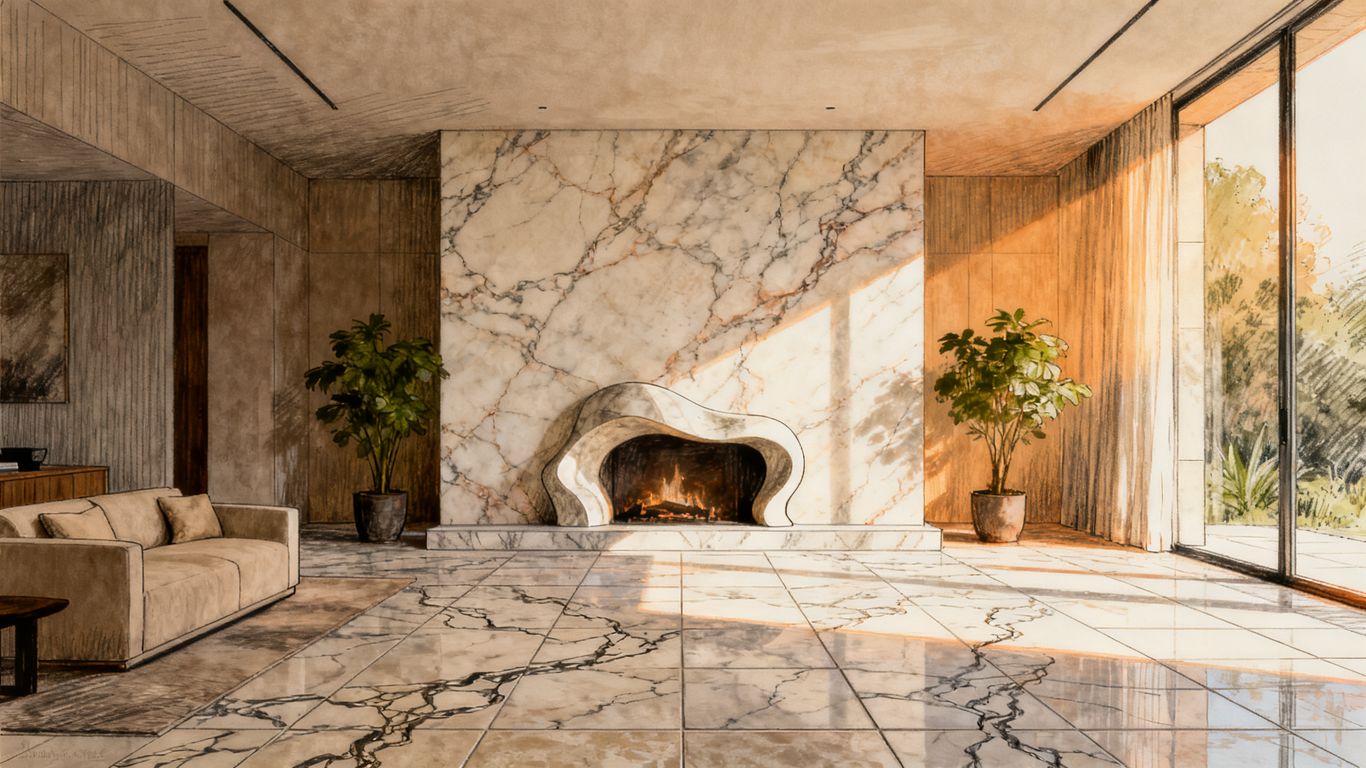
Explore popular marble colors and collections
Color sets the emotional temperature of a space. White marble can feel bright and classic, gray marble can feel architectural, and darker varieties can add contrast and intimacy. Review samples in the actual room, because surrounding paint, cabinetry, lighting, and grout can change how the stone reads.
White marble options, including Carrara, Calacatta, and Thassos
Carrara usually brings a soft white ground with delicate gray movement, while Calacatta is often selected for bolder veining and a more dramatic impression. Thassos offers a crisp, clean white appearance that suits both modern and traditional rooms. These choices work well for bathroom walls, backsplashes, shower surrounds, and elegant floor layouts.
For a smaller installation, a Carrara mosaic can add detail without overwhelming the room. For a larger statement, Calacatta-inspired movement can carry across a wall or vanity area.
Gray marble choices, including Tundra Gray and Atlantic Gray
Tundra Gray creates a composed backdrop with refined gray tones and delicate veining. Atlantic Gray has soft gray coloring with more visible character, making it useful for floors, walls, vanities, and feature areas. Both can bridge warm wood, white cabinetry, brushed metal, and darker accents.
Gray is also forgiving when a room needs flexibility. It can support a contemporary palette today and still work with more traditional furnishings later.
Black marble, including Nero Marquina and Pietra Notte
Black marble creates immediate contrast. Nero Marquina is known for a deep black background with white veining, while Pietra Notte can provide a similarly rich, dramatic direction depending on the individual selection. Use dark marble on a powder-room wall, backsplash, shower wall, or carefully lit floor for a strong architectural effect.
Surfaces Galore offers Nero Marquina tile guidance for homeowners planning inspection, dry-fitting, installation, and care. Dark stone benefits from thoughtful lighting and a grout choice that supports rather than interrupts the pattern.
Beige, brown, green, and red marble varieties
Warm marble shades create a softer, more welcoming mood. Beige and brown varieties pair naturally with wood and cream finishes, green marble adds a botanical or old-world note, and red marble can bring deep, expressive color to a fireplace or accent wall. Onyx-like movement can also create a luminous effect in selected decorative applications.
Because stronger colors vary widely, request a sample before committing to a full order. Look at it beside flooring, cabinetry, hardware, and the room’s warmest and coolest light sources.
Matching marble color to your interior design style
Modern interiors often benefit from restrained gray, pure white, or bold black marble. Traditional spaces can welcome creamy tones, checkerboard layouts, and richer veining. Transitional rooms usually succeed with a stone that connects existing wood tones to the cleaner lines of new cabinetry or plumbing fixtures.
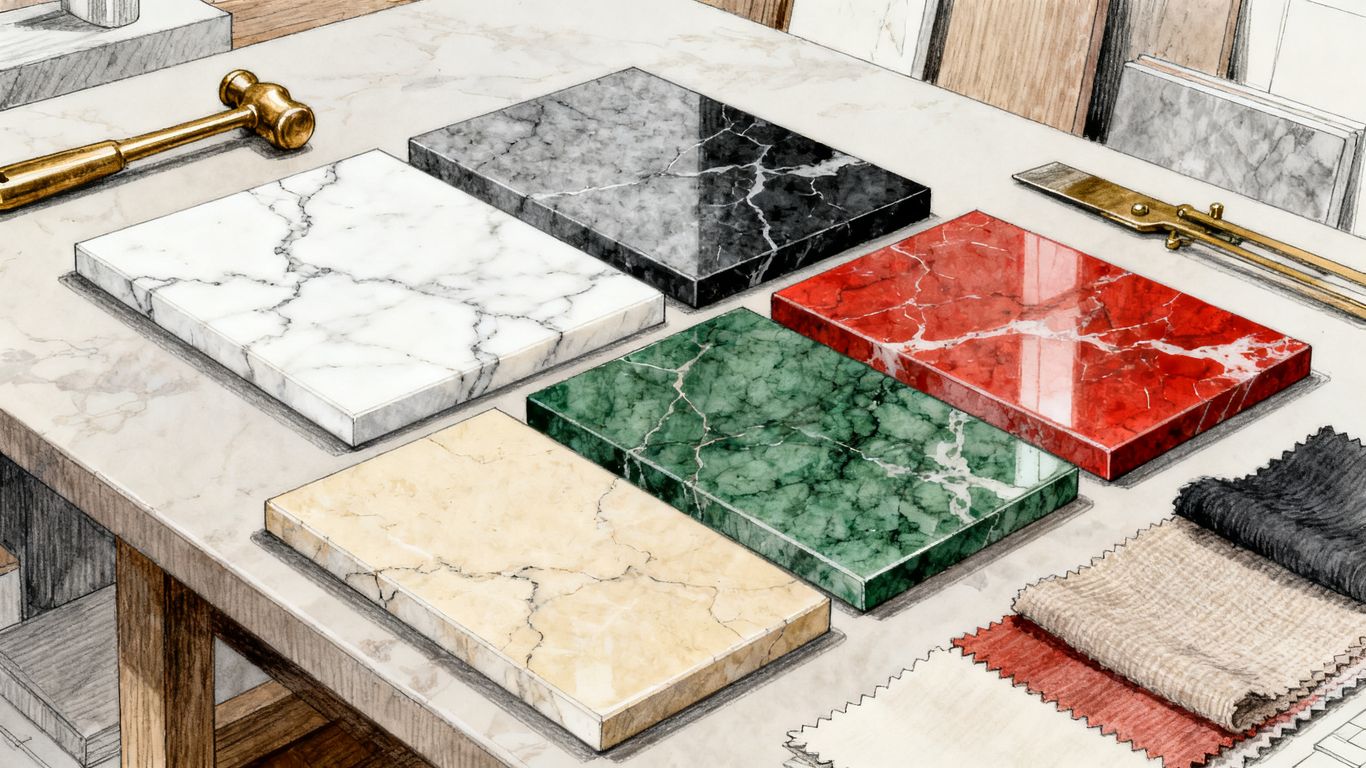
A sample review is also a good time to consider adjacent materials. Even unrelated design decisions, such as layered pillow cover ideas, can reveal whether your room wants cooler contrast or warmer texture.
Select the right marble tile format and pattern
Format changes how marble is perceived. Large tiles reduce visual interruption and can make a room feel calmer, while smaller pieces create rhythm and allow more flexibility around corners, niches, and curves. The pattern should support the room’s scale, not compete with every other surface.
Marble floor tile for entryways, living areas, and bathrooms
Marble floor tile can establish a strong foundation in an entryway, living area, powder room, or bathroom. Larger formats often feel expansive, while smaller formats can help with layout adjustments and detailed borders. For busy areas, combine a suitable finish with a realistic maintenance plan rather than choosing only by appearance.
Before installation, check for chips, cracks, warping, and noticeable differences in tone. A dry layout can prevent awkward edge cuts and help distribute variation across the floor.
Marble wall tile for backsplashes and feature walls
Wall tile is an effective way to enjoy marble’s visual impact with less foot traffic. A backsplash can frame cabinetry, while a feature wall can give a living room, bathroom, or fireplace a strong focal point. Subway formats create orderly lines; larger pieces let expressive veining take center stage.
Keep the surrounding materials quiet when the marble has dramatic movement. The result feels considered rather than crowded.
Marble mosaic tile in herringbone, hexagon, and basketweave patterns
Mosaic sheets make it easier to introduce pattern into a backsplash, shower wall, niche, or accent floor. Herringbone feels tailored, hexagon creates a crisp geometric note, and basketweave brings a classic architectural character. Polished, honed, and tumbled surfaces each change the mood of the same pattern.
Surfaces Galore’s marble mosaic collection includes pattern-focused installation guidance, making it useful to review layout, cutting, grouting, and sealing before ordering. Allow the mosaic to be the detail that finishes the room, not the detail that fills every surface.
Checkerboard marble and other statement-making layouts
Checkerboard marble remains a confident choice for entryways, dining areas, bathrooms, and formal halls. Black and white can feel graphic and historic, while gray and white or warm beige combinations create a gentler interpretation. A border can make the layout feel intentional and help define the room’s edges.
The pattern needs accurate lines and a carefully centered starting point. Measure the room, dry-lay the field, and decide where partial pieces will fall before installation begins.
Marble molding, trim, borders, and thresholds for finished installations
Trim provides the quiet finishing work that makes a tile installation look complete. Marble molding, pencil liners, chair rails, thresholds, stair pieces, and base molding can frame a field tile or create clean transitions between materials. Match the trim’s finish and undertone to the main stone whenever possible.
Keep a record of transitions and outside corners before ordering. A small amount of planning here can prevent a beautiful field tile from looking unfinished at the doorway or wall edge.
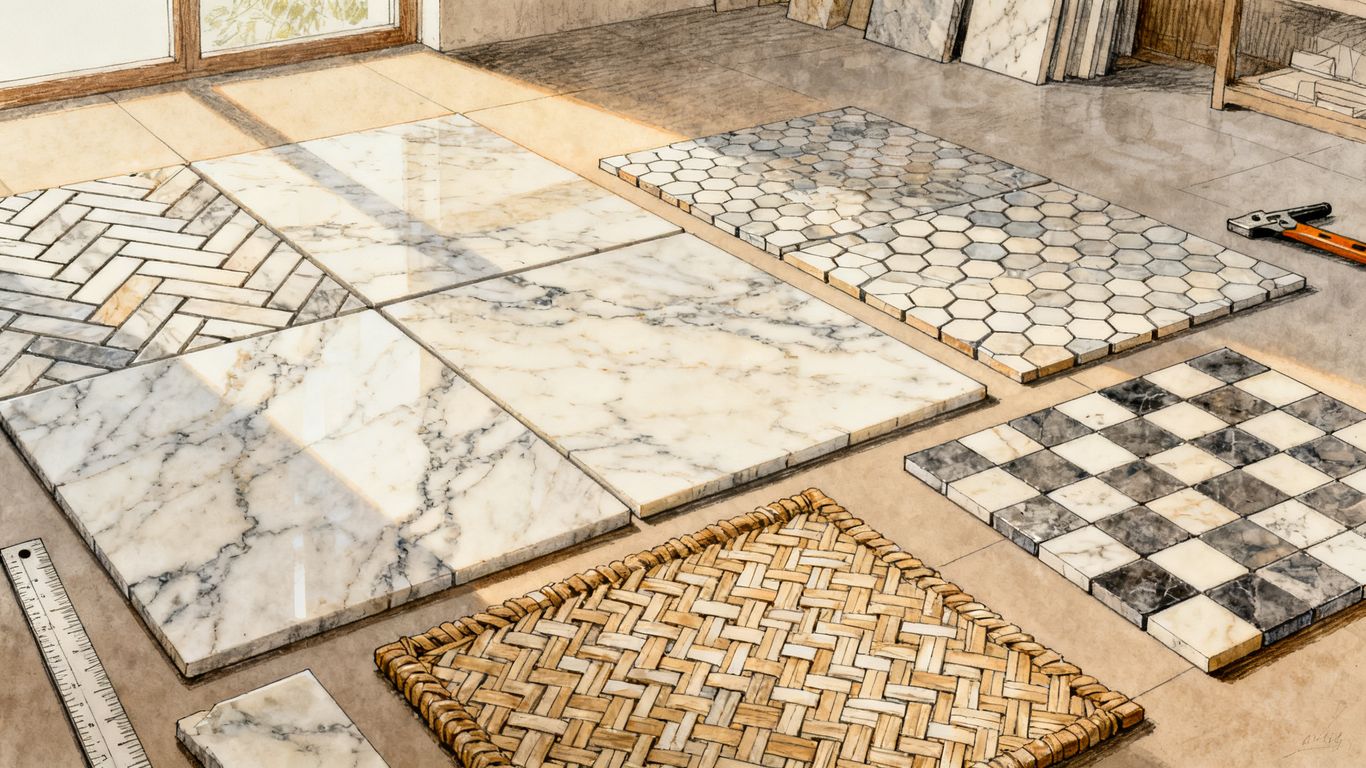
For adjacent flooring decisions, a practical flooring comparison can help clarify how material, underlay, installation, and room use affect the broader renovation plan.
Choose the best marble finish for each application
Finish affects more than shine. It changes color depth, texture, grip, maintenance, and the way light travels across the room. When comparing samples, view the same marble in more than one finish so the decision reflects real use rather than a catalog photograph.
Polished marble for a reflective luxury aesthetic
Polished marble has a smooth, reflective surface that brings out color and veining. It suits formal floors, walls, backsplashes, vanities, and decorative features where a luminous appearance is the priority. The glossy surface can make a small room feel brighter, though it may show scratches, etching, and water marks more readily.
Use polished marble where the visual reward matches the care routine. Soft lighting and simple surrounding materials allow the finish to feel luxurious without becoming overly busy.
Honed marble for a softer, more understated appearance
Honed marble has a matte or low-sheen appearance that feels calm and tactile. It can be a practical direction for floors, bathroom walls, kitchen backsplashes, and traditional interiors that call for less reflection. The finish also lets veining appear more subtle and grounded.
Honed stone is not maintenance-free, but its softer appearance can make everyday marks less visually prominent. Always confirm the product’s recommended care with the supplier and installer.
Tumbled and textured marble for traditional and rustic designs
Tumbled marble has softened edges and a timeworn character that works well with Mediterranean, rustic, and collected interiors. Textured surfaces can add visual depth to a niche, backsplash, shower wall, or decorative border. They are especially effective when paired with warm grout and natural wood.
Texture also affects cleaning and installation. Deep recesses may need more attention, and uneven edges require a layout that feels intentionally relaxed rather than accidentally irregular.
Slip resistance considerations for showers and wet areas
Wet areas require more than a color decision. A smaller mosaic may provide more grout joints, while a honed or textured finish can offer a different underfoot feel than polished stone. Ask about the specific product, intended use, and installation requirements before choosing marble for a shower floor or pool-adjacent space.
For a shower, review these practical questions before ordering:
- Is the selected finish recommended for the intended wet area?
- Does the tile size work with the slope and drain layout?
- Will grout joints and transitions be easy to clean?
- Has the installer confirmed the substrate and waterproofing plan?
These checks do not replace professional advice, but they help keep a beautiful choice grounded in daily use. A compatible finish and sound installation matter as much as the stone’s color.
How finish affects maintenance and everyday performance
Polished surfaces may call attention to water marks and etching, while honed and tumbled surfaces change how light and wear appear. All natural stone benefits from appropriate cleaning and, where recommended, sealing. Avoid harsh or unsuitable cleaners that can damage the surface.
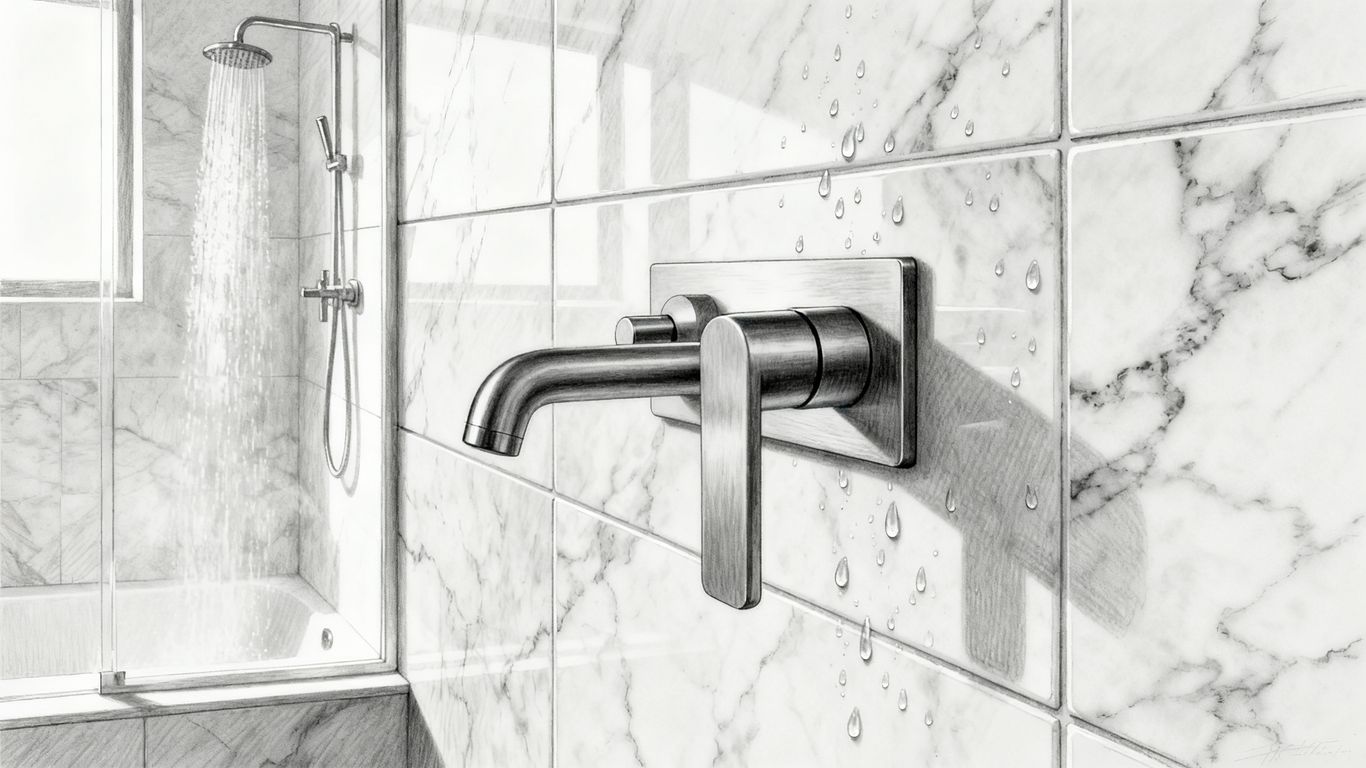
A finish sample viewed beside the room’s lighting is often more informative than a small online image. It lets you judge reflection, texture, color depth, and the amount of routine care you are comfortable providing.
Plan marble installations by room and use
The same marble can feel entirely different depending on where it is installed. A bathroom prioritizes moisture management and underfoot comfort, while an entryway demands a plan for traffic and grit. Start with the room’s conditions, then select the color, format, finish, and maintenance routine together.
Marble bathroom and shower tile design considerations
Bathrooms are natural settings for marble because walls, floors, niches, and vanities can share a coordinated material. Use variation deliberately: a quiet field tile can make a bold niche or mosaic more memorable. In showers, confirm waterproofing, slope, grout, and slip considerations with a qualified installer.
A small bathroom may benefit from larger wall tile and a restrained mosaic floor. This keeps the room visually open while preserving texture where it helps with scale and function.
Marble kitchen backsplash and countertop applications
A marble backsplash can bring movement behind simple cabinetry, while marble slabs can create a seamless look for countertops and vanity tops. Kitchens need a realistic conversation about staining, scratching, heat, sealing, and daily cleaning. Sample the material beside cabinet doors and hardware before making a final selection.
If the countertop has dramatic veining, consider a quieter backsplash. If the counter is restrained, a patterned marble backsplash can provide the room’s focal point.
Marble flooring for high-traffic areas and entryways
Marble flooring can make an entryway or living area feel grand, but traffic and tracked-in grit should shape the decision. Choose an appropriate finish, use mats at exterior doors, and plan regular care. A professional installer can also help with substrate preparation, transitions, and layout balance.
For an entryway, a border or checkerboard field may create a welcoming threshold. In a living area, larger tiles and consistent tone can make the space feel more expansive.
Marble fireplaces, accent walls, and architectural details
Fireplaces, accent walls, stair risers, and built-in niches are excellent places to use marble as a focal material. These applications let you enjoy expressive veining without covering every surface. Coordinate slab or tile direction with the architecture so the movement feels deliberate.
A fireplace project can pair a deep black stone with pale walls, while a warm beige or green marble can soften a more traditional room. The best result usually comes from limiting the number of competing focal points.
Outdoor marble applications, pool coping, and climate considerations
Outdoor marble requires careful attention to climate, water, freeze-thaw exposure, surface texture, and installation details. Pool coping, patios, and exterior walkways should use products and finishes appropriate for those conditions. Confirm suitability with the supplier and a qualified installer before placing an outdoor order.
Natural stone can be beautiful outside, but indoor assumptions do not automatically transfer outdoors. Drainage, edge treatment, setting materials, and ongoing care all deserve a place in the plan.
Buy premium marble tile with confidence
A successful purchase is more than selecting a beautiful photograph. It means confirming the actual stone, finish, thickness, available sizes, quantity, and delivery timing. Ask clear questions early so the installation schedule is not forced to depend on assumptions.
How to evaluate stone quality, thickness, sizing, and finish
Inspect samples and, when possible, the actual available material. Look for cracks, chips, excessive warping, inconsistent sizing, and finish differences that could affect installation. Confirm whether the product is polished, honed, or tumbled and whether the listed dimensions are nominal or actual.
Natural variation is expected, but quality control still matters. Your installer should also verify that the substrate, setting materials, grout, and tools suit the selected marble.
Ordering samples and reviewing natural color variation
Samples help you see the stone beside your own paint, cabinetry, flooring, and lighting. A small piece cannot show every possible variation, so ask how the full lot may differ and whether multiple boxes can be reviewed before installation. Dry-laying the material is one of the best ways to create a balanced distribution of tone and veining.
This is where an online purchase becomes a design decision rather than a guess. Keep the approved sample with your project notes and compare deliveries against it.
Estimating quantities, waste, accessories, and installation needs
Measure the room carefully, then account for cuts, corners, pattern matching, breakage, and future repairs. Patterned layouts and natural stone with strong movement may require more extra material than a simple straight lay. Include trim, thresholds, grout, setting materials, sealers, and delivery considerations in the estimate.
A clear quantity worksheet keeps the purchase practical:
| Project element | What to confirm | Why it matters |
|---|---|---|
| Field tile | Area, size, and layout | Establishes the base quantity |
| Waste allowance | Cuts, pattern, and defects | Reduces the risk of shortages |
| Trim and transitions | Corners, doors, and edges | Creates a finished installation |
| Installation supplies | Mortar, grout, sealer, and tools | Keeps work moving efficiently |
Review the numbers with the installer before ordering. It is usually easier to plan additional material at the start than to match a natural stone lot later.
Benefits of buying from a direct importer and nationwide supplier
A direct importer can give homeowners, designers, and architects access to a broad natural-stone selection while reducing unnecessary steps between source and project. Nationwide service is especially useful when a renovation requires coordinated material, samples, bulk quantities, or delivery across state lines.
For buyers researching unrelated project decisions, resources such as a private testing guide, a 950 silver guide, or a search visibility guide may be useful elsewhere, but marble selection should remain anchored in stone quality, application, and installation requirements.
Requesting a quote, checking current stock, and arranging delivery from Surfaces Galore
Surfaces Galore is an Anaheim, California-based direct importer and nationwide supplier of marble and travertine tiles, mosaics, and moldings. The company serves homeowners, designers, and architects with premium natural stone, competitive pricing, bulk discounts, and cross-country shipping support. Ask for current stock, available finishes, sample options, quantity pricing, and delivery timing before placing the order.
When you are ready, request a marble quote with the room dimensions, preferred collection, finish, format, and target installation date. That information gives the team a practical starting point for checking availability and building an accurate order.
Make Your Marble Plan
Bring your room measurements, finish preferences, and design ideas to a natural-stone supplier that can help you review available marble, confirm quantities, and arrange delivery for your renovation.
Conclusion
Choosing marble well means balancing beauty with the realities of the room, the finish, the installation, and everyday care. Review real samples, plan the layout, allow for natural variation, and buy enough material to complete the work confidently. With the right preparation, marble can give a home a lasting sense of character, warmth, and refinement.
Frequently Asked Questions
Is marble a good choice for home renovation?
Marble is a strong choice when you want authentic veining, natural variation, and a premium appearance. It requires more thoughtful care than some alternatives, so the room and finish should guide the selection.
What is the difference between polished and honed marble?
Polished marble has a reflective, glossy surface that brings out color and veining. Honed marble has a matte or low-sheen appearance and generally feels softer and more understated.
Which marble is best for a bathroom?
White, gray, and softly veined marble are popular for bathrooms, but the finish and tile format matter as much as color. Shower floors require careful attention to slip resistance, slope, grout, and waterproofing.
Does marble need to be sealed?
Many marble installations benefit from sealing, but the correct product and schedule depend on the stone, finish, and application. Follow the recommendations of the stone supplier and qualified installer.
How much extra marble tile should I order?
The amount depends on room shape, tile size, layout, pattern matching, cuts, and natural variation. Your installer or supplier can help calculate an appropriate allowance before ordering.
Can marble be used in high-traffic areas?
Marble can be used in entryways and other busy areas when the product, finish, installation, and maintenance plan are appropriate. Mats, regular cleaning, and prompt care can help protect the surface.
How should I compare marble samples?
View samples in the room’s actual lighting and beside cabinetry, paint, flooring, grout, and hardware. Compare color, veining, texture, finish, and the amount of maintenance you are prepared to provide.

Leave a comment