
What Is French Pattern Tile? A Stone Buyer’s Guide

A floor made from one tile size can look clean, but it rarely has the architectural presence of a properly installed modular stone layout. So, what is french pattern tile? It is a repeating arrangement of four different tile sizes that fit together in a defined sequence, creating a richly varied, old-world surface without relying on a printed design.
Often called a Versailles pattern, French pattern tile is especially popular in travertine, limestone, and marble. The format gives natural stone room to show its movement, tonal variation, and texture - qualities that can be lost in a simple grid installation. It is a serious material choice for buyers who want a floor, patio, entry, or wall with lasting visual depth.
What Is French Pattern Tile Made Of?
French pattern tile is not one tile shape. It is a coordinated set, traditionally made up of four rectangular and square formats. In a common stone set, those pieces are 8-by-8-inch, 8-by-16-inch, 16-by-16-inch, and 16-by-24-inch tiles. They are packed in a calculated ratio so the installer can repeat the same interlocking layout across the surface.
The pattern is sometimes described as random because it does not read like a conventional square grid. In reality, it is highly organized. Each piece has a specific place in the repeat. That geometry is what gives a French pattern floor its balanced, established look rather than the uneven appearance of mismatched remnants.
Actual dimensions can vary slightly by material, collection, and whether the product is calibrated or tumbled. Natural stone is not manufactured like ceramic tile, and a premium supplier should clearly state the nominal size, thickness range, finish, and square footage per set before you order. Do not assume that tiles from two different French pattern collections will work together, even if their listed sizes appear similar.
Why the Layout Has Enduring Appeal
The French pattern has roots in European estates, courtyards, and historic interiors, where stone was selected for permanence as much as appearance. Its enduring appeal comes from scale and rhythm. Different tile sizes break up broad expanses, making a large room feel considered rather than flat.
That effect is particularly valuable with natural materials. Travertine brings warm mineral variation and a relaxed, lived-in character. Limestone offers a quieter, more uniform field with understated movement. Marble makes the same format more refined, with veining that shifts from one module to the next. The layout adds visual interest, while the stone provides authenticity.
French pattern tile can also make a space feel more custom without introducing a high-contrast decorative motif. A honed beige limestone pattern may suit a tailored transitional kitchen. Tumbled walnut travertine can anchor a covered patio or rustic great room. Honed white marble in this layout can bring a European sensibility to a powder room, foyer, or fireplace surround.
The trade-off is that this is not a background-only installation. The format has presence. In a compact room already filled with busy cabinetry, strongly veined countertops, or patterned wallpaper, a quieter stone and finish are usually the better choice.
French Pattern Tile vs. Standard Tile Layouts
A standard running bond uses tiles of one size, offset in rows. A straight-set grid keeps joints aligned. Both are efficient, familiar layouts that can make a room feel orderly and contemporary. French pattern tile is more dimensional and decorative, even when the stone itself is neutral.
Because the joint lines change direction and length throughout the repeat, the eye moves across the surface instead of following a single row. This can be an advantage in open-plan homes, large kitchens, long hallways, and outdoor entertaining areas. It gives the installation a stronger sense of scale.
It is not always the right answer. If you are designing a minimalist bath with large-format slab walls, a simple field tile may better support the concept. If the installation area is narrow or interrupted by many doorways and cabinets, the additional cuts required by a modular pattern can increase labor and reduce the visual payoff. The best layout depends on the room dimensions, stone selection, surrounding finishes, and installer skill.
Choosing the Right Stone and Finish
Material selection changes the character of a French pattern more than many buyers expect. The same four-size layout can look rustic, formal, coastal, or contemporary depending on the stone and finish.
Travertine for Warmth and Texture
Travertine is a natural fit for French pattern layouts because its tonal shifts and surface character complement the old-world geometry. Beige, ivory, and walnut travertine work especially well on floors, patios, pool-adjacent spaces, and casual living areas. Honed and filled travertine has a smoother, more tailored appearance, while tumbled material creates softer edges and a more relaxed finish.
For exterior applications, confirm that the specific stone and finish are appropriate for your climate and exposure. Freeze-thaw conditions, direct sun, drainage, and the intended level of slip resistance all matter. A beautiful patio begins with the correct material specification, not just the correct color.
Limestone for Quiet Sophistication
Limestone is often the strongest option for homeowners and designers who want the French pattern itself to provide the interest. Its restrained movement lets the geometry take center stage. Cream, taupe, sand, and soft gray limestones can move easily between traditional and modern interiors.
Limestone needs thoughtful care because it is calcareous and can be sensitive to acidic cleaners and spills. In a busy kitchen or dining area, sealing and a realistic maintenance plan are part of the purchase decision. That is not a reason to avoid it. It is a reason to specify it correctly.
Marble for a More Formal Statement
Marble French pattern tile is more polished in spirit, even when the finish is honed. Carrara delivers soft gray veining and a classic European look; warmer marbles can add depth without the rustic character of travertine. This is an excellent choice for foyers, interior floors, bathrooms, and feature walls where a premium finish is the priority.
A honed finish is often preferred for marble floors because it is less reflective and more forgiving of everyday wear than polished stone. Polished marble can be striking, but it may show etching, water spotting, and fine scratches more readily in active areas.
Installation Details That Determine the Result
French pattern tile rewards precision. It should be installed by a contractor who understands modular stone layouts and can work from the actual pattern diagram supplied with the material. Starting without confirming the repeat is a costly mistake. One misplaced tile can disrupt the layout across an entire room.
Dry-laying several pattern repeats before setting tile is good practice, particularly when working with veined marble or naturally varied travertine. This allows the installer to blend color and movement across the floor instead of creating concentrated dark or light areas. It also confirms how the pattern will land at focal points, transitions, and perimeter cuts.
Joint width deserves attention as well. Tumbled stone generally accepts a wider grout joint that supports its softened edges. Calibrated, honed stone may be installed with tighter joints when tile sizing and substrate conditions allow. The right answer depends on the product, not a universal rule. Excessively tight joints can make natural variation more noticeable and leave too little tolerance for a clean installation.
Subfloor preparation is equally important. Stone requires a stable, flat substrate. Tile can be cut to fit a poor layout; it cannot compensate for movement or an uneven floor. Ask your installer to assess flatness, appropriate underlayment, waterproofing in wet zones, expansion requirements, and the correct setting materials for the stone selected.
Ordering the Right Quantity
French pattern sets are sold by square footage, but planning should account for cuts, room shape, and pattern alignment. A simple rectangular room may need a modest overage. Spaces with angled walls, curved edges, stair details, multiple openings, or a diagonal installation require more.
For most projects, an experienced installer can help calculate waste based on the actual plan. Ordering too tightly can create a problem if additional material from a later production run differs in shade, texture, or calibration. Natural stone variation is part of its value, but it should be managed through proper ordering and blending.
Before committing to a full order, review a sample in the project lighting and alongside cabinets, paint, countertops, and fabrics. Indoor lighting can make beige stone read warmer, while daylight can bring out gray, cream, or gold undertones. For projects requiring premium-grade imported stone, Surfaces Galore provides a focused selection of French pattern sets and samples so buyers can specify with confidence before installation begins.
Where French Pattern Tile Works Best
French pattern tile is particularly effective in rooms where the floor is visible and allowed to carry the design. Foyers, kitchens, great rooms, dining spaces, wine rooms, covered patios, and outdoor kitchens are natural candidates. It can also be used on shower walls, fireplace surrounds, and feature walls when the scale suits the surface.
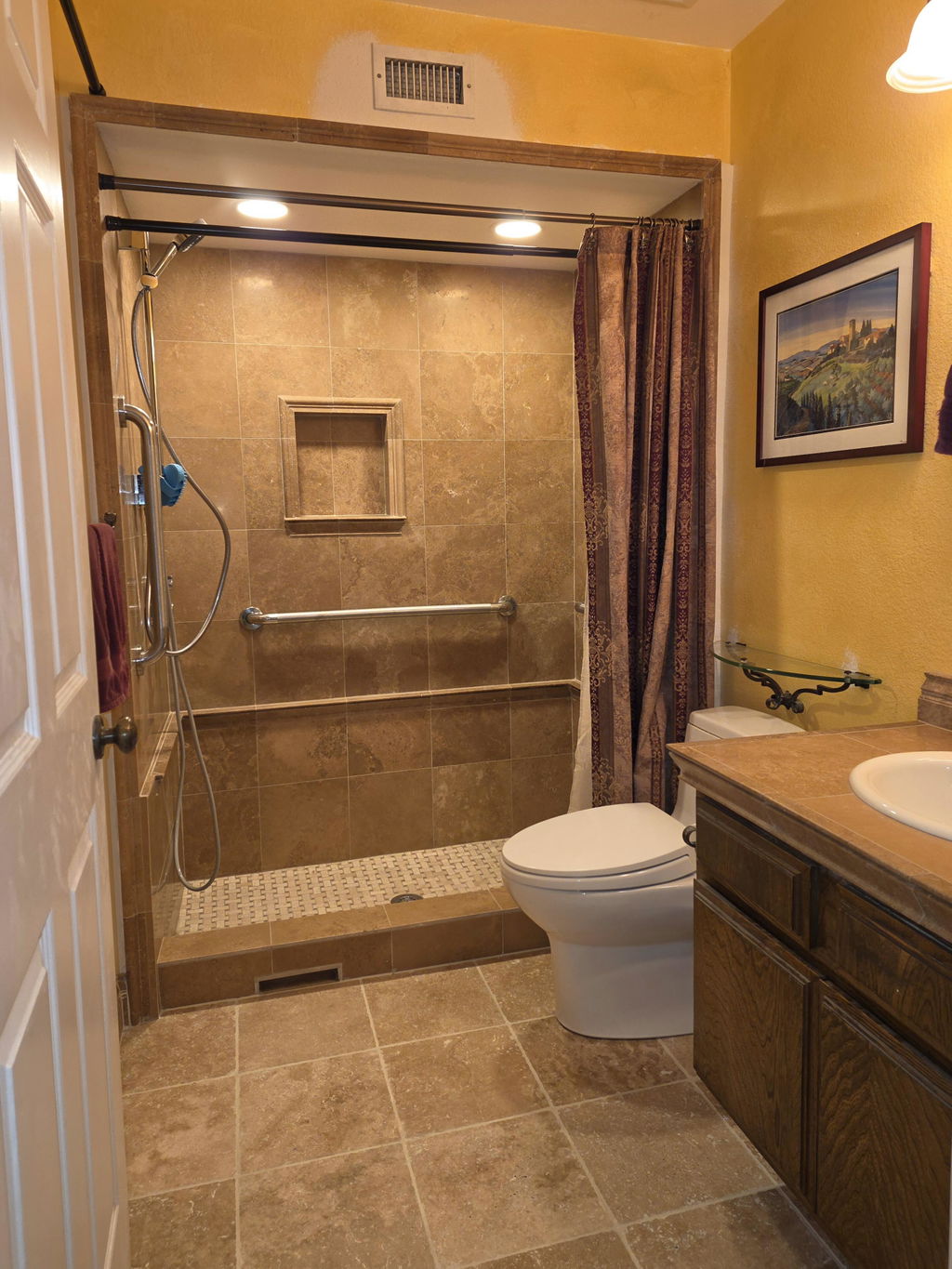
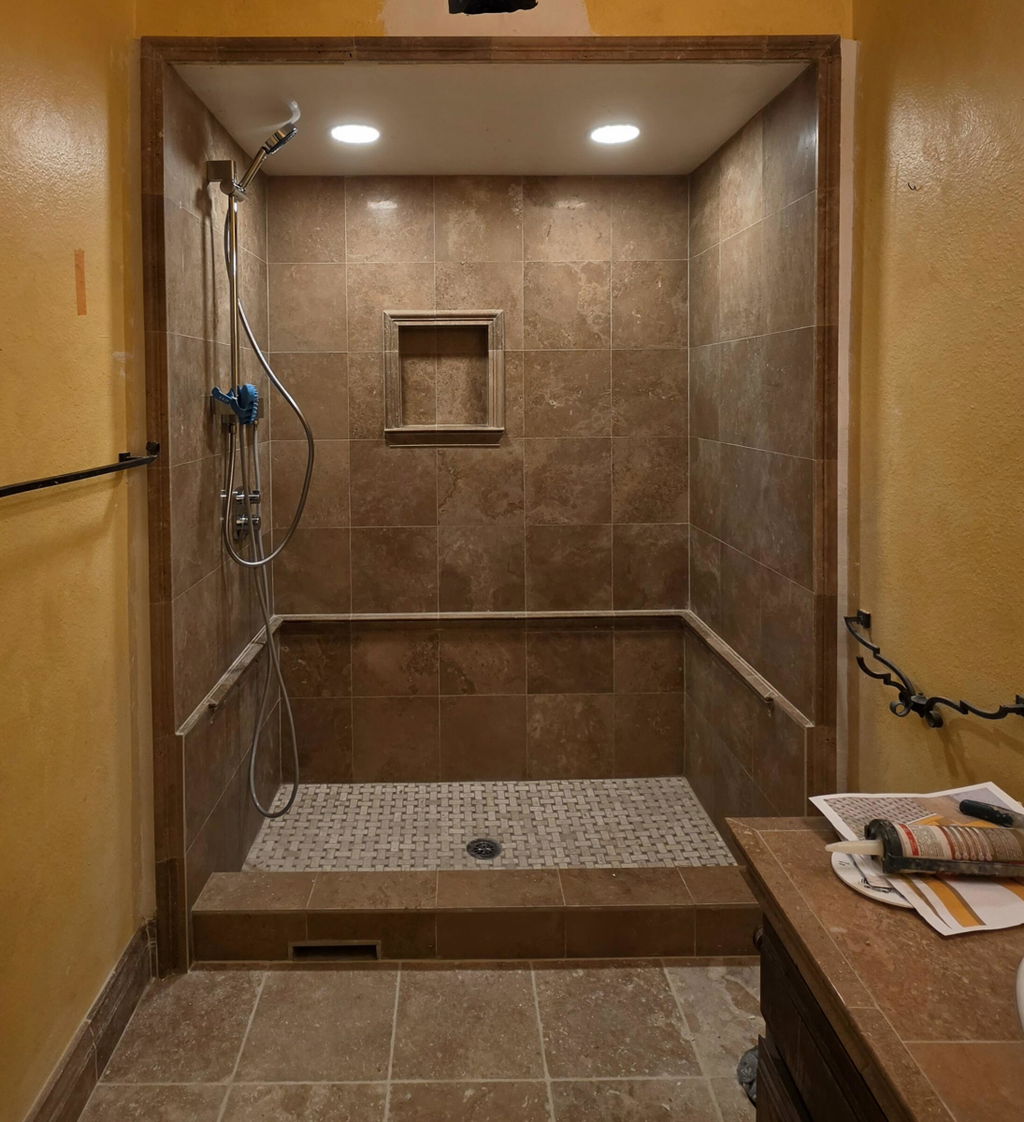
For smaller bathrooms, the format can still work, but consider the number of cuts and the visible portion of each repeat. A small room may benefit more from a smaller mosaic or a single-format stone tile, especially when the floor plan is crowded with a vanity, shower, and toilet.
The most successful French pattern installations do not treat stone as a commodity. They begin with premium material, a layout scaled to the room, and a contractor prepared to execute the repeat accurately. Choose the stone that fits how you live, confirm the installation details before ordering, and let the pattern give the space the grounded, lasting character only natural stone can provide.

Leave a comment