
Travertine marble: How to choose, use, and care for this natural stone

Key Takeaways
Travertine brings warmth, texture, and natural variation to a wide range of spaces. The right choice depends on the look you want, the conditions in the room, and the care you’re comfortable providing.
- Travertine is a porous natural stone in the limestone family, distinct from metamorphic marble.
- Natural pores, color shifts, and veining make every piece visually different.
- Finish and fill affect the stone’s texture and appearance.
- Choose products rated for the intended indoor, wet-area, or outdoor application.
- Dry-lay, seal, and clean travertine according to stone-specific guidance.
What travertine marble is—and how it differs from marble
The phrase travertine marble appears often in tile listings, even though travertine and marble are distinct natural stones. Both offer character that manufactured surfaces can’t duplicate, but their formation and appearance differ. Knowing what the name means helps you choose with confidence rather than relying on a label alone.
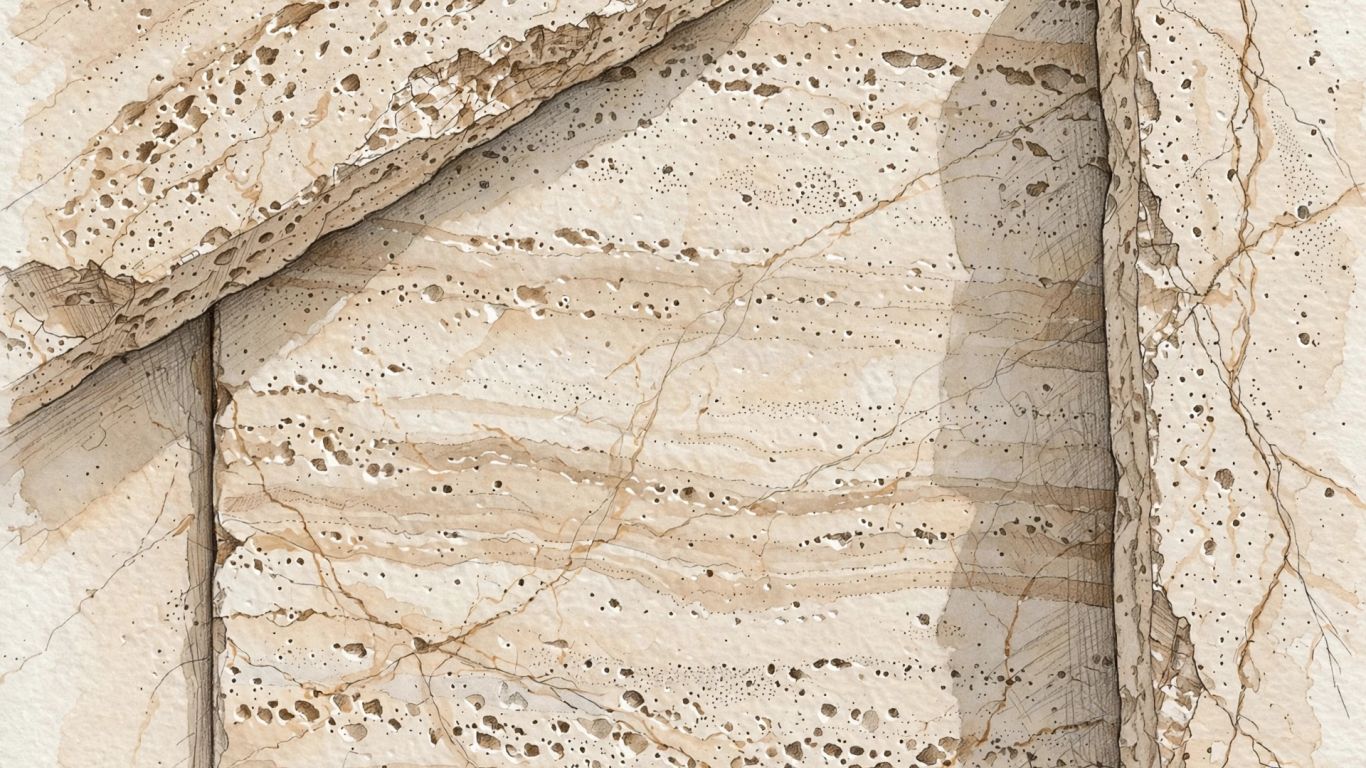
Why travertine is often called marble in the marketplace
In everyday shopping language, “marble” is sometimes used broadly for natural stone tile, and travertine may be grouped with marble in product categories. Geologically, travertine is a type of limestone, while marble forms when limestone is changed by heat and pressure. So when a listing says travertine marble, it usually refers to travertine being sold in a marble-style tile marketplace—not to travertine being a variety of marble. For a closer look at the distinction, see this marble and travertine comparison.
How travertine forms and develops its natural pores
Travertine forms as calcium carbonate is deposited from mineral-rich water, including around springs and in caves. During formation, small cavities and channels can remain in the stone, creating the familiar pitted texture. Some tiles retain those pores, while others are filled during finishing for a more even surface. The result is a stone with a distinct sense of depth; its subtle openings and lines are part of its natural character, not a printed pattern. This travertine formation overview offers additional context on how the stone develops.
Key visual differences in color, texture, and veining
Travertine commonly reads as warm and earthy, with colors that can move from ivory and beige to gold, walnut, or gray. Its pores and layered markings give it a more textured look than the smoother, often more dramatic veining associated with marble. The exact appearance varies from tile to tile, so a small sample can help you judge the palette, but it cannot show every variation in a full order. For a different way to see those natural lines, explore travertine’s character.
The benefits and trade-offs of travertine
Travertine can make a room feel settled and welcoming, with natural shifts in tone that give a floor or wall a little movement. It is used for flooring and walls, but it is still porous stone and needs appropriate care. The best choice weighs that living, varied look against the maintenance and application requirements of the space.
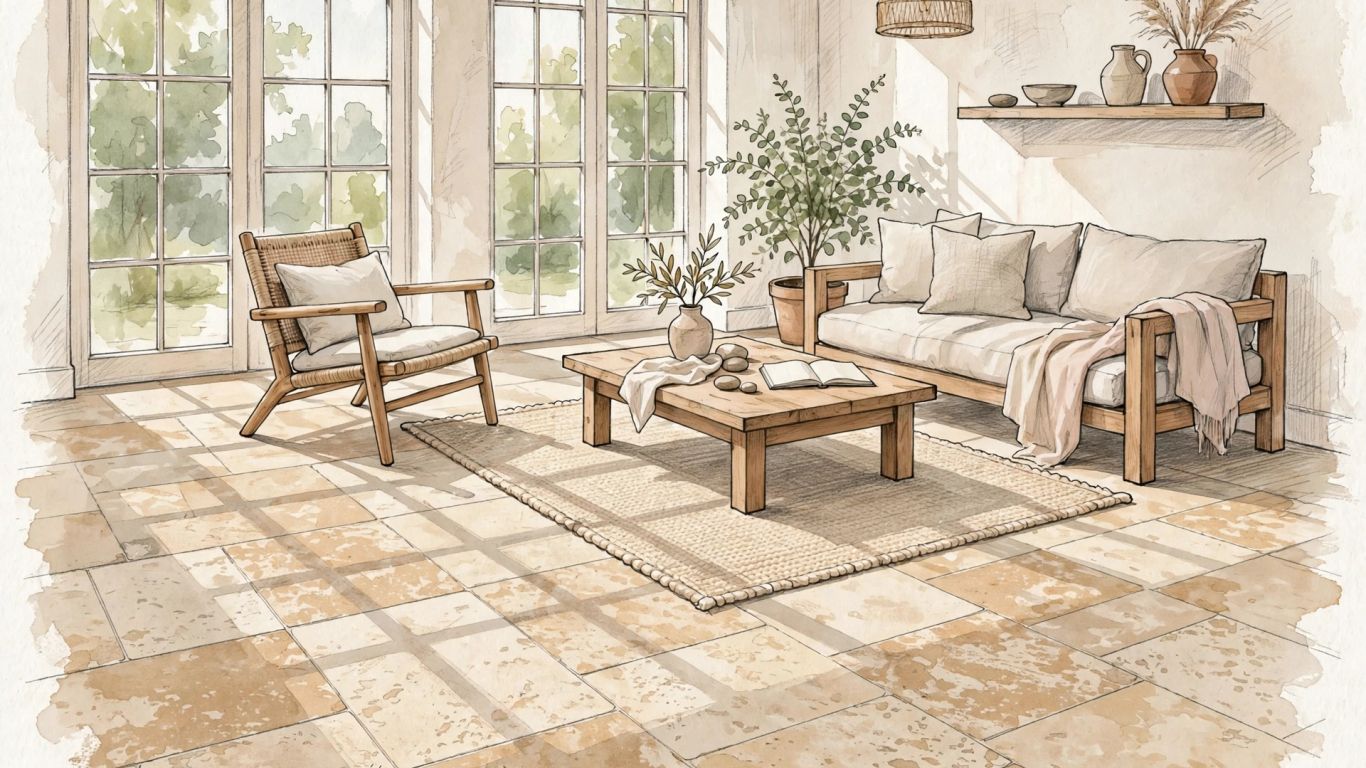
How natural variation gives each tile a distinctive look
No two pieces have exactly the same pattern, and that is a large part of travertine’s appeal. Within one order, some tiles may show more color, veining, or pore detail than others. A mixed layout can feel relaxed and organic; a more restrained selection can create a quieter effect. Surfaces Galore offers Travertine Tiles in a range of sizes and finishes, including honed and filled and tumbled options, so you can consider different expressions of that natural character.
What to know about durability in busy spaces
Travertine is used in homes and commercial spaces, including floors and walls, but the right product depends on traffic and the conditions it will face. Natural stone can scratch, stain, or crack if it is poorly installed or inadequately cared for. Before choosing it for a busy entry or hallway, check the product’s intended application and plan for routine cleaning. If you are comparing materials more broadly, this travertine and marble guide outlines factors such as appearance, durability, and use.
Porosity, sealing, and moisture considerations
Travertine’s pores make sealing and moisture planning part of ownership, not an optional finishing touch. A suitable sealer helps protect stone from stains and moisture, but it does not make the surface impervious or eliminate the need for care. Confirm the product guidance for the specific tile, installation, and room; shower floors and other wet locations deserve particular attention to both product suitability and slip resistance. Small product differences matter here, so read specifications rather than assuming every travertine tile performs the same way.
Finishes, colors, and patterns to consider
The finish can change the way travertine feels as much as the color changes the way it looks. A smooth surface reads differently from a textured one, and even the same stone can suit very different interiors depending on its finish and layout. Compare actual samples where possible, then decide how much visual movement you want across the room.
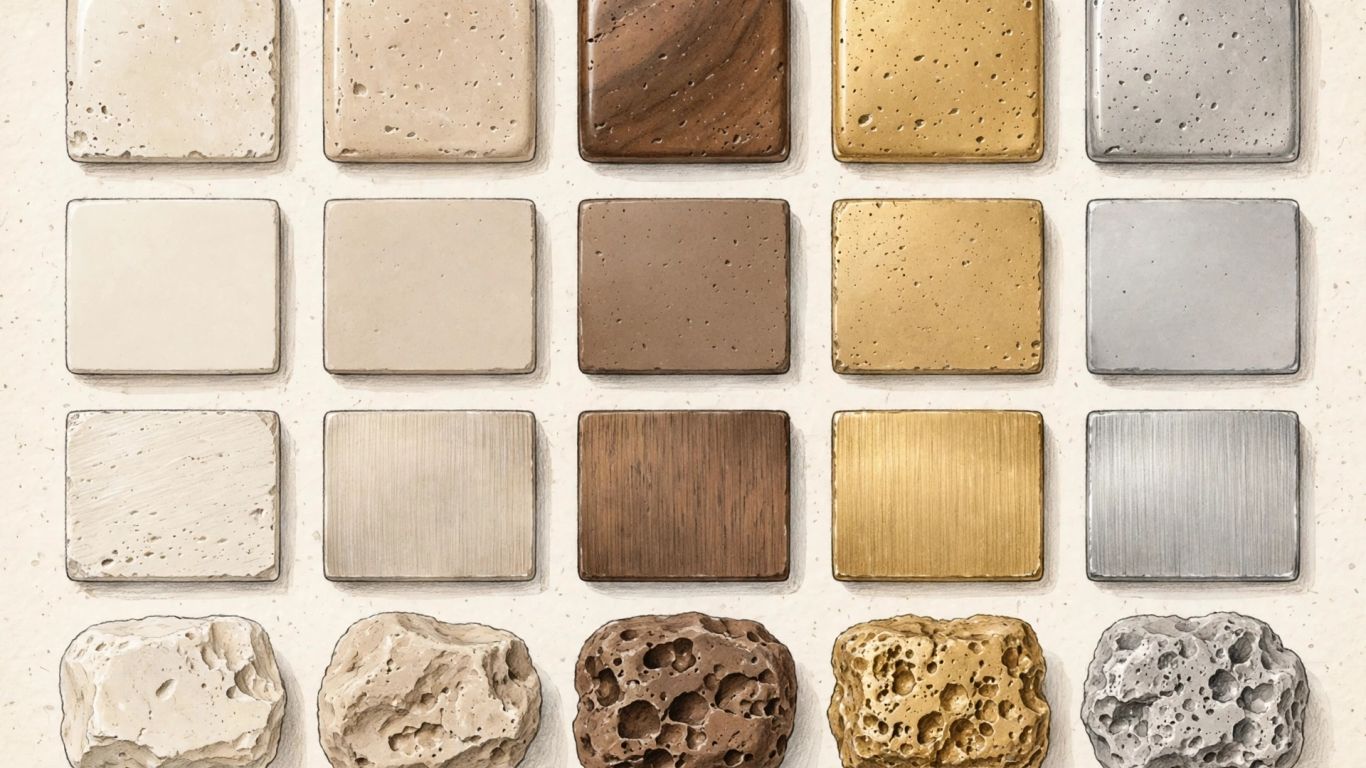
Compare polished, honed, brushed, and tumbled finishes
Polished stone has a smooth, reflective appearance; honed stone has a softer, matte look. Brushed and tumbled finishes retain more surface texture, giving the stone a less formal feel. Filled travertine has its natural voids filled for a more even surface, while unfilled material preserves more of the open texture. A quick comparison can help narrow the options before you order:
| Finish or treatment | Typical appearance | Useful selection question |
|---|---|---|
| Polished | Smooth, reflective surface | Do you want a glossy look? |
| Honed | Smooth, matte surface | Would a quieter sheen suit the room? |
| Brushed | Textured, softened surface | Do you want visible surface character? |
| Tumbled | Aged, tactile appearance | Would a rustic edge feel at home here? |
Use the table as a starting point, not a substitute for checking the specific product. The stone’s color, pore fill, and edge treatment also affect the final impression.
Choose among ivory, beige, walnut, gold, and silver-gray tones
Ivory and beige can keep a room feeling light, while walnut and gold bring a deeper, warmer note. Silver-gray tones offer a cooler direction without losing the natural movement of the stone. If you’re torn between shades, consider the room’s fixed finishes—cabinetry, wood, paint, and metal—and view a sample in the actual light. A La Travonya travertine tile is one filled-and-honed option described in warm, earthy tones.
Use vein-cut travertine for a linear, contemporary effect
Vein-cut travertine reveals its natural lines in a more linear pattern, which can give a wall or floor a clean, directional feel. The orientation of the pieces matters: repeated lines can lengthen a narrow room or bring rhythm to a feature wall. The Exotic Vein-Cut Travertine Collection is offered in polished and honed finishes and in warm ivory, beige, walnut, and silver-gray tones. A sample helps you see how the linear markings work with the scale and lighting of your space.
Where travertine marble works best
Travertine can move from quiet interior flooring to a more tactile accent, provided the product is suited to the setting. Its range of finishes and formats makes it adaptable, but application matters: a tile appropriate for a wall may not be the right choice underfoot in a wet area. Think about how the room is used, then match the surface to that job.
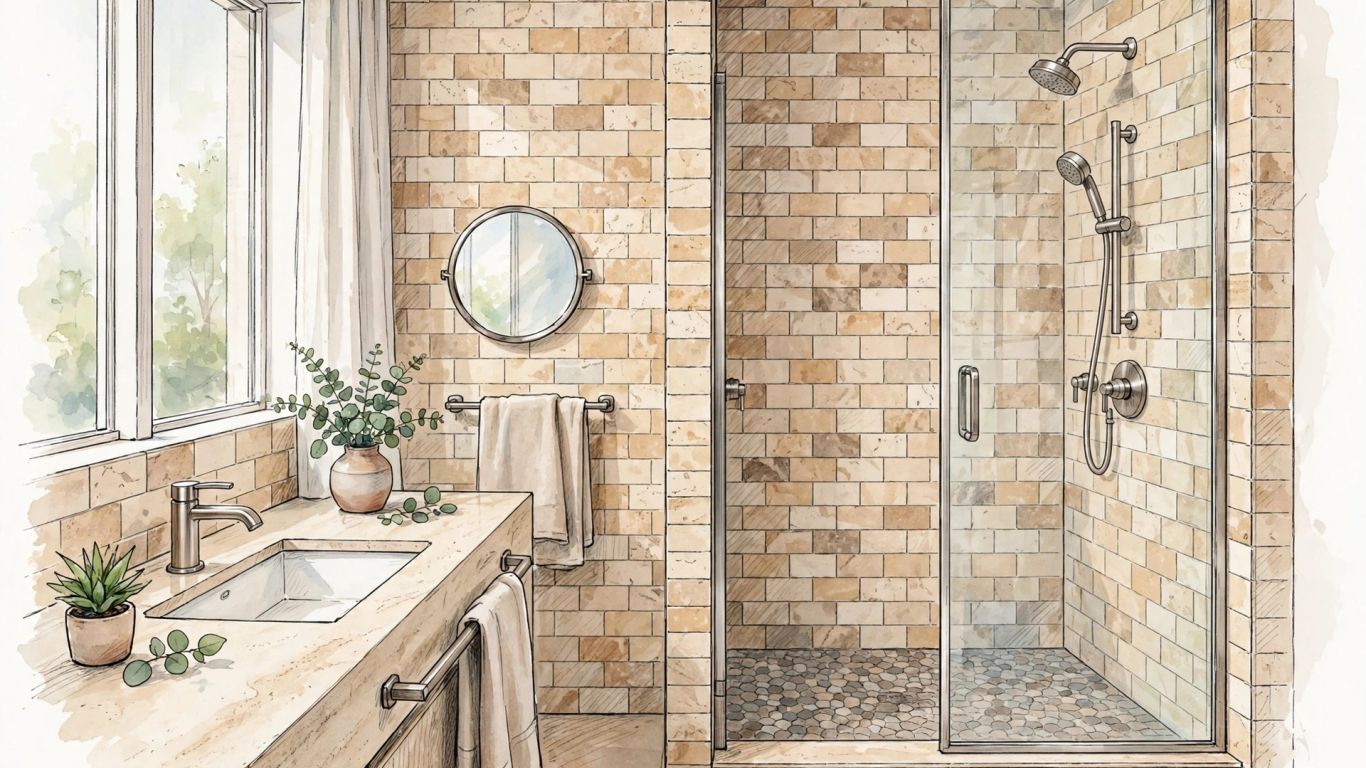
Create warm floors in living rooms, entries, and hallways
Living rooms, entries, and hallways are natural places to use travertine’s warm tones and varied markings. Larger formats can help a space feel more continuous, while smaller pieces create a busier rhythm. In high-traffic areas, review the tile’s product specifications and plan for sealing and regular care. The goal is a floor that feels inviting while remaining practical for the way people move through the home.
Add natural texture to bathroom walls and shower floors
On bathroom walls, travertine can bring a soft, spa-like texture without relying on a strong pattern. For shower floors, choose a product specifically suited to wet-area use and consider the finish underfoot; the smallest mosaic format is not automatically the right one for every shower. Confirm installation and maintenance guidance before buying, and make sure the stone’s pores and finish fit the amount of upkeep you expect.
Use mosaics, backsplashes, and accent walls for detail
Mosaics can introduce variation in a smaller, controlled area, making them a natural fit for backsplashes, shower walls, or an accent. The smaller pieces create more grout lines and a different visual scale than large-format tile, so it helps to view the pattern before committing. Surfaces Galore offers Travertine Mosaic Tiles in designs including herringbone, hexagon, subway, basketweave, and penny round. A filled and honed brick mosaic shows how a compact format can add texture to a wall or floor.
Consider outdoor patios and pool areas with suitable products
Travertine is also used outdoors, but do not assume every tile is made for exposure to weather or poolside conditions. Check the product specifications for the intended application and seek guidance on finish, installation, and maintenance. The surface should suit the conditions and the way the area will be used. For wider architectural context, this travertine in contemporary design article touches on the stone’s place in both historic and modern settings.
How to select the right travertine for your project
A good selection starts with the room, not the product photo. Decide how the space functions, then compare format, finish, and color against that use. Since natural stone varies, plan to inspect the actual stock or a representative sample before you make a final commitment.
Match tile format and pattern to the room’s scale
Large tiles can create a more expansive, uninterrupted look in an open room; small formats and mosaics add pattern and detail. A French or Versailles pattern combines several tile sizes for a more traditional, varied layout. Before buying, sketch the room or measure key areas and consider where cuts, borders, and transitions will fall. These steps help avoid choosing a striking pattern that feels crowded once it reaches the walls and corners.
Check finish, fill, thickness, and intended application
Product listings should tell you the finish, whether pores are filled, and the tile’s intended use. Check dimensions and thickness as well, since these affect transitions and installation planning. Natural stone and setting materials need to be compatible; follow the product and material manufacturers’ instructions. If the tile is light-colored or translucent, guidance recommends using white thinset to help avoid bleed-through or discoloration. Never infer wet-area or outdoor suitability from appearance alone.
Plan for natural shade variation and inspect current stock
Color and pattern variation are expected in natural stone. Ask to review current stock or request a sample, and remember that a small piece shows only part of a larger range. If you’re coordinating several boxes, arrange pieces together before installation so you can decide how to distribute the lighter, darker, or more strongly marked tiles. A little planning makes the finished surface feel intentional rather than accidental.
Installation, care, and sourcing
Careful preparation is what lets the stone’s natural appeal take center stage. Inspect the tiles before installation, confirm the substrate is stable and level, and use materials made for natural stone. Afterward, routine cleaning and appropriate sealing help protect the surface without asking it to look perfectly uniform forever.
Dry-lay tiles and blend pieces before installation
Lay the tiles out without adhesive before fixing them in place. This makes it easier to check the overall pattern, avoid awkward edge cuts, and blend variations from different boxes. Keep an eye out for cracks, chips, excessive warping, or other concerns, and raise questions with the supplier before installation. As a separate project-planning note, resources on custom timber flooring, porcelain veneers, teen residential treatment, Camden Market facilities, and website hosting address unrelated needs rather than stone selection.
Follow stone-specific guidance for setting, grouting, and sealing
Use a stable, level substrate and setting materials rated for marble or travertine. Follow the product instructions for mortar, grout, joint spacing, and curing times, and ask a professional installer about complex conditions. Once the grout has cured as directed, apply an appropriate stone sealer according to its manufacturer’s instructions. These steps are not interchangeable across every stone or product, so rely on the specific guidance for your material.
Clean routinely with products made for natural stone
Use a cleaner intended for natural stone and follow its label; harsh or unsuitable products can affect the surface. Wipe spills promptly and clean regularly rather than waiting for visible buildup. Sealing intervals vary with product and use, so check the stone and sealer instructions rather than treating a calendar schedule as universal. Consistent, modest care is usually easier than trying to correct a stain later.
Compare supplier selection, bulk pricing, and nationwide shipping options
Before placing an order, compare the available formats and finishes, request a sample if useful, and confirm the quantity and delivery details. Ask whether bulk pricing is available for your planned order and verify the current product stock. Surfaces Galore is an Anaheim-based direct importer and nationwide supplier of natural stone; its supplied information describes cross-country shipping and bulk discounts. If you are ready to check options, view current selections. A travertine tile sample can also help you assess color and texture before committing to a larger quantity.
Planning the finished look
A short video can help you picture how travertine’s natural variation and finish affect a room before you settle on a direction.
Use inspiration as a starting point, then confirm the actual tile, finish, and intended application with current product information. That combination of visual planning and practical checking makes it easier to choose with confidence.
Explore Travertine Options
Explore Surfaces Galore’s marble and travertine tile selection, compare available finishes, and ask about samples, bulk pricing, or nationwide delivery for your project.
Conclusion
Travertine’s pores, layered markings, and earthy colors give it a character all its own, while its range of formats and finishes makes it adaptable across many rooms. Choose for the setting, inspect the stone, and follow product-specific installation and care guidance. With those choices made thoughtfully, travertine marble can bring a lasting natural warmth to your home.
Frequently Asked Questions
Is travertine marble actually marble?
No. Travertine is a type of limestone, while marble forms when limestone is altered by heat and pressure. The phrase is commonly used in marketplace listings, but the stones are different.
What gives travertine its holes and pores?
Travertine forms as calcium carbonate is deposited from mineral-rich water. Small cavities and channels can remain as the stone forms, creating its characteristic pores.
Does travertine need to be sealed?
Travertine is porous, and a suitable sealer helps protect it from stains and moisture. Follow the instructions for the specific stone and sealer, including guidance on application and re-sealing.
Is travertine suitable for bathrooms?
It can be used on bathroom walls and, with a product intended for the conditions, shower floors. Check the finish, wet-area suitability, slip resistance, and care requirements before choosing.
Which travertine finish is best for floors?
That depends on the look, feel, and use of the room. Compare polished, honed, brushed, and tumbled options, then confirm that the specific product is appropriate for the intended floor.
Can travertine be used outdoors?
Some travertine products are intended for outdoor applications, but suitability varies. Check product specifications and installation guidance for exposure to weather, patios, or pool areas.
Will travertine tiles all look the same?
No. Natural stone varies in color, pattern, and texture, sometimes even within one order. Dry-laying and blending pieces before installation can help create a balanced overall layout.

Leave a comment