
Large Format Marble Trends for Elevated Spaces

A 24-by-48-inch marble tile changes more than the dimensions of a floor. It changes the room’s visual rhythm, the grout strategy, the installation requirements, and the standard buyers should expect from the material itself. The strongest large format marble trends are rooted in that complete effect: fewer interruptions, more visible stone character, and surfaces that feel intentionally specified rather than merely tiled.
For homeowners, designers, builders, and remodelers, large-format marble offers a direct path to a more composed result. But it is not a one-size-fits-all decision. The right stone, finish, layout, and tile size depend on the room, the subfloor or wall condition, light levels, and how closely the installation team can control lippage and pattern flow.
Why Large Format Marble Trends Continue to Lead
The move toward larger marble tiles reflects a broader preference for calmer, more architectural interiors. Smaller formats create more grout lines, which can be beautiful in mosaics, checkerboard floors, and traditional bathrooms. Large tiles do the opposite. They give the marble’s veining, fossil detail, and tonal movement room to register as the main visual feature.
This matters especially in kitchens, primary baths, entryways, and open-plan living areas. A floor laid in generous rectangular pieces can make a compact room read wider. On shower walls, a large format tile reduces grout joints and creates a cleaner backdrop for a statement vanity, brass fixtures, or a sculptural tub.
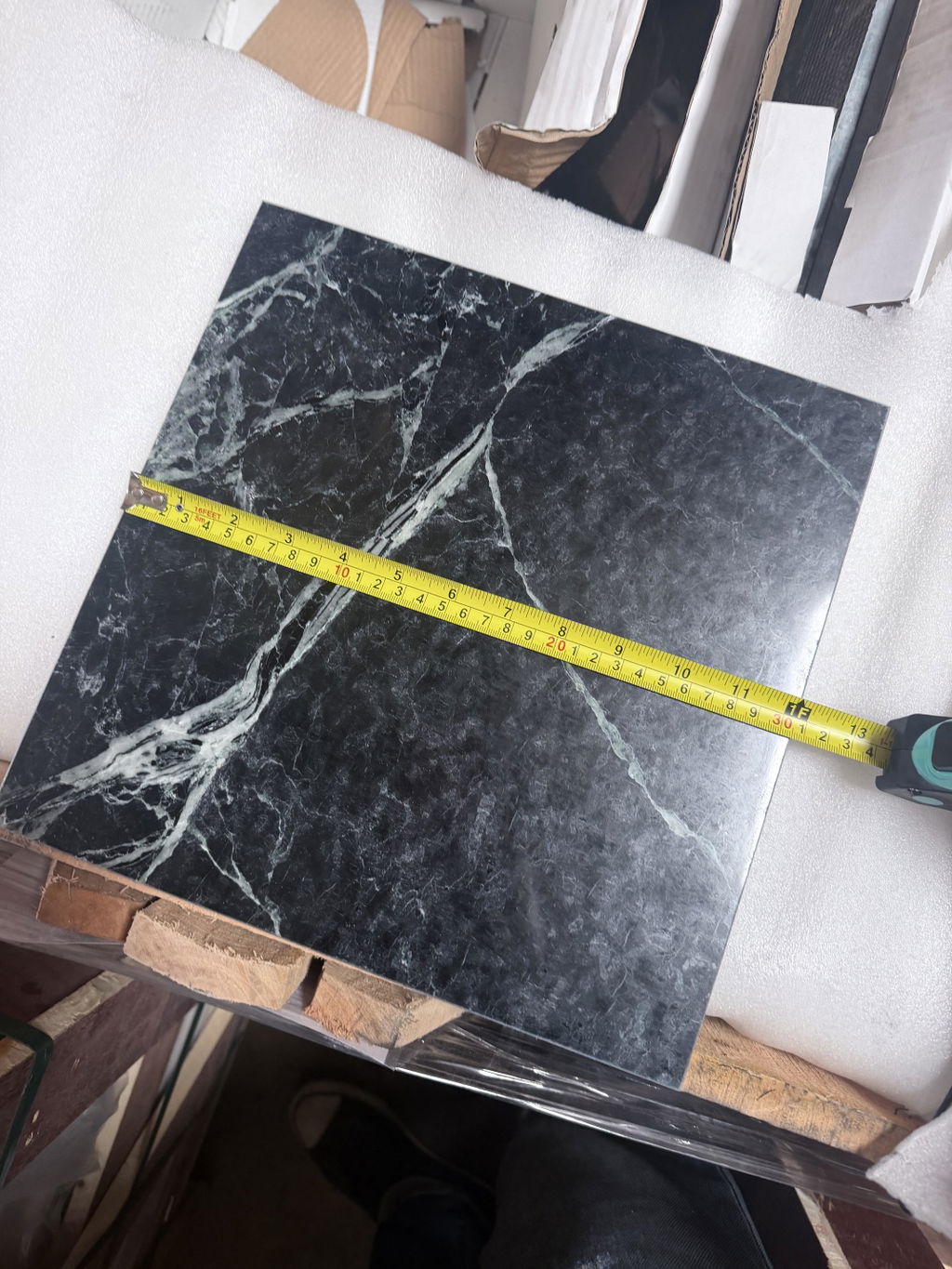
The appeal is not limited to contemporary homes. Honed Carrara in a large rectangle can feel restrained and classic. Calacatta with broader, warmer veining can support a more decorative or high-contrast scheme. Nero Marquina makes a dramatic statement when its white veining is allowed to travel across a full wall rather than broken into numerous small tiles.
The Most Relevant Directions in Large-Scale Marble
Quiet veining with strong natural variation
The most specified spaces are not necessarily choosing the busiest slabs or the whitest backgrounds. Many are selecting marble with a softer field color and organic movement that remains visible at a distance. Honed Carrara, dolomite-look white marbles, and select beige or taupe stones work well when the goal is depth without visual noise.
Natural variation is a feature, not a defect. Marble is formed by nature, so samples establish the overall family of color and movement, not an exact duplicate of every shipped piece. Buyers should review lot imagery when available and order enough material from the same lot to maintain the most consistent possible appearance across a project.
Honed finishes for floors and wet areas
Polished marble remains a compelling choice for walls, fireplace surrounds, and formal spaces where light reflection is part of the design. Yet honed finishes continue to gain ground, particularly on floors and shower walls. Their softer sheen is easier to integrate with wood cabinetry, plaster, brushed metals, and matte fixtures.
A honed surface can also be the more practical direction in a busy home because it is less likely to highlight minor etching or day-to-day surface marks than a high polish. That does not make it maintenance-free. Marble should still be sealed as appropriate, cleaned with pH-neutral products, and protected from acidic spills. The trade-off is worthwhile for clients who want authentic stone with a lived-in, less formal character.
Larger wall tile, not just larger flooring
One of the clearest shifts is the use of 12-by-24, 18-by-36, and 24-by-48 marble tile on walls. Full-height bathroom installations gain a more tailored look when grout joints are limited and carefully aligned. In a shower, a horizontal layout can make a narrow enclosure feel wider, while a vertical layout emphasizes ceiling height.
Large wall tile also gives designers more freedom to build a quiet field around smaller focal details. A handmade-look marble mosaic in the niche, a contrasting trim profile, or a checkerboard floor can become more effective when the surrounding wall is visually disciplined. The result feels layered, not overdesigned.
Vein matching and bookmatched focal walls
Vein matching is increasingly expected in premium installations, particularly around fireplace surrounds, shower feature walls, and vanity backdrops. Bookmatching mirrors adjacent pieces so the veining opens outward in a symmetrical composition. It is a powerful detail, but it requires planning before installation begins.
Not every marble or every application needs bookmatching. It can be too formal for a relaxed limestone-and-oak kitchen or a rustic European-inspired bath. It also creates more cutting, sorting, and labor. For a quieter installation, directional vein flow or a blended layout may better suit the stone and the budget.
Warm neutrals beyond bright white marble
White marble will always have a place, but warm neutral stone is expanding the large-format conversation. Cream, sand, mushroom, and light brown marble or marble-adjacent natural stones bring softness to rooms that would feel stark in bright white and charcoal. These tones pair naturally with walnut, rift-cut oak, unlacquered brass, and earthy painted cabinetry.
This direction is particularly effective in renovation work. A warm, honed large-format floor can connect a newer kitchen or bath to older architecture without making the space look artificially aged. The material reads substantial, durable, and appropriate to the home.
Scale Must Be Chosen Room by Room
Large format does not always mean choosing the largest tile available. In a small powder room, an oversized tile may require so many cuts that its visual advantage disappears. A 12-by-24 or 18-by-18 format may produce a more balanced field, especially when centered on the doorway or vanity.
For larger rooms, 24-by-24 and 24-by-48 tiles can create an impressive, low-joint surface. Before ordering, map the layout around room dimensions, transitions, drains, doorways, and fixed cabinetry. A professional layout plan helps avoid narrow perimeter cuts and ensures the best faces of veined material appear in the most visible locations.
Tile thickness matters as well. Natural stone tile is typically heavier than ceramic or porcelain, and large pieces demand careful handling. Wall applications may need specific substrate preparation and setting materials. Floor installations require a flat, stable base. Flatness is different from level: a floor can be level but still have minor highs and lows that cause unacceptable lippage between large tiles.
Installation Is Where Premium Material Earns Its Place
A premium marble tile cannot compensate for poor preparation. Large-format installations call for an experienced stone installer who understands substrate tolerances, proper mortar coverage, expansion movement, and the need to inspect and dry-lay material before setting it.
A few decisions should be made early. Confirm whether the installer recommends a straight lay, offset pattern, or stacked layout. Decide joint width based on tile calibration and the desired look. Choose grout that supports the stone rather than competing with it. In most refined marble installations, a closely coordinated grout color keeps attention on the natural material.
Wet areas deserve additional scrutiny. Shower walls need a properly waterproofed assembly behind the stone. Shower floors often benefit from mosaics or smaller pieces that can conform to slope and provide more grout joints for traction. Using large-format marble on the walls and a compatible mosaic on the floor is not a compromise. It is often the most sensible performance-and-design combination.
Buying Marble Online With More Confidence
Online sourcing can offer exceptional selection and direct importer value, but marble should never be treated as a generic commodity. Review the listed finish, dimensions, thickness, recommended use, and variation description. Order samples to assess color, texture, and finish in the actual lighting of the project.
Then account for waste. Straightforward layouts may require a modest overage, while diagonal patterns, vein matching, complicated room shapes, and extensive cuts require more. Ordering sufficient material at the beginning protects the visual continuity of the installation and reduces the risk of trying to blend a later lot.
Surfaces Galore supports serious stone buyers with premium imported selections, sample access, insured orders, and nationwide fulfillment. That combination matters when the tile is a defining architectural finish, not a small decorative purchase.
Large-format marble works best when it is specified with discipline: choose a stone whose variation suits the room, select a size that respects the layout, and give the installation the preparation it deserves. The finished surface will not need to announce itself. It will simply make the entire room look better.

Leave a comment