
Kitchen tiles: how to choose the right natural stone for your space

Key Takeaways
Marble and travertine can both bring natural variation and lasting character to a kitchen. The best choice depends on where the tile will go, the look you want, and the care you’re prepared to give it.
- Choose marble for varied veining and a polished or softly honed look.
- Consider travertine for warm, earthy color and natural texture.
- Match the tile’s finish and format to its location and everyday use.
- Confirm the substrate, grout, sealing plan, and order quantity before installation.
- View samples in your kitchen’s light and compare options before you buy.
Compare marble and travertine for kitchen use
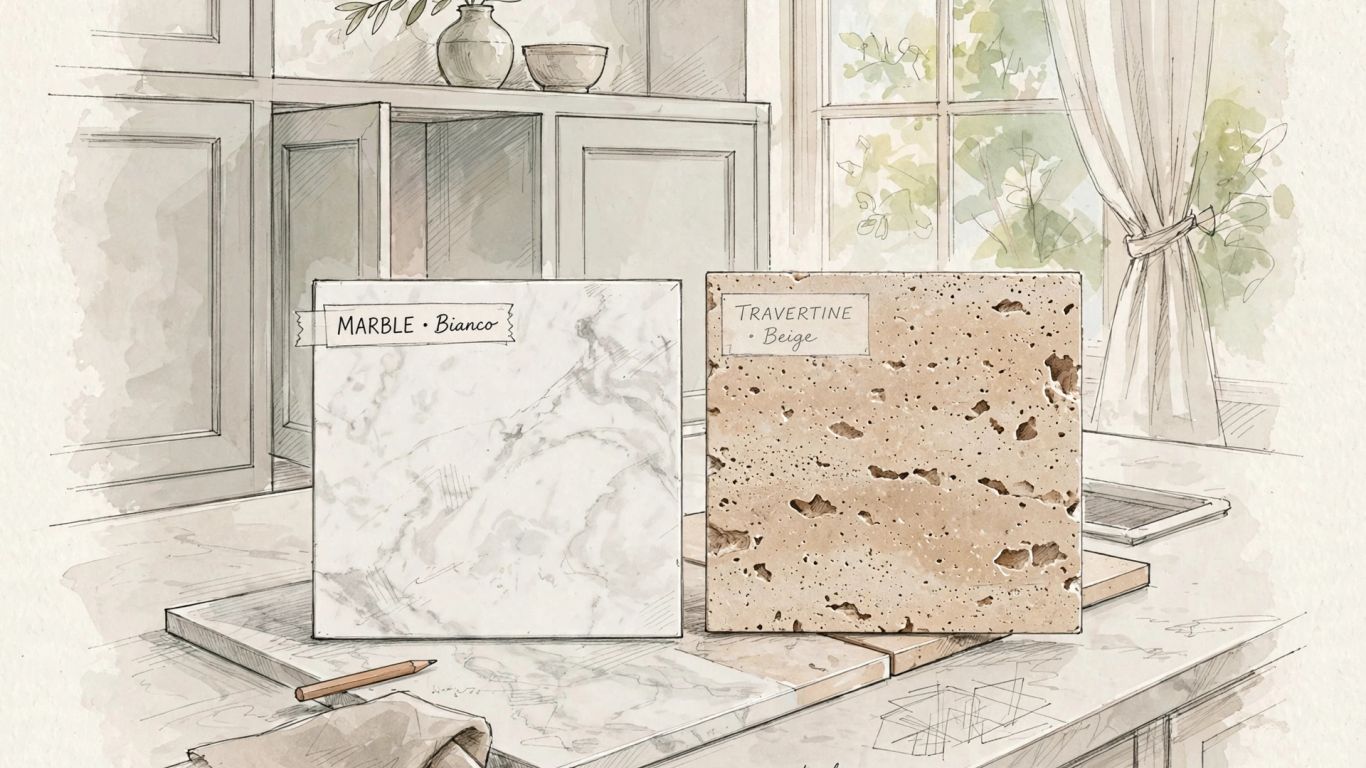
Marble and travertine offer different ways to bring natural stone into a kitchen. Marble often feels crisp and refined, while travertine tends toward a softer, earthier mood. Both stones vary from piece to piece, so a sample can tell you more than a small image on a screen. Consider the room’s light and the amount of daily activity before settling on a favorite.
How marble’s veining and color shape the room
Marble’s veining can be quiet and delicate or pronounced enough to guide the whole palette. A white stone with gray movement can sit comfortably beside painted cabinets, while darker marble creates a stronger contrast. If you’re drawn to a classic white field with fine gray lines, Carrara White Marble 4x4 is one example to compare. Look at several tiles together: the pattern on a single piece may not show the range you’ll see across a full floor or backsplash.
Why travertine brings warm, earthy character
Travertine’s beige, ivory, walnut, and other earthy tones can make a kitchen feel relaxed and grounded. Its natural texture gives the surface a less formal character, particularly in tumbled finishes. The La Travonya Travertine tiles offer one example of warm color and textured stone for floors, walls, and backsplashes. A honed and filled surface gives a smoother impression, so the right choice depends on whether you prefer rustic texture or a calmer, more even look.
Consider sealing, staining, and everyday maintenance
Natural stone is porous, so sealing is part of planning rather than an optional finishing touch. Marble can be more prone to scratching and staining, and travertine also needs sealing. Everyday care is straightforward when you use products suitable for natural stone and wipe spills promptly, but acidic cleaners such as vinegar or lemon can be a poor match. A dependable routine matters as much as the stone choice; even kitchen knife sharpening is easier to keep up with when it has a clear place in the household routine.
The following comparison can help you frame the decision, but the exact stone and finish still matter. Ask your installer about the selected material and the care it needs in your particular kitchen.
| Consideration | Marble | Travertine |
|---|---|---|
| Visual character | Distinct veining and varied colors | Warm, earthy tones and natural texture |
| Common impression | Refined, classic, or dramatic | Relaxed, rustic, or softly understated |
| Care planning | Seal and protect against stains and scratches | Seal and protect against stains and moisture |
| Finish choices | Polished, honed, and tumbled options | Polished, honed, brushed, and tumbled options |
Use this as a starting point, not a promise that every tile in a stone category will look or perform identically. Samples and product specifications can help you make a more informed selection.
Choose tiles for floors, backsplashes, and walls
A kitchen asks different things of tile depending on where it is installed. Floors see foot traffic and dropped crumbs, while a backsplash faces splashes and cooking residue. Wall tile can add texture without needing to compete with the cabinetry. Exploring a wider range of kitchen tile options can help clarify how location affects the choice of material and finish.
Select floor tiles with traffic and traction in mind
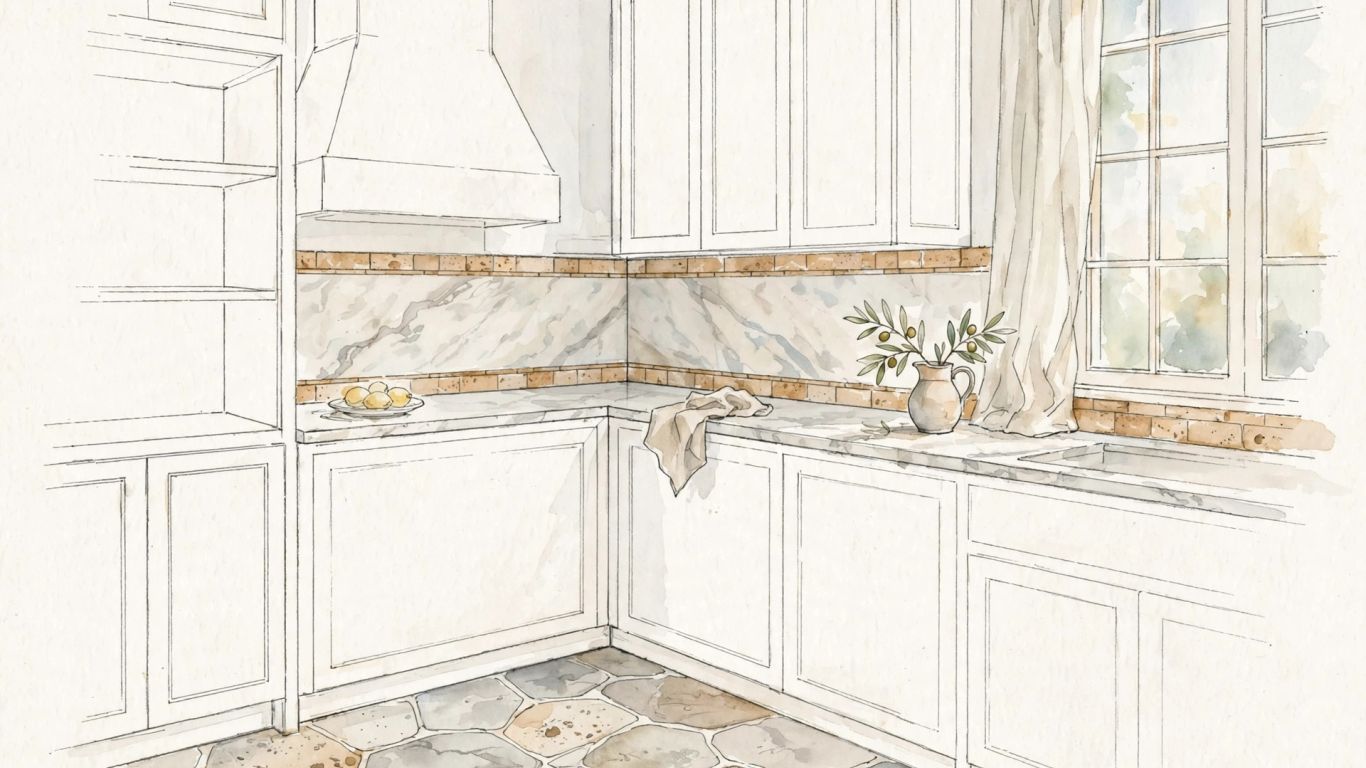
For a kitchen floor, think about how often the space is used, how spills are handled, and how the surface feels underfoot. A textured or honed finish may be worth considering where moisture is a concern; polished stone can feel slick when wet. Size and grout joints also affect the finished look and the amount of routine cleaning. If you’re weighing materials for the floor, comparing tile with custom timber flooring can help you think through the room’s use, subfloor, finish, and maintenance needs.
Use a backsplash to protect walls and add a focal point
A backsplash is a natural place to introduce pattern or stronger color without covering a large area. Marble can bring veining behind a range, while a travertine mosaic can add warmth and small-scale texture. For a measured contrast, a Nero Marquina Black marble mosaic offers a honed hexagon format to consider for a wall or floor accent. Keep the surrounding counter and cabinets in view as you choose; a sample placed vertically may catch the light differently from one laid flat.
Coordinate wall and floor tile without overwhelming the kitchen
A room usually feels more settled when one surface leads and the other supports it. If the floor has visible movement, a simpler backsplash can give the eye a place to rest; a quiet floor can make room for a patterned wall. Repeat a color or finish in small ways rather than matching every surface exactly. That balance lets natural variation feel intentional instead of busy.
Find a color, finish, and format that fit your design
Color, finish, and tile size shape the kitchen’s mood as much as the stone itself. A pale tile can brighten a room, while a darker one can anchor open cabinetry and light counters. The finish changes how the color reads, and format affects the rhythm of the surface. It helps to compare these decisions together rather than choosing each in isolation.
Pair light, dark, or neutral stone with cabinetry
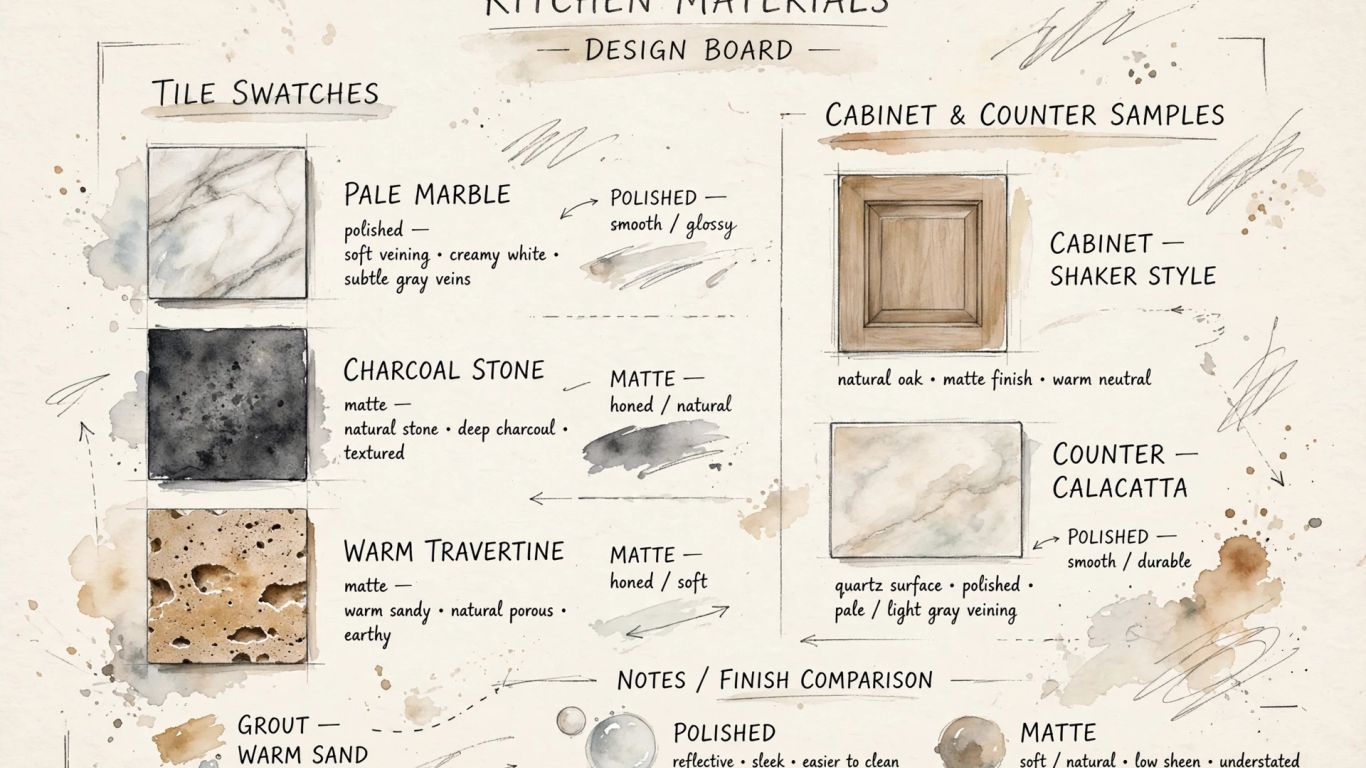
Start with the cabinet color and the amount of natural light, then look for a stone that complements rather than competes. Light marble can sit quietly beside painted cabinets, while dark stone creates a defined edge against pale wood or white cabinetry. Neutral travertine can bridge warm wood, cream paint, and natural finishes. Bring samples into the room and look at them at different times of day; a shade that seems cool in a showroom may read warmer at home.
Compare polished, honed, brushed, and tumbled finishes
Polished stone has a reflective surface and a more formal feel; honed stone is matte and softer in appearance. Brushed and tumbled finishes bring additional texture, with tumbled stone often reading as aged or rustic. The finish changes the way the stone feels and how it interacts with light, so compare actual samples where possible. For the Travertine Mosaic Tiles selection, Surfaces Galore describes tumbled, honed, and chiseled-edge styles, with patterns suited to backsplashes, floors, and accent features.
Choose tile sizes and mosaics for the scale of the space
Large-format tiles can create a quieter field with fewer grout joints, while smaller pieces bring more pattern and detail. Mosaics can be useful for a focused accent or a transition between larger surfaces, but dense pattern across every plane may make a compact kitchen feel crowded. Consider the proportions of cabinets, counters, and open wall area before choosing a format. Lay out a few sample pieces together so you can see the pattern’s overall scale.
Plan a layout that complements the kitchen
A good layout considers the room before the pattern. Doorways, cabinet runs, islands, and narrow passages all affect where cuts land and how a design reads. A pattern that looks balanced on a small sample can feel quite different across a full floor. Marking key lines before ordering helps you discuss the plan with your installer.
Create a classic look with subway or checkerboard patterns
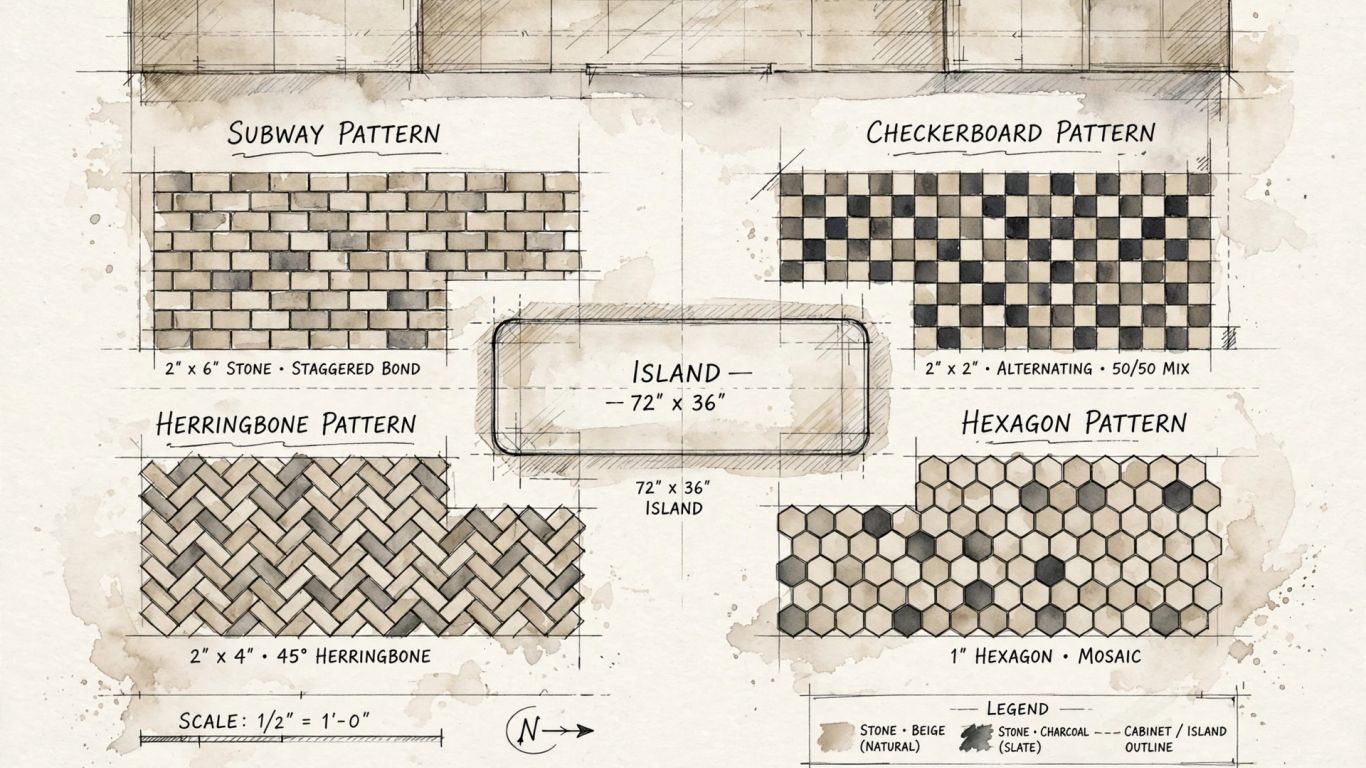
Subway layouts can feel familiar and clean, while checkerboard designs make a bolder graphic statement. Either can suit natural stone, but the contrast between colors and the direction of the pattern affect the overall mood. Keep the surrounding finishes simple if the floor or backsplash is meant to be the focal point. For a kitchen shared by several people, discussing routines and preferences openly—much like talking with a teenage son—can help uncover what everyone wants from the space.
Use herringbone, basketweave, or hexagon mosaics as accents
A mosaic pattern can add movement in a small, purposeful area, such as behind the range or along a short backsplash. Herringbone draws the eye along its direction; basketweave feels more traditional, and hexagons create a repeating geometric field. A single accent can be enough to give a restrained palette personality. If you want contrast, repeat one of the mosaic’s colors elsewhere in the room rather than introducing several new ones.
Align grout lines with cabinets, counters, and room dimensions
Layout decisions are easier to judge when grout lines relate to visible edges. Ask the installer to show where the pattern starts, how it meets the cabinet run, and where cuts will fall around an island or doorway. You can sketch these relationships before ordering, then confirm the plan on site. Choosing a gym in Camden Town involves weighing practical details against preferences; a kitchen tile plan benefits from the same habit of checking the everyday fit, even though the project itself is quite different.
For a pattern that still feels personal, it can help to narrow the options around a few priorities instead of chasing every idea. That kind of focused decision-making is similar to choosing a blog niche: settle on what matters most, then see whether the details support it. In a kitchen, those priorities might be the cabinet color, the amount of pattern, and how the tile meets adjacent surfaces.
Prepare for installation and long-term care
Even a beautiful stone can disappoint if the surface beneath it or the installation plan is not ready. Natural stone needs a sound, level substrate and setting materials suited to the tile. Thickness, pattern, grout joints, and transitions should be checked before the order is finalized. A clear conversation with an experienced installer can prevent avoidable surprises later.
Confirm substrate, tile thickness, and layout before ordering
Ask the installer to verify that the floor or wall is clean, stable, and level, and to confirm that the substrate can support the planned installation. Check tile thickness against adjoining floors and thresholds so the finished surfaces meet cleanly. Before placing an order, review the layout and confirm the material quantity, including cuts and the pattern’s starting point. A few simple checks now can save time once the work begins.
A short pre-order review keeps practical details from slipping behind the more exciting color and pattern decisions:
- Confirm the measured area and planned layout.
- Check tile thickness and transitions to adjacent surfaces.
- Agree on grout-joint width and grout color.
- Ask which setting materials are appropriate for the stone.
Use the list as a conversation guide with your installer, then record the agreed choices before material is ordered. Clear notes help keep the sample, quote, and installation plan aligned.
Discuss grout, sealing, and cleaning with your installer
Grout color and joint width can either blend into the stone or outline each tile. Your installer can help choose a grout and setting materials compatible with the selected marble or travertine. Ask when the stone and grout should be sealed, how often they may need attention, and which cleaning products are appropriate. For routine care, avoid acidic cleaners and follow the sealer and stone-care product directions.
Account for natural variation and order enough material
Natural stone varies in color, veining, and texture, so the installed surface will not be perfectly uniform. Review multiple pieces and, where possible, arrange them before installation to distribute the variation in a way that feels balanced. Confirm the order quantity with the installer, accounting for cuts and the chosen pattern. Keeping some extra material from the same order can also be helpful if a future repair is needed.
Shop for kitchen tiles with confidence
Shopping for natural stone is easier when you know the application, preferred color family, finish, and approximate quantity. Look at the current product details and compare samples in the lighting where they will be installed. If the kitchen is a larger project, ask for a quote based on the planned quantity and finish. A little research up front helps narrow the field without rushing the decision.
Review available marble and travertine colors, sizes, and finishes
Compare the available marble and travertine options by color, format, and surface treatment, then check each product’s application details. The Marble Tiles collection at Surfaces Galore includes options for flooring, backsplashes, and walls, with polished, honed, and tumbled finishes. Use samples to judge the veining and texture in your own space rather than relying on a screen alone. The right match should feel good in the room, not just look appealing in a product photo.
Request samples or a quote and ask about bulk pricing
A sample can make it easier to compare color and texture against cabinets, counters, and paint. Request a quote once you have an estimated area and preferred finish, and ask about bulk pricing for a larger order. Keep the product name and sample details together so you can refer back to the same option during planning. When you are ready, browse the collection and use those details to guide your next step.
Arrange nationwide shipping from Surfaces Galore in Anaheim, California
Surfaces Galore is based in Anaheim, California, and offers nationwide shipping for marble and travertine tiles. Before ordering, confirm the shipping details, quantities, and timing that apply to your project. Buyers planning a cross-country renovation can ask about delivery arrangements as part of the quote, then coordinate the order with the installer’s schedule.
Conclusion
The right kitchen tiles bring together natural character, a practical finish, and a layout that suits the way you use the room. Compare marble and travertine in your own light, confirm care and installation details, and choose a pattern that feels at home with the cabinetry and counters.
Frequently Asked Questions
Is marble or travertine better for a kitchen floor?
Either can work when the stone, finish, installation, and care plan suit the space. Compare the look and texture of actual samples, and ask an installer about the product’s specifications for your intended use.
Do natural stone kitchen tiles need to be sealed?
Natural stone is porous, and sealing helps protect it from stains and moisture. Follow the stone and sealer manufacturer’s instructions, and ask your installer when sealing and any later resealing should happen.
Which finish is best for a kitchen floor?
Honed or textured finishes may be worth considering where moisture and traction matter. The best choice depends on the specific stone, room conditions, and how the surface will be maintained.
Can I use marble or travertine for a backsplash?
Yes, natural stone can be used on a backsplash, where it can protect the wall and add color or texture. Review the product’s application details and discuss sealing and cleaning with your installer.
How do I choose grout color for natural stone tile?
A grout close to the tile color can create a quieter look, while a contrasting color makes the tile pattern more visible. Test the options with a sample and confirm compatibility with the stone and installation materials.
Will every natural stone tile look the same?
No. Natural stone varies in color, veining, and texture, and those differences are part of its character. Review several pieces together before installation to understand the range in the order.
Should I order extra tile for a kitchen project?
Discuss the quantity with your installer after measuring the area and confirming the layout. Cuts, pattern choices, and the possibility of future repairs can all affect how much material is sensible to order.

Leave a comment