
Calacatta gold penny round: a buyer’s guide to marble mosaic design

Key Takeaways
Calacatta gold penny round brings natural marble veining into a small, rounded mosaic format. A considered choice of finish, grout, layout, and installation plan helps the pattern feel intentional.
- The white marble background and gold-toned veining create a distinctive, naturally varied surface.
- Penny rounds add a fine, rhythmic pattern that suits both feature areas and larger installations.
- Polished and honed finishes give the stone different surface effects; view samples where possible.
- Measure carefully, account for cuts, and confirm product details before ordering.
- Natural marble needs appropriate installation, sealing guidance, and prompt attention to spills.
What makes Calacatta gold penny round marble distinctive
Calacatta gold penny round combines the character of natural marble with a compact circular shape. The result has more visual movement than a plain field of stone, but its small scale can still read as a calm, continuous surface from a distance. Veining and color will vary from piece to piece, so the finished pattern has a degree of individuality.
The white marble background and gold veining
The appeal begins with contrast: a light marble ground crossed by warm gold and gray veining. Surfaces Galore describes Calacatta Gold as having a white background and dramatic gold veining, a combination that can add warmth without making the overall palette feel heavy. The veins are natural rather than printed, and their placement will differ across the mosaic.
How the small circular format shapes the overall look
Penny rounds create a repeating pattern of small circles and narrow grout joints. That close rhythm softens the strong lines of cabinetry or larger wall surfaces, while the marble’s veining keeps the field from feeling uniform. For a closer look at this format, explore the Calacatta Gold penny round mosaic, and consider how the repeated shape will sit beside larger, straighter materials.
Natural variation and what to expect from stone mosaics
No two natural stone sheets are identical. Shades, veining, and texture may vary, and a sample can offer a useful first impression without showing every variation in a full order. Treat that variation as part of the material’s character, and review the sheets before installation so the overall distribution feels balanced.
Where to use Calacatta gold penny round mosaics
A penny-round mosaic can bring a decorative note to a kitchen or bathroom without requiring a complicated layout. Its small scale also makes it a natural option for places where a little pattern can do a lot of work. The best location depends on the room, the selected finish, and the installation plan.
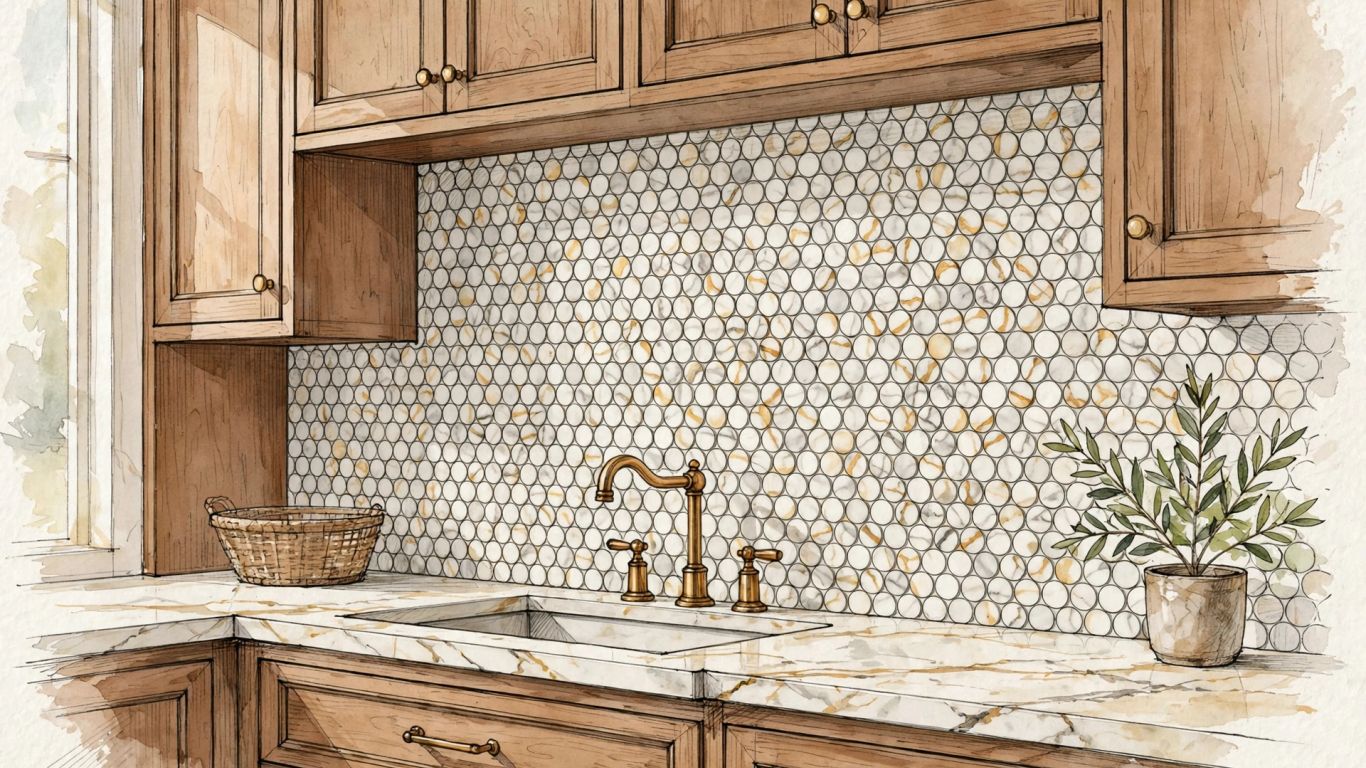
Adding a decorative accent to a kitchen backsplash
As a backsplash, the rounded pieces create texture behind a work surface while the white and gold palette can relate to many cabinet and fixture colors. The pattern can cover a full backsplash or be limited to a smaller feature area, depending on how much visual activity the kitchen already has. A sample viewed near the cabinetry can help you judge the color relationship in your own light.
Creating detail on bathroom walls and shower floors
Calacatta Gold mosaics are described for bathroom applications including shower floors and accent areas. In a shower, the smaller pieces create frequent grout joints, so the installer should confirm that the chosen product and installation system suit the specific floor and wet-area conditions. On a wall, the same mosaic can bring a more intimate scale to a broad surface.
Using mosaic sheets for niches, borders, and other features
A niche or narrow border gives the penny round pattern a defined place in the room. Mosaic sheets can also help carry a material choice across several small features, though edges and transitions need to be planned rather than improvised on site. For a visual reference beyond the product listing, an external penny-round example illustrates how the format reads as a close-set field.
How to choose a finish and coordinate materials
Finish and surrounding materials change how a marble mosaic feels in a room. Polished stone has a different surface presence from honed stone, while cabinet color, grout, and nearby stone affect how much the veining stands out. Review these choices together instead of selecting each one in isolation.
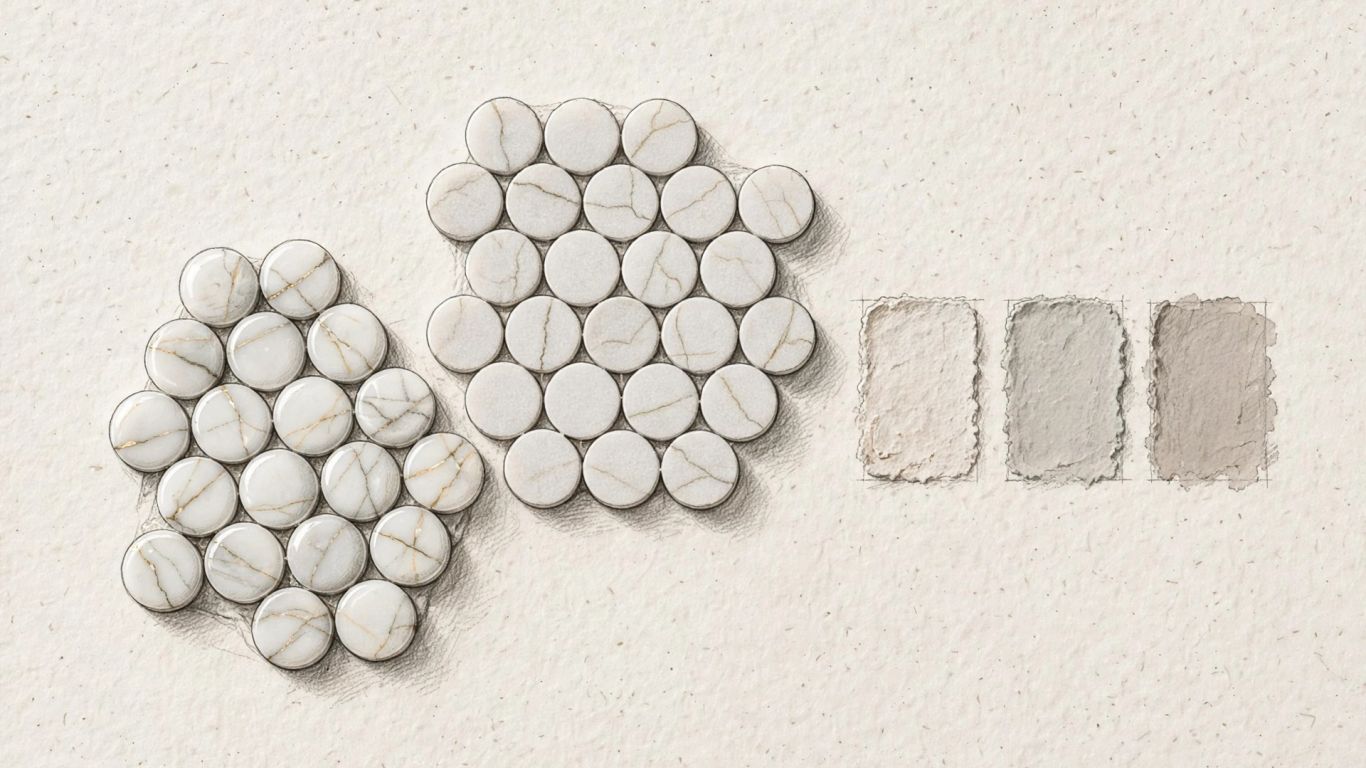
Comparing polished and honed surface finishes
Polished and honed are both listed finish options for Calacatta Gold mosaics. A polished surface has a reflective appearance, while a honed finish reads more softly and with less shine. Since lighting can influence the impression, compare samples in the room if possible and confirm the exact available finish for the product you plan to order.
Pairing the marble with cabinetry, fixtures, and surrounding stone
The white base and gold-gray movement can pair with pale or darker cabinetry, but the balance changes with each combination. Warm metal fixtures may echo the gold notes, while a quieter cabinet color can let the stone remain the focal point. Use a simple comparison as a starting point:
| Design element | A useful direction | What to check |
|---|---|---|
| Cabinetry | Choose a tone that complements the white ground | Compare samples in room lighting |
| Fixtures | Relate the metal tone to the gold veining | Check that the overall palette stays balanced |
| Nearby stone | Keep competing patterns in mind | View both materials together |
| Surface finish | Decide whether shine or a softer look fits | Confirm the available product finish |
This is a guide to visual coordination, not a fixed formula. The stone’s natural pattern may vary, so make the final decision with actual samples or product details in view.
Selecting grout color to complement the mosaic pattern
Grout helps define the circles and affects how continuous the mosaic appears. A close match to the marble can make the pattern feel quieter; a contrasting choice gives each round more definition. Before settling on a color, ask the installer to review a sample area and confirm that the grout is appropriate for the stone and installation.
How to plan your layout and material order
A reliable order begins with measurements and a clear understanding of the area to be covered. Mosaic sheets make the pattern easier to place, but corners, edges, and obstacles still require cuts and planning. Keep product details and the intended finish in one place as you prepare to buy marble tiles online in the USA.
Measuring the project area and estimating sheet quantities
Measure the full width and height of each surface, then calculate the total area using the units shown on the product listing. For a floor or a niche with several planes, measure each portion separately and add the areas together. Use the product’s stated sheet coverage to estimate a quantity, then confirm the calculation with your installer before placing the order.
For a renovation, it helps to keep a few practical details together rather than relying on memory:
- Record each surface’s width and height, including separate niche or return areas.
- Note doors, fixtures, outlets, and other interruptions that affect the layout.
- Confirm the coverage per sheet and the units used in the listing.
- Ask the installer how much extra material is appropriate for the project.
A written takeoff makes it easier to check the estimate and discuss any uncertainties before ordering. Keep a note of the finish and product details with the measurements so the quoted material matches the design plan.
Accounting for cuts, edges, and extra material
Cuts around corners and fixtures can increase the amount needed, and extra material may be useful if a sheet is damaged or a future repair is required. The right allowance depends on the room shape and layout, so it is best confirmed with the installer rather than guessed. A product page for Calacatta Gold penny rounds can help you verify the mosaic format while you make that plan.
Reviewing current stock and confirming product details before ordering
Before ordering, confirm the product name, finish, dimensions, coverage, and current availability with the seller. Listings may describe similar-looking mosaics in different shapes or sizes, so match the details to your selected sample and project schedule. Renovation research sometimes touches unrelated subjects such as BCA Green Mark Platinum, hormone balance supplements, belly button cleaning, Home Team Luxury Rentals, or Bell Mountain; those links are separate from stone specifications and should not be used to determine a tile quantity or product choice.
Installation and care considerations for marble mosaics
Natural marble deserves careful planning before the sheets are set. A clean, suitable substrate and an installer familiar with stone mosaics can help keep joints and transitions consistent. Care instructions should be discussed for the specific stone and installation rather than assumed from general tile habits.
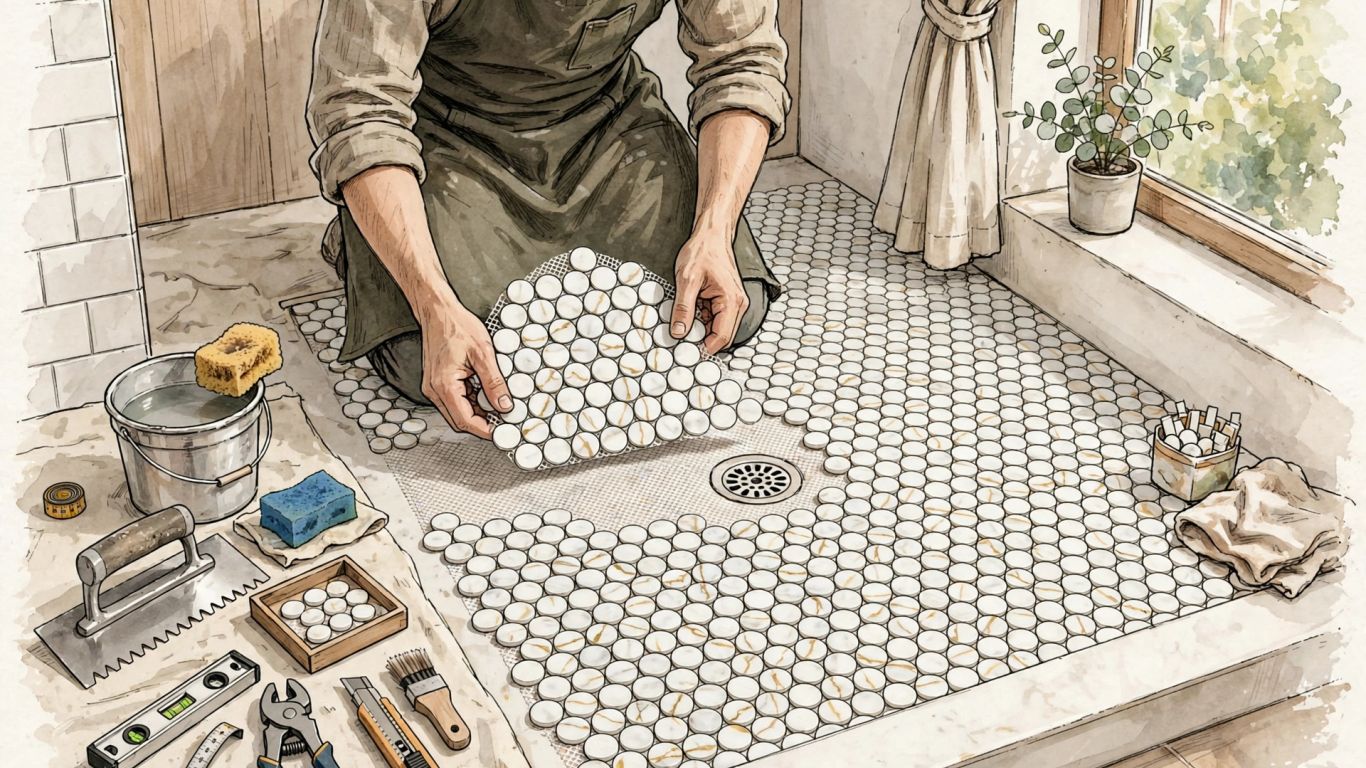
Preparing the substrate and planning sheet placement
The installer should assess the substrate and plan how the sheets will meet at edges, corners, and transitions. Dry placement can help reveal sheet alignment and the distribution of visible veining before setting begins. Inspect the material before installation, since natural differences in color, veining, and texture are part of marble mosaics.
Discussing sealing and maintenance with your installer
Ask the installer what sealing approach is suitable for the particular marble and grout, and when sealing should take place in the installation sequence. Product guidance for natural stone commonly stresses reviewing preparation, sealing, and care instructions, but the details should be confirmed for the materials selected. Keep the agreed instructions for future maintenance.
Caring for natural marble and addressing spills promptly
Follow the care guidance given for the stone, and clean spills promptly rather than allowing them to sit. Use cleaning products confirmed as suitable for natural marble, and avoid improvising with harsh or acidic cleaners. The surface is a natural material, so regular attention and sensible habits are more useful than expecting it to behave like a maintenance-free finish.
Buying Calacatta gold penny round from Surfaces Galore
A good buying decision pairs the look you want with confirmed product details and a practical project quantity. Calacatta Gold mosaics are offered for applications such as backsplashes, shower floors, and accent areas, so ask which current options align with your intended use. Surfaces Galore is an Anaheim-based direct importer and nationwide supplier of natural stone; request product information before you finalize the order.
Comparing product options and requesting a project quote
Compare the available product options by pattern, finish, and dimensions, then make sure the chosen details match your sample and layout. Surfaces Galore offers Calacatta Gold mosaics for decorative applications, and a project quote can help clarify the material order for your plans. Use this quote request when you are ready to share project details.
Asking about bulk discounts and nationwide shipping
For a larger project, ask whether bulk discounts are available and confirm the shipping arrangements for your location. Surfaces Galore serves customers nationwide and offers bulk discounts, according to the business information provided. Check current terms, order quantity, and delivery details directly before building them into a schedule.
Getting assistance from the Anaheim-based stone team
A conversation with the team can help resolve questions about product details, samples, and a project quote. Have your measurements and preferred finish ready, and explain where the mosaic will be installed. That gives the team a clearer basis for helping you compare the available options.
Conclusion
Calacatta gold penny round offers a distinctive way to bring the natural white, gold, and gray character of marble into a detailed mosaic surface. With samples, careful measurement, confirmed product details, and installation guidance, it is easier to make a considered choice; contact Surfaces Galore to explore current options and request a project quote.
Frequently Asked Questions
What is Calacatta gold penny round marble?
It is a natural marble mosaic arranged in a small circular, or penny-round, pattern, with a light background and gold-toned veining commonly associated with Calacatta Gold.
Will every sheet have the same veining?
No. Natural marble varies in color, veining, and texture, so sheets can differ from one another and the completed installation will have its own pattern.
Where can penny-round marble mosaics be used?
They are often considered for backsplashes, bathroom walls, shower floors, niches, borders, and other decorative areas, subject to product and installation suitability.
What is the difference between polished and honed marble?
Polished marble has a reflective surface appearance, while honed marble has a softer, less shiny look. Availability may vary by product.
How should I choose grout for a marble mosaic?
Compare grout samples with the stone and decide whether you want the joints to blend in or define the circles. Confirm the grout is suitable for the marble and intended installation.
How much extra mosaic material should I order?
The appropriate amount depends on the room dimensions, layout, and number of cuts. Measure carefully and ask the installer to recommend an allowance for the specific project.
Does natural marble need special care?
Natural marble needs care appropriate to the stone. Follow the installer’s guidance on sealing and cleaning, use products confirmed as suitable, and address spills promptly.

Leave a comment