
White Carrara marble: A complete guide to choosing the right tile, mosaic, and slab

Key Takeaways
White Carrara marble brings a calm, classic character to both traditional and contemporary interiors. The best result comes from matching the product, finish, layout, and maintenance plan to the room.
- Choose tiles, slabs, mosaics, or trim according to the surface and scale of the project.
- Expect natural variation in white backgrounds, gray veining, tone, and pattern.
- Select polished or honed finishes based on appearance, use, and cleaning preferences.
- Plan installation carefully, including dry-laying, inspection, sealing, and waste.
- Request samples and a detailed quote before you buy marble tiles online USA-wide.
What makes white Carrara marble a timeless design choice
White Carrara marble has a refined look that does not depend on a passing trend. Its pale background helps rooms feel open, while gray movement adds visual depth without overwhelming cabinetry, paint, or furnishings. It works across residential and commercial settings, from a compact powder room to a large lobby. That flexibility is why white Carrara marble remains a dependable design choice.
Distinctive white backgrounds and gray veining
The signature look is a beautiful white background with subtle gray veining. Some pieces read almost quietly, while others carry more visible movement, so the surface feels natural rather than mechanically uniform. A cool white base pairs easily with wood, painted cabinetry, metal fixtures, and warm textiles. For a useful visual reference, this Carrara marble overview shows how the material can suit countertops, floors, and bathroom surfaces.
How natural variation creates a one-of-a-kind surface
Natural stone is not printed in repeating patterns. Vein direction, gray density, small tonal shifts, and surface character can change from one tile or slab to another. That variation is part of the material’s appeal, but it should be reviewed before installation. A thoughtful installer can distribute stronger and quieter pieces so the finished room feels balanced.
The design styles that complement Carrara marble
Carrara marble is equally comfortable in a restrained modern room and a more traditional interior. Large-format tile can create a calm field with fewer visual interruptions, while smaller mosaics introduce rhythm around a vanity, shower, or backsplash. Simple cabinetry lets the veining lead; detailed millwork gives it a classic setting. The key is to repeat the stone thoughtfully rather than use it everywhere by default.
Comparing white Carrara marble with other white marble options
White marbles differ in background tone, veining, movement, and overall presence. Carrara generally appeals to buyers who want a soft white field and gray character rather than a highly dramatic surface. Compare actual samples in the room’s lighting, beside grout, cabinetry, and fixtures. Online photographs are useful for narrowing choices, but they cannot replace seeing the stone in person.
Choosing the right white Carrara marble product
The product format determines both the visual scale and the practical demands of the installation. Tiles are useful for repeatable layouts, slabs create broad uninterrupted surfaces, and mosaics add detail in smaller areas. Trim and bricks finish transitions or bring texture to a design. Surfaces Galore’s Carrara White collection includes tiles, slabs, mosaics, backsplashes, shower-floor tile, and bricks for these different applications.
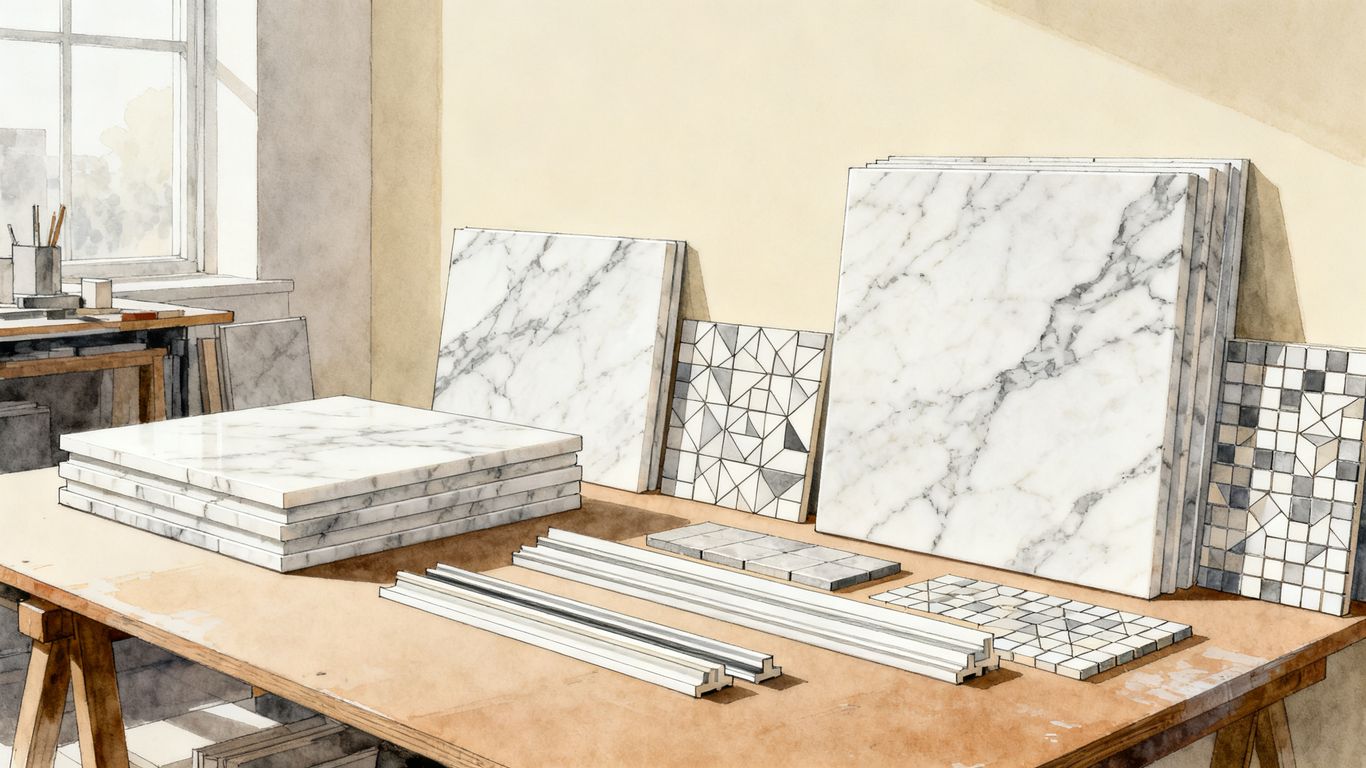
Marble tile sizes for floors, walls, and backsplashes
Tile size changes the rhythm of a room. Smaller formats can suit backsplashes, niches, and traditional layouts, while larger formats create a quieter floor or wall plane. Consider the room’s dimensions, drain locations, corners, and transitions before selecting a size. Options such as Carrara White 12x24 tiles and Carrara White 4x4 tiles illustrate how format can shift the character of the same stone.
Slabs for countertops and seamless surfaces
Slabs are the natural choice when the goal is a broad countertop, vanity, or other surface with fewer grout lines. Before ordering, review dimensions, edge details, sink cutouts, seams, and access to the installation area. Vein placement matters, especially where a surface turns a corner or meets a backsplash. A fabricator should confirm the measurements and explain how the selected slab will be used.
Mosaics for shower floors and decorative accents
Mosaics bring scale and texture to shower floors, backsplashes, niches, and accent bands. Their smaller pieces make it easier to follow curves and manage changes in direction, while the grout pattern becomes part of the design. Consider whether polished, honed, or tumbled material suits the location. For a geometric accent, Carrara diamond mosaic offers a focused pattern without requiring the entire room to be highly decorative.
Moldings, trim, borders, and marble bricks
Trim gives a project a finished edge. Borders can frame a shower or backsplash, liners can define a transition, and bricks can add a classic touch to a wall or architectural detail. Keep the profile proportional to nearby tile and confirm that the thickness works with adjoining surfaces. A small amount of well-placed trim often creates more polish than a complicated mix of materials.
Selecting the best finish and installation location
Finish changes how light moves across the marble and how the surface feels underfoot or to the hand. Location changes the practical requirements, particularly in wet or frequently used areas. Polished and honed surfaces can both be beautiful, but they create different visual and maintenance experiences. Review the finish, room function, lighting, and installation method together rather than choosing one in isolation.
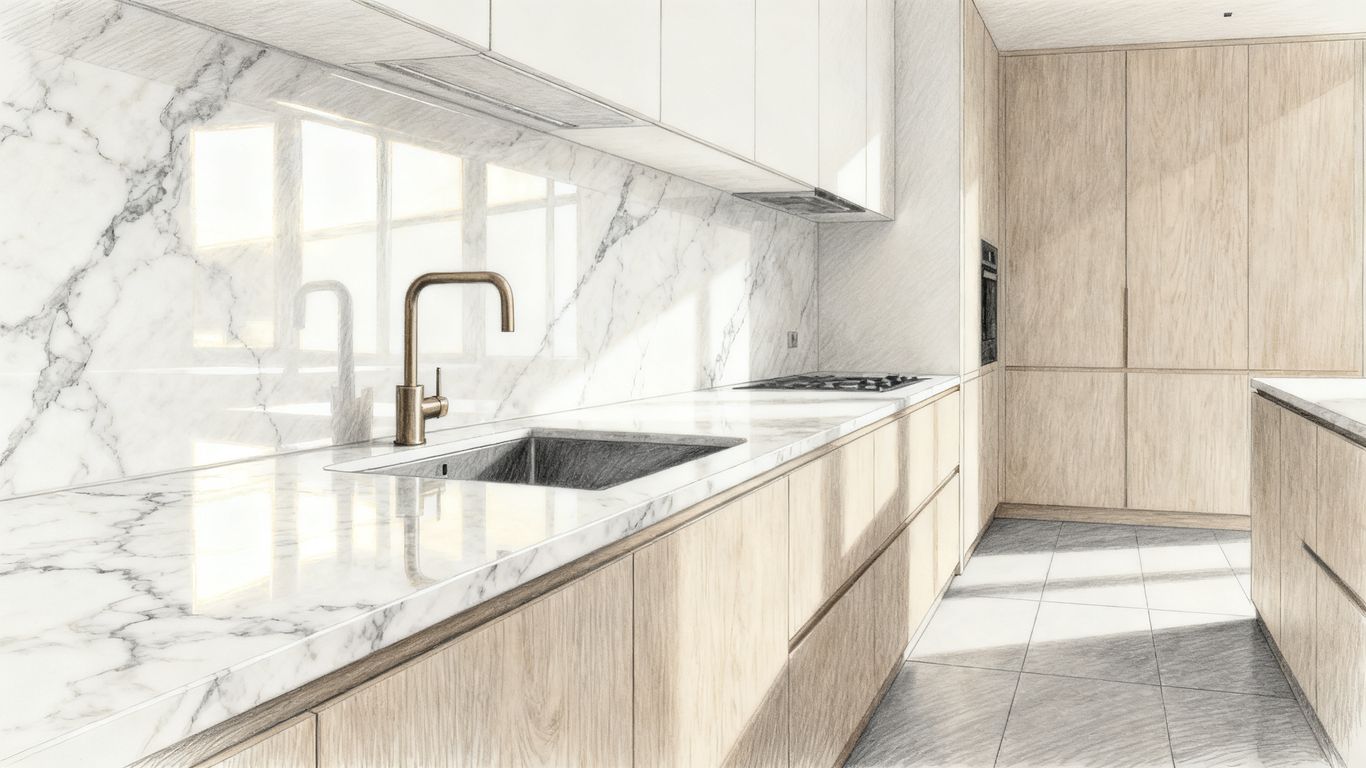
Polished marble for a reflective luxury look
Polished marble has a smooth, reflective appearance that can brighten a room and make veining more pronounced. It is especially effective on walls, backsplashes, vanity surrounds, and formal floors where its shine can be appreciated. Strong lighting may reveal more surface variation, so samples should be viewed at different times of day. A polished finish is a visual decision as much as a practical one.
Honed marble for a softer, more understated appearance
Honed marble has a lower-sheen appearance and a quieter presence. It works well when the design calls for texture without glare, particularly in relaxed kitchens, bathrooms, and living spaces. The softer look can make everyday marks less visually prominent, although natural stone still needs appropriate care. Review the sample against the planned grout and surrounding materials before committing.
Matching finishes to kitchens, bathrooms, and living spaces
A kitchen backsplash can support either finish, depending on whether the room needs reflected light or a calmer surface. Bathrooms benefit from a coordinated approach across floors, walls, niches, and vanity areas. In living spaces, a large marble floor or feature wall can become the main architectural gesture. Helpful planning also includes the bathroom backsplash guide, particularly when a vanity or wet-area transition needs careful detailing.
Evaluating slip resistance and everyday use
A surface that looks beautiful in a sample may behave differently when exposed to water, shoes, cooking residue, or frequent cleaning. Ask about the intended application and select a finish appropriate to the location. Mosaics may provide more grout joints in wet areas, while a larger format can reduce visual interruption on a dry wall. The installer should verify substrate preparation, slope, adhesive, and grout for the specific project.
A practical finish comparison helps narrow the choice before ordering:
| Finish | Visual character | Common design use | Planning question |
|---|---|---|---|
| Polished | Reflective and luminous | Walls, backsplashes, formal areas | Will glare or visible marks be distracting? |
| Honed | Soft and low-sheen | Floors, kitchens, bathrooms | Does the room benefit from a quieter surface? |
| Tumbled | Textured with softened edges | Rustic accents and decorative layouts | Does the irregular edge suit the design? |
The table is a starting point, not a substitute for a sample. Lighting, grout, room traffic, and the exact stone selection can change the final impression.
White Carrara marble design ideas for every room
A successful marble scheme feels intentional from the first threshold to the last detail. Repeat a finish or tone to connect separate surfaces, then allow one area to carry the strongest pattern. White Carrara marble can serve as a quiet background or a focal point depending on scale and placement. The following ideas help translate the material into a cohesive room plan.
Creating an elegant kitchen backsplash
A backsplash is a manageable way to bring marble into a kitchen without covering every surface. Run tile to the underside of the cabinets, use a simple border behind the range, or continue the stone toward open shelving. Vein direction deserves attention around outlets, corners, and the cooking zone. A restrained grout color keeps the white background and gray movement visually connected.
Designing a sophisticated marble bathroom
In a bathroom, Carrara marble can coordinate the floor, shower wall, vanity backsplash, and niche while still allowing each area to serve a different function. Pair a larger wall tile with a smaller shower-floor mosaic for scale and drainage planning. Repeat metal finishes and lighting temperatures so the room feels composed. For a softer scheme, combine honed surfaces with warm wood or painted cabinetry.
Using marble tile for floors and feature walls
Floor tile establishes the room’s foundation, while a feature wall can direct attention toward a fireplace, vanity, or entry. Large formats reduce visual breaks, but smaller tiles can add proportion and pattern in narrow spaces. Always consider thresholds and adjacent flooring before finalizing the layout. A dry layout helps prevent awkward cuts and distributes natural variation more evenly.
Adding detail with mosaics, borders, and trim
Decorative pieces are most effective when they have a clear purpose. A mosaic can frame a niche, a border can mark a change in plane, and a slim liner can finish a backsplash edge. A short list of planning checks keeps the detail practical:
- Align borders with cabinet lines, niches, or other strong horizontal elements.
- Confirm trim thickness before combining it with field tile.
- Use samples to compare grout width and color with the marble.
- Reserve extra material for cuts, breakage, and future repairs.
These small decisions turn a collection of attractive pieces into a deliberate installation. They also make the finished room easier for the installer to execute cleanly.
How to care for and maintain white Carrara marble
Natural stone rewards a steady care routine. The goal is not to make every piece look identical, but to protect the surface while allowing its character to remain visible. Good installation, suitable sealing, and gentle cleaning work together. For larger projects, clarify responsibilities with the installer before material is fixed in place.
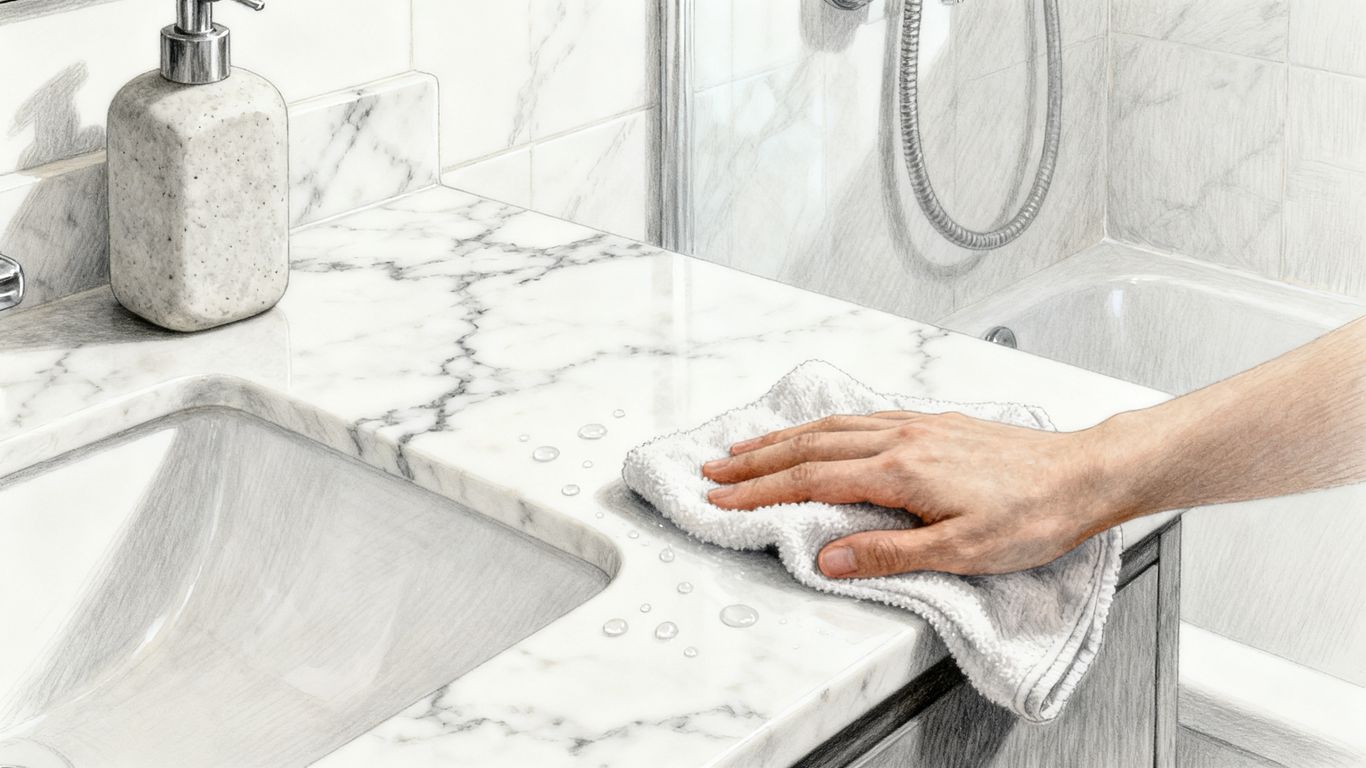
Sealing natural stone before and after installation
Marble should be assessed for sealing before and after installation. The installer can advise on the appropriate sealer and timing based on the product, finish, and location. Sealing does not make stone indestructible, so spills still deserve prompt attention. The surface should be clean and dry before any treatment is applied.
Cleaning products and practices to use
Use a cleaner intended for natural stone and follow its directions. Soft cloths, clean water, and regular removal of grit help preserve the finish. Avoid experimenting with harsh household products, abrasive pads, or unverified acidic cleaners. A simple care routine is easier to maintain than occasional aggressive cleaning.
Preventing stains, etching, and surface damage
Wipe spills promptly, especially near cooking areas, vanities, and shower products. Use suitable mats or trays where water and grit are repeatedly introduced, and avoid dragging heavy objects across the surface. Etching and staining are different types of damage, so the remedy depends on the cause. If a mark persists, consult a stone professional instead of repeatedly scrubbing it.
Handling maintenance in busy residential and commercial spaces
High-use areas benefit from clear maintenance instructions shared with everyone who cleans the space. Schedule routine inspection of grout, caulk, edges, and transitions, not just the marble face. Commercial settings may need a more frequent cleaning cycle than a private bathroom. The surface preparation guide is a useful reminder that the condition beneath a finish can influence long-term performance.
How to buy white Carrara marble with confidence
Buying natural stone is easier when the aesthetic choice and the project logistics are reviewed together. Start with the room, surface, measurements, finish, and installation timeline. Then confirm what is available now and what must be sourced or reserved. Surfaces Galore is an Anaheim, California–based direct importer and nationwide supplier of marble and travertine tiles, mosaics, and moldings.
Confirming material, finish, size, and product availability
Write down the exact material name, format, finish, quantity, and intended location before requesting pricing. Similar names can describe very different looks, while polished and honed versions may photograph differently. Ask whether the quoted material is currently available and whether pieces will come from the same lot. This level of clarity reduces surprises between sample approval and delivery.
Ordering samples and reviewing natural variation
A sample lets you assess color beside cabinet doors, paint, flooring, metal, and grout. It also gives you a better sense of the finish under your actual lighting. Remember that a small sample cannot show every possible vein or tonal shift. For broader inspiration, Carrara marble tile reference offers a helpful way to think about format, finish, and natural variation together.
Planning quantities, waste, and installation requirements
Measure the surface carefully and discuss waste with the installer before ordering. Extra material may be needed for cuts, corners, pattern matching, breakage, and future repairs. Natural stone should be inspected before installation, and a dry layout can help distribute variation and avoid awkward edge pieces. Keep delivery access, storage, substrate preparation, and installation timing in the same project plan.
Requesting a quote, bulk pricing, and nationwide delivery from Surfaces Galore
For a renovation, trade project, or multi-room order, request a quote that identifies material, finish, size, quantity, delivery, and any applicable bulk pricing. Surfaces Galore serves homeowners, designers, and architects across the United States, with nationwide shipping for its natural stone products. A well-prepared request helps the team check current stock and recommend a suitable product format. You can also request a marble quote when you are ready to compare project costs.
A few unrelated planning guides may appear during online research, so keep your sourcing notes focused on the stone itself. For example, a Mera homes page concerns accommodation rather than tile, while a Medellín market guide concerns travel and local commerce. A lead follow-up guide is likewise about sales communication, not installation. These links are not material recommendations; they simply reinforce the value of checking that every page and quote matches the project you are actually planning.
Start Your Marble Project
Explore the Carrara White collection, compare samples, and contact Surfaces Galore for current availability, project quantities, bulk pricing, and nationwide delivery options. A thoughtful product choice today can give your kitchen, bathroom, floor, or feature wall a classic finish that remains inviting for years.
Conclusion
White Carrara marble combines a clean white background, natural gray movement, and broad design flexibility. When you select the right format and finish, review variation, plan installation carefully, and follow a sensible care routine, the material can bring lasting character to nearly any interior.
Frequently Asked Questions
Is white Carrara marble suitable for kitchens?
Yes. It can be used for backsplashes, floors, countertops, and other kitchen surfaces when the product, finish, installation, and maintenance plan are appropriate for the location.
What is the difference between polished and honed Carrara marble?
Polished marble has a reflective, higher-sheen appearance, while honed marble has a softer, lower-sheen look. The best choice depends on the room, lighting, traffic, and preferred visual character.
Does Carrara marble vary from piece to piece?
Yes. Natural variation may appear in the white background, gray veining, tone, and pattern. Reviewing samples and dry-laying the material can help create a balanced installation.
Is marble mosaic suitable for a shower floor?
Marble mosaic can be suitable for a shower floor when the specific product and finish are appropriate and the installation includes proper slope, substrate preparation, grout, and water-management details.
How often should Carrara marble be sealed?
Sealing frequency depends on the stone, finish, location, use, and sealer instructions. Ask a qualified installer or stone-care professional to assess the surface and recommend a schedule.
What should be used to clean white Carrara marble?
Use a cleaner made for natural stone and follow its directions. Avoid abrasive pads and unverified acidic or harsh products, and wipe spills promptly.
How much extra marble should be ordered?
The allowance depends on room shape, tile size, layout, pattern, cuts, and installation complexity. Measure with the installer and include additional material for waste, breakage, and future repairs.

Leave a comment