
Crema Marfil marble: A complete guide to timeless natural stone tile design

Key Takeaways
Crema Marfil marble brings natural warmth, subtle movement, and enduring flexibility to residential and commercial interiors.
- Spanish Crema Marfil marble has a creamy beige background with delicate natural veining.
- Tiles, mosaics, borders, and moldings support cohesive designs across many rooms.
- Polished, honed, tumbled, and textured finishes create different visual effects.
- Careful measuring, dry-laying, sealing, and professional installation help protect the result.
- Surfaces Galore offers natural stone products, project pricing, and nationwide shipping.
What makes Crema Marfil marble a timeless choice
Crema Marfil marble has remained popular because it feels refined without becoming overly formal. Its warm neutral color works with many furnishings, metals, and wood tones. As a natural stone, every piece has its own small shifts in color and pattern, giving a finished room depth that uniform materials often lack.
Spanish origin and natural stone character
Crema Marfil is sourced from prestigious quarries in Spain. Its natural formation gives the stone an individual surface character, with gentle movement rather than a perfectly repeated print. That variation is part of the appeal, but it also means samples should be viewed as a guide rather than an absolute promise of the final installation.
For a broader look at the material’s background and applications, this Spanish marble guide offers useful context. It is especially helpful when comparing the look of field tile, wall tile, and backsplash applications before selecting a layout.
Warm beige tones and subtle veining
The soft beige background is the defining feature of Crema Marfil marble. Fine veining may appear in creamy, cinnamon, yellow, or white shades, adding quiet contrast without overwhelming a room. This makes the stone a natural fit for spaces that need warmth, light, and a calm visual foundation.
The color can look different beside cool white paint, warm cabinetry, or bronze hardware. Viewing a sample in the actual room, at different times of day, is a simple way to make the choice with greater confidence.
How it complements classic and modern interiors
In a traditional setting, Crema Marfil can support raised-panel cabinetry, classic molding, and antique-inspired fixtures. In a contemporary room, larger tiles, restrained grout lines, and streamlined furniture allow the stone’s soft variation to provide texture without visual clutter. Its neutral palette also pairs naturally with cream, gold, bronze, and wood accents.
A collection overview of timeless beige marble can help when shaping a broader color story for entryways, dining rooms, bathrooms, and other living spaces. The goal is not to make every surface identical, but to let related tones repeat with intention.
Durability and long-term design value
Marble is durable and long-lasting when it is installed and maintained correctly. Crema Marfil is suitable for many residential and commercial applications, including floors and walls, though the selected finish and the conditions of each space should guide the final decision. Thoughtful material selection matters as much as the stone’s appearance.
Natural stone can develop a pleasing patina over time, but it remains sensitive to acidic substances and abrasive treatment. A realistic care plan helps preserve both the surface and the investment in the design.
Choosing the right Crema Marfil marble products
The best product depends on the room, the amount of traffic, and the design detail you want to create. Field tiles establish the main plane, while mosaics and trim bring rhythm and definition. Taking the time to coordinate these elements can make a small renovation feel considered from edge to edge.
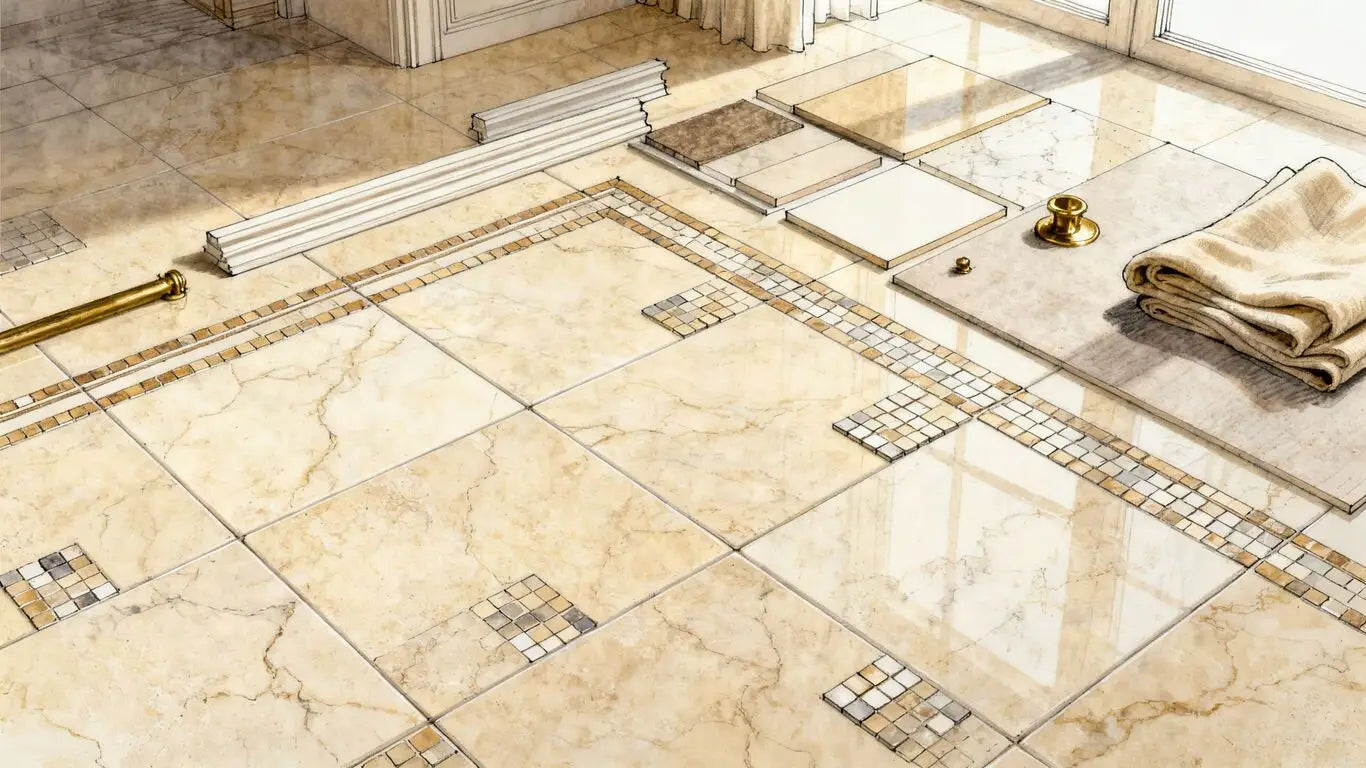
Marble tiles for floors, walls, and entryways
Crema Marfil tiles are available in various sizes and finishes for flooring, walls, and backsplashes. They can create a quiet expanse in an entryway or a more tailored composition around a bathroom vanity. Before ordering, confirm the tile thickness, finish, intended use, and quantity required for the project.
If you plan to buy marble tiles online USA shoppers should still request samples and verify shipping details before placing a large order. A sample reveals the stone’s warmth more accurately than a screen can.
Mosaics for backsplashes and decorative accents
Mosaics are useful when a project calls for scale, pattern, or a concentrated decorative moment. Crema Marfil mosaics can work in backsplashes, shower floors, niches, and accent areas, provided the material and finish suit the conditions. Sheets also simplify the installation of repeating patterns, although the layout still needs careful planning.
For a richer blend of related stones, the Spanish Mix marble mosaic combines Crema Marfil with Emperador Light and Emperador Dark marbles. Used selectively, a blended mosaic can connect a warm beige field tile to darker cabinetry or furnishings.
Borders, listellos, and molding for finished details
Borders, listellos, and molding give a project a deliberate stopping point. A narrow liner can frame a backsplash, while base molding or a decorative border can define a floor or wall composition. These details are most successful when their color, thickness, and finish relate to the field tile rather than compete with it.
Order trim with the main material whenever possible. Even stones with the same name can show natural differences between lots, and coordinating them early reduces visual surprises.
Matching accessories for cohesive installations
Small accessories can carry the same stone language into practical areas. Corner shelves, shower niches, switch plate covers, and other natural stone details help a bathroom or kitchen feel complete. The accessory should support the room’s main lines and remain easy to clean.
A simple product plan might include the following:
- Field tile for the dominant floor or wall surface.
- Mosaic tile for a backsplash, niche, or accent band.
- Border or listello to frame the composition.
- Coordinated molding or an accessory for the finishing point.
This approach prevents the common problem of choosing beautiful pieces individually but discovering that they do not relate once installed. A unified palette usually feels more luxurious than a crowded mix of unrelated details.
Designing with Crema Marfil marble throughout the home
Crema Marfil marble is versatile enough to move through a home without making every room look repeated. The key is to vary the format, finish, or pattern while keeping the warm beige foundation consistent. Used with restraint, the stone can create a comfortable visual thread from the entrance to the private spaces.

Creating inviting marble floors
A Crema Marfil floor can make an entryway, hallway, dining room, or living area feel brighter and more open. Larger formats reduce visual interruption, while smaller tiles or borders introduce a more traditional character. In high-traffic areas, select a finish and maintenance routine appropriate to the room’s use.
Dry-laying the material before installation helps distribute shade and veining across the floor. It also reveals where cuts will fall, which is particularly valuable around doorways and stair transitions.
Elevating bathroom walls and shower spaces
Warm beige marble creates a calm backdrop for bathroom walls and shower spaces. Mosaics can define a shower floor or niche, while field tile keeps the larger walls visually quiet. Use compatible installation materials and confirm that the selected product is appropriate for the specific wet-area application.
Keep transitions clean. A carefully aligned niche, matching trim, and coordinated grout can make a modest bathroom feel finished without relying on excessive ornament.
Adding warmth to kitchen backsplashes
A Crema Marfil kitchen backsplash softens the harder lines of cabinetry and appliances. It can sit behind a range, run across a full counter wall, or appear as a framed accent above a work area. Mosaics and narrow borders offer ways to add detail while keeping the overall palette restrained.
The backsplash should relate to the countertop, cabinet undertone, and hardware. Bringing those samples together before ordering is more reliable than choosing the marble in isolation.
Designing fireplace surrounds and feature walls
Around a fireplace, Crema Marfil can create a welcoming focal point with a classic architectural feel. On a feature wall, a larger tile layout may provide a quiet surface that allows furniture, artwork, or lighting to lead. Consider the scale of the room and the visual weight of the surrounding materials.
A feature installation benefits from deliberate vein distribution. Set aside pieces with particularly strong movement for areas where they can be appreciated rather than hidden by shelves or fixtures.
A visual installation overview can be useful at this stage, especially for homeowners comparing floor, wall, mosaic, and trim arrangements. It should supplement—not replace—product instructions and advice from a qualified installer.
Selecting the best finish, size, and pattern
Finish and format change the personality of Crema Marfil marble as much as color does. A polished surface feels brighter and more formal, while honed stone is quieter and softer in appearance. Size and pattern then determine whether the room reads as expansive, detailed, traditional, or deliberately graphic.
Polished versus honed Crema Marfil surfaces
Polished marble has a reflective surface that brings clarity to the beige tones and veining. Honed marble has a matte, understated look that can feel relaxed and can make minor etching less visually apparent. Neither finish is universally better; the right choice depends on the room, lighting, traffic, and maintenance expectations.
Tumbled and textured options add another layer of tactile character. Request a sample of the exact finish, because the same stone can appear noticeably different when its surface treatment changes.
Tile sizes for spacious and compact rooms
Large tiles can make a spacious room feel composed and reduce the number of grout lines. Smaller formats can suit compact rooms, curved areas, shower floors, or designs that depend on more frequent rhythm. The room’s dimensions, substrate, access, and cutting plan should all be considered before selecting a size.
The visual scale should also relate to adjacent rooms. A well-proportioned transition keeps the installation from feeling abruptly divided at a doorway.
Checkerboard, herringbone, and geometric layouts
Pattern can transform a warm neutral stone into a more expressive design. Checkerboard layouts create architectural contrast, herringbone adds directional movement, and geometric mosaics bring detail to a backsplash or accent zone. Crema Marfil may be paired with deeper or cooler stones, but the contrast should be tested beside the room’s permanent finishes.
The Crema Marfil tile collection provides helpful inspiration for field sizes, mosaic patterns, trim, and finish combinations. Use those ideas as a starting point, then simplify the design if the room already contains strong cabinetry or furnishings.
Using tumbled and textured finishes for added character
Tumbled finishes soften edges and give marble a gently aged appearance. Textured surfaces can add tactile interest to a feature area, while a smoother finish may be easier to maintain on broad walls. Since surface texture affects both appearance and cleaning, consider the practical side alongside the visual effect.
A restrained mix often works best: one dominant finish, one supporting pattern, and trim used sparingly. That combination lets the stone remain the central material rather than turning the room into a collection of competing surfaces.
Planning a successful Crema Marfil marble installation
Good installation begins before the first tile is set. Measurements, material inspection, layout planning, grout selection, and installer coordination all influence the final appearance. Natural stone rewards patience, particularly when the design depends on balanced shade and veining.
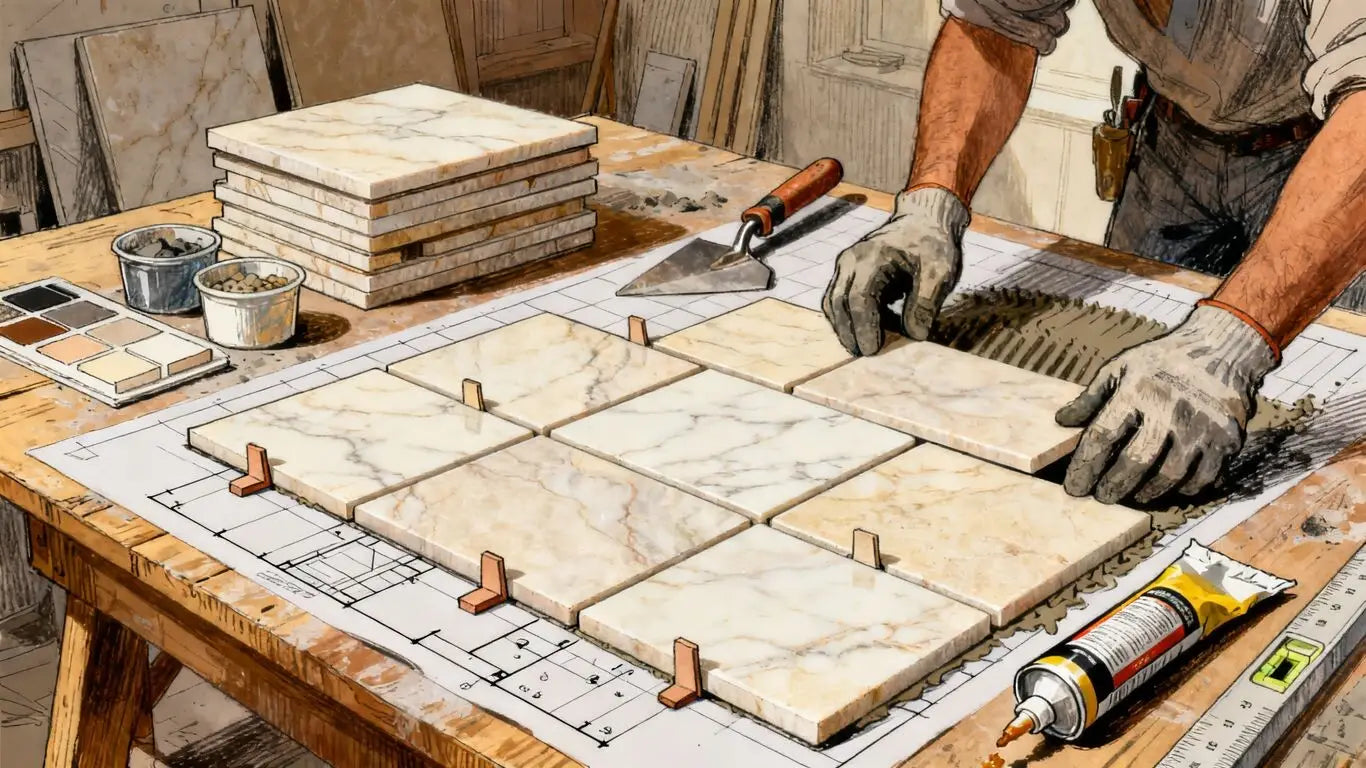
Measuring the project and ordering additional material
Measure each area separately and calculate the total square footage before ordering. Include cuts, corners, transitions, and pattern alignment in the plan. Natural stone projects also require additional material for waste, so ordering only the exact measured area can leave a project short.
The Spanish Mix installation guide discusses layout preparation, cutting, cleaning, and waste-factor planning. Those same habits are useful for a Crema Marfil installation, especially when the design includes mosaics or repeated borders.
Reviewing natural variation, veining, and shade
Inspect tiles before installation for cracks, chips, warping, and other concerns. Then dry-lay the material and blend pieces from different boxes so the color and movement are distributed naturally. Once a tile is fixed in place, it is generally treated as accepted, so questions should be resolved before setting begins.
This step is not about eliminating variation. It is about placing variation thoughtfully, allowing the finished surface to look intentional rather than accidental.
Coordinating grout colors and transition details
Grout can either blend into Crema Marfil or create a visible grid. Warm ivory, beige, or closely related shades usually keep the stone’s movement in focus, while a stronger contrast makes the layout more graphic. Always review grout samples with the actual tile and lighting.
Transitions deserve equal attention. Door thresholds, base molding, stair edges, and changes between tile sizes should be planned before installation so the finishing details do not look improvised.
Working with a qualified natural stone installer
An experienced natural stone installer can assess the substrate, plan the layout, make clean cuts, and use suitable setting and grout materials. Discuss the desired joint spacing, finish direction, edge details, sealing schedule, and maintenance expectations before work begins.
For a smaller-format reference, the Spanish Mix 2x2 mosaic includes guidance on inspection, dry-fitting, mortar, grouting, sealing, and ordering extra material. Product-specific instructions should always take priority over general advice.
Caring for Crema Marfil marble over time
Marble care is straightforward when it becomes part of the household routine. Dust, spills, and moisture should be addressed with appropriate products rather than harsh shortcuts. The aim is to preserve the surface’s finish while accepting that natural stone may gain subtle character through use.
Sealing marble tiles and grout
A suitable sealer can help reduce the absorption of spills, but it does not make marble completely stain-proof or maintenance-free. Follow the sealer manufacturer’s instructions and confirm compatibility with the specific stone and finish. Grout may require its own protection as well.
Sealing schedules vary by product, traffic, and exposure. Ask the installer or stone-care professional when the surface should be resealed instead of applying a new coat automatically.
Cleaning products and everyday maintenance
Use a soft cloth, clean water, and a pH-neutral stone cleaner for regular maintenance. Sweep or dust floors frequently to reduce abrasive grit, and wipe spills promptly. Avoid rough pads and products that leave a heavy residue.
For perspective on choosing gentle daily routines, this cleaning and care guide discusses accessible ways to support consistent upkeep in another setting. Marble itself still requires stone-appropriate products and instructions.
Preventing stains, etching, and surface damage
Acidic substances can etch marble, leaving dull spots that are different from stains. Keep citrus, vinegar, harsh bathroom cleaners, and similar products away from the surface. Use coasters, mats, trivets, and cutting boards where appropriate, particularly in kitchens and dining areas.
A quick response is usually easier than a repair. Blot spills rather than rubbing them, and avoid dragging gritty furniture across a marble floor.
Repairing chips and preserving the finish
Small chips, scratches, or dull areas should be assessed by a stone-care professional. Repair methods depend on the size and location of the damage, the finish, and the surrounding material. Do not assume a household filler or abrasive polish will blend invisibly.
Keep spare tiles from the original installation if possible. Matching a future repair is easier when the material, lot, and natural variation are already known.
Buying Crema Marfil marble from Surfaces Galore
Choosing the stone is only part of a successful renovation; sourcing, quantity, and service matter too. Surfaces Galore is an Anaheim, California–based direct importer and nationwide supplier of premium natural stone, including marble and travertine tiles, mosaics, and moldings. The business serves homeowners, designers, and architects across the United States.
Viewing current tile, mosaic, and molding inventory
Start by comparing the current selection of Crema Marfil tiles, mosaics, borders, and moldings. Look at finish, size, pattern, thickness, and available quantity together. Samples are especially useful for checking how warm beige tones respond to your lighting and nearby materials.
The Crema Marfil marble collection is a practical place to begin exploring available products. If a particular format is temporarily unavailable, a quote request can help clarify suitable options for the project.
Requesting project pricing and bulk discounts
Large floors, multi-room renovations, and designer projects should be priced from the full material schedule rather than a single box. Share measurements, preferred finish, pattern, trim requirements, and timing when requesting a quote. Bulk discounts may be available for qualifying project quantities.
A complete quote also makes it easier to compare material needs, waste allowance, accessories, and delivery planning before placing an order.
Shipping natural stone nationwide from Anaheim, California
Surfaces Galore ships natural stone nationwide from Anaheim, California. Delivery timing and freight details should be confirmed for the specific order, especially when the project has an installation deadline. Ordering samples first can help reduce the chance of making a large decision from a screen alone.
Plan for safe receiving and inspection when the shipment arrives. Check the boxes promptly and contact the supplier about any concern before installation begins.
Getting expert help with product selection and quotes
A knowledgeable product conversation can simplify decisions about finish, format, pattern, and quantity. Provide photos, room dimensions, and your preferred design direction so the quote reflects the actual project rather than a rough guess. Surfaces Galore can help customers review product choices and request pricing.
That support is valuable when a room needs both field tile and finishing pieces. A clear material list helps keep the installation visually consistent and avoids last-minute substitutions.
Shop Crema Marfil Tile
Bring your plans, measurements, and preferred finish to Surfaces Galore, then request a quote for Crema Marfil marble tiles, mosaics, or moldings. Reviewing samples and current inventory is a simple next step toward a warm, lasting natural stone design.
Conclusion
Crema Marfil marble remains a compelling choice because its Spanish origin, creamy beige color, subtle veining, and adaptable formats suit both classic and modern interiors. With a thoughtful layout, suitable finish, qualified installation, and regular stone care, it can give floors, walls, backsplashes, and decorative details a welcoming character that lasts.
Frequently Asked Questions
Is Crema Marfil marble suitable for floors?
Yes, Crema Marfil marble can be used for many residential and commercial floors when the selected finish, installation method, and maintenance plan suit the space and its level of traffic.
What colors work well with Crema Marfil marble?
Cream, beige, gold, bronze, wood tones, and selected darker accents pair well with its warm neutral background. Always compare samples with permanent room finishes.
Should Crema Marfil marble be polished or honed?
Polished marble offers a reflective, formal appearance, while honed marble has a softer matte look. The best option depends on lighting, traffic, desired style, and care expectations.
Does natural Crema Marfil marble vary from tile to tile?
Yes, natural stone can vary in shade, veining, and movement. Dry-laying and blending pieces from multiple boxes can create a more balanced finished layout.
How should marble be cleaned?
Use a soft cloth or mop with water and a pH-neutral stone cleaner. Avoid acidic cleaners, abrasive pads, and products that can etch or scratch the surface.
How much extra marble should be ordered?
The amount depends on the room shape, pattern, cuts, and installation plan. Include a reasonable waste allowance and confirm the recommendation with the installer or supplier.
Can Crema Marfil marble be used in bathrooms?
It can be used for many bathroom walls, shower areas, niches, and floors when the product and finish are appropriate for the application and the installation includes proper protection and drainage.

Leave a comment