
How to choose kitchen floor tile: Materials, finishes, and design ideas

Key Takeaways
A kitchen floor should suit the way you cook, gather, and clean—not just look beautiful in a sample. Compare materials, surface feel, layout, and care before choosing.
- Weigh natural stone, porcelain, and ceramic against your household’s priorities.
- Choose a finish, tile size, and grout joint with both appearance and upkeep in mind.
- Use color and layout to complement the cabinets, counters, and proportions of the room.
- Plan for spills, slip resistance, installation details, and natural stone maintenance.
- Order samples and confirm quantities before committing to a purchase.
Compare kitchen floor tile materials
Kitchen floor tile has a big job: it sets the room’s tone while facing spills, daily traffic, and regular cleaning. Start by comparing how different materials look and what kind of care they call for. A sample in your own kitchen can reveal subtleties that are easy to miss online.
Weigh natural stone against porcelain and ceramic
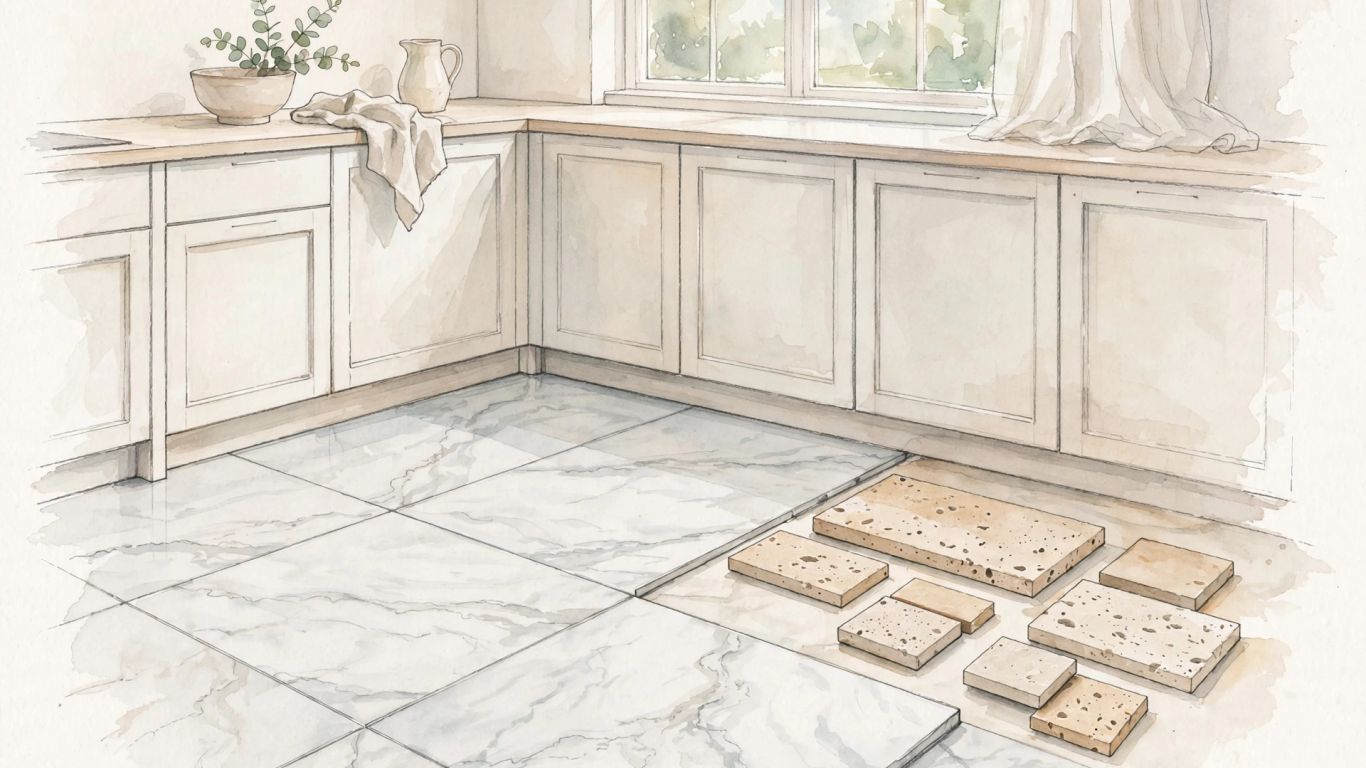
Natural stone varies from piece to piece, bringing veining and color shifts that make a floor feel individual. Porcelain and ceramic offer a more consistent manufactured appearance, while stone asks you to consider sealing and cleaning as part of the decision. The best match depends on whether you value natural variation, predictable appearance, or a particular care routine.
A quick comparison can help frame the choice. These are broad material tendencies; the specific product and its installation instructions should guide the final decision.
| Material | Visual character | Care consideration | A useful question |
|---|---|---|---|
| Marble | Distinctive veining and natural variation | More prone to scratching and staining; sealing may be needed | Am I comfortable with a surface that develops character? |
| Travertine | Warm, earthy tones and natural texture | Porous stone needs sealing and suitable care | Do I want a softer, rustic look? |
| Porcelain | A manufactured surface with a consistent design | Check product guidance for cleaning and use | Do I prefer a more uniform appearance? |
| Ceramic | Broad choice of colors and shapes | Follow the product’s care and installation guidance | What look and format suit my room? |
This is a starting point, not a durability ranking for every product. Compare samples and manufacturer guidance before settling on a material.
Consider marble for distinctive veining and a refined look
Marble brings natural veining and a quietly polished sense of detail to a kitchen. Its pattern can be subtle or pronounced, so lay a few samples together to see how their markings read across a larger area. The Marble Tiles collection from Surfaces Galore includes polished, honed, and tumbled finishes, as well as a range of sizes and patterns.
Marble is more prone to scratching and staining than some other stones, so consider whether its appearance is worth the added attention it may need. For another way to imagine natural stone variation across a floor, look at Tundra Gray 24×24 tile and assess its finish and veining against your cabinetry.
Explore travertine for warm tones and natural texture
Travertine’s earthy colors and natural texture can bring warmth to a kitchen without relying on a strong pattern. Its finish changes the mood: honed and filled surfaces feel smoother, while tumbled options have a more rustic character. The Travertine Tiles collection from Surfaces Galore includes these different looks, along with multiple sizes and patterns.
Travertine is porous and needs sealing, so factor care into the choice along with its visual appeal. Compare several pieces together; natural variation is part of the material, and a single tile cannot show the whole effect.
Match the material to your household’s maintenance preferences
Think about the cleanup you are willing to do after a busy evening, not only how the floor will look on installation day. Stone’s natural beauty comes with care requirements that vary by type and finish, and everyday habits matter. Match beauty with upkeep so the floor feels like a good choice months and years later.
If you like a natural surface but want to keep the care routine simple, ask what cleaning and sealing the specific stone requires before buying. For ideas that focus on other kitchen flooring materials, see this overview of kitchen floor tile choices; compare the details with your own priorities rather than assuming every product behaves the same way.
Choose a finish, size, and shape
The finish changes how a tile feels and reflects light, while size and shape affect the room’s overall rhythm. Consider these choices together rather than selecting each one in isolation. Samples help you judge texture, scale, and color under the lighting in your kitchen.
Compare polished, honed, brushed, and tumbled surfaces
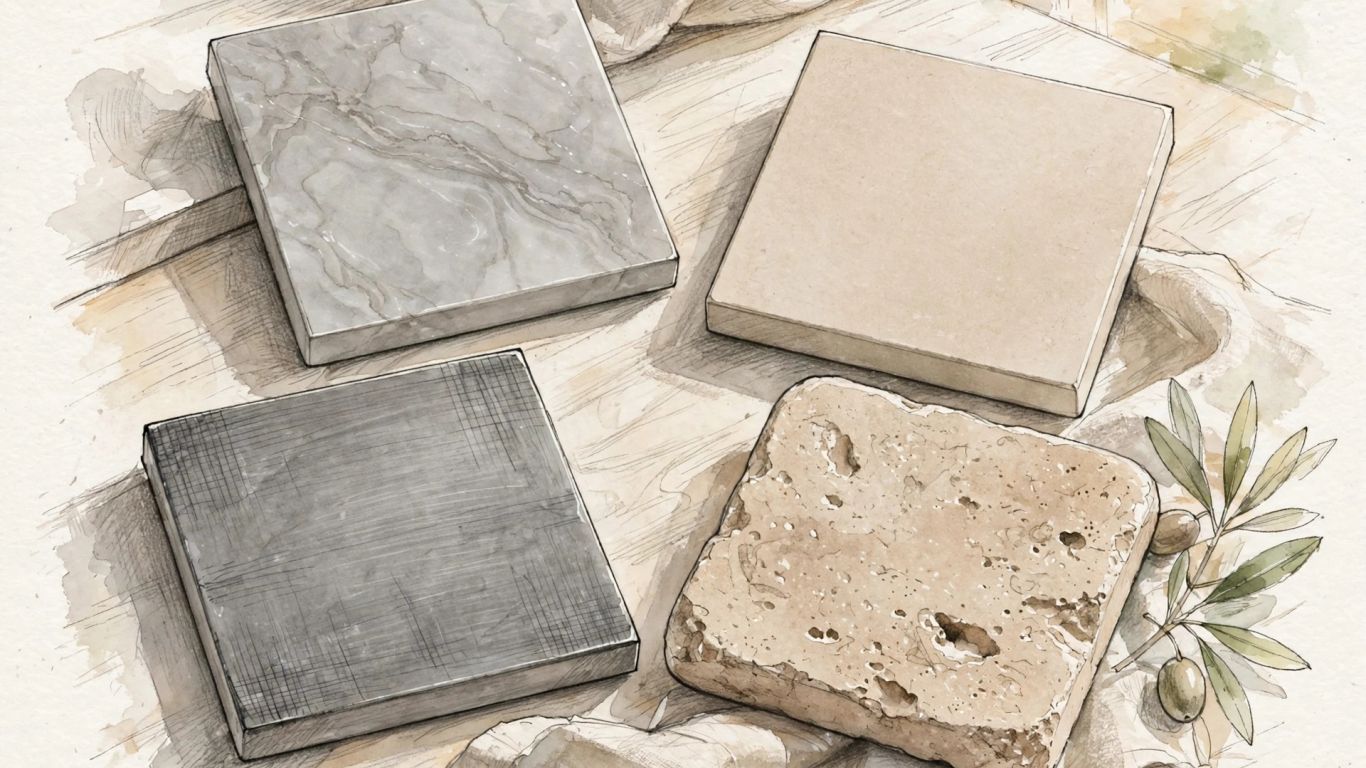
Polished stone has a reflective surface that can bring out color and veining. Honed stone has a matte appearance, while brushed and tumbled finishes create more visible texture; the exact effect varies by product. Choose by sight and touch, then check the manufacturer’s guidance for cleaning and suitability.
A textured or honed surface may be worth considering where you want more grip underfoot, especially in a space where spills are common. Texture alone does not establish slip resistance, though, so look for product-specific information before deciding.
Select tile sizes for your kitchen’s proportions
Large tiles create fewer visible joints and can give a floor a calmer, more open feeling. Smaller formats add more grout lines and can make a pattern feel busier or more detailed. Neither scale is automatically right for a small or large kitchen: the room’s shape, cabinetry, and planned cuts all affect the result.
Measure carefully and sketch the room before choosing a format. If you are considering a larger stone tile, compare its scale against the actual floor area and the lines of the cabinets, rather than relying on a product photo alone.
Use mosaics and specialty shapes for visual detail
Mosaics introduce a finer pattern and can add detail to a floor or a defined area within it. Marble Mosaic Tiles from Surfaces Galore come in patterns such as herringbone, hexagon, basketweave, penny round, and arabesque, with polished, honed, and tumbled finishes available across the collection. The amount of pattern can be striking, so consider how it will sit alongside counters and cabinets.
For a smaller-scale design reference, explore Tundra Gray hexagon mosaics. A mosaic sample lets you see both the stone’s variation and the effect of the repeated shape before you commit to a full floor.

Consider how grout lines affect appearance and upkeep
Grout color and joint width shape the floor almost as much as the tile itself. A close color match can let the stone read as a broad surface, while contrast makes the grid more prominent. More joints also mean more lines to clean, so include grout in the maintenance picture.
Ask the installer or product guidance to confirm suitable joint spacing and grout for your selected tile. Natural stone pieces can vary, and a dry layout is a useful way to see how the joints, colors, and patterns come together before setting begins.
Plan colors and tile layouts
A floor can anchor a kitchen quietly or become its strongest design feature. Start with the colors and patterns already in the room, then choose a layout that complements rather than competes with them. A simple arrangement can feel just as considered as an elaborate one.
Coordinate floor colors with cabinets and countertops
Look at the undertones in the cabinets, counters, and floor samples together. Warm beige and brown stones can soften a crisp white kitchen; gray or white marble may suit a cooler palette, depending on its veining. Bring samples into the room and view them in daylight and evening light before choosing.
Natural materials vary, so the color you see on one tile may not capture the range in a full installation. Lay out several pieces to get a more honest sense of the pattern and its relationship to the rest of the kitchen.
Use a checkerboard pattern for classic contrast
Checkerboard tile has a familiar rhythm that can feel either traditional or fresh, depending on the colors and scale. High contrast makes the pattern more prominent, while two closer tones create a softer effect. Keep the surrounding finishes relatively restrained if you want the floor to take the lead.
Try the pattern on paper or with a dry layout before ordering. This makes it easier to judge how the checks meet walls, cabinets, and doorways, where partial tiles can change the overall impression.
Try straight, diagonal, or Versailles layouts
A straight layout keeps the room’s lines simple, while a diagonal arrangement adds movement and usually changes how edge cuts fall. A Versailles pattern combines multiple tile sizes in a repeating arrangement, creating a more decorative surface. Travertine is available in patterns and sizes suited to these kinds of layout ideas, but confirm that the selected product and installation plan are compatible.
For a diagonal or multi-size design, map the floor before installation and check how the pattern will end at the boundaries. A little planning up front can help avoid awkward slivers and an unbalanced-looking edge.
Balance bold patterns with the rest of the room
A patterned floor needs breathing room. If the tile carries strong contrast or pronounced veining, quieter cabinet fronts and counters can help the room feel composed. When the rest of the kitchen already has a lot of detail, a more restrained floor may be the easier choice to live with.
Use samples to test the whole palette, not just individual colors. A floor that looks appealing on its own should also sit comfortably beside the finishes that will stay in the room.
Evaluate durability and everyday performance
A kitchen floor should feel right underfoot and suit the routines of the people using it. Consider the spots where spills land, how much traffic passes through, and what happens when a heavy item slips from a counter. Product specifications and installation guidance matter as much as the material’s general reputation.
Think through spills, foot traffic, and dropped items
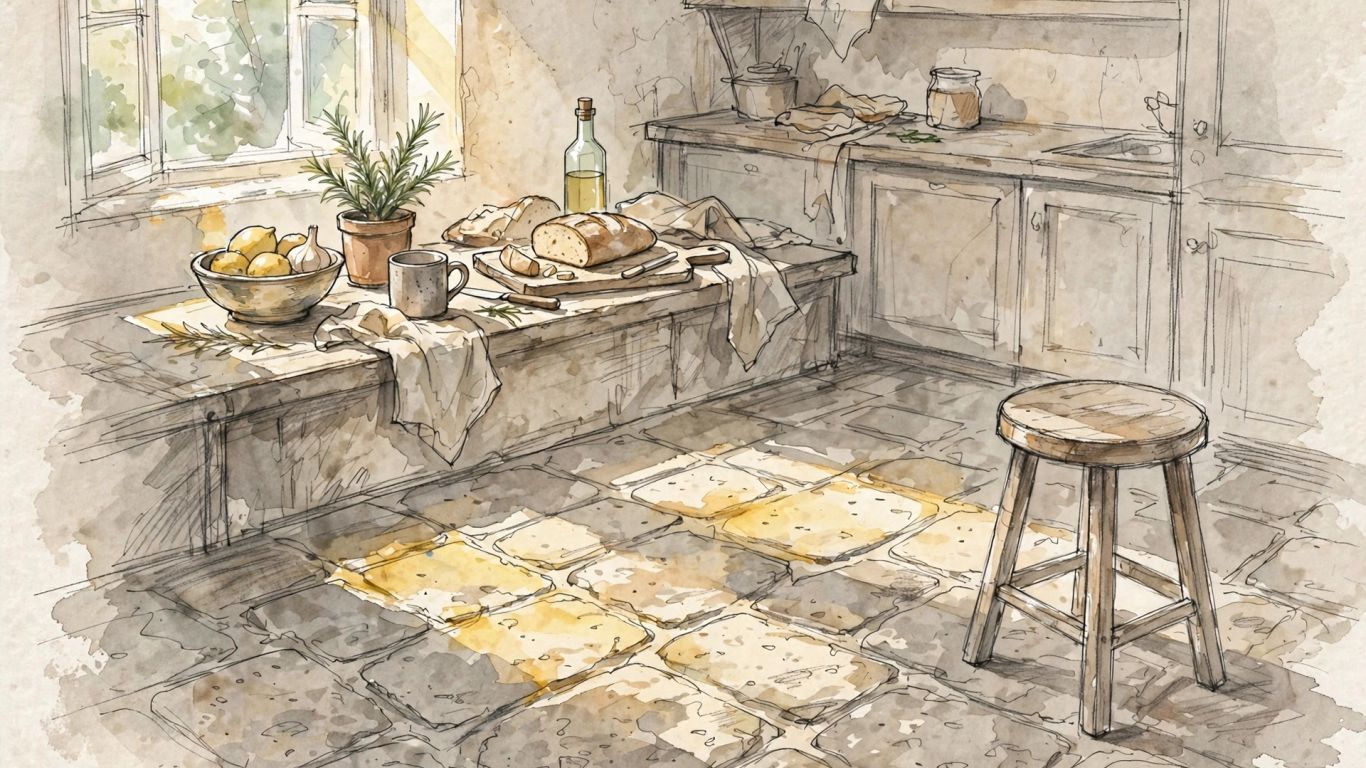
Busy kitchens bring repeated walking, frequent cleaning, and the occasional dropped utensil or dish. Marble is more prone to scratching and staining than harder stones, so think honestly about how carefully you want to treat the surface. For any tile, review product information and ask an installer about the conditions in your home.
A floor’s long-term appearance also depends on routine care and correct installation. The right choice is not simply the material that sounds toughest; it is the product whose maintenance and performance expectations make sense for your household.
Check surface texture and slip resistance
Finish and texture affect how the floor feels, especially when it is wet. Honed or textured stone may be worth considering in a kitchen, but a visual impression is not a substitute for a product’s specific slip information. Ask for the relevant performance details and make sure they apply to the intended use.
Compare the texture in person if possible. Run a hand over the sample and view it from different angles; the surface can look quite different in bright window light than it does under evening lighting.
Understand natural stone’s porosity and sealing needs
Marble and travertine are porous natural stones and can stain more easily than less porous materials. Sealing helps protect stone against stains and moisture, but the right product and schedule depend on the tile and its use. Follow the supplier’s and sealer manufacturer’s recommendations rather than assuming every stone needs the same treatment.
If you are weighing travertine for the kitchen, include sealing and suitable cleaning products in your plans from the start. That way, the care routine is part of the decision rather than an unwelcome surprise after installation.
Account for tile thickness and transitions to adjacent rooms
Tile thickness affects how the kitchen floor meets neighboring rooms, doorways, and existing flooring. Measure the full assembly, including any setting materials, and discuss transition details before work begins. A small difference in finished height can change how an edge looks and feels.
Check the selected tile’s dimensions and thickness against the adjoining surfaces. Confirming these details early gives the installer a chance to plan a neat transition and helps you avoid last-minute adjustments.
Prepare for kitchen floor tile installation
A thoughtful installation starts before the first tile is set. Inspecting the floor, planning the pattern, and checking material quantities can prevent avoidable surprises. If you are hiring an installer, share the tile details and layout plan before work begins.
Inspect and prepare the subfloor
The subfloor should be clean, dry, and level before tile is installed. Have any uneven areas assessed and corrected as appropriate for the project and the chosen tile. Natural stone tiles should also be inspected for chips, cracks, warping, and variation before installation.
Ask the installer to review the preparation and setting recommendations for the specific material. Following the product and material manufacturers’ directions is more reliable than assuming one installation method fits every floor.
Plan the layout to minimize narrow cuts
A dry layout helps you see the pattern, distribute color variation, and spot awkward cuts before mortar is involved. Marking reference lines and working through the edges of the room can help the installer balance the layout. This step is especially helpful for checkerboard, diagonal, and multi-size patterns.
Tile projects also benefit from clear planning around measurements and coordination. For broader project-planning examples, these guides cover very different subjects: a Canberra renovation checklist, roof estimate planning, Barcelona property buying, dental disability insurance, and choosing a body scrubber. They are not tile-installation advice, but each concerns preparing for a separate kind of decision.
Choose appropriate mortar, grout, and setting materials
Mortar, grout, and setting materials should suit the tile and the installation conditions. Natural stone may call for specific products; follow the tile and material manufacturers’ instructions, and ask the installer to confirm compatibility. The right choice can depend on the stone’s color, format, substrate, and planned joint.
Do not guess based on a previous project with a different tile. Check the relevant product guidance before purchasing materials, and make sure the installer knows exactly which stone and finish you have selected.
Confirm measurements and order extra tile for cuts and repairs
Measure the floor carefully, including alcoves and spaces around fixed cabinets, then have the quantity checked against the layout. Some additional tile is usually useful for cuts and future repairs; the amount depends on the design, the room, and the material’s variation. Ask your installer or supplier to help estimate an appropriate order quantity.
Before work starts, confirm the tile size, finish, and quantity on the order. If you are comparing a wider range of kitchen flooring options, use the product’s installation guidance as well as its appearance to narrow the choice.
Maintain your tile and plan your purchase
Choosing the tile is only part of the project; think about how you will care for it and how you will confirm the look before ordering. Samples are useful for checking color, texture, and scale in your own kitchen. Compare product details and quantities carefully, especially when natural variation is part of the appeal.
Clean stone tile with pH-neutral products
Use a pH-neutral product intended for natural stone, and avoid acidic cleaners such as vinegar or lemon on marble and travertine. Sweep or vacuum grit regularly before damp cleaning so that loose particles are not dragged across the surface. Follow the stone and cleaner manufacturers’ directions for the specific tile.
A simple, suitable routine is easier to keep up than a complicated one. Keep the recommended cleaner on hand and ask what the supplier suggests for spills, routine washing, and any residue that may need attention.
Seal marble or travertine as recommended
Follow the sealer manufacturer’s instructions and the tile supplier’s recommendations for the stone you choose. Natural stone may need sealing to help protect against stains and moisture, but the timing and frequency vary with the product and how the floor is used. Do not assume a one-size-fits-all schedule.
Ask which sealer is compatible with the tile and whether it should be applied before or after grouting. Clear guidance before installation makes it easier to protect the finished surface properly.
Request samples to assess color and texture at home
A sample lets you compare the stone with cabinets, counters, and natural light in the room where it will be installed. Look at it in the morning and evening, and notice how the finish feels as well as how it appears. For stone with natural variation, ask whether the sample represents the range you can expect across an order.
If a particular marble or travertine is on your shortlist, request a sample before making the final decision. It is a practical way to narrow the options with more confidence than a screen image alone can provide.
Compare current stock, bulk discounts, and nationwide shipping from Surfaces Galore
Once you have narrowed the material and finish, confirm the current stock, quantities, and delivery details before placing an order. Surfaces Galore offers nationwide shipping and bulk discounts, so ask for a quote if you are planning a larger project or need delivery arranged across the country. Make sure the order details match your measured area and installation plan.
Allow time to inspect the delivered tiles before installation, since natural stone can vary in color and pattern. A careful check before setting gives you a chance to confirm the material and discuss any concerns with your supplier.
Conclusion
Choosing kitchen floor tile is a balance of appearance, practical care, and thoughtful planning. Compare materials and finishes in your own space, account for installation details, and order samples before you commit; when you are ready to explore marble and travertine, Surfaces Galore can help you review options, stock, and delivery for your project.
Frequently Asked Questions
What is the best tile for a kitchen floor?
The best choice depends on your preferred look, care routine, household traffic, and product-specific performance information. Compare natural stone, porcelain, and ceramic before deciding.
Is marble suitable for a kitchen floor?
Marble can be used in kitchens, but it is more prone to scratching and staining than some other stones. Consider whether its natural veining and appearance suit the care you are willing to provide.
Does travertine need to be sealed?
Travertine is porous and needs sealing according to the recommendations for the specific tile and sealer. Follow the manufacturers’ instructions for application and upkeep.
Which tile finish is best for a kitchen floor?
Polished, honed, brushed, and tumbled finishes each create a different look and feel. Compare samples, consider texture where spills are common, and check product-specific slip information.
Are larger tiles better for a small kitchen?
Larger tiles can reduce the number of visible grout lines, but the room’s shape and the planned edge cuts also matter. Use a measured layout to judge what works in your space.
How much extra tile should I order?
The amount depends on the room, layout, tile format, and cuts required. Have the quantity checked against a measured plan and discuss extra material for cuts and possible future repairs.
How should I clean natural stone kitchen tile?
Use a pH-neutral cleaner intended for natural stone and follow the product’s care instructions. Avoid acidic cleaners on marble and travertine, and sweep regularly to remove loose grit.

Leave a comment