
How to Inspect a Tile Delivery Before You Sign

Inspect a tile delivery at the truck, before the driver leaves and before you sign anything. Count the pallets and cartons against the paperwork, walk around every side of the load, write any damage or shortage on the delivery receipt, take photos, and then open the cartons within a day or two to check for breakage you could not see from outside. A signature is the moment you tell the carrier the freight arrived in good order, so the few minutes you spend at the curb protect the whole order.
That matters more with natural stone. Marble, travertine and limestone are heavy, they travel on pallets by freight, and a hairline crack or a chipped corner can hide inside a carton that looks fine. This guide gives you the routine we would hand to a homeowner receiving a bathroom floor or a contractor receiving a job-lot of 12x24 pieces.
TL;DR
- Do not sign until you have counted pallets and cartons, checked every side of the load and written any damage, shortage or wrong item on the receipt.
- Photograph the pallet, the packaging and the damage before anything is moved or unwrapped.
- Open cartons within a day or two. Concealed damage is commonly reported to the carrier within five business days, and the sooner the better.
- Compare the lot, shade and size codes on every carton, and keep the stone boxed until you have confirmed they match.
- Keep all packaging until the claim is settled, and send your documentation to the seller and carrier together.
Table of Contents
- Why the first five minutes decide the claim
- Step 1: Match the delivery to your order
- Step 2: Walk the load before it comes off the truck
- Step 3: Open the suspect cartons, with the driver present
- Step 4: Write it on the receipt, in specific words
- Step 5: Photograph and record what you need
- Step 6: Unpack within a day or two
- Step 7: Check lot, shade and size before anything is installed
- A quick delivery-day checklist
- Who does what: seller, carrier and you
- How long does tile delivery take?
- Our perspective
- Order natural stone from a direct importer
- FAQ
- Sources
Why the first five minutes decide the claim
Most tile orders over a few boxes arrive as freight: a truck, a liftgate, a driver with a clipboard or a tablet. The driver hands you a delivery receipt, often called a proof of delivery, and asks you to sign. That signature is read as your statement about condition. As one freight guide for equipment buyers puts it, signing a clean receipt is a legal statement that the goods arrived in good condition, and a concealed-damage claim after that is an uphill argument rather than a routine one.
The pressure runs the other way. The driver has a schedule, the pallet is blocking the street, and the carton on top looks perfectly fine. Slow the exchange down politely. You are entitled to look at your own freight, and a driver who has delivered stone before expects it.
If you are planning ahead, a few things make delivery day easier:
- Know the expected delivery window and have someone on site who can sign and inspect.
- Clear a level spot where a pallet jack or liftgate can set the load down.
- Have a phone charged for photos and a pen ready for the receipt.
- If the job site cannot take a full truck, tell the seller before shipping so the delivery method can be arranged. Our guide to insured tile shipping nationwide explains how freight coverage fits into a tile order.
Step 1: Match the delivery to your order
Before you look at condition, confirm that this is your freight.
- Check the name and address on the shipping labels and the receipt.
- Count the pallets or crates and compare with the number on the bill of lading, the shipping document the driver carries.
- Compare the order: tile name, size, finish, quantity in square feet and number of cartons per pallet, using your order confirmation.
- Look at the labels on the cartons you can see. Product name, size and finish should match what you ordered. Honed and polished versions of the same stone, or 12x12 and 12x24 formats, are easy to confuse once they are stacked on a pallet.
If the pallet count is short, write the shortage on the receipt before you sign. If a pallet belongs to someone else, say so and refuse that one. Do not accept freight you did not order and sign for it as yours.
Step 2: Walk the load before it comes off the truck
If you can, inspect while the pallet is still on the liftgate or just beside the truck. Photos taken before the pallet is moved are the most useful ones, because they show the condition the carrier handed over.
Walk all four sides and look at the top. You are looking for:
- Crushed or collapsed corners on cartons, especially at the bottom of the stack where the weight sits.
- Torn, loose or cut shrink wrap, or wrap that is a different material from the rest, which can mean the pallet was handled or rebuilt.
- Wet cartons, stains or water marks. Wet cardboard weakens, and stone can be stained or scuffed inside.
- Snapped or missing banding and a load that leans or has shifted.
- Forklift punctures or gouges in the sides of cartons.
- Rattling or grinding sounds when the pallet is tilted or moved. Loose fragments inside a carton are a clear sign of breakage.
Natural stone is dense and brittle along its edges. A carton that took a hard drop can look only slightly dented while the tiles inside have chipped corners or cracks that run across the face. Treat any visible carton damage as a reason to open that carton on the spot.
Step 3: Open the suspect cartons, with the driver present
You are not expected to unpack a full truckload at the curb. You are entitled to open the cartons that show damage, and a few cartons from the outside of the stack, while the driver is still there.
When you open a carton:
- Lift out a few tiles and look at all four edges and corners, not just the face.
- Check the face for cracks, especially on thinner marble and travertine in large formats. Hold each tile up to the light if you can.
- Look at mosaic sheets for loose pieces, shifted chips or a broken mesh backing.
- Photograph the open carton, the packing material and each damaged piece with the carton label in the shot.
A few chips on the edge of a single tile in a large order are not necessarily a claim: you will cut and lose some pieces during installation anyway, and a normal overage covers that. The real concern is a pattern, such as several cartons on the same side of a pallet with the same damage, or a stack where tiles have slid against one another.
Step 4: Write it on the receipt, in specific words
This is the step that protects you. Do not rely on a verbal comment to the driver or on a photo alone. The notation should be on the delivery receipt itself, in ink, before you sign, and it should be specific.
Vague notes such as “damaged” invite a dispute. Better examples:
- “2 of 4 pallets received. 2 pallets short.”
- “Pallet 3, three cartons crushed on the lower left corner, tiles broken inside.”
- “Shrink wrap torn, cartons wet, pallet 2.”
- “Carton count 48 received, bill of lading says 50.”
If the driver uses a handheld tablet, type the notation into the signature screen and photograph the screen after you sign. If the driver says damage notes are not allowed or will void the delivery, do not accept that. Take photos, write the same words in an email to the seller the moment you can, and tell the seller the driver refused the notation.
If the damage is severe, you can refuse the delivery, or refuse only the damaged pallet. Call the seller first, since the way a refused shipment is returned and replaced affects both the timing and the claim.
Step 5: Photograph and record what you need
The carrier and the seller will both ask for the same evidence. Gather it while you are standing there.
- Overall photos of each pallet from all four sides, with the truck or the driver in the background if possible.
- Close-ups of every damaged area, with a coin or tape measure for scale.
- Photos of the shipping labels, the pro number or tracking number, and the bill of lading.
- A photo of the receipt with your notation and the driver’s name.
- The date and time of delivery, and the carrier name.
Keep the cartons, the wrap and the pallet exactly as they are until the claim is closed. Do not throw away broken tiles, and do not stack damaged cartons back on the pile. If the carrier sends an inspector, they will want to see the original packaging.
We cover the paperwork in more detail in our guide to filing tile freight damage claims, including what a claim should contain.
Step 6: Unpack within a day or two
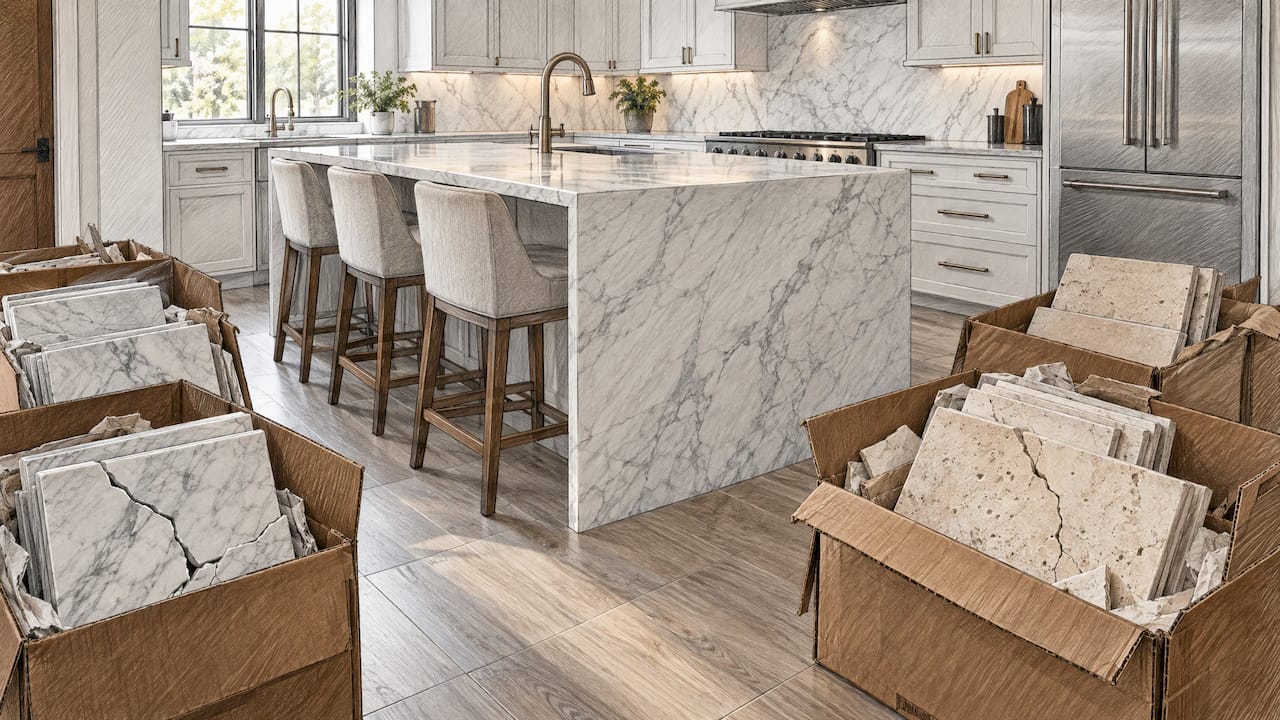
Concealed damage is breakage you cannot see until you open the carton. It is common with stone, because the cartons look fine and the tiles inside are cracked. This is why you should unpack soon after delivery, not when the installer arrives weeks later.
Freight guidance generally says to report concealed damage to the carrier within five business days of delivery and request an inspection, after which claims are commonly presumed to be damage that happened on your side. That window is a common industry practice, not a universal rule: the actual deadline is in the carrier’s terms and the bill of lading, so check them and act well within it.
For concealed damage:
- Stop unpacking and leave the tiles and packaging as found.
- Photograph the damage, the carton and the pallet together.
- Contact the seller and the carrier right away, the same day where possible.
- Ask the carrier for an inspection and note the date and the name of the person you spoke to.
- Confirm everything in an email so there is a written record.
Under federal law, the formal claim has its own clock. The Carmack Amendment, which governs most interstate freight claims, prevents a carrier from allowing less than nine months to file a claim. Nine months is the outer limit, not a target: a prompt report and a prompt written claim are what move a case. A written claim generally has to identify the shipment, state that the carrier is liable and name a specific dollar amount, and a note on the receipt does not by itself count as a formal claim.
Step 7: Check lot, shade and size before anything is installed
Damage is only one thing to check. The second is whether the tile matches itself.
Natural stone varies. Veining in marble, color movement in travertine and tone in limestone all change from one quarry block to the next. A lot or batch code on the carton identifies the material cut and finished together. Mixed lots can show up as visible stripes of lighter and darker tile once the floor is down.
On arrival:
- Compare the lot or shade code on every carton. All cartons for one room should share a code.
- Open a few cartons from different pallets and lay tiles side by side in daylight, not under a garage bulb.
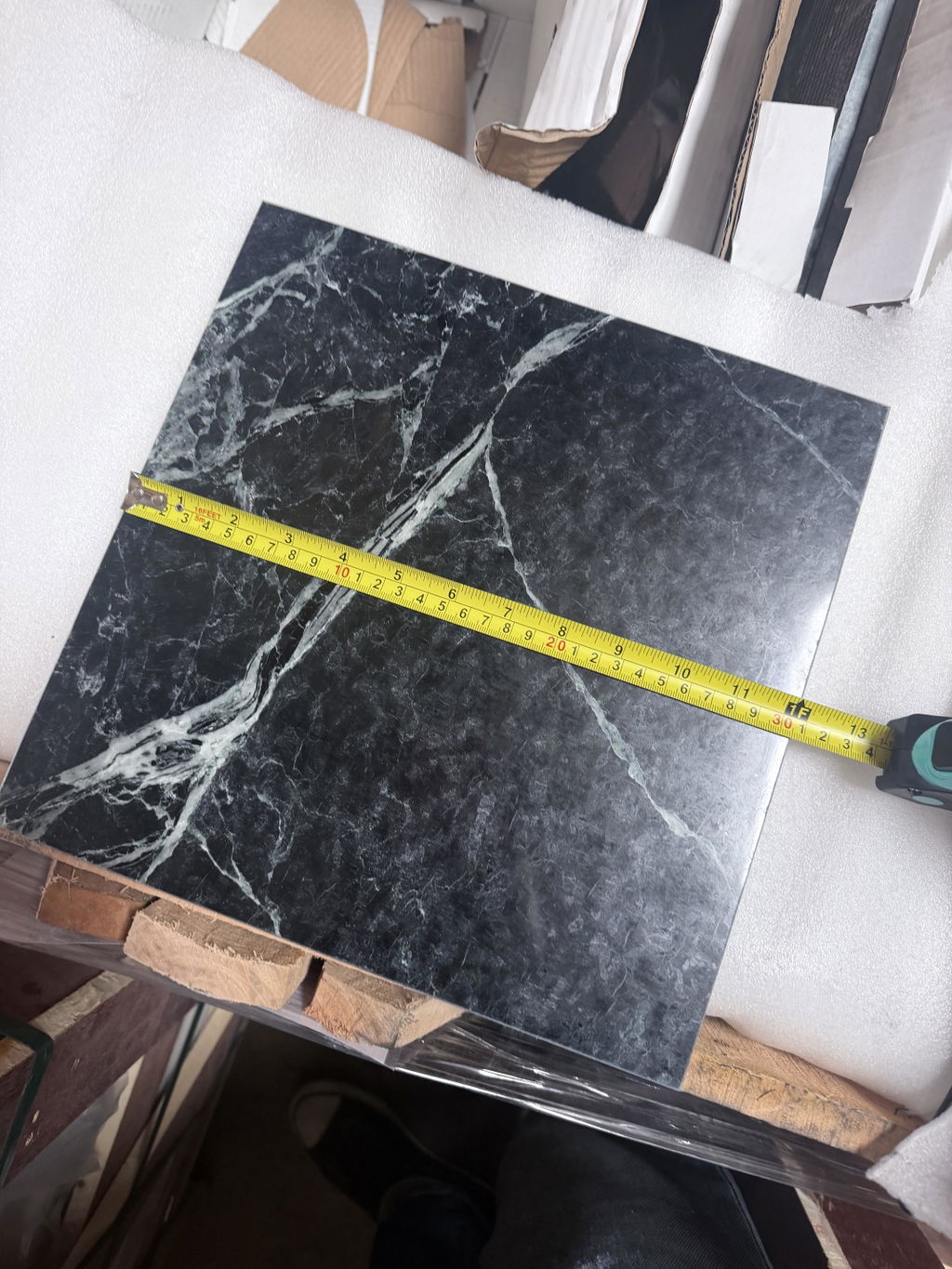
- Check the stated size and thickness. Calibrated tile is cut to a tight, consistent thickness and size, which matters for thin grout lines and large formats. Our explanation of marble tile calibration shows what to look for.
- Dry-lay a few square feet of the pattern, particularly for herringbone, checkerboard and mosaics, before committing to a full install.
If you find a different lot code on part of the order, stop and contact the seller before the tile is cut or set. Installed tile is generally treated as accepted, and replacing it is a different problem from replacing boxes. Our guide to natural stone tile batch matching explains how lots work and why ordering all the tile for a space at once helps.
Some natural variation is expected and is part of why people choose stone: the point is to confirm the tile is within the range you approved on your sample, not to expect a printed pattern.
A quick delivery-day checklist
| Check | Where | What to look for | If it fails |
|---|---|---|---|
| Pallet and carton count | Truck, receipt | Matches bill of lading and order | Write the shortage on the receipt |
| Wrap and banding | Pallet exterior | Torn, wet, loose, rebuilt | Photograph, open that carton |
| Carton condition | Corners, bottom rows | Crushed, punctured, stained | Open it with the driver present |
| Tile condition | Inside suspect cartons | Chips, cracks, loose mosaic chips | Note on receipt, photograph |
| Product and finish | Carton labels | Matches name, size, finish | Refuse or note, call the seller |
| Lot and shade code | Every carton | Same code across the order | Hold installation, contact the seller |
| Concealed damage | After unpacking | Cracks not seen at delivery | Report same day, request inspection |
Who does what: seller, carrier and you
It helps to know who the parties are. The carrier is the trucking company that moved the freight. The seller is the company you bought from. In a damage claim, the carrier is usually responsible for freight damaged in transit, but you will deal with both, and the seller is usually the best first call because it knows the shipment and the packing.
Give both the same package: order number, carrier tracking number, photos, a copy of the signed receipt with notations, the count of damaged versus good pieces, and the replacement quantity you need. A tidy file speeds things up and removes arguments about what happened.
For contractors and designers who receive stone on tight schedules, ask before ordering what the replacement timeline is for a damaged pallet, and order a small overage so that routine breakage does not stop the install. Our guide on how to ship tile covers packing and pallet basics from the shipping side, which is useful background if you are also sending stone on to a job site.
How long does tile delivery take?
Lead times depend on whether the tile is in stock, how large the order is and how far it travels. A single box usually ships as a parcel and arrives fast. Pallet orders ship by freight: the carrier schedules a delivery appointment, often with a call ahead, and the transit time depends on distance and the carrier’s route. Custom, special-order or bulk orders take longer than stocked tile. Check the seller’s current shipping information and the tracking number rather than counting on a fixed number of days, and be ready to receive the freight when the call comes, since a missed appointment can mean redelivery fees or delays.
Our perspective
Receiving stone is the last step of a good purchase, and it deserves the same attention as choosing the tile. We are a direct importer of marble, travertine and limestone, and we want the tile on your floor to be the tile you chose.
Here is how we think about it. Order everything for a room at once so it comes from the same lot, and have someone on site who can count, look and write on the receipt. Open a few cartons the day the freight arrives, not the week the installer shows up. That one habit turns most delivery problems into simple replacements.
We publish guides on freight damage claims, insured shipping and batch matching because these are the questions our customers, from homeowners to contractors and designers, run into when stone is delivered. Free sample shipping lets you see the stone’s color and veining before the full order, so what arrives on the pallet is what you approved. Our inventory is premium, non-commercial grade, and we pay close attention to architectural-grade quality, which is what makes a delivery inspection a short job rather than a long one.
If something does arrive wrong, document it on the receipt, photograph it and contact us with the order number. Having the facts in hand is what lets everyone solve it quickly.
John | Surfaces Galore
Order natural stone from a direct importer
If you are planning a kitchen, bathroom, shower or floor, we offer marble, travertine and limestone tiles, mosaics and decorative pieces, shipped nationwide, with free sample shipping and custom and bulk quotes for trade customers.

Browse marble tiles, mosaics and travertine by type, or start from our marble, travertine and limestone collections. If you need a large quantity for a project, ask us for a bulk quote.
FAQ
Should I refuse a tile delivery if one carton is damaged?
Usually not the whole delivery. Note the damaged carton and its tiles on the receipt, photograph them and accept the rest, or refuse only the damaged pallet if it is badly broken. Call the seller before you refuse anything so the replacement and the return are arranged correctly.
What if I sign and find broken tile later?
That is concealed damage, and it can still be claimed. Stop unpacking, keep the cartons, photograph everything and contact the seller and the carrier the same day. Freight guidance commonly puts the reporting window at five business days, so do not wait.
How many extra tiles should I order for breakage?
Plan an overage for cuts and waste, and keep a few unopened boxes from the same lot for future repairs. The right percentage depends on the layout, the tile size and the pattern, so ask your installer. Complex patterns such as herringbone need more than a straight lay. Our guide on choosing tile size for a room helps with the layout.
Do I need to keep the packaging?
Yes, until any claim is settled. The carrier may want to inspect the cartons, wrap and pallet as they arrived, and discarding them can weaken your case.
Can I install tile that has a different lot code?
It is better not to. Different lots can differ in shade and veining and sometimes in size, and the difference shows once the floor is in. Contact the seller before cutting or setting any tile that does not match the rest.
Sources
- Receiving an LTL Freight Delivery: How to Inspect, Note Damage and Protect Your Claim
- Concealed Damage & OS&D: What to Do at Delivery
- Cargo Claims: What a Motor Carrier Should Do After Loss or Damage
Recommended
- Tile Freight Damage Claims: How to File and Win
- Insured Tile Shipping Nationwide Guide
- How to Ship Tile: Packing, Pallets and Freight Tips
- Things to Know Before Buying Tile Online
This article is provided for general informational guidance only. Natural stone varies in color, veining, texture and performance. For installation, sealing, cleaning and maintenance, follow the product manufacturer’s instructions and consult a qualified installer or stone-care professional. Always test cleaning and sealing products in an inconspicuous area first. Surfaces Galore is not responsible for damage, discoloration, etching, staining, installation issues or other problems resulting from

Leave a comment