
Marble tile for kitchen backsplash: How to choose, style, and care for a timeless design

Key Takeaways
Marble tile for kitchen backsplash projects brings natural movement, refined color, and lasting character to one of the most visible areas of the home.
- Choose the marble color and veining before committing to a pattern.
- Match the tile format to the scale and style of your kitchen.
- Compare polished, honed, and tumbled finishes in your actual lighting.
- Plan for careful installation, sealing, and pH-neutral cleaning.
- Request samples and buy authentic natural stone with the project support you need.
Why marble tile works for a kitchen backsplash
A backsplash has to work hard visually, even when it covers a relatively small area. Marble adds depth without requiring a complicated design, and its natural variation keeps a kitchen from feeling flat or overly manufactured. The right marble tile for kitchen backsplash installation can connect cabinetry, counters, flooring, and hardware with one graceful material.
Natural stone also gives you plenty of room to personalize the result. A quiet white tile can recede behind open shelving, while a veined mosaic can create a focal point behind the range. Before choosing, consider how much movement you want and how the stone will look beside your existing finishes.
Natural veining and one-of-a-kind character
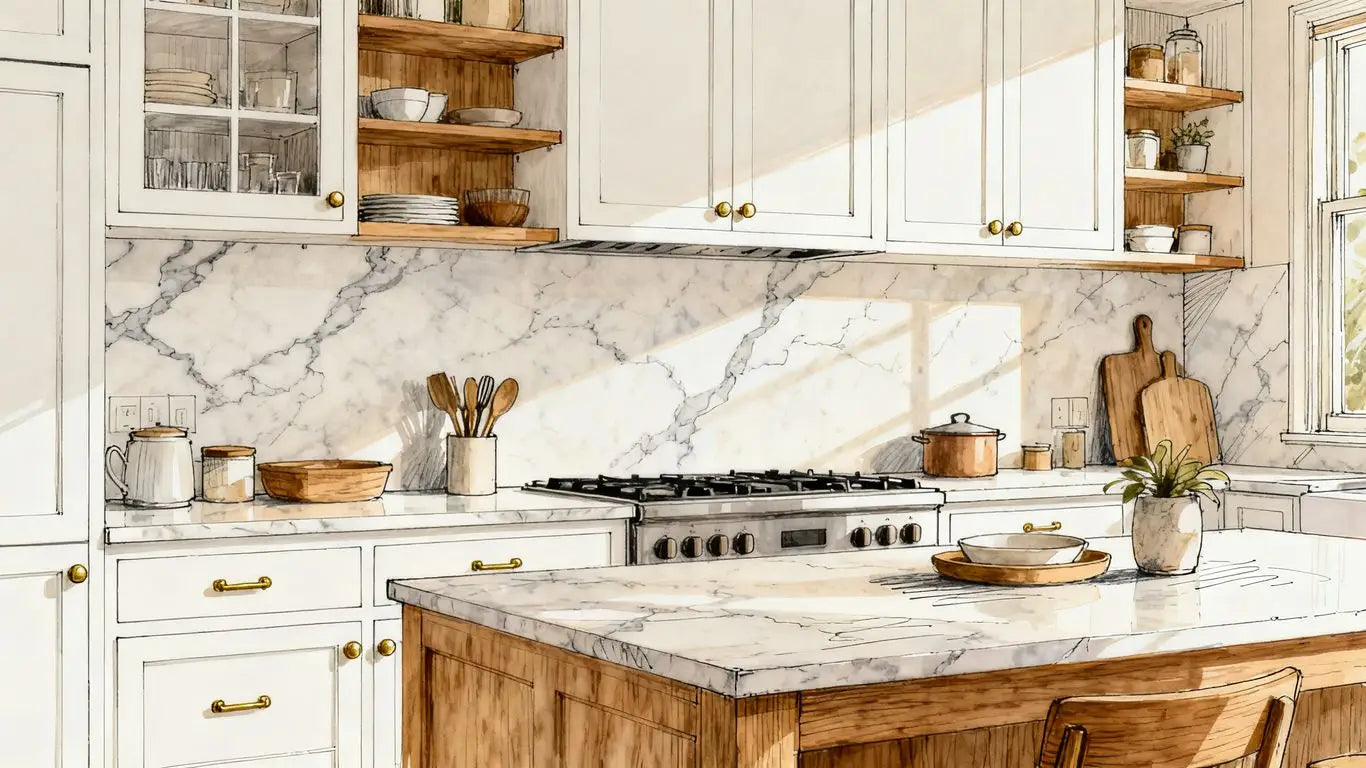
No two pieces of natural marble are exactly alike. Fine gray lines, cloudy movement, and occasional tonal shifts give the backsplash a surface that changes subtly as daylight moves across it. That individuality is part of the appeal, especially when the rest of the kitchen has clean, simple lines.
A dry layout helps you decide how to distribute those variations. Set aside pieces with unexpected marks, then arrange the remaining tiles so the veining feels balanced rather than concentrated in one corner. The result should look intentional while still retaining the relaxed character of real stone.
Beauty that complements modern and traditional kitchens
Marble is unusually adaptable. A narrow subway layout with light grout feels crisp in a contemporary kitchen, while a honed mosaic with warm cabinetry can feel collected and traditional. Soft whites and grays pair easily with wood, painted cabinets, brass, black fixtures, and stainless steel.
For visual inspiration, browse these marble backsplash ideas and pay attention to proportion rather than copying a room exactly. The same stone can read quiet or dramatic depending on the tile size, finish, grout, and amount of surrounding cabinetry.
How a marble backsplash can add long-term design value
A well-chosen natural stone backsplash can make a renovation feel considered for years rather than tied to a short-lived trend. Marble is recognized for its elegance, distinctive veining, and broad range of colors, so it can support future changes to paint, lighting, or cabinet hardware.
Design value also comes from coherence. When the backsplash echoes a countertop undertone or repeats a color found in the floor, the kitchen feels more finished. That visual continuity can make a modest renovation appear more substantial without covering every surface in stone.
Key considerations for daily kitchen use
Marble is durable, but it is not maintenance-free. It can scratch or etch, and acidic ingredients such as lemon, vinegar, and tomato can affect an unprotected surface. A backsplash is less exposed than a countertop, yet cooking splashes and steam still deserve attention.
The best choice balances appearance with your habits. If you prefer a lived-in surface and can wipe spills promptly, marble offers tremendous character. If you want marks to be less visible, a honed finish is often a calmer, more forgiving visual choice.
Choose the right marble color and style
Color sets the mood before pattern or finish enters the conversation. Start by studying your cabinet color, countertop undertone, floor, and natural light at different times of day. A marble that looks cool and silvery in a showroom may appear warmer beside cream cabinetry or wood.
Bring samples home whenever possible. Look at them vertically, not flat on a counter, and place them beside the grout and hardware you are considering. This small step prevents many expensive surprises.
Carrara and Bianco Carrara for soft gray veining
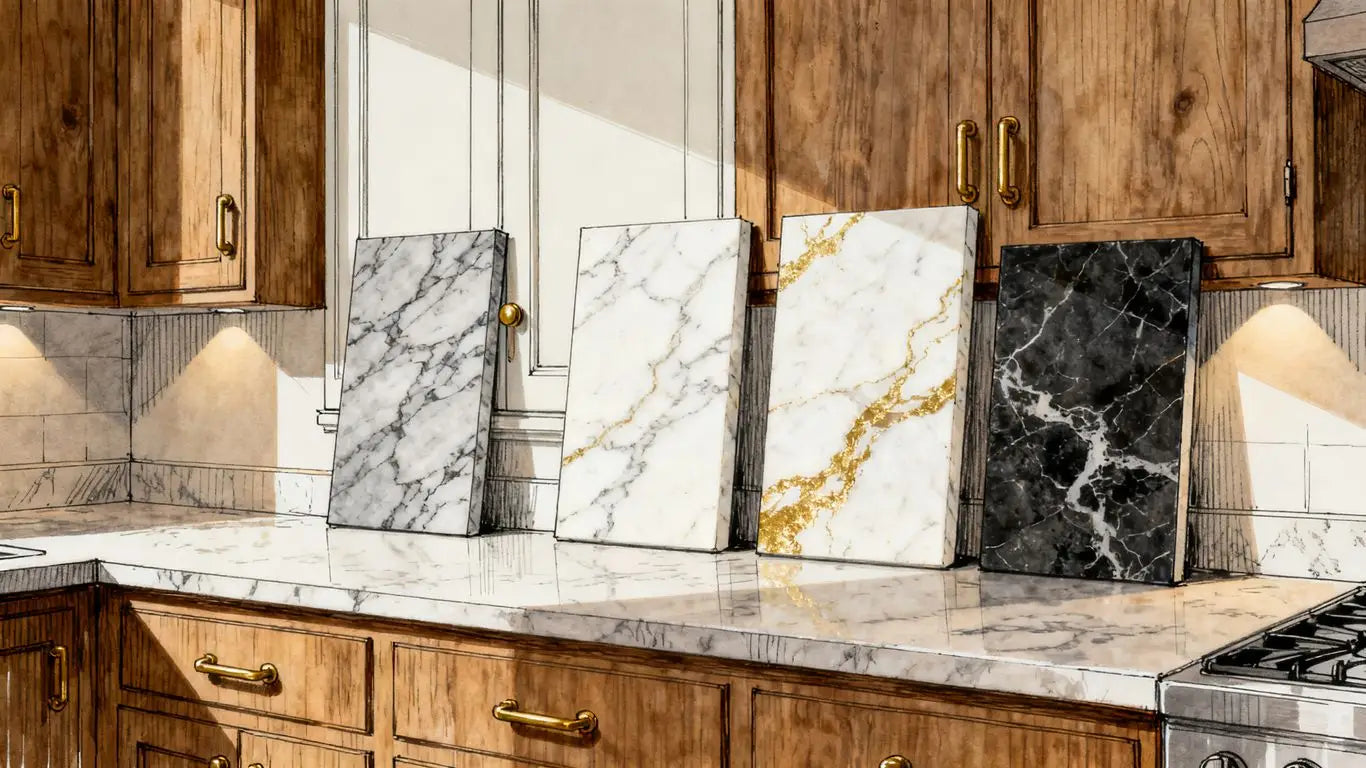
Carrara and Bianco Carrara are dependable choices for a light backsplash with gentle movement. Their white-to-gray palette can brighten the wall without demanding all the attention, making them particularly useful when the kitchen already has patterned flooring or expressive countertops.
A small Carrara mosaic adds texture, while a larger subway tile creates a quieter field. Surfaces Galore describes its Carrara White collection as available in tiles, mosaics, and several finishes, giving homeowners flexibility when matching a layout to the room.
Calacatta Gold and Statuario for dramatic luxury
Calacatta Gold brings a bright background with stronger gold and gray movement, while Statuario is known for a more pronounced, sculptural vein. Either can become the visual anchor behind a range or sink, especially when paired with restrained cabinetry and simple hardware.
Because dramatic marble has more visual activity, order samples and inspect several pieces together. You may prefer to center the boldest vein in a key area or use a smaller mosaic so the pattern feels rich rather than overwhelming.
Thassos White and Dolomite for a bright, clean look
Thassos White is suited to a crisp, luminous palette, while Dolomite can introduce subtle gray or muted movement without losing a clean overall impression. These stones work well in kitchens that rely on light, reflective surfaces and uncluttered lines.
Pure white tile can make grout color especially noticeable. A soft warm white may preserve the brightness while avoiding a stark grid, particularly when the cabinets or counters have creamy undertones.
Emperador, Nero Marquina, and green marble for contrast
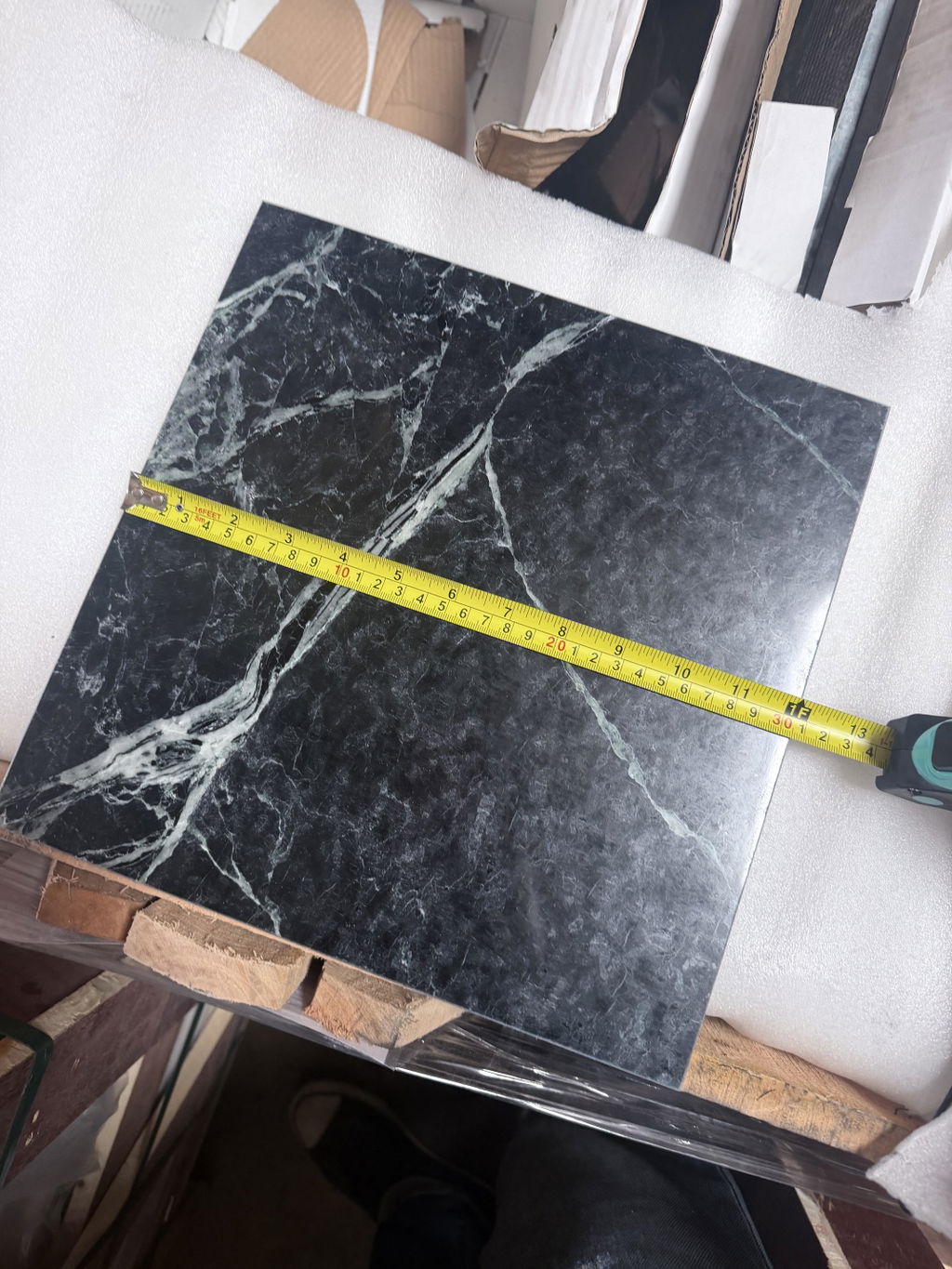
Dark marble creates a stronger frame for pale cabinets and light counters. Emperador brings brown warmth, Nero Marquina offers a black ground with contrasting veining, and green marble can add an unexpected jewel-like note. Use these colors selectively if you want contrast without making the kitchen feel visually heavy.
A dark backsplash can look polished and formal, or relaxed and old-world, depending on the finish and grout. Green marble is especially effective as a compact accent behind open shelves or within a larger neutral installation.
Select a backsplash tile format and pattern
The format determines how the stone’s color and movement are experienced. Long rectangles stretch the wall, small mosaics add rhythm, and geometric layouts can turn a backsplash into the room’s artwork. Begin with the architecture of the kitchen, including outlets, corners, windows, and the range hood.
Pattern should support the room rather than compete with it. A simple cabinet profile can handle a busier mosaic, while ornate doors may call for a quieter tile field. Always view a full sample sheet when possible, since individual pieces rarely reveal the complete effect.
Subway marble tile for a classic, streamlined layout
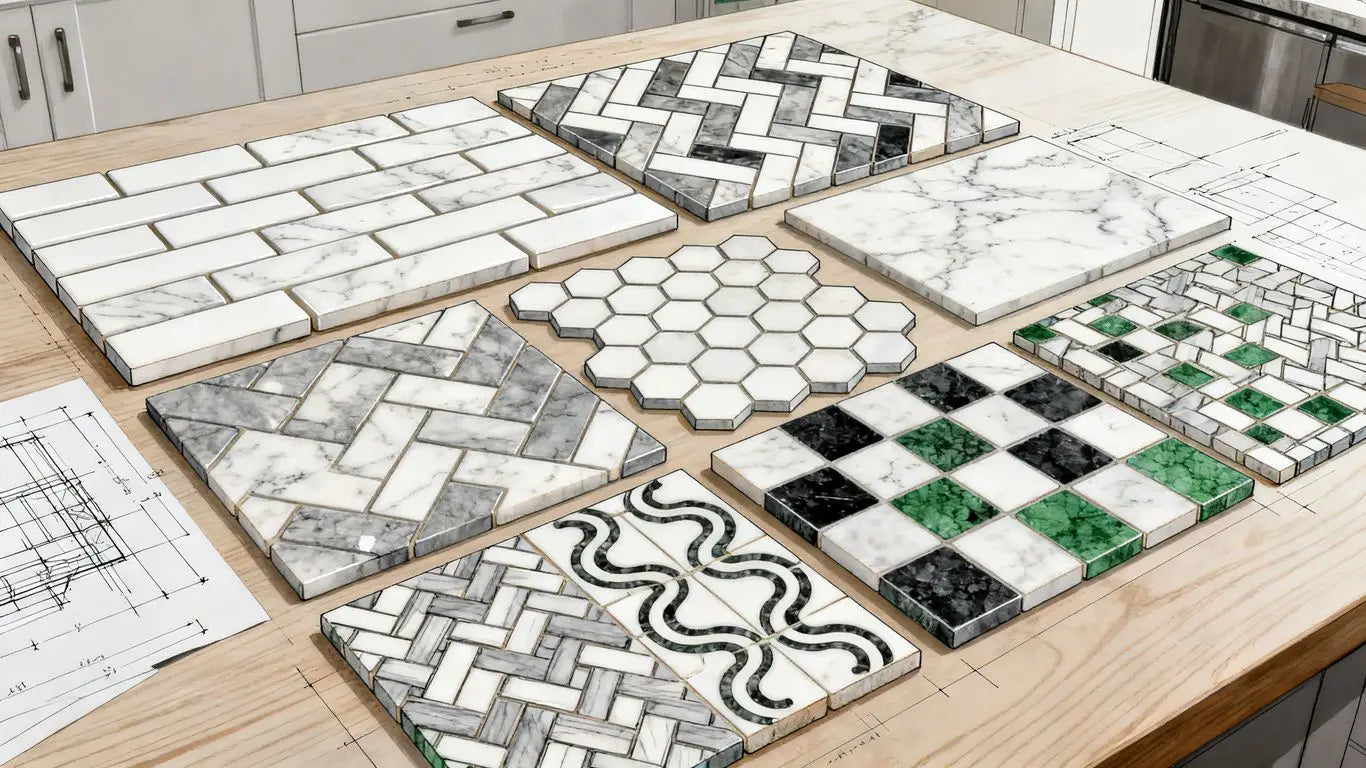
Subway marble tile remains popular because it is easy to read and adaptable to many kitchens. A standard running bond feels familiar, while a stacked layout gives the same rectangle a more contemporary edge. Larger formats reduce visual interruption and can make a compact wall feel more open.
Choose the length and joint width with the scale of the room in mind. A narrow backsplash may benefit from a smaller rectangle, while a spacious wall can carry a longer tile without looking crowded.
Herringbone, hexagon, and basketweave mosaics
Herringbone adds direction and movement, hexagons bring a clean geometric rhythm, and basketweave creates a more tailored traditional feel. Mosaics are useful when you want pattern without cutting individual pieces into a complex design on site.
For a classic directional effect, consider Asian Statuary herringbone. Its polished and honed options illustrate how the same general pattern can shift from reflective and formal to softer and more understated.
Arabesque, picket, and geometric designs for visual impact
Arabesque and picket shapes soften a backsplash with curved or tapered edges, while diamonds and other geometric formats feel more architectural. These patterns look strongest when the surrounding materials are edited carefully.
Let the marble do the work. Simple cabinet hardware, a restrained counter, and a quiet wall color allow an intricate mosaic to remain the focal point. A busier room may be better served by a single decorative band rather than a full patterned wall.
Checkerboard and custom mosaic options for distinctive kitchens
Checkerboard layouts usually rely on confident contrast, such as black and white or green and white marble. They can be used across a backsplash, inside a niche, or as a focused panel behind a cooktop. Custom mosaics offer another route for homeowners who want a truly personal composition.
Surfaces Galore’s checkerboard marble layouts provide a useful reference for thinking about contrast and installation planning. Keep the surrounding surfaces calm so the alternating pattern feels deliberate instead of busy.
Compare marble finishes, sizes, and trim
Finish changes both the appearance and the way a backsplash handles everyday marks. Size affects the number of grout lines, the pace of the pattern, and how easily the tile fits around outlets and corners. Trim then gives the installation a clean stopping point.
It helps to compare these decisions together instead of choosing them separately. A polished small mosaic has a very different presence from a honed large-format tile, even when both use the same marble.
Polished marble for reflective elegance
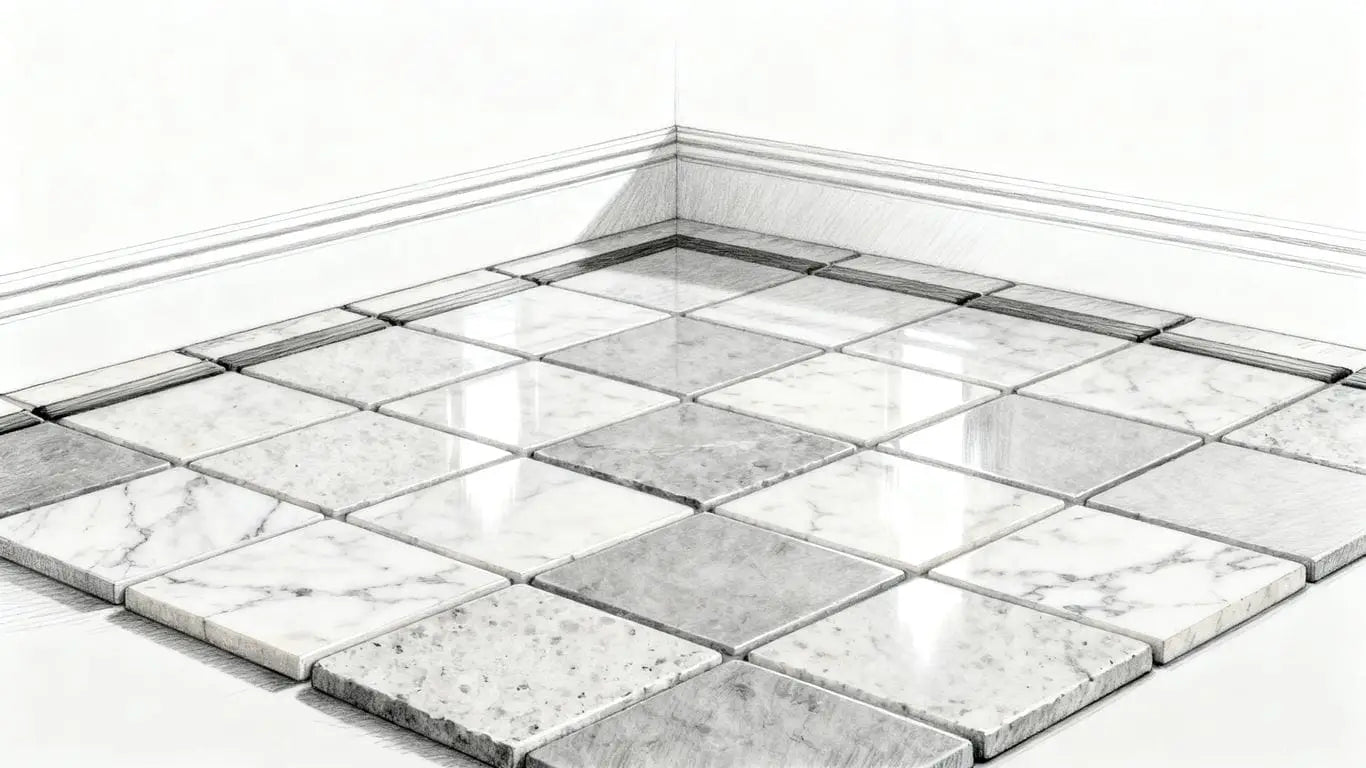
Polished marble has a smooth, reflective surface that catches light and heightens color variation. It can make a backsplash feel formal and luxurious, particularly in a kitchen with under-cabinet lighting or limited daylight.
The shine can also make splashes and fingerprints more visible. If you love a glossy look, plan lighting carefully and keep a stone-safe cleaning routine close at hand.
Honed marble for a softer, contemporary appearance
Honed marble has a matte appearance that feels calm and tactile. It tends to soften strong veining and can make a traditional stone feel more current. Many homeowners also prefer its understated surface because minor etching is less visually obvious than it may be on a polished finish.
Honed tile still needs sealing and sensible cleaning. Its low sheen is a design choice, not a substitute for care, but it can be an excellent fit for a relaxed kitchen with natural wood or painted cabinetry.
Tumbled and textured finishes for an aged look
Tumbled marble has softened edges and an aged appearance that suits cottage, Mediterranean, and rustic interiors. Texture adds shadow and depth, especially when used in a small mosaic or behind open shelving.
Before ordering, check how much variation the finish includes. A heavily textured installation may need more attention around grout lines, while a lightly tumbled tile can provide character without becoming difficult to wipe.
Coordinating moldings, pencil liners, borders, and chair rails
Trim frames the backsplash and helps transition from tile to painted wall, cabinetry, or a countertop. Pencil liners are subtle, borders define a section, and chair rails create a stronger horizontal edge. Select a trim that repeats a color already present in the marble rather than introducing a competing accent.
The following guide can help narrow the visual direction:
| Finish or element | Visual effect | Good design fit | Planning note |
|---|---|---|---|
| Polished tile | Bright and reflective | Formal or glamorous kitchens | Shows surface marks more readily |
| Honed tile | Soft and matte | Contemporary or relaxed rooms | Sample beside the intended grout |
| Tumbled tile | Aged and tactile | Rustic or traditional spaces | Expect softened edges and variation |
| Pencil liner | Slim finished border | Clean transitions and framed panels | Coordinate its color with the field tile |
Use trim sparingly when the marble already has dramatic movement. A narrow liner at the edge or beneath open shelving may be enough to give the installation a finished, architectural quality.
Plan installation and protect your investment
Good design decisions matter, but installation determines whether the finished backsplash looks intentional. Natural stone varies in color, thickness, and veining, so planning should happen before adhesive reaches the wall. Review the tile, map the layout, and make sure the installer understands the desired pattern.
A careful process also protects the money and time invested in premium material. The marble installation guide is a useful reference for inspection, dry-fitting, mortar, grouting, sealing, and cleaning considerations.
Measure the backsplash area and order extra material
Measure each wall separately, subtracting openings only when appropriate, and calculate the total square footage. Add extra material for cuts, corners, breakage, and natural variation. Complex mosaics and diagonal patterns generally require a larger cushion than a simple running-bond layout.
Use the same lot when possible, and do not wait until the installation is underway to discover that a particular tile has sold out. Extra material can also be valuable later if a repair is needed.
Prepare the wall and choose a qualified installer
The wall should be clean, sound, flat, and suitable for the chosen mortar and stone. Remove grease and loose material, address uneven areas, and discuss outlet placement before the tile is set. A qualified installer can also help with cuts around corners, windows, and electrical boxes.
Ask to see examples of previous natural-stone work. Marble rewards precision, particularly where sheets meet, grout joints align, and veining needs to flow across a visible area.
Select grout colors and joint widths
Grout can either blend into the marble or outline every shape. A close color match creates a quieter surface, while contrast makes a herringbone, hexagon, or checkerboard pattern more graphic. Joint width should follow the tile’s recommendations and the installer’s assessment of its variation.
Before final grouting, test a small area or loose sample. This is especially helpful with light marble, where a dark grout can change the entire mood of the backsplash.
Seal marble tile and maintain it properly
Natural marble benefits from an appropriate impregnating sealer, applied according to the product instructions and installer guidance. Sealing does not make the stone indestructible, but it can help reduce staining and give you more time to clean a spill.
A simple routine works best:
- Wipe cooking splashes with a soft, damp cloth.
- Use a pH-neutral cleaner made for natural stone.
- Dry areas where water tends to sit.
- Follow the sealer manufacturer’s schedule for refreshing protection.
These habits keep the surface looking composed without turning maintenance into a daily project. Test any cleaner in an inconspicuous area before using it across the installation.
Avoid acidic cleaners and address spills promptly
Lemon, vinegar, abrasive powders, and harsh chemicals can dull or etch marble. Even a sealed backsplash should be treated with care, especially near a range or food-preparation area. Blot spills rather than spreading them, then clean with a stone-safe product.
A few small marks over time may become part of the stone’s story, but prevention is still worthwhile. If a stain or etch remains, consult a stone-care professional rather than experimenting with aggressive household remedies.
Shop for premium marble tile for your kitchen backsplash
Once the style is clear, shopping becomes much easier. Compare the actual stone, not just a product photograph, and confirm the available format, finish, quantity, and lead time. For homeowners searching to buy marble tiles online USA, dependable samples and clear project guidance can make the process far less uncertain.
Surfaces Galore is an Anaheim, California-based direct importer and nationwide supplier of marble and travertine tiles, mosaics, and moldings. Its collection includes premium natural stone for residential and commercial projects, with options that suit both subtle backsplashes and statement walls.
Review current marble tile, mosaic, and trim collections
Start with the field tile, then look for a matching mosaic or trim rather than mixing too many unrelated materials. Collections may include subway tiles, mosaics, polished and honed options, and decorative borders that help complete the installation.
For a darker accent, the Nero Marquina basketweave offers a patterned direction worth considering. For a brighter, more traditional approach, a Carrara octagon format can introduce contrast without overwhelming the wall.
Request samples to compare color and veining
Samples reveal details that screens cannot: the warmth of the background, the scale of the veins, the amount of shine, and the texture beneath your hand. Place them beside cabinet doors, counter samples, grout cards, and hardware in morning and evening light.
If you are comparing several options, photograph the group from the same distance. This makes it easier to judge which stone supports the kitchen instead of simply standing out in isolation.
Order authentic natural stone from a direct importer
A direct importer can be a practical source when you want authentic natural stone, a broad selection, and help coordinating material for a renovation. Confirm the tile’s finish, dimensions, quantity, and expected availability before placing the order.
Surfaces Galore sources natural stone from quarries and factories in Italy, Turkey, and China, and its materials are available for projects across the United States. Those details make it easier to plan a cohesive order when a backsplash includes field tile, mosaics, and trim.
Get nationwide shipping, bulk pricing, and project support from Surfaces Galore
Surfaces Galore serves homeowners, designers, and architects with nationwide shipping, bulk pricing, and customer support for natural-stone projects. Orders are shipped from its Anaheim warehouse, with insured logistics and professional crating described in the company’s source materials.
For a project quote or material check, request a marble quote after you have confirmed your measurements and preferred finish. A clear quantity list helps the team respond with more useful guidance.
Conclusion
The best marble tile for kitchen backsplash design is the one that fits your light, cabinetry, habits, and sense of style. Compare the stone in person, choose a pattern with the room’s scale in mind, and protect the finished surface with careful installation and gentle maintenance. With those foundations in place, marble can bring quiet elegance or expressive character to the kitchen for many years.
Frequently Asked Questions
Is marble tile a good choice for a kitchen backsplash?
Yes. Marble offers natural veining, varied color, and a refined appearance, but it requires sealing, prompt spill cleanup, and non-acidic cleaning products.
Which marble color is easiest to pair with kitchen cabinets?
Carrara, Bianco Carrara, and soft Dolomite are versatile because their white and gray palettes can work with wood, painted, black, brass, and stainless-steel finishes.
Is polished or honed marble better for a backsplash?
Polished marble reflects more light and feels formal, while honed marble has a softer matte appearance. The better choice depends on your preferred look and tolerance for visible marks.
What marble backsplash pattern works in a small kitchen?
A simple subway layout or a modest-scale mosaic can work well. Choose the pattern according to the wall’s width, outlet locations, and the amount of movement already present elsewhere in the room.
How much extra marble tile should I order?
Order additional material for cuts, corners, breakage, and natural variation. Intricate or diagonal patterns usually need more extra tile than a straightforward running-bond installation.
Does marble backsplash tile need to be sealed?
Most natural marble installations benefit from an appropriate sealer. Follow the product instructions and ask the installer how often the surface should be refreshed.
How should marble backsplash tile be cleaned?
Wipe spills promptly with a soft cloth and use a pH-neutral cleaner formulated for natural stone. Avoid vinegar, lemon-based cleaners, abrasive powders, and harsh chemicals.

Leave a comment