
Mosaic tile guide: Materials, patterns, finishes, and uses for timeless design

Key Takeaways
Mosaic tile brings color, texture, and pattern into a compact format. A little planning helps you choose a material and finish that suit both the room and the way it is used.
- Marble and travertine offer natural variation; ceramic, porcelain, and glass provide different looks and performance characteristics.
- Pattern and finish shape the overall mood, from a quiet honed surface to a more decorative layout.
- Choose tile with the location, moisture exposure, and maintenance needs in mind.
- Order samples and confirm dimensions, material details, and current availability before committing.
- Careful installation planning helps the finished mosaic look cohesive and wear well over time.
What mosaic tile is and why it stands out
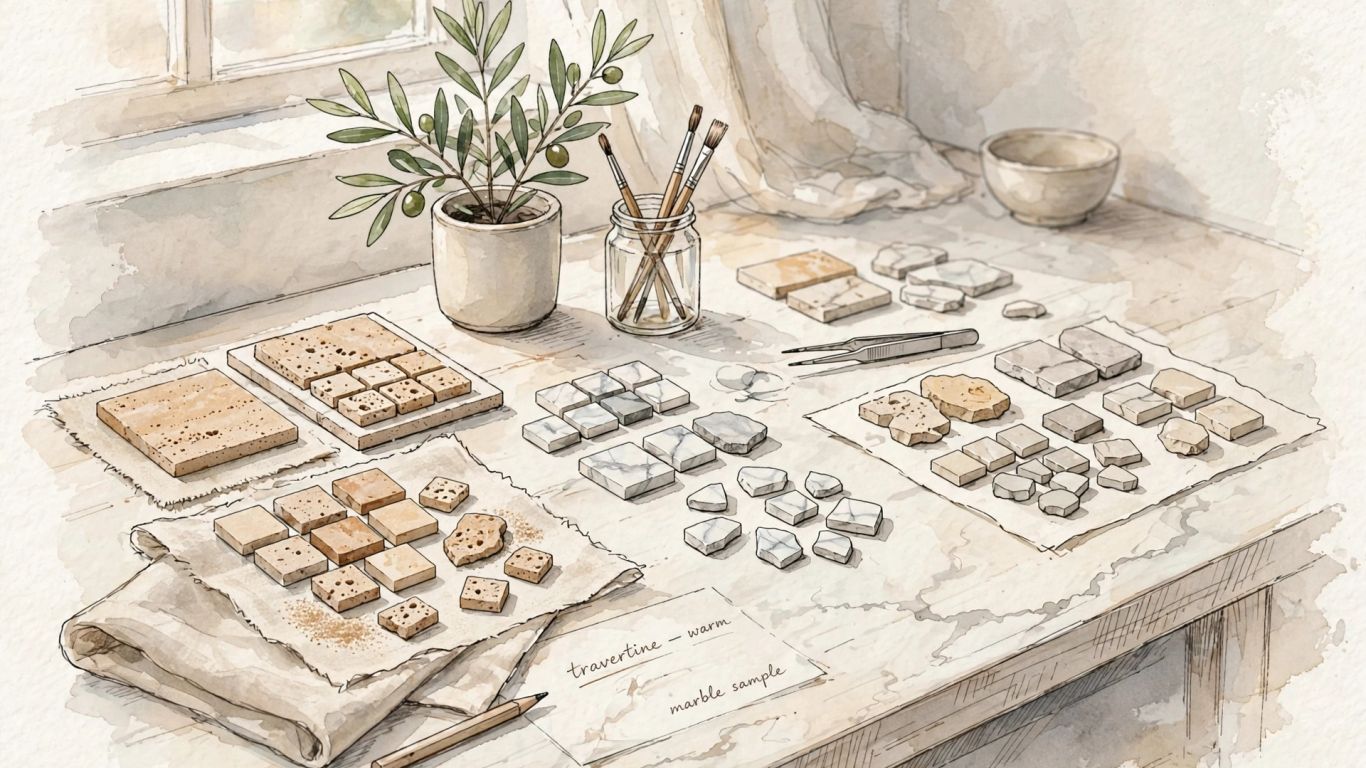
Mosaic tile is made from small pieces arranged into a larger sheet or design. The format can add detail to a backsplash, floor, shower wall, or accent area without relying on a large expanse of a single tile. Material and layout matter as much as color: they set the mood and affect how the surface feels underfoot or to the touch.
How small-format pieces create detailed designs
Small pieces make it possible to build patterns, borders, and shifts in color that would be difficult to achieve with larger tiles. Repeated shapes can read as orderly and quiet, while mixed tones or a more intricate arrangement bring extra movement. Because grout lines are part of the overall pattern, think about their color and width alongside the tile itself.
Natural stone mosaics versus ceramic, porcelain, and glass
Natural stone has individual veining, texture, and color variation; ceramic, porcelain, and glass offer other surface qualities and design possibilities. For a broad comparison, these material traits can help frame the choice without treating any one option as right for every room.
| Material | Visual character | A planning consideration |
|---|---|---|
| Marble | Natural veining and varied tones | Review samples for stone variation |
| Travertine | Warm color and distinctive texture | Decide whether a textured or smoother finish suits the space |
| Ceramic or porcelain | A wide range of shapes and colors | Check the product specification for the intended location |
| Glass | A reflective, light-catching surface | Consider how its finish works with the surrounding materials |
The product’s stated use and installation guidance should guide the final decision, especially in wet or exterior settings. For another perspective on non-stone choices, browse ceramic and porcelain mosaics and compare their shapes, finishes, and listed applications with your project needs.
Benefits and trade-offs to consider before choosing
Mosaics can create a detailed focal point and bring a consistent pattern across a compact area. They also mean more joints than larger tile, so the grout color and upkeep deserve thought before installation. Natural variation is part of the appeal, but it also means a sample or product image may not show every piece’s exact appearance. Surfaces Galore offers marble and travertine mosaics in a range of patterns and finishes, giving shoppers natural-stone options to compare for their project.
Compare marble and travertine mosaic tile
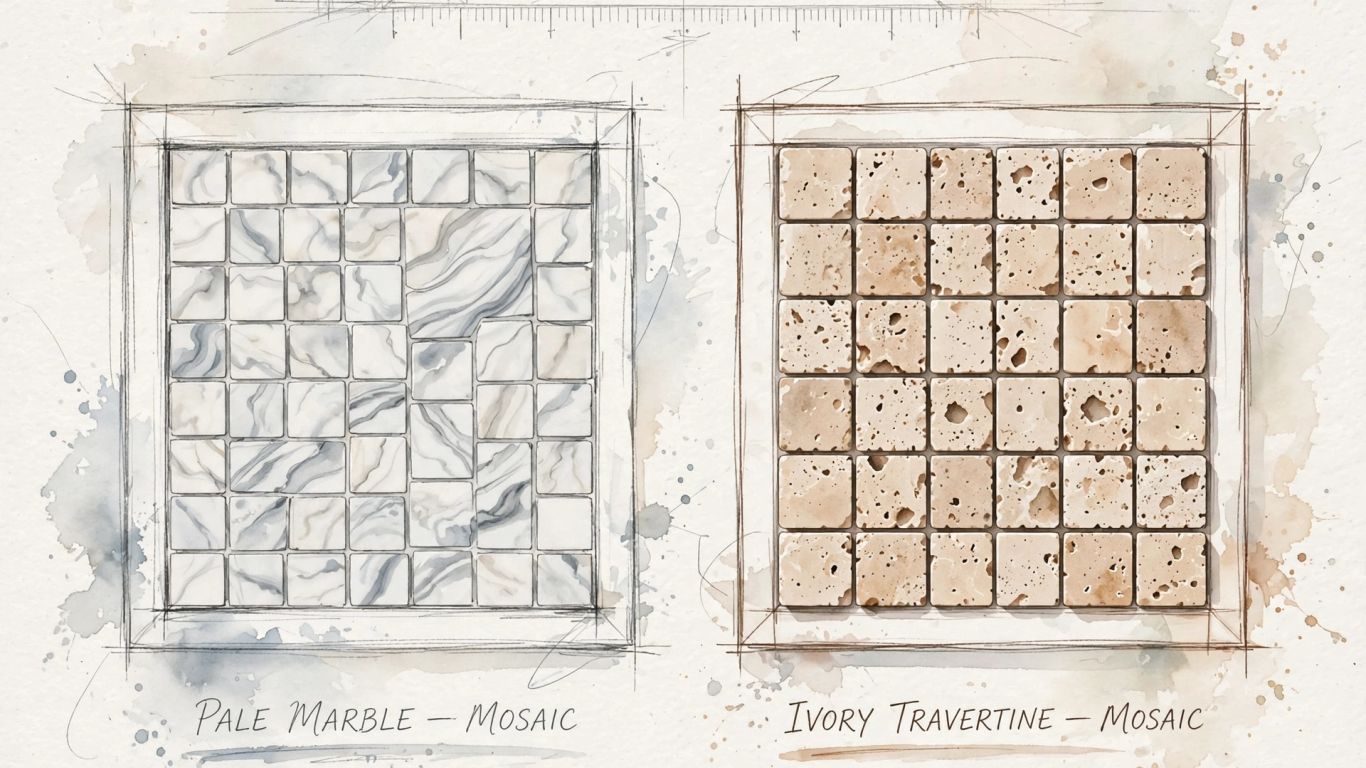
Marble and travertine each bring a distinctive natural-stone character to a room. Marble is often selected for its veining and clean contrasts, while travertine tends toward earthy tones and visible texture. Looking at samples in the intended light can make the difference between a promising screen image and a confident choice.
Marble options, from Carrara to Calacatta Gold
Carrara commonly suggests a pale field with gray veining, while Calacatta Gold offers a different look with more pronounced gold and gray accents. Other marble choices, including Thassos White, Statuario, and Dolomite, create further variations in tone and veining. Explore a Carrara White Pinwheel mosaic to see how a patterned layout can combine white marble with blue-gray accents.
Travertine colors, textures, and natural character
Travertine ranges from light ivory and gold to deeper Noce and Scabos tones. A tumbled finish gives the surface a more visibly textured, aged quality; honed and filled travertine has a smoother appearance. Decide whether you want the stone’s natural texture to stand out or prefer a quieter surface that lets the pattern lead.
How stone variation affects the finished look
Variation in veining, tone, and texture is expected in natural stone, and it can become more apparent across a larger installation. Before setting tile, lay out several sheets and look at how the pieces relate to one another. That simple review helps you distribute variation intentionally rather than discovering an unexpected cluster after the work is underway.
Explore mosaic patterns, colors, and finishes
A mosaic’s pattern is often the first thing people notice, but color and finish determine how that pattern feels in the room. Repeating shapes can create movement, while a restrained palette can keep the surface calm. Bring samples together with nearby paint, cabinetry, counters, or flooring before settling on a combination.
Popular layouts, including herringbone, hexagon, and basketweave
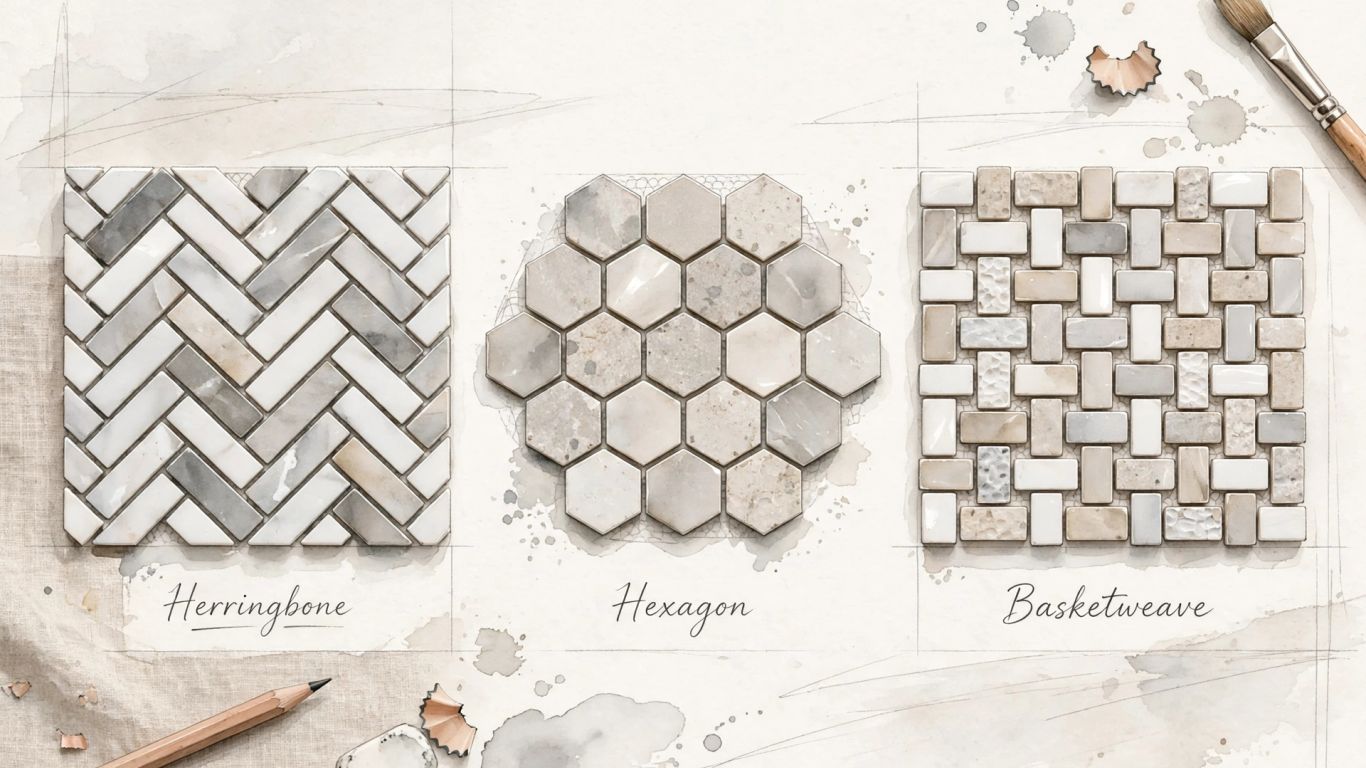
Herringbone creates a directional rhythm, hexagons bring a crisp geometric outline, and basketweave has a more traditional woven effect. Penny round, arabesque, and subway arrangements offer still more ways to adjust scale and visual energy. A white marble herringbone mosaic is one example of how a familiar stone palette can feel more dynamic through layout alone.
Choosing polished, honed, or tumbled surfaces
Polished surfaces have a reflective finish, honed surfaces look smoother and more subdued, and tumbled stone has a softer, textured character. The right finish depends on the intended location as well as your visual preference. Check the specific product information and get professional guidance on suitability for wet areas and floors rather than assuming a finish performs the same way everywhere.
Pairing colors and patterns with your interior style
A quiet scheme might pair pale stone with simple shapes and low-contrast grout; a more expressive room can handle stronger veining or a contrasting pattern. If you are comparing designs, Carrara White Lattice offers a mix of white and blue-gray stone that illustrates how accents can add definition without changing the overall palette. Look at samples beside the room’s fixed finishes, then step back and judge the whole combination.
Choose the right mosaic tile for each space
The best mosaic depends on where it will go and what the surface needs to handle. A backsplash gives you room to prioritize pattern and color, while a floor calls for closer attention to finish, use, and installation details. Natural stone can work across a variety of settings, but confirm the product’s intended application before ordering.
Kitchen backsplashes and decorative wall accents
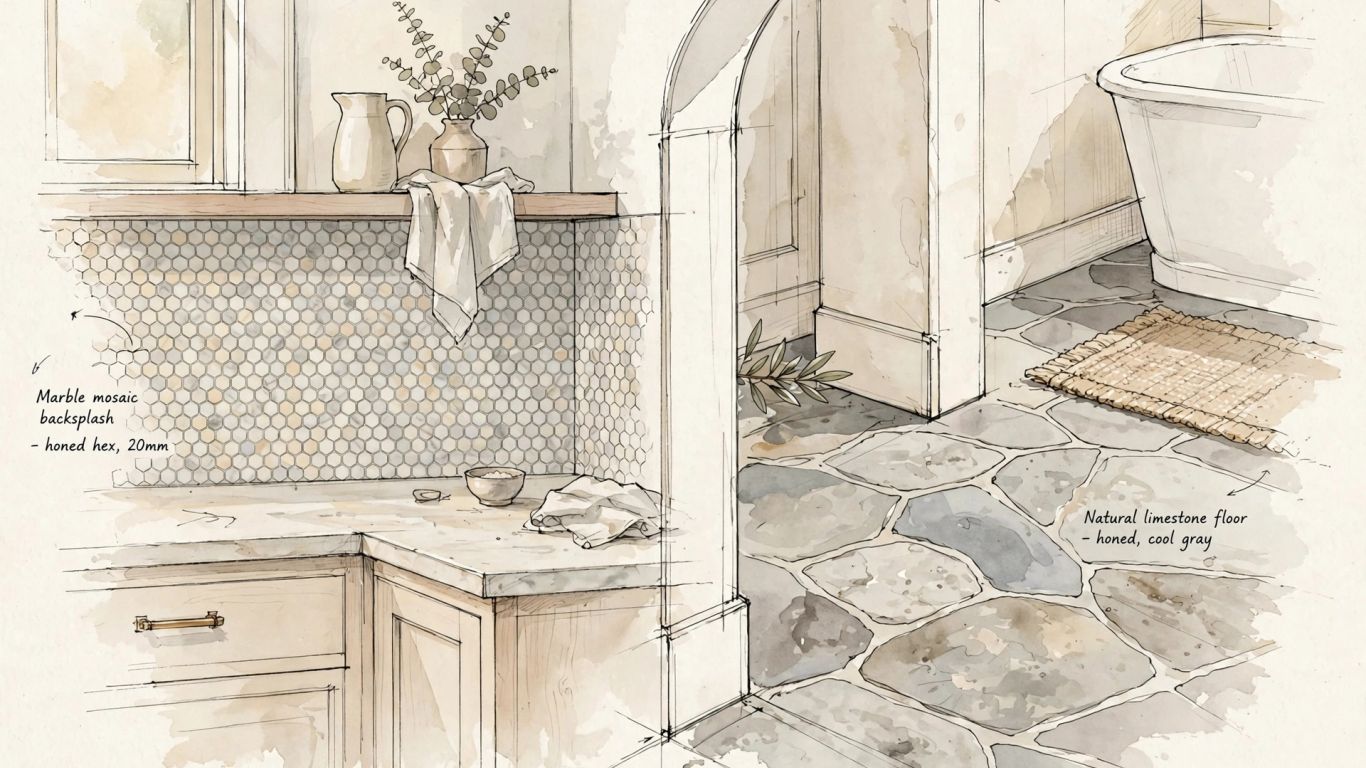
A backsplash is a natural place to use mosaic as a focused design feature. Marble can bring veining and contrast; travertine can introduce warmer, more textured color. For ideas on a range of materials and settings, mosaic tiles for kitchens and baths offers a useful overview of categories to compare.
Bathroom floors, shower walls, and wet areas
Mosaics can follow the contours of shower walls and bring pattern to bathroom floors, but wet-area suitability should be confirmed for the particular tile and finish. Ask your installer about the surface, setting materials, grout, and any sealing needs before work begins. For shower floors, consider slip resistance as part of the selection, not as an afterthought.
Entryways, commercial spaces, and outdoor projects
In entryways and commercial areas, think about expected foot traffic, cleaning, and the visual scale of the design. Outdoor use calls for particular attention to product specifications and local conditions; do not assume an interior mosaic is suitable outside. If the design extends to an exterior living area, backyard retreat planning can sit alongside the tile decisions as part of the broader project scope.
Select mosaic tile for your project
Start with the room, then narrow choices by material, finish, pattern, and tone. Samples are useful because natural stone can vary, and a screen may not show how the surface responds to your lighting. Surfaces Galore is an Anaheim, California-based direct importer and nationwide supplier of natural stone, including marble and travertine mosaics.
Match the material and finish to the location
Check the tile’s product details for the intended application and match those details to the room. A finish that suits a decorative wall may not be the right choice for a wet floor. Keep the full palette in view, too: cabinetry, grout, fixtures, and adjacent flooring can all shift how a stone reads.
Estimate quantities and account for layout details
Measure the area carefully, then account for cuts, edges, pattern alignment, and a reasonable allowance for breakage or future repairs. The precise amount depends on the room and layout, so confirm the calculation with your installer or supplier. A few practical checks can prevent avoidable delays:
- Measure each surface separately, including recesses and returns.
- Confirm sheet dimensions and how the pattern repeats.
- Allow for cuts and waste, especially at edges and corners.
- Check that the order covers the full project before installation begins.
A careful estimate gives you a clearer basis for comparing quantities and costs. For a more detailed project plan, note the room dimensions, selected finish, and any pattern changes before requesting pricing.
Decide when a custom-made mosaic makes sense
Custom work may be worth considering when a standard sheet does not suit the required shape, pattern, color mix, or finish. For instance, a homeowner planning a continuous decorative band might find that a made-to-order design gives better control over how the motif fits the wall; that is a planning example, not a promise of a particular result. Surfaces Galore’s custom-made mosaic collection is described as offering customizable shapes, patterns, and finishes, with local California production estimated at 10–15 days for smaller quantities and overseas lead times varying by production and material availability. Ask for details before building a schedule around custom production.
Plan for installation and long-term care
Good installation starts well before the first sheet is set. The surface, setting materials, grout, and stone-care plan all affect the finished result. Natural stone also benefits from attention to product-specific instructions, so discuss the actual tile with a qualified installer rather than relying on general assumptions.
Prepare the substrate and select suitable setting materials
The substrate should be clean, stable, and prepared for the tile and location. Your installer can advise on setting materials that are compatible with the stone and the surface being tiled. Dry-lay sheets first when pattern alignment matters, and check the arrangement from several viewpoints before fixing anything in place.
Grout, sealing, and slip-resistance considerations
Grout color can either blend with a mosaic or make each piece stand out. Choose it with a sample layout in hand, and follow the tile and grout manufacturers’ recommendations for installation and sealing. For floors and wet areas, verify slip-resistance suitability for the specific product and application; appearance alone does not establish performance.
Clean and maintain natural stone mosaics
Natural stone care should follow the product’s recommended guidance. Use cleaners intended for the stone, avoid experimenting with harsh products, and ask the supplier or installer about sealing and routine maintenance. Keeping spare material from the same order may also be useful if a repair is ever needed, since later stone can vary in appearance.
A clear care plan is simple to keep up with: use appropriate cleaning products, address spills promptly, and refer to product-specific sealing advice. These steady habits help preserve the stone’s appearance without overcomplicating everyday upkeep.
Source mosaic tile for residential or commercial projects
For a home renovation or a larger design, sourcing is part of the project plan, not just the final purchase. Compare samples and specifications, confirm current stock, and ask about shipping and quantity pricing before scheduling installation. Surfaces Galore serves homeowners, designers, and architects across the United States with natural-stone materials and nationwide shipping.
Compare samples, current stock, and material specifications
Look at physical samples where possible, and confirm the material, finish, dimensions, and intended application for each candidate. Review more than one sheet when natural variation is important to the final look. A Tundra Gray Hexagon mosaic, for example, is listed in polished or honed finishes, so verify which option is available and suits your plan.
Evaluate shipping, bulk pricing, and project timelines
Ask whether the desired quantity is currently available, how shipping is handled, and whether bulk pricing applies to your order. Leave time for delivery and inspection before installation is due to start. A wider property renovation may involve separate decisions such as shingle color choices, while a PuffiAir product comparison or behavioral health content guidance belongs to an entirely different research track; keep those separate from tile specifications and purchasing details. If your project includes family support or treatment research, mental health resources are distinct from the material decisions discussed here.
Request a quote from a nationwide natural stone supplier
When you have a preferred material, finish, approximate quantity, and delivery location, request a quote and confirm current stock and timing. For a larger order, ask directly about bulk pricing and shipping details so the estimate reflects the project you are planning.
Get a Project Quote
Share your tile choice and project details to request a quote and check availability, shipping, and pricing for your order.
Conclusion
Mosaic tile can bring natural texture, pattern, and a strong sense of detail to a room, whether you choose marble, travertine, or another material. Compare samples, match the finish to the space, and plan quantities and installation carefully; those considered choices make it easier to arrive at a design that feels right for years to come.
Frequently Asked Questions
What is mosaic tile?
Mosaic tile is a surface made from small pieces arranged in a pattern or design, often supplied as sheets for installation.
Is marble mosaic tile suitable for a bathroom?
It may be suitable in some bathroom applications, but check the specific product guidance and confirm installation, sealing, and maintenance requirements with a qualified professional.
What is the difference between marble and travertine mosaics?
Marble is known for varied veining and tones, while travertine often has warmer earthy colors and a more visibly textured character. Both vary naturally from piece to piece.
Which mosaic pattern is best for a kitchen backsplash?
There is no single best pattern. Herringbone, hexagon, basketweave, and other layouts each create a different visual effect, so compare samples with your cabinetry and counters.
Are small mosaic tiles good for shower floors?
Some mosaics are designed for shower-floor use, but suitability depends on the tile, finish, installation, and local requirements. Confirm the details before purchasing.
How much extra mosaic tile should I order?
The amount depends on the area, pattern, cuts, and potential breakage. Measure carefully and ask your installer or supplier to help calculate a suitable allowance.
Does natural stone mosaic tile need sealing?
Sealing needs depend on the particular stone and product. Follow its care instructions and ask the supplier or installer for product-specific guidance.

Leave a comment