
Travertine tile for bathroom: How to choose, style, and maintain natural stone

Key Takeaways
Travertine brings natural warmth, texture, and lasting character to a bathroom when its finish, layout, and care routine are chosen thoughtfully.
- Match the finish to the bathroom’s moisture and traffic levels.
- Use light, dark, or silver tones to shape the room’s mood.
- Choose mosaics and textured surfaces carefully for wet areas.
- Prepare a flat, stable substrate before installation.
- Seal and clean natural stone regularly to protect its beauty.
Understand why travertine works in bathrooms
Travertine has a soft, mineral-rich appearance that makes a bathroom feel grounded rather than overly polished. It can work across floors, walls, shower surrounds, and accent areas, provided the stone is selected and installed for the space. The best results come from treating travertine as a natural material, with variation and maintenance needs built into the design from the start.
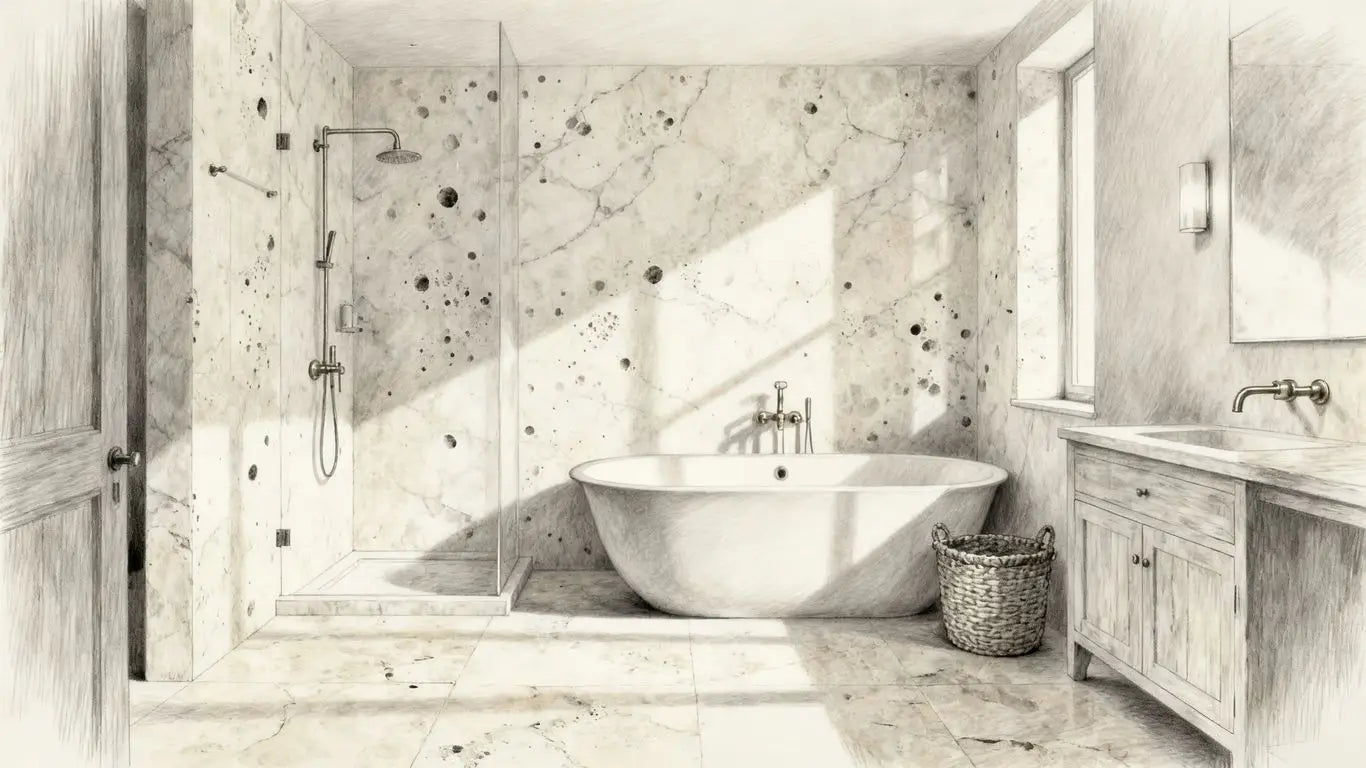
Natural beauty and unique color variation
No two travertine tiles look exactly alike. Small shifts in tone, open pores, veining, and mineral movement give the surface an organic quality that manufactured materials often imitate but cannot fully duplicate. Ivory may lean creamy, beige may carry gold, and darker pieces can introduce a quiet, smoky contrast.
A dry layout is useful before installation because it lets you distribute those variations intentionally. Mix tiles from different cartons rather than placing similar pieces together, and set aside anything with cracks, chips, or an appearance that does not suit the finished room. For inspiration, these travertine tile bathroom ideas show how different tones and textures can change the character of a renovation.
Durability for floors, walls, and shower surrounds
Travertine is a form of limestone suited to flooring and wall applications, including bathroom floors and shower walls. Its natural durability makes it appealing for everyday spaces, but durability does not mean indestructibility. The stone still benefits from a sound substrate, compatible setting materials, careful grout work, and protection from staining.
On a floor, consider how the stone will feel under bare feet and how much water the room receives. On a wall or surround, the visual scale matters just as much as performance. Larger pieces can feel calm and architectural, while smaller tiles add rhythm and help accommodate corners.
Warm, earthy tones for spa-inspired designs
Travertine’s beige, cream, gold, brown, and gray notes create an easy foundation for a restful bathroom. Pair a warm floor with pale painted walls and brushed metal for a relaxed retreat, or use deeper stone around a vanity to create a more intimate mood. Natural wood, woven accents, and soft white towels reinforce the same quiet palette.
Warmth without visual noise is one of travertine’s strongest design qualities. Even when the surface contains noticeable movement, its earthy range usually keeps the room cohesive. A restrained lighting plan, such as layered vanity and ceiling light, helps reveal the stone’s texture without making it feel busy.
Key considerations for moisture and daily use
Travertine is porous and needs sealing, especially in a bathroom where water, soap, cosmetics, and humidity are part of everyday life. Sealing does not make the stone maintenance-free, but it helps protect against stains and moisture when applied correctly. Ventilation also matters: an effective fan and adequate drying time can reduce the amount of lingering moisture.
Before choosing a tile, ask how it will be used, how often the bathroom is cleaned, and whether the household prefers a naturally varied surface or a more uniform appearance. Those answers will guide the finish, grout, layout, and care plan more reliably than color alone.
Choose the right travertine finish
Finish changes more than appearance. It affects the way light moves across the stone, how comfortable it feels beneath the feet, and how much texture the room presents at close range. Compare samples in the bathroom’s actual lighting, because a finish that looks subtle in a showroom may appear much more pronounced beside glass or bright fixtures.
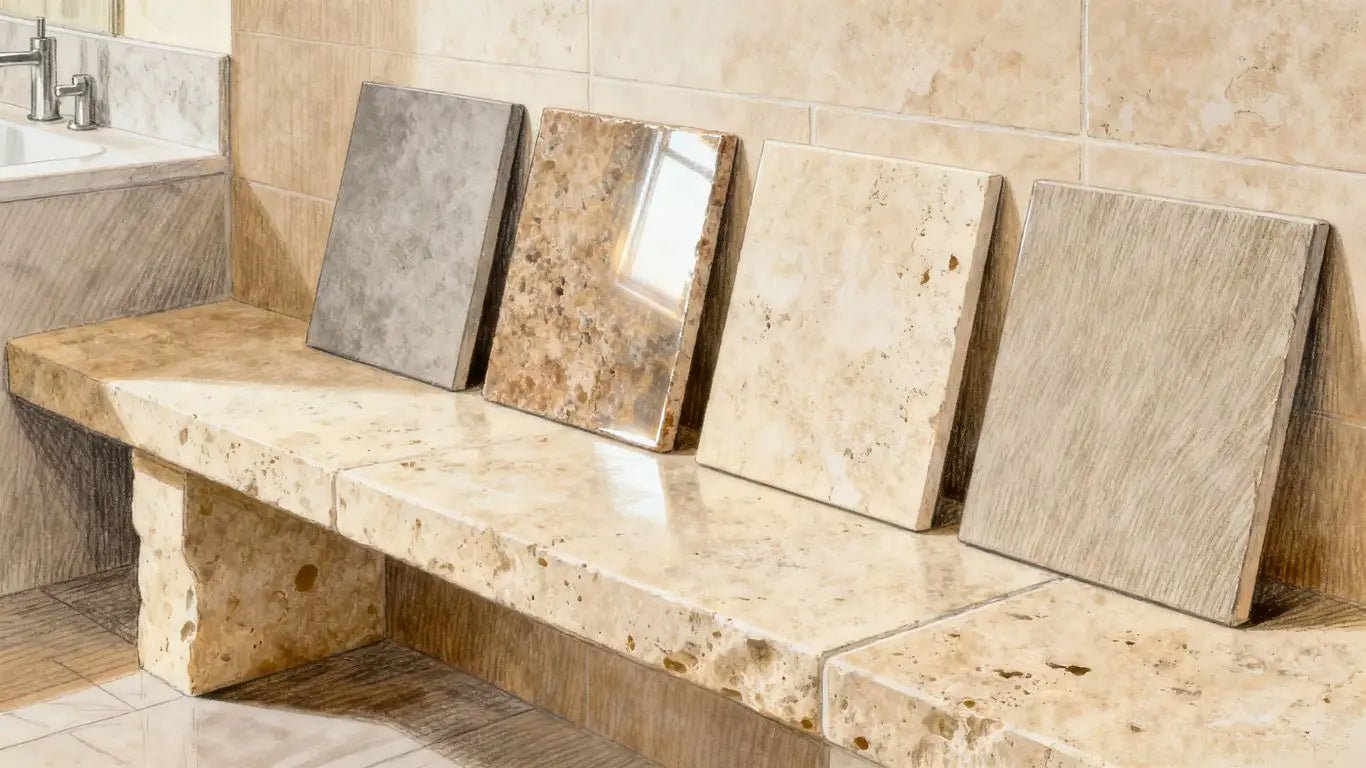
Honed and filled travertine for a smooth matte look
Honed and filled travertine has a smooth, matte surface with the stone’s pores filled for a more even appearance. It works especially well in contemporary, transitional, and minimalist bathrooms because it feels refined without the reflection of a glossy finish. The surface also lets the color variation remain visible in a softened way.
For a floor, confirm that the specific product is appropriate for the intended wet area and discuss slip performance with the installer. A honed finish can also make grout color more apparent, so sample the tile and grout together rather than separately. The filled honed travertine tile is a useful reference for this understated look.
Tumbled travertine for rustic texture and character
Tumbled travertine has softened edges and a weathered, textured appearance. It suits Mediterranean, rustic, cottage, and old-world bathrooms where a little irregularity is part of the charm. Used as a border, niche accent, or shower-wall feature, it can add depth without covering every surface in texture.
Because tumbled edges and surface variation create more visual activity, balance them with simple fixtures and quiet grout. A compact tumbled tile can also help a small bathroom feel deliberately detailed rather than unfinished. The tumbled travertine tile offers a natural direction for floors, walls, and accent areas.
Polished travertine for a more luxurious appearance
Polished travertine has a reflective surface that deepens color and brings out movement in the stone. It can make a powder room or feature wall feel especially elegant, particularly when paired with sculptural lighting and restrained hardware. In a wet-floor setting, however, confirm that the product and installation plan provide suitable traction.
Polish is often most effective when used selectively. A polished wall behind a vanity or tub can become a focal point, while a quieter honed floor keeps the room comfortable and balanced. Always view the actual tile under the lighting conditions planned for the bathroom.
Brushed and textured finishes for added visual interest
Brushed, chiseled, and other textured finishes give travertine a tactile surface and a slightly more relaxed personality. They can highlight the stone’s natural pores and variation, making them attractive for feature walls, borders, and carefully selected floor applications. Texture also changes how grout, dust, and water marks appear, so the cleaning routine should be considered before committing.
Surfaces Galore lists polished, honed, brushed, chiseled, and tumbled options across its travertine collection. Compare the sample edges and surface feel, not just the product photograph. That small step can prevent an expensive mismatch between the intended atmosphere and the finished room.
Select the best travertine color and style
Color sets the bathroom’s emotional temperature. Light travertine opens the room, brown tones create depth, and silver-gray varieties offer a cooler contemporary direction. Since natural stone varies from piece to piece, a sample or small group of tiles is the safest way to judge the overall blend.
Ivory and light travertine for bright bathrooms
Ivory and light travertine reflect more available light and can make a compact bathroom feel spacious. Their creamy undertones are softer than stark white, which helps the room feel comfortable and layered. Light stone pairs naturally with white cabinetry, pale oak, brushed nickel, warm brass, and muted green accents.
Keep the palette from becoming flat by introducing contrast through grout, hardware, or a darker vanity. A subtle mosaic in the shower niche can add detail without interrupting the bright foundation. Light tiles also reward careful installation, since dark setting materials or uneven grout can be more visible through pale stone.
Noce and walnut travertine for rich contrast
Noce and walnut travertine bring warm brown tones and a stronger sense of enclosure. They can ground a large bathroom, frame a freestanding tub, or create a dramatic vanity wall. Use them with cream paint, warm metals, and generous lighting so the room feels rich rather than heavy.
Dark stone is particularly effective when used as a controlled accent. A walnut shower wall against a lighter floor can create a clear focal point, while a full dark installation benefits from simple lines and open storage. Let the natural variation do the decorating instead of adding too many competing patterns.
Silver travertine for contemporary spaces
Silver travertine combines silver-gray tones with natural veining, making it a strong fit for modern bathrooms. It works with matte black, stainless steel, white oak, and cool white surfaces, but it can also be warmed with beige textiles or wood details. The result is contemporary without feeling sterile.
A silver floor can establish a calm, architectural base, while a linear wall application may draw attention to the room’s height. Keep samples beside the vanity and shower hardware because gray stone can shift noticeably between daylight and artificial light. The Silver Travertine collection provides a helpful view of the color range and available formats.
Scabos and mixed travertine for distinctive patterns
Scabos and mixed travertine bring more pronounced variation, often combining gold, rust, cream, and brown notes. They suit homeowners who want the bathroom to feel collected and individual rather than perfectly uniform. Use this style where the stone can be appreciated, such as a backsplash, shower niche, or feature wall.
When the tile itself is expressive, simplify the rest of the room. Plain cabinetry, quiet walls, and one consistent metal finish allow the stone to remain the visual focus. A small sample board with the proposed grout and fixtures can reveal whether the colors feel harmonious before installation begins.
Plan bathroom applications and tile layouts
The same travertine can feel entirely different depending on where it is installed. Floors need an appropriate surface and dependable drainage; walls offer more freedom with scale and finish. Layout matters too, because grout lines, cuts, and pattern direction can either make a bathroom feel carefully designed or visually unsettled.
Slip-resistant options for bathroom floors
Bathroom floors deserve special attention because water and bare feet create a different performance requirement from a dry wall. Textured, tumbled, or otherwise suitable slip-resistant options may be preferable, but the exact product should be reviewed with the installer for the intended application. Smaller formats can also create more grout joints, which may contribute to underfoot traction.
Before ordering, confirm tile dimensions, thickness, finish, and recommended use. A simple floor plan helps estimate cuts and keeps the chosen pattern realistic. Do not select a floor solely because it looks attractive in a staged photograph.
Travertine mosaics for shower floors and niches
Mosaics are practical design tools in wet areas. Their smaller pieces can follow the slope of a shower floor more easily than large tiles, while sheets of mosaic can add a concentrated band of color or texture inside a niche. Herringbone, hexagon, basketweave, subway, penny round, and brick formats each create a different rhythm.
These travertine mosaics can bring detail to a shower wall or accent area without requiring a full-room commitment. Inspect the sheet layout before setting it, and plan how the joints will align at corners and transitions. The grout is part of the pattern, not merely a gap-filling afterthought.
Large-format tiles for walls and open spaces
Large-format travertine can reduce visual interruptions and make an open bathroom feel more serene. It is especially effective on a feature wall, around a tub, or in a spacious shower where the stone’s movement can be seen across a broader field. The installer must account for weight, handling, substrate flatness, and lippage control.
A larger tile is not automatically easier or more economical. Measure the room carefully, identify plumbing penetrations, and dry-lay the design where possible. For a warm, expansive look, the 12x24 travertine tile shows how a larger format can support both classic and modern interiors.
Versailles, subway, herringbone, and geometric patterns
Pattern gives the bathroom a sense of direction. Versailles, also called a French pattern, feels established and architectural; subway tile is familiar and versatile; herringbone adds movement; geometric mosaics create a more decorative focal point. Choose one primary pattern and use secondary details sparingly.
A few practical decisions make patterns easier to live with:
- Center the layout on the strongest architectural feature.
- Dry-lay enough material to check color distribution and cuts.
- Plan grout joints before ordering trim and edge pieces.
- Include a reasonable waste allowance for cuts and natural variation.
After the layout is dry, step back and view it from the bathroom doorway. That perspective often reveals whether the pattern feels balanced. A Versailles pattern set can bring a classic four-piece rhythm to a floor when the room has enough visual space for it.
Coordinate travertine with bathroom features
Travertine is forgiving because its earthy range can connect several materials at once. Still, coordination works best when one element leads and the others support it. Begin with the stone, then choose cabinetry, grout, trim, and accessories around its dominant undertones.
Pairing natural stone with vanities and countertops
A light travertine floor can support a painted vanity, while Noce or walnut tones can pair beautifully with pale cabinetry. If the vanity top is also stone, look for a relationship rather than an exact match. Similar warmth or a shared undertone is usually more natural than forcing identical veining.
Leave room for visual breathing space. A busy countertop, intricate mosaic, and highly varied floor may compete in a small bathroom. One strong surface and two quiet supporting materials usually create a more polished result.
Choosing grout colors and joint widths
Grout can soften the tile field or outline every individual piece. A close color match creates a continuous look, while a contrasting grout makes the pattern more graphic. Joint width should follow the tile’s specifications and the installer’s recommendations, especially when natural variation or softened edges are involved.
Test grout on a sample board and let it cure before deciding. Wet grout can look different from its final color, and a strong contrast may be more dramatic than expected across a whole floor. The right choice supports the stone instead of competing with it.
Matching trim, moldings, borders, and listellos
Trim gives transitions a finished edge and can frame a niche, mirror, or shower wall. Choose pieces that relate to the field tile in color and finish, then decide whether they should blend quietly or create a deliberate border. Natural stone moldings are especially useful when a bathroom needs a traditional architectural detail.
Measure corners and termination points before ordering. A beautiful listello placed where it ends awkwardly can distract from the entire installation. Keep the trim plan simple enough that the room still feels restful.
Combining travertine with glass, ceramic, or marble
Glass can add brightness and reflect light against a matte stone surface. Ceramic can provide a clean, controlled field beside irregular travertine, while marble can introduce a related natural-stone note. The key is to coordinate undertones, thicknesses, edges, and movement rather than choosing materials in isolation.
Use a physical sample board with the actual metals and paint colors whenever possible. This makes scale and contrast easier to judge. A mixed-material bathroom feels intentional when one surface clearly leads and the others repeat a color, line, or texture from it.
Prepare for installation and long-term care
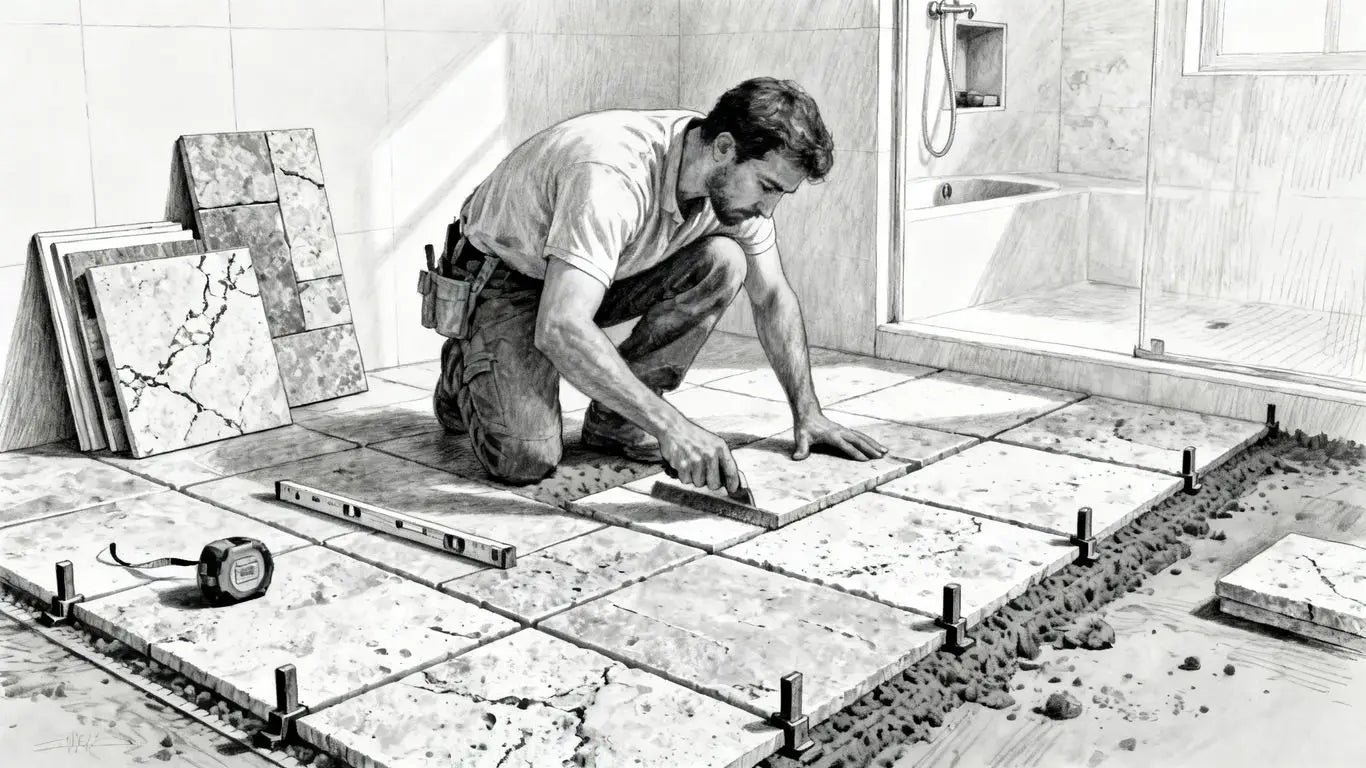
Good preparation protects both the appearance and the investment. Travertine needs a clean, stable, level substrate, compatible installation materials, and a maintenance plan that respects its porous nature. The installation guide for travertine tile preparation is a useful companion when reviewing substrate work, dry-fitting, grouting, and sealing.
Evaluating the subfloor and shower substrate
The substrate should be clean, dry, sound, flat, and stable before tile is set. Natural stone can crack or develop uneven edges when installed over movement, flex, dust, old adhesive, or significant low spots. Shower areas require a properly prepared waterproofing and drainage system, not simply a stone surface placed over an unsuitable wall.
Review the floor structure and wall backing with a qualified installer. Large or heavy tiles may need additional handling and leveling measures, while corners and plumbing penetrations should be planned before mortar is spread. Fixing the foundation first is cheaper than repairing a finished shower.
Sealing travertine before and after installation
Sealing helps protect travertine from stains and moisture, but the product, timing, and number of applications should follow the sealer manufacturer’s instructions. Tiles may be sealed before grouting when appropriate, then sealed again after grout has cured. Always test the sealer on a spare tile because it can change the stone’s color or sheen.
The installer should also confirm that mortar, grout, and other setting materials are rated for natural stone. Light or translucent materials may require white thinset to reduce the chance of discoloration. Allow curing times to be met before exposing the surface to regular bathroom use.
Cleaning products and routines for natural stone
Routine care is straightforward when it is consistent. Wipe splashes from vanities and walls, remove standing water from floors, and use a cleaner intended for natural stone. Avoid acidic or abrasive products that can dull, etch, or scratch the surface.
A practical care routine includes:
- Wiping soap and water from shower surfaces after use.
- Cleaning with a pH-neutral stone cleaner as needed.
- Drying corners, ledges, and grout lines where water collects.
- Checking the sealer periodically instead of waiting for a stain.
These habits take little time and help preserve the finish between professional inspections or resealing. They also make it easier to notice a loose tile, damaged grout, or moisture issue early.
Preventing stains, etching, and moisture damage
Keep cosmetics, hair products, and colored containers from sitting directly on unprotected stone. Blot spills rather than rubbing them across the surface, and do not use vinegar, lemon-based cleaners, or harsh scouring powders. Persistent darkening, loose grout, or a musty smell may signal moisture beyond ordinary surface care and should be evaluated promptly.
Natural variation is part of travertine’s appeal, but preventable damage is not. A sensible cleaning routine, adequate ventilation, correctly installed waterproofing, and timely resealing give the material the best chance to age gracefully.
Order premium travertine tile from Surfaces Galore
Choosing the stone is easier when the tile, sample, quantity, and installation plan are considered together. Surfaces Galore is an Anaheim, California–based direct importer and nationwide supplier of premium natural stone, including travertine tiles, mosaics, and moldings. Homeowners, designers, and architects can compare styles while planning a project with the practical details in view.
Comparing tile sizes, finishes, mosaics, and samples
Start with the room’s application, then compare size and finish. A honed 12-by-12 tile may create a quiet field, a tumbled 3-by-6 tile may feel more traditional, and a mosaic can add traction and detail in a shower area. Samples reveal the real surface texture and undertone far better than a screen.
Request samples before committing to a full order, and place them beside the vanity, paint, grout, and hardware. This is also the time to check whether the tile’s thickness and edge treatment work with adjacent materials. Order tile samples before finalizing a large bathroom purchase.
Reviewing current stock and project quantities
Measure each installation area separately and record doors, niches, plumbing openings, and transitions. Add material for cuts, breakage, and natural variation, then confirm that all cartons come from compatible stock when color consistency matters. Current availability can affect the schedule, so review stock before the design is locked.
Keep a few extra pieces for future repairs, particularly for a distinctive color or pattern. Surfaces Galore’s range includes tiles, mosaics, slabs, and related natural-stone formats, allowing a bathroom plan to be coordinated rather than assembled piecemeal.
Requesting quotes and bulk pricing
A useful quote includes the product name, size, finish, quantity, delivery location, and desired timing. Include photos or a simple drawing when the project involves several patterns or trim pieces. Bulk pricing may be relevant for larger residential, designer, or commercial orders, so ask directly rather than estimating from a single-carton price.
For a focused comparison, request a project quote with the quantities and finishes you are considering. A clear request makes it easier to review material costs, shipping, samples, and any needed accessories together.
Nationwide shipping from Anaheim, California
Surfaces Galore serves customers across the United States from Anaheim, California, making nationwide delivery a practical option for bathroom renovations outside Southern California. Confirm delivery access, timing, and inspection procedures before the shipment arrives. Natural stone should be checked promptly for transit damage, cracks, chips, and quantity.
Plan a clean, accessible delivery area and avoid scheduling installation before the material has been inspected. With the right tile, a realistic quantity, and a prepared substrate, the path from sample to finished bathroom becomes much more predictable.
Bring Your Bathroom Vision Home
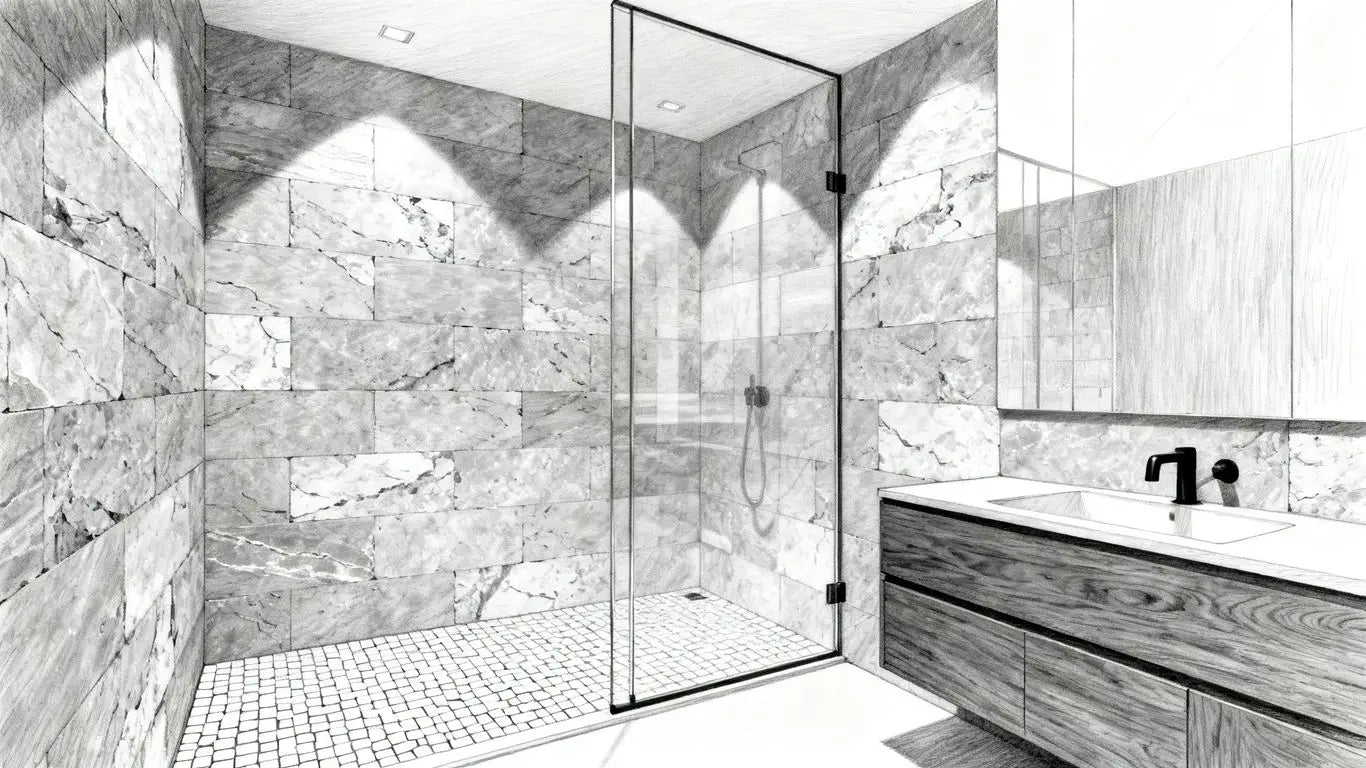
Choose a finish that suits the room, a color that feels natural with your existing features, and a layout that respects the stone’s character. Then request samples, confirm quantities, and move forward with a qualified installation plan for a bathroom designed to look better with time.
Conclusion
Travertine tile for bathroom design offers warmth, texture, and enduring natural character, but its success depends on thoughtful selection and care. When finish, color, layout, substrate, sealing, and cleaning work together, travertine can turn an ordinary bathroom into a calm and deeply personal space.
Frequently Asked Questions
Is travertine tile suitable for a bathroom?
Yes. Travertine can be used for bathroom floors, walls, shower surrounds, niches, and accent areas when the specific finish is appropriate and the material is installed over a properly prepared substrate.
Does travertine need to be sealed?
Yes. Travertine is porous, so sealing helps protect it from stains and moisture. Follow the sealer manufacturer’s instructions and establish a resealing schedule based on use and product guidance.
Which travertine finish is best for a shower floor?
A suitable textured or slip-resistant finish is generally preferable for a shower floor, but the exact product should be confirmed for wet-area use. Smaller mosaics may also help accommodate slope and drainage.
What color travertine makes a bathroom look larger?
Ivory, cream, and other light travertine tones can reflect more light and make a compact bathroom feel more open. Use grout and fixtures for contrast so the room does not become visually flat.
Can polished travertine be used on a bathroom floor?
It may be appropriate in some applications, but polished surfaces can require extra consideration in areas exposed to water. Confirm traction, product recommendations, and installation requirements before using polished stone underfoot.
How should travertine be cleaned?
Use a pH-neutral cleaner made for natural stone and wipe away standing water, soap, and spills. Avoid acidic, abrasive, or harsh cleaning products that may etch or damage the surface.
How much extra travertine should be ordered?
The amount depends on the room’s measurements, layout, tile size, cuts, and natural variation. Your installer or supplier can help calculate a suitable waste allowance, and keeping a few spare pieces is wise for future repairs.

Leave a comment