

What Marble Is Used for in Homes, Architecture, and Industry

Marble’s main uses fall into five categories: residential finishes, architecture and monuments, sculpture, industrial and agricultural products, and decorative accents. Designers choose it for one core reason: its calcite structure takes a polish no other common stone matches, and light moves through it in a way that makes surfaces look alive rather than flat.
- Home finishes: floors, countertops, bathrooms, stairs
- Architecture: facades, columns, lobbies, monuments
- Sculpture: statuary and fine art
- Industry and agriculture: fillers, soil treatment, pharmaceuticals
- Accents: mosaics, trim, mantels
Each application depends on a different set of the stone’s physical traits, which is worth understanding before you pick a slab.
Key Takeaways
Marble earns its place across five distinct fields because its calcite structure delivers a polish, translucency, and workability that few other stones can combine.
| Point | Details |
|---|---|
| Five core uses | Marble serves residential finishes, architecture, sculpture, industrial products, and decorative accents. |
| Translucency drives sculpture demand | Light scatters 0.5 to 1.5 inches beneath the surface, giving carved marble a lifelike glow. |
| Match grade to room | Dense, low-porosity marble suits floors and kitchens; fine statuary grades suit carving and accents. |
| Sealing is non-negotiable | Reseal every 6 to 12 months and avoid acidic cleaners to prevent etching. |
| Surfacesgalore sources direct | Surfacesgalore imports marble, limestone, and travertine and ships nationwide with sample and bulk quote options. |
Table of Contents
- What Makes Marble Suitable for So Many Uses?
- Where Do Homeowners Actually Use Marble?
- Why Do Architects Choose Marble for Public Buildings?
- Why Do Sculptors Prefer Marble Over Other Stone?
- What Industrial and Agricultural Products Come From Marble?
- How Do You Choose and Maintain Marble the Right Way?
- Where Can You Learn More About Marble Selection?
- What the Research Actually Tells You About Marble
- Ready to Choose Marble for Your Own Project?
- Sources
- FAQ
What Makes Marble Suitable for So Many Uses?
Marble starts as limestone, then gets cooked and compressed underground until its calcium carbonate (CaCO3) recrystallizes into interlocking calcite grains. That recrystallization is what separates marble from ordinary limestone: the crystals fuse tightly enough to take a mirror polish, and their arrangement determines nearly everything about where a given block ends up being used.
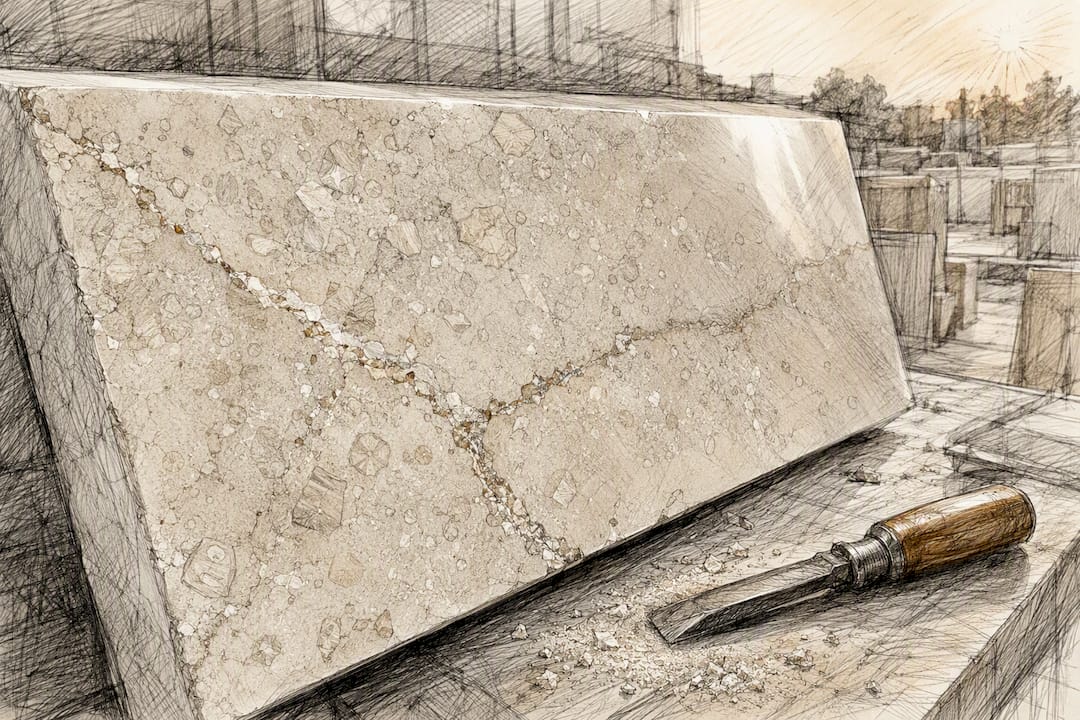
Grain size and purity split marble into two practical camps. Statuary marble is fine grained and close to pure white, prized by sculptors. Architectural marble runs coarser and often carries mineral veining that gives it color, better suited to floors and walls than fine detail work.
Translucency is marble’s signature trait. Light penetrates roughly 0.5 to 1.5 inches into the stone before scattering back to the surface, which is why carved marble skin looks like it has depth instead of sitting flat like painted plaster.
That same structure has a downside. Marble is slightly porous and reacts to acid, so lemon juice or vinegar left on a countertop can etch a dull spot in minutes. Abrasion resistance also varies by how tightly the calcite grains are bonded, which is why not every marble belongs on a kitchen floor.
- Composition: calcite, metamorphic origin
- Grain: fine (statuary) vs. coarse (architectural)
- Light behavior: subsurface scattering, 0.5 to 1.5 inches deep
- Weakness: porous surface, sensitive to acidic substances
Where Do Homeowners Actually Use Marble?
Most homeowners meet marble in one of four rooms, and the right variety changes depending on foot traffic, moisture, and how much wear the surface takes daily.
- Floors and stairs. Denser, tighter grained marbles like Carrara or Thassos hold up to daily foot traffic better than softer, more porous varieties. Stair treads see concentrated wear at the nose, so a honed finish there resists slipping better than a high polish.
- Countertops and backsplashes. A honed finish hides etching better than a polished one, since the matte surface doesn’t rely on shine to look good. Either way, sealing before first use is non-negotiable, and resealing on a schedule keeps the surface from absorbing oil and wine stains.
- Bathrooms and showers. Wet areas call for denser grades and a honed or textured finish for slip resistance. Marble mosaics on shower floors also drain better than large-format slabs, since the extra grout lines add texture underfoot.
- Accent pieces. Mantels, inlaid mosaics, and trim pieces let you use higher-grade marble in small doses without the cost of covering an entire room.
Tile format tends to run cheaper and easier to replace piece by piece, while slab format gives you the dramatic, uninterrupted veining designers usually want on a kitchen island. Both can last decades with proper sealing, but slab typically outlasts tile in wet areas since it has fewer seams for water to find. If you’re weighing which format fits your project, this guide to marble applications breaks down room-by-room recommendations.
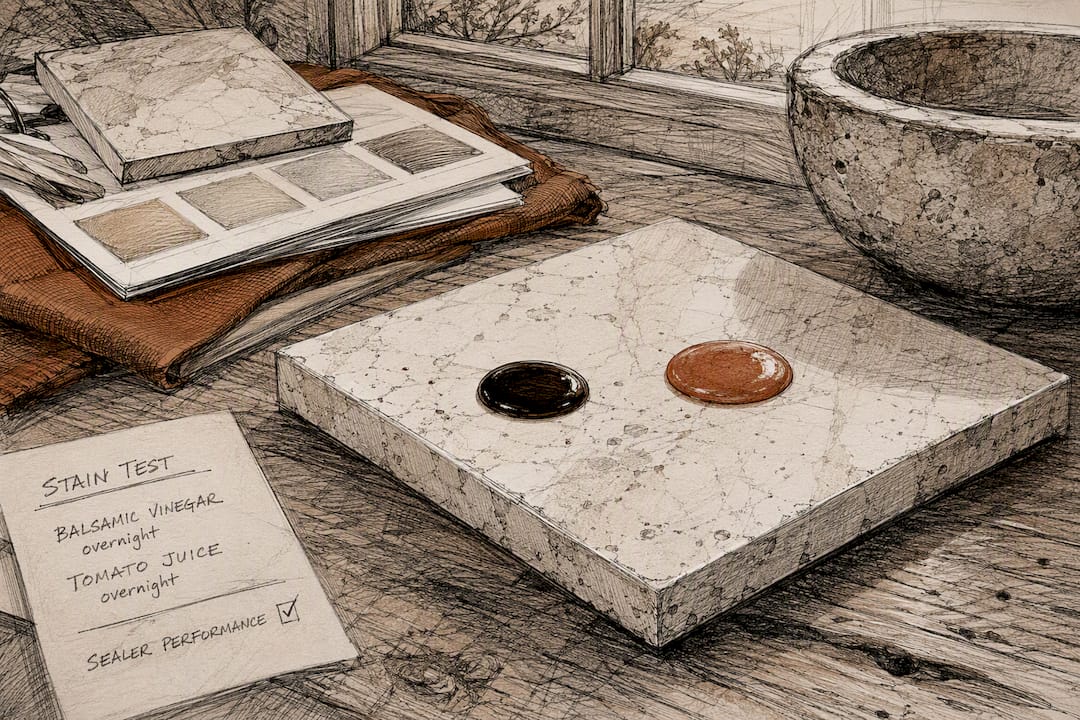
Pro Tip: Ask for a sample tile and leave a drop of olive oil and a drop of lemon juice on it overnight. If either leaves a mark, expect the same on your finished installation, and plan your sealing schedule accordingly.
Why Do Architects Choose Marble for Public Buildings?
Marble shows up in facades, columns, lobby floors, and grand staircases because it delivers a visual weight that few other materials match, and its abrasion resistance holds up under decades of foot traffic when the grain is dense enough. The U.S. Capitol used marble throughout its floors, walls, columns, and statuary largely because it was both beautiful and relatively easy to carve compared to granite, and multiple domestic quarries made it available at scale.
Marble’s abrasion resistance in these settings depends heavily on how tightly the mineral grains bond together, which is why some historic buildings show smooth, worn stair treads after a century of use while others hold sharp edges.
- Facades and exterior cladding
- Columns and load-bearing accents
- Lobby floors and grand staircases
- Memorials and monument carving
Exterior use comes with a caveat. Weathering and acid rain slowly dull polished exterior marble over years, which is why specification for outdoor facades often leans toward denser, less porous stock than what you’d choose for an interior lobby floor.
Why Do Sculptors Prefer Marble Over Other Stone?
Sculptors gravitate toward marble because of that same subsurface light scattering that makes countertops look luminous. In a carved figure, it produces a soft, almost skin-like glow that flat, opaque stone can’t replicate.
- Fine grain allows crisp detail in features like hands and drapery folds
- High-purity statuary marble avoids the veining that would distract from form
- Colored, veined marbles suit decorative or abstract pieces where pattern matters more than realism
- Outdoor sculpture needs denser stock and periodic sealing to resist weathering
Michelangelo’s preference for Carrara marble wasn’t just tradition. Fine grain and high purity let a chisel carry detail that coarser architectural marble simply can’t hold, and the same translucency that makes bathroom tile glow is what gives carved skin its lifelike depth.
What Industrial and Agricultural Products Come From Marble?
Crushed and powdered marble does work far from any showroom. High-purity calcium carbonate from marble serves as filler and a chemical agent across a surprising range of industries, from farms to pharmacies.
A moderate amount of crushed limestone or marble per acre is typically applied by farmers to neutralize acidic soil, though the exact rate depends on soil pH and local extension guidance.
- Ground into agricultural lime to raise soil pH on acidic farmland
- Micronized into paint, rubber, and plastic as a brightener and filler
- Processed into pharmaceutical-grade antacid tablets, which requires strict purity control
- Used to produce bright, acid-free paper that resists yellowing over time
The industry is also getting smarter about waste. Marble slurry left over from cutting and polishing can be refined into micronized calcium carbonate competitive with manufactured fillers, turning what used to be quarry waste into a sellable product when contamination is controlled.
How Do You Choose and Maintain Marble the Right Way?
Picking the right marble starts with matching the stone’s density and grain to the room, then locking in a maintenance routine before problems start.
- Match grain and color to purpose. Fine grain, high purity stone suits carving and formal accents; coarser, veined architectural marble suits floors and walls where color variation reads as character rather than flaw.
- Pick density for the environment. Denser, less porous marble belongs in kitchens and entryways; more delicate varieties are better reserved for low-traffic accent walls or vertical surfaces that never touch a shoe.
- Choose the finish deliberately. Honed surfaces resist etching better and hide wear longer; polished surfaces show more reflected light but reveal every scratch and water spot faster.
- Insist on proper installation. A qualified installer checks the substrate for flatness, uses the right grout width for the tile size, and seals the surface before grout haze becomes a permanent problem. This selection checklist covers the questions worth asking before you order.
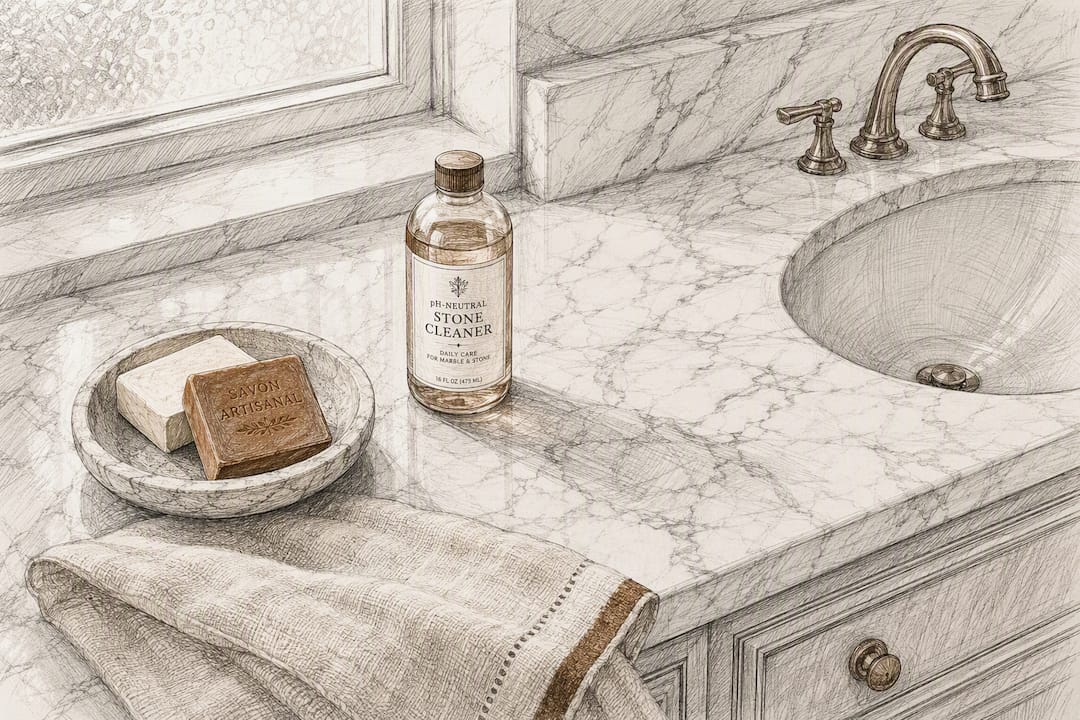
- Maintain on a schedule. Reseal every 6 to 12 months depending on traffic, clean with pH-neutral stone soap, and keep vinegar, citrus, and other acidic cleaners off the surface entirely.
For areas that take heavy impact daily, like a mudroom floor with dropped tools or a commercial kitchen prep station, a denser alternative stone may outperform even premium marble. Marble’s strength is beauty and workability, not maximum impact resistance.
Pro Tip: Keep a small bottle of pH-neutral stone cleaner under the sink specifically for marble. Reaching for an all-purpose spray “just this once” is how most etching damage actually happens.
Where Can You Learn More About Marble Selection?
Choosing the right marble variety and finish gets easier with a resource built specifically around that decision, rather than generic stone advice. Surfacesgalore imports marble, limestone, and travertine directly and ships nationwide to homeowners, designers, and contractors, which means the guidance below comes from people who source and cut the material daily.
- Author cihan covers marble selection and application guidance for Surfacesgalore’s editorial content
- Surfacesgalore ships tile, mosaics, and slab-format natural stone nationwide from its Anaheim, California facility
- Color and finish selection guidance walks through matching stone to a specific room
- Kitchen and bath style examples show finished projects for reference
- Sample requests and bulk quotes are available for trade and commercial buyers planning larger orders
What the Research Actually Tells You About Marble
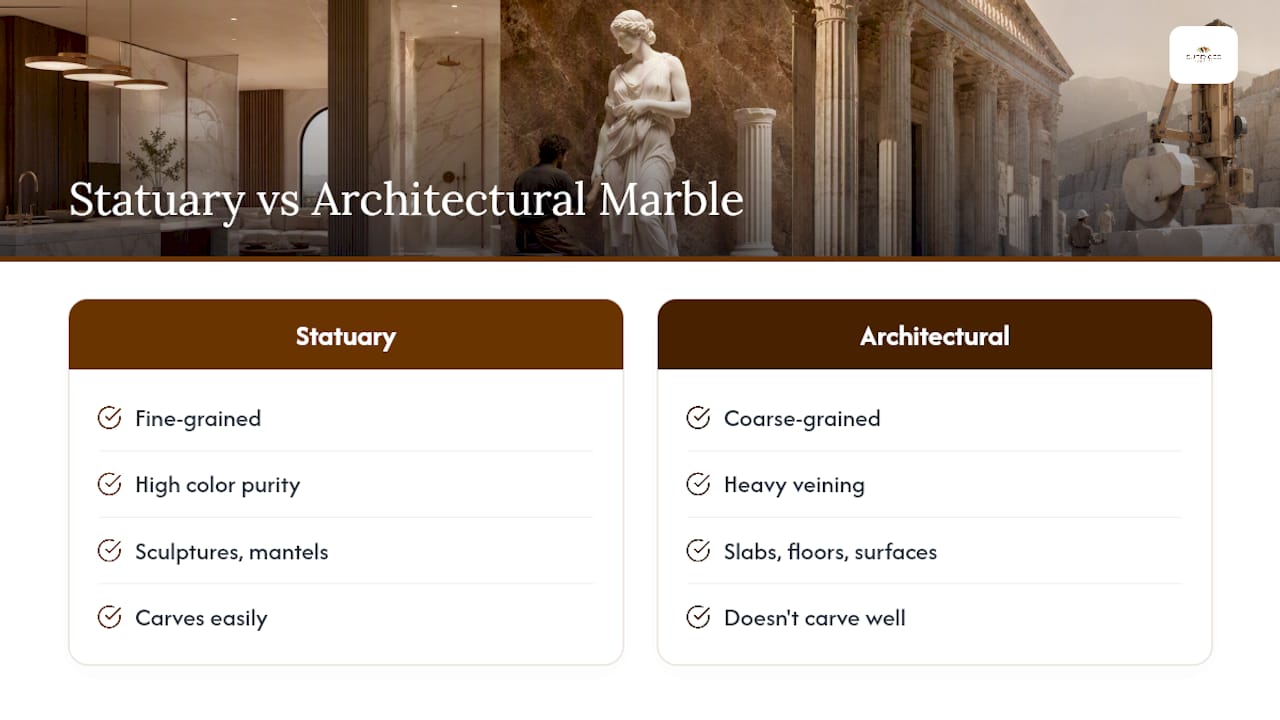
The conventional advice on marble treats it as one material with one set of rules: seal it, don’t spill wine on it, done. That undersells the point. Statuary marble and architectural marble behave differently enough that the sealing schedule, finish choice, and even the room you’d put them in should differ too. A fine-grained statuary block belongs on a mantel or in a sculptor’s studio, not underfoot in a mudroom, and a coarse-grained architectural slab with heavy veining will never carve the way a sculptor needs it to.
The bigger miss in most buying guides is skipping the “why” behind the maintenance checklist. Homeowners get told to reseal every year without understanding that porosity and acid sensitivity come from the same calcite chemistry that makes marble carve so beautifully. Once you see the tradeoff, sealing stops feeling like a chore and starts feeling like the obvious price of the material’s best trait.
If you’re choosing marble for a real project, prioritize matching density and finish to how the room actually gets used, not just to the photo you liked on a mood board; understanding what kind of doors are best for interiors can help coordinate your marble selection with adjacent finishes and door hardware. The stone will forgive a lot. It won’t forgive the wrong finish in a wet shower.
Ready to Choose Marble for Your Own Project?
Surfacesgalore cuts out the distributor markup that most stone showrooms build into their pricing, because it imports marble, limestone, and travertine directly and ships tile, mosaics, and slabs nationwide from its Anaheim facility. That matters most for the exact decisions covered above: matching grain and density to a floor versus a backsplash, picking a honed finish for a wet shower, or sourcing enough consistent veining for a full kitchen island.
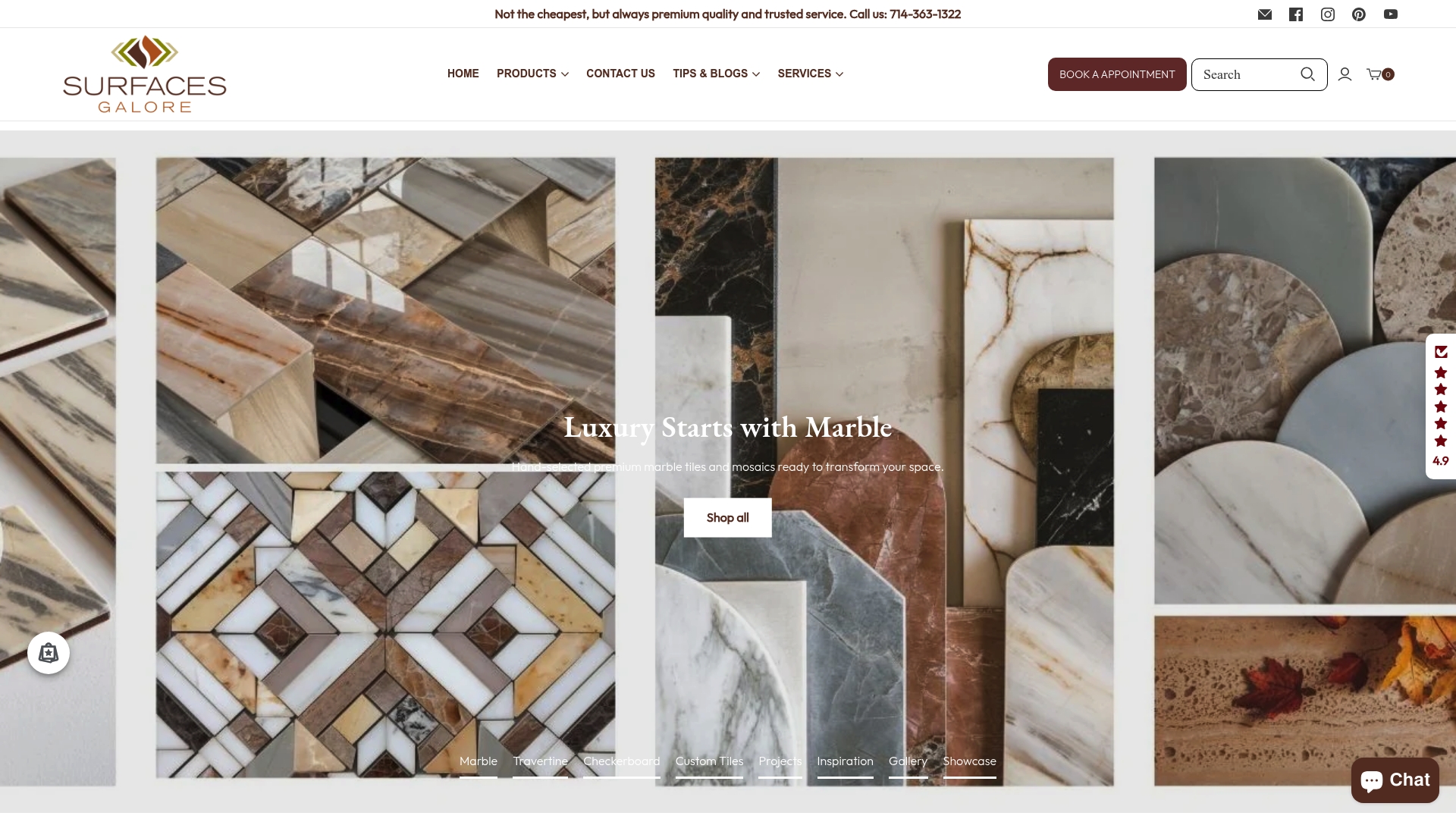
Trade buyers and homeowners can request samples before committing to a full order, which solves the biggest risk in any marble purchase: color and veining that look different under your own lighting than they did online. Contractors and designers working on multiple units can also request bulk quotes directly. If you’re ready to compare finishes for your space, shop natural stone tiles today and request a sample before you order.
Sources
- Marble | Definition, Types, Uses, & Facts - Britannica
- Geology
- Marble | Architect of the Capitol
- RSC article on marble byproduct reuse (2024)
FAQ
What Are Marble Slabs and Tiles Actually Used for?
Marble is used for flooring, countertops, bathroom surfaces, staircases, architectural facades, columns, monuments, sculpture, and as crushed calcium carbonate in agriculture and industry.
What Products Are Made From Marble?
Beyond building materials, ground marble becomes agricultural lime, antacid tablets, paint and rubber fillers, and bright acid-free paper, while marble slurry gets recycled into micronized calcium carbonate filler.
Is Marble Good for Kitchen Countertops?
Marble works well for countertops when honed and sealed properly, though its porosity means acidic foods like lemon juice or wine can etch the surface if left too long.
What Is the Difference Between Statuary and Architectural Marble?
Statuary marble is fine grained and high purity, ideal for sculpture, while architectural marble runs coarser with more veining and suits floors, walls, and facades.
How Often Should Marble Be Sealed?
Most marble surfaces need resealing every 6 to 12 months depending on traffic and exposure to moisture or acidic substances.
Leave a comment