
0.14% Water Absorption: White Thassos Marble Specs for Designers

White Thassos marble is a dolomitic stone from a single Greek quarry source, prized for a whiteness that borders on translucent and a fine, sugar-like crystal structure few marbles match. It performs best on walls, backsplashes, and honed floors under moderate traffic, with polished finishes reserved for vertical accents. Water absorption runs low, but Thassos still needs sealing and routine care to stay pristine.
TL;DR:
- Thassos marble has an exceptionally low water absorption rate of approximately 0.14%, making it suitable for wet areas with proper sealing and maintenance.
- Polished Thassos offers a luminous, high-gloss finish ideal for vertical accents, but honed surfaces are better for floors due to slip resistance and camouflaging wear.
- Grade A marble provides the whitest, most uniform appearance but is scarce and expensive, while A1 offers a cost-effective alternative with minor, barely visible inclusions.
- Proper sourcing requires checking batch numbers and inspecting samples under different lighting conditions to ensure color and pattern consistency.
- Seal Thassos with a penetrating sealer before grouting, reseal every 12 to 18 months, and use pH-neutral cleaners for long-lasting, pristine surfaces.
Table of Contents
- What Makes White Thassos Marble Different From Other White Marbles?
- Should You Choose Polished or Honed Thassos?
- Where Does White Thassos Marble Work Best in a Home?
- What Do Grade A, A1, and Commercial Thassos Actually Mean?
- How Do You Source and Order White Thassos Marble Correctly?
- How Should You Seal and Maintain White Thassos Marble?
- Why Trust This Thassos Buying Guide?
- Is White Thassos Marble a Sustainable Choice?
- What the Data Actually Tells You About Specifying Thassos
- Shop White Thassos Marble Tiles and Slabs
- Sources
- FAQ
What Makes White Thassos Marble Different From Other White Marbles?
Thassos is quarried on the Greek island of Thassos, and its calcite and dolomite crystals grow in a tight, uniform structure that geologists compare to granulated sugar. That crystalline density is why the stone reads as bright, almost glowing white rather than the creamier tone you see in Carrara or the dramatic gray veining of Calacatta. The historical quarry provenance on Thassos Island has supported architectural use for centuries, a track record that speaks to how well the stone holds up structurally over time.
The specs back up the reputation:
- Water absorption: approximately 0.14% by weight, among the lowest of any commercial marble
- Compressive strength: roughly 95 MPa, solid enough for flooring and structural cladding
- Mohs hardness: in the 3 to 4 range typical of calcitic and dolomitic marbles, softer than granite but fully workable for residential use
- Reflectivity: high, thanks to the fine crystal grain, which is why designers lean on it to brighten rooms with limited natural light
Thassos’s water absorption sits well below the rate of many commercial-grade marbles, which is exactly why it holds up in bathrooms and other wet areas better than its softness alone would suggest. That low porosity does not mean zero maintenance. It means Thassos resists water infiltration better than most marbles while still needing a sealer to guard against etching from acidic spills.
Should You Choose Polished or Honed Thassos?
The finish decision matters more with Thassos than with almost any other marble, because its surface shows everything. Polished Thassos delivers a glassy, light-bouncing shine that makes walls and accent pieces look almost luminous. Honed Thassos trades that shine for a soft, matte surface that hides daily wear far better.
Here’s the trade-off in plain terms:
- Polished: higher gloss, more dramatic brightness, but footprints and water spots show up quickly
- Honed: matte look, better slip resistance underfoot, and it masks minor scratches and etch marks far more forgivingly
- Mosaics and textured formats: small-format tumbled or cross-cut mosaics scatter light unevenly, which hides imperfections in shower floors and pool surrounds where large polished slabs would show every flaw
Pro Tip: If you’re torn between finishes for a bathroom floor, go honed. You get the same bright white color with none of the slip risk or constant wipe-downs that polished floors demand.
Our guide comparing polished versus honed finishes breaks down slip resistance ratings and maintenance differences in more detail if you’re specifying across multiple rooms.
Where Does White Thassos Marble Work Best in a Home?
Room by room, Thassos rewards smart finish pairing more than almost any stone on the market.
- Bathrooms. Honed floors reduce slip risk on wet tile, while polished or honed walls both work well for shower surrounds. Make sure drainage slopes correctly before installation, since standing water is the main threat to any light-colored marble.
- Kitchens. Thassos shines as a backsplash or accent counter, but full working countertops are riskier. Citrus, wine, and vinegar will etch the surface over time, so reserve it for islands or bar tops that see lighter use, and seal aggressively.
- Flooring. Large-format honed tiles in 18x18 or similar sizes create a seamless, bright expanse. Pair with a light or matching grout so the joint lines don’t interrupt the visual purity of the stone.
- Walls, fireplaces, and mosaics. This is where Thassos performs at its absolute best. Fireplace surrounds and accent walls take full advantage of the crystalline shine with none of the foot traffic wear concerns.
- Exterior use. Approach with caution in freeze-thaw climates. Dolomitic marbles can be vulnerable to cracking when trapped moisture repeatedly freezes, so exterior applications work best in moderate climates with proper drainage detailing.
What Do Grade A, A1, and Commercial Thassos Actually Mean?
Grading determines both the look you get and the price you pay, and the differences are visible if you know what to look for.
- Grade A is the cleanest, whitest selection with minimal veining or mineral flecking. It’s also the rarest cut from any given block, which keeps supply tight and prices at the top of the range.
- Grade A1 allows minor water lines or pin-sized dark inclusions that are barely visible once the tile is installed and grouted. For most residential projects, A1 delivers 90% of the visual impact of Grade A at a noticeably better price point.
- Commercial grade carries more visible veining, occasional gray streaks, or inconsistent crystal patterning. It still reads as bright white from a distance and works well for high-volume commercial installs where budget matters more than flawless uniformity.
If your heart is set on Grade A for a feature wall but the budget doesn’t stretch that far, consider mixing grades: Grade A for the focal wall, A1 for supporting surfaces nearby.
How Do You Source and Order White Thassos Marble Correctly?
Ordering Thassos sight-unseen is where most projects go wrong. Because the stone’s whole appeal rests on subtle crystal patterning and consistent tone, batch variation between production runs can be noticeable if you’re not careful.
- Always request the slab batch number and full-size photos of the actual material, not a generic catalog image.
- Inspect samples under at least two different lighting conditions. Thassos can shift in perceived brightness between warm incandescent and cool daylight bulbs.
- Ask your supplier directly about grade, quarry origin, and whether they offer a match guarantee across your full order quantity.
- Build in lead time. Direct-import stone orders typically take longer than domestically stocked tile, so plan accordingly for project timelines.
- Match your chosen finish to the installation method, and request a sample edge cut if you’re using mitered or bullnose details so you can see how the finish reads at the profile.
Our Thassos buying guide walks through sample requests and batch verification in more depth if you’re specifying for a larger commercial run.
How Should You Seal and Maintain White Thassos Marble?
Some installers seal Thassos tile before grouting, not after. Because the stone is porous enough to absorb grout haze, a pre-grout penetrating sealer makes cleanup dramatically easier and prevents staining around joint lines.
- Use a pH-neutral cleaner exclusively. Anything acidic, including many common bathroom sprays, will etch the surface on contact.
- Reseal every 12 to 18 months in wet areas, longer in low-traffic walls or accent applications.
- Address etching quickly with a marble polishing powder for light marks; deeper etches typically need professional honing.
- Installers should prep the substrate thoroughly, choose a grout color close to the stone tone, and protect finished surfaces with breathable coverings during the rest of construction.
Pro Tip: Keep a small bottle of pH-neutral stone cleaner under the sink specifically for the Thassos surfaces. Mixing up cleaning products between your granite counters and your marble backsplash is one of the most common ways homeowners accidentally etch their own stone.
Homeowners tackling their own maintenance schedule can find more detail in our honed finish guide for homeowners.
Why Trust This Thassos Buying Guide?
Surfaces Galore operates as a direct importer and nationwide supplier specializing in marble, travertine, and limestone products, which means specification advice here comes from sourcing relationships with quarries rather than secondhand retail knowledge. Our ongoing coverage of Thassos and marble specification on the Surfaces Galore blog tracks grading standards, finish trends, and installation lessons pulled from real project feedback.
Trade customers working through commercial specs get sample requests, bulk quote support, and nationwide shipping timelines built around actual project deadlines, not generic freight estimates. That combination, direct import pricing plus hands-on grading guidance, is what separates a stone supplier from a stone distributor.
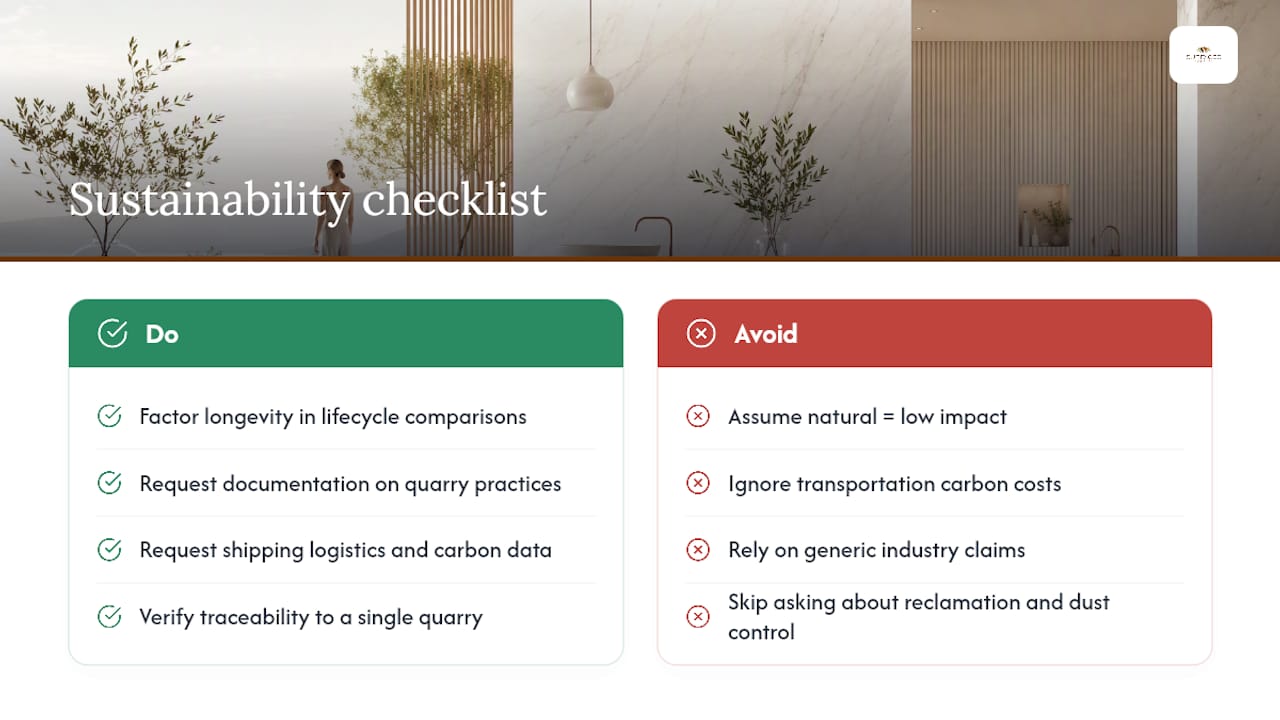
Is White Thassos Marble a Sustainable Choice?
Natural stone carries an inherent sustainability advantage that manufactured surfaces can’t match: it lasts for generations rather than needing replacement every decade or two. Thassos marble quarried from a single Greek island source has documented use stretching back through ancient architecture, evidence that the material itself doesn’t degrade the way engineered stone or laminate does over time.
The environmental conversation around any quarried stone centers on extraction impact and transportation distance. Quarrying is inherently resource-intensive, and reputable operations manage water use, dust control, and land reclamation as part of standard practice. Because Thassos comes from one geographic source, buyers can trace material back to a specific quarry rather than a blended, unverifiable supply chain, which matters increasingly to architects specifying for LEED or similar green building documentation.
Transportation is the other factor worth weighing honestly. Thassos ships from Greece, so the carbon cost of that journey is real and worth factoring into any sustainability comparison against domestically quarried stone. What offsets it, in part, is longevity: a marble installation that lasts 50-plus years with proper sealing and care has a very different lifecycle footprint than flooring or countertop materials replaced every 10 to 15 years.
For designers weighing sustainability formally, request documentation directly from your supplier on quarry practices and shipping logistics rather than relying on general industry claims, since practices vary meaningfully between operations even within the same region.
What the Data Actually Tells You About Specifying Thassos
Most articles about Thassos lead with the romance: the whiteness, the luminosity, the Greek island mystique. That’s not wrong, but it buries the number that should actually drive your decision, which is that 0.14% water absorption rate. Very few marbles in this price range perform that well in wet environments, and it’s the single fact that justifies putting Thassos in a shower rather than admiring it from a distance on a fireplace surround.
The conventional advice to “always polish for a luxury look” undersells honed finishes badly. On floors especially, honed Thassos gives up almost nothing visually while solving the slip and footprint problems that make polished floors impractical for daily life.
If you take one thing from this guide, prioritize grade transparency over grade name. A well-matched A1 slab often outperforms a poorly matched Grade A batch visually, because consistency across your installation matters more than the label on the invoice. Ask for batch photos before anything else.
— John | Surfaces Galore
Shop White Thassos Marble Tiles and Slabs
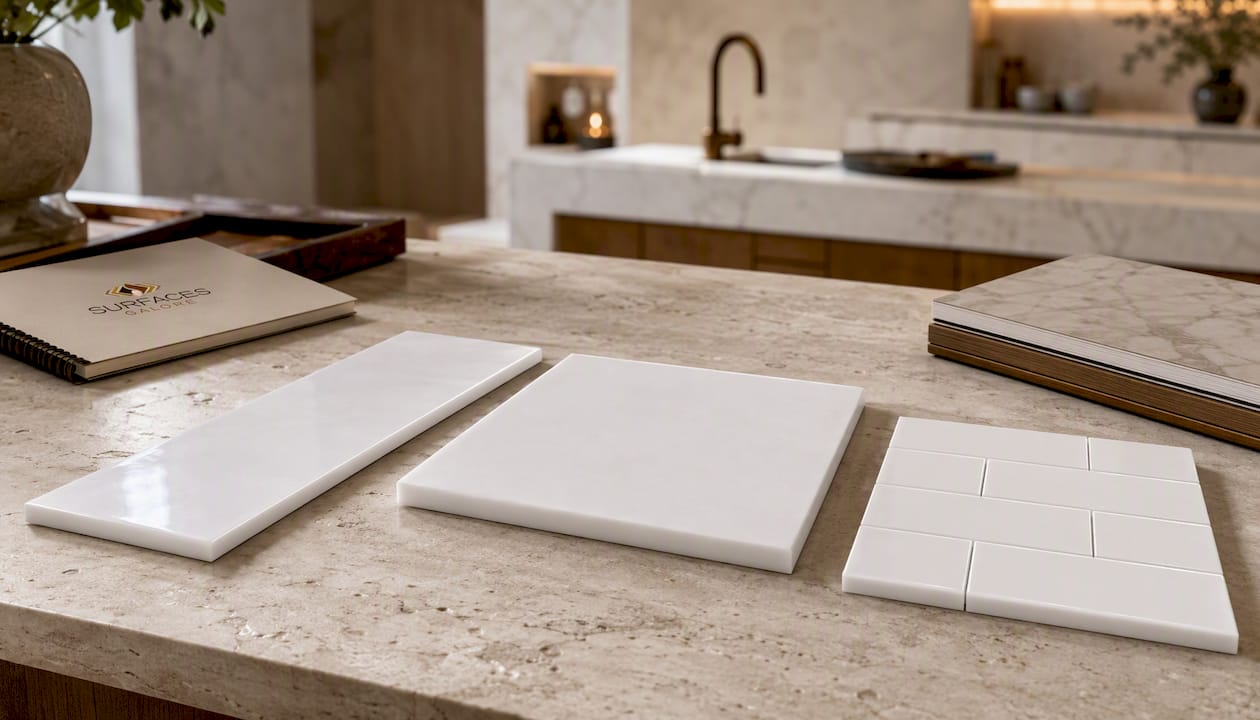
Three Thassos formats are available built around exactly the applications covered in this guide, so you can match product to project without guessing. The Thassos White 3x6 tile suits classic subway-pattern backsplashes and decorative shower accents in either polished or honed finish. Step up to the Thassos White 2x8 tile for a more elongated backsplash or accent wall look, also available in both finishes. For flooring or large wall panels, the Thassos White 18x18 tile delivers the seamless expanse that smaller formats can’t match, and we recommend honed for any floor application.
Every order can start with a sample request, so you can check grade, tone, and batch consistency in your own lighting before committing to a full project quantity. Contractors and designers working on larger commercial runs can also request batch verification and bulk quotes directly.
Ready to move forward? Browse the three Thassos formats above, request samples for your specific room, or reach out through Surfaces Galore for a bulk quote on your next project.
Sources
- Thassos Snow White | White Marbles | DERMITZAKIS BROS S.A.
- Thassos Snow White Marble: The Complete Guide | Dionyssomarble
- Thassos Marble - IUGS
- STONETECH® Maintenance & Care — Clé Thassos Marble
FAQ
Is Thassos Marble Expensive?
Thassos runs higher than many commercial white marbles because of its limited quarry source and the rarity of top Grade A material, though A1 grade offers a more moderate price point without sacrificing much visual impact.
How Rare Is Thassos Marble?
Thassos is quarried from a single source on Thassos Island in Greece, which limits total supply and keeps the cleanest Grade A material especially scarce compared to marbles sourced from multiple quarry regions.
What Is the Most Expensive White Marble?
Pricing varies by grade and market conditions, but exceptionally pure Grade A Thassos consistently ranks among the priciest white marbles available, alongside select Calacatta varieties, due to limited clean-block yield.
Where Can I Buy White Thassos Marble?
Surfaces Galore supplies Thassos White in 2x8, 3x6, and 18x18 tile formats in both polished and honed finishes, with sample ordering and nationwide shipping available for residential and trade customers.
Recommended
- Pure White Thassos Marble Buying Guide
- Best Marble Types for Kitchens and Design Excellence
- Marble Tile Absorption Rates: What You Need to Know
- Marble in Wet Areas for Beauty and Function
This article is provided for general informational guidance only. Natural stone varies in color, veining, texture and performance. For installation, sealing, cleaning and maintenance, follow the product manufacturer’s instructions and consult a qualified installer or stone-care professional. Always test cleaning and sealing products in an inconspicuous area first. Surfaces Galore is not responsible for damage, discoloration, etching, staining, installation issues or other problems resulting from

Leave a comment